Bank Fishing Techniques for Connecticut Lakes
It’s a common frustration for many anglers in Connecticut: you want to get out on the water, but you don’t own a boat, a kayak, or even a paddleboard. You find yourself limited to shorelines, wondering if you can still effectively catch fish. This comprehensive guide will equip you with proven bank fishing techniques for Connecticut lakes, turning your shoreline adventures into productive fishing excursions.
Understanding the Unique Challenges and Advantages of Bank Fishing
Fishing from the bank certainly comes with its own set of hurdles, but it also offers some surprising perks that boat anglers sometimes miss out on. It's all about understanding these dynamics and playing to your strengths.
Overcoming the Limitations of Limited Access
One of the biggest struggles for bank anglers is the sheer limitation of reach. When you're standing on shore, you can only cast so far, and that can mean missing out on deeper waters, offshore structures, or hidden coves that boaters can easily access. It’s tough to watch someone out in a boat pull in fish after fish from a spot you can only dream of reaching. Plus, shoreline vegetation, fallen trees, or private property can block prime casting lanes, forcing you into less-than-ideal positions. You might also find yourself battling thick weed beds right along the bank that make it hard to retrieve lures or even land a fish. This can be especially frustrating when you know fish are holding just beyond your casting range, or when your perfect cast lands you directly in a snag.
Another common issue is dealing with fluctuating water levels. A spot that was great last week might be too shallow this week, or completely submerged and inaccessible. You’re also often confined to popular public access points, which can mean more fishing pressure and spookier fish. The challenge is real, and it requires a different mindset and skillset than boat fishing. You can't just motor over to the next spot; you have to hike, observe, and often make do with what's available directly in front of you. This is why learning to read the water from a static position is so incredibly important, as is understanding the specific habits of fish that hug the shore.
Maximizing the Benefits of Shoreline Accessibility
Despite the challenges, bank fishing offers some fantastic advantages. First off, it’s incredibly accessible and often much more affordable. No boat ramp fees, no gas for the motor, no expensive boat maintenance. You can simply grab your gear, walk a short distance, and start fishing. This makes spontaneous trips incredibly easy – got an hour free after work? Head to a local pond. This ease of access means you can fish more often, honing your skills and learning local waters intimately. For many, it's also a more peaceful and solitary experience, allowing you to connect with nature without the noise of an outboard motor.
Furthermore, fish often patrol shorelines, especially in the early morning or late evening, or during specific feeding times. Think about it: insects fall from overhanging branches, baitfish scatter near shallow cover, and larger predators follow. These fish are already accustomed to being near the bank, making them prime targets for a well-placed cast. You can also be incredibly stealthy from the bank, approaching a spot quietly and observing fish behavior before making your first cast. This can be a huge advantage, as fish are less likely to be spooked by a subtle approach than by a boat motoring overhead. Bank fishing really encourages you to slow down, pay attention to your surroundings, and develop a deeper understanding of the aquatic environment.
Essential Gear for Successful Connecticut Lake Bank Fishing
You don’t need a boatload of expensive equipment to be a successful bank angler in Connecticut. In fact, a minimalist approach can often be more effective, allowing you to stay mobile and adaptable. The key is choosing versatile gear that performs well across different scenarios.
Rods, Reels, and Line Choices for Shore Anglers
When you're confined to the bank, casting distance and accuracy become paramount. That's why I generally recommend a spinning setup for most bank fishing situations. A rod between 7 to 9 feet in length, with a medium to medium-heavy power and a fast action, is a great all-around choice. This length provides the leverage needed for longer casts without being too unwieldy in tight, brushy spots. A fast action tip allows for sensitive bite detection and quick hook sets, while the medium power handles a variety of lure weights and fish sizes. You can find excellent, durable spinning combos from brands like Penn or Shimano on platforms like Amazon that will serve you well for years. Having a rod that offers a bit of extra reach can make all the difference when you're trying to get a lure just past that submerged weed line or into a promising deeper pocket.
For reels, a 2500 to 3000 series spinning reel is usually perfect, balancing line capacity with retrieve power. Spool it with a good quality braided line, typically 10 to 20 lb test, as it offers superior casting distance, sensitivity, and strength for its diameter. Braided line also cuts through vegetation better, which is a huge plus when fishing near thick weeds. Always tie on a fluorocarbon leader (6 to 12 lb test, depending on your target species and water clarity) of about 2-4 feet. Fluorocarbon is nearly invisible in the water, has good abrasion resistance, and provides a bit of stretch for shock absorption. This combination of braid for the main line and fluorocarbon for the leader gives you the best of both worlds: casting performance and stealth.
The Bank Angler's Tackle Box Essentials
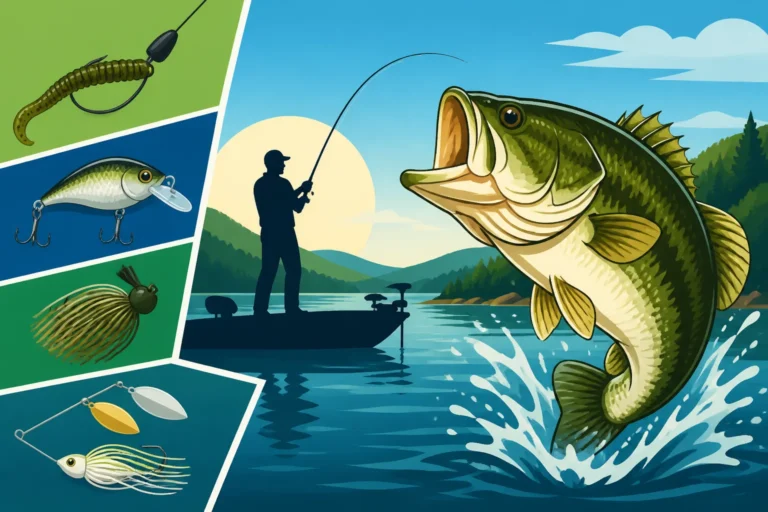
You don't need a massive, overflowing tackle box when you're bank fishing. In fact, a smaller, well-organized tackle bag or backpack can be a game-changer, allowing you to move easily along the shoreline. Think about versatility and what works for multiple species. For baits, live worms are always a winner for almost anything that swims, especially panfish and stocked trout. Small shiners or minnows can be deadly for bass and chain pickerel. For artificials, start with a selection of soft plastics: Senkos, curly-tail grubs, and creature baits in natural colors like green pumpkin, watermelon, and black. These are incredibly versatile and can be rigged weightless, Texas-rigged, or on a Ned rig to imitate different forage.
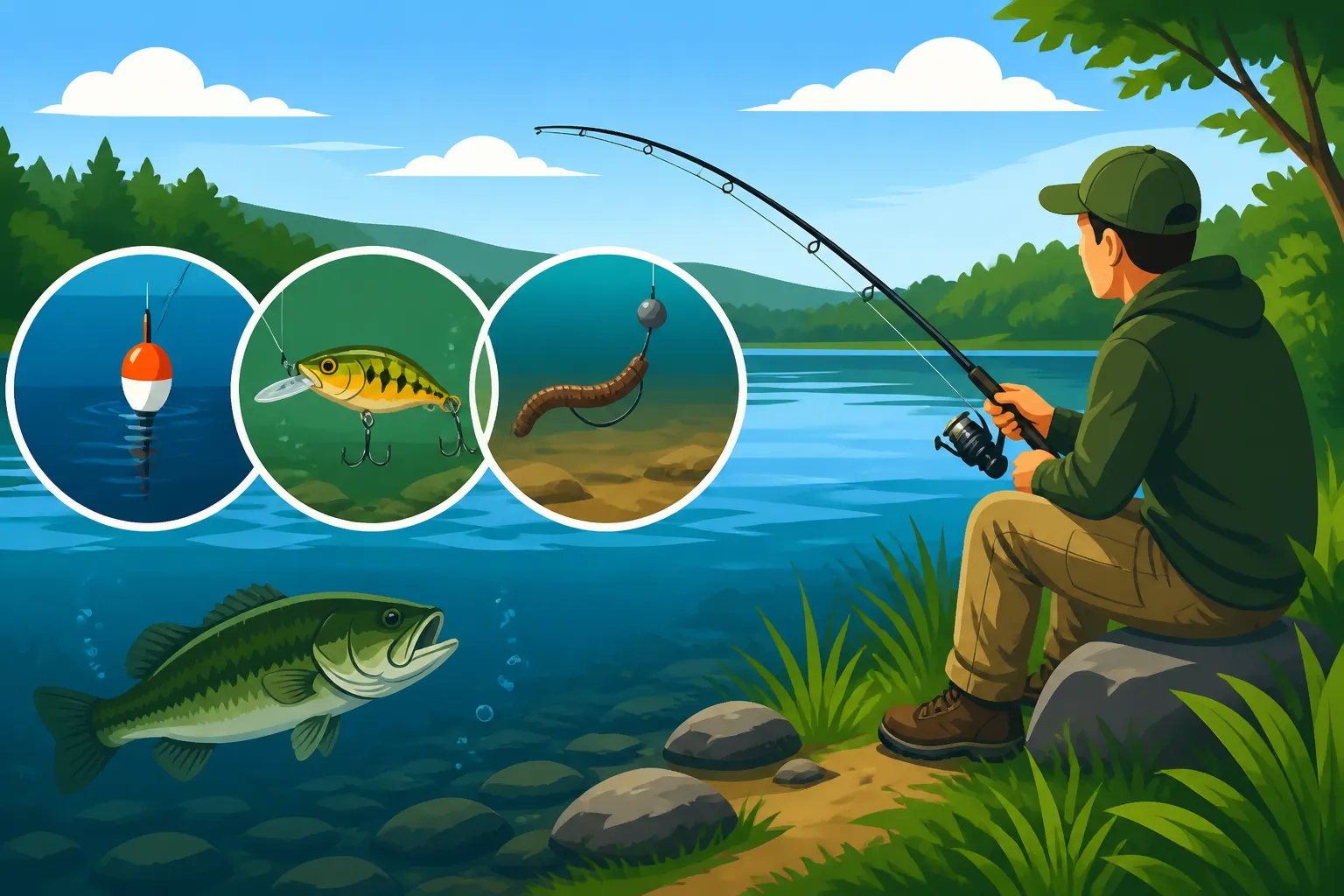
Beyond soft plastics, a few small spinnerbaits (1/4 to 3/8 oz) are excellent for covering water and targeting bass and pickerel near weeds. A couple of shallow-diving crankbaits and a topwater popper or walking bait can also produce explosive strikes, especially during low light conditions. Don't forget terminal tackle: an assortment of hooks (worm hooks, octopus hooks), small bullet weights, split shots, swivels, and bobbers (clip-on and slip bobbers) are critical. A pair of pliers for hook removal, line cutters, and a small net are also indispensable. A compact tackle management system, like those offered by Plano, available on Amazon, can keep everything neat and accessible, making your time on the bank much more enjoyable and efficient. Remember, you're carrying everything, so make every item count!
| Species Targeted | Recommended Gear | Essential Baits/Lures | Key Techniques |
|---|---|---|---|
| Largemouth/Smallmouth Bass | 7' Medium-Heavy Spinning Rod, 2500-3000 Reel, 15lb Braid to 10lb Fluoro Leader | Senkos (Green Pumpkin), Creature Baits (Black/Blue), Shallow Crankbaits, Spinnerbaits, Jigs | Target cover (docks, laydowns, lily pads), cast parallel to shore, slow retrieves, twitching |
| Stocked Trout | 6.5-7' Light-Medium Spinning Rod, 1000-2000 Reel, 6lb Mono or 8lb Braid to 4lb Fluoro Leader | PowerBait, Corn, Worms, Small Spinners (Mepps, Panther Martin), Small Spoons | Still fishing with bobber or bottom rig, slow retrieve for spinners/spoons, focus on inlets/outlets |
| Panfish (Perch, Bluegill, Crappie) | 5-6' Light Action Spinning Rod, 500-1000 Reel, 4lb Mono | Worms, Mealworms, Crappie Jigs, Small Grubs | Bobber fishing near structure, slow vertical jigging, stealthy approach to shallow areas |
| Chain Pickerel | 7' Medium Spinning Rod, 2500 Reel, 15lb Braid to 20lb Fluoro Leader (steel leader optional) | Spoons (Silver/Gold), Spinnerbaits (White/Chartreuse), Live Shiners, Jerkbaits | Cast along weed lines and sudden drop-offs, erratic retrieves, quick jerk-pauses |
Key Techniques for Targeting Popular Connecticut Lake Species from Shore
Connecticut's lakes hold a diverse array of fish, and while bank fishing might seem limiting, specific techniques can unlock impressive catches from species like bass, trout, and panfish. It's all about understanding their habits and presenting your bait or lure effectively from your vantage point on the shoreline.
Strategies for Largemouth and Smallmouth Bass
Bank fishing for bass in Connecticut lakes means focusing on the readily accessible shoreline cover and structure that these fish naturally gravitate towards. Largemouth bass, in particular, are ambush predators that love to hide. Look for any kind of visual cover: docks, fallen trees (often called laydowns), thick patches of lily pads, or even submerged brush. These are their hunting grounds. Your approach should be stealthy. Cast soft plastics like a Texas-rigged Senko or a creature bait directly into these pockets of cover. Let it sink slowly, then twitch it subtly. The key is to be patient and work the cover thoroughly. When fishing around docks, cast parallel to the dock and let your lure sink, mimicking a baitfish darting under the structure.
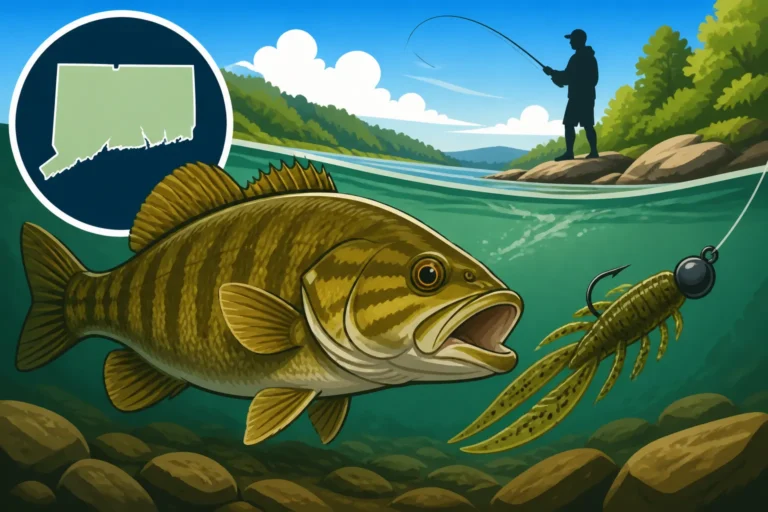
Smallmouth bass, while also found near shore, often prefer rocky bottoms, points, and sudden drop-offs. If your lake has these features accessible from the bank, they’re prime smallmouth territory. Small crankbaits or tubes jigged along rocky banks can be very effective. Try fan casting around points, working your lure at different depths. On Candlewood Lake, for instance, targeting rocky shorelines with a small jig can be incredibly productive for smallmouth. For both species, remember that bass are often most active during low light conditions in the early morning or late evening, or on overcast days. During the bright mid-day sun, they’ll often retreat to deeper, shadier cover. You can find more targeted advice for different species in our guide on Best Largemouth Bass Fishing in Connecticut, and even adapt some tips from How to Catch Smallmouth Bass in Connecticut Rivers for lake-dwelling smallies.
Landing Trout from Lake Banks
Connecticut's lakes and ponds are regularly stocked with trout, making them fantastic bank fishing destinations, especially in spring and fall. These fish, primarily rainbow and brown trout, often cruise near the shore in search of food after stocking. The classic bank fishing setup for trout is incredibly simple and effective: a light spinning rod, a bobber, and a piece of PowerBait, a kernel of corn, or a live worm. Cast it out, let it sit, and watch your bobber. The key here is not necessarily fancy retrieves, but rather finding where the trout are cruising and presenting a natural or enticing stationary bait.
When trout are first stocked, they often stay schooled up. Observe other anglers to see where they're having success, or look for deeper channels or drop-offs near the bank. Inlets and outlets of streams flowing into lakes can also be hotspots, as these areas often have slightly cooler, more oxygenated water and concentrated forage. Don't be afraid to experiment with small inline spinners like Mepps or Panther Martin, or even a tiny spoon, retrieved slowly and steadily. These artificials can trigger aggressive strikes from freshly stocked fish. Keep an eye on the Connecticut Interactive Trout Stocking Map, Explained to know which lakes have recently received a fresh batch of trout, as these periods offer some of the best bank fishing opportunities. Many of the techniques discussed in Spring Trout Fishing Techniques for Connecticut Streams can be adapted for stillwater trout, focusing on presentation and understanding feeding zones.
Panfish and Chain Pickerel Opportunities
Panfish – think bluegill, sunfish, yellow perch, and crappie – are the ultimate bank fishing target, especially for beginners or those seeking consistent action. They are abundant in most Connecticut lakes and ponds and are relatively easy to catch. For these species, simplicity is key. A small hook, a bit of split shot, and a bobber with a worm, mealworm, or even a tiny piece of bread will often yield steady bites. Look for panfish around any submerged structure, weed edges, or shallow coves. They school up, so once you find one, you'll often find many. This makes them perfect for a relaxing afternoon outing, and for introducing children to the joys of fishing. Our comprehensive guide on Panfish Fishing in Connecticut delves into more specifics on targeting these fun-to-catch species.
Chain pickerel are another fantastic bank fishing target in many Connecticut lakes. These toothy predators love to ambush prey from dense weed beds or submerged timber. They're aggressive and can provide exciting fights. Target them by casting spoons (silver or gold are often effective) or spinnerbaits along the edges of weed lines. Erratic retrieves, with pauses and sudden jerks, can trigger a strike. Live shiners under a bobber can also be incredibly effective for pickerel. Remember their sharp teeth, and consider using a heavier fluorocarbon leader or even a light steel leader to prevent bite-offs. They're often found in the same shallow, weedy areas as largemouth bass, so keep an eye out. Understanding Chain Pickerel Habits in Connecticut Ponds will definitely give you an edge in locating and catching these feisty fish.
Reading the Water and Choosing Your Spots Wisely
Successfully bank fishing in Connecticut lakes isn't just about the gear you use or the lure you throw; it's profoundly about your ability to "read the water." This means understanding what features attract fish and how their behavior changes based on their environment.
Identifying Productive Shoreline Features
From the bank, your biggest asset is your observational skill. Don't just cast blindly. Take a few minutes to observe the water before you even make your first cast. What do you see? Productive shoreline features are the bread and butter of bank fishing. Look for points that jut out into the lake, as these act as highways for fish moving between shallow and deep water. Coves, especially those with some protection from wind, can be excellent feeding grounds, trapping baitfish and insects. Submerged timber, like old logs or fallen trees, provides crucial cover and ambush points for predators. Weed lines – where dense aquatic vegetation meets open water – are magnets for baitfish and, consequently, the larger fish that prey on them.
Artificial structures like docks, bridge pilings, or culverts where water flows in or out can also be highly productive. These spots offer shade, cover, and often concentrate forage. A general rule of thumb is to look for areas where shallow water transitions quickly to deeper water – this "breakline" is often a fish highway. Using resources like depth maps, if available for the specific lake you're targeting, can help you visualize these transitions even from shore. Even without a map, you can often deduce depth changes by observing the steepness of the bank itself. If the bank drops off sharply, the water likely gets deep quickly. If it's a gradual slope, expect a long, shallow flat. This insight is crucial for understanding where to present your bait.
Understanding Lake Structure and Fish Behavior
Fish don't just randomly swim around; they relate to structure, cover, and changes in their environment. Understanding this is key to consistent success. For example, bass will often hold tight to cover (like a dock post or a laydown) during bright daylight, darting out to ambush prey. As the sun gets lower or on cloudy days, they might move to the edges of weed beds or patrol open flats. Trout, especially stocked ones, often cruise at specific depths or near temperature breaks, particularly around inlets or deeper, cooler sections of a lake. Our article on Connecticut Fishing Regulations Explained will give you a baseline understanding of what you can legally catch, which helps in focusing your efforts.
Seasonal changes also play a massive role. In spring, fish will be in shallower waters, often near spawning areas. As summer progresses, they'll seek deeper, cooler water or denser cover. Fall brings them back to the shallows as they feed heavily before winter. Consulting resources like Connecticut Fishing Season Dates and Closures can help you understand general fish activity throughout the year. Wind direction and intensity also influence fish behavior; a steady breeze can push baitfish against a shoreline, concentrating predators. Even the clarity of the water matters: clear water often means more cautious fish and the need for lighter lines and more subtle presentations, while stained water can make fish bolder and less discerning of your tackle. Always try to envision what's happening under the surface and how fish might be using the available lake structure to their advantage.
Advanced Bank Fishing Tactics and Tips for Maximizing Your Catch
Once you've got the basics down, it's time to refine your approach and adapt your techniques for even greater success from the bank. These advanced tactics focus on maximizing your casting efficiency, lure presentation, and overall situational awareness.
Presentation and Retrieval for Shore Anglers
One of the most effective strategies for bank anglers is "fan casting." Instead of repeatedly casting straight out, make your first cast to your far left, then gradually work your way across your entire accessible area, casting to different points in a fan shape until you reach your far right. This ensures you cover as much water as possible and explore different depths and structures. For instance, you might cast parallel to a shoreline for a few feet, then make a 45-degree cast, then a 90-degree cast, covering every potential fish-holding spot. Varying your retrieve speed is also crucial. Sometimes a slow, steady retrieve is best, other times a quick twitch-and-pause, or a rapid burning retrieve can trigger a strike. Don't be afraid to experiment until you find what the fish are reacting to on that particular day.
Working the entire water column is another critical component. If you’re fishing a deep section from the bank, start by letting your lure sink all the way to the bottom, then retrieve it in stages. Next, try retrieving it just off the bottom, then mid-water, and finally right under the surface. This systematic approach helps you locate where the fish are holding at that specific moment. Also, practice casting as far and as accurately as possible. The further you can cast, the more water you can cover and the more untouched spots you can reach. Consider using casting aids or longer rods if distance is a consistent issue. The more precisely you can place your lure near cover, the higher your chances of getting a bite. Remember, stealth on approach and during casting will prevent spooking any fish lurking right at your feet in the shallows.
Adapting to Conditions and Local Regulations
The weather, water conditions, and local regulations all play a significant role in your bank fishing success. Learning to adapt to these variables will set you apart. For instance, in clear water, fish are more wary. You'll want to use lighter lines, smaller lures, and more natural colors. Fluorocarbon leaders become even more critical here. In stained or muddy water, fish rely more on scent and vibration, so louder, bulkier lures with brighter colors (like chartreuse or orange) can be more effective. Fishing after a rain can be excellent, as runoff washes food into the lake, but too much rain can muddy the water excessively, making fishing tough.
Always, always be familiar with the latest Connecticut Fishing Regulations Explained. These regulations can change annually, and ignorance is no excuse for violating limits or seasons. For example, some lakes might have special regulations for certain species or gear restrictions. The official Connecticut Fishing Guide, which we discuss in Reading the Connecticut Fishing Guide, is your go-to resource for these details. You should also be aware of specific statewide and local Connecticut Fishing Season Dates and Closures, as these dictate when you can legally fish for certain species. Checking the regulations helps you avoid fines and ensures you're fishing responsibly. Understanding the rules, adapting to the conditions, and patiently working through different presentations will drastically improve your catch rate when bank fishing Connecticut's beautiful lakes.
Disclaimer
The information provided in this guide is for general informational purposes only. Fishing regulations, conditions, and fish behavior can change. Always consult the official Connecticut Department of Energy and Environmental Protection (DEEP) regulations before fishing and prioritize your safety on the water.