Best moon phase for striped bass fishing
One of the most common frustrations I hear from fellow anglers, especially those just getting into saltwater, is trying to predict when the striped bass will be really on the chew. It feels like sometimes you can cast all day and get nothing, while other times, they're practically jumping into the boat. The truth is, there's a huge underlying force influencing all this activity: the moon. This guide will help you understand how lunar cycles directly impact the tides and, by extension, the feeding patterns of striped bass in Connecticut, so you can plan your trips for maximum success.
Understanding the Moon's Influence on Tides and Fish Behavior
It's easy to overlook the moon when you're focused on your tackle box or the color of the water, but its gravitational pull is the primary driver of our ocean's tides. These tidal movements are far more than just rising and falling water; they create currents, move baitfish, and signal major feeding windows for predatory fish like striped bass. Ignore the moon, and you're essentially ignoring a huge piece of the puzzle for consistent fishing success.
Gravity and Tidal Swings
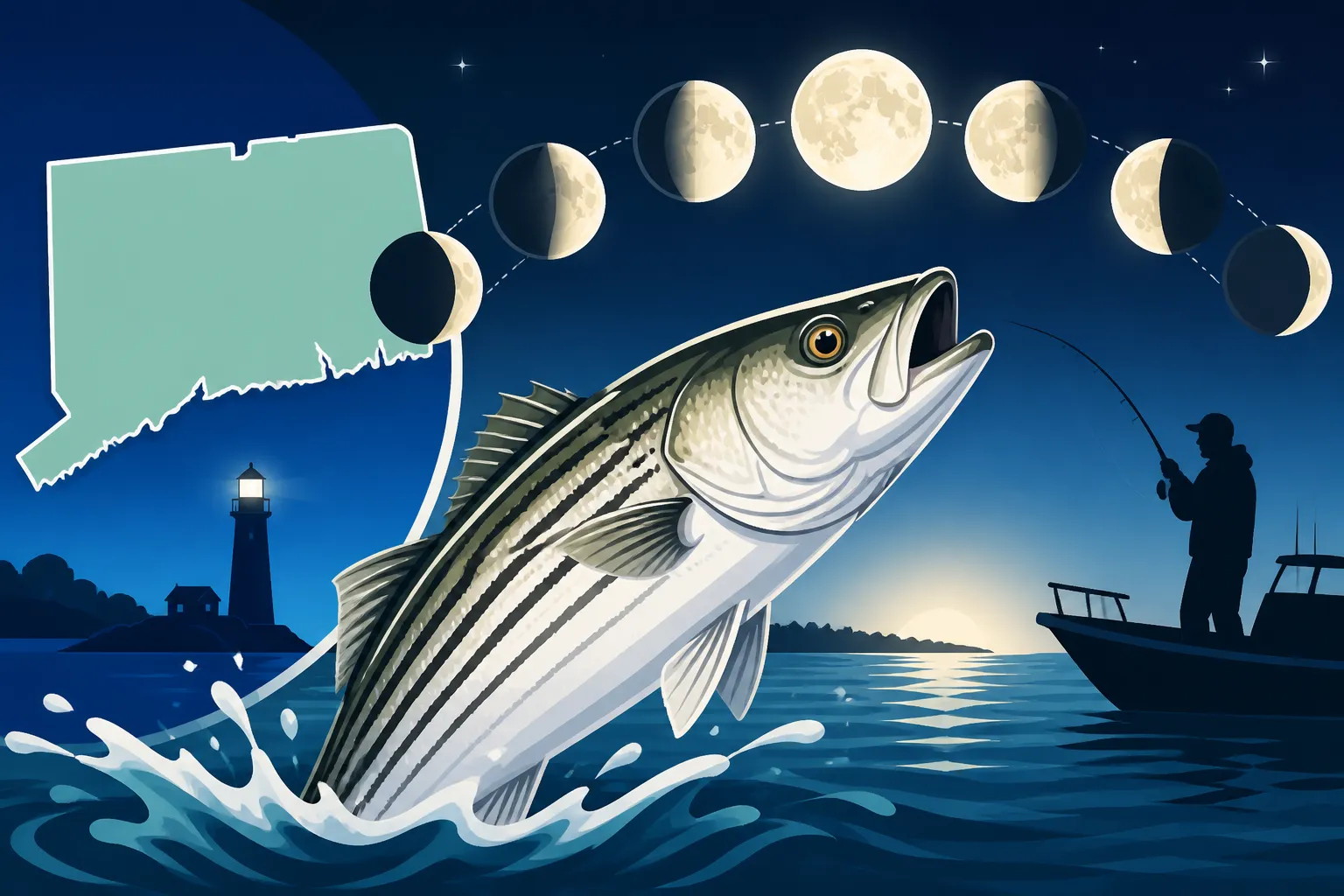
Think back to science class – the moon's gravity tugs at the Earth, and since water is fluid, it responds most dramatically. When the moon is aligned with the sun, their combined gravitational pull creates stronger tides, known as "spring tides." This happens during both the new moon and the full moon phases. The water rushes in and out with more force, creating significant current. Conversely, when the moon is at its first or last quarter, it's at a right angle to the sun, and their gravitational pulls partially cancel each other out. This results in weaker tidal swings, often called "neap tides," with less pronounced currents.
For us anglers, this isn't just academic. These strong and weak tidal cycles directly dictate how much water is moving, which then dictates how active the baitfish are, and consequently, how aggressive the striped bass will be. A strong current can disorient baitfish, making them easier targets, and it can also concentrate them in certain areas. It's like a conveyor belt of food for a hungry striper!
Feeding Windows and Current
Striped bass are ambush predators, and they absolutely love current. Stronger currents, characteristic of spring tides, mean more oxygenated water and a higher volume of baitfish being swept through choke points, rips, and over structure. This creates prime opportunities for stripers to conserve energy while waiting for food to come to them. When the current is ripping, striped bass often position themselves behind structure – rocks, jetties, points, or submerged humps – waiting for an easy meal to be washed past.
Conversely, during neap tides with weaker currents, the baitfish tend to disperse more, and the stripers have to work harder to find their meals. This isn't to say you can't catch fish during neap tides, but their feeding behavior often shifts. They might move into shallower flats, patrol edges more actively, or become more opportunistic feeders rather than waiting in strong ambush points. Understanding this fundamental shift is key to adjusting your approach. The difference in current can be astonishing, turning a lazy drift into a frantic sprint depending on the lunar phase.
Major Moon Phases and Their Impact on Striped Bass
Let's get down to the specifics of each moon phase and what it means for your fishing trip to the Long Island Sound or one of Connecticut's tidal rivers. Knowing which phase you're fishing under will help you anticipate the tides and the stripers' likely behavior.
New Moon and Full Moon (Spring Tides)
These are often considered the "prime time" for striped bass fishing, and for good reason. During both the new moon (when the moon is between the Earth and the sun, making it invisible from Earth) and the full moon (when the Earth is between the moon and the sun, showing a fully illuminated disc), the gravitational pull is at its strongest. This means spring tides with the most extreme high and low tides, and crucially, the strongest currents.
- New Moon: You might not see the moon, but you'll definitely feel its effects in the water. The strong tidal flow moves a lot of water, which stirs up nutrients, dislodges bottom dwellers, and sweeps baitfish out of hiding. This period often coincides with aggressive feeding frenzies as stripers capitalize on the abundant, disoriented food. Many anglers find the days leading up to and immediately following the new moon to be incredibly productive, especially when targeting trophy striped bass. The low light of the new moon nights is also a massive advantage for those who enjoy night fishing for striped bass in Connecticut, as the lack of ambient light makes stripers bolder.
- Full Moon: The full moon brings equally strong tides, but with the added element of bright moonlight. This can be a double-edged sword. While the strong currents still trigger feeding, the bright nights might make some stripers more cautious in very shallow, clear water. However, deeper water, areas with good current, and cloudy nights can still be phenomenal. The transition periods around dawn and dusk during a full moon can be particularly hot, as the stripers take advantage of the feeding opportunities before or after the brightest part of the night. It's often said that the full moon brings out the biggest fish, as larger stripers are more comfortable feeding under bright conditions.
First and Last Quarter Moon (Neap Tides)
When the moon is in its first or last quarter, it appears as a half-moon. During these phases, the moon and sun are at right angles to the Earth, meaning their gravitational forces are working against each other. The result is neap tides, characterized by smaller tidal swings and significantly weaker currents.
- First Quarter Moon: This phase sees tides that aren't as strong as the spring tides. The current will be less vigorous, and the periods of slack tide might feel longer. Stripers during this time tend to be less active in strong current rips and might spread out more. Instead of holding in concentrated ambush points, they might patrol flats, channel edges, or search for bait in areas with subtle currents. You might need to adjust your approach to slower presentations, or focus on areas where even a weak current can still create a distinct feeding zone, like a subtle drop-off or the mouth of a smaller creek.
- Last Quarter Moon: Similar to the first quarter, the last quarter moon brings weaker tidal flows. Fishing during these periods often requires more searching and a different approach. Instead of relying on the current to bring the fish to you, you might need to actively seek out schools of bait or areas where stripers are holding in less obvious spots. While not always as explosive as spring tides, neap tides can still be very productive for anglers who are willing to adapt. Sometimes, the quieter conditions of a neap tide can make for more peaceful fishing, and the fish, while possibly less aggressive, can still be caught with patience and the right technique.
Here's a quick overview of how the moon phases generally influence tidal strength and feeding:
| Moon Phase | Appearance | Tidal Strength | Current Activity | General Striper Feeding |
|---|---|---|---|---|
| New Moon | Invisible | Strongest (Spring) | High | Often highly aggressive, excellent for trophy fish & night fishing |
| First Quarter Moon | Half-Moon (right half) | Weaker (Neap) | Moderate to Low | More spread out, opportunistic, focus on subtle currents |
| Full Moon | Fully Illuminated | Strongest (Spring) | High | Highly aggressive, especially dawn/dusk, can be good at night |
| Last Quarter Moon | Half-Moon (left half) | Weaker (Neap) | Moderate to Low | Similar to First Quarter, requires more active searching |
Translating Moon Phases into Striped Bass Fishing Strategies
Understanding the moon's influence is one thing; actually using that knowledge to catch more fish is another! This is where you get to put on your detective hat and think like a striper. Your approach should change quite a bit depending on whether you're dealing with spring or neap tides.
Adjusting Tactics for Strong Tides
During new and full moon periods, when those spring tides are roaring, the water is moving fast, and that means baitfish are on the move. Striped bass will often hunker down in current breaks, waiting to ambush prey. This is when your heavier lures and baits come into play.
- Heavier Lures and Jigs: To get your offering down in the strike zone and keep it there, you'll often need more weight. Think heavy bucktail jigs, large soft plastics on substantial jig heads, or metal lips that can dive and swim against the current. If you're using live bait, a heavier sinker might be necessary to present it naturally. You can find a fantastic selection of these on Amazon, often with different weights and colors to match the conditions.
- Targeting Current Breaks: Look for areas where the strong current creates eddies or slack water directly behind structure. Rock piles, bridge pilings, jetties, points, and even subtle changes in depth can create these crucial feeding zones. Stripers will sit in the calmer water, expending minimal energy, and dart out to grab anything that drifts by. This is prime territory for How to Catch Striped Bass in Long Island Sound.
- Rips and Channels: Strong tides create visible "rips" where opposing currents meet or flow over shallow structure. These are conveyor belts of food. Likewise, deeper channels where the current is concentrated are excellent places to troll or drift live baits. The movement also helps to disperse your scent, attracting fish from further away. Consider adapting your Trolling Techniques for Long Island Sound Striped Bass during these periods.
- Live Bait and Big Plugs: If you're going for a trophy striped bass, these strong tidal periods are ideal for live-lining bunker (menhaden) or large eels. The strong current helps to present the bait naturally. For artificials, big swimming plugs that imitate bunker or herring can be incredibly effective, especially when fished near structure.
Adapting to Weaker Tides
When the neap tides roll around during the quarter moon phases, the currents are less intense. This doesn't mean the fishing is bad, it just means you need to shift your strategy. Stripers aren't as likely to be waiting in fierce current breaks; they'll be more actively patrolling for food.
- Lighter Tackle and Slower Presentations: With less current, you can often get away with lighter jig heads, smaller soft plastics, and lighter line. Slower retrieves and subtle presentations can be very effective. Try working the edges of flats, oyster beds, or shallower points where baitfish might be congregating more broadly.
- Fan Casting and Searching: Instead of targeting specific current seams, you might need to do more fan casting to cover a wider area. Stripers will be more spread out, so systematically working an area can help you locate schools. This is a great time to explore new spots or areas that might be too turbulent during spring tides.
- Focus on Bait: If the current isn't doing the work of concentrating bait, you need to find where the baitfish are naturally holding. Look for nervous water, diving birds, or bait balls on your fish finder. Where the bait is, the stripers won't be far behind, even with weaker tides. Many anglers find success by casting smaller soft plastics or flies that imitate the prevalent bait. For specific fly patterns, checking out guides on Fly Fishing for Trout in Connecticut can also give you ideas, as many baitfish patterns cross over well to stripers.
- Dawn and Dusk: While always important, dawn and dusk become even more critical during neap tides. These low-light periods offer stripers a natural advantage, and they often become more active, regardless of the weaker current. The Striped Bass Migration Along the Connecticut Coast is largely driven by temperature and bait, but lunar phases influence daily movements.
Beyond the Moon: Other Factors to Consider
While the moon phase is a huge indicator, it's never the only factor. A great angler considers all elements.
- Tide Height (High vs. Low): Even within a strong or weak moon phase, whether it's high tide or low tide dictates where the fish will be. During high tide, stripers might push into shallower areas, tidal marshes, or over submerged rocks. At low tide, they might retreat to deeper channels or the edges of flats. Understanding the Connecticut Fishing Season Dates and Closures for specific species is also crucial, as even prime moon phases won't help if the season isn't open!
- Time of Day: As mentioned, dawn and dusk are almost always productive, regardless of the moon. These low-light conditions allow stripers to hunt more effectively. Night Fishing for Striped Bass in Connecticut, especially around the new moon, can be incredibly rewarding.
- Weather and Water Temperature: Cold fronts can shut down a bite, warm fronts can ignite it. Water temperature dictates where the bait is, and therefore, where the stripers will be. A sudden drop in temperature can make even the most perfect moon phase tough fishing. You can usually find a good quality waterproof fishing thermometer on Amazon to help you track this.
- Bait Presence: Ultimately, stripers go where the food is. If there's a huge school of bunker or herring, the stripers will be there, sometimes even overriding the moon's influence on their feeding. Pay attention to local reports and look for signs of bait. Knowing When striped bass migrate into Long Island Sound can give you a heads-up on when to expect larger bait schools.
- Structure: Rock piles, jetties, reefs, and sudden depth changes are always key holding spots for stripers. They offer ambush points and shelter from strong currents. Learning How to read structure for striped bass in Long Island Sound is an invaluable skill that complements moon phase knowledge.
By combining your understanding of the moon phase with these other critical factors, you'll be well on your way to more consistent and successful striped bass fishing trips here in Connecticut. Happy fishing!
Disclaimer
This article is for general informational purposes only and does not constitute professional advice. Laws, prices and regulations vary by location and change over time. Consult a qualified professional for guidance on your specific situation.