Best dry fly patterns for summer trout hatches
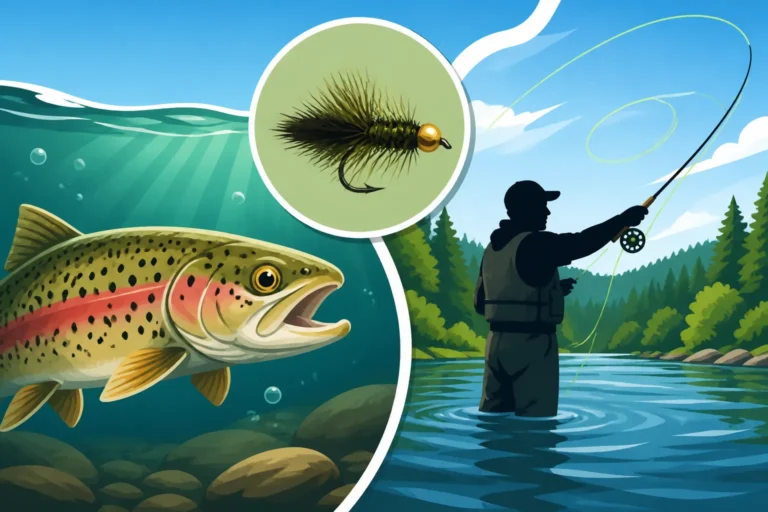
The frustration of seeing trout rising all around you, sipping something invisible off the surface, yet refusing every fly you cast their way is a feeling every dedicated angler knows intimately. It’s like they’re mocking you, these finicky fish, and it can turn a beautiful summer day into a test of patience. When the water warms up and insect activity really gets going, knowing which dry fly patterns to reach for can make all the difference between a triumphant catch and a silent, humbling defeat. This guide is all about equipping you with the knowledge of the best dry fly patterns for summer trout hatches in Connecticut, helping you decode those mysterious rises and finally fool those wary trout.
Understanding Summer Hatches in Connecticut
When summer fully settles in across Connecticut, our trout streams and rivers, from the gentle Farmington River to the wilder stretches of the Housatonic, come alive with insect activity. This isn't just a random flurry; it's a symphony of life, with specific insects hatching in predictable patterns. Understanding these hatches is the bedrock of successful dry fly fishing, because if you're not presenting something that looks like what they're actually eating, you're pretty much just casting a pretty piece of fluff. It’s a core component of successful Fly Fishing for Trout in Connecticut.
Common Summer Aquatic Insects and Their Life Cycles
Summer in Connecticut means a changing cast of characters in the insect world. Gone are the massive March Browns and Hendrickson duns of spring. Instead, we're looking at smaller, often more delicate insects that require a keen eye and a subtle approach. The major players you'll encounter are Caddisflies, various Mayflies (especially those smaller olive, yellow, and sulfury patterns), and the ever-present Midges. Stoneflies are less common on the surface during summer, but you might find them in specific, faster-moving sections where cool, oxygenated water prevails.
Caddisflies are often the most prolific, especially in the evenings as the light fades. They hatch quickly, often skittering across the surface and flying off almost immediately, which can cause trout to react aggressively with splashy rises. Their life cycle is relatively simple: larvae live in cases or cling to rocks, pupae swim quickly to the surface, emerge as adults (duns), and then fly off to mate, eventually returning to the water to lay eggs. Mayflies, on the other hand, have a more graceful emergence. Their nymphs swim to the surface, shed their shuck, and drift as duns, sitting for a moment on the water before taking flight. This slower, more vulnerable presentation is often what really triggers selective trout into those subtle, sipping rises. Finally, midges are tiny, almost microscopic insects that hatch year-round but can be particularly dense in summer, especially on slower pools or tailwaters. They're often overlooked because of their diminutive size, but if trout are rising subtly and refusing everything else, tiny midges might be the critical answer to unlock consistent action.
Identifying What Trout Are Eating
This is where the detective work begins, and it's perhaps the most critical skill for any dedicated dry fly angler. You'll often hear the phrase "matching the hatch," and it's exactly what it sounds like. When you first spot trout rising, don't just blindly cast your favorite, go-to fly. Take a quiet moment, observe the water and the fish's behavior. Are the rises splashy and aggressive, sometimes with a head or tail breaking the surface? That often points to actively emerging or skittering caddis. Are they subtle dimples, almost like the fish is just sipping air or gently nudging something off the surface? That's typically indicative of a mayfly dun, emerger, or midge.
Then, try to spot the actual insects on the water. Look for duns drifting downstream, caddis fluttering upstream, or even spent spinners lying flat in the film. If you can carefully net one, or even catch one in your hand, that's incredibly helpful. Pay close attention to its size, shape, and color. Is it olive green, pale yellow, or a darker brown? Is it tiny, like a size 20 or 22, or a bit larger, like a size 14? This observational skill is developed over time, but it's crucial for consistent success. Remember that trout often key in on a specific stage of the hatch—the emerger just below the surface, the dun drifting on the surface, or the spent spinner after mating—so having patterns for each stage in your fly box is essential. While this guide focuses on natural hatches, understanding Connecticut Trout Season and Stocking Rules can also help you anticipate prime fishing times when the fish are often less selective.
Essential Dry Fly Patterns for Connecticut Summers
Alright, now that we understand why those trout are rising, let's talk about the what. Having the right arsenal of dry flies is like having the right tools for a job; you wouldn't try to fix a leaky faucet with a hammer. For Connecticut's summer hatches, you'll want a selection of patterns that effectively imitate the most common insects. This goes beyond the general Fly Patterns for Connecticut Trout Streams and drills down into the specific patterns for the warmer months.
Caddisfly Imitations
Caddisflies are probably the most prevalent insect you'll encounter on many Connecticut rivers during the summer, particularly in the evenings as shadows lengthen or on overcast days. Their frantic, skittering emergence often triggers aggressive, confidence-building takes from hungry trout.
- Elk Hair Caddis: This is an absolute workhorse pattern for summer caddis. It's incredibly buoyant, generally easy to see on the water, and does a fantastic job of imitating a fluttering caddis adult either resting or trying to take flight. You'll want them in various sizes (from 12 to 18) and a range of colors (tan, olive, grey, and even black) to match different regional variations. The durable deer hair wing helps it float through rough water and turbulent seams, making it perfect for faster runs and riffles where caddis love to hatch and where trout often aggressively pursue them. I always have a few dozen of these in my box, often picked up from my favorite local fly shop or even on Amazon if I'm stocking up quickly in the off-season.
- Goddard Caddis: While perhaps less universally known than the Elk Hair, the Goddard Caddis offers an even more robust and exceptionally buoyant profile. This makes it a great choice for really turbulent water, or when you need a fly that can easily support a small dropper nymph beneath it. Its densely packed, clipped deer hair body allows it to float like a cork, and trout don't seem to mind the slightly bulkier appearance when they're feeding aggressively on active caddis.
- Stimulator: Though often thought of as a general attractor pattern, or sometimes even a large stonefly imitation, smaller Stimulators (sizes 14-18) in tan or olive can be surprisingly deadly caddisfly imitations. They work especially well when trout are looking for a slightly larger, more substantial meal, or when a mix of caddis and other larger insects are present. Its bushy profile and ample hackle suggest a lot of movement and a juicy meal, often eliciting strong, opportunistic strikes.
Mayfly and Midge Patterns
Mayflies, though sometimes less numerous than caddis in pure quantity during summer, often bring out the most selective and discerning feeding behavior in trout. When you see those incredibly gentle dimples or subtle sips on the surface, chances are it's a mayfly dun or spinner. Midges, while tiny, are a constant and reliable food source, and you should never, ever underestimate their importance, especially on slow, glassy pools.
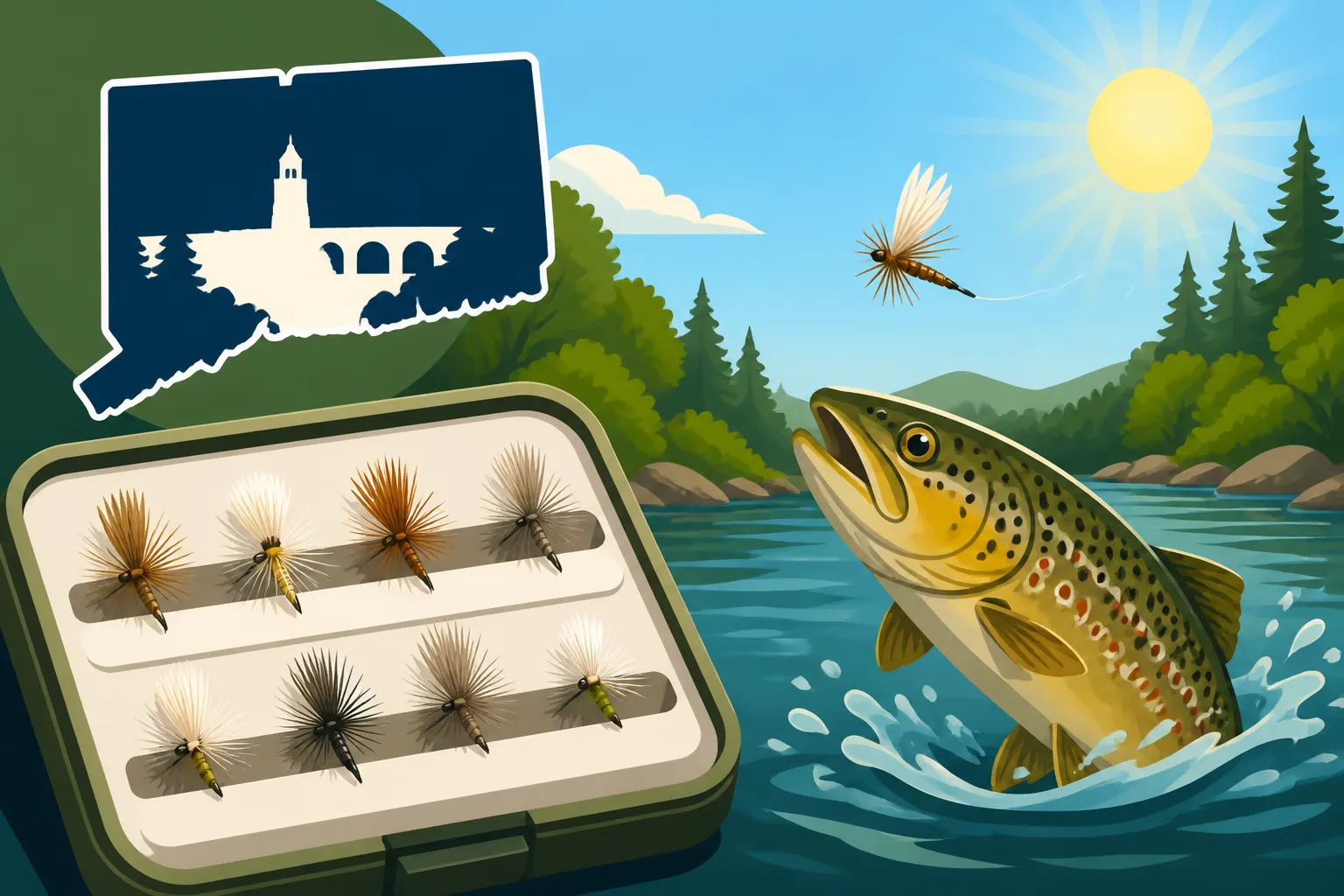
- Parachute Adams: If there's one dry fly pattern that could truly be considered an "all-rounder" for general mayfly hatches, it's the Parachute Adams. Its parachute-style hackle allows it to sit perfectly in the surface film, mimicking a wide range of mayfly duns with its lifelike silhouette. The bright white parachute post makes it incredibly easy for the angler to see, even in tricky or fading light conditions. Stock up on a good range of sizes, typically from 12 down to 22, in various shades of grey, olive, and dun. This pattern is also fantastic for mimicking the ephemeral, vulnerable nature of a newly emerged mayfly dun.
- Sulfur Dun/Spinner: In mid-to-late summer, sulfur mayflies (often Ephemerella dorothea or similar species known for their pale yellow coloration) can hatch in impressive numbers on many Connecticut waters, particularly on productive tailwaters like sections of the Farmington River West Branch Trout Fishing. Their pale yellow bodies are highly distinctive. Make sure you have some Sulfur Duns in sizes 16-20 to match the emerging adults, and equally important, a good selection of Sulfur Spinners for when the trout are keying in on spent adults after their mating flights. The spent spinner fall can be a truly incredible event, and trout often gorge themselves on these easily accessible meals.
- Blue-Winged Olive (BWO) Parachute: While BWOs are most famous for their strong spring and fall hatches, smaller varieties can emerge sporadically throughout the summer, especially on overcast days or during a cool spell. A size 18-22 BWO Parachute is a must-have for those times when trout are rising consistently to tiny, dark-bodied mayflies. You'll definitely want to have some of these for those moody, drizzly summer days when larger insects might not be as active.
- Griffith's Gnat: For those incredibly frustrating moments when trout are rising constantly and rhythmically but steadfastly refusing everything you offer, it's almost always tiny midges, or perhaps a cluster of them. The Griffith's Gnat, tied simply with a body of peacock herl and a collar of grizzly hackle, is an exceptional midge cluster imitation. Have them in sizes 18-24. It's sparse and unassuming, but incredibly effective when trout are being finicky about size and profile. You can often find great assortments of these smaller patterns from online retailers like Amazon to ensure you're comprehensively covered.
Terrestrial Patterns
Summer isn't just about aquatic insects; it's also prime time for terrestrials. Terrestrial insects, those that live on land but often end up in the water, become a surprisingly significant food source for trout as the weather warms and grasses and foliage grow thick along the riverbanks.
- Ants (Cinnamon, Black): Ants are perhaps the most underrated terrestrial pattern in many anglers' fly boxes. They consistently fall into the water throughout the day, providing a steady, easy meal for opportunistic trout. Have both cinnamon and black ant patterns in sizes 14-20. Trout often become very accustomed to eating ants, and these patterns can be incredibly reliable when nothing else seems to be working.
- Beetles (Foam Beetle, Black Gnat Beetle): Like ants, various species of beetles are clumsy flyers and frequently plop into the water from overhanging vegetation. Foam beetle patterns are excellent because they are incredibly buoyant, durable, and have a realistic, dense silhouette that trout key in on. Black is a universal color, but don't shy away from dark greens or browns. These can be particularly effective during midday lulls when aquatic hatches are sparse or non-existent.
- Hoppers (Tan, Pink, Yellow): As grass grows tall in mid to late summer, grasshoppers become a prime target. Large, leggy hopper patterns in tan, pink, or yellow (sizes 8-14) can elicit incredibly explosive, heart-stopping strikes, especially on blustery days when they're likely to be blown into the water from the banks. Fishing these along cut banks, grassy edges, and under overhanging foliage is often key to success. A good, realistic hopper pattern is an indispensable tool when fishing the larger rivers like the Housatonic River Fishing Guide.
| Insect Type | Common Connecticut Species | Primary Summer Patterns | Recommended Sizes | Notes |
|---|---|---|---|---|
| Caddisflies | Hydropsyche, Rhyacophila | Elk Hair Caddis, Goddard Caddis | #12-18 | Erratic flight, splashy rises. Evenings. |
| Mayflies | Ephemerella (Sulfurs), BWOs | Parachute Adams, Sulfur Dun/Spinner, BWO Parachute | #16-22 | Gentle drifts, subtle sips. Overcast days. |
| Midges | Various Chironomidae | Griffith's Gnat, Zebra Midge (dry) | #18-24 | Constant food source, very subtle rises. |
| Terrestrials | Ants, Beetles, Grasshoppers | Cinnamon Ant, Foam Beetle, Hopper Imitations | #8-20 | Wind-blown, reliable midday option. |
Matching the Hatch: Strategies and Tips
Having the right flies is only half the battle, and frankly, often the easier half. Presenting them correctly and knowing when and where to use them are just as important, if not more so. Summer trout can be incredibly finicky and particular, and a poor presentation or an ill-timed cast will almost guarantee refusal, no matter how perfectly your fly imitates the natural.
Observational Skills and Reading the Water
This really goes back to being a good detective on the water. When you arrive at your chosen stretch of water—be it a pristine, well-managed section of the Farmington River West Branch Trout Fishing or a lesser-known brook in the quieter corners of the state—don't just immediately start stringing up your rod and casting. Instead, take five, ten, even fifteen minutes to just watch. Sit back, be still, and observe. Look intently for rising fish. Are they holding in the slow, glassy pools, the faster, oxygenated runs, or tight against the shaded banks? What kind of rise is it? Is it a hard, aggressive splash with a head and tail visible? Or is it a soft, almost imperceptible dimple, barely breaking the surface tension?
Then, shift your focus to the insects on the water. Are there duns drifting serenely downstream? Are caddis adults buzzing and flying erratically upstream? If nothing seems to be happening on the surface, start considering terrestrials. Are there ants crawling on your waders, or grasshoppers jumping in the bankside grass as you approach? Often, trout will give you very clear clues if you're patient enough to watch. If you see a fish rise repeatedly in the exact same spot with a consistent rhythm, it's likely targeting a steady, predictable drift of a specific insect. If it's chasing something with a visible wake, it might be an emerger struggling to break free, or a skittering adult trying to escape. Reading the water also means understanding where trout will hold in different conditions. In summer, with often lower, warmer flows, trout will actively seek out well-oxygenated water and secure shelter. Look for the faster riffles, the heads and tails of deeper pools, undercut banks that provide cover, and current seams where natural food is concentrated. Knowing how to fish a run and pool trout stream effectively is absolutely crucial for success.
Presentation is Key
You've successfully identified the right fly, and you've matched the hatch as best as possible. Now, if your presentation is sloppy, clumsy, or unnatural, the trout will almost certainly bolt or simply refuse your offering. Summer trout, especially in the clear, often lower water conditions, are notoriously wary and hyper-sensitive to anything that looks unnatural.
- Drag-Free Drift: This is the golden rule, the holy grail, of dry fly fishing. Your fly must drift at the exact same speed as the natural insects floating alongside it. Any drag—where your fly moves faster or slower than the current due to your line catching different currents or wind—will instantly put trout off. This is where learning to mend your line upstream, gently and subtly, to achieve a perfectly drag-free drift becomes invaluable. Casting slightly upstream of the fish and allowing your line to curve downstream with the current can also significantly help in creating a natural presentation.
- Stealth and Approach: Get low, move slow, and think like a predator yourself. Don't cast a shadow over the water where fish are feeding. Trout have excellent eyesight and are easily spooked by sudden movements or bright colors. Always approach from downstream, or from an angle that keeps you as far out of their line of sight as possible. Long leaders (9-12 feet) with light tippet (5x-7x) are absolutely essential for achieving a delicate, natural presentation that won't alarm wary summer trout.
- Accuracy: Placing your fly just a few inches upstream of a rising trout is critical. They won't move far or expend much energy for a fly that isn't directly in their feeding lane, especially if there are plenty of naturals drifting by. Practice your casting to be able to hit a small target like a dinner plate from a reasonable distance, consistently and gently.
- Emerger and Spinner Presentations: Don't limit yourself to just the dun stage of a hatch. Sometimes trout are primarily keying on emergers just below the surface, or spent spinners lying perfectly flat in the surface film. A soft-hackle emerger pattern fished just under the surface, or a CDC emerger fished subtly in the film, can be incredibly effective when duns are being ignored. For spinner falls, make sure your dry fly sits perfectly flush and flat in the surface film to mimic the naturals accurately.
Dealing with Tough Conditions and Selective Feeders
Summer fishing isn't always easy. Bright sun, low clear water, and incredibly picky trout are common challenges you'll face.
- Low and Clear Water: When water levels naturally drop and clarity increases significantly in summer, trout become even more wary and selective. This is precisely the time to go to longer leaders, lighter tippets, and smaller, more delicate flies. Stealth is paramount; move slowly and deliberately. Focus your efforts during low light conditions—dawn, dusk, or on heavily overcast days—when trout feel safer feeding in more exposed areas. You can find more comprehensive information on Best Time of Year to Fish in Connecticut to plan your trips for optimal conditions.
- Hot Weather and Warm Water: As much as we love summer, sustained hot weather can raise water temperatures in our rivers and streams to dangerous levels for trout. When water temperatures approach or exceed 70°F, trout become severely stressed, lethargic, and highly susceptible to post-release mortality. It is best to completely avoid fishing during these times to minimize harm to the fish. Focus instead on tailwaters (like the lower sections of the Farmington River) that are fed by cold-water discharges from dams, or higher elevation mountain streams where water naturally stays cooler. Always carry a thermometer and be vigilant about water temperatures. You should also be fully aware of when Connecticut trout streams get too warm to fish.
- Micro-Hatches and Midges: Sometimes, the hatch is so subtle, so minuscule, that you can barely even see the insects. If trout are rising rhythmically and consistently but you simply cannot spot any visible insects, chances are it's a midge hatch or a very sparse hatch of tiny, tiny mayflies. This is the time to downsize your flies dramatically (sizes 20-24) and use extra-fine tippet (7x or 8x). The Griffith's Gnat is your absolute best friend here, but also consider tiny parachute patterns like a Parachute Adams in those super small sizes.
- Mixing it Up: If you're consistently getting refusals, even with what you believe is the perfect match, don't be afraid to change things up. Sometimes, a trout that's stubbornly refusing a perfect dun imitation will suddenly smash a well-presented terrestrial like a realistic ant or a small beetle. Or, if you strongly suspect trout are keying on emergers but aren't quite breaking the surface, try a dry-dropper rig with a small emerger pattern trailing a few feet behind your buoyant dry fly. Sometimes the trout are just looking for something different or a different stage of the same insect.
Gear and Presentation for Summer Dry Fly Fishing
Having the right flies is just the start. The rest of your setup, from your rod to your leader, plays a huge role in successful summer dry fly fishing. A delicate, precise presentation often means opting for lighter gear and mastering careful, subtle technique. This is especially true when pursuing wild or holdover trout in some of Connecticut's Best Fly Fishing Rivers in Connecticut.
Rods, Reels, and Lines for Dry Fly Fishing
For most Connecticut trout streams and rivers, you'll want a rod that offers finesse, feel, and accurate casting capabilities.
- Rods: A fly rod between 7'6" and 9' feet in length, typically in a 3-weight or 4-weight, is considered ideal for dry fly fishing for trout. These lighter rods protect delicate tippets, offer a wonderfully softer landing for your fly, and make accurate casts with smaller, lighter flies much easier. If you're primarily fishing very small streams or targeting smaller fish, a 2-weight or even a "shorty" 6'6" 3-weight can be an absolute joy to cast. For larger rivers like the Housatonic or the main stem of the Farmington, where you might encounter bigger fish or need to cast across wider currents, a 9' 4-weight offers a good balance of power for casting distance and the delicacy required for precise presentations. Reputable brands like Orvis, Redington, and Sage all make excellent light-line rods that are perfectly suited for this style of fishing.
- Reels: For dry fly fishing specifically, the reel's primary function is essentially a lightweight line holder. Any quality click-and-pawl or disc-drag reel that effectively balances your chosen rod will do the trick nicely. You simply don't need a heavy-duty drag system for average-sized trout on light tackle, but a smooth retrieve and dependable clicker are always beneficial.
- Lines: A weight-forward floating line is the standard choice for dry fly applications. Look specifically for lines that are designed for delicate presentations, often labeled as "trout taper," "dry fly specific," or "presentation taper." These lines typically feature a longer, finer front taper that helps the fly land softly and gently on the water's surface, preventing a "splatting" sound or action that can instantly spook wary trout. For example, a Rio Gold or Scientific Anglers Amplitude Smooth Trout line would be excellent choices, readily available from specialized fly shops or reliable online stores like Amazon.
Leaders, Tippet, and Fly Treatments
These often-overlooked and seemingly minor components are absolutely critical for effective dry fly fishing, especially in summer. Your leader system is the direct, most subtle link between your brightly colored fly line and your tiny fly, and it needs to be chosen and managed with meticulous care.
- Leaders: A long leader is your absolute best friend in summer, particularly in those clear, low water conditions. I typically use a 9-foot tapered leader as an absolute minimum, often extending it further with additional tippet to 12 feet or even longer, especially when fish are incredibly spooky or the water is gin-clear. A longer leader helps to dissipate casting energy, presenting the fly much more gently, and keeps your brighter fly line further away from the fish's immediate line of sight. Tapered leaders, gradually thinning from butt to tip, are essential for proper fly turnover and delicate presentation.
- Tippet: This is the very fine, nearly invisible line that connects the end of your leader directly to your fly. For summer dry fly fishing, you will almost exclusively be using lighter tippet sizes, typically 5x, 6x, or even 7x. The "x" rating refers to the diameter of the line, with higher numbers indicating finer, less visible diameters. Finer tippet is significantly less visible to fish and allows for a much more natural, drag-free drift of your small flies. Always carry a spool of each common size, as you'll often need to size down to precisely match particular hatches or to fool unusually wary fish. For larger, air-resistant dries like bulky hoppers, you might get away with a slightly heavier 4x tippet.
- Floatant and Desiccant: Dry flies, by their very nature, need to float high and proudly on the surface film to be effective. Liquid floatants (such as Gink, Loon Aquel, or Tiemco Dry Shake) are applied to the fly before casting, helping it repel water and stay buoyant. After you've caught a few fish, or after a lot of casting, your fly will inevitably become waterlogged and begin to sink. This is where a desiccant powder (like Frog's Fanny, Loon Dust, or Shimazaki Dry Shake) comes in. It can be used to thoroughly dry out a soggy fly, making it float again almost like new. Some convenient products even combine both a floatant and a desiccant in one, which is super handy to have at the ready on the water.
Essential Accessories for the Dry Fly Angler
A few small but critical items can make a huge difference in your overall dry fly fishing experience, especially when you're out there trying to fool those tricky summer trout.
- Nippers and Hemostats/Forceps: These are absolutely essential tools. Nippers are needed for cleanly cutting tippet and leader material, while a good pair of hemostats or forceps is invaluable for safely and gently removing flies from a trout's mouth, minimizing stress and handling time for the fish. Many anglers prefer models that also have a built-in eye-clearing needle for tiny fly eyes.
- Fly Box: A dedicated dry fly box with individual compartments or specially designed slit foam is a must-have. This protects your delicate dry flies from being crushed, their hackles bent, or their wings damaged. Consider a truly waterproof box to protect your precious patterns from the elements, as getting your dry flies wet prematurely is a common frustration.
- Waders and Boots: Depending on where and how you're fishing, waders can be absolutely essential for safely accessing prime water, wading across channels, and getting into a better casting position. Breathable waders are a literal lifesaver in the warmer summer months, preventing overheating. Always wear sturdy wading boots with excellent grip, especially on the notoriously slippery, algae-covered river bottoms found in many Connecticut rivers. If you're only targeting stocked ponds or easily accessible bank fishing spots, simple wading shoes or even knee boots might suffice. You can find excellent choices from outdoor retailers and even on Amazon. For specific advice on navigating our waterways, check out Wading Techniques for Connecticut Trout Streams.
Remember, dry fly fishing, especially in summer, is truly an art form that blends observation, precise presentation, and having the right tools. There will be glorious days when everything clicks and the trout eagerly rise, and there will be frustrating days when you feel like you're talking to a brick wall. But stick with it, keep learning, and those moments of a trout gently sipping your perfectly presented dry fly will make all the effort worthwhile. It's a truly beautiful and rewarding way to experience the magic of Dry Fly Fishing Connecticut Mountain Streams and other waterways.
Disclaimer
Fishing conditions and regulations can change rapidly. Always consult the latest Connecticut Department of Energy and Environmental Protection (DEEP) fishing guide and local advisories before heading out. The information provided here is for general guidance and educational purposes only.