Connecticut boat title vs registration difference
It can be incredibly confusing trying to wrap your head around all the regulations when you're getting into boating in Connecticut. One of the biggest head-scratchers for many new boat owners, and even some seasoned ones, is understanding the distinct difference between a boat title and a boat registration. They sound similar, and both are necessary for legal boating, but they serve entirely different purposes. This comprehensive guide will break down what each means, when they're required, and why knowing the distinction is crucial for every Connecticut boater.
Unpacking the Basics of Boat Ownership in Connecticut
Getting your boat on the water in Connecticut involves more than just launching it from a ramp. First, you need to establish legal ownership, and that's where the boat title comes into play. It's a foundational document that often gets confused with the operating permit, but understanding its role is paramount for a smooth boating experience.
What Exactly is a Boat Title?
Think of a boat title as your vehicle's pink slip, but for your boat. It's a legal document issued by the Connecticut Department of Motor Vehicles (DMV) that officially establishes and proves who owns a specific vessel. This isn't just a piece of paper; it's the state's official record of legal ownership. When you purchase a boat, especially a new one or one that was previously titled, this is the document you'll receive (or transfer into your name) that signifies you are the rightful owner. Without a clear title, proving ownership can become a tangled mess, affecting everything from selling your boat to insuring it or even obtaining a loan against it.
The title contains important details about the vessel, much like a car title would. This includes the boat's Hull Identification Number (HIN), which is a unique 12-digit code permanently affixed to the boat, usually on the stern. It also lists the make, model, year, length, and the owner's name and address. If there's a lien on the boat – meaning you've financed it through a bank or credit union – that lienholder's information will also be recorded on the title. This transparency is vital for consumers, protecting buyers from purchasing a vessel with outstanding debts or unclear ownership history.
Which Boats Require a Title in Connecticut?
Connecticut law is pretty specific about which vessels need to be titled. Generally, any vessel 19 feet 6 inches or more in length, and any vessel with a permanently installed motor (inboard) or an outboard motor of any horsepower, must be titled. This applies to most recreational powerboats you see on Long Island Sound or the larger inland lakes like Candlewood Lake or Bantam Lake. The length requirement is an important threshold, as many smaller canoes, kayaks, and rowboats often fall below it.
However, there are some important exemptions to this titling requirement. For instance, vessels less than 19 feet 6 inches in length that are solely propelled by oars, paddles, or sails, or small boats with detachable electric trolling motors, typically do not need a title. This means your canoe, kayak, paddleboard, or even a small sailboat without a permanent engine usually won't require a title. Also, certain vessels like those owned by the U.S. government or documented with the U.S. Coast Guard, tenders used with a titled vessel, or vessels used exclusively for racing are exempt from state titling requirements. This distinction is important because it means not every boat you own will necessarily need a title, simplifying things for those who enjoy smaller, simpler watercraft.
Demystifying Boat Registration for Operation
Once you’ve established ownership with a title (if required), the next step is getting permission to actually operate your boat on Connecticut's waterways. That’s where registration comes into play, and it’s a distinct process from titling.
What Does Boat Registration Actually Mean?
Boat registration is essentially a permit to operate your vessel on public waters in Connecticut. Unlike a title, which proves ownership, registration simply indicates that your boat has been identified and recorded by the state, and you've paid the necessary fees to use it legally for a specific period. It’s similar to how you register your car – the registration sticker and card allow you to drive on public roads, even if you don't actually own the car (e.g., if it's leased).
When you register your boat, you'll receive a registration certificate, often a small card you need to keep on board, and a set of registration numbers and a decal. These numbers must be prominently displayed on both sides of the bow of your vessel, typically in block letters at least three inches high, contrasting with the boat's color. The decal, which indicates the year of validity, is usually placed within six inches of the registration numbers. Failing to properly display these can lead to fines from the Connecticut Environmental Conservation Police (ENCON) or local marine patrols. The revenue from registration fees helps fund various boating and conservation programs across the state, from maintaining public boat launches to stocking fish. You can find more details on how these funds are used in our guide on Connecticut Boating Laws for Anglers.
Who Needs to Register Their Vessel in Connecticut?
The registration requirements in Connecticut are quite broad, covering nearly all mechanically propelled vessels and most sailboats operating on public waters. This includes everything from a small jon boat with an outboard motor to large cruisers and personal watercraft (PWCs). Even if your vessel doesn't require a title because of its size, it will likely still need to be registered if it has any kind of motor. For example, a 16-foot fishing boat with a 25 HP outboard motor would require registration, even if it might not meet the length requirement for a title.
There are, of course, some exemptions. Vessels that are solely propelled by oars or paddles, like canoes, kayaks, and paddleboards, are generally exempt from registration requirements in Connecticut. This is a huge relief for many casual paddlers and anglers who prefer human-powered craft. You can learn more about these specific exemptions in our article on Connecticut non-motorized boat registration exemption. Additionally, sailboards (windsurfers), vessels documented with the U.S. Coast Guard (though they may still need state decals), and vessels used solely on private ponds or lakes that are not connected to public waters are also exempt. It's crucial to understand these distinctions to avoid getting cited while enjoying Connecticut's beautiful waterways.
Title Versus Registration: A Tale of Two Documents
Understanding the core differences between a boat title and registration is not just about avoiding legal trouble; it’s about grasping the full spectrum of boat ownership and operation responsibilities. These two documents, while both essential, serve distinct functions in the world of Connecticut boating.
Core Differences and Legal Significance
The most fundamental difference lies in what each document signifies. A boat title proves ownership. It’s a certificate of property rights, demonstrating that you legally own the vessel, much like a deed to a house or a title to a car. This document is particularly critical when buying or selling a boat, as it's the primary means of transferring legal possession from one owner to another. If you're looking to sell your boat, a clean title is usually a prerequisite, and its absence can complicate the transaction significantly.
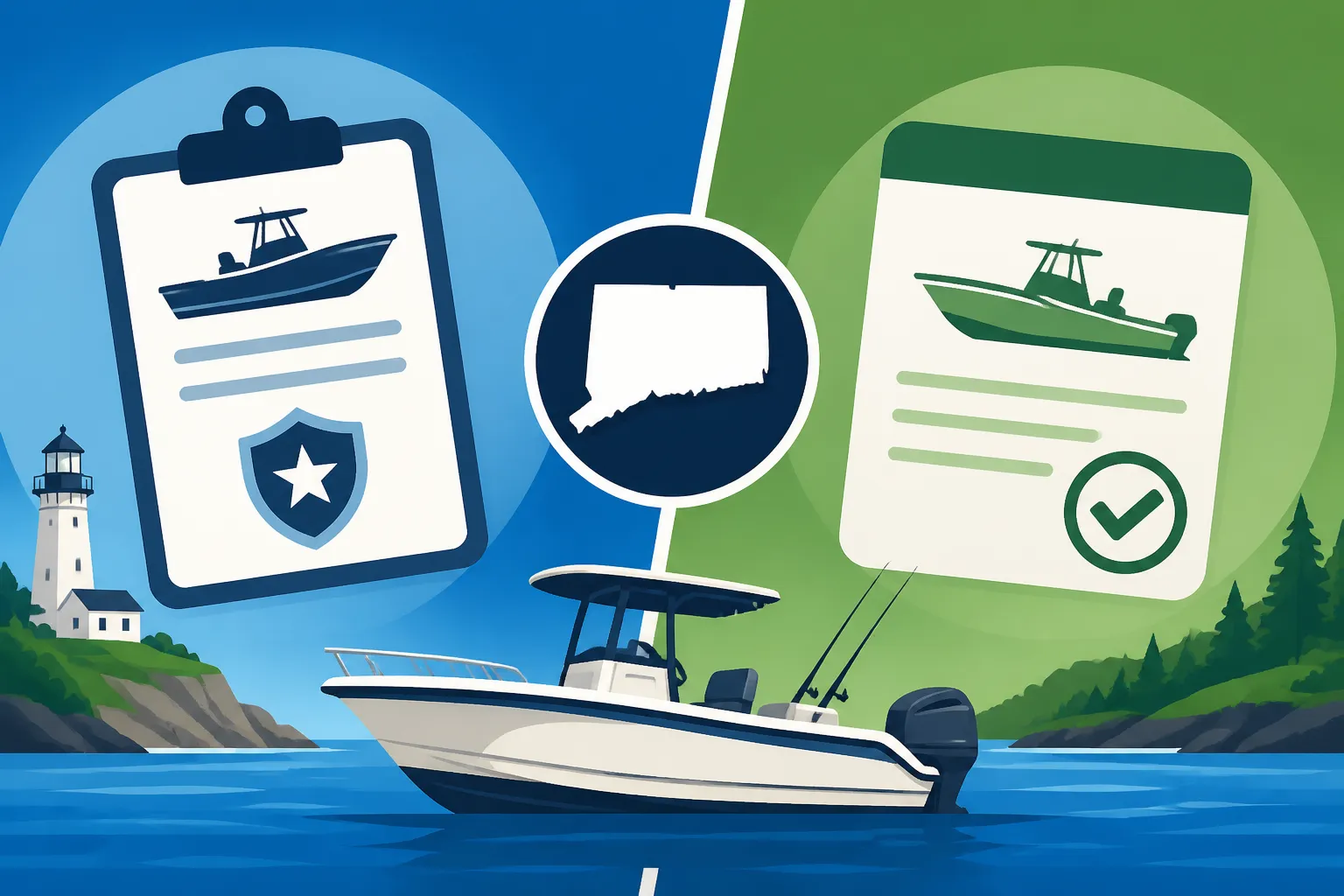
A boat registration, on the other hand, grants permission to operate. It's a license to use your vessel on public waters, ensuring that the state has a record of who is responsible for the boat while it's in use. This permit must be renewed periodically, typically every year or two, and failure to do so means you're operating illegally. Think of it this way: you can own a boat (have the title), but without current registration, you can't legally use it on public waterways. You can find detailed information about the renewal process in our guide on Connecticut boat registration expiration date. The distinction is summarized in the table below:
| Feature | Boat Title | Boat Registration |
|---|---|---|
| Purpose | Proof of legal ownership | Permit to operate on public waters |
| Issued By | Connecticut Department of Motor Vehicles (DMV) | Connecticut Department of Motor Vehicles (DMV) |
| Information | HIN, make, model, year, owner, lienholder | HIN, owner, vessel type, registration numbers |
| Display | Kept securely off-board (unless requested) | Numbers/decal on bow; certificate on board |
| Transfer | Transferred when boat ownership changes | Stays with the boat, renewed by current owner |
| Requirement | For vessels 19'6" or more OR with any motor | For most motorized vessels & sailboats |
| Duration | Permanent (until transferred) | Renewable (typically annually or biennially) |
Why Both Matter to Connecticut Boaters and Anglers
For Connecticut boaters, and especially anglers who spend a lot of time on the water, understanding both titling and registration requirements is not just a bureaucratic formality – it has real-world implications. First, compliance protects you legally. Operating an unregistered boat or trying to sell a boat without a proper title can lead to fines, impoundment, and significant headaches. It also impacts your ability to secure boat insurance. Insurance companies will require proof of ownership (title) and legal operation (registration) before they'll cover your vessel, protecting your investment against theft, damage, or liability.
Beyond legalities, there are practical considerations. When you purchase boat safety equipment, whether it's life jackets you picked up from a local marine supply store or a first aid kit you ordered from Amazon, you're investing in a vessel you legally own and operate. Proper documentation also facilitates travel. If you trailer your boat out of state, having your current Connecticut registration numbers and decals ensures you comply with interstate agreements. Furthermore, knowing these rules helps you plan for expenses, like the Connecticut boat registration cost, which varies based on vessel length and type. Whether you're chasing trophy striped bass in Long Island Sound or fly fishing for trout in the Farmington River, ensuring your boat is properly titled and registered means fewer worries and more time enjoying the water.
Navigating the Application Process and Staying Compliant
Once you understand the difference between a boat title and registration, the next step is to actually go through the process of obtaining them. While it might seem daunting, breaking it down into manageable steps makes it much clearer. Staying compliant is key to enjoying Connecticut's beautiful waterways without unnecessary stress or penalties.
How to Obtain Your Connecticut Boat Title
Getting your boat titled in Connecticut typically involves visiting a Department of Motor Vehicles (DMV) office, or, in some cases, a qualified dealer can handle the initial paperwork. The exact process can vary slightly depending on whether you're purchasing a new boat from a dealer, buying a used boat from a private seller, or bringing a boat in from another state.
For a New Boat Purchase from a Dealer:
When you buy a brand-new boat that meets the titling requirements, the dealer will usually submit the application for you. You'll sign the necessary paperwork, and they'll handle forwarding the Manufacturer’s Statement of Origin (MSO) or Manufacturer’s Certificate of Origin (MCO) to the DMV, along with the application for a Certificate of Title. You'll pay the titling fees and sales tax through the dealer.
For a Used Boat Purchase from a Private Seller:
This is where many people run into confusion. The seller should provide you with the properly endorsed (signed over) existing Connecticut Certificate of Title. If the boat was previously titled in another state, you'll need that state's title. You’ll also need a bill of sale detailing the purchase price, date, and identification of the boat and seller/buyer. You then take these documents, along with a completed Application for Certificate of Title (Form H-13B), to a Connecticut DMV office. You’ll pay the title fee and sales tax (or present proof that sales tax was already paid).
For a Boat Coming from Out of State (New Resident or Purchase):
If you're bringing a boat into Connecticut from another state, you'll generally need the previous state’s title (if that state issues titles for your vessel type) or proof of ownership if the previous state didn't title that specific type of vessel. You’ll then follow a similar process as buying a used boat, submitting an H-13B form, bill of sale, and previous ownership documents to the CT DMV. Be prepared for potential inspections if there are questions about the vessel's identity or origin.
Steps to Register or Renew Your Boat Registration
Registering your boat is a process most Connecticut boaters will become very familiar with, as it's a recurring requirement. The good news is that it's often more straightforward than titling, especially for renewals.
Initial Registration:
Whether your boat requires a title or not, if it needs to be registered, you'll typically start by filling out the Application for Vessel Registration (Form H-13). You’ll need to provide details about the boat (HIN, make, model, length, motor type) and ownership information. If the boat is new, you'll need the MSO/MCO. For a used boat, you'll need the bill of sale and, if applicable, the previous owner’s registration certificate. You'll then submit these documents and the appropriate registration fee to the DMV. Many towns in Connecticut also have specific requirements or fees, so it's wise to check with your local tax assessor's office as well. Remember, you'll need your registration numbers and decal before you can legally operate your boat on public waterways. Don't forget to also consider if you need a Connecticut Safe Boating Certificate Requirement before you even get on the water.
Registration Renewal:
Renewing your boat registration in Connecticut is usually a simpler process. The DMV typically mails out renewal notices before your registration expires. You can often renew online through the Connecticut DMV website, by mail, or in person at a DMV office or a designated AAA branch that handles DMV services. You’ll need your current registration certificate and the renewal notice. The Connecticut boat registration cost will be clearly indicated on your renewal form, and it's essential to pay this on time to avoid late fees or citations. Many boaters find it convenient to order extra decals or emergency repair supplies from Amazon while managing their boat maintenance, so keeping track of these renewal dates is crucial for uninterrupted boating.
Avoiding Common Pitfalls and Penalties
Ignoring the boat titling and registration requirements in Connecticut can lead to a host of problems that nobody wants to deal with. The most immediate consequence is typically a fine from ENCON officers or local police. Operating an unregistered vessel is a violation, and the penalties can range from minor fines to more significant charges, especially if combined with other infractions. Additionally, if you're found operating a boat without the required safety equipment, like sufficient life jackets, that's another fine you'll want to avoid. Our guide on Life Jacket Requirements for Connecticut Boaters offers all the crucial details.
Another significant pitfall involves buying or selling a boat without properly transferring the title. If you buy a titled boat and don't transfer the title into your name, you don't legally own it, which can create huge headaches down the line if there's a dispute, an accident, or if you decide to sell. Conversely, if you sell a titled boat and don't ensure the buyer properly transfers the title, you could theoretically remain liable for certain issues related to the vessel. Always ensure all paperwork is completed accurately and promptly. By understanding these distinctions and adhering to the processes outlined, you'll be well on your way to a hassle-free and enjoyable boating season in Connecticut.
Disclaimer
Please note that boating laws and regulations in Connecticut, including those pertaining to titling and registration, are subject to change. While this guide provides comprehensive information based on current regulations, it is always recommended to consult the official Connecticut Department of Energy and Environmental Protection (DEEP) and Department of Motor Vehicles (DMV) websites or contact them directly for the most up-to-date and authoritative information. This content is for informational purposes only and does not constitute legal advice.