Connecticut Boating Laws for Anglers
It's a common story: you're itching to get out on the water, maybe chase some striped bass in Long Island Sound or find a quiet cove for trout in one of Connecticut's beautiful lakes. But before you even cast a line, a nagging question creeps in – "Am I actually legal to be out here?" Boating laws can feel like a labyrinth of certificates, registrations, and obscure equipment requirements, leaving many anglers feeling overwhelmed and worried about unknowingly breaking the rules. This guide is here to untangle those complexities, breaking down Connecticut's essential boating laws specifically for us anglers, so you can focus on the fishing, not the fines.
The Angler's Imperative: Why Boating Laws are Non-Negotiable
Let's face it, nobody wants to get a ticket when they're trying to enjoy a peaceful day on the water. But beyond avoiding a hefty fine or a stern talking-to from the EnCon Police, Connecticut's boating laws are fundamentally about safety – for you, your passengers, and everyone else sharing our precious waterways. These aren't just arbitrary rules; they're designed to prevent accidents, save lives, and protect our natural resources. As anglers, we're often out in all kinds of weather, sometimes alone, and frequently focused intently on our fishing, which can make us more susceptible to overlooking critical safety precautions.
Understanding the "Why" Behind the Rules
Every single boating regulation, from wearing a life jacket to carrying a fire extinguisher, has a purpose rooted in real-world scenarios. Think about it: navigation lights aren't just pretty; they prevent nighttime collisions. Registration ensures that if your boat is found adrift, authorities can quickly identify the owner and initiate a search if necessary. Knowing the "why" can often make compliance feel less like a chore and more like a responsible act of self-preservation and community care. It helps shift your mindset from merely following rules to actively participating in a safer boating environment, which is something every angler should strive for.
Consider the potential chaos if everyone just did whatever they pleased on the water. Imagine multiple boats converging on a popular fishing spot without understanding right-of-way, or a small craft getting caught in an unexpected storm without proper safety gear. These laws act as a universal language, ensuring that everyone understands the baseline expectations for safe operation. They create order, minimize risk, and allow us all to share Connecticut’s diverse aquatic environments responsibly.
Navigating the Waters: Who Needs to Know These Laws?
The simple answer is: anyone operating a boat in Connecticut waters. This isn't just for the captains of large offshore vessels; it applies to virtually every angler, whether you're paddling a kayak, motoring a small Jon boat, or running a center console. While some rules have exemptions based on vessel size or propulsion, the core principles of safe operation and basic equipment requirements are universal. Even if you're a seasoned angler who's been on the water for decades, laws can change, and a quick refresher never hurts.
Many anglers might assume that because they're simply fishing, they're somehow exempt from the more "serious" boating regulations. This couldn't be further from the truth. A fishing boat is still a boat, and its operator is still responsible for its safe passage and the well-being of those on board. Whether you're drift fishing for fluke or casting for trout in a river, you're interacting with other boaters, swimmers, and shorelines, all of whom are impacted by your adherence to – or disregard for – boating laws. Ignorance of the law is never an excuse, especially when safety is on the line.
Unpacking Connecticut's Safe Boating Certificate Requirements
One of the most common questions anglers have is about the Safe Boating Certificate (SBC). It's easy to get confused about who needs it, how to get it, and what it actually covers. Essentially, the SBC is proof that you've completed an approved boating safety course, demonstrating a basic understanding of navigation rules, safety equipment, and responsible operation. It's a vital step for many Connecticut boaters, designed to ensure that those at the helm have fundamental knowledge of safe practices.
Who Needs the Certificate and When
Connecticut law specifies that anyone operating a motorboat or sailboat 19.5 feet in length or greater must have an SBC. However, the requirement expands significantly for Personal Watercraft (PWCs, like Jet Skis) and for anyone born after January 1, 1959, operating any vessel powered by a motor. This means if you're planning to use a small outboard on your jon boat or even an electric trolling motor on a larger kayak, and you fall into that birthdate category, you'll likely need your SBC. It's not just about horsepower; even modest electric motors can trigger the requirement.
There are specific stipulations regarding age as well. Even if you're operating a boat that doesn't usually require an SBC, if you're under 16, there are restrictions on motor size. For instance, those under 16 cannot operate a motorboat over 10 horsepower unless they have a certificate and are accompanied by an adult 18 or older who also holds a certificate. It’s a nuanced system, and understanding these specifics is crucial to avoid potential legal issues, especially if you have younger family members who want to take the helm. You can find more detailed information on specific age requirements by looking into Connecticut Fishing License Age Requirements, as these often overlap with general boating age guidelines.
Obtaining Your Safe Boating Certificate
Getting your SBC involves completing an approved boating safety course. The Connecticut Department of Energy and Environmental Protection (DEEP) offers courses, as do various private organizations across the state. These courses cover everything from marine knots and navigation lights to distress signals and proper fueling procedures. They typically last about 8-10 hours, often split over a weekend or several evenings, culminating in a written exam. Passing this exam demonstrates you have the knowledge to operate a vessel safely.
Many people opt for online courses, which can be a convenient option, but ensure the course is approved by the National Association of State Boating Law Administrators (NASBLA) and accepted by Connecticut DEEP. Upon successful completion of the course and exam, you'll receive your certificate, which you must carry with you whenever you operate the vessel. Think of it like your driver's license for the water – you wouldn't drive without your license, and you shouldn't boat without your SBC if it's required. To learn more about specific requirements, refer to the comprehensive guide on the Connecticut Safe Boating Certificate Requirement.
Age Restrictions and Exemptions for Anglers
While the general rule is about motor size and age, there are some important exemptions that often apply to anglers. For example, if you're only paddling a canoe, kayak, or stand-up paddleboard without any motor, you generally don't need an SBC, regardless of your age. This is great news for those who prefer to explore quiet coves or river bends with paddle power. However, adding even a small electric trolling motor can change things, so always double-check.
Another key exemption relates to sailboats under 19.5 feet, which typically don't require an SBC unless they're equipped with an auxiliary motor. However, again, if you were born after January 1, 1959, and are operating any motor-powered vessel (even a small one), the certificate is necessary. This is where it can get tricky for anglers who might use a small sailboat to reach a fishing spot and then deploy a trolling motor. It's always best to err on the side of caution and get certified if there's any doubt. The article Boat size that requires a safe boating certificate in Connecticut delves deeper into these specific size and propulsion exemptions.
Vessel Registration, Titling, and Documentation for Your Fishing Craft
Just like your car needs to be registered and titled, most motorized boats operating in Connecticut waters do too. This system helps the state keep track of vessels, supports law enforcement efforts, and ensures that property ownership is clearly defined. For anglers, this means understanding the process and ensuring your vessel is properly documented before you hit the water. It’s not just about showing a number on your bow; it’s about legal ownership and compliance.
Understanding Connecticut Boat Registration and Display
All motorized vessels, regardless of size, must be registered with the Connecticut Department of Motor Vehicles (DMV). This includes canoes, kayaks, and paddleboards if they've had a motor permanently or temporarily affixed. Yes, that little electric trolling motor on your kayak means it needs to be registered! Once registered, you'll receive a registration decal and a certificate. The registration numbers must be painted or permanently affixed to both sides of the bow in block letters at least three inches high, in a color that contrasts with the hull. The registration decal should be displayed according to the instructions provided by the DMV, typically near the registration numbers.
Failure to properly register your vessel or display your numbers and decals correctly can lead to fines. It's a straightforward process, but one that many new boat owners (or even seasoned ones acquiring a new craft) overlook. Ensure your registration is current; it typically expires annually. Renewals are often mailed, but it's ultimately your responsibility to keep it up to date. This system allows enforcement officials to quickly identify your vessel should any issues arise, contributing to overall safety and accountability on the water.
The Nitty-Gritty of Boat Titling
In addition to registration, certain vessels in Connecticut are also required to be titled. A boat title serves a similar purpose to a car title, proving legal ownership and protecting buyers and sellers from fraud. Generally, all motorized vessels 19.5 feet in length or greater, and any vessel with an outboard motor of 25 horsepower or greater, must be titled. There are also requirements for PWCs. This applies whether you purchased it new or used, and it's something you'll need to handle through the DMV.
When you buy a boat, especially a used one, make sure you receive a clear title from the seller (if applicable). Without it, transferring ownership and registering the vessel can become a real headache. If you’re financing your boat, the lienholder (like a bank) will typically hold the title until the loan is paid off. Understanding the difference between these two processes, registration and titling, is key. For a deep dive into these distinctions, check out the article on Connecticut boat title vs registration difference.
Exemptions for Smaller and Non-Motorized Vessels
Good news for many anglers: if you're paddling a traditional canoe, kayak, or rowing a small dinghy without any motor, you are generally exempt from registration and titling requirements. This makes getting out on the water much simpler for those who prefer human power. However, as mentioned earlier, the moment you attach a motor, even a small electric one, the rules change. This often catches paddle anglers by surprise, so it's a point worth repeating.
Another exemption applies to vessels that are currently documented with the U.S. Coast Guard. These are typically larger commercial vessels or pleasure craft above a certain size, and they have their own federal documentation system that supersedes state registration. Most anglers operating smaller recreational fishing boats won't fall into this category, but it's an important distinction to be aware of. For more details on what's exempt, you can read about Connecticut non-motorized boat registration exemption. Always assume your boat needs to be registered unless you're absolutely sure it meets an exemption.
Life Jacket Laws: Keeping Yourself and Your Crew Safe
Perhaps the most critical piece of safety equipment on any boat is a properly fitted, U.S. Coast Guard-approved life jacket, also known as a Personal Flotation Device (PFD). Drowning is the leading cause of boating fatalities, and a life jacket can be the difference between life and death. Connecticut has very clear and specific laws regarding life jacket usage, especially for children and during colder months.
Mandatory Wear Times and Age Requirements
In Connecticut, any child under 13 years of age must wear a U.S. Coast Guard-approved life jacket at all times while on a recreational vessel that is underway. This applies to all vessels, from kayaks to large motorboats. "Underway" means not anchored, moored, or aground. So, if you've got kids on your fishing trip, they need to be wearing their PFDs from the moment you leave the dock until you return. This isn't just a suggestion; it's the law, and it's there for their safety.
For adults, the rules are slightly different outside of specific conditions. While you aren't always required to wear a life jacket, you must have a readily accessible, properly sized, and serviceable U.S. Coast Guard-approved life jacket for every person on board your vessel. "Readily accessible" means not stowed in a locked compartment or under a pile of gear; it should be immediately available for use. This means you can't just toss a bunch of PFDs in a storage locker at the start of the season and forget about them. They need to be in good condition, too – no rips, tears, or broken buckles. For all the detailed rules, check out Life Jacket Requirements for Connecticut Boaters.
Choosing the Right Type of PFD for Anglers
Not all life jackets are created equal, and for anglers, comfort and functionality are key. There are five main types of PFDs, each designed for different situations:
- Type I (Offshore) PFDs: Most buoyant, designed for rough or remote waters where rescue may be delayed. They turn unconscious wearers face-up.
- Type II (Near-Shore Buoyant Vests): Good for calm, inland waters. May turn unconscious wearers face-up.
- Type III (Flotation Aids): Designed for conscious users in calm waters. Often found as fishing vests or watersports vests, offering more comfort and range of motion. They generally won't turn an unconscious person face-up.
- Type IV (Throwable Devices): Ring buoys or buoyant cushions. Not wearable, but required as an extra device on boats 16 feet or longer.
- Type V (Special Use Devices): Includes inflatable PFDs, deck suits, or work vests, which are approved for specific activities. Inflatables are very popular with anglers due to their low profile, but they require regular inspection and maintenance.
For fishing, many anglers prefer Type III or Type V inflatables because they offer greater mobility. Just remember that inflatable PFDs generally only count as a "wearable" PFD if they are worn and in serviceable condition. If you choose an inflatable, make sure you understand how to maintain it and ensure it's always ready for deployment. You can find a wide selection of USCG-approved PFDs on platforms like Amazon, often with detailed descriptions to help you choose the right type for your fishing adventures.
The Critical Connecticut Cold Water Life Jacket Rule
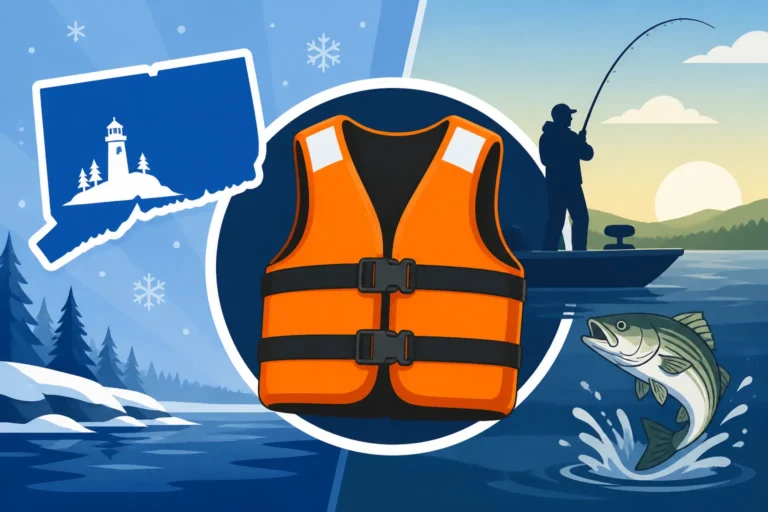
This is a regulation that often surprises even experienced anglers, and it's one of the most important for safety in Connecticut. From October 1st through May 31st, anyone on a canoe, kayak, or any other vessel 20 feet in length or less, must wear a U.S. Coast Guard-approved life jacket at all times while underway. This rule exists because cold water drastically reduces survival time. Even on a relatively warm autumn or spring day, water temperatures in Connecticut can be dangerously cold, leading to hypothermia in minutes.
Many anglers venture out in small boats during these shoulder seasons, targeting trout, striped bass, or fall run species, often dressing for the air temperature rather than the water temperature. This rule is a direct response to the heightened risk of cold water immersion. If you accidentally capsize or fall overboard in cold water, even a strong swimmer can quickly become incapacitated. Wearing your PFD constantly during these months significantly increases your chances of survival. This critical rule is expanded upon in detail in the article Connecticut Cold Water Life Jacket Rule (October to May), so make sure you're familiar with it before heading out in the cooler months.
Essential Safety Equipment Every Angler's Boat Needs
Beyond life jackets and registration, your boat must be equipped with a range of other safety gear, depending on its size and propulsion type. These items are not just bureaucratic requirements; they are tools that can genuinely save your life or prevent a dangerous situation from escalating. Having them onboard, and knowing how to use them, is part of being a responsible boater and angler.
Visual Distress Signals and Sound-Producing Devices
Every boat operating on coastal waters (like Long Island Sound) and certain large inland bodies like the Connecticut River, must carry U.S. Coast Guard-approved visual distress signals (VDS). These can include flares (pyrotechnic), flags, or electronic lights. Pyrotechnic flares have expiration dates, so make sure yours are current. If you're out after dark, you'll need night VDS. Most small vessels operating only on inland lakes, ponds, or rivers (where they won't typically encounter large vessels or need to signal over long distances) are exempt from VDS requirements, but it's always smart to have a flashlight or an air horn, at minimum.
Speaking of sound, all vessels are required to have a sound-producing device onboard. For boats under 39.4 feet, this can be a simple whistle or an air horn. For larger vessels, a bell is also required. These devices are used to signal intentions (like when passing another boat) or to alert other vessels to your presence, especially in fog or low visibility. Imagine being out on a foggy morning, targeting some bass, and suddenly hearing a foghorn from a larger vessel you can't see – your whistle or horn could be the simple tool that prevents a collision. You can easily find USCG-approved whistles and air horns on Amazon to ensure you're compliant.
Fire Extinguishers, Ventilation, and Anchoring Gear
If your boat has an inboard engine, enclosed fuel compartments, or permanent fuel tanks, you'll need a U.S. Coast Guard-approved marine fire extinguisher. The type and number required depend on your boat's length and specific features. Extinguishers also have an expiration date and need to be inspected regularly. Proper ventilation for engine and fuel compartments is also crucial to prevent the buildup of explosive fumes, which is another area where regulations apply if your boat has an enclosed engine or fuel tank.
Even if you don't have an engine, an anchor and sufficient rode (rope/chain) are vital for any fishing boat. An anchor allows you to hold your position over a fishing spot, but more importantly, it provides a means to secure your vessel in an emergency, such as engine failure or drifting toward hazards. The general rule of thumb is to have at least 7-10 feet of anchor rode for every foot of water depth you plan to anchor in, plus a short length of chain to help the anchor set properly. This is crucial even for a small kayak fishing in a pond; an anchor can prevent you from drifting into dense weeds or dangerous currents.
Navigation Lights and Other Vital Components
Any vessel operating between sunset and sunrise, or during periods of restricted visibility (like fog), must display proper navigation lights. This usually means a red light on the port (left) side, a green light on the starboard (right) side, and a white all-around light or stern light. The specific configuration depends on your boat's size and whether it's under power or sail. These lights are absolutely critical for preventing nighttime collisions. If you're a night angler, chasing stripers under the cover of darkness, your navigation lights are your lifeline.
Beyond these, other crucial items include:
- Bailing Device: A bucket, pump, or sponge is needed to remove water from your vessel. This applies to virtually all boats, even canoes and kayaks.
- Oars or Paddle: If your boat is under 16 feet and not equipped with an auxiliary motor, you'll need oars or a paddle. Even if you have a motor, it's a smart backup in case of engine failure.
- Mirror: For PWC operators to allow them to see behind them.
- Kill Switch Lanyard: If your boat has an engine with a kill switch, the operator is typically required to wear the lanyard that connects to it, ensuring the engine shuts off if they fall overboard.
A comprehensive checklist for all these items is often provided by the DEEP, and you can also find a detailed breakdown in the article Connecticut required boat safety equipment checklist. Investing in these items is not an expense; it's an investment in your safety and peace of mind on the water.
Here’s a helpful table summarizing common safety equipment requirements for recreational vessels in Connecticut:
| Equipment Item | Vessels Under 16 ft (motorized/non-motorized) | Vessels 16 ft to 26 ft (motorized) | Vessels Over 26 ft (motorized) | Notes |
|---|---|---|---|---|
| Life Jackets (PFDs) | 1 for each person onboard (wearable) | 1 for each person onboard (wearable) | 1 for each person onboard (wearable) | Must be USCG-approved, properly sized, and readily accessible. Kids under 13 must wear. Cold water rule applies (Oct-May) for vessels 20ft or less. Inflatable PFDs count if worn. |
| Throwable Device (Type IV PFD) | Not required | Required (1) | Required (1) | Must be USCG-approved and immediately accessible. |
| Sound-Producing Device | Whistle or horn | Whistle or horn | Whistle or horn, plus a bell | Whistle/horn must be audible for 1/2 nautical mile. Bell (over 26ft) must be audible for 1/2 nautical mile. |
| Visual Distress Signals (VDS) | Not required (for inland waters) | Required (for coastal waters) | Required (for coastal waters) | Pyrotechnic flares, electric lights, or orange flag. Must be USCG-approved. Pyrotechnic flares expire. Coastal waters include Long Island Sound. |
| Fire Extinguisher | Not required (unless specific conditions)* | Required (1 B-1 type) | Required (1 B-1 or 2 B-1) | *Required if boat has enclosed engine compartment, fuel tank (not portable), or galley/living spaces. |
| Navigation Lights | Required (sunset to sunrise) | Required (sunset to sunrise) | Required (sunset to sunrise) | Specific configurations (red/green sidelights, white all-around/stern light) depending on vessel type and length. |
| Bailing Device | Required (bucket, pump, sponge) | Required | Required | Any means to effectively remove water. |
| Oars/Paddle | Required (if no motor or auxiliary propulsion) | Recommended as backup | Recommended as backup | Even if motorized, a backup propulsion method is always a good idea. |
| Kill Switch Lanyard | Required (if equipped) | Required (if equipped) | Required (if equipped) | Operator must wear if vessel has a kill switch. |
| PWC Rearview Mirror | Not applicable | Not applicable | Not applicable | Required for Personal Watercraft (PWCs) to operate legally. |
Rules of the Water: Avoiding Collisions and Ensuring Safe Passage
Just like roads have traffic laws, our waterways have navigation rules – often called the "Rules of the Road." These rules are crucial for preventing collisions and ensuring smooth, predictable interactions between vessels. As anglers, we're often focused on our lines and lures, but it's vital to stay aware of our surroundings and understand how to navigate safely around other boats, swimmers, and fixed objects.
Understanding Right-of-Way and Navigation Lights
The core of collision avoidance lies in understanding who has the right-of-way. Generally, larger, less maneuverable vessels (like commercial ships) have the right-of-way over smaller recreational boats. Among recreational vessels, there's a pecking order:
- Sailboats often have the right-of-way over powerboats (unless the sailboat is operating under power).
- Powerboats must give way to vessels on their right when crossing paths (the "starboard rule").
- Head-on encounters: Both vessels should alter course to starboard (right) to pass port-to-port.
- Overtaking: The vessel being overtaken has the right-of-way; the overtaking vessel must keep clear.
These are simplified versions, and knowing the full International Regulations for Preventing Collisions at Sea (COLREGs) is complex, but understanding the basics is vital. Navigation lights play a huge role here, too. Red and green sidelights tell you which way a boat is headed, especially at night. A red light means you're seeing its port side; a green light means its starboard. A white stern light means it's moving away from you. Learning these visual cues is as important as knowing the rules themselves.
Operating Safely in Different Conditions
Connecticut's waters can be unpredictable, and operating safely means adapting to various conditions.
- Weather: Always check the forecast before heading out. Don't push your luck in strong winds, thunderstorms, or dense fog. If conditions worsen unexpectedly, know your boat's limits and seek shelter. A small fishing boat that handles calm lake water beautifully might be completely unsafe in a rough Long Island Sound chop.
- Visibility: In fog, heavy rain, or darkness, reduce speed, use your sound signals (like a short blast on your horn every two minutes in fog if underway), and have an extra lookout.
- Speed: Maintain a safe speed, especially in crowded areas, near shore, or in limited visibility. "No wake" zones exist around docks, swimming areas, and narrow channels to protect property and people. Obey these strictly.
- Operator Awareness: Stay alert! Avoid distractions like cell phones or loud music. Be aware of swimmers, divers (look for dive flags!), paddleboarders, and other boats. A few seconds of inattention can lead to a tragic accident.
Many anglers get tunnel vision when they're on a hot bite, but constantly scanning the horizon and being aware of your surroundings is paramount. You need to be ready to react, not just to a fish strike, but to an approaching vessel or an unexpected hazard.
Pollution Prevention and Environmental Stewardship
As anglers, we have a special responsibility to protect the very environments that provide us with our passion. Connecticut has strict laws against pollution.
- No Discharging Waste: It is illegal to discharge oil, chemicals, or sewage into Connecticut waters. This means holding tanks for sewage, and proper disposal of any hazardous materials back on shore.
- Trash: Always bag your trash and dispose of it properly on land. Fishing line, plastic baits, and food wrappers can be deadly to wildlife. "Pack it in, pack it out" is the golden rule.
- Aquatic Invasive Species: Be diligent about cleaning your boat, trailer, and fishing gear when moving between different bodies of water. Invasive species like zebra mussels or hydrilla can wreak havoc on ecosystems, and we play a critical role in preventing their spread.
Being a good steward of our waters ensures that future generations of anglers can enjoy the same resources we do today. It's about respecting the environment and understanding that our actions have consequences far beyond our immediate fishing spot. When you adhere to rules outlined in publications like the Reading the Connecticut Fishing Guide, you’re not just following laws, you’re actively contributing to the health of our fisheries.
Consequences of Boating Under the Influence (BUI)
Operating a boat while under the influence of alcohol or drugs is not only incredibly dangerous but also strictly illegal in Connecticut, just as it is on the road. Boating Under the Influence (BUI) laws are in place to protect everyone on the water from impaired operators who pose a serious risk to themselves and others. It's a risk simply not worth taking, no matter how good the fishing is.
Understanding Connecticut's BUI Laws
In Connecticut, it is illegal to operate any vessel (including kayaks, canoes, and stand-up paddleboards) with a Blood Alcohol Content (BAC) of 0.08% or higher. For operators under 21, the legal limit is even lower, at 0.02%. This isn't just for large motorboats; the law applies to any vessel, demonstrating the state's commitment to preventing impaired operation across all watercraft types. Law enforcement, including the EnCon Police and local marine patrols, are vigilant in detecting and apprehending impaired boaters.
A BUI conviction carries severe penalties, often mirroring those of a DUI (Driving Under the Influence) on land. These can include hefty fines, suspension of your boating privileges, and even jail time. Furthermore, a BUI conviction can impact your driving privileges on land, creating a dual layer of legal trouble. It's crucial to understand that alcohol and drugs impair judgment, coordination, and reaction time, all of which are essential for safe boat operation, especially when unexpected situations arise.
The Serious Repercussions for Anglers
For anglers, a BUI charge can mean much more than just a ruined fishing trip. Imagine losing your fishing boat, or worse, causing an accident that injures yourself or others. The legal fees, increased insurance premiums, and potential loss of employment can be devastating. Beyond the legal ramifications, there's the moral weight of knowing your impaired judgment put lives at risk. It’s simply not worth it.
If you plan to have alcohol, designate a sober operator, or enjoy your drinks once you're safely back on shore. Many experienced anglers choose to completely abstain from alcohol while on the water to ensure they are always sharp and focused. The serenity of fishing often pairs well with clear thinking, allowing you to fully appreciate the experience. For a full understanding of the penalties involved, refer to Connecticut boating under the influence penalties. Always remember that safety, and legal compliance, come first.
Navigating Specific Waterways: Inland vs. Coastal Considerations
Connecticut is unique in offering both vast saltwater fishing opportunities in Long Island Sound and an abundance of diverse freshwater lakes and rivers. While many boating laws are universal, there are specific considerations and regulations that apply depending on whether you're dropping a line in brackish tidal rivers, expansive freshwater lakes, or the open marine environment of the Sound.
Long Island Sound: Unique Marine Regulations
Fishing in Long Island Sound means dealing with marine-specific regulations that often differ from inland freshwater rules. The sheer size of the Sound, combined with commercial traffic, larger recreational vessels, and stronger currents, necessitates a distinct set of guidelines.
- Visual Distress Signals (VDS): As mentioned earlier, VDS are generally required for vessels operating on coastal waters like Long Island Sound. This means flares, flags, or an electronic signal.
- Federal Waters: While primarily regulated by the state, parts of Long Island Sound extend into federal waters, which might have additional rules, especially concerning commercial fishing or larger vessels. For most recreational anglers, sticking to Connecticut's marine regulations is sufficient.
- Navigation Challenges: The Sound can be busy, especially during peak fishing season. Be extra vigilant for ferries, commercial trawlers, and large yachts. Understanding channel markers, buoys, and other aids to navigation is crucial here. The current and tides in the Sound are also significant factors that freshwater anglers might not be accustomed to.
- Fishing Regulations: Beyond boating laws, the Sound also has specific fishing regulations for species like striped bass, fluke, black sea bass, and tautog, often with different size and bag limits compared to inland species. Always check the current Connecticut Fishing Regulations Explained for marine species before you head out. A guide such as the Long Island Sound Fishing Guide can also offer practical advice for navigating and fishing these waters.
Inland Lakes and Rivers: Special Rules to Remember
Connecticut's inland waterways, from large bodies like Candlewood Lake to smaller streams and ponds, have their own set of rules and considerations, even though they might feel less imposing than the open Sound.
- Motor Restrictions: Many smaller lakes and ponds in Connecticut have restrictions on motor size (e.g., electric motors only, or limited horsepower outboards). Some even prohibit gasoline engines entirely. Always check local regulations before launching your boat, as these vary widely. A quick search on the CT DEEP website or consulting local town ordinances will often provide this information.
- "No Wake" Zones: These are prevalent on inland lakes and rivers, particularly near marinas, swimming areas, and residential shorelines. Your wake can cause significant damage to docks and erode shorelines, as well as create hazardous conditions for smaller boats or swimmers.
- Wildlife Management Areas: Some lakes and ponds within state parks or wildlife management areas might have additional specific regulations regarding boating, launch times, or even permitted fishing methods. For example, some ponds might be designated "catch and release only" for certain species, impacting how you handle fish from your boat.
- Currents and Obstacles: While inland rivers might not have the massive tides of the Sound, they can have strong currents, especially after heavy rains. Be aware of submerged rocks, fallen trees (snags), and low bridges. Paddlers, in particular, need to be mindful of rapids and portage points.
Whether you're fishing for largemouth bass on a tranquil pond or navigating the currents of the Connecticut River for shad, being aware of the specific rules for that body of water is paramount. A little bit of research before you go can save you from a lot of trouble, ensuring your fishing trip is memorable for all the right reasons.
Disclaimer
This guide is intended for informational purposes only and should not be considered legal advice. Boating laws and regulations in Connecticut are subject to change. Always consult the most current official publications from the Connecticut Department of Energy and Environmental Protection (DEEP) and the Department of Motor Vehicles (DMV), or seek legal counsel, to ensure full compliance with all applicable laws.