What baitfish Connecticut striped bass key on
One of the biggest frustrations for any angler targeting striped bass in Connecticut waters is staring at a beautiful stretch of Long Island Sound or a promising river mouth and drawing a blank. You know the stripers are there, but they just aren't biting your offering. More often than not, the secret to success lies not in the fanciest rod or the latest reel, but in understanding exactly what baitfish Connecticut striped bass are currently keying on. This guide will dive deep into the world of striper forage, helping you decode their menu and dramatically improve your chances of a successful outing.
The Critical Connection: Why Baitfish Dictate Striped Bass Behavior
It’s no exaggeration to say that baitfish are the lifeblood of the striped bass fishery. These powerful predators are driven by instinct, and that instinct is to find and consume food. Understanding their primary forage isn't just a nicety; it's fundamental to predicting where they'll be, what they'll be doing, and crucially, what they'll eat.
Stripers Are Opportunistic, But Not Random Eaters
While striped bass are often described as opportunistic feeders, this doesn't mean they'll eat just anything. They are highly attuned to the most abundant and easiest-to-catch prey in their immediate environment. When a specific baitfish species is plentiful, stripers will often gorge themselves on it, sometimes ignoring other offerings entirely. This phenomenon is why the concept of "matching the hatch" — borrowed from fly fishing — is so vital for striper anglers. If you're throwing a lure that looks nothing like the millions of tiny fish surrounding them, you're going to have a tough day.
Think of it like this: if you walk into a buffet and there's a mountain of your favorite dish, you're probably going to focus on that. Striped bass operate similarly. Their movements, from large-scale migrations to subtle shifts in a rip or a cove, are often directly tied to the presence and abundance of these critical baitfish. Ignoring this connection is like trying to find a treasure without a map – you might get lucky, but you're probably just spinning your wheels.
Deciphering the Baitfish Puzzle
Learning to "read the water" for signs of baitfish is a skill that comes with time and observation. It's not just about seeing baitfish jump; it's about noticing the subtle swirls, the nervous ripples, the presence of specific birds, or even the smell of menhaden oil in the air. These clues are your roadmap to finding hungry stripers. The more you pay attention to the ecosystem around you, the better you'll become at identifying the prevalent baitfish and, consequently, the patterns of the striped bass. This knowledge allows you to quickly adapt your presentation, whether you're fishing a quiet tidal creek or the open waters of Long Island Sound Fishing Guide.
The Usual Suspects: Key Baitfish Species for Connecticut Stripers
Connecticut's waters, both inland-tidal and marine, host a diverse array of baitfish that striped bass absolutely love. Knowing these species and their habits is crucial for any angler hoping to consistently hook into these prized game fish.
Atlantic Menhaden (Bunker) – The Fatty Favorite
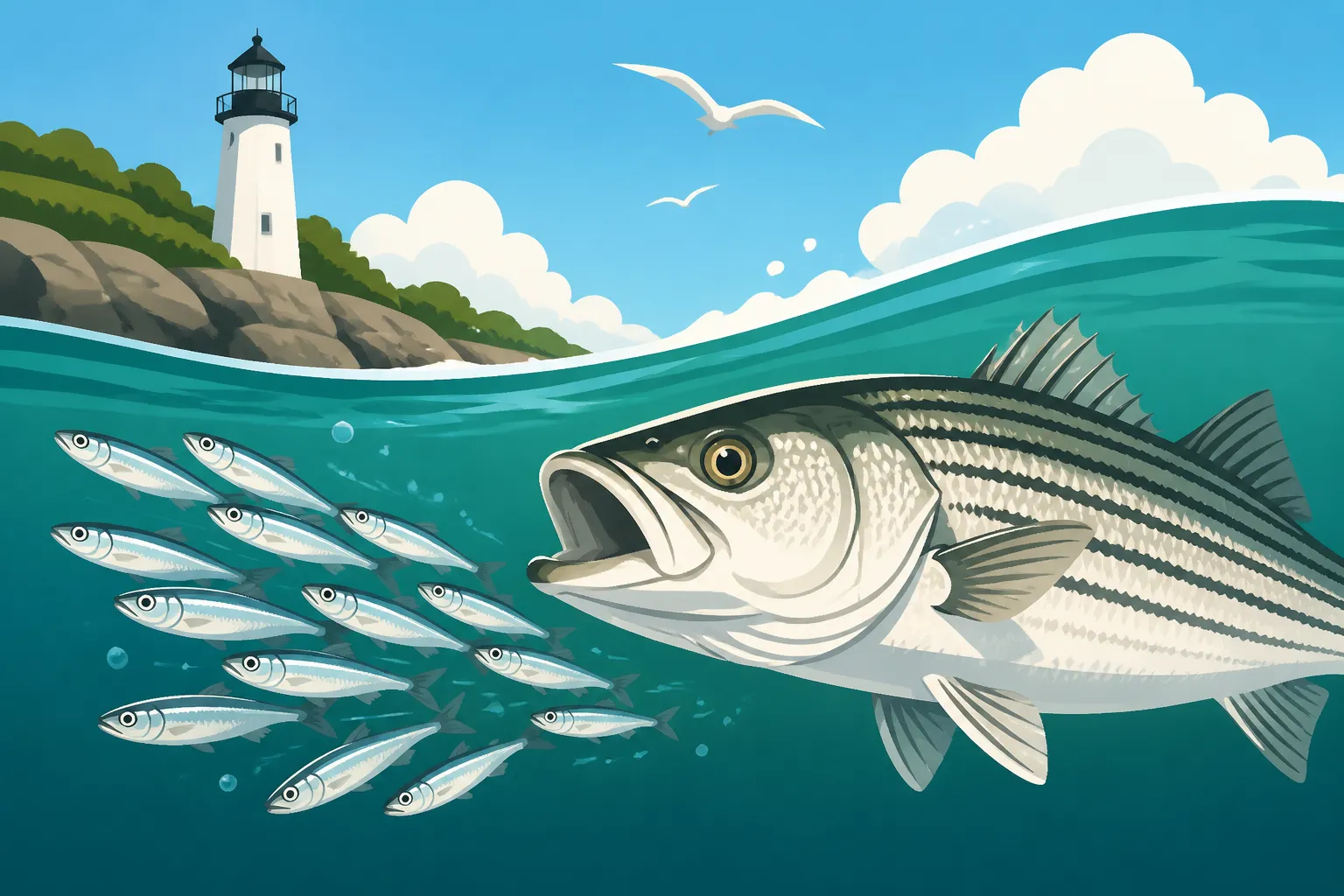
Without a doubt, Atlantic Menhaden, often called "bunker," are the number one food source for larger striped bass in Connecticut's marine and brackish waters. These oily, silvery fish travel in massive, dense schools that can literally blacken the water. Stripers absolutely gorge on bunker, making them a prime target.
- Characteristics: Menhaden are deep-bodied, silvery fish, typically 8-15 inches long, though they can grow larger. They have a distinctive dark spot behind their gills. Their high oil content makes them a very nutritious meal for stripers.
- Where and When: Bunker arrive in Connecticut waters, particularly Long Island Sound, in significant numbers during late spring and stay through the fall. You'll find them in harbors, bays, and out in the open Sound, often close to shore or along channel edges. Atlantic Menhaden as Forage Fish in Long Island Sound explains their importance in great detail. Keep an eye out for nervous water, dark patches, or flocks of gulls and ospreys diving – these are all indicators of bunker schools.
- Striper Connection: When stripers are on bunker, they're often not interested in much else. They will literally bust through schools, creating chaotic surface feeds. Using live bunker as bait, or chunking cut bunker, is incredibly effective. Large swimming plugs, soft plastic paddle tails, or metal jigs that mimic the profile and flash of bunker can also be deadly. You can find some excellent bunker imitation lures on Amazon, perfect for those times when live bait isn't an option.
American Eels – The Nighttime Delicacy
While not as abundant as menhaden, American Eels are another top-tier food source, especially for trophy-sized striped bass, and particularly after dark. Their snake-like profile and greasy texture make them irresistible.
- Characteristics: American Eels are long, slender, dark-colored fish, ranging from small "pencil eels" to large, thick specimens over two feet. They have a distinct slithering swimming motion.
- Where and When: Eels are common in rivers, estuaries, and shallow coastal areas throughout Connecticut. They are primarily nocturnal, moving out of cover to feed under the cloak of darkness. You can learn more about them in American Eel in Connecticut Rivers.
- Striper Connection: Big stripers love eels, especially in strong currents and around structure like rock piles, bridges, and jetties. Live eels are perhaps the best bait for targeting large, nocturnal stripers. They can be slow-trolled, drifted, or cast. When using artificials, soft plastic stickbaits or large plastic worms with a paddle tail that imitate the undulating motion of an eel can be very effective, particularly at night or in low light conditions.
Mackerel and Herring – Migratory Meals
These schooling baitfish play a significant role in the striped bass diet, especially during their spring and fall migrations.
- Characteristics: Mackerel (Atlantic Mackerel) are sleek, torpedo-shaped fish with distinctive dark stripes on their backs, usually 10-16 inches. River Herring (Alewives and Blueback Herring) are smaller, silvery, and migrate into freshwater to spawn.
- Where and When: Mackerel are often found in cooler, open ocean waters and can push into Long Island Sound, particularly in spring and fall. Herring make their anadromous runs into rivers and estuaries in early spring, becoming a vital food source as stripers arrive.
- Striper Connection: When stripers encounter schools of mackerel or herring, they will actively pursue them. Speed is often the key. Fast-moving plugs, epoxy jigs, or metal lures that mimic these baitfish are very productive. Trolling lipped plugs or umbrella rigs is also a popular method for stripers feeding on mackerel. Pay attention to early season reports; if herring are running in rivers like the Connecticut or Housatonic, you can bet the stripers aren't far behind.
Spearing, Silversides, and Sand Eels – The Inshore Snack Foods
These smaller, more common baitfish form the everyday diet for stripers, especially those in shallower, inshore environments.
- Characteristics:
- Spearing (Atlantic Silversides): Small, slender, silvery fish, typically 3-6 inches, found in huge schools close to shore, in estuaries, and along beaches.
- Sand Eels (Sand Launce): Worm-like, slender fish that burrow into the sand, usually 4-8 inches. They're a favorite of many predators.
- Bay Anchovies: Very small, silvery baitfish, usually 2-4 inches, forming enormous schools in estuaries.
- Where and When: You'll find these species virtually everywhere in Connecticut's coastal waters throughout the warmer months. They're the omnipresent baitfish that form the base of the food chain.
- Striper Connection: Smaller stripers and "schoolie" bass will feed heavily on these smaller baitfish. Even large stripers will opportunistically gorge on them, especially in skinny water. Soft plastic jerkbaits, small swimming plugs, poppers, and even fly patterns that match the size and profile of these tiny fish are highly effective. Having a variety of smaller lures on hand, easily purchased from retailers like Amazon, can make all the difference when stripers are focused on these bite-sized snacks.
Other Opportunistic Forage
Striped bass are not above eating other creatures, especially when their primary forage is scarce. This includes crabs, squid (especially at night), worms, and even smaller bottom fish. While not true "baitfish," they are important considerations when stripers are being picky or when specific conditions (like a big tide washing out crabs) create an opportunity.
Strategies for Matching the Baitfish
Now that we've covered the main players, let's talk about how you actually "match the hatch" and present your offering effectively. It's a combination of observation, technique, and choosing the right gear.
Becoming a Master Observer: Reading the Water
Your eyes and ears are your most valuable tools on the water. Before you even make your first cast, take time to observe.
- Bird Activity: Diving birds, especially gulls, terns, and ospreys, are a huge clue. They're often keying in on baitfish being pushed to the surface by predatory fish from below. A frenzy of birds usually means stripers are below, making short work of a baitball.
- Surface Disturbance: Look for nervous water, boils, splashes, or actual baitfish jumping out of the water. This is direct evidence of actively feeding fish. Sometimes it's subtle, just a slight ripple different from the wind, indicating bait is just below the surface.
- Water Clarity and Conditions: Clear water might mean stripers are spooky and feeding deeper, while murkier water might mean they're more aggressive and relying on lateral lines to find food. This can influence the type and color of lure you choose.
- What's in the Area: Are there eelgrass beds, rocky structures, or tidal rips? Different baitfish prefer different habitats, and stripers will follow. For instance, you might find a lot of spearing in shallow grass flats, or bunker holding in deeper channels.
By paying close attention, you'll often get an immediate sense of what's happening beneath the surface, allowing you to react quickly. This might mean switching from a topwater plug to a subsurface swimmer, or vice versa, based on how the bait is behaving.
Choosing the Right Lure: Size, Shape, and Color
Once you have an idea of what the stripers are eating, your next step is to select a lure or bait that closely mimics that forage.
- Size: This is often the most critical factor. If stripers are focused on 4-inch spearing, a 10-inch plug is likely to be ignored. Carry a range of sizes in your tackle box. Many reputable brands offer lures in various sizes, making it easier to match precisely.
- Shape/Profile: Does the baitfish you're mimicking have a slender, eel-like body, or is it deep-bodied like a bunker? Choose soft plastics, plugs, or jigs that have a similar silhouette. For example, a paddle-tail swimbait is excellent for imitating bunker or herring, while a long, slender plastic worm excels at mimicking eels.
- Color: While often debated, color can play a role, especially in clear water or specific light conditions. Natural baitfish colors like silver, white, olive, and darker greens are usually safe bets. Sometimes a flash of chartreuse or pink can trigger a strike, especially if the stripers are aggressively feeding or the water is murky. However, when stripers are tightly focused on a specific bait, a realistic color pattern often outperforms a flashy one. You can find a vast selection of lure colors on Amazon to ensure you have all your bases covered.
| Baitfish Species | Typical Size Range | Key Characteristics | Best Lure/Bait Imitations |
|---|---|---|---|
| Atlantic Menhaden | 8-15 inches | Oily, deep-bodied, silvery | Live bunker, chunk bait, large paddle-tail swimbaits, lipped swimming plugs, big metal jigs |
| American Eel | 6-24+ inches | Long, slender, dark | Live eels, soft plastic stickbaits, plastic worms, large soft plastics with minimal action |
| Mackerel/Herring | 8-16 inches | Sleek, silvery, fast | Fast-retrieved metal jigs, epoxy jigs, slender swimming plugs, large paddle-tail swimbaits |
| Spearing/Silversides | 3-6 inches | Small, slender, silvery | Small soft plastic jerkbaits, small swimming plugs, poppers, flies, bucktail jigs |
| Sand Eels | 4-8 inches | Thin, worm-like, silvery | Slender soft plastics, "needlefish" style plugs, metal jigs, flies |
| Bay Anchovies | 2-4 inches | Very small, silvery, schools | Tiny jigs, small flies, very small soft plastics, micro metals |
Live Bait and Chunking
When stripers are being particularly finicky, or when they are actively feeding on a specific baitfish like bunker or eels, using the real thing can be unbeatable.
- Live Bait: Live-lining a frisky bunker, a struggling eel, or a lively herring is often the most effective method for targeting large stripers. The natural scent, movement, and distress signals of live bait are incredibly potent. This is a common technique used by many Best charters for live-lining bunker for striped bass in Connecticut.
- Chunking: If live bait isn't an option, or if stripers are feeding on dead or injured bait, "chunking" (using cut sections of oily baitfish like bunker or mackerel) can be deadly. The scent trail created by the oil and blood can draw stripers in from a distance. Just be sure to check local regulations on bait use, as some areas have restrictions.
Seasonal Shifts and Baitfish Migration
The availability of baitfish in Connecticut waters isn't static; it's a dynamic ballet dictated by water temperature, light, and spawning cycles. Understanding these seasonal shifts is another critical piece of the puzzle for consistently finding active stripers.
Spring: The Arrival of Forage and Stripers
As the waters begin to warm in spring, it's a time of awakening for both baitfish and striped bass.
- Early Forage: Smaller baitfish like spearing, silversides, and bay anchovies often become active first in the shallow, warmer estuaries and creeks. Resident populations of eels also become more active.
- Herring Runs: A major event in early spring is the anadromous run of river herring into many Connecticut rivers like the Connecticut and Housatonic. These migrations attract the first waves of migratory striped bass, eager to gorge on the abundant protein.
- Striper Migration: As detailed in Striped Bass Migration Along the Connecticut Coast, stripers follow these warming waters and baitfish schools northward along the coast. Smaller "schoolie" bass often arrive first, pushing into estuaries to feed on the smaller bait and herring, followed by larger fish. Your focus here should be on smaller, more subtle presentations mimicking these early season forage options.
Summer: Deeper Water and Nocturnal Feeds
Summer in Connecticut sees warmer water, and while baitfish remain abundant, striper behavior often changes.
- Menhaden Dominance: Atlantic Menhaden schools are typically at their peak size and abundance during the summer months, providing a constant buffet for larger stripers in Long Island Sound. This is when How menhaden schools attract striped bass and bluefish is most evident, with spectacular surface feeds.
- Nocturnal Activity: With bright sun and warm surface temperatures, large stripers often become more nocturnal, retreating to deeper, cooler water or structure during the day. This is prime time for targeting them at night with eels or large, dark-colored artificials that mimic the nocturnal movements of eels or squid. Check out Best Time of Day to Catch Striped Bass for more insights into diurnal patterns.
- Inshore Diversity: In shallower, inshore areas, stripers will still feed on spearing and other small baitfish, often during low light conditions or when ambush points are favorable. Don't overlook these smaller, ubiquitous baitfish, even if larger schools of bunker are offshore.
Fall: The Grand Buffet and Migration South
Fall is arguably the most exciting time for striper fishing in Connecticut, as cooling waters trigger massive baitfish migrations, leading to the famed "fall run."
- Massive Migrations: As baitfish like bunker, mackerel, and herring sense the impending winter, they begin their southward migration. These schools often hug the coastline, creating enormous feeding opportunities for striped bass.
- Aggressive Feeding: Stripers know winter is coming and they need to pack on fat. They become incredibly aggressive, often feeding in blitzing schools on the surface. This is when the fishing can be truly epic, with fish of all sizes joining the frenzy.
- "Match the Hatch" for the Run: During the fall run, being able to quickly identify the current baitfish and adapt your presentation is absolutely crucial. You might start the day with stripers on small spearing and end it on massive bunker. Having a versatile tackle box with lures of various sizes and profiles is key. Best Techniques for Fall Striped Bass offers excellent strategies for this productive season. Many anglers make sure to stock up on a variety of fall run lures, including larger swimming plugs and metal jigs, which can be easily found on Amazon.
By understanding these seasonal rhythms and the baitfish that accompany them, you can anticipate where stripers will be and what they'll be eating, dramatically improving your fishing success throughout the year.
Disclaimer
This article is for general informational purposes only and does not constitute professional advice. Laws, prices and regulations vary by location and change over time. Consult a qualified professional for guidance on your specific situation.