What lures imitate the baitfish striped bass eat
It can be incredibly frustrating when you're out on the water, casting your heart out for striped bass, only to have them ignore every single lure you throw. You see them busting bait or marking them on your sonar, but they just won't commit. This often happens because stripers are incredibly picky eaters, and if your lure doesn't look, swim, or feel like what they're actively hunting, you might as well be casting a boot. This guide is here to unravel that mystery, showing you exactly what lures imitate the baitfish striped bass eat in Connecticut waters, helping you crack the code and put more fish in your boat or on the beach.
Understanding the Striped Bass Diet: What's on the Menu?
Before we dive into specific lures, it's crucial to understand what striped bass are actually chowing down on. These powerful predators are opportunistic, but they often key in on abundant baitfish, sometimes to the exclusion of all else. Knowing their preferred menu items helps us select the right "imitation." What striped bass eat in Long Island Sound is a topic many anglers obsess over, and for good reason!
The Primary Forage: Menhaden (Bunker)
Ah, the mighty menhaden, or "bunker" as we call them around here. These oily, protein-packed baitfish are like candy to striped bass, especially the bigger cows. When large schools of bunker move into Long Island Sound or up tidal rivers, stripers follow them with an almost singular focus.
Bunker are relatively large, broad-bodied fish, often schooling tightly near the surface or just below. Their presence usually means a full-blown striper feeding frenzy is either happening or about to happen. You'll see the water boiling, birds diving, and the unmistakable thrashing of bass gorging themselves. It’s a sight every angler dreams of! The frustration comes when the bass are so locked onto these living, breathing meals that they won't touch anything else. Your sleek, shiny lure looks completely out of place next to a school of hundreds of frantic bunker. How menhaden schools attract striped bass and bluefish perfectly illustrates why these baitfish are so important. When menhaden schools arrive in Long Island Sound, the fishing often heats up dramatically.
Other Key Baitfish Species in Long Island Sound
While bunker get a lot of attention, they're far from the only item on a striper's diverse menu. A variety of other baitfish play crucial roles at different times of the year and in various parts of our Connecticut waters. Adapting to these changes is what separates a good angler from a great one.
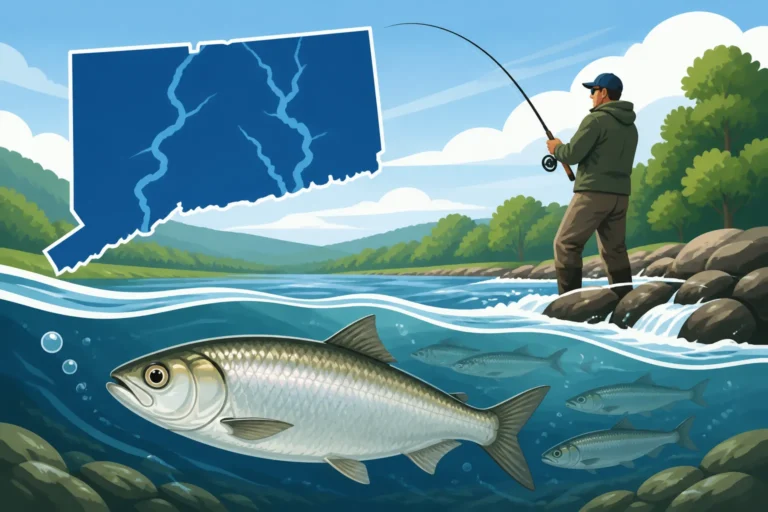
- Alewives and River Herring: These silvery, deep-bodied fish are anadromous, meaning they migrate from saltwater into freshwater rivers to spawn each spring. This creates incredible opportunities for striped bass, especially in the tidal stretches of rivers like the Connecticut and Housatonic. Bass stack up at river mouths and in lower river sections, feasting on these migrating baitfish. Their profile is similar to a smaller bunker, often with a more pronounced silver flash.
- American Eels: Don't let their snake-like appearance fool you; eels are a prized meal for large striped bass. These nocturnal creatures are particularly important for night fishing, as they're often found slithering along the bottom or near structure after dark. Their long, slender profile and undulating movement are unique, and when bass are keying on eels, nothing else seems to work.
- Atlantic Mackerel and Sea Herring: While more common offshore or in cooler, deeper waters, mackerel and herring can certainly be found in Long Island Sound, especially in the spring and fall. These baitfish are fast-moving, streamlined, and very oily. Bass will chase down schools of mackerel with incredible speed and aggression. Their iridescent backs and silvery sides make them easy to identify.
- Sand Eels (Sand Launce) and Spearing (Silversides): These are the smaller, more ubiquitous baitfish that are present almost year-round. Sand eels are long, thin, and burrow into the sand, making them a primary food source for bass of all sizes, especially in sandy areas and rips. Spearing are small, silvery baitfish that gather in huge schools in shallow bays, estuaries, and along the shoreline. While individually small, a large school of spearing can attract plenty of stripers. Often, when bass are feeding on these tiny baits, they can be incredibly difficult to fool with larger offerings.
Lures that Mimic Menhaden (Bunker)
When those big, oily bunker are rolling, you need lures that match their substantial profile and often slower, more deliberate swimming action. These are the lures that scream "easy meal" to a hungry striped bass.
Swimbait and Paddle Tails
Soft plastic swimbaits and paddle tails are absolutely essential for imitating bunker. Their soft, realistic bodies and thumping tail action perfectly mimic a swimming bunker. The beauty is in their versatility: you can retrieve them slowly, letting them wobble like a dazed baitfish, or speed them up to mimic a fleeing one.
For larger bass, go for swimbaits in the 6-inch to 9-inch range. Companies like T-Man Custom Baits, Hogy, and even popular brands available on Amazon make excellent soft plastic bunker imitations. You can rig these on a weighted swimbait hook for a weedless presentation, which is fantastic when fishing around submerged grass or rocky structure. Alternatively, a heavy-duty jig head matched to the lure's size and weight allows for deeper presentations and faster sink rates. When the bass are just below the surface, gently finning with the bunker schools, a slowly retrieved, unweighted or lightly weighted swimbait can be absolutely deadly. The key is to make it look effortless, like a bunker that's unaware of the lurking predator.
Hard Body Swimmers and Plugs
Hard body swimming plugs are another fantastic option when bunker are around. These lures typically have a larger profile and a distinct wobbling or diving action designed to mimic a distressed or swimming baitfish. They often come with a lip that helps them dive to a certain depth.
Look for plugs in the 6-inch to 10-inch range, with a wide body and natural bunker-like colors such as olive, dark green, or black on the back, with silver or white sides. Brands like Rapala, Yo-Zuri, and Bomber all offer excellent swimming plugs that can fool a striper. You can retrieve these plugs slowly and steadily, letting their built-in action do the work, or impart a subtle twitch-and-pause to make them look more erratic and wounded. When bunker are being pushed to the surface or are getting picked off, a subsurface swimmer can be retrieved just below the commotion to draw strikes. Sometimes, a larger, slower presentation is exactly what a big, lazy striper wants. Check Amazon for a wide selection of these effective plugs. Best Lures for Striped Bass in Long Island Sound often include these types of lures.
Spoons and Jigs for Deeper Water
Sometimes, the bunker schools are deeper, or the bass are pushing them down. This is when heavy metal spoons and jigs really shine. These lures are designed to get down quickly and imitate a fleeing or wounded baitfish in the water column.
Heavy metal jigs, often referred to as diamond jigs, are simple yet incredibly effective. Their flash and erratic fall can mimic a dying bunker fluttering through the water. Cast them out, let them sink to the desired depth, and then reel them back with a quick retrieve, imparting a jigging motion to make them flutter and dart. Flutter spoons, which are designed to have a more pronounced wobbling or "fluttering" action on the fall, are another excellent choice. These are particularly effective when bass are busting deep or when you're fishing over structure where bunker might be hiding. The key is to match the weight of the jig or spoon to the depth and current you're fishing, allowing for a natural fall and retrieve. Look for silver, chrome, or even green-backed spoons on Amazon.
Imitating Slender Baitfish: Eels, Sand Eels, and Herring
When stripers are feeding on the longer, thinner baitfish like eels, sand eels, or smaller herring, your approach needs to shift. Lures with a slender profile and often a more fluid, undulating action are key.
Soft Plastic Stick Baits and Worms
For eel imitations, nothing beats a long, slender soft plastic stick bait or worm. These are designed to mimic the natural swimming motion of an eel, which is usually a slow, sinuous glide.
Soft plastic eels, often 9 to 16 inches long, are incredibly effective, especially after dark. You can rig them weedless on a large, weighted worm hook, allowing them to slither through cover without snagging. A slow, steady retrieve with occasional pauses is usually all it takes. The subtle movement of the tail and the overall profile are what fool the bass. Colors like black, dark purple, or a natural olive are usually best, especially at night. When bass are keyed into sand eels, you can downsize to 5-inch to 7-inch slender soft plastics. Rig these on a small jig head or a lightweight swimbait hook and reel them steadily just above the bottom. The key here is presenting a long, thin profile that matches what the bass are expecting. Finding a good variety of these on Amazon can expand your options. Night Fishing for Striped Bass in Connecticut is often most productive with eel imitations.
Slim Profile Plugs and Jerkbaits
When bass are chasing sand eels or small herring in open water, slim profile plugs and jerkbaits become incredibly effective. These lures have a sleek, streamlined body and are designed for a darting, erratic action that mimics a panicking baitfish.
Look for plugs that are 4 to 7 inches long with a slender body. Diving jerkbaits, often with a small lip, can be twitched and paused to make them dart side to side, exactly like a sand eel trying to escape. Colors like chrome, silver, blue-back, or olive are excellent choices. Floating or suspending models are great for fishing shallower water or over weed beds, while sinking versions can reach deeper striper schools. Retrieve them with a series of quick twitches followed by pauses; this erratic action can trigger aggressive strikes from bass that are actively hunting. Some anglers find that these lures work particularly well during the day when stripers are chasing schools of bait in clear water.
Small Jigs and Metals
Sometimes, the baitfish are incredibly small, or the bass are just being finicky and require a more subtle presentation. This is where small jigs and metal lures come into play, especially for imitating spearing or small sand eels.
Tiny lead head jigs paired with small, slender soft plastics (2 to 4 inches) can be incredibly effective when bass are feeding on small bait. The light jig head allows for a slower, more natural fall, and the small plastic provides the perfect profile. Work these with a gentle twitch and retrieve. Similarly, small metal lures like Kastmasters, Charlie Grays, or slender jigging spoons are fantastic for replicating the flash and darting action of small baitfish. These can be cast a mile, making them perfect for surf fishing or when bass are busting just out of reach. Retrieve them quickly and steadily, or give them an erratic jigging motion. These lures are also excellent for finesse situations, when you need to "match the hatch" with precision.
Topwater Lures for Explosive Strikes
There's nothing quite like a topwater strike. The heart-stopping explosion as a striped bass ambushes a lure on the surface is pure adrenaline. Topwater lures are designed to imitate baitfish frantically fleeing across the surface, creating commotion and tempting aggressive predators. This is often when Best Time of Day to Catch Striped Bass truly means something – dawn and dusk.
Poppers and Walk-the-Dog Lures
Poppers and walk-the-dog style lures are the quintessential topwater choices for striped bass. They create significant surface disturbance, drawing attention from a distance and triggering reactionary strikes.
- Poppers: These lures have a concave face that "cups" water and creates a loud "bloop" or "pop" when retrieved with a sharp twitch. They imitate a wounded or struggling baitfish on the surface, making distressed noises that attract predators. Poppers are excellent during low light conditions (dawn, dusk, overcast days) or when stripers are actively busting bait on the surface. Vary your retrieve: pop-pop-pause, or a series of rapid pops followed by a longer pause, letting the ripples dissipate. This can drive bass wild! Look for poppers in white, chartreuse, or even a natural bunker pattern. Amazon has a huge selection of these.
- Walk-the-Dog Lures (Spooks): These lures have a cigar-like shape and no lip. When retrieved with a rhythmic twitching motion of the rod tip, they "walk" side-to-side across the surface in a zigzag pattern. This action perfectly mimics a frantic, fleeing baitfish or one that's injured and disoriented. Walk-the-dog lures are often effective in calmer conditions or when bass are a bit more wary of aggressive pops. The subtle yet constant movement is incredibly enticing. Master the retrieve, and these lures can be incredibly rewarding.
Spook-Style Lures and Glide Baits
Beyond the classic poppers and walkers, there are other surface and near-surface lures that can trigger aggressive topwater action, often with a slightly different appeal.
Spook-style lures, as mentioned, are primarily the "walk-the-dog" category. They rely on the angler's skill to create the enticing side-to-side motion. The beauty of these is their versatility in imitating various types of baitfish that might be skittering across the surface. From small sand eels creating ripples to larger bunker trying to escape, the retrieve dictates the imitation. Glide baits, though often used sub-surface, can sometimes be worked just below or on the surface with a "walk" or "slash" action. These lures are designed to move with a wide, S-shaped glide, mimicking a larger, slower-moving baitfish. While less common for pure topwater striper fishing compared to poppers or traditional spooks, a well-worked glide bait can sometimes trigger huge strikes when bass are looking for a substantial meal near the surface, especially around structure or in areas with current. Experimenting with these lures can open up new possibilities, particularly if you're targeting trophy-sized bass that prefer a bigger, slower presentation.
Matching the Hatch: Key Considerations for Lure Selection
Understanding what lures imitate which baitfish is only half the battle. The real secret to consistent success lies in "matching the hatch" – ensuring your chosen lure not only looks like the bait but also acts like it, in terms of size, color, and presentation.
Size Matters: Don't Overlook the Details
This might seem obvious, but it's often the most overlooked detail. Striped bass can be incredibly size-selective. If they are aggressively feeding on 3-inch sand eels, they will often ignore your 6-inch swimbait, no matter how perfectly it swims. Conversely, if they are crashing on 10-inch bunker, a tiny jig might not even register on their radar.
Always pay close attention to the size of the baitfish present in the water. If you see small bait, downsize your lure. If you see large bait, don't be afraid to throw something big. It's not uncommon for stripers to gorge on one size of bait, completely ignoring all others. I’ve been on the water when bass were destroying schools of peanut bunker (juvenile menhaden), and the only lures getting bit were small, 3-inch paddle tails. Switch to a 6-inch offering, and it was crickets. The opposite holds true for bigger fish. Carrying a variety of lure sizes is crucial, and that's where online retailers like Amazon can be a real convenience for stocking up.
Color Cues: Natural vs. Reactionary
Color selection can also make a significant difference, influenced by water clarity, light conditions, and the actual color of the prevalent baitfish.
- Natural Colors: For the most part, you want your lure colors to mimic the natural hues of the baitfish. This means silver, white, olive, dark green, black, and various shades of blue or gray for backs. When fishing clear water or bright sunny days, these natural colors are often the most effective. A pearl white or silver-sided swimbait will mimic a struggling bunker or herring beautifully. Black or dark purple is incredibly effective at night, as it creates a strong silhouette against the moonlit sky or city lights.
- Reactionary Colors: Sometimes, especially in stained or murky water, during low light, or when bass are super aggressive, a "reactionary" color can outperform natural shades. Chartreuse, hot pink, or bright orange can trigger strikes simply because they stand out and irritate the fish. These aren't necessarily imitating a specific baitfish but rather provoking a strike through their visibility and contrast. Don't be afraid to experiment, especially if the natural colors aren't producing.
Action and Presentation: Bringing the Lure to Life
Finally, how you work your lure – its action and presentation – is just as important as its size and color. A perfectly matched lure fished incorrectly will often go ignored.
Think about how the actual baitfish moves. Is it swimming smoothly, darting erratically, or struggling on the surface? Your retrieve should mimic this. For instance:
- Smooth Glides: When bunker are just finning lazily, a slow, steady retrieve of a soft plastic swimbait might be best, letting it wobble gently.
- Erratic Darts: To imitate a panicking sand eel or herring, a jerk-and-pause retrieve with a slim plug will be more effective, making the lure dart unpredictably.
- Wounded Struggler: If you're using a topwater popper, varied pops and long pauses can make it seem like a dying baitfish, creating easy pickings for a striper.
- Current Considerations: Always consider the current. Baitfish naturally drift with the current. Casting upstream and letting your lure swing down and across, mimicking a disoriented baitfish being carried by the flow, can be incredibly effective, especially in rivers or rips. The goal is to make your lure look as natural and as easy a meal as possible.
Remember, every day on the water is a learning experience. Pay attention to what the fish are doing, what bait is present, and don't be afraid to switch up your lures and retrieve methods. That's the real joy of chasing striped bass in Connecticut!
Here's a quick reference table to help you match your lures to the baitfish:
| Baitfish Type | Key Characteristics | Recommended Lure Types | Example Lure Actions | Prime Conditions |
|---|---|---|---|---|
| Menhaden (Bunker) | Large, broad, oily, school in open water. | Large Soft Plastic Swimbaits, Hard Body Swimmers, Spoons, Metal Jigs | Slow wobble, steady retrieve, erratic flutter (jigs) | Active blitzes, deeper schools |
| Alewives/River Herring | Medium-sized, silvery, deeper body, migratory. | Medium Swimbaits, Shallow Diving Plugs, Spoons | Steady retrieve, moderate wobble, flash and dart | River mouths, spring migrations |
| American Eels | Long, slender, dark, nocturnal. | Soft Plastic Eel Imitations, Large Worms | Slow, undulating retrieve, steady glide | Night fishing, near structure |
| Mackerel/Herring | Medium, streamlined, fast-moving, iridescent. | Slim Profile Plugs, Metal Jigs, Fast Retrieved Swimbaits | Fast retrieve, darting, ripping, erratic movements | Cooler water, open water, active chases |
| Sand Eels (Sand Launce) | Long, very slender, small, burrow in sand. | Small Soft Plastic Stick Baits, Slim Jerkbaits, Small Metal Jigs | Quick twitches, steady retrieve, erratic darting, fast jigging | Sandy areas, rips, when bass are finicky |
| Spearing (Silversides) | Very small, silvery, school in shallow areas. | Small Soft Plastics on Light Jigs, Small Spoons, Micro Spoons | Slow retrieve, subtle twitch, gentle flutter | Shallow water, calmer conditions, light tackle |
| Fleeing/Wounded Bait | Any baitfish acting distressed on the surface. | Poppers, Walk-the-Dog Lures, Spook-Style Lures | Popping, blooping, zigzagging, splashing, pausing | Low light, calm surface, active surface feeding |
Disclaimer
This article is for general informational purposes only and does not constitute professional advice. Laws, prices and regulations vary by location and change over time. Consult a qualified professional for guidance on your specific situation.