Connecticut shellfish license requirements for anglers
It can be incredibly frustrating when you just want to enjoy a day on the water, maybe catch some fish, and perhaps dig up a few clams for dinner or even for bait, only to be met with a labyrinth of regulations. Many anglers, myself included, have stood on a Connecticut beach, shovel in hand, wondering if that innocent bucket of steamers would land them in hot water. The confusion around Connecticut shellfish license requirements for anglers is real and widespread. This guide is here to untangle that web, helping you understand precisely when and why you need a shellfish permit, and how to get one, so you can enjoy Connecticut's rich coastal resources without a worry.
Understanding Connecticut's Shellfish Regulations for Recreational Anglers
When you're out fishing in Connecticut, whether casting a line into Long Island Sound or wading a freshwater stream, the thought of needing another license for a few clams or oysters can feel like overkill. But the regulations around shellfish are distinct from your standard fishing license, and they're overseen by different agencies for some very good reasons. It's not about making things complicated; it's about protecting a vital, vulnerable resource and safeguarding public health.
Why the Rules Exist: Protecting Our Shellfish Resources
Imagine if everyone could just dig up shellfish whenever and wherever they wanted, without any oversight. Our clam beds would be depleted in no time, and critical habitats for other marine life could be damaged. Connecticut's coastal waters are incredibly productive, supporting everything from finfish to a diverse array of shellfish like clams, oysters, and mussels. These species are not just food; they're filter feeders that play a crucial role in maintaining water quality. Overharvesting can devastate their populations, impacting the entire ecosystem.
Beyond ecological concerns, there's a significant public health aspect. Shellfish are filter feeders, meaning they process large volumes of water, concentrating anything present in their environment, including bacteria, viruses, and toxins like those produced during "Red Tide" events. This is why you'll often see advisories about shellfish consumption, or even closures. The Connecticut Department of Agriculture's Bureau of Aquaculture, not the Department of Energy and Environmental Protection (DEEP) which handles most finfish regulations, is the primary state authority for shellfish sanitation and management. Their stringent monitoring helps ensure that the shellfish you eat, or even use as bait, are safe and come from healthy beds. Ignoring these rules isn't just about breaking a law; it could put your health, and the health of others, at risk.
The Key Distinction: Personal Consumption vs. Bait
Here's where a lot of anglers get tripped up, and it's a critical distinction: are you harvesting shellfish for your dinner plate, or are you just gathering a few for bait? Generally speaking, if you're collecting shellfish for personal consumption, meaning you intend to eat them, you almost always need a permit. This is because consumption carries the highest public health risk and requires strict management of harvest limits, locations, and safety closures.
However, the rules can get murky when it comes to bait. Some towns might allow the incidental collection of a small number of clams or mussels for bait without a specific shellfish permit, provided you possess a valid Connecticut marine fishing license. The logic often is that you're already licensed to fish, and the impact of a small bait harvest is minimal. But this is not a universal rule across all towns or for all species. For instance, harvesting oysters or quahogs for bait might be more strictly regulated than collecting a handful of steamer clams. It's crucial to understand that even for bait, you cannot harvest from closed areas or violate size and quantity limits. Always err on the side of caution and check local regulations, which we'll dive into next.
Who Needs a Shellfish License and When
Let's be clear: if your intention is to gather clams, oysters, or mussels for you and your family to enjoy, you absolutely need a permit. There are no state-wide "free pass" days for recreational shellfish harvesting, unlike some other outdoor activities. This applies whether you're planning a clambake with soft-shell clams, shucking oysters on the half-shell, or steaming up some mussels you've collected yourself.
The type of permit you need, and where you get it, depends almost entirely on where you plan to do your harvesting. Most recreational shellfish harvesting in Connecticut's intertidal areas and nearshore waters falls under municipal jurisdiction. This means you'll need a permit from the specific town where you intend to harvest. For instance, if you want to dig clams in Fairfield, you'll need a Fairfield shellfish permit, and that permit won't be valid in Milford or Westport. These town permits are almost always required for residents and non-residents alike, though non-resident fees are often higher. If you're wondering about your general fishing activities, remember that a standard Connecticut Fishing License Guide for 2026 covers finfish, but not usually shellfish.
Navigating Local vs. State Shellfish Permits
This is perhaps the biggest source of bewilderment for anglers and recreational harvesters in Connecticut. Unlike finfish, where the DEEP sets most state-wide regulations and issues a single state fishing license, shellfish management is a shared responsibility, with significant power delegated to local municipalities. It's like a patchwork quilt of rules, and what's legal in one town might get you a hefty fine just a few miles down the coast.
The Patchwork of Local Ordinances
Most of Connecticut's accessible shoreline, including mud flats, tidal creeks, and nearshore waters where recreational clamming and oystering occur, falls under the jurisdiction of individual towns. Each coastal town has the authority to establish its own shellfish commission or equivalent body, which then sets specific rules for their designated shellfish areas. This means that towns like Branford, Clinton, and Stonington will each have their own unique regulations, season dates, harvest limits, approved gear, and permit requirements.
For example, the town of Norwalk might have specific dates when their clam beds are open, strict daily limits on how many dozen you can take, and requirements for the size of rakes or shovels you can use. You'll need to go directly to the Norwalk Town Clerk or their specific Shellfish Commission to purchase a permit. Your permit from Greenwich won't do you any good here. This local control also extends to public health closures; a town might close certain areas due to high bacterial counts after heavy rainfall, even if nearby towns remain open. This variability is why checking local rules is paramount. For general saltwater fishing, the Connecticut Saltwater Fishing Regulations by Species are fairly consistent, but for shellfish, it's a completely different ballgame.
State-Managed Shellfish Areas
While towns manage most nearshore recreational shellfish areas, the Connecticut Department of Agriculture's Bureau of Aquaculture oversees larger, usually deeper, commercial shellfish beds, and also monitors water quality for all designated shellfish growing areas across the state. For recreational anglers, it's less common to directly interact with state-issued recreational shellfish permits, as most direct-harvest opportunities are town-regulated.
However, understanding the state's role is crucial for public health. The Bureau of Aquaculture constantly monitors water quality across Long Island Sound and its estuaries. They issue classifications for waters (e.g., approved, conditionally approved, restricted) and impose closures when necessary due to pollution, excessive rainfall (which washes contaminants into the water), or harmful algal blooms (like Red Tide). These state-level closures override any local open seasons. So, even if your town's shellfish season is "open," if the state has issued a closure for that specific area, you cannot harvest. Information on these closures is often disseminated through local town offices, harbor masters, and the Bureau of Aquaculture's website. It's a critical layer of protection for anyone consuming shellfish from Connecticut waters.
How to Find Your Local Shellfish Regulations
This is the actionable part: how do you figure out the rules for where you want to go? You can't just pick up a state fishing guide and find the shellfish rules there. The best starting points are:
- Town Website: Most coastal towns in Connecticut have dedicated sections on their official websites for their Shellfish Commission, Parks & Recreation Department, or Harbor Master. Search for "[Town Name] Shellfish Regulations" or "[Town Name] Clamming Permit."
- Town Clerk's Office: A direct phone call or visit to the Town Clerk's office is often the most reliable way to get current information on permits, fees, open seasons, and closures. They can also tell you exactly which areas are open for recreational harvesting.
- Harbor Master: Many towns have a Harbor Master who is deeply familiar with local marine activities, including shellfish. They can be a great resource for not only regulations but also for tips on where the best spots are, or current conditions.
- Local Bait & Tackle Shops: Proprietors of local tackle shops are often fonts of local knowledge. While they might not sell shellfish permits, they usually know the nuances of the local rules and can point you in the right direction. When picking up bait or gear (maybe a sturdy clam rake from Amazon), ask them about the local shellfish rules!
Remember, these regulations are dynamic. Weather events, pollution incidents, and even shifting shellfish populations can lead to emergency closures or changes in season dates. Always check the very latest information before heading out.
Practical Considerations and What to Watch Out For
Once you've wrapped your head around the idea that shellfish require separate permits and local vigilance, there are a few more practical aspects to consider before you start digging for dinner or bait. Being prepared and informed will make your experience much more enjoyable and, most importantly, safe.
Common Shellfish Species and Their Regulations for Anglers
Connecticut waters are home to several popular shellfish species, each with its own quirks when it comes to regulations and suitability for angling or eating.
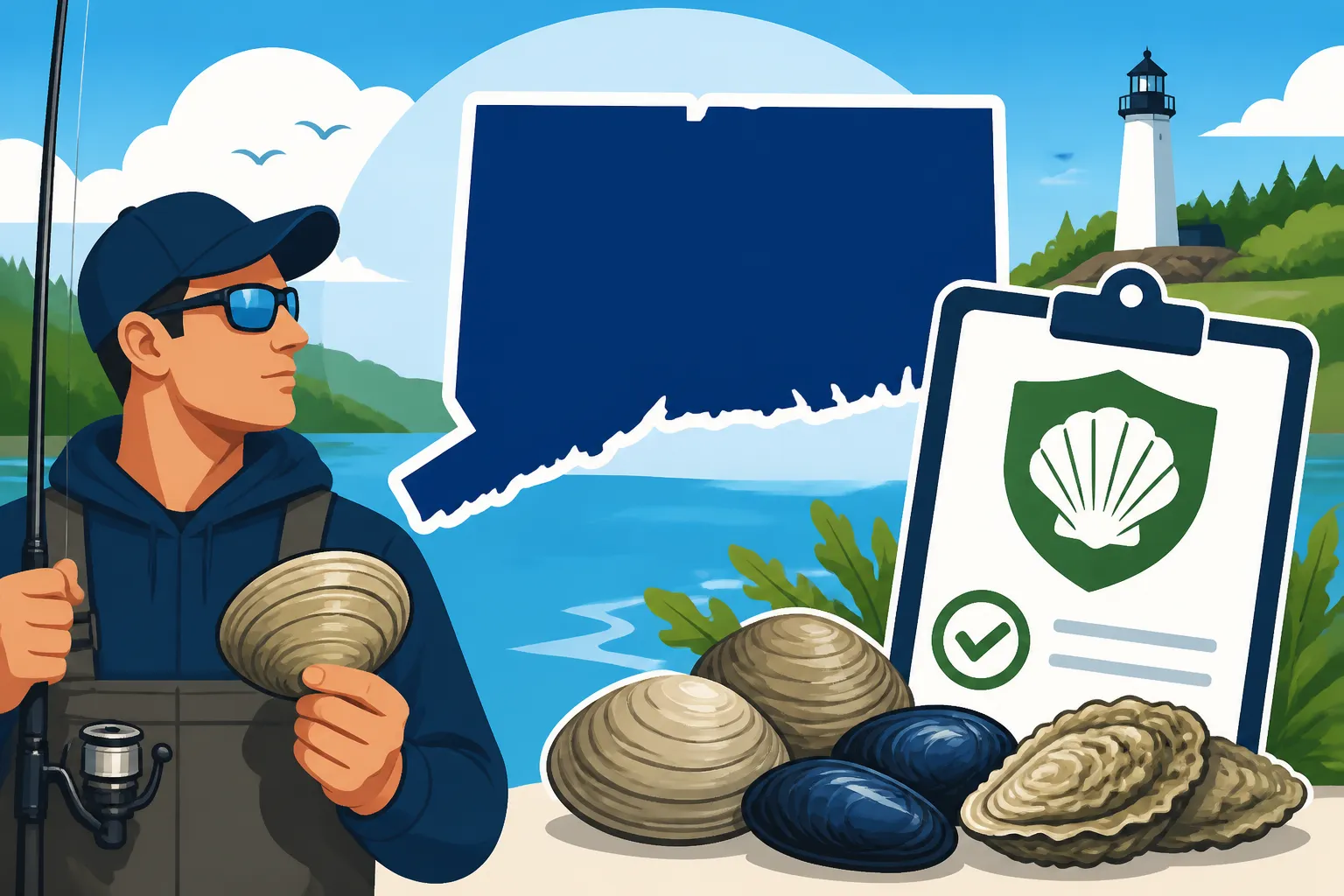
- Soft-shell Clams (Steamer Clams): These are perhaps the most popular for recreational harvesting. They live in muddy flats and are relatively easy to dig. Most towns have specific regulations for soft-shell clams regarding size (measured by the largest diameter), daily limits (often by the quart or peck), and tools allowed. For anglers, while not typically used for live bait, they can be excellent for chumming or cut bait for species like scup or even striped bass, though Best Baits for Smallmouth Bass on the Housatonic might involve different approaches. Always check if you're allowed to harvest them for bait without a permit, or if a regular shellfish permit is required.
- Hard-shell Clams (Quahogs, Littlenecks, Cherrystones, Chowders): These hearty clams are also very popular for eating and live in sandier or gravelly bottoms. Like soft-shells, they have size and daily limits. Anglers might use smaller quahogs (littlenecks) as bait for larger finfish, or simply cut them up. Again, local rules apply, and these are often more strictly regulated due to their commercial value.
- Oysters (Eastern Oysters): While historically abundant, wild oysters are often in designated beds and heavily managed. Recreational harvesting of wild oysters is much less common and often more restricted than clams, with many areas reserved for commercial aquaculture. If you find yourself on a Long Island Sound Fishing Guide trip and spot an oyster bed, resist the urge to harvest without explicit permission and permits.
- Mussels (Blue Mussels): These cling to rocks and pilings and are often overlooked by recreational harvesters. Some towns may have open seasons and limits for mussels, while others might not address them specifically. Mussels can make good bait, especially for bottom feeders. However, like other filter feeders, they are susceptible to contamination, so always check public health advisories.
- Worms (Sandworms, Bloodworms): While not technically shellfish, these are often collected in similar intertidal zones. Generally, recreational collection of a small amount for personal bait use is allowed without a specific permit, as long as it's not done in restricted areas or on private property. For specific bait needs, consider What Blackfish Eat Around Structure or other target species might prefer.
Public Health Concerns and Advisories
This cannot be stressed enough: always check for closures before you harvest any shellfish. Shellfish safety is a dynamic issue. Heavy rainfall can lead to runoff carrying bacteria (like E. coli from septic systems or stormwater) into estuaries, prompting temporary closures. "Red Tide," or harmful algal blooms, produce toxins that shellfish can accumulate, making them dangerous for human consumption. These toxins are not destroyed by cooking.
The Connecticut Department of Agriculture's Bureau of Aquaculture website is the authoritative source for state-level shellfish growing area classifications and closures. Local town websites and harbor masters will also relay this information. Never harvest from an area marked "Closed" or "Prohibited," even if it looks pristine. The consequences of consuming contaminated shellfish can range from mild gastrointestinal distress to severe neurological poisoning, depending on the contaminant. It’s simply not worth the risk.
Consequences of Violating Shellfish Rules
Fishing without a license in Connecticut can lead to penalties, and the same goes for violating shellfish regulations. The consequences for illegal shellfish harvesting can be significant and include:
- Fines: You could face substantial monetary fines for harvesting without a permit, taking undersized shellfish, exceeding daily limits, or harvesting from closed areas. These fines can easily run into the hundreds of dollars.
- Confiscation: Your catch, and potentially your harvesting tools (rakes, shovels, buckets), can be confiscated.
- Legal Action: Repeated or severe violations could lead to more serious legal charges.
- Health Risks: As mentioned, the biggest "consequence" might not be legal, but rather a serious illness from consuming contaminated shellfish.
Enforcement is typically carried out by local marine police, environmental conservation officers, or harbor patrols. They are often very familiar with the local shellfish beds and the common offenders. Don't assume that because an area looks unmonitored, it is. It's far better to spend a few dollars on a permit and a few minutes checking advisories than to risk your wallet or your health.
Here's a quick comparison of the two main types of permits:
| Feature | Recreational Finfish License (DEEP) | Recreational Shellfish Permit (Local Town/Bureau of Aquaculture) |
|---|---|---|
| Primary Purpose | Catching finfish (e.g., striped bass, trout, fluke) | Harvesting clams, oysters, mussels for consumption |
| Issuing Authority | CT DEEP (state-wide) | Local Town (e.g., Shellfish Commission), CT Bureau of Aquaculture |
| Validity | State-wide for finfish (with species/area rules) | Specific to the issuing town's designated shellfish areas |
| Required For Bait | Not generally for bait collection of shellfish | Often required for shellfish used as bait, depending on town |
| Public Health Focus | Less direct; more on fish stock management | High; monitors water quality, closes unsafe areas |
| Typical Cost (Resident) | ~$28 for an annual all-waters license | ~$10-25 per town annually (can vary greatly) |
| Non-Resident Options | Yes, higher fees | Yes, often higher fees |
| Example Species Covered | Striped Bass, Fluke, Trout, Bass, Bluefish | Soft-shell clams, Hard-shell clams, Oysters, Mussels |
Where to Purchase and How to Apply for Shellfish Permits
Alright, so you're convinced you need a permit – fantastic! That's the first step towards responsible and legal shellfish harvesting. Now, let's talk about the nitty-gritty of actually getting one. Unlike the streamlined process for your Connecticut Fishing License Guide for 2026, shellfish permits are a different beast.
Town-Specific Application Processes
Because most recreational shellfish harvesting falls under municipal jurisdiction, the application process is almost entirely town-specific. There isn't a single website or state office where you can buy a universal Connecticut recreational shellfish permit. You'll need to contact the town where you intend to do your harvesting.
Typically, you'll find the permits available at one of these locations:
- Town Clerk's Office: This is the most common point of sale. You'll usually need to visit during business hours, fill out a simple application form, and pay the fee. Some towns might offer the option to download the form online and mail it in, but picking it up in person is often the fastest way to get immediate information and clarification.
- Shellfish Commission Office: If a town has a dedicated Shellfish Commission, they might handle permit sales directly, or work in conjunction with the Town Clerk.
- Harbor Master's Office: In some towns, especially smaller coastal communities, the Harbor Master might be the point of contact for shellfish permits.
When you go, be prepared to provide proof of residency (if you're claiming resident rates, which are always cheaper), like a driver's license or tax bill. Non-residents will simply pay the non-resident fee. Some towns might also require you to sign a waiver acknowledging you understand the risks of consuming wild shellfish. Don't be surprised if the process feels a bit old-school; many town offices are still cash or check only for these smaller permits.
State Permit Information
While the Connecticut Department of Agriculture's Bureau of Aquaculture is the main state authority for shellfish sanitation, they primarily issue commercial aquaculture permits. For recreational anglers just looking to dig a bucket of clams for personal use or bait, you generally won't be dealing directly with the state for a permit. Your interaction with the state will mainly be through checking their website for water quality classifications and shellfish bed closures.
However, if you ever had aspirations beyond a recreational harvest, say for starting a small-scale oyster farm or harvesting for commercial sale, then yes, you would dive deep into the state's Bureau of Aquaculture regulations and permitting processes. But for the average angler, stick to the town-specific permits for your casual clamming. Remember, while your annual Connecticut Fishing Season Dates and Closures will tell you about finfish, they won't typically touch on specific town-level shellfish openings.
Annual Renewals and Residency Requirements
Most recreational shellfish permits are issued annually, typically expiring on a specific date (e.g., December 31st or March 31st), regardless of when you purchase them during the year. This means if you buy a permit in November, it might still expire at the end of December, so plan accordingly.
Residency is a key factor in the cost. Connecticut residents almost always pay a significantly lower fee for town-specific shellfish permits compared to non-residents. This is a common practice across many recreational licenses, designed to give a break to taxpayers who contribute to the maintenance of local resources. If you own property in a Connecticut coastal town but don't reside there full-time, you might qualify for a "non-resident property owner" rate, which is usually somewhere between the full resident and full non-resident fees. Again, this varies by town, so inquire directly when applying. It's a bit more complex than figuring out Resident vs Nonresident Fishing License Costs in Connecticut for finfish, as each town sets its own specific pricing tiers.
Navigating Connecticut's shellfish regulations for anglers can feel like a chore, but it's a small price to pay for enjoying our state's beautiful coastal waters and the bounty they offer. By understanding the distinction between finfish and shellfish licenses, the critical role of local ordinances, and the importance of public health advisories, you can ensure your next clamming or bait-collecting adventure is both legal and safe. Happy harvesting, and tight lines!
Disclaimer
Please be aware that fishing regulations, including those concerning shellfish, can change. Always consult the official Connecticut Department of Energy and Environmental Protection (DEEP) website, the Connecticut Department of Agriculture, Bureau of Aquaculture, and the specific municipal authority (Town Clerk, Shellfish Commission, or Harbor Master) for the most current and accurate information before engaging in any fishing or shellfish harvesting activities. This guide provides general information and should not be considered a substitute for official legal guidance.