Bantam Lake best bass fishing spots
It can be incredibly frustrating to hit a new lake, especially one as renowned as Bantam Lake, only to spend hours casting without a single bite. You know the bass are there – everyone talks about them! – but finding their favorite haunts can feel like searching for a needle in a haystack. This guide is designed to cut through that confusion, giving you the insider scoop on Bantam Lake's prime bass fishing spots, ensuring your next trip is filled with far more action and far less head-scratching.
Understanding Bantam Lake's Bass Potential
Bantam Lake, nestled in Litchfield County, isn't just Connecticut's largest natural lake; it's a legitimate bass factory, famous for both its robust largemouth and feisty smallmouth populations. But what makes it so special for bass? It's all about the diverse habitat it offers, from shallow, weedy flats to rocky points and deeper humps. Anglers often face the challenge of breaking down such a large body of water, but understanding its unique characteristics is the first step to unlocking its full potential.
Lake Overview and Habitat
Bantam Lake sprawls across roughly 947 acres, and its contours are a bass angler's dream. The lake boasts a maximum depth of about 23 feet, but a significant portion of its acreage is relatively shallow, especially in the northern and southern sections. This shallower water warms up quickly in the spring, making it a prime location for bass to stage before and during their spawn. The bottom composition varies wildly, moving from soft, silty areas where dense weed beds thrive, to hard, rocky sections that smallmouth absolutely adore. You'll find a mix of submerged vegetation, standing timber, boat docks, and natural rock formations, all providing crucial cover and ambush points for hungry bass. Knowing this variety means you can switch up your tactics rather than stubbornly throwing the same lure everywhere. For a broader look at this fantastic fishery, consider diving into our full guide on Bantam Lake Fishing Guide.
Identifying Prime Bass Zones
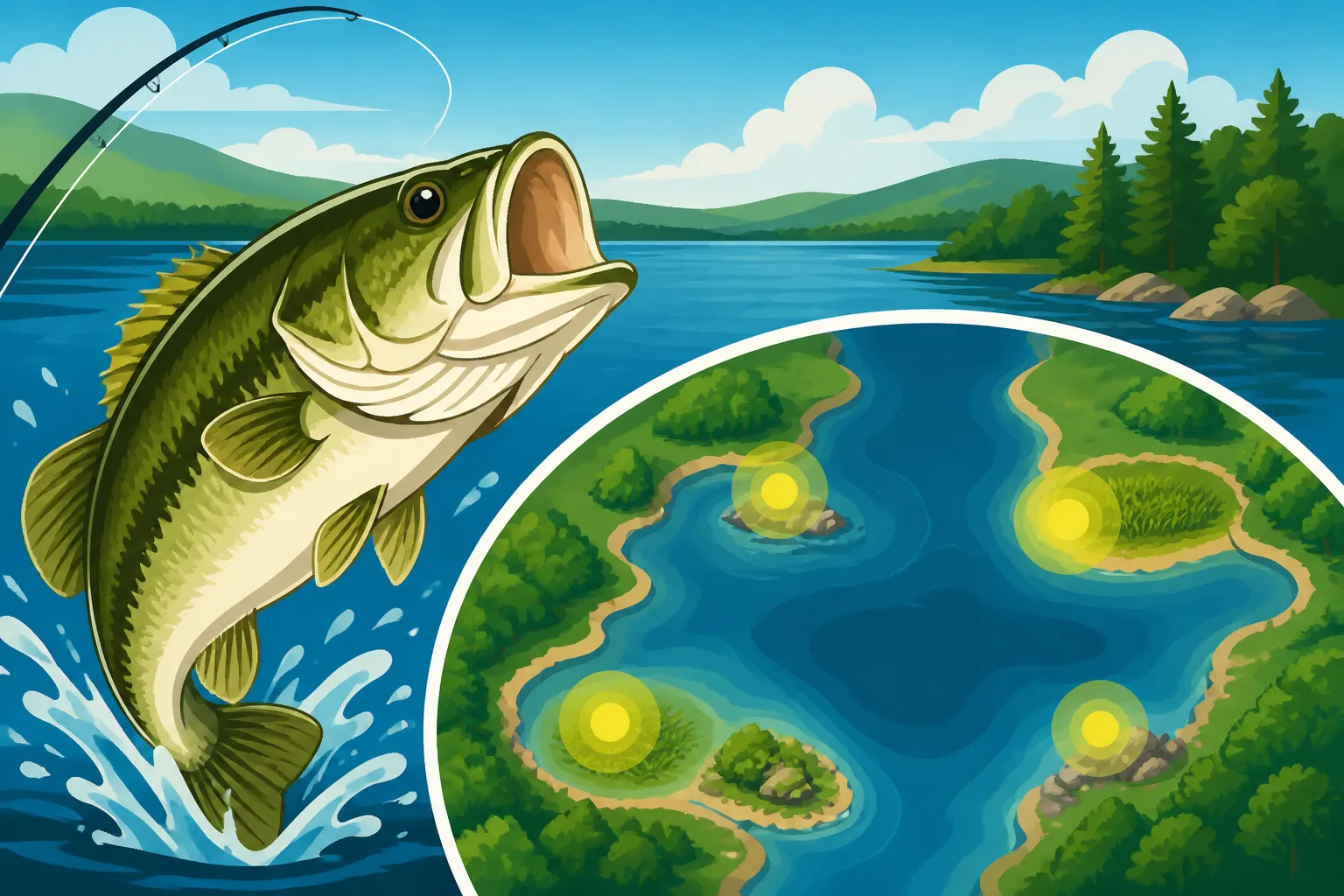
To truly dial into Bantam's bass, you need to think like a fish. Bass are opportunistic predators, always looking for cover, food, and comfortable water temperatures. In Bantam, this often translates to specific zones that consistently hold fish. Look for transitions in structure – where a weed line meets a rocky drop-off, or where a shallow flat suddenly gives way to deeper water. These "edge" areas are magnets for baitfish, which in turn attract bass. Docks, especially those with brush piles or submerged cribs underneath, act as artificial reefs, providing shade and sanctuary. Similarly, areas with lily pads or dense submerged coontail and milfoil offer excellent cover for largemouth bass, allowing them to ambush prey. Understanding these general principles will guide you even when you're exploring new sections of the lake.
Top Largemouth Bass Hotspots on Bantam Lake
If big, green, bucket-mouthed bass are what you're after, Bantam Lake delivers in spades. The lake's abundant shallow water and lush vegetation create ideal conditions for largemouth to thrive. They love to hide, preferring dense cover where they can wait in ambush for unsuspecting prey. Targeting these areas with the right approach can lead to some truly memorable catches.
Weed Beds and Lily Pads
Bantam Lake is renowned for its extensive weed beds, particularly the thick submerged vegetation and floating lily pads that dominate its shallower bays and coves. These areas are largemouth paradise. Fish often sit just inside the weed lines, under the canopy of pads, or even buried deep within the thick stuff. During the warmer months, these weed beds provide essential shade and cooler water, as well as a rich buffet of baitfish and amphibians.
Think about areas like the northernmost section of the lake, near the Bantam River inlet, or the western shorelines around Marsh Point. These spots are often riddled with lily pads and dense submerged hydrilla or milfoil. Pitching jigs, Texas-rigged worms, or topwater frogs directly into openings in the pads or along the edges of dense weed lines can be incredibly effective. Don't be afraid to fish in the cover; that's where the biggest bass are often hiding. Patience is key here, as bites can be subtle amidst the greenery, but the reward of pulling a hawg out of the slop is unmatched. This aggressive, cover-oriented approach is a staple of How to Catch Largemouth Bass in Connecticut.
Coves and Inlets
Bantam Lake features several prominent coves and smaller inlets that act as sheltered nurseries and feeding grounds for largemouth bass. These areas often have softer bottoms, less current, and slightly warmer water, making them perfect for baitfish and insect hatches. Bass congregate here, especially during pre-spawn and post-spawn periods, but they'll hold here throughout the summer as well, seeking refuge from boat traffic and open-water predators.
Take, for instance, the large cove on the eastern side, near the public boat launch. This area, along with smaller indentations along the shoreline, often has a mix of docks, submerged brush, and developing weed lines. Cast spinnerbaits or chatterbaits along the edges of emergent vegetation, or work crankbaits parallel to shorelines with scattered rock and wood. These coves are also fantastic places for kayak anglers to explore, offering quiet pockets away from the main lake action. You might even find some hidden gems that aren't visible from a larger boat. If you're looking to explore more diverse water, check out our piece on Best Kayak Fishing Spots in Connecticut.
Docks and Wood Structure
Human-made structures are often overlooked, but on a lake like Bantam, docks, boat lifts, and any fallen trees or submerged timber are absolute magnets for largemouth bass. These structures offer vertical cover, overhead shade, and ambush points, often concentrating fish in a relatively small area. Bass will position themselves facing outwards, ready to dart out and grab a passing meal.
The developed shorelines on the eastern and southern sides of Bantam Lake are lined with private docks. These aren't just for tying boats; they're artificial habitats teeming with life. Approach them quietly and pitch jigs, wacky-rigged Senkos, or weightless flukes underneath the pontoons or into the shady pockets. Pay close attention to any docks that have ladders, old tires, or brush piles sunk nearby, as these provide even more intricate cover. Sometimes, the largest bass will hold tight to the pilings or suspended beneath the dock, so a vertical presentation can be incredibly effective. Don't be shy about working multiple casts from different angles to thoroughly cover each dock.
Targeting Smallmouth Bass on Bantam Lake
While largemouth might steal some of the spotlight, Bantam Lake is also home to a healthy population of smallmouth bass, particularly in areas with clearer water and hard bottom. These bronze battlers are known for their aggressive strikes and powerful fights, often jumping clear of the water when hooked. Finding them requires a slightly different approach than their largemouth cousins, focusing more on deeper structure and open water.
Rocky Bottoms and Drop-offs
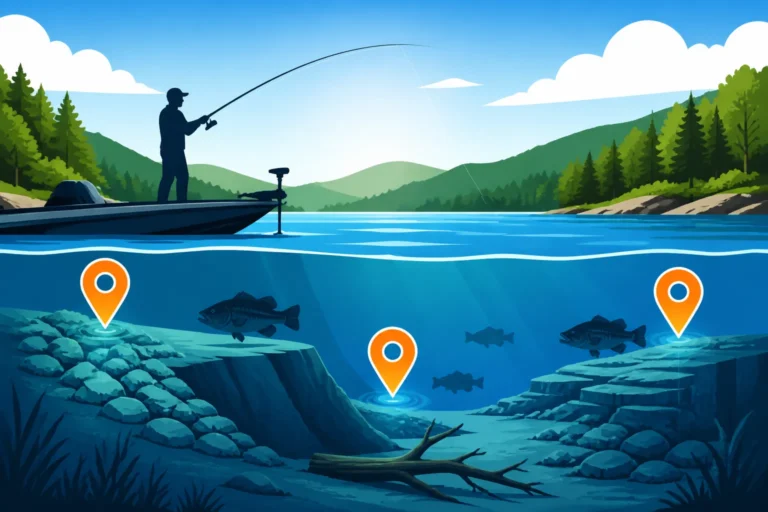
Smallmouth bass in Bantam Lake, much like in many other Connecticut fisheries, absolutely adore rocky bottoms, gravel patches, and sharp drop-offs. These areas mimic their preferred riverine habitats, offering plenty of nooks and crannies for crayfish and other bottom-dwelling prey, as well as clear, well-oxygenated water. Unlike largemouth, smallmouth are less reliant on dense overhead cover and more on horizontal transitions and depth changes.
The deeper sections of Bantam, particularly the central basin and certain areas along the western shore, feature these coveted rocky structures. Look for areas where the lake bottom transitions from a shallow flat to a sudden drop-off into 15-20 feet of water. Using your fishfinder or even a good old-fashioned depth finder is crucial here. Target these areas with finesse presentations like drop-shot rigs, tube jigs, or Ned rigs, allowing your bait to sit right on the bottom. Crankbaits that dive to relevant depths can also be incredibly effective when retrieved over these rocky transitions. You might even find some decent smallmouth activity near the larger boulders that dot the lake's landscape. Learning the nuances of these fish can really up your game, as explored in Smallmouth Bass Fishing in Connecticut.
Main Lake Points and Humps
Main lake points and submerged humps are also prime smallmouth territory on Bantam Lake. A point is any piece of land that extends out into the main body of the lake, often forming a ridge underwater. Humps are essentially submerged islands or high spots that rise significantly from the surrounding bottom. Both types of structure serve as natural highways and feeding stations for smallmouth.
Smallmouth will patrol these points and humps, intercepting baitfish that move along them or feeding on crayfish that inhabit the rocky slopes. During periods of lower light, like dawn or dusk, or on overcast days, smallmouth may push shallower onto the tops of these structures. In bright sun or heavy boat traffic, they'll often retreat to the deeper flanks. Jigging spoons, swimbaits, and even topwater walking baits can be very effective over these structures, depending on the time of day and water depth. A great way to cover water and locate active fish is to slowly motor around these areas, keeping an eye on your electronics for baitfish schools or arches indicating bass. Using a service like FishingBooker can help you find local guides who are experts at pinpointing these less obvious, yet highly productive, smallmouth haunts.
Optimal Strategies and Gear for Bantam Bass
Having the right spots is only half the battle; knowing when and how to fish them, and with what, will significantly increase your success rate on Bantam Lake. The bass here respond to different presentations based on the season, weather, and time of day, so being versatile is key.
Seasonal Tactics and Best Times
Fishing Bantam Lake effectively means adapting to the seasons. Each part of the year presents unique opportunities and challenges for bass anglers.
- Spring (Pre-Spawn & Spawn): This is arguably the most exciting time for Bantam bass. As ice melts and water temperatures rise into the 40s and 50s, bass move from deeper wintering holes into shallower bays and coves to feed heavily before spawning. Look for them around emerging weed growth, fallen trees, and rocky shorelines. Jerkbaits, spinnerbaits, and lipless crankbaits are excellent for searching out active pre-spawn fish. Once water temperatures hit the low 60s, bass will be on beds, typically in protected, shallow areas. Sight fishing with soft plastics or jigs can be effective, but remember to practice catch and release to protect the spawning fish.
- Summer (Post-Spawn & Full Summer): As waters warm into the 70s, bass transition to their summer patterns. Largemouth will hold tight to dense weed beds, lily pads, docks, and submerged timber, seeking shade and ambush points. Topwater frogs, senkos, and pitching jigs are go-to lures. Smallmouth will often move to deeper main lake points, humps, and rocky drop-offs, especially during the heat of the day. Drop-shot rigs, deep diving crankbaits, and football jigs are productive here. Early mornings and late evenings often offer the best surface activity.
- Fall (Turnover & Pre-Winter): Fall can be fantastic for big bass, as they feed aggressively to fatten up for winter. As water temperatures cool, bass become more active and will often be found shallower than in mid-summer, especially around baitfish schools. Spinnerbaits, swimbaits, and crankbaits worked along main lake points, weed edges, and rocky transitions can be deadly. Pay attention to baitfish activity, as bass will follow their food source.
- Winter (Ice Fishing): Yes, Bantam Lake is also a popular spot for ice fishing! While pike often get the most attention, you can certainly catch bass through the ice. Jigging spoons, blade baits, and live shiners fished near drop-offs or over deeper weed beds can entice sluggish bass. Always prioritize safety on the ice, checking thickness frequently. You can even find specific tips for Ice Fishing in Connecticut.
| Season | Largemouth Hotspots | Smallmouth Hotspots | Recommended Lures/Baits |
|---|---|---|---|
| Spring | Shallow coves, emergent weeds, docks | Rocky points, shallow humps, transitions | Jerkbaits, Spinnerbaits, Soft Plastics |
| Summer | Dense weeds, lily pads, shaded docks | Deeper points, humps, rocky drop-offs | Topwater Frogs, Jigs, Drop-Shots |
| Fall | Main lake points, weed edges, channels | Rocky reefs, deep humps, baitfish schools | Spinnerbaits, Crankbaits, Swimbaits |
| Winter | Deep weed lines, rocky edges (ice fishing) | Deep humps, transitions (ice fishing) | Jigging Spoons, Blade Baits, Live Shiners |
Recommended Baits and Lures
Having the right tackle in your box for Bantam Lake's bass is essential. Here's a breakdown of what typically performs well:
- Soft Plastics: These are incredibly versatile. Texas-rigged or Carolina-rigged worms (like a Zoom Trick Worm or Senko) are fantastic for working through weeds and around docks. Drop-shot rigs with small finesse worms or creature baits are killer for smallmouth on deep structure. Flukes or soft jerkbaits are great for open water or around sparse cover.
- Jigs: Flipping and pitching jigs (like a Football Jig or a standard Arkie-style jig) are perfect for working dense cover for largemouth. Pair them with a craw or creature trailer. Finesse jigs or Ned rigs are excellent for smallmouth on rocky bottoms.
- Crankbaits: Medium-diving crankbaits are great for covering water along weed edges or rocky banks. Deep-diving crankbaits are essential for probing those deeper smallmouth haunts on humps and points. Lipless crankbaits shine in spring and fall, especially when ripped through grass.
- Spinnerbaits & Chatterbaits: These are search baits, great for covering lots of water and eliciting reaction strikes, especially in spring and fall, or around moderately dense cover.
- Topwater Lures: Frogs, poppers, and walking baits (like a Heddon Super Spook) are exhilarating when bass are active on the surface, typically during low light conditions or over dense submerged vegetation. Nothing beats the explosion of a bass hitting a topwater!
- Live Bait: While many bass anglers prefer artificials, live shiners or crayfish can be incredibly effective, especially for sluggish bass in tough conditions or through the ice.
Access and Navigation Tips
Accessing Bantam Lake is relatively straightforward, but understanding the nuances of navigating it will enhance your fishing experience. The main public access point is the Connecticut DEEP boat launch located on the eastern side of the lake, off Bantam Lake Road. This launch provides ample parking and a good ramp for trailered boats. It's a busy spot, especially on weekends, so plan accordingly.
For those without a large boat, smaller craft like kayaks, canoes, and jon boats can be launched from various points, offering access to some of the shallower, more secluded coves that larger boats can't easily reach. If you're considering a guided trip, many local guides specializing in bass fishing on Bantam Lake can be found through platforms like FishingBooker. They'll know the current conditions and hot spots, providing a significant advantage. Remember that while there are plenty of productive areas, boat traffic can be considerable, especially on summer weekends. Consider fishing early mornings, late evenings, or during weekdays to avoid the crowds. Familiarize yourself with Connecticut boating laws for anglers to ensure a safe and legal trip.
Final Thoughts on Bantam Lake Bass Fishing
Bantam Lake truly is a jewel in Connecticut's fishing crown, offering incredible opportunities for both largemouth and smallmouth bass. Whether you love flipping jigs into dense lily pads or systematically working deep rocky points with finesse plastics, this lake has something to offer. It's a place that rewards patience, observation, and a willingness to adapt your approach to what the fish are telling you. So, next time you're heading out, remember these prime spots and strategies, and get ready to hook into some of Connecticut's finest bass. Tight lines!
Disclaimer
Please note that fishing conditions, regulations, and fish behavior can change. Always consult the latest Connecticut Department of Energy and Environmental Protection (DEEP) fishing regulations before heading out. This guide provides general information and best practices based on current knowledge and experience.