Smallmouth Bass Fishing in Connecticut
Many anglers, especially those new to fishing in the Northeast, often get stuck in a rut, chasing the same old largemouth bass or trout. But what if I told you there’s another game fish in Connecticut that offers an exhilarating fight, cunning intelligence, and some of the most beautiful waters to explore? If you've ever felt the tug of a smallmouth bass, you know there’s nothing quite like it. This comprehensive guide is dedicated to unlocking the secrets of smallmouth bass fishing in Connecticut, helping you find those hard-fighting bronze beauties and make your next outing truly unforgettable.
The Allure of Connecticut Smallmouth Bass
There’s a special place in the heart of many Connecticut anglers for the smallmouth bass. They aren't always the easiest fish to find, and they can be incredibly picky at times, but when you do hook into one, you quickly understand why they're so revered. Their aggressive strikes, powerful runs, and acrobatic jumps are legendary.
Why Smallmouth Bass Are a Premier Game Fish in CT
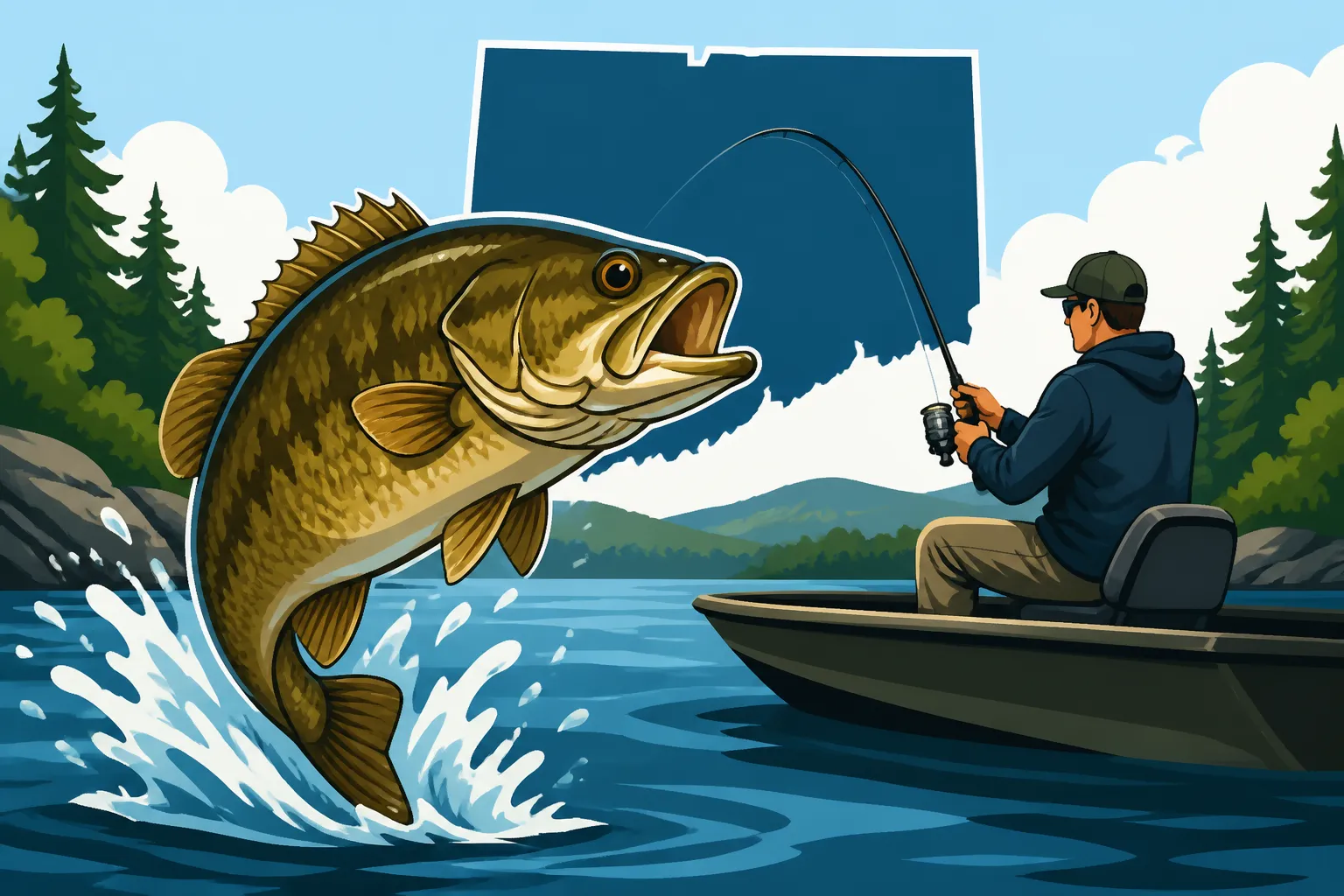
For starters, smallmouth bass are absolute gladiators of the freshwater world. Unlike their largemouth cousins, who often make a quick, powerful dash for cover, smallmouth tend to fight with an incredible, sustained ferocity. They'll dive, they'll pull, and they'll launch themselves clear out of the water in an attempt to shake the hook. This puts your gear and your angling skills to the test, offering a truly rewarding experience when you finally get one into the net. It's not just about the size of the fish; it's about the quality of the battle.
Beyond the fight, smallmouth bass are often found in some of Connecticut's most scenic and pristine waters. Think clear rivers with rocky bottoms or deep, expansive lakes with dramatic underwater structures. The challenge of deciphering their patterns, understanding their preferred habitats, and selecting the right presentation makes every successful catch feel like a genuine accomplishment. It's a thinking person's game, and the reward is a beautiful, bronze-hued fish that will leave you grinning. Many anglers consider a day chasing smallmouth to be a superior experience to almost any other freshwater pursuit due to their sheer sporting nature.
Identifying Connecticut Smallmouth vs. Largemouth Bass
When you’re out on the water, especially in lakes where both species coexist, it’s easy to get them mixed up at first glance. However, once you know what to look for, distinguishing a smallmouth from a largemouth becomes second nature. It's important because their behaviors and preferred habitats can differ significantly, impacting your fishing strategy. Knowing which one you’ve caught also helps in understanding the fishery better and complying with any species-specific regulations.
The most obvious difference lies in the mouth itself. A largemouth bass's jaw extends well beyond the back of its eye when closed, giving it that characteristic "big mouth" look. A smallmouth bass, true to its name, has a jaw that typically doesn't extend beyond the middle of its eye. Another key visual cue is the dorsal fin. A largemouth has a deep notch, almost separating the spiny front part from the softer back part of the fin. Smallmouth have a much shallower, continuous dorsal fin.
Beyond the mouth and dorsal fin, look at their coloring and body patterns. Largemouth bass generally have a distinct, often irregular, dark horizontal stripe or blotches running down their sides. Smallmouth bass, on the other hand, typically feature vertical bars or blotches, sometimes described as tiger stripes, which can fade or darken depending on their environment and mood. Their overall coloration also differs; largemouth tend to be greener, while smallmouth are more bronze, brown, or olive, often with reddish eyes. Understanding these distinctions is crucial for identifying your catch and adapting your tactics. You can read more about the subtle differences in Largemouth Bass vs Smallmouth Bass Identification.
Here's a quick comparison table:
| Feature | Smallmouth Bass | Largemouth Bass |
|---|---|---|
| Upper Jaw | Does not extend past the middle of the eye | Extends well beyond the back of the eye |
| Dorsal Fin | Shallow notch, appears mostly continuous | Deep, prominent notch, almost separated |
| Body Color | Bronze, brown, golden, olive-green | Dark green, olive-green, sometimes brownish |
| Body Pattern | Vertical bars or tiger stripes | Horizontal, often broken, dark stripe |
| Eyes | Often reddish or yellowish | Typically golden or brownish |
| Body Shape | More streamlined, torpedo-shaped | More stout, deeper body |
| Preferred Habitat | Cool, clear, rocky rivers and deep lakes | Weedy, warmer, shallower lakes and ponds |
Prime Smallmouth Bass Habitats in Connecticut
One of the biggest challenges, and joys, of smallmouth fishing in Connecticut is figuring out where these elusive fish like to hang out. They're not just anywhere; they have specific preferences that dictate their presence and activity. Understanding these prime habitats is the first step toward consistent success.
Rivers and Streams: The Classic Smallmouth Domain
When most anglers think of smallmouth bass, they envision a beautiful river, full of current and rocky structures. Connecticut is blessed with several rivers that fit this description perfectly, offering incredible opportunities for river-run smallmouth. These fish thrive in moving water that provides a constant supply of oxygen and forage, as well as plenty of ambush points.
The Housatonic River, particularly its lower stretches, is arguably the crown jewel for river smallmouth fishing in Connecticut. Its varied bottom, featuring extensive rock gardens, ledges, and current seams, creates an ideal environment. Here, smallmouth will position themselves behind current breaks, waiting for baitfish or crayfish to be swept past. Knowing how to read the current, identify eddies, and spot submerged boulders or log jams is paramount. The Farmington River and portions of the Connecticut River's tributaries also hold impressive populations, especially in stretches with similar rocky, clear-water characteristics. For a deeper dive, check out the Housatonic River Fishing Guide.
When approaching a river or stream, don't just cast blindly. Look for current breaks: the calm water behind a large rock, a log, or a point of land jutting into the flow. These are prime resting and ambush spots. Riffles and rapids, while challenging to fish, often produce as smallmouth will hold in the deeper pockets or current seams just below them, feeding on disoriented prey. Deeper pools, especially those with rock piles or submerged timber, are also key, particularly during periods of higher water temperatures or in the colder months. These river systems offer a dynamic fishing experience, constantly requiring you to adapt to changing conditions and fish behavior. For specific insights into their river behavior, read about Smallmouth Bass Habits on the Housatonic.
Lakes and Ponds: Unexpected Smallmouth Hotspots
While rivers get a lot of glory, Connecticut's larger, deeper lakes and even some unexpected ponds can hold incredibly healthy populations of smallmouth bass. These lake smallmouth often grow larger due to a more stable food supply and different habitat structures. They trade the constant current of a river for the vastness of deep water, using contours and offshore cover to their advantage.
Lakes like Candlewood, Lillinonah, and Zoar are renowned for their smallmouth fishing. These aren't your typical shallow, weedy largemouth lakes. Instead, they feature deep rock piles, underwater ledges, dramatic drop-offs, and expansive main lake points that act as highways for migrating baitfish and cruising bass. In these environments, smallmouth might relate to structure 20, 30, or even 40 feet deep, making them a challenge to locate without the right tools. Understanding contour maps and using your electronics effectively becomes critical. Candlewood Lake Bass Fishing offers specific insights into one of the state's premier smallmouth lakes.
In lakes, smallmouth often school up, especially around prominent features. If you find one, chances are there are more in the vicinity. Focus your efforts on deep humps, submerged islands, the ends of long points that drop into deep water, and steep bluffs. Unlike river fish that constantly fight current, lake smallmouth expend less energy, allowing them to grow to impressive sizes. Their seasonal movements in lakes are also distinct, often involving migrations from shallow spawning areas in spring to deeper, cooler main lake structure in summer, and then back to staging areas in fall. Learning these patterns is key to unlocking consistent lake smallmouth success.
Essential Gear for Connecticut Smallmouth Fishing
Stepping up your smallmouth game often means having the right tools for the job. While you can catch them on basic gear, having specialized rods, reels, and a well-stocked tackle box can significantly increase your success rate and enhance the enjoyment of the fight. Don't worry, you don't need to break the bank, but a few thoughtful choices make a big difference.
Rods, Reels, and Line for River and Lake Situations
Smallmouth bass fishing in Connecticut is incredibly diverse, from battling strong current fish in rivers to probing deep lake structures. This variety calls for a range of rod and reel setups. For river fishing, where accuracy and sensitivity are key for casting to specific current seams and feeling subtle bites, a medium-light to medium-power spinning rod around 6'6" to 7'0" is often ideal. Pair this with a 2500-size spinning reel spooled with 6-8 pound fluorocarbon or braided line with a fluorocarbon leader. The sensitivity of fluorocarbon is excellent for feeling light bites, while braid offers incredible casting distance and strength.
When targeting deeper lake smallmouth, especially with heavier baits or for power fishing techniques, a baitcasting setup might be preferred. A medium-heavy fast-action baitcasting rod, ranging from 6'8" to 7'4", coupled with a high-speed baitcasting reel, is perfect for throwing crankbaits, jigs, or larger soft plastics. Spool this with 10-15 pound fluorocarbon or braid with a short fluoro leader for maximum sensitivity and hook-setting power in deep water. You can find a fantastic selection of these specialized rods and reels on Amazon, often at competitive prices that help you get quality gear without emptying your wallet. Having both spinning and baitcasting options gives you the versatility to adapt to any situation.
Choosing the right line is often overlooked but is crucial for smallmouth success. Monofilament line is great for topwater baits due to its buoyancy and stretch, which can prevent hooks from tearing out during aggressive surface strikes. Fluorocarbon is less visible underwater, has excellent abrasion resistance (important around rocky smallmouth habitat), and superior sensitivity, making it ideal for most subsurface presentations like jigs and worms. Braided line offers incredible strength, no stretch, and thin diameter, which is great for casting distance and cutting through weeds. However, its visibility often necessitates a fluorocarbon leader. Match your line type and strength to your chosen technique and the conditions you're facing for optimal results.
Tackle Box Essentials: Lures, Baits, and Terminal Tackle
A well-stocked tackle box for smallmouth bass should include a variety of lures to cover different depths, conditions, and fish moods. Smallmouth can be finicky, so having options is key. For soft plastics, consider tube baits (green pumpkin, watermelon, smoke with flake are great colors), small finesse worms, and Ned rigs. These excel when fish are pressured or in clear, cold water, mimicking crayfish or small baitfish. Jigs, especially football head jigs with craw trailers, are deadly around rocky bottoms in both rivers and lakes.
When it comes to hard baits, crankbaits that dive to various depths are essential. Shallow divers work well in rivers and on shallow lake points, while deep-diving crankbaits are critical for reaching fish suspended over deep structure in lakes. Look for natural baitfish patterns like perch, shad, or crawfish colors. Topwater lures like poppers, walking baits, and prop baits can provide explosive strikes, especially during low light conditions or when fishing is calm. Spinnerbaits and chatterbaits also have their place, particularly in stained water or when covering water quickly. Best Baits for Smallmouth Bass on the Housatonic provides more specific bait recommendations for river smallmouth.
Don't forget your terminal tackle! A selection of extra wide gap (EWG) hooks, round bend hooks, and jig heads in various sizes and weights will keep you prepared. Swivels, split rings, and extra leaders are also critical. Having a good pair of pliers or a multi-tool for cutting line and removing hooks is also a must-have. When stocking up, it’s always a good idea to check out sites like Amazon for bulk packs of hooks, weights, and soft plastics, as you'll go through them quickly when fishing rocky smallmouth habitat. Always err on the side of having more than you think you need, especially for weights and hooks.
Top Techniques for Catching Smallmouth Bass in CT
Now that you know where they live and what gear to use, let's talk about the fun part: catching them! Smallmouth bass fishing requires a blend of finesse and power, and adapting your technique to the specific water you're fishing is paramount.
River Strategies: Reading Water and Presenting Baits
River fishing for smallmouth is a truly immersive experience. It's about more than just casting; it's about understanding the flow, identifying subtle changes in depth and current, and knowing where a smallmouth might be holding. Wading is often the most effective way to fish smaller rivers like parts of the Housatonic or Farmington, allowing you to move stealthily and get into prime casting positions. Always prioritize safety when wading, especially in swift currents or on slippery rocks. A good pair of wading boots with felt or studded soles can make a huge difference in stability.
When presenting baits in a river, think like the current. Smallmouth position themselves to ambush prey that is being swept downstream. Cast your lure upstream or quartering upstream and allow it to drift naturally with the current, retrieving just fast enough to maintain control and impart action. This "drift fishing" technique is incredibly effective for tubes, jigs, and soft plastics, mimicking a struggling baitfish or crawfish being carried by the flow. Target current seams – the line where fast water meets slow water – and the eddies behind large rocks or fallen trees. These are prime ambush points. In deeper pools, try working crankbaits or spinnerbaits across the current, letting them deflect off rocks. For a complete guide to river fishing, check out How to Fish a River for Smallmouth Bass.
Another effective river strategy is "pounding the banks," but not just any bank. Look for undercut banks, submerged rootwads, and large boulders that create current breaks and deep pockets. Often, the biggest smallmouth will hold tight to these features, especially during brighter daylight hours. Using a short, accurate cast to land your lure precisely into these small strike zones, followed by a quick retrieve, can trigger an immediate reaction strike. Focus on presenting your bait naturally, maintaining contact with your lure so you can feel the subtle "tick" of a smallmouth bite, which can often be very light in current.
Lake Tactics: Locating and Triggering Bites
Lake smallmouth fishing often involves covering more water and utilizing technology to locate fish in deeper, more expansive environments. While shore fishing can be productive in certain areas, a boat equipped with reliable electronics will give you a significant advantage. Modern fish finders with side imaging or down imaging can reveal underwater ledges, rock piles, and even schools of baitfish, showing you exactly where smallmouth are likely to be holding. Getting familiar with your electronics is an investment that pays off immensely. You can find some great entry-level and advanced fish finders on Amazon, often with excellent user reviews to help guide your choice.
Once you've located potential smallmouth habitat in a lake, various techniques can trigger bites. For fish holding deep on rock piles or ledges, vertical jigging with tube jigs, drop-shot rigs, or blade baits can be deadly. Position your boat directly over the structure and present your bait with minimal movement, letting the fish come to it. In deeper water, smallmouth can be very responsive to slow, methodical presentations. Another excellent technique is casting crankbaits or jerkbaits along the edges of points or over submerged humps. The erratic action of these lures can often provoke a reaction strike from aggressive fish.
When conditions are right – typically early morning, late evening, or on cloudy, calm days – don't overlook topwater fishing. Smallmouth love to smash a popper or a walking bait, creating an exhilarating visual strike. Cast these lures over shallow rock piles, along rocky shorelines, or over submerged weed beds that top out near the surface. The key is to work them with an erratic, stop-and-go retrieve, imitating a wounded baitfish. Experiment with different retrieves until you find what the fish prefer on that particular day. For more on this exciting technique, check out Topwater Fishing for Smallmouth Bass in Connecticut.
Seasonal Approaches to Connecticut Smallmouth Bass
Smallmouth bass, like most fish, are highly influenced by water temperature and the changing seasons. Their behavior, where they hold, and what they're willing to bite can shift dramatically from spring to winter. Understanding these seasonal patterns is crucial for consistent success.
Spring: Pre-spawn and Spawn Feeding Frenzies
Ah, spring! This is often considered prime time for trophy smallmouth in Connecticut. As ice retreats and water temperatures begin to rise, smallmouth bass emerge from their wintering grounds and begin to move into shallower areas. The pre-spawn period is characterized by aggressive feeding as they bulk up for the energy-intensive spawning process. Look for them staging on rocky points, transition areas between deep and shallow water, and along protected shorelines that warm up quickly. Crankbaits, jerkbaits, and suspending stickbaits are excellent choices during this period, as are jigs worked slowly along the bottom.
Once water temperatures hit the mid-50s to low 60s Fahrenheit, smallmouth will begin to spawn. When smallmouth bass spawn in Connecticut is a critical time, and they typically build their nests on hard, rocky bottoms in relatively shallow water, often visible from the surface. During the spawn, male smallmouth become very protective of their nests and will aggressively strike anything they perceive as a threat. While they can be easy to catch during this time, many anglers practice catch and release and avoid targeting bedding fish to protect the fishery. However, targeting nearby staging fish can still be incredibly productive.
Post-spawn, the fish are often tired and may move slightly deeper to recover. However, they will quickly resume feeding as they regain their energy. This period can be a bit slower than the pre-spawn bite, but as they recover, they become more active again, often staying in the general vicinity of their spawning grounds before transitioning to deeper summer patterns. The key during spring is paying close attention to water temperature; What water temperature smallmouth bass prefer directly influences their activity and location.
Summer: Deep Water and Early/Late Day Bites
As Connecticut summers heat up and water temperatures climb into the 70s and beyond, smallmouth bass, especially in lakes, will often retreat to deeper, cooler water. This is when they become structure-oriented, relating to deep humps, offshore ledges, main lake points, and the thermocline – the layer of water where temperature changes rapidly. Finding the thermocline can be a game-changer, as smallmouth will often suspend just above it, finding comfortable temperatures and abundant oxygen.
During the scorching midday hours, focus your efforts on these deeper structures. Drop-shot rigs, Ned rigs, and football head jigs fished slowly and methodically are highly effective. Using electronics to pinpoint schools of baitfish or individual bass is paramount. However, don't write off shallower water entirely. During the early morning, late evening, or on cloudy days, smallmouth will often move up to feed in shallower rock piles or along shaded banks, offering opportunities for topwater lures or shallow-running crankbaits. The key is to be flexible and willing to adapt to their movements throughout the day.
River smallmouth in summer will also seek out cooler, more oxygenated water. This often means concentrating in deeper pools, the tailwaters below dams, or areas with significant current where the water is more aerated. They might also become more nocturnal, feeding heavily under the cover of darkness. Techniques like night fishing with dark-colored jigs or topwater lures can be surprisingly effective for larger fish during the warmest months. Look for areas with consistent shade or cooler inflowing tributaries in rivers to find active fish during the day.
Fall and Winter: Migratory Patterns and Cold-Water Tactics
As autumn leaves begin to change and water temperatures drop, smallmouth bass enter another aggressive feeding phase, often referred to as the "fall turnover." This is when they feed heavily to build up fat reserves for the lean winter months. In lakes, they'll often migrate back to shallower main lake points and humps, following schools of baitfish that are also moving shallower before retreating to their winter haunts. Crankbaits, jerkbaits, and swimbaits become extremely effective as smallmouth gorge themselves.
As winter sets in and water temperatures dip into the 30s and 40s, smallmouth become much more lethargic. In rivers, they'll congregate in deep, slow-moving pools, main channel bends, or below dams where the current is minimal. In lakes, they'll often stack up in the deepest parts of the lake, relating to significant offshore structure like deep rock piles or channel swings. Finesse techniques are the name of the game during winter. Small jigs, drop-shot rigs, and blade baits worked extremely slowly right on the bottom are often the only way to entice a bite. The bites can be incredibly subtle, feeling like just a little extra weight on your line. Best technique for late fall smallmouth bass will help you hone your approach.
Ice fishing for smallmouth in Connecticut is also a possibility on some lakes, though they aren't as commonly targeted as other species. If you do venture out, focus on those same deep structures they inhabit in open water. Tiny jigging spoons, small Swedish Pimples, or delicate soft plastics fished on light line can tempt a bite. Remember, winter smallmouth fishing is a slow game, requiring patience and keen attention to detail. However, the reward can be a surprisingly large fish, as they often don't expend much energy and can maintain their weight throughout the colder months.
Conservation and Responsible Smallmouth Fishing
As passionate anglers, we have a responsibility to protect the incredible fisheries we enjoy. Smallmouth bass populations in Connecticut are generally healthy, but good conservation practices ensure they remain that way for future generations. It's about more than just catching fish; it's about being a good steward of the environment.
Catch and Release Best Practices
While keeping a legal-sized smallmouth for a delicious meal is certainly an option, many anglers choose to practice catch and release, especially for larger, older fish which are vital to the breeding population. If you do plan to release fish, it's crucial to do so in a way that maximizes their chances of survival. Minimizing the time the fish is out of water is key. Have your camera, measuring tape, and de-hooking tools ready before you even bring the fish in.
Handle the fish gently with wet hands to avoid removing their protective slime layer, which can lead to infection. Support the fish horizontally, especially larger ones, to prevent damage to their internal organs or spine. If a fish is deeply hooked, it’s often best to cut the line rather than try to forcefully remove the hook, especially if using barbed hooks. Consider using barbless hooks, which makes removal much easier and quicker. After a hard fight, some fish might need to be revived. Hold them gently in the water, facing into a mild current, until they are able to swim away under their own power. This patience dramatically increases their survival rate and helps maintain robust smallmouth populations.
Understanding Regulations and Protecting Habitat
Responsible angling also means being fully aware of and adhering to Connecticut's fishing regulations. These rules are in place to manage fish populations, prevent overfishing, and ensure the long-term health of our aquatic ecosystems. Regulations can include specific size limits, daily creel limits (the number of fish you can keep), and special rules for certain bodies of water or seasons. While I can't give you exact numbers here as they change, always consult the current state fishing guide before heading out. Connecticut Fishing Regulations Explained will provide a general overview, but an up-to-date guide is your best friend.
Additionally, remember that you need a valid fishing license to fish for smallmouth bass in Connecticut, regardless of whether you plan to keep your catch or practice catch and release. Obtaining a Connecticut Fishing License Guide for 2026 is a straightforward process, but it's essential to have it on you when fishing. Beyond licenses and limits, protecting habitat is paramount. Avoid littering, dispose of old fishing line properly, and be mindful of invasive species by cleaning your boat and gear between waterways. Healthy habitats mean healthy fish, and by following these simple guidelines, we all contribute to a thriving smallmouth bass fishery for everyone to enjoy.
Advanced Tips for Avid Smallmouth Anglers
You've got the basics down, you know where to find them, and you're set up with the right gear. But how do you take your smallmouth fishing to the next level? It's about constantly learning, adapting, and paying attention to the details that often separate a good day from a truly great one.
Adjusting to Weather and Water Conditions
Smallmouth bass are incredibly sensitive to changes in their environment, and weather plays a huge role in their behavior. A sudden cold front, for instance, can often shut down a hot bite, making fish lethargic and pushing them to deeper water or denser cover. In these situations, slowing down your presentation, downsizing your lures, and using finesse techniques like a Ned rig or a light drop-shot become much more effective. Conversely, stable weather and rising barometric pressure often lead to more aggressive feeding. Understanding Fishing after a heavy rain on Connecticut rivers is also crucial, as clarity and current can dramatically alter fish location and bite.
Water clarity is another critical factor. In clear water, smallmouth rely heavily on sight, making natural colors (green pumpkin, watermelon, smoke) and subtle presentations more effective. Line visibility also becomes a concern, so fluorocarbon leaders are a must. In stained or muddy water, smallmouth rely more on their lateral line (vibration) and scent. Here, brighter colors (chartreuse, orange), lures with more vibration (spinnerbaits, chatterbaits, loud crankbaits), and even scented baits can trigger strikes. Experimentation is key; if one approach isn't working, don't be afraid to change colors, lure types, or retrieve speeds until you crack the code for that day's conditions.
Patterning Fish and Locating Forage
Truly successful smallmouth anglers don't just fish spots; they identify patterns. This means understanding why the fish are in a particular location and what they are eating. Smallmouth bass are opportunistic predators, and their movements are almost always dictated by the availability of forage. In Connecticut, this often means crayfish, shiners, alewives, and various other baitfish. If you can locate the bait, you're usually close to the bass. Use your electronics to find schools of baitfish, or pay attention to signs of feeding activity like baitfish scattering on the surface.
Keeping a detailed fishing log can be an invaluable tool for patterning fish. Note down the date, time, weather conditions (temperature, sky, wind, barometric pressure), water temperature and clarity, lunar phase, specific spots fished, lures used, retrieve methods, and, of course, the size and number of fish caught. Over time, you'll start to see trends and develop a deeper understanding of smallmouth behavior on your favorite waters. For example, you might notice that on cloudy spring mornings, smallmouth consistently hit a chartreuse crankbait on shallow rocky points of Candlewood Lake. This information is gold and allows you to make more informed decisions on future outings, transforming guesswork into strategic angling.
Disclaimer
This article is for general informational purposes only and does not constitute professional advice. Laws, prices and regulations vary by location and change over time. Consult a qualified professional for guidance on your specific situation.