Best jig weight for fluke drifting
There’s nothing quite as frustrating as heading out for a day of fluke fishing, eager to feel that tell-tale tap, only to find your jig isn't quite hitting the bottom, or worse, getting snagged constantly. The truth is, finding the perfect jig weight for drifting for fluke in Connecticut waters can feel like a guessing game, influenced by everything from the tide to the wind. This guide is here to unravel that mystery, helping you dial in your presentation so you spend less time frustrated and more time reeling in those delicious summer flatties.
Understanding Fluke Drifting Dynamics in Connecticut
Successfully drifting for fluke means understanding the underwater environment and how your presentation interacts with it. It’s not just about tossing a jig over the side; it's about a controlled descent and presentation that mimics natural prey, right in front of the fluke's nose.
The Critical Role of Current and Tide
In Connecticut, especially when you're fishing in places like Long Island Sound, the current is king. It's the engine that drives your drift and dictates how a jig behaves. Ignoring it is like trying to drive a car without gas.
- Tidal Flow: The daily ebb and flow of the tide are the primary drivers of current. An incoming tide often brings clearer, cooler ocean water, while an outgoing tide can pull baitfish from rivers and estuaries. Both can be productive, but the strength of the current will change drastically throughout the cycle. Around a new or full moon, expect stronger currents, often called "spring tides," requiring heavier jigs. During a quarter moon, currents are typically weaker, known as "neap tides," and you might get away with lighter weights. Understanding the Best time to fish for fluke at slack tide can sometimes mean a momentary reprieve from strong currents, allowing for a lighter presentation.
- Current Speed and Direction: Imagine you're fishing a rip or a channel where the current is really cranking. A jig that might work perfectly in a calm bay entrance will simply fly through the water column, never reaching the bottom where fluke lie in wait. Conversely, a jig that's too heavy in slack water will just sit there, looking lifeless and unnatural. Anglers often keep a close eye on markers, buoy lines, or even other boats to gauge the speed and direction of the drift.
Depth, Structure, and Bottom Contours
Fluke are ambush predators, meaning they love to hide and wait for prey to swim by. This means they are often found near structure and changes in bottom contour.
- Deep Channels and Reefs: Places like the main shipping channels in Long Island Sound or artificial reefs often hold larger fluke. The sheer depth combined with potentially strong currents in these areas will demand heavier jig weights. You need to get down to the fish, and quickly, before your boat drifts too far past the prime holding spot.
- Rocky Outcroppings and Humps: Fluke will stage on the down-current side of these structures, waiting for bait to be swept over them. These spots can present challenges, as a jig that's too heavy might constantly snag on the rocks. It’s a delicate balance: heavy enough to get down, but light enough to lift over obstructions.
- Sandy Bottoms and Edges: While fluke love structure, they're called "flounder" for a reason – they also sit on sandy or muddy bottoms. Often, you'll find them along the edges of these soft bottoms where they meet rocky patches or channel drop-offs. Here, the challenge is maintaining contact with the bottom without stirring up too much mud or getting buried. Knowledge of Fluke Habits in Long Island Sound is crucial here, as their preferred holding areas will dictate your approach.
Deciphering the Ideal Jig Weight for Fluke
Let's cut to the chase: what weight should you be using? The answer, as with most things in fishing, is "it depends!" But there are definite principles and starting points that will guide you to success.
The "Lightest Possible, Heaviest Necessary" Principle
This is the golden rule for fluke jigging. You want to use the lightest jig weight possible that still allows you to consistently maintain contact with the bottom throughout your drift. Why? Because a lighter jig has a more natural fall, a more appealing darting action, and transmits subtle bites much better. However, it must be heavy enough to reach the bottom and stay there, especially in strong currents or deep water.
If your jig is too light, you won't feel the bottom at all. It'll just be sweeping through the middle of the water column, far above the fluke. If it's too heavy, it'll clang the bottom constantly, feeling unnatural, snagging often, and potentially masking those light fluke bites.
Factors Influencing Your Jig Weight Choice
Several interconnected factors play into the equation of choosing the right jig weight:
- Water Depth: This is perhaps the most obvious factor. You simply need more weight to get to 50 feet than you do to 20 feet. For shallower waters (10-25 feet), you might start with 1/2 ounce to 1.5 ounces. For moderate depths (25-50 feet), 1.5 to 3 ounces is a good range. And for deeper haunts (50+ feet), you could be looking at 3 to 6 ounces, or even more in extreme cases.
- Current Strength: As discussed, stronger currents demand heavier jigs. If the current is ripping, a 1 oz jig might feel like a feather, barely sinking. You might need to jump up to 2, 3, or even 4 ounces to get your presentation into the strike zone effectively.
- Wind Speed and Direction: The wind doesn't directly affect your jig, but it absolutely impacts your boat's drift. A strong wind against the current can slow your drift dramatically, meaning you might need a lighter jig. Conversely, a strong wind pushing you with the current can speed up your drift, requiring heavier weight to keep up with the faster pace and maintain bottom contact. Pay attention to how your boat is moving; if you're flying, heavier weight is likely needed.
- Line Type: The type and diameter of your fishing line make a huge difference. Braided lines, like those from PowerPro or Sufix, have a much thinner diameter than monofilament or fluorocarbon of comparable strength. This thinner profile creates less drag in the water, allowing you to use lighter jigs to reach the same depth and maintain bottom contact. For instance, a 1 oz jig on 15 lb braid might perform similarly to a 2 oz jig on 15 lb mono.
- Bait/Soft Plastic Size and Profile: If you're using a large, bulky soft plastic presentation, like a 6-inch grub on a bucktail, it will create more drag in the water than a smaller, more streamlined bait. This added resistance means you might need a slightly heavier jig to compensate and keep your offering on the bottom. When you're Jigging for Fluke in Long Island Sound, the bait presentation is just as vital as the weight.
- Target Species (Larger Fluke): Often, the biggest fluke are found in deeper water or areas with stronger currents, where they can ambush larger prey. If you're specifically targeting a trophy fluke, be prepared to use heavier jigs to reach their domain.
Here's a general guideline for jig weights based on common Connecticut conditions:
| Water Depth (Feet) | Current Strength (Knots) | Recommended Jig Weight (Ounces) | Notes |
|---|---|---|---|
| 10-25 | Light (0-0.5) | 1/2 – 1.5 | Calm bays, slack tide, thin braid. |
| 10-25 | Moderate (0.5-1.0) | 1.5 – 2.5 | Moving tide, areas with some flow. |
| 25-50 | Light (0-0.5) | 1.5 – 2.5 | Deeper calm spots, early/late tide. |
| 25-50 | Moderate (0.5-1.0) | 2.5 – 4 | Typical Long Island Sound conditions, steady drift. |
| 25-50 | Strong (1.0-1.5+) | 4 – 6+ | Ripping currents, channels, faster boat drift. |
| 50+ | Moderate (0.5-1.0) | 4 – 6 | Deep water, light to moderate current. |
| 50+ | Strong (1.0-1.5+) | 6 – 8+ | Deep channels, strong rips, target trophy fish. |
Note: These are starting points. Always adjust based on your specific conditions and "feel."
Practical Tips for Selecting and Adjusting Jig Weight on the Water
Even with the best charts, there's no substitute for experience and adaptability on the water. Fluke fishing is an art as much as a science, and your ability to "read" the conditions will make all the difference.
The Importance of a "Feel" for the Bottom
Developing a feel for your jig and the bottom is paramount. It's not something you can learn from a book; it comes with practice.
- When it's too light: If your jig never seems to hit the bottom, or you only feel it occasionally after a long drop, it's too light. You're just pulling a bait through the water column, potentially spooking fish or missing them entirely. The line will feel taut and pulled back by the current, without any distinct taps or thuds from the bottom.
- When it's too heavy: If your jig slams into the bottom with every drop, digs in, and requires significant effort to lift and drop again, it's likely too heavy. You'll be spending more time retrieving snagged gear and less time fishing. The connection to the bottom will feel dull and constant, rather than distinct taps.
- When it's just right: You'll feel a distinct "tap-tap" as the jig makes contact with the bottom. You should be able to lift it a foot or two off the bottom and then feel it fall back down, tapping again. There should be a momentary slack in your line as it falls, followed by that subtle tap. This allows the jig to dance and flutter naturally, making it irresistible to fluke. This "bounce" or "lift and drop" is key to effective Jigging for Fluke in Long Island Sound.
Experimentation and Adaptation
Don't be afraid to change things up. The conditions in Long Island Sound, or any other Connecticut fishing spot, can change quickly.
- Start with a Medium Weight: A good approach is to start with a middle-of-the-road weight from the table above, perhaps 2.5 to 3 ounces for most general fluke drifting in 30-40 feet of water. Make a few drifts.
- Observe and Adjust: If you're not hitting bottom, go up a half-ounce or full ounce. If you're constantly snagging or feeling too much drag, go down in weight. It’s better to slightly under-weight and then increase, rather than over-weight and risk losing gear. Keep an eye on other successful anglers around you, too. What weights are they using?
- Vary Your Drift Speed: Sometimes, adjusting your drift speed can be just as important as adjusting weight. If the current is too fast, you might need to deploy a drift sock (sea anchor) to slow the boat down, allowing you to use a lighter, more natural-feeling jig.
- Adding Teasers and Bucktails: Many anglers incorporate a teaser rig above their main jig, typically a bare hook or a small bucktail with a grub. This can sometimes allow you to use a slightly lighter main jig, as the overall profile might still be appealing. However, if the current is strong, even a large teaser might not compensate enough. You can find a wide variety of these accessories on Amazon to complement your jig selection.
Recommended Jig Types and Brands for Connecticut Fluke
While weight is crucial, the type of jig and its presentation are equally important. Fluke are visual predators, and a lively, appealing bait will always win.
Bucktail Jigs and Soft Plastic Combos
Bucktail jigs are the classic choice for fluke, and for good reason. They're incredibly versatile and effective.
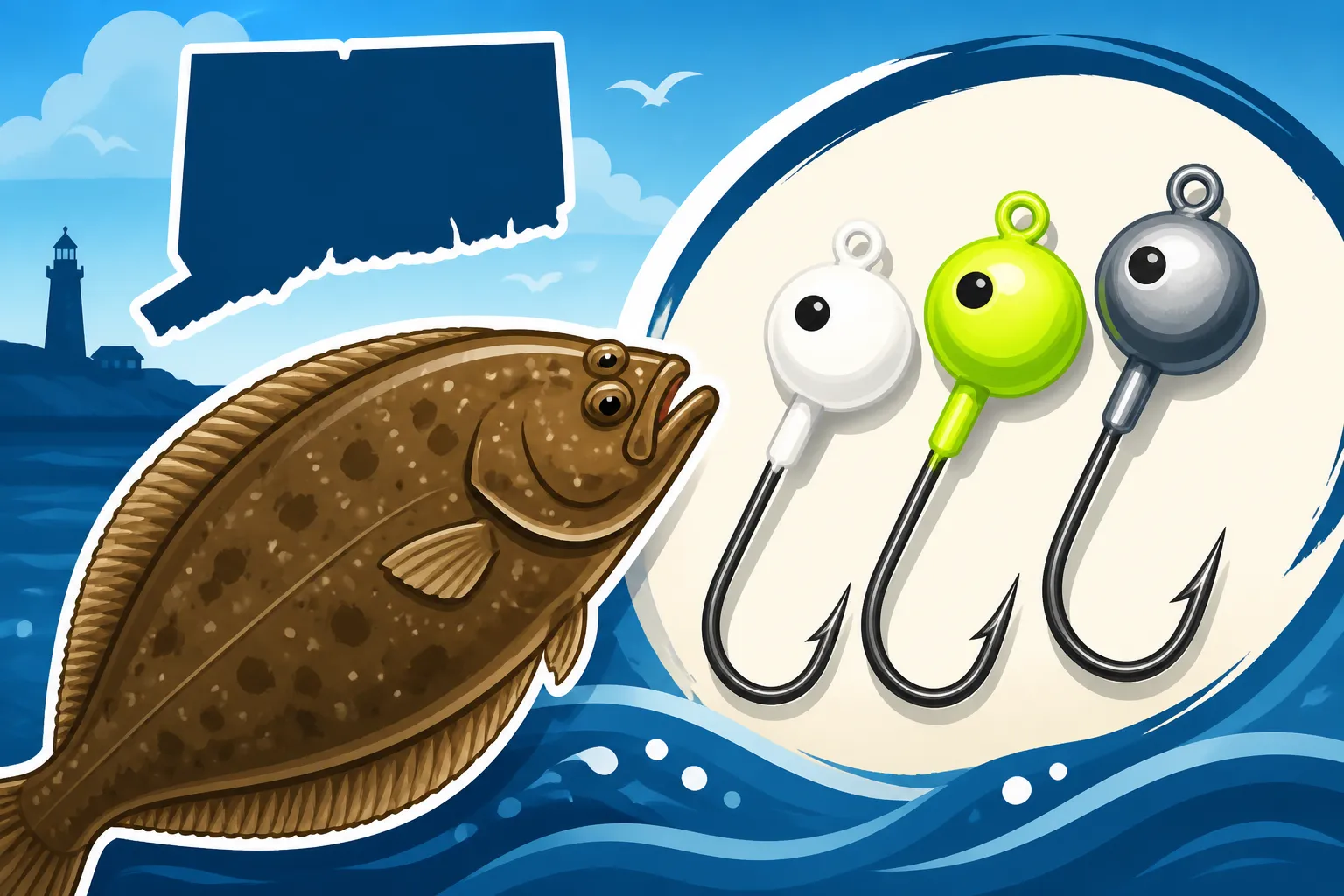
- Bucktail Jigs: These jigs, often made by brands like SPRO, are designed to mimic baitfish with their hair or synthetic fibers. The natural undulation of the hair in the water is incredibly enticing. They come in a vast array of colors, from basic white and chartreuse to more natural olive and tan. When you're purchasing bucktails, check out options on Amazon for a good selection of weights and colors.
- Soft Plastic Trailers: The magic really happens when you combine a bucktail jig with a soft plastic trailer. The most popular choice, by far, is Berkley Gulp! Alive! This scent-infused bait is a game-changer for fluke, often out-fishing natural bait like squid or spearing. Popular shapes include swimming mullets, grubs, and sandworms. Attach a 3-inch, 4-inch, or 5-inch Gulp! to the hook of your bucktail. Again, Amazon is a great place to stock up on different sizes and colors of Gulp! and other soft plastics.
- Other Soft Plastics: Beyond Gulp!, many other soft plastic baits work well, especially those with paddle tails or curly tails that create vibration and movement. Z-Man soft plastics are another durable option, especially when paired with a jig head.
- Color Choices: While natural colors (white, pearl, chartreuse, pink) are always a good starting point, don't be afraid to experiment. On bright, sunny days, natural colors often shine. In darker, overcast conditions, or deeper water, brighter colors or those with UV enhancers can make a difference.
Terminal Tackle and Setup Considerations
Your entire rig works together, not just the jig itself.
- Leader Material: A fluorocarbon leader is highly recommended for fluke. It’s nearly invisible underwater, more abrasion-resistant than mono (great for rubbing against structure), and gives your jig a more natural presentation. A good starting point is 20-30 lb test fluorocarbon, about 3-4 feet long. Connect it to your main braided line with a strong knot like an FG knot or a double uni knot.
- Swivels and Snaps: Many anglers use a small, high-quality ball-bearing swivel to connect their leader to the main line to prevent line twist, especially when drifting. A small, strong snap (like a Tactical Anglers clip or a Duo Lock snap) at the end of your leader allows for quick jig changes without having to re-tie your entire rig. This is invaluable when you're experimenting with different weights and colors throughout the day.
- Hook Choices: Most bucktail jigs come with a sturdy O'Shaughnessy style hook, which is perfectly adequate. However, some anglers prefer to add a stinger hook, a small treble or single hook tied a few inches above the main hook, especially if fish are short-striking the tail of the soft plastic. Be mindful of Connecticut Fluke and Summer Flounder Regulations regarding the number of hooks allowed.
By combining the right jig weight with an appealing presentation and adjusting to the ever-changing conditions, you'll be well on your way to a cooler full of delicious fluke. Don't forget to review Connecticut Fishing Regulations Explained before heading out on your next trip!
Disclaimer
Please note: Fishing regulations, including those for specific species, seasons, and gear, are subject to change. Always consult the latest official Connecticut Department of Energy and Environmental Protection (CT DEEP) fishing guide or website before heading out on the water to ensure compliance. This guide is for informational purposes only and does not constitute legal advice regarding fishing regulations.