Best trolling speed for striped bass in Long Island Sound
Few things are more frustrating for a Connecticut angler than seeing the radar light up with fish or marking bait, yet your lines stay untouched while trolling for striped bass. You've got the right lures, you're in a prime spot like the Race or off the mouth of the Connecticut River, but the fish just aren't biting. Often, the hidden culprit isn't your bait, your location, or even the fish's mood – it's your trolling speed. Dialing in the optimal speed can be the difference between a silent trip and a screaming reel, and this guide will help you master that crucial element for success in Long Island Sound.
Understanding the Striped Bass and Their Forage in Long Island Sound
Before we even talk about specific numbers on your speedometer, it's vital to understand the target: the striped bass. These powerful predators are driven by instinct, and their feeding behavior is directly tied to the availability and movement of their prey. To effectively troll for them, you need to think like a striper and understand what makes their dinner appealing.
Striped Bass Behavior and Feeding Habits
Striped bass are opportunistic predators, known for their aggressive feeding binges, especially during migratory periods or when large schools of baitfish are present. They are visual hunters, relying on their keen eyesight to spot struggling or disoriented baitfish. When a striper decides to strike, it's often a sudden, powerful lunge. They'll chase down fleeing prey, ambush from structure, or herd bait into tight balls. This means your trolled lure needs to mimic either a healthy, active baitfish moving through the water, or, more often, a wounded or easy meal that's struggling to keep up.
Their predatory instincts are sharp, and they can be incredibly discerning, especially in clearer waters or under heavy fishing pressure. A lure that looks out of place, moves too unnaturally fast, or too sluggishly, often gets ignored. Consider their powerful tails and streamlined bodies – they are built for bursts of speed, but they also conserve energy, waiting for the opportune moment. Understanding these inherent traits is foundational to understanding why certain trolling speeds are effective. For a deeper dive into these fascinating fish, check out our guide on Striped Bass Fishing in Long Island Sound.
Key Forage Species and Their Swimming Patterns
The primary food sources for striped bass in Long Island Sound dictate how you should present your offerings. One of the most important forage species is the Atlantic menhaden, or "bunker." These oily baitfish often school in massive numbers, and when stripers are on them, it's usually a chaotic, high-energy event. Menhaden don't swim in a straight line when being pursued; they dart, change direction erratically, and often attempt to flee in a panicked burst. Your lure should try to replicate this desperate escape.
Beyond bunker, stripers also feed on sand eels, squid, mackerel, and even small lobsters or crabs. Each of these has a distinct movement pattern. Sand eels, for example, are long and slender, often swimming in a rapid, undulating motion. Squid can be quite agile, darting and pausing. Eels have a more serpentine, slithering motion. When choosing your lure and, consequently, your trolling speed, always think about what natural prey you're trying to imitate. If the stripers are keying in on bunker, a fast, erratic retrieve might be best. If they're hunting more subtle prey like a wounded scup or a slow-moving eel, a more deliberate, slower speed could be the ticket. Understanding What striped bass eat in Long Island Sound can give you an edge.
The Art and Science of Trolling Speed for Striped Bass
Trolling for striped bass isn't just about putting a line in the water; it's a careful dance between your boat's movement and the presentation of your lure. The speed at which you move your boat directly impacts how your bait or artificial lure behaves underwater, making it either irresistible or invisible to a hungry striper.
The "Sweet Spot" Speeds and Why They Work
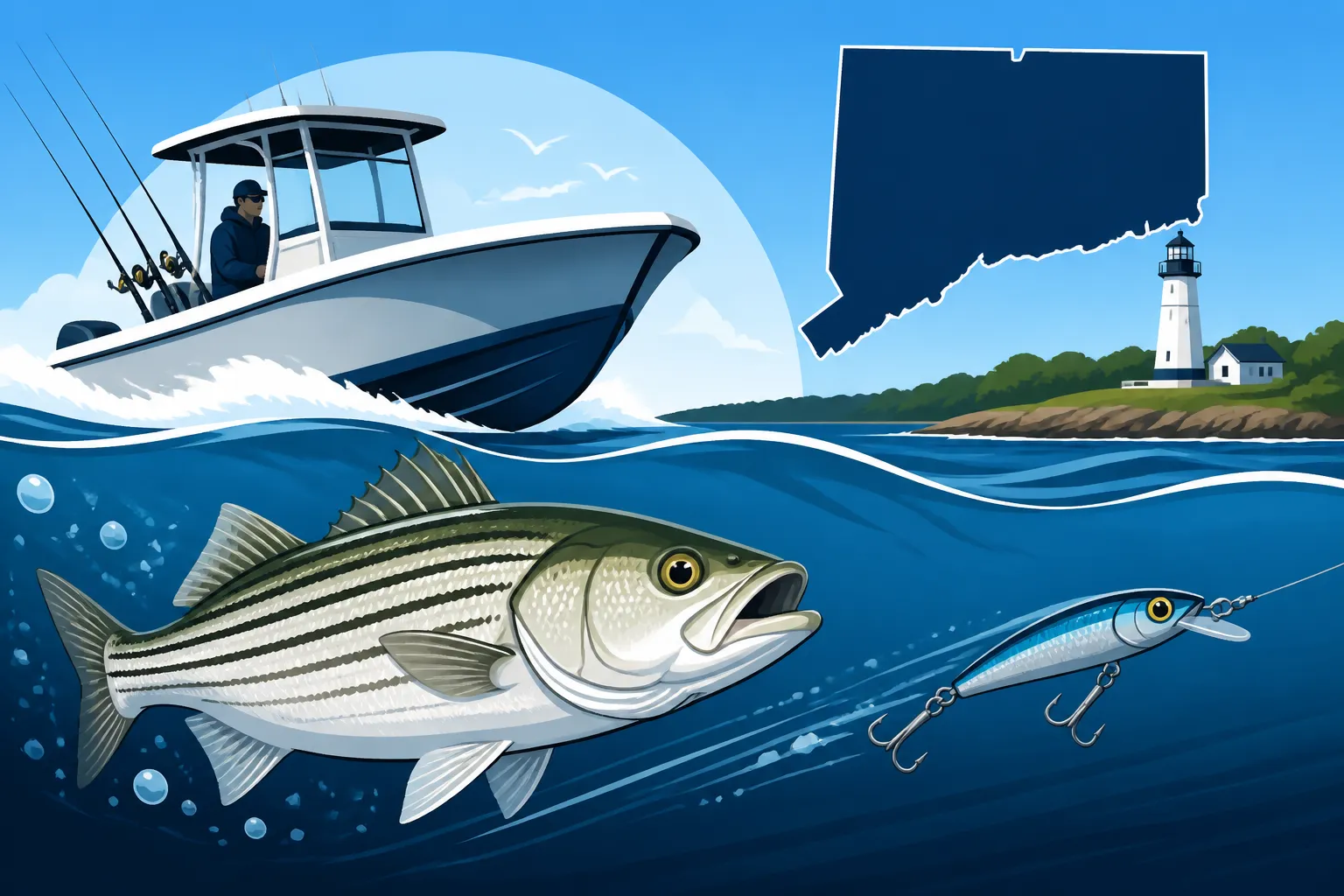
Generally speaking, the consensus "sweet spot" for trolling striped bass in Long Island Sound falls between 2.5 and 4 knots. This range isn't arbitrary; it's the result of countless hours on the water and a deep understanding of striper behavior and lure dynamics.
- 2.5 to 3.0 knots: This slower end of the spectrum is often ideal for larger umbrella rigs, tube-and-worm setups, or when using live eels or bunker. At these speeds, umbrella rigs mimic a small school of baitfish moving steadily, enticing predatory stripers to engulf the entire school. Live baits appear to be swimming naturally but slowly, making them an easy target. The subtle wiggling action of a tube-and-worm becomes incredibly lifelike. This speed range is particularly effective in cooler water temperatures when stripers might be less active, or when they're feeding on slower-moving prey.
- 3.0 to 4.0 knots: As you push towards 4 knots, you're generally targeting stripers that are more aggressive and actively feeding on fast-moving bait like bunker or mackerel. At these speeds, spoons like the Drone Spoon or the Tony Maja Bunker Spoon will flash and wobble erratically, simulating a panicked or wounded baitfish trying to escape. Plugs like Bombers or Rapalas will dive and swim with a tight, fast action that often triggers a reaction strike. This faster range is excellent when you're covering a lot of water or when you've located active schools of bait and want to imitate a chase.
The key across this spectrum is consistency. Your goal is to make your offering look like a real meal, not a toy being dragged through the water. The correct speed gives artificial lures their designed action and allows live bait to swim naturally without being dragged unnaturally or spinning.
Factors Influencing Optimal Trolling Speed
While the 2.5 to 4-knot range is a great starting point, the "optimal" speed is rarely static. Several environmental and equipment factors will force you to constantly adjust, demanding your attention and skill.
First, water temperature plays a huge role in fish metabolism. In colder water (think early spring or late fall), stripers are more sluggish. Their metabolism is slower, and they're less likely to chase down a fast-moving meal. A slower troll, around 2.5-3 knots, will often be more productive, giving them an easier target. Conversely, in warmer summer waters, stripers are more active and aggressive, ready to chase down a faster presentation closer to 3.5-4 knots. Knowing the Connecticut Fishing Seasons by Month can help you predict these changes.
Second, current and tide in Long Island Sound are relentless and always changing. If you're trolling against a strong outgoing tide, your ground speed might be only 2.5 knots, but your lure speed through the water could be much faster due to the opposing current. The reverse is true when going with the tide. You need to compensate by adjusting your boat's engine RPMs. Many experienced anglers adjust their trolling path, often preferring to troll with the current for a more natural presentation, or across it to maintain a consistent speed relative to the bottom. Understanding the tidal swings and how to adjust your approach is critical for successful Trolling Techniques for Long Island Sound Striped Bass.
Finally, the type of lure you're deploying is paramount. A large umbrella rig with multiple teasers isn't designed for high-speed trolling; it needs a slower speed to maintain its schooling effect and prevent tangles. On the other hand, a metal spoon needs to be trolled faster to achieve its characteristic flash and erratic wobble. A deep-diving plug might perform best at a specific speed where it achieves its designed depth and swimming action. You need to become familiar with how each of your chosen lures behaves at different speeds. The best way to do this is to deploy a lure next to your boat in clear water and observe its action before letting out line. For more on what's effective, check out our guide on the Best Lures for Striped Bass in Long Island Sound.
Practical Tips for Dialing in Your Trolling Speed on Long Island Sound
Successfully trolling for striped bass requires more than just picking a speed and sticking with it. It's about being observant, using your tools effectively, and constantly adapting to the conditions around you. This dynamic approach is what separates a consistent catcher from someone just dragging lines.
Using Technology to Maintain Speed and Track Success
In today's world, modern boat electronics are your best friends for dialing in trolling speed.
- GPS and Speedometers: These are absolutely indispensable. Your boat's analog speedometer, which measures speed through the water, can be heavily influenced by current. A GPS-based speedometer, however, gives you your true speed over ground. While speed over ground is important for navigation and covering territory, for trolling, you often want to know your speed through the water to ensure your lures are behaving correctly. Many modern multi-function displays (MFDs) found on brands like Garmin, Raymarine, and Simrad offer both. Aim to keep a close eye on both, understanding how the current is affecting your lure presentation. If you're just starting out, even a basic handheld GPS can give you a reliable speed reading. These can easily be found on platforms like Amazon.
- Chartplotters and Fishfinders: Beyond just speed, your chartplotter and fishfinder provide crucial context. Mark areas where you’ve had success, noting your speed, the depth, and any structure. If you see baitfish schools on your fishfinder, adjust your speed to match how those baitfish might be trying to escape. Are they balled up and frantic? Or slowly cruising? This directly informs your trolling speed and lure choice. You can learn more about finding the right spots in our Long Island Sound Fishing Guide.
- Logbooks: This old-school tool remains one of the most powerful. Keeping a detailed log of your trips—date, time, location, tide, water temperature, trolling speed, lure type, and catch results—creates a database of success patterns. You'll quickly start to see correlations, for instance, that "on an incoming tide near Plum Gut, 3.2 knots with a chartreuse umbrella rig was lights out." A simple waterproof notebook or a dedicated fishing logbook purchased from Amazon can make a huge difference in refining your approach over time.
Adjusting for Conditions and Observing Your Lures
The Long Island Sound is a dynamic environment, and conditions rarely stay the same for long. Wind, waves, and current all conspire to make maintaining a consistent trolling speed a challenge.
When trolling, you'll need to make frequent, small adjustments to your engine's throttle to compensate. If you're heading into a strong chop, you might need to increase your RPMs slightly to prevent your boat from slowing down too much. If you're running with the wind and current, you might need to drop your RPMs significantly to avoid going too fast. It's a constant dance with your throttle and steering wheel, often called "boat control."
Always pay attention to your lures. If you're running artificials, periodically pull one up to the surface or deploy it close to the boat (if safe) to observe its action. Is it swimming true? Is it fouled with weed? Is it diving to its intended depth? If a spoon is spinning rather than wobbling, you might be going too fast. If a plug isn't diving, you might be going too slow or have an issue with its lip. For live bait, ensure it's swimming freely and not twisting or getting tangled. This constant visual check is crucial for ensuring your effort isn't wasted.
Specific Lures and Their Ideal Trolling Speeds
Different lures are engineered to perform optimally at specific speed ranges. Here's a quick reference table for some common striped bass trolling lures in Long Island Sound:
| Lure Type | General Ideal Speed Range (knots) | Action at Optimal Speed | Best For |
|---|---|---|---|
| Umbrella Rigs | 2.0 – 3.5 | Mimics a small school of baitfish, natural swimming motion | Covering large areas, targeting schools, less active fish |
| Tube and Worm | 2.0 – 3.0 | Enticing, subtle wiggling of the worm, slow eel-like action | Finesse presentation, cooler water, picky fish |
| Spoons | 3.0 – 5.0+ | Erratic flash, wobbling, wounded baitfish imitation | Aggressive fish, faster search, imitating bunker/mackerel |
| Deep-Diving Plugs | 2.5 – 4.0 | Tight wobble, natural swimming action, deep presentation | Targeting suspended fish, specific depths, structure |
| Live Baits (e.g., eels, bunker) | 1.0 – 2.5 | Natural swimming, subtle movement, appears disoriented | Picky fish, larger specimens, specific presentations |
Remember, these are general guidelines. Brands like Joe Baggs Tackle (known for their tube and worm), and Bomber (famous for their plugs) often have specific recommendations for their products. Always test your lures. If you're targeting big fish, especially during periods like the Striped Bass Migration Along the Connecticut Coast, a slower, more deliberate approach with a large offering might be more effective. For information on big fish habits, consider reading How big striped bass get in Long Island Sound.
Common Trolling Mistakes and How to Avoid Them
Even experienced anglers can fall into common pitfalls when it comes to trolling speed. Avoiding these errors can dramatically increase your success rate and lead to more hookups with those elusive Long Island Sound stripers.
Going Too Fast or Too Slow
This is arguably the most common mistake. Many anglers, either out of impatience or a lack of attention to their electronics, will simply go too fast or too slow for the conditions and the lures they are presenting.
- Going too fast often results in lures with unnatural actions. Spoons might spin instead of wobble, umbrella rigs can get tangled or "blow out" (lose their proper school formation), and plugs might swim too erratically or not dive to their intended depth. More critically, an overly fast retrieve can make your bait appear too healthy or too fast for a striper to bother chasing, especially if they are not in an aggressive feeding mood. The fish either can't catch up, or they simply aren't fooled by the unnatural presentation. You might also miss strikes because the fish can't properly engulf the lure.
- Going too slow is equally detrimental. Lures might not have enough water resistance to achieve their proper action; spoons won't flash, plugs won't wobble, and soft plastics or teasers on an umbrella rig might just drag lifelessly. Live bait might appear too lethargic, not like a struggling meal but a dead one. If a striper is active and looking for a chase, a slow-moving lure can be easily ignored as not worth the effort. In conditions where fish are spread out, going too slow also means you're covering less water and reducing your chances of encountering a feeding fish.
The solution is constant vigilance over your GPS and fishfinder, combined with regular checks on your lures' action. Don't be afraid to make micro-adjustments to your throttle.
Ignoring Environmental Cues
Another significant error is failing to acknowledge and adapt to the ever-changing environmental conditions of Long Island Sound. The wind, waves, and particularly the strong tidal currents can drastically alter your true lure speed, even if your engine RPMs remain constant.
Imagine you're trolling at a perfectly dialed-in 3.0 knots, but a 2-knot opposing current suddenly kicks in. Your boat's GPS might still show 3.0 knots over ground, but your lure's speed through the water could now be a sluggish 1 knot, effectively killing its action. Conversely, if you suddenly get a 2-knot assisting current, your lure's speed jumps to 5 knots, making it look like a jet-powered squid.
Smart anglers are always monitoring wind direction and speed, wave height, and paying close attention to the tidal charts for the specific area they are fishing. Areas like The Race or Plum Gut are notorious for their strong currents and demand constant adjustment. You can find excellent tidal information online or in fishing apps. Always adjust your boat's throttle and sometimes even your course to maintain that consistent lure presentation through the water. For more on navigating these challenges, see our guide on Connecticut Boating Laws for Anglers.
Not Experimenting Enough
Finally, one of the biggest mistakes is getting stuck in a rut. You find a speed that worked last week, or even last hour, and you stubbornly stick to it, even when the fish aren't biting. Every day, every tide, and every group of striped bass can be different.
Successful trolling is about being a detective. If the fish aren't hitting, don't just change lures; change your speed. Try bumping it up or down by half a knot, then a full knot. Observe what happens. Sometimes, a slight increase in speed makes a spoon flash just right, or a slight decrease allows an umbrella rig to hold its school formation perfectly.
Don't be afraid to experiment with different speeds, especially when you're in a known productive area but not getting bites. Start with the "sweet spot" range, but then slowly expand outwards. Try running slightly slower, then slightly faster. Pay attention to the subtle cues: a slight flutter from your rod tip might indicate a better lure action, or a small tap might suggest you're getting closer to triggering a strike. By actively experimenting, you're not just fishing; you're actively learning and refining your technique, which will lead to more consistent success over the long haul. Remember, there's a reason why expert captains are often booked solid; their ability to consistently find and catch fish comes from constant adaptation and experimentation. Learning from a charter can be invaluable, so consider checking out the Best Fishing Charters in Connecticut.
Disclaimer
Please note: Fishing regulations, including those for striped bass, can change. Always consult the latest Connecticut Department of Energy and Environmental Protection (DEEP) fishing guide before heading out on the water. This information is for general guidance and educational purposes only.