Best technique for high water spring bass fishing
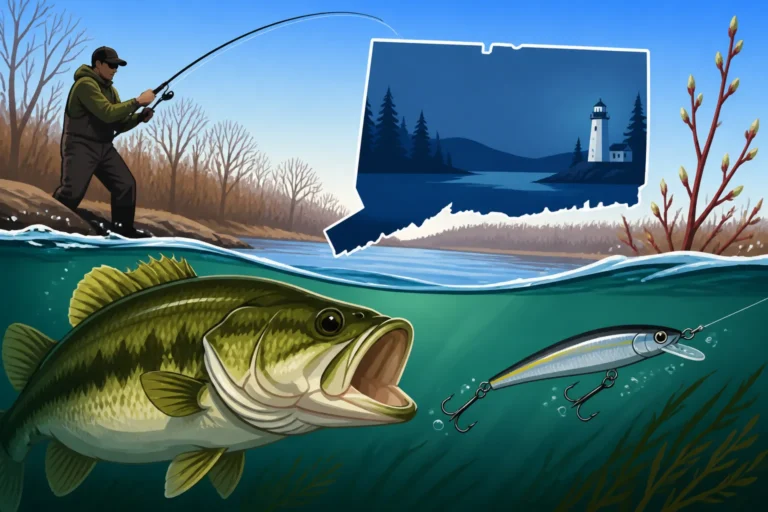
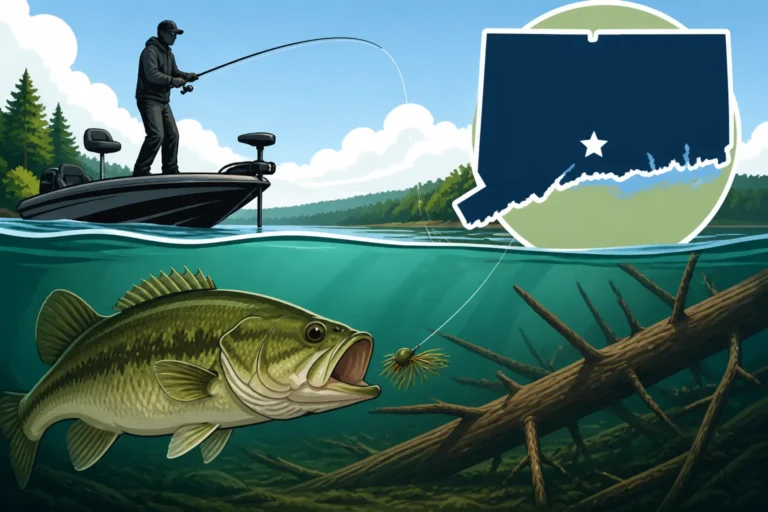
Spring in Connecticut can be a beautiful time to hit the water, but it often throws a curveball at bass anglers: high water conditions. Heavy rains and melting snow can transform serene rivers and calm lakes into fast-moving, murky challenges, leaving many anglers scratching their heads about where the bass have gone or what to throw. This guide aims to demystify high water spring bass fishing in Connecticut, providing you with actionable strategies to find and catch more largemouth and smallmouth bass, even when the water levels are against you.
Understanding High Water Dynamics in Spring
When those spring deluges hit, and the rivers swell, it's easy to feel defeated. But understanding what's happening beneath the surface is the first step to turning a tough day into a successful one. High water isn't just "more water"; it changes everything about a bass's environment.
The Impact of Rain and Runoff on Bass Behavior
Increased water levels in spring are usually accompanied by a few key changes: heightened flow, reduced visibility due to turbidity, and often, fluctuating water temperatures. Rivers like the Housatonic or the Connecticut River can become roaring torrents, making typical fishing spots unproductive. Bass, being opportunistic predators, don't just disappear; they adapt. They seek refuge from the strong currents, looking for areas where they can expend less energy while still having access to food. The influx of runoff also washes in a lot of organic matter and terrestrial insects, adding to the buffet for baitfish, which in turn, draws in bass.
Murky water, while challenging for anglers, can sometimes be a blessing in disguise. It reduces visibility for the bass, making them less wary of anglers and sometimes more willing to strike at lures that create significant disturbance. However, it also means your lure needs to be easily detected. The temperature changes are critical too; if the runoff is colder than the main body of water, bass will avoid it. If it's warmer, especially if it's sun-warmed shallow water spilling in, it can be a magnet for both baitfish and bass.
Where Bass Relocate During High Water Events
When the water rises, bass often move into predictable areas that offer respite from the current and easy access to new food sources. These are your prime targets:
- Slack Water and Eddies: Any area where the current slows down, like behind a large rock, a log jam, or inside a river bend, creates an eddy. Bass will stage in these calmer zones, waiting for unsuspecting baitfish or debris to wash by.
- Flooded Cover: Shoreline vegetation, brush piles, fallen trees, and even picnic tables or docks that were once on dry land suddenly become submerged cover. This provides excellent ambush points and shelter from the current. Lakes such as Candlewood Lake or Bantam Lake, when their levels rise, will flood shoreline grass and bushes, creating new fishing opportunities.
- Tributary Inflows and Creek Mouths: Smaller creeks and streams often warm up faster than larger bodies of water in spring. When these tributaries flow into a larger river or lake, they create warmer, often murkier plumes that attract baitfish and, consequently, bass. These "warm water highways" can be fantastic spots, especially after a cold rain.
- Riprap and Rocky Banks: These areas absorb heat and create small pockets of slack water. The rocks also provide cover for crawfish and other forage, making them appealing to bass looking for an easy meal and a place to hide.
- Marinas and Boat Basins: These typically offer calmer, often deeper water, and plenty of structure like docks, pilings, and moored boats. The protection from current and wind makes them ideal sanctuaries for bass during high water.
Understanding these relocation patterns is crucial. Don't waste time casting into fast, open water where bass are unlikely to be holding. Instead, focus your efforts on these high-percentage zones.
Essential Gear for High Water Spring Bass Fishing
Your usual tackle might not cut it when the water is raging and visibility is low. You'll need to adjust your gear to present lures effectively, handle stronger currents, and penetrate heavy cover.
Rods, Reels, and Line for Challenging Conditions
When the water is high and murky, finesse techniques often take a backseat to more robust presentations. This calls for a slight upgrade in your setup.
- Rods: Opt for medium-heavy to heavy power rods, typically 7 to 7.5 feet in length. A fast or extra-fast action tip will give you the sensitivity to detect bites in muddy water and the backbone to drive hooks through heavy cover. Look for models from brands like St. Croix or Ugly Stik, which offer durable options capable of handling the larger, heavier lures often needed in these conditions. This extra power helps you control fish in current and extract them from snags without breaking your line.
- Reels: Baitcasting reels are often preferred for their power and ability to cast heavier lures accurately. A gear ratio around 6.4:1 to 7.1:1 provides a good balance of retrieve speed and cranking power. For spinning gear, which can still be effective for lighter presentations in specific high-water scenarios, choose a 3000 or 4000 series reel for added line capacity and drag strength.
- Line: This is paramount.
- Braided Line: Many anglers swear by braided line, especially in high water. Its zero-stretch quality provides excellent sensitivity in murky water, allowing you to feel subtle bites. Its incredible strength and abrasion resistance are also invaluable when fishing around submerged timber or heavy brush. Use 30-50 lb test braid.
- Fluorocarbon Leader: While braid is great for sensitivity and strength, many will tie on a 15-20 lb fluorocarbon leader. Fluorocarbon is less visible in clearer pockets of water, and its abrasion resistance is a benefit around structure. Its limited stretch can also help with hook sets.
- Monofilament: While less common for the main line in these specific conditions, a heavy monofilament (17-20 lb test) can be used for crankbaits, as its stretch can allow for a little more give if a bass strikes aggressively.
Finding these specialized items is often easiest online. You can find a wide range of suitable rods, reels, and lines on platforms like Amazon, often with detailed reviews to help you make the best choice for your budget and fishing style.
Lures That Shine in Murky, High Water
In low visibility, bass rely heavily on their lateral line system to detect vibrations and sound. Your lure selection should prioritize these attributes.
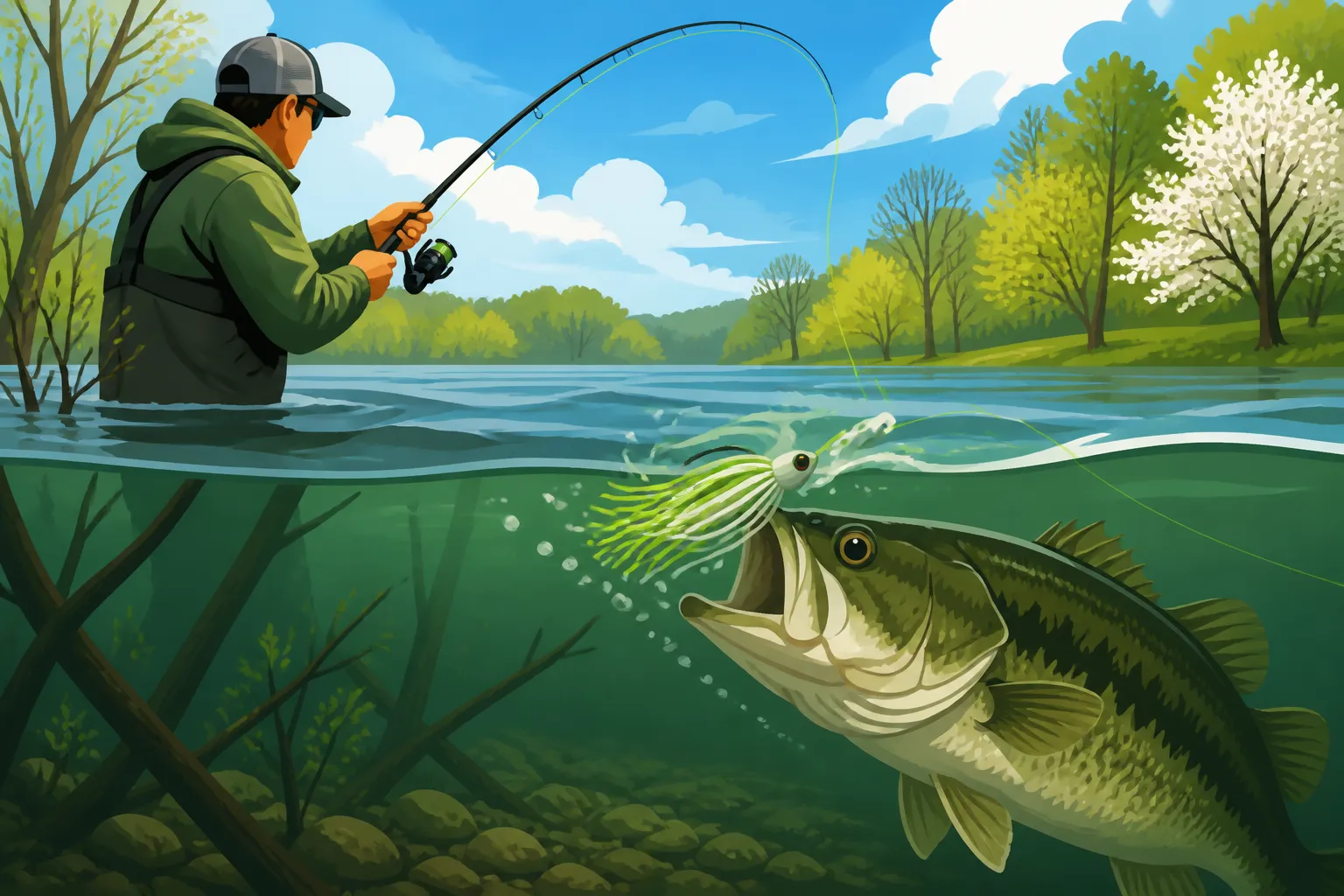
- Vibrating Jigs (ChatterBaits): These are absolute workhorses in high, murky water. The unique blade creates an incredible amount of vibration and flash, making them easy for bass to locate. Fish them around flooded cover, current seams, or over submerged grass. Pairing them with a paddle-tail trailer enhances the action and profile.
- Spinnerbaits: Another classic for these conditions. The thumping blades (Colorado or Indiana blades are great for vibration; Willowleaf for flash) and skirt pulse through the water, creating a strong presence. Use heavier spinnerbaits (3/8 oz to 1 oz) to help them penetrate the current and stay down. Chartreuse, white, and black-and-blue are fantastic color choices.
- Jigs (Flipping and Pitching Jigs): When bass are buried deep in flooded cover, a jig is your best friend. Use heavier jigs (1/2 oz to 1 oz) with a bulky trailer to displace more water. Black and blue, green pumpkin, and brown are reliable colors in murky water. The slow, methodical presentation of a jig allows you to dissect cover thoroughly. These are also excellent for Best Lure Color for Muddy Water Bass Fishing.
- Squarebill Crankbaits: These shallow-diving crankbaits are excellent for bumping off flooded timber, rocks, and other cover. Their erratic action and deflection off obstacles often trigger reaction strikes. Colors with a lot of contrast or a chartreuse base are ideal.
- Swim Jigs: Similar to a traditional jig but designed to be retrieved steadily through cover. They offer a more subtle profile than a spinnerbait but still push water effectively, especially when paired with a grub or small paddle-tail trailer.
- Soft Plastics (Texas-Rigged or Weightless): While less vibration-focused, a bulky soft plastic creature bait or worm, Texas-rigged, can be pitched into dense cover where other lures snag. A slow fall and natural profile can entice reluctant bass. Look for dark colors like junebug or black, or vibrant ones like bubblegum if the water has some stain but isn't completely opaque.
Proven Techniques for High Water Bass Success
Now that you've got the right gear, let's talk about putting it to use. High water demands a more strategic and often slower approach.
Targeting Slack Water and Eddies with Precision
When rivers and lakes are swollen, the main channel can be a blur of current. Bass will naturally seek out zones where they can escape this relentless flow without expending too much energy. These are your slack water areas and eddies.
- Identifying Productive Spots: Look for anything that breaks the current. This could be a large boulder, a fallen tree, bridge pilings, or even subtle indentations in the shoreline. An eddy forms downstream of these obstacles, a circular current where the water is significantly slower. Also, pay attention to current seams – the visible line where fast water meets slow water. Bass will often sit right on this seam, waiting for food to be swept past them.
- Lure Presentation: The key here is a slow, controlled retrieve. If you're using a spinnerbait or vibrating jig, cast slightly upstream of the slack water and let the current carry your lure into the target zone. Begin your retrieve as it enters the slower water, keeping it just above the bottom. For jigs or Texas-rigged plastics, pitch them directly into the eddy and let them sink. Work them with short hops and pauses, allowing the subtle movement of the water to do some of the work. Remember, bass in these areas are often conserving energy, so a slow, easy target is more appealing.
It's crucial to make multiple casts to these areas from different angles. Sometimes a slight change in the retrieve path or angle of approach can make all the difference. These spots are also prime real estate for smallmouth bass. For more specific strategies, consider exploring How to Catch Smallmouth Bass in Connecticut Rivers.
Fishing Flooded Cover and Structure Thoroughly
High water transforms dry land into prime bass habitat. Shoreline brush, submerged trees, and even partially submerged docks become excellent ambush points. This is where largemouth bass, especially, love to hide.
- Approach and Presentation: This is often a game of "flipping and pitching." Instead of long casts, you'll be making short, accurate presentations to specific pieces of cover. Use heavy jigs, Texas-rigged creature baits, or punch rigs with enough weight to penetrate dense cover. Drop your lure silently into the thickest part of the cover, let it sink, and work it slowly with subtle twitches.
- Types of Cover:
- Fallen Trees/Log Jams: These offer multiple ambush points. Focus on the main trunk, branches, and the shaded side.
- Submerged Bushes/Grass: These provide excellent cover and often hold baitfish. A swim jig or a weedless spinnerbait retrieved slowly through the openings can be deadly.
- Docks and Pilings: Even if partially submerged, docks provide shade, overhead cover, and vertical structure. Pitch jigs or weightless worms under and around them. This is where a lighter, more accurate setup purchased from Amazon could come in handy.
- Persistence is Key: Don't just make one cast and move on. Work each piece of cover meticulously from all angles. Bass can be very tight to cover in these conditions, and it might take several presentations to elicit a strike. This kind of fishing can be tough, requiring patience and a good understanding of How to Catch Largemouth Bass in Connecticut.
Exploiting Tributary Inflows for Warmth and Forage
Small creeks and streams flowing into larger lakes or rivers can be incredibly productive during high water spring conditions. These inflows often carry warmer water, especially if they’ve been running through sun-exposed areas, and they wash in an abundance of food.
- The "Mud Line" and Temperature Break: Look for the visible "mud line" where the murkier, warmer tributary water meets the main body. This transition zone is often a hotspot. Use a thermometer to check the water temperature difference – even a few degrees can be a significant draw for bass and their forage.
- Concentrating Baitfish: The inflow often pushes baitfish into concentrated areas. Shad, minnows, and other small fish will congregate here, seeking the warmer water and new food sources, which in turn attracts bass.
- Lure Choices: Crankbaits, especially squarebills, are excellent for covering water along these mud lines. Spinnerbaits and vibrating jigs also work well. If the tributary is small and fishable, consider working your way upstream a bit with a jig or a Texas-rigged plastic. Sometimes, the warmest water and most concentrated bass will be just inside the creek mouth. For fishing around these areas, knowing Best Baits for Smallmouth Bass on the Housatonic could give you some good crossover ideas for other river systems.
A Guide to High Water Spring Lure Selection
When those Connecticut waters are high and turbid, choosing the right lure becomes even more critical. Here's a quick rundown of some top picks and why they excel in these conditions.
| Lure Type | Key Feature | Ideal Target Zone | Retrieve Style | Best Colors (Murky Water) |
|---|---|---|---|---|
| Vibrating Jig | Strong vibration/flash | Flooded cover, current seams | Steady, slow to medium | Chartreuse, Black & Blue |
| Spinnerbait | Vibration, flash, pulse | Current seams, open water | Steady, slow roll | Chartreuse, White, Black |
| Jig (Flipping/Pitching) | Bulk, weedless, slow | Dense flooded cover, pilings | Hop, drag, pause | Black & Blue, Green Pumpkin |
| Squarebill Crankbait | Erratic deflections | Rocks, timber, shallow cover | Steady, retrieve & deflect | Crawfish, Chartreuse Shad |
| Swim Jig | Subtle profile, pushes water | Submerged grass, light cover | Steady, slow to medium | Green Pumpkin, White |
| Soft Plastic Creature | Natural profile, bulk | Heavy cover, slow descent | Pitch, punch, subtle shakes | Junebug, Black, Watermelon |
Adapting to Changing Water Levels After the Peak
The spring bass bite isn't static. High water levels will eventually recede, and bass will adjust their patterns again. Being ready for these transitions can keep you on the fish.
As Water Recedes: Following the Bass Back to Structure
Once the heavy rains subside and the floodwaters begin to drop, bass will gradually start moving out of their high-water sanctuaries. This transition period can be incredibly productive if you know where to look.
- Exposed Cover: As the water drops, previously submerged cover like flooded bushes and grass will begin to expose itself. Bass will often linger around the remaining submerged edges of this cover, or move to the nearest hard structure.
- Return to Main Channel Structure: Bass that were hiding in slack water pockets along the main river channel will start to reposition themselves on current breaks that become more defined as the flow decreases. This includes rock piles, humps, ledges, and drop-offs. Areas near the mouth of tributaries, as the flow lessens, can still hold fish but they may move a bit further out. Knowing the Best Fishing Rivers in Connecticut and their typical structures is key here.
- Edge Fishing: Focus on the new "edges" created by the receding water. This might be the edge of a newly exposed flat or the last remaining submerged grass line. Bass will patrol these edges looking for baitfish.
- Lure Adjustments: As visibility improves slightly, you can start experimenting with lures that have a more realistic profile or subtle action. Jerkbaits, stickbaits, and even finesse worms might become more effective. However, don't abandon your vibrating jigs and spinnerbaits too quickly, as the water can still be stained.
Post-Front Conditions and High Water
Spring often brings volatile weather, and it's common to have a cold front move in right after a period of heavy rain and high water. This combination can make fishing exceptionally tough. Bass become lethargic and less willing to chase.
- Slowing Down Even More: If a cold front hits during high water, your retrieve speed needs to slow down dramatically. Think about crawling a jig or a weightless worm along the bottom. Bass will be hugging cover even tighter and will need an easy meal.
- Focus on Depth and Verticality: Bass might move deeper to find more stable water temperatures. Vertical presentations like drop-shotting a small worm or slowly hopping a football jig on deeper structure can be effective.
- Concentrate on Prime Sanctuaries: The most protected areas, like the deep pockets within marinas, the thickest part of a log jam, or tight to bridge pilings, become even more critical during post-front conditions. These are the last bastions of comfort for cold, inactive bass. For more in-depth knowledge on this specific challenge, review Cold Front Fishing Tactics for Connecticut Bass. This strategy is also relevant for Best time to fish after a cold front.
Ultimately, high water spring bass fishing in Connecticut is about adapting. It's not about fighting the conditions, but understanding them and using them to your advantage. By focusing on slack water, heavy cover, and tributary inflows with the right gear and a patient approach, you can turn a challenging day into a memorable one, consistently putting bass in the boat.
Disclaimer
Please remember that fishing regulations in Connecticut can change. Always consult the latest Connecticut Department of Energy and Environmental Protection (DEEP) fishing guide before heading out on the water. This guide is for informational purposes only and does not supersede official regulations.