How to fish a jerkbait for early spring bass
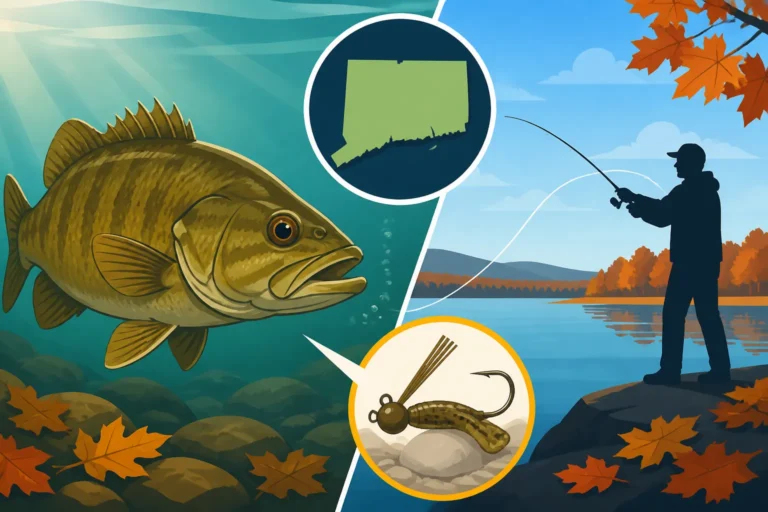
The ice has finally receded, and the first whispers of spring are in the air, but the water in Connecticut's lakes and ponds is still bone-chillingly cold. This time of year can be incredibly frustrating for bass anglers; the fish are there, but they're sluggish, finicky, and not yet ready to chase down a fast-moving bait. If you've ever felt like you're casting into a void during early spring, this guide is for you. We're going to dive deep into how to effectively fish a jerkbait for early spring bass, transforming those cold, slow days into rewarding trips.
Understanding Early Spring Bass Behavior in Connecticut
Before we even talk about lures, it's crucial to understand what the bass are doing in early spring. They're just coming out of their winter slumber, and their metabolism is still quite slow. They aren't actively burning a lot of energy, which means they're not going to expend much effort chasing down a meal. This fundamental behavior dictates everything about our approach.
The Impact of Cold Water on Bass
When water temperatures are hovering in the 40s to low 50s, bass are lethargic. Think of it like trying to run a marathon right after waking up from a long nap – you're just not going to be at peak performance. Their digestive systems work slowly, so they don't need to eat frequently. This means you need to present a bait that looks like an easy, high-reward meal without requiring a strenuous chase. They're often grouped up in deeper areas adjacent to shallower spawning grounds or near structures that offer a slight warmth advantage or ambush points. You can learn more about specific behaviors in Best water temperature for smallmouth bass fishing or How barometric pressure affects Connecticut bass fishing.
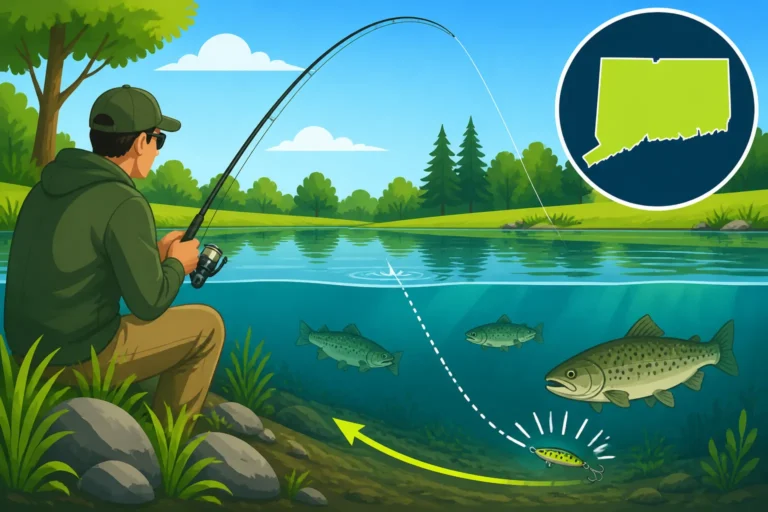
A bass in cold water won't typically dart out from cover and slam a crankbait moving at speed. Instead, it will eye a struggling baitfish, waiting for the opportune moment when it's just too tempting to ignore. This is why a bait that can be paused for an extended period, mimicking a dying or disoriented forage fish, becomes absolutely deadly. They want that easy, suspended meal.
Prime Locations for Early Spring Bass
Finding early spring bass in Connecticut often comes down to locating those subtle temperature differences or key structures. Bass will gravitate towards anything that offers a slight advantage in the cold. Look for hard bottom areas, rocky points, and channel swing bends that transition from deeper wintering holes to shallower flats. These spots often warm up a degree or two faster when the sun hits them, and even a small temperature bump can make a big difference to a sluggish bass.
Another overlooked area is the sunny side of a lake or pond, especially those protected from cold northern winds. These areas receive more direct sunlight throughout the day, causing the water to warm slightly faster. Docks, riprap, and submerged timber can also be key, providing both cover and ambush points as bass slowly start to explore shallower zones. Identifying these subtle shifts in habitat is paramount. Consider reading our guide on How to pattern bass on an unfamiliar Connecticut lake to refine your location scouting.
Choosing the Right Jerkbait for Connecticut's Early Spring Waters
Selecting the perfect jerkbait isn't just about grabbing the prettiest one off the shelf. It's about matching the conditions, the local forage, and the bass's mood. For early spring in Connecticut, certain characteristics become non-negotiable for success.
Suspending Jerkbaits: Your Early Spring MVP
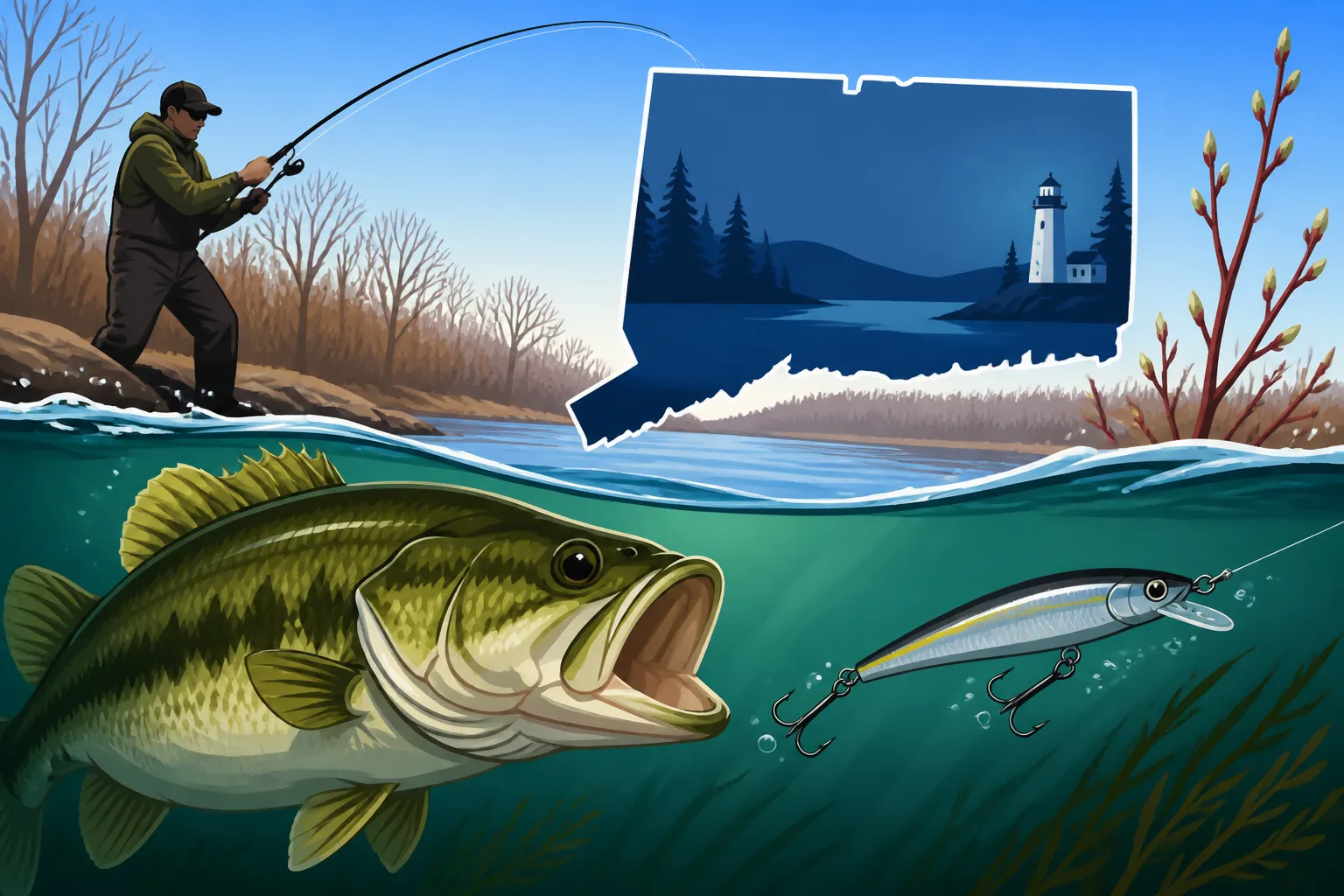
Hands down, the most critical feature of an early spring jerkbait is its ability to suspend. Floating jerkbaits will rise on the pause, and sinking ones will fall. While they have their place in other seasons, for cold water bass that aren't willing to chase, a bait that hangs perfectly still in the strike zone during a pause is gold. This allows a bass to slowly approach, inspect, and then, hopefully, inhale the bait without much effort.
When you're browsing for jerkbaits, make sure the packaging explicitly states "suspending." Brands like Rapala, Megabass, and Lucky Craft are well-known for their suspending jerkbaits, and you can find a wide selection of them on platforms like Amazon. The key is that prolonged hang time, sometimes for 10, 20, or even 30 seconds between twitches, is what often triggers a bite from a hesitant fish.
Color and Size Selection for Connecticut Forage
Matching your jerkbait's color and size to the local forage is always a good idea, but it's especially important when bass are being picky. In Connecticut, common bass forage includes shiners, alewives, perch, and bluegill.
- Natural Colors: For clear water conditions, which are common in many of Connecticut's deeper lakes, opt for natural baitfish patterns like silver-side, shad, chrome, or even realistic perch and bluegill patterns. These mimic the prey bass are accustomed to seeing.
- High-Contrast Colors: If you're fishing in stained or slightly murky waters, a brighter or more high-contrast pattern can be effective. Chartreuse, firetiger, or those with a touch of orange or red on the belly can help bass locate the bait in reduced visibility.
- Size Matters: In early spring, starting with smaller to medium-sized jerkbaits (3-5 inches) is often best. As the water slowly warms and bass become more active later in spring, you can experiment with slightly larger profiles. Remember, they're looking for an easy meal, not a strenuous chase after a giant bait.
Here's a quick reference table for jerkbait selection:
| Water Clarity | Temperature Range | Jerkbait Size | Recommended Colors | Retrieve Style on Pause |
|---|---|---|---|---|
| Clear | 40-50°F (cold) | 3-4 inches | Silver, Shad, Perch, Bone | Very Long (10-30s) |
| Clear | 50-55°F (warming) | 4-5 inches | Silver, Shad, Chartreuse | Long (5-15s) |
| Stained | 40-50°F (cold) | 3-4 inches | Firetiger, Chartreuse, Orange Belly | Very Long (10-30s) |
| Stained | 50-55°F (warming) | 4-5 inches | Firetiger, Orange Belly | Long (5-15s) |
Mastering Jerkbait Techniques for Connecticut Bass
The beauty of the jerkbait lies not just in the lure itself, but in how you work it. It's an active lure that requires your constant input to bring it to life, especially for those hesitant early spring bass.
The "Rip, Rip, Pause" Cadence
This is the quintessential jerkbait retrieve, and mastering it for early spring is all about the pause. Start with your rod tip pointed down towards the water, making a short cast to your target area.
- Cast and Retrieve Slack: Cast out, let the ripples settle, and reel in any slack in your line until you can just feel the bait.
- First Jerk: Give your rod tip a sharp, downward twitch (a "rip"). This makes the bait dart.
- Second Jerk: Immediately follow with another sharp twitch. The bait will dart again, often in a different direction.
- The Pause (THE CRITICAL PART): This is where patience comes in. After those two jerks, do nothing. Let the bait suspend. Count slowly to 5, 10, 15, or even 30. Watch your line for any subtle movement – a tiny twitch, a pull, or a sudden slackening could indicate a bite. Many times, the strike comes on the pause, when the bait is completely still.
- Repeat: Reel in a bit of slack, and then repeat the "rip, rip, pause" sequence.
Experiment with the length of your pauses. On colder days or in clearer water, longer pauses are usually more effective. As the water warms, you might shorten the pauses and increase the frequency of your jerks. This retrieve perfectly mimics a dying baitfish, creating an irresistible target for a lethargic bass.
Reading the Water and Adjusting Your Approach
Being successful with jerkbaits in early spring isn't just about a mechanical retrieve; it's about being observant and adapting. Pay close attention to the conditions. Is it a sunny day, warming the shallows? Or is a Cold Front Fishing Tactics for Connecticut Bass moving in, making the fish even more hesitant?
- Sunlight vs. Clouds: On sunny days, bass might move shallower to absorb warmth, making them more accessible near cover. On cloudy days, they might stay slightly deeper, requiring a jerkbait that dives a bit more.
- Wind: A little chop on the water can actually be your friend, breaking up the surface and making your retrieve look more natural, allowing you to get away with slightly more aggressive jerks. However, strong winds can make casting and line management difficult.
- Depth: If you're not getting bites near the surface, try a jerkbait that dives deeper or adjust your retrieve to let it get down further before starting your cadence. Often, bass are suspended a few feet down, just above structure or a thermocline. Pay attention to your fish finder if you have one, looking for schools of baitfish or arches that could be bass.
Remember, every cast is a learning opportunity. If one cadence isn't working, don't be afraid to change it up. Vary your jerk intensity, the number of jerks, and especially the duration of your pauses.
Maximizing Your Success: Gear, Conditions, and Advanced Tips
Getting the most out of jerkbait fishing in early spring involves more than just the lure and the retrieve. Your equipment, understanding the subtle nuances of conditions, and a few advanced tricks can significantly increase your catch rate.
Essential Gear for Jerkbait Fishing
Having the right rod, reel, and line can make a world of difference in your jerkbait presentation and your ability to detect subtle bites.
- Rod: A medium-light to medium power casting or spinning rod, typically 6'6" to 7' in length, with a fast action tip, is ideal. The fast action allows for sharp, crisp jerks to impart action to the bait, while the medium power provides enough backbone to fight bass effectively without ripping the treble hooks out. Many anglers find baitcasting setups superior for casting accuracy and fighting power with larger bass. You can find quality rods suitable for jerkbait fishing on Amazon.
- Reel: A casting reel with a gear ratio around 6.3:1 to 7.1:1 works well. This provides a good balance of retrieve speed for taking up slack quickly between jerks and sufficient power. For spinning setups, any smooth, reliable reel in the 2500-3000 size range will do.
- Line: Fluorocarbon line is generally preferred for jerkbait fishing. Its low stretch provides excellent sensitivity, allowing you to feel even the lightest taps on the pause. It also sinks, which helps your suspending jerkbait get down to its intended depth and stay there more effectively. A 10-12 lb test fluorocarbon is a good starting point for most situations in Connecticut. Some anglers use a monofilament leader for a slightly slower sink rate or more neutral buoyancy, but fluorocarbon is usually the top choice.
When and Where to Fish for Early Spring Bass
Timing is everything in early spring. The warmest part of the day, typically late morning to mid-afternoon, often provides the most active bite. Look for the sunniest days right after a stretch of colder weather, as the bass will be eager to move and feed.
As for locations, in addition to the points and channel bends mentioned earlier, don't overlook areas with darker bottoms. Mud or dark rock absorbs more heat from the sun, radiating it into the water and creating warmer pockets. Creek arms or coves that feed into larger lakes can also be hotspots, especially if they have slightly warmer inflowing water. Remember to check out resources like Best Bass Fishing Lakes in Connecticut for specific locations.
Advanced Jerkbait Tips and Tricks
Once you've got the basics down, here are a few ways to fine-tune your jerkbait game:
- Vary Your Pauses: Don't get stuck on one pause length. Start with a medium pause (5-10 seconds) and then go longer or shorter until you find what the fish prefer that day. Sometimes a 30-second pause is what it takes to coax a stubborn fish.
- Line Watch: During those long pauses, keep a keen eye on your fishing line. Any twitch, jump, or slackening of the line can indicate a bass has picked up the bait. It's often more subtle than a violent strike.
- Subtle Color Changes: Don't be afraid to slightly alter your lure's appearance. Adding a touch of chartreuse dye to one of the treble hook feathers or a spot on the belly can sometimes provide just enough contrast to trigger a strike in stained water.
- Trailer Hooks: If you're getting short strikes where bass are nipping at the tail, consider adding a small trailer hook to the rear treble. You can find these on Amazon as well, and they can make a difference in hooking those finicky fish.
- Focus on Structure and Cover: Cast your jerkbait to run alongside submerged logs, rock piles, dock pilings, or vegetation lines. Bass love to ambush from cover, and a suspended jerkbait lingering nearby is a prime target. For specific areas, you might find tips in Best Largemouth Bass Lakes in Connecticut.
Jerkbait fishing for early spring bass in Connecticut is an art form, but one that is incredibly rewarding. By understanding the bass's cold-water behavior, selecting the right suspending jerkbait, and mastering that crucial "rip, rip, pause" retrieve, you'll be well on your way to catching some impressive early-season fish. Remember, patience is your greatest virtue, especially during those long pauses!
Disclaimer
This article is for general informational purposes only and does not constitute professional advice. Laws, prices and regulations vary by location and change over time. Consult a qualified professional for guidance on your specific situation.