Best drop shot rig for Connecticut smallmouth
It can be incredibly frustrating to hit your favorite Connecticut smallmouth spot, knowing those feisty bronzebacks are down there, but just can't seem to entice a strike with your usual lures. When smallmouth get finicky, or when you need to precisely present a bait in tough conditions, a drop shot rig can be an absolute game-changer. This guide will walk you through building and mastering the best drop shot rig to consistently catch smallmouth bass in Connecticut's diverse waterways, turning those frustrating days into successful ones.
Understanding the Drop Shot Advantage for Connecticut Smallmouth
Smallmouth bass are notorious for being smart, wary, and sometimes incredibly picky, especially in clear water or during high-pressure fishing periods. Traditional jigging or casting methods might not always cut it when they're hugging bottom structure or suspended just above it. This is where the drop shot really shines, offering a level of finesse and presentation control that few other rigs can match.
Why Drop Shot Excels in Finicky Situations
Imagine a smallmouth tucked behind a rock, watching a school of baitfish dart by. If your lure comes crashing down or zips past too quickly, it might spook the fish or simply fail to trigger that predatory instinct. The beauty of the drop shot is its ability to suspend your bait at a precise depth, right in the strike zone, and keep it there for an extended period. The weight rests on the bottom, allowing your hook and bait to hover above, free to flutter and dance with the slightest rod tip movement, mimicking a natural, struggling baitfish or an insect. This subtle, stationary presentation is often irresistible to even the most lock-jawed smallmouth. It's particularly effective when these fish are holding tight to vertical structures like bridge pilings, submerged trees, or rock walls in deep clear lakes like Candlewood Lake.
Reading Connecticut Smallmouth Habitat for Drop Shot Success
Connecticut offers an incredible variety of smallmouth habitats, from the powerful currents of the Housatonic River to the rocky depths of our larger lakes. Understanding where smallmouth like to hang out is key to deploying your drop shot effectively. In rivers, look for current breaks, eddies behind large boulders, or deeper pools with submerged logs. The ability of the drop shot to keep your bait in place without constantly drifting downstream is a huge asset here. In lakes, target humps, points, ledges, and deep main lake structure. Smallmouth often suspend a few feet off the bottom around these features, and the drop shot allows you to put your bait right at their eye level. For more general advice on where to find these fish, check out our guide on Smallmouth Bass Fishing in Connecticut. Remember, smallmouth are creatures of structure, and the drop shot is designed to fish that structure intimately.
Essential Components of a Superior Drop Shot Rig
Building the "best" drop shot rig isn't about finding one magical combination; it's about understanding how each component works together and adapting it to the conditions you face on Connecticut waters. Every part, from your rod to your hook, plays a critical role in sensitivity, presentation, and ultimately, hooking those bass.
The Right Rod, Reel, and Line Setup
For drop shotting smallmouth, sensitivity is paramount. You need to feel those subtle taps and pick-ups.
- Rod: A spinning rod is generally preferred, typically in a medium-light to medium power, with a fast or extra-fast action. This combination gives you the backbone to fight a good fish, but a soft enough tip to impart subtle action to your bait and detect those light bites. A rod length of 6'6" to 7'6" is versatile, allowing for both accurate casting and good line control. For river fishing on the Housatonic River Fishing Guide, a slightly shorter rod might be more manageable in tighter spaces. Many excellent finesse rods are available from brands widely sold on Amazon.
- Reel: A 2000 or 2500 series spinning reel is a perfect match for a finesse drop shot setup. These reels offer a smooth drag system and sufficient line capacity without being overly heavy, which helps maintain the delicate balance required for drop shot fishing.
- Line: This is crucial. Most anglers opt for a main line of 6-10 lb braided line, not for its low visibility, but for its zero stretch and incredible sensitivity. The braid allows you to feel everything, from the weight ticking bottom to the faintest bite. To this, you'll want to tie a fluorocarbon leader of 6-8 lb test. Fluorocarbon is nearly invisible underwater, extremely abrasion resistant (great for rocky Connecticut bottoms), and has a decent sink rate, helping your bait get down. The leader length can vary, but 6-10 feet is a good starting point, allowing you to tie on new weights or hooks without re-tying your main line.
Hook and Weight Selection: The Critical Details
These two small components dictate how your bait moves and where it sits in the water column. Don't underestimate their importance!
-
Hooks: The most popular hook for drop shotting is a specialized drop shot hook, often called a Rebarb or octopus hook, in sizes #1 to #4. These hooks have a wide gap and a slight bend, designed to hold your soft plastic bait perfectly horizontally. They're also incredibly sharp and lightweight, ensuring minimal interference with your bait's action. Some anglers prefer a straight shank worm hook (offset or not) for larger baits or when fishing around heavy cover. The key is to choose a hook that matches the size of your bait and allows it to sit naturally without twisting.
-
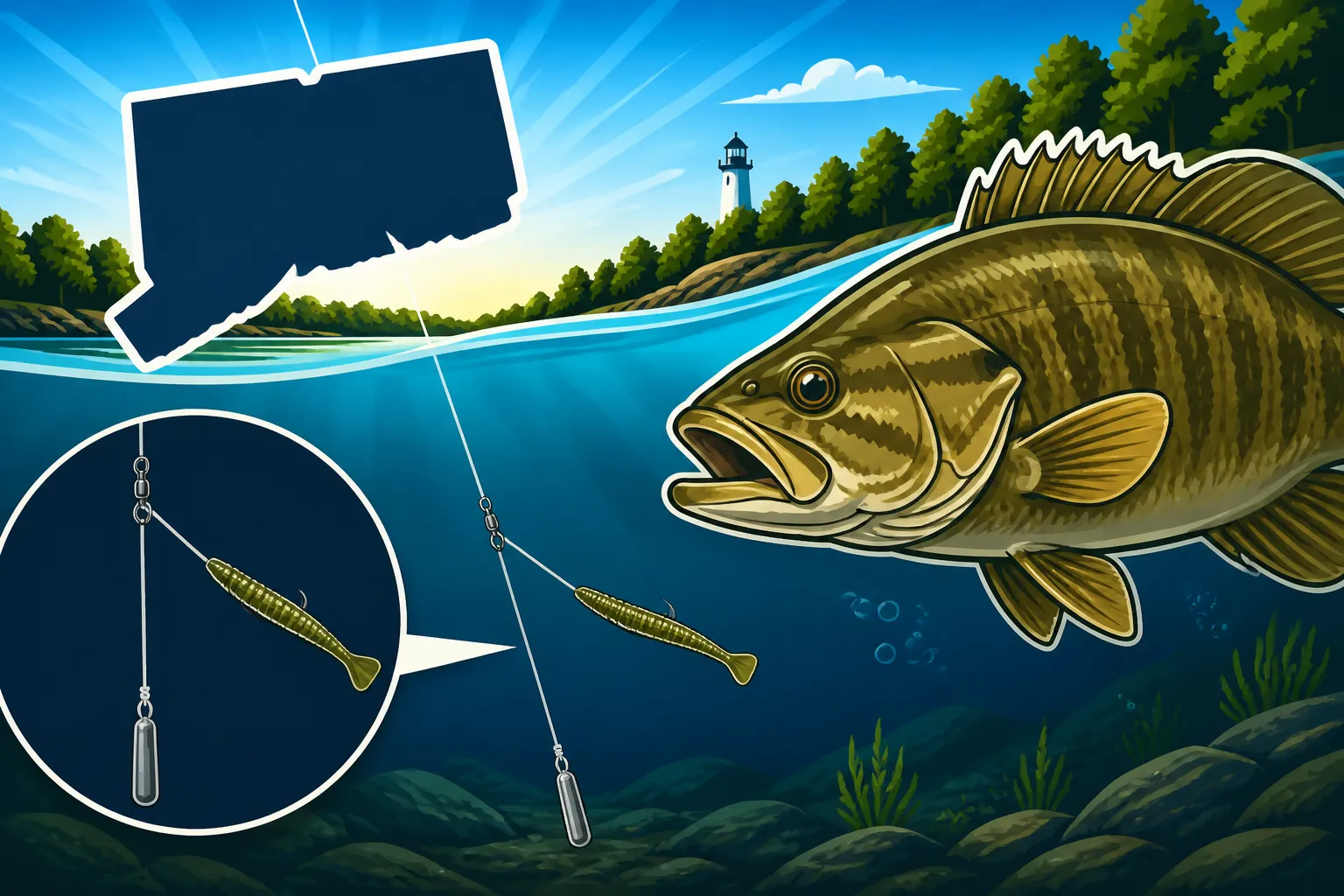
Weights: Drop shot weights are distinct, typically featuring a swivel at the top and a line clip or pinch system that allows you to easily adjust your leader length without re-tying. This adjustability is a huge advantage. They come in various shapes:
- Round/Cylindrical: Great for fishing through rocks and lighter cover as they tend to snag less.
- Teardrop/Bullet: Offer a faster sink rate and good feel on the bottom, but can wedge into rocks.
- Ball: Excellent feel on soft bottoms.
Weight size depends on depth, current, and wind. In calm, shallow water (under 10 feet), a 1/8 oz or 3/16 oz weight might suffice. When fishing deeper lakes or rivers with strong currents, like sections of the Connecticut River, you might need to go up to 1/4 oz, 3/8 oz, or even 1/2 oz to maintain bottom contact. Many anglers carry a variety of sizes and shapes, easily found on Amazon, to adapt to changing conditions throughout the day.
Here's a quick guide to selecting your drop shot weights:
| Condition | Recommended Weight Range | Best Weight Shape (Generally) | Notes |
|---|---|---|---|
| Shallow, Calm Water | 1/8 oz – 3/16 oz | Round/Cylindrical | Minimal interference, subtle presentation. |
| Moderate Depth, Light Current | 1/4 oz – 3/8 oz | Cylindrical/Teardrop | Good balance of feel and snag resistance. |
| Deep Water, Strong Current | 3/8 oz – 1/2 oz+ | Teardrop/Bullet | Faster sink, maintains bottom contact, can be adjusted for heavier current. |
| Rocky Bottom | Cylindrical | Cylindrical | Less prone to wedging and snagging in crevices. |
| Soft/Muddy Bottom | Ball/Round | Ball | Good feel, less likely to bury in soft sediment. |
Rigging Your Drop Shot for Maximum Effectiveness
Getting your drop shot rig tied correctly is key to its performance. It's not overly complicated, but a few specific knots and techniques will ensure your bait looks natural and your knots hold strong.
Tying the Palomar Knot: Your Best Friend
The Palomar knot is arguably the strongest and most reliable knot for tying fluorocarbon to your hook, and it's particularly excellent for drop shot applications. When tied correctly, it seats the hook point upwards, ensuring your bait presents horizontally.
Here's how to tie it for a drop shot:
- Double the Line: Take about 12-18 inches of your fluorocarbon leader and double it over, creating a loop.
- Pass Through Eye: Thread the doubled line through the eye of your hook.
- Tie a Simple Overhand Knot: Form a simple overhand knot with the doubled line, allowing the hook to dangle freely in the center. Don't pull it tight yet.
- Loop Over Hook: Now, pass the entire hook back through the large loop you just created. This is the crucial step that sets the Palomar apart.
- Moisten and Cinch: Moisten the knot with saliva (this reduces friction and prevents line damage) and pull both ends of the doubled line (the tag end and the main line side) slowly and firmly to cinch the knot down against the hook eye.
- Adjust the Hook: Once cinched, your hook will likely be pointing downwards. Take the tag end, run it back up through the eye of the hook (from the top, the same direction your main line will be coming from), and pull it gently until the hook points upwards. This ensures your soft plastic bait will sit horizontally in the water.
- Attach Weight: Now, measure out your desired leader length (the distance between your hook and your weight). This can be anywhere from 6 inches to 3 feet, depending on how high off the bottom you want your bait to suspend. Once you've decided on the length, attach your drop shot weight to the tag end. The beauty of the drop shot weight's clip system is that you don't need another knot here; simply pinch the line in place. This allows for quick depth adjustments.
Practicing this knot a few times at home will make it second nature on the water.
Bait Presentation and Action: Making it Irresistible
The right bait, rigged correctly, combined with subtle rod movements, is what seals the deal.
- Bait Selection: Smallmouth love small, finesse-style soft plastics. Popular choices include:
- Straight-tail worms/finesse worms: 3-4.5 inches are often ideal, mimicking slender baitfish or aquatic worms. Brands like Roboworm, Berkley Powerbait, and Z-Man offer excellent options you can often find on Amazon.
- Minnow/shad imitations: Small 2-3 inch plastics with a subtle paddle or fork tail, great for mimicking emerald shiners or juvenile alewives.
- Creature baits/tubes (small): Tiny creature baits or micro tubes can mimic crawfish or other invertebrates, especially effective when smallmouth are feeding on bottom-dwelling prey.
- Rigging the Bait: The key is to nose-hook your soft plastic. Simply thread the point of your drop shot hook through the very tip of the bait's nose. This allows the entire body of the bait to move freely and naturally in the water with minimal obstruction, creating maximum action.
- Leader Length: This is highly variable. If smallmouth are tight to the bottom, a 6-12 inch leader might be perfect. If they're suspended over deeper structure, or if the bottom is exceptionally weedy or snaggy, you might want to use a 2-3 foot leader to keep your bait above the mess. Experimenting with leader length based on the depth smallmouth are biting will significantly increase your catch rate.
Mastering Drop Shot Techniques on Connecticut Waters
Once your rig is tied and your bait is on, it's time to learn how to work it effectively. The drop shot isn't about power fishing; it's about finesse, patience, and subtlety.
Subtle Shakes and Dead Stick Approaches
These are the bread and butter of drop shotting, especially when smallmouth are lethargic or in clear, cold water.
- Subtle Shakes: Cast your drop shot to your target area and let it sink until you feel the weight hit bottom. Reel up the slack until your line is taut. Now, with just your wrist, impart tiny, shivering shakes to the rod tip. This makes your bait quiver and dance in place, looking like a distressed or feeding organism. It's often enough to trigger a curious smallmouth to investigate and strike. The beauty is that the weight stays put, keeping your bait exactly where you want it. This technique is deadly on deep points or rocky ledges in lakes, or in the calmer pockets of rivers.
- Dead Stick: Sometimes, the less you do, the better. Cast out, let the weight settle, and then literally do nothing. Just let your bait sit there, suspended in the water column, moving only with the natural current or subtle boat drift. This "dead stick" approach can be incredibly effective when smallmouth are extremely cautious or are feeding on stationary prey. Many bites on a dead stick are often incredibly light — just a subtle tap or a feeling of added weight on your line. You might just feel your line go slack or move sideways. This is where your sensitive braided line and fluorocarbon leader, like those you can find readily on Amazon, truly pay off, allowing you to detect those faint takes. For more on the specifics of how smallmouth bass behave, check out Smallmouth Bass Habits on the Housatonic.
Vertical Jigging and Finesse Drifting
Beyond casting and shaking, the drop shot excels in other specific applications.
- Vertical Jigging: This is ideal when you've located a school of smallmouth directly beneath your boat using your fish finder, perhaps suspended over a deep hump or a submerged channel. Position your boat directly over them, drop your rig straight down, and let it sink to the desired depth. Once the weight hits bottom, lift your rod tip a few inches and then let it fall back, allowing the bait to flutter. You can also perform those subtle shakes mentioned earlier while holding the bait vertically in the strike zone. This is a highly efficient way to pick off multiple fish from a concentrated school. This technique is often effective in larger bodies of water like Lake Lillinonah Fishing Guide or Lake Zoar Fishing Guide where smallmouth congregate in deeper sections.
- Finesse Drifting: If you're fishing a river with a gentle current, or if there's a light breeze on a lake, you can use the drop shot to "finesse drift." Cast upstream or upwind, let the weight hit bottom, and then slowly reel in slack as your boat or kayak drifts with the current or wind. The weight will drag along the bottom, keeping your bait suspended just above, presenting a natural-looking offering to fish as you move over structure. This allows you to cover water efficiently while maintaining a subtle presentation. This technique is particularly good for exploring vast areas for Best Bass Fishing Lakes in Connecticut. If you're a kayak angler, understanding Kayak Fishing Techniques for Connecticut Rivers can enhance your drop shot drifting game.
Mastering the drop shot requires patience and attention to detail, but the rewards are well worth it. There's nothing quite like feeling that subtle tap on your line and setting the hook into a powerful Connecticut smallmouth that couldn't resist your perfectly presented, hovering bait. Get out there, experiment with these techniques, and enjoy the fight!
Disclaimer
This article is for general informational purposes only and does not constitute professional advice. Laws, prices and regulations vary by location and change over time. Consult a qualified professional for guidance on your specific situation.