Where brook trout still live wild in Connecticut
Wild brook trout in Connecticut live in cold spring-fed streams where summer water temperatures rarely exceed 68 degrees.
Know what’s on the line.
Gamefish and panfish profiles — identification, behavior, feeding habits, and species-specific strategies for every catch.
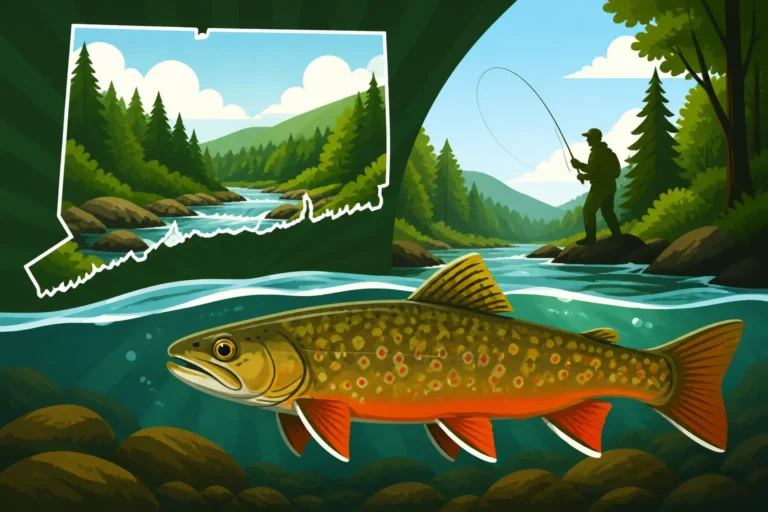
Wild brook trout in Connecticut live in cold spring-fed streams where summer water temperatures rarely exceed 68 degrees.
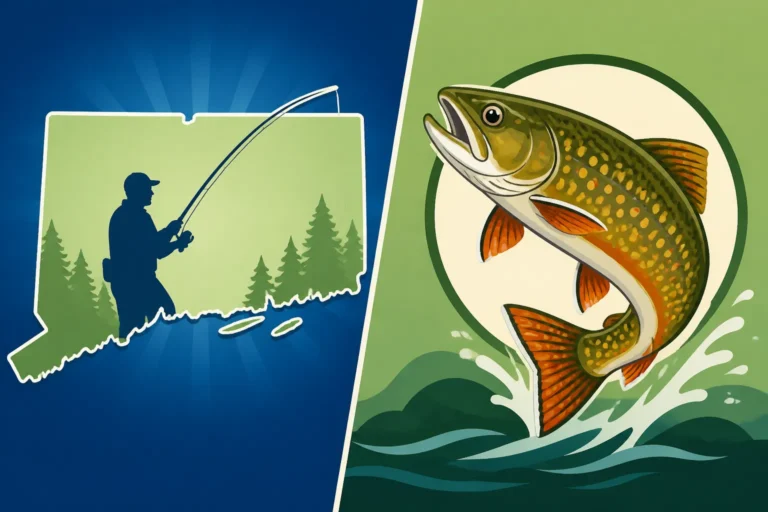
Connecticut state fish status clarification explains why the native brook trout lacks official designation and highlights the eastern oyster instead.
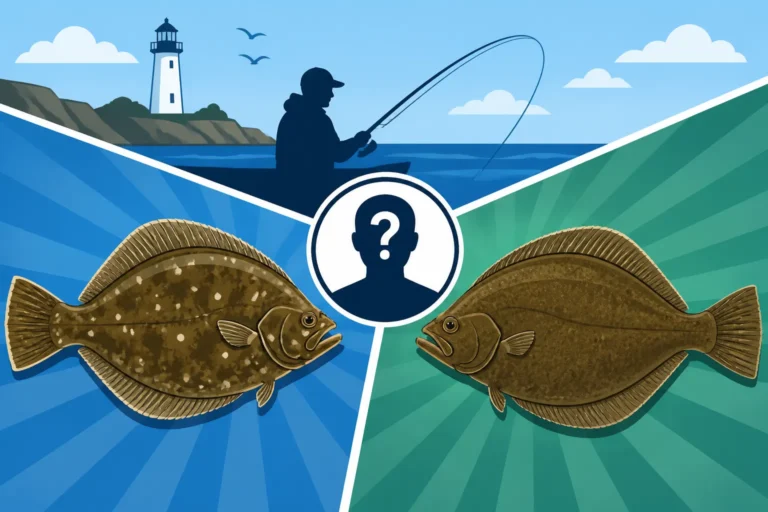
Flatfish eye placement and mouth shape differences help anglers correctly identify fluke versus winter flounder catches.
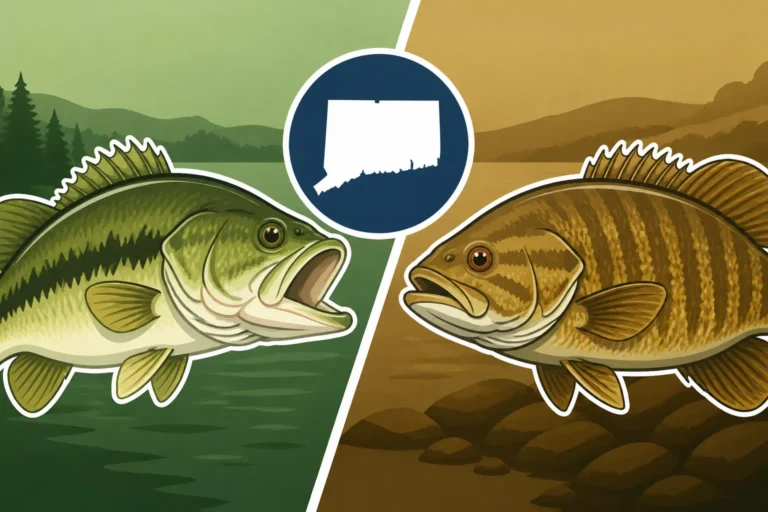
Largemouth and smallmouth bass identification details explain jawlines, dorsal fins, and coloration differences for anglers.
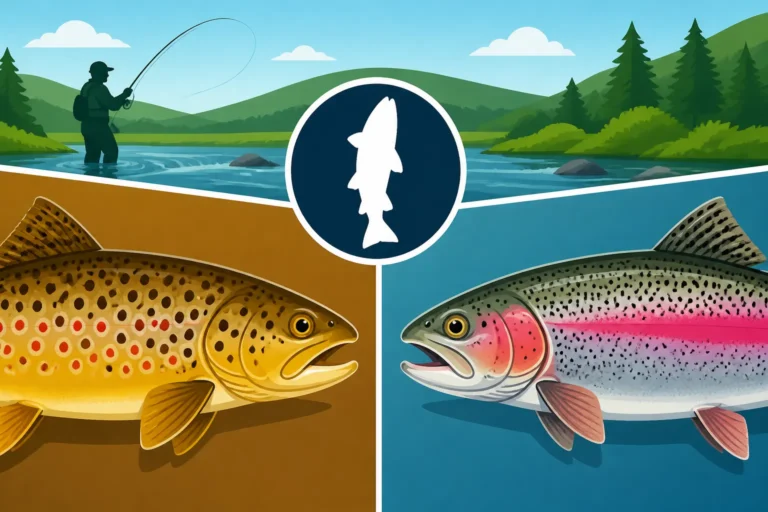
Brown and rainbow trout identification in Connecticut waters using distinct body shapes, markings, fins, and coloration.
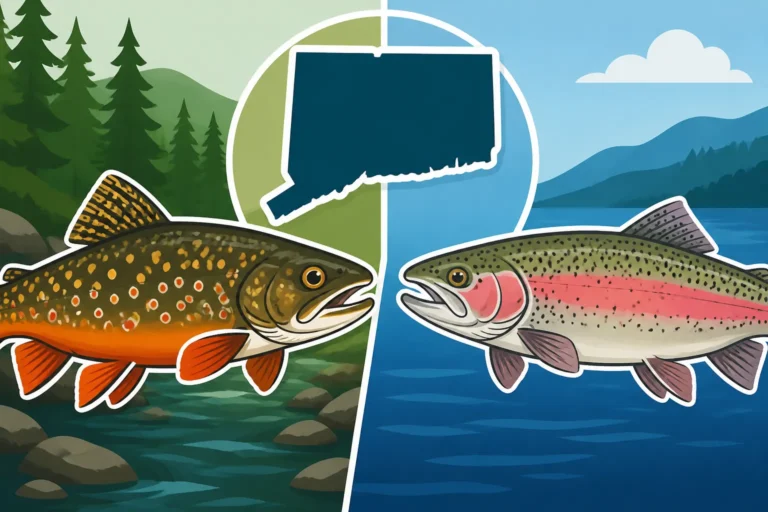
Connecticut anglers learn the distinct physical markings to identify native brook trout and vibrant stocked rainbow trout.
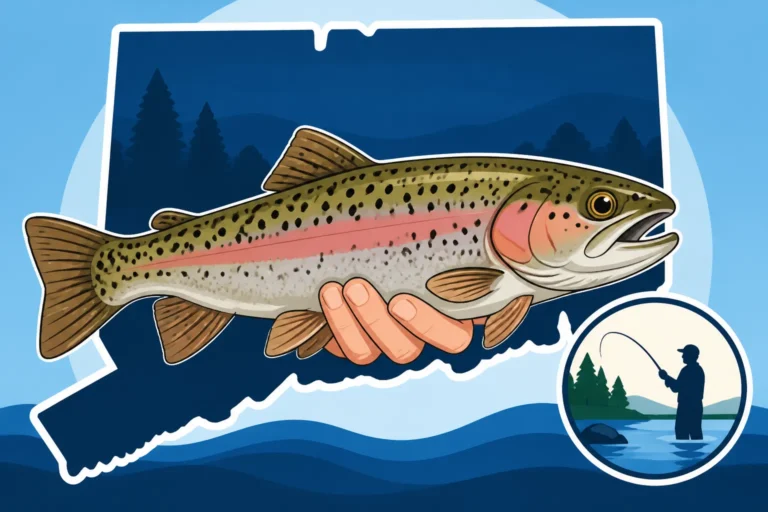
Stocked trout in Connecticut measure nine to twelve inches on average, with larger broodstock reaching up to twenty inches.
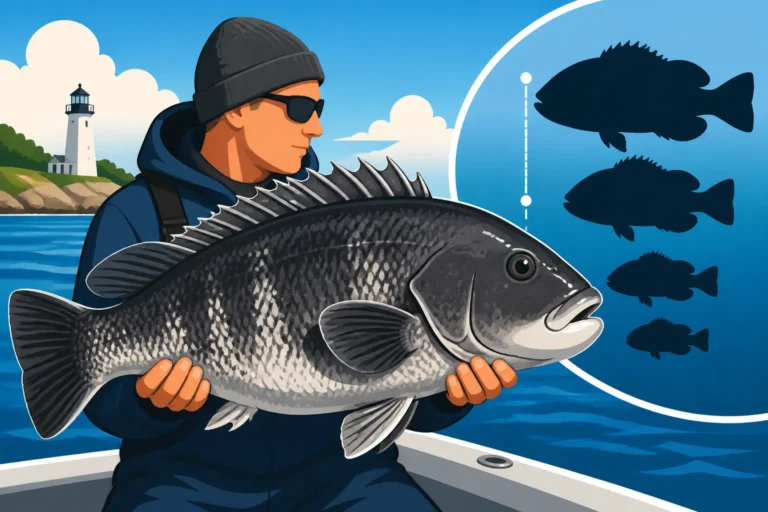
Connecticut blackfish size potential and growth factors including diet, water temperature, structure, and lifespan up to 20 years.
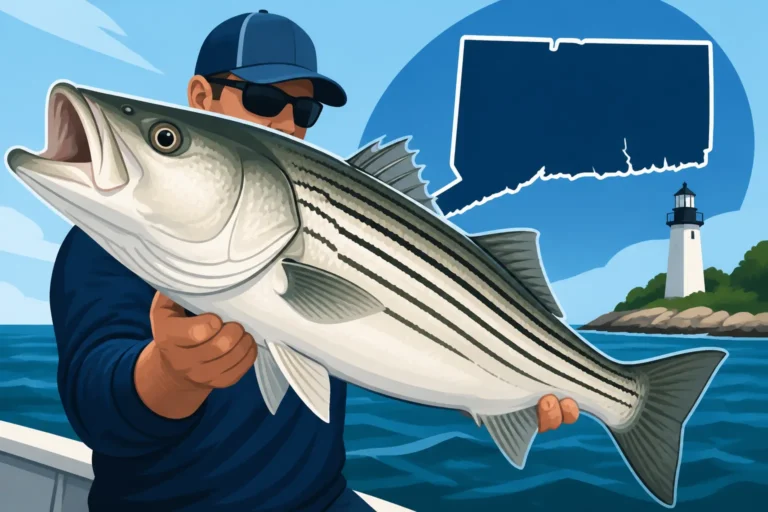
Striped bass in Long Island Sound reach forty to fifty inches over twenty years by consuming Atlantic menhaden and squid.
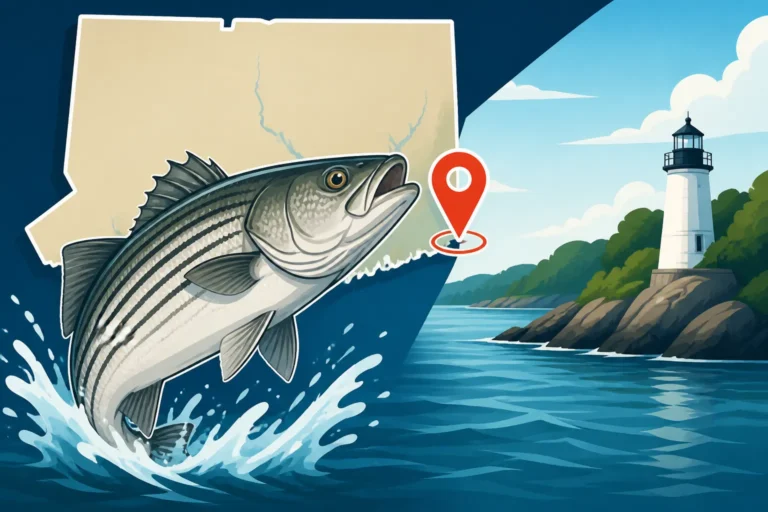
The state record striper weighed 76 pounds, and the legend of where it was caught draws anglers who study tides, baitfish patterns and structure for a giant.