How to tell a brook trout from a rainbow trout
It can be surprisingly tricky out on the water, can't it? You land a beautiful trout in a Connecticut stream or lake, and for a moment, you're just thrilled. But then the question hits: "Is this a brook trout or a rainbow?" It's a common moment of confusion for many anglers, myself included, because while both are gorgeous, they have distinct features. This comprehensive guide is here to walk you through the tell-tale signs, helping you confidently identify whether you've caught a native brook trout or a vibrant stocked rainbow, ensuring you're compliant with regulations and can appreciate the unique beauty of each.
Why Knowing Your Trout Matters in Connecticut
Beyond just the satisfaction of correctly identifying your catch, there are genuinely important reasons why distinguishing between trout species in Connecticut is crucial for every angler. It's not just about bragging rights; it's about respecting the ecosystem and adhering to local regulations.
Navigating Regulations and Conservation
Connecticut's fisheries are carefully managed, and that often means specific rules for specific species. While many waters might have a general trout limit, there are often special regulation areas, like certain Trout Management Areas, that might have different catch limits, size restrictions, or even tackle requirements depending on the species present. For instance, knowing if you've caught a Brook Trout: Connecticut's Native Trout versus a stocked rainbow can be critical, as native brookies are often a species of special interest for conservation due to their wild populations sometimes being more sensitive. Ignoring these distinctions can lead to unintended violations, so a little knowledge goes a long way. Checking the current Connecticut Fishing Regulations Explained before you head out is always a good practice.
Appreciating the Unique Beauty and Habits
Each trout species has its own charm, its own story. The native brook trout, for example, is a testament to Connecticut's natural heritage, often found in pristine, cold headwater streams. Rainbows, while not native, are celebrated for their fighting spirit and the sheer joy they bring to anglers, especially in heavily stocked waters. Learning to identify them allows you to appreciate their unique aesthetics – the subtle patterns, the vibrant colors – and to connect more deeply with the fish you're pursuing. It also helps you understand where and how to target them effectively, as their preferred habitats and feeding behaviors can differ, as outlined in a Trout Species Identification Guide for Connecticut. A good field guide, perhaps one you picked up on Amazon, can be an invaluable resource.
Getting to Know the Brook Trout
Ah, the brook trout! For many of us, this is the jewel of Connecticut's freshwater streams. They are truly captivating fish, and once you know what to look for, their identification becomes second nature.
Distinctive Coloration and Markings
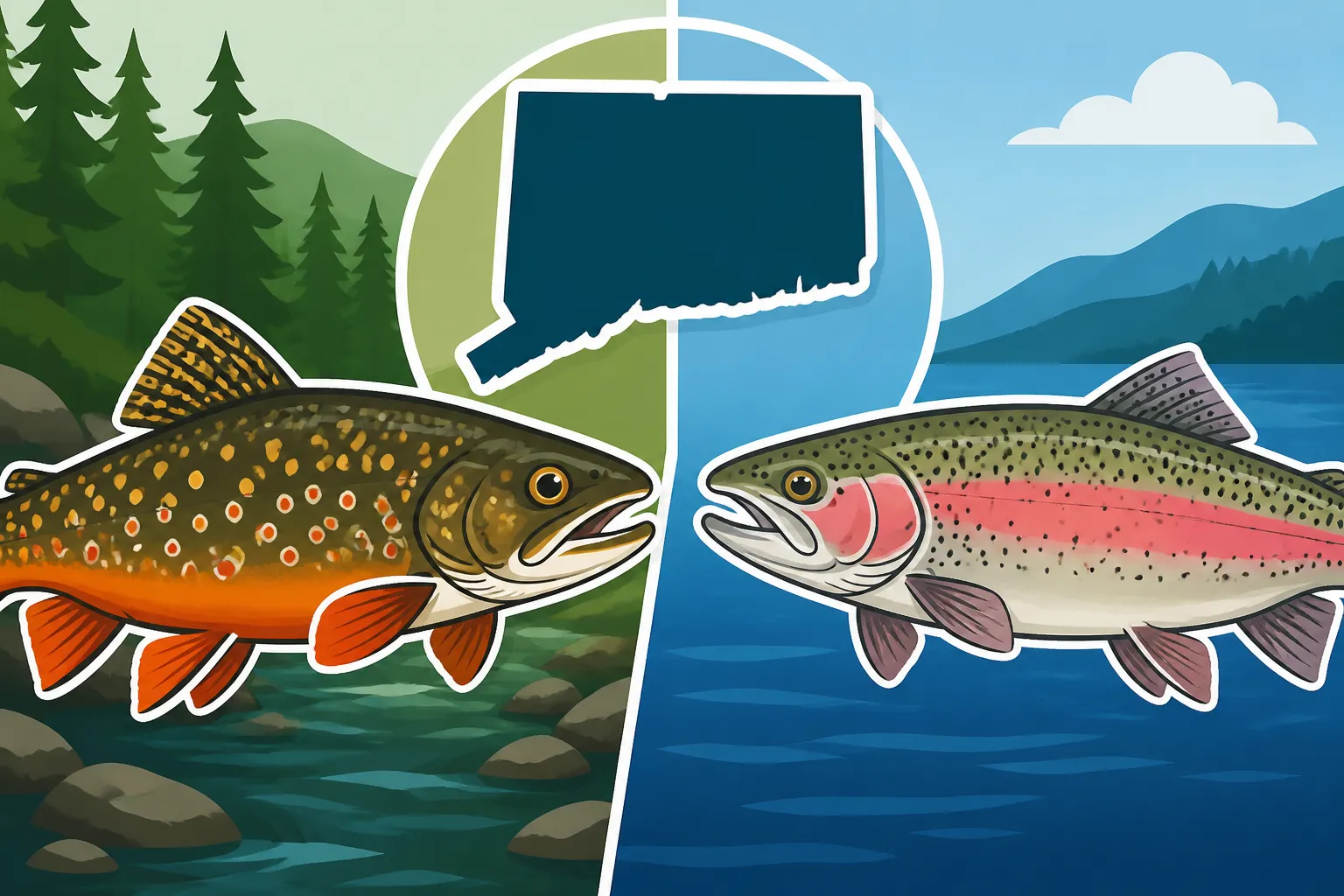
When you first see a brook trout, you'll likely be struck by its intricate patterns. Their backs are usually a mottled olive green or dark brown, transitioning into lighter flanks. But the real giveaway? Those mesmerizing worm-like markings, known as "vermiform patterns," that squiggle across their backs and dorsal fin. These aren't just dots; they're like a maze of interconnected lines. Below this, along their sides, you'll find an array of small, vibrant red spots, each often encircled by a striking blue halo. This combination of vermiform patterns and haloed red spots is almost always a dead giveaway. They truly are one of the most beautiful Native trout species found in Connecticut.
Fin Features and Body Shape
Take a closer look at their fins. The brook trout has something quite unique that stands out: the leading edges of their lower fins – particularly the pectoral, pelvic, and anal fins – are bright white. This white stripe is usually followed by a thin, dark, almost black line, which creates a stunning contrast against the darker body. This white leading edge is a key identifier. In terms of body shape, brook trout tend to be a bit more stout and robust compared to the often more elongated, torpedo-like shape of a rainbow. They can sometimes appear a bit deeper-bodied, especially the larger specimens. They might not grow as large as some other trout species in Connecticut, but their compact power is impressive.
Habitat and Behavioral Clues
While not a direct identification marker on the fish itself, knowing where you caught your trout can offer strong clues. Brook trout thrive in cold, clear, highly oxygenated water – typically found in pristine, smaller mountain streams, headwater tributaries, and remote ponds. They prefer areas with plenty of cover, like undercut banks, submerged logs, and rocky bottom structures. If you're fishing a tiny, wild-looking stream far off the beaten path, especially if it's high in elevation, the chances of encountering a brook trout are much higher than in a large, open, heavily stocked river. Their presence is often a sign of a healthy, undisturbed aquatic ecosystem. Many anglers seek out these specific habitats for a chance at these magnificent fish, often researching local fishing reports or consulting detailed maps on sites like Amazon.
Getting to Know the Rainbow Trout
The rainbow trout is a true angling favorite across Connecticut, beloved for its spirited fight and willingness to strike a variety of baits and lures. They're regularly stocked, making them a common catch in many of our rivers and lakes.
Prominent Coloration and Spotting
Rainbow trout typically boast a sleeker, more silvery body, often with a greenish or bluish hue along the back that fades to white on the belly. The most iconic feature, and where they get their name, is the iridescent pink or reddish stripe that runs horizontally along their lateral line, from gill plate to tail. This "rainbow" band can be subtle or incredibly vibrant, depending on the individual fish, its diet, and its environment. What's also very distinctive are the numerous small, dark spots (often black) that cover their entire body, including their head, dorsal fin, and most notably, their tail fin. Unlike the brook trout's worm-like patterns, these are almost universally distinct spots.
Fin Structure and Body Proportions
When examining the fins of a rainbow trout, you won't find the prominent white leading edges that characterize brook trout. Rainbow fins are generally more uniform in color, matching the body or being slightly darker, and are heavily speckled with dark spots, especially the caudal (tail) fin. Their tail fin is typically more squared-off or slightly forked, often feeling a bit more powerful and broader than a brook trout's. In terms of overall shape, rainbows tend to be more streamlined and torpedo-shaped, built for speed and fighting strong currents. This difference in form is quite noticeable once you've seen a few of each. Their more elongated profile contributes to their reputation as fierce fighters on the line.
Preferred Habitats and Stocking Patterns
Rainbow trout are incredibly adaptable and can thrive in a wide range of freshwater environments, from large rivers and lakes to smaller ponds and streams. However, in Connecticut, you'll most frequently encounter them in waters that are regularly stocked by the state's Department of Energy and Environmental Protection (DEEP). Rainbow Trout Stocking in Connecticut is a major program, and these fish are often released into easily accessible locations, making them a staple for many anglers, particularly on opening day. While they can sometimes hold over and even reproduce in certain environments, the majority of rainbow trout caught in Connecticut are of hatchery origin. This means if you're fishing a popular, well-known trout stream or lake that sees a lot of angler pressure, it's highly probable your catch will be a rainbow.
Side-by-Side: Key Differences at a Glance
Sometimes, seeing the details laid out side-by-side can make all the difference. While each fish is unique, these general characteristics are reliable indicators.
Visual Comparison Table
Let's break down the main identifying features into a quick reference table. This is often what I flip to in my laminated field guide when I'm trying to be absolutely sure, especially if I'm wearing polarized sunglasses that might alter my perception of color. You can find excellent waterproof versions of these guides on Amazon, which are perfect for a tackle box.
| Feature | Brook Trout (Salvelinus fontinalis) | Rainbow Trout (Oncorhynchus mykiss) |
|---|---|---|
| Back/Upper Body | Mottled olive green/dark brown with distinctive "vermiform" patterns (worm-like squiggles) | Silvery, greenish-blue or olive back, generally smoother appearance |
| Side Band | No distinct lateral stripe; sometimes a faint yellowish wash | Prominent, iridescent pink or red stripe along the lateral line (gill to tail) |
| Spots | Small, vibrant red spots, each often with blue halos, along the sides; no spots on tail fin | Numerous small, dark (black) spots covering the entire body, head, dorsal fin, and tail fin |
| Lower Fins | Distinct white leading edges, often followed by a thin black line, on pectoral, pelvic, and anal fins | Generally uniform color, matching body or slightly darker; no distinct white leading edges |
| Tail Fin | Square or slightly emarginate (slightly indented); generally no spots | Square or slightly forked; heavily spotted with distinct dark spots |
| Body Shape | Often more stout, deeper-bodied | More streamlined, torpedo-shaped |
Beyond the Visuals: Habitat and Behavioral Clues
While the physical characteristics are the definitive way to tell them apart, understanding their typical stomping grounds can give you a strong initial guess. Trout Fishing in Connecticut offers diverse environments, and knowing where each species typically thrives can inform your identification.
If you're hiking into a remote, spring-fed tributary with crystal-clear, icy cold water, surrounded by dense forest, and you hook a small, brilliantly colored fish with those unmistakable white-tipped fins, you can be reasonably confident it's a brook trout. They are shy and prefer undisturbed, pristine conditions. These are the fish that represent the wild heart of Connecticut's trout population, and understanding their preferences helps us protect them.
Conversely, if you're fishing a popular, easily accessible river bend that was heavily stocked a few weeks ago, perhaps during Connecticut Spring Fishing Day and Opening Day Rules, and you catch a larger, chrome-bright fish with a bold red stripe and a spotted tail, it's almost certainly a rainbow. They are known for being more opportunistic and will often congregate in areas where food is abundant or where they were recently released. When trying to identify tricky catches, I sometimes refer to larger, comprehensive guides, many of which are readily available through retailers like Amazon, that include details on Non-native trout species stocked in Connecticut versus wild populations.
When Identification Gets Tricky
Let's be real, nature doesn't always read the textbook. Sometimes, even experienced anglers can pause for a moment when trying to distinguish between a brook and a rainbow trout. There are a few scenarios where the lines can blur.
Color Variations and Hybrids
Trout coloration isn't always static. A fish's diet, the water clarity, the streambed color, and even its reproductive cycle can influence how vibrant or muted its colors appear. A rainbow trout caught in very clear, dark-bottomed water might have a more subtle lateral stripe, for example. Conversely, a brook trout in certain conditions might show a stronger yellowish or reddish flush on its flanks that could almost be mistaken for a faint rainbow stripe. It's rare, but it happens.
Even rarer, but worth mentioning, is the existence of hybrids. While true brook trout and rainbow trout are different species and don't naturally hybridize, there's a fascinating phenomenon with "tiger trout." These are sterile hybrids of a brown trout and a brook trout, and their markings are truly unique, a striking labyrinthine pattern that looks like a tiger's stripes. If you catch something that looks truly bizarre, it might be a tiger trout, which are sometimes stocked in specific waters. This is a different identification challenge, but understanding the possibility of such variations helps to underscore why focusing on multiple identifying features, not just one, is always the best approach. If you’re really curious about other trout species, you might find a book about How to tell a brown trout from a rainbow trout helpful as well.
Environmental Factors and Stocking Practices
The environment plays a huge role in how a fish looks. A rainbow trout that has been in a river for months, surviving and feeding naturally, will often develop much richer colors and a more streamlined appearance than a hatchery-raised fish that was just stocked last week. The pink stripe might become more vivid, and the dark spots more pronounced. Similarly, brook trout in different watersheds, or even different sections of the same stream, can exhibit slight variations in the intensity of their vermiform patterns or the blue halos around their spots.
Another factor is the sheer volume and location of Connecticut Trout Season and Stocking Rules. In some areas, both species might be stocked, or native brook trout might coexist with stocked rainbows. This overlap can make quick identification challenging, especially for newcomers. That's why having a reliable, up-to-date field guide, perhaps one you ordered from Amazon, is always a great tool to have. When in doubt, take a picture, release the fish unharmed if possible, and consult your guide or local resources to solidify your identification. Learning the Difference between wild and stocked trout in Connecticut can also help you understand the nuances.
Disclaimer
This article is for general informational purposes only and does not constitute professional advice. Laws, prices and regulations vary by location and change over time. Consult a qualified professional for guidance on your specific situation.