Striped Bass Migration Along the Connecticut Coast
Oh, the striped bass! If you've spent any time at all fishing the Connecticut coast, you know there's nothing quite like the thrill of a striper on the line. But what you might not realize, or perhaps you've felt it intuitively, is that these magnificent fish are always on the move, engaged in an incredible annual migration that dictates where they are, what they're eating, and how best to catch them. It can be incredibly frustrating to fish the same spot day after day only to find the bite has completely shut down, leaving you wondering where all the fish went. This comprehensive guide will pull back the curtain on the epic journey of striped bass along our beautiful Connecticut shoreline, helping you understand their patterns so you can be where the fish are, no matter the season.
The Grand Journey: Understanding Striped Bass Migration Along Connecticut's Coast
Striped bass, or "stripers" as we affectionately call them, are creatures of habit when it comes to their travels, but those habits are deeply influenced by environmental cues. Their migration isn't just a random wander; it's a meticulously timed, instinct-driven journey that spans hundreds of miles for many individuals. For us anglers, understanding this pattern is like having a secret roadmap to better fishing. Without it, you're often left scratching your head, wondering why yesterday's hot spot is today's cold shoulder.
The Rationale Behind the Rove: Why Stripers Migrate
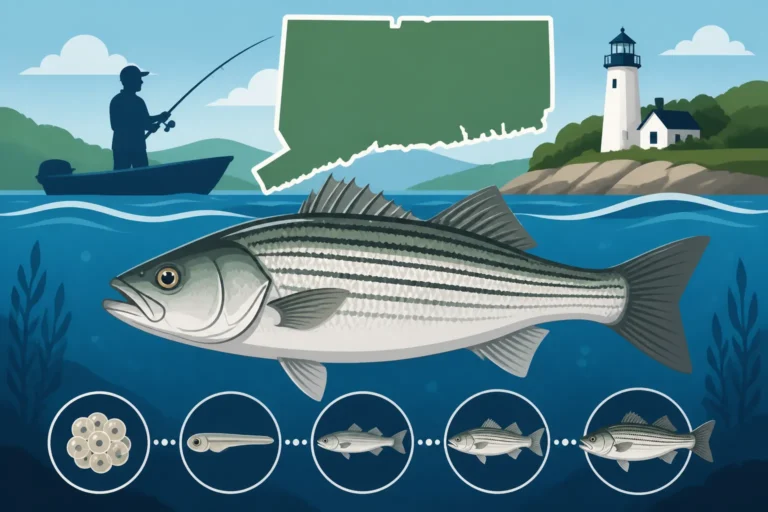
At its core, striped bass migration is about survival, plain and simple. It's an instinctive drive to find optimal conditions for spawning, feeding, and overwintering. Imagine living in a world where your very existence depends on being in the right place at the right time for food and procreation – that's the life of a striper! The majority of the Atlantic coast striped bass population originates from the Chesapeake Bay, with smaller contributions from the Delaware River and Hudson River. After spawning in these brackish waters in the spring, the fish disperse, heading north along the coast to feed in cooler, food-rich waters during the summer months. As fall approaches and temperatures drop, they reverse course, returning south to overwinter in more temperate climes. Our stretch of Long Island Sound Fishing Guide and the surrounding coastal waters serve as crucial feeding grounds and migratory pathways.
It's not just a single, unified movement. Different age classes and sizes of fish have slightly different patterns. The smaller, younger fish often stay closer to home in bays and estuaries for longer, while the larger, more mature "cow" stripers undertake epic journeys. This means that at any given time, especially during transition periods, you might have different sizes of fish moving through the same area, offering varied angling opportunities. The energy demands of this constant travel are immense, which is why feeding becomes such a critical part of their migratory behavior.
A Coastal Calendar: General Timing of Movements
While nature rarely adheres to a strict schedule, there's a predictable rhythm to the striper migration along the Connecticut coast. Think of it as a broad outline, with specific dates fluctuating a bit depending on how mild or harsh the winter was, or how quickly spring warms up. This general calendar helps us anticipate their presence. Missing these windows can mean missing out on some of the most exciting fishing of the year.
The earliest signs of stripers often appear in late March or early April, usually smaller, eager fish, but the main push really gets going by late April into May. By summer, they're typically well-established, though their movements become more localized within the Sound. The big show, for many, is the fall run, starting in September and often continuing strongly through October, sometimes even into November, before the last of them depart for their southern overwintering grounds. This ebb and flow means that anglers need to be adaptable, changing tactics and locations as the fish move through.
Here's a general overview of the migratory periods:
| Season | Approximate Timing | Typical Striper Behavior | Key Fishing Targets |
|---|---|---|---|
| Spring | Late March – Early June | First arrivals, post-spawn, actively feeding after long migration | Schoolie to mid-sized stripers |
| Summer | Mid-June – Early September | Established in local feeding grounds, less migratory movement | Larger resident fish, nocturnal bites |
| Fall | Mid-September – Late November | Southern migration, aggressive feeding, "blitzes" | All sizes, often in large schools |
| Winter | December – Early March | Overwintering south of CT, very few resident fish | Scarce, deep-water holdovers (rare) |
Spring Fever: The Northern Advance into Connecticut Waters
Ah, spring! There's a tangible buzz in the air, not just from the warming weather, but from the anticipation of those first migratory striped bass. After a long winter of ice fishing or dreaming of warmer days, the return of the stripers signals the real start of the fishing season. It's a time of renewed hope and frantic tackle preparations.
Early Arrivals: Following the Baitfish North
The earliest striped bass to grace our Connecticut waters are often the smaller "schoolie" stripers. These fish, having overwintered further south but not necessarily participated in the full Chesapeake spawn, are eager to follow the warming water and the first signs of baitfish returning to the estuaries. They'll push up into the rivers and coves of Long Island Sound, seeking out herring, spearing, and other early-season forage. Think of rivers like the Housatonic River and the lower Connecticut River as early season hotspots. They are the first places to really warm up and attract these hungry travelers. You might find them lurking in the shallows during high tide, ambushing baitfish pushed against the banks.
Anglers often spot these first arrivals in late March or early April. They're usually in the 18-28 inch range, spirited fighters that are perfect for light tackle. It's a time for patience and observation, as these initial waves of fish can be a bit spread out. Small soft plastics, bucktail jigs, and slender swimming plugs are often very effective. This is also when many anglers are gearing up for the season, perhaps ordering new lines or jigs from Amazon to be ready for the first bite. Don't forget to check the Connecticut Fishing Season Dates and Closures so you're always fishing within the legal windows.
Post-Spawn Push: Larger Fish Entering the Sound
As spring progresses into May and early June, the real heavy hitters start to arrive. These are the larger, mature striped bass that have completed their arduous spawning rituals in the major river systems further south. They enter Long Island Sound with a powerful hunger, needing to replenish their energy reserves after their reproductive efforts. This is when the fishing can really turn on, with bigger fish chasing larger baitfish like bunker (menhaden) and mackerel that are also migrating into the Sound.
These larger stripers will often hug the deeper channels, rock piles, and points along the coast, areas where strong currents deliver a steady supply of food. Places like the mouth of the Connecticut River or the rips and reefs off the eastern Sound become prime targets. Anglers often switch to larger lures, live bait like bunker or eels, or larger chunks of cut bait. This period is a prime opportunity for anglers targeting a trophy-sized striped bass, as these big fish are often less wary and more aggressive due to their post-spawn hunger. It's a truly exhilarating time, where you never know if the next cast will connect you to a truly massive fish.
Key Spring Fishing Opportunities
Spring fishing for striped bass in Connecticut offers diverse opportunities. Early on, river mouths and protected bays are excellent for light tackle schoolies. As the water warms, the focus shifts to major coastal structures, rocky points, and current-swept areas where larger migratory fish ambush bait. The herring runs up many of Connecticut's rivers provide an incredible feeding spectacle, drawing stripers right into casting range. Watching a school of stripers tear through a herring run is a memory that sticks with you for years.
Many anglers find success by focusing on dawn and dusk, when stripers are often most active in the shallows. On cloudy or rainy days, the bite can extend throughout the day. Using local knowledge, reading tide charts, and even consulting Connecticut Interactive Trout Stocking Map, Explained (though for trout, the principle of knowing where fish are being introduced holds true for understanding fish distribution generally) can give you an edge. The key is to be mobile and adaptable; if one spot isn't producing, don't be afraid to move and find where the bait — and therefore the stripers — are holding.
Summer Stays: Localized Movements and Feeding Patterns
Once June fully arrives and the summer heat begins to settle in, the migratory patterns of striped bass along the Connecticut coast shift. While they've completed their northward journey, they certainly don't stay in one spot. Summer striper fishing can sometimes feel more challenging than the spring or fall runs, but with a good understanding of their summer habits, you can still find incredible success. It just requires a bit more finesse and often, a different schedule.
Establishing Summer Grounds: Structure and Depth
During the hotter months, striped bass tend to establish more localized "summer grounds" within Long Island Sound. The key here is structure and depth. As surface water temperatures rise, stripers, being cold-blooded creatures, will seek out cooler water. This means they often retreat to deeper rock piles, wrecks, reefs, and sudden drop-offs during the day. Think about the hidden underwater geography of the Sound – all those contours and features provide crucial ambush points and cooler refuges.
These fish might hold tight to these structures, waiting for bait to pass by, or venturing out during cooler periods to feed more actively. Fishing these deeper spots often requires heavier jigging spoons, bucktails, or vertically jigged soft plastics. Anglers with good sonar can locate these structures and identify bait balls or individual fish holding tight to the bottom. Sometimes, you'll find them right in the middle of Long Island Sound, but often they'll be in the numerous bays and harbors that dot the coastline, seeking out the cooler water or deeper channels.
Tides, Currents, and Daily Rhythms
Summer stripers are incredibly sensitive to tidal movements and currents. Strong currents can push baitfish against structure or through narrow passages, creating prime feeding opportunities for waiting stripers. Anglers often focus on areas with strong tidal flow, such as rips, inlets, and the mouths of larger rivers where baitfish are concentrated and disoriented by the moving water. The incoming tide, especially around dawn or dusk, can be particularly productive as cooler, ocean-fed water pushes into the Sound.
Their daily rhythms also become more pronounced. In the intense heat of midday, they'll often hold deep and become sluggish. As the sun sets and the air cools, they become much more active, often moving into shallower water to feed. This is where Best Time of Day to Catch Striped Bass really comes into play, as many seasoned anglers swear by the nocturnal shift for summer stripers. It requires a different kind of dedication, but the rewards can be phenomenal.
Night Fishing for Summer Stripers
If you want to catch big striped bass in Connecticut during the summer, night fishing is often your best bet. Under the cover of darkness, these wary predators lose some of their inhibitions and move into shallower water to feed. They'll cruise sand flats, rock gardens, and along shorelines where they wouldn't dare venture in broad daylight. The cool, quiet hours of the night offer a completely different angling experience – it's tranquil, mysterious, and incredibly exciting when a big striper smashes your lure in the dark.
For night fishing, stealth is paramount. Keep lights to a minimum, and approach your spots quietly. Darker colored lures, like black or purple plugs and soft plastics, are often very effective as silhouettes against the dim sky. Live eels are also a deadly weapon at night. You can pick up essentials like headlamps or a good pair of pliers for removing hooks safely on Amazon, ensuring you're well-equipped for those late-night adventures. Just remember to have your Connecticut Fishing License Age Requirements in order before you head out, no matter the time of day.
Fall Farewell: The Epic Southern Migration
For many seasoned anglers, the fall run is the undisputed heavyweight champion of the Connecticut fishing calendar. This is when the striped bass migration truly becomes a spectacle, characterized by aggressive feeding, massive schools, and those unforgettable "blitzes" that make your heart pound. It’s a bittersweet time; the days are getting shorter, but the fishing is often at its absolute best.
The Building Blitz: Schools Consolidate
As water temperatures begin their gradual decline in late August and September, something shifts in the striper population. The fish sense the approaching winter and the long journey ahead. Their primary directive becomes simple: eat everything they can. Smaller, scattered groups begin to consolidate into much larger schools, often joined by bluefish, creating a feeding frenzy. This is the stage where you'll start to hear whispers, then shouts, about "the blitz."
Baitfish, particularly bunker (menhaden), spearing, and anchovies, are also staging for their own migrations or seeking deeper water. This creates an incredible scenario where massive schools of bait are herded against the shorelines or into bays by predators. Watching hundreds, if not thousands, of stripers and bluefish erupting on a school of bunker, driving them to the surface, is a truly wild experience. This period of intensified feeding continues through October, with various sizes of stripers moving through our coastal waters, from schoolies to genuine trophy fish looking to pack on pounds.
The Race South: Fueling Up for Winter
The fall migration isn't just about eating; it's a race. The stripers need to move south before the frigid grip of winter settles in, and they need to build up substantial fat reserves to survive the leaner months in their overwintering grounds. This urgency makes them incredibly aggressive feeders. They're not particular; if it looks like food, they'll try to eat it. This is why a wide variety of lures and baits can be incredibly effective during the fall run.
From shore, anglers can experience incredible fishing along beaches, jetties, and rocky points, casting into the churning water where stripers are busting bait. Boat anglers will follow the schools of bait, looking for birds diving or surface commotion to pinpoint the action. Best Techniques for Fall Striped Bass often involve throwing large topwater plugs, swim shads, and metal jigs right into the thick of the fray. It's truly a time when you could catch a striper on almost anything you throw out there, provided you're in the right place at the right time.
Maximizing Fall Fishing Excitement
To really make the most of the fall run, you need to be flexible and ready to move. Social media and local tackle shops become invaluable resources for current reports, as the fish can be in one town today and another tomorrow. Having a versatile tackle box with various lure types and sizes is crucial. You might start the day throwing topwaters, switch to a soft plastic as the sun rises, and then jig metal if the fish go deep.
Don't forget the importance of proper handling, especially for larger fish. While many are keen to catch dinner, catch and release is also a big part of conservation. Using a landing net and stout tackle can help ensure a quick fight and healthy release. Remember to be mindful of regulations, including the Connecticut Striped Bass Slot Limit and Season and the Connecticut Circle Hook Requirement for Striped Bass when using bait. This ensures future generations can also enjoy the incredible spectacle of the fall striper run.
Environmental Influences: What Drives the Striper Shuffle
While we talk about the "instinctive drive" of striped bass, that instinct is finely tuned to environmental cues. It's not just a clock in their heads; it's a complex interplay of factors that dictate when and where they move. Understanding these influences is like getting a peek behind the curtain of their decision-making process, helping us predict their behavior rather than just reacting to it.
Water Temperature: The Primary Commander
If there's one single factor that dictates the movements of striped bass, it's water temperature. These fish have preferred temperature ranges for feeding, spawning, and general comfort. As coastal waters warm in the spring, it signals their northern migration. They'll follow that perfect temperature band, often in the mid-50s to low 70s Fahrenheit. If spring is cool, the migration might be delayed; if it warms up quickly, they'll arrive earlier.
Conversely, as fall progresses and water temperatures drop into the low 60s and 50s, it triggers their southern migration. They're trying to escape the bitter cold of a New England winter, seeking the more stable, warmer waters of the mid-Atlantic. Understanding current water temperatures in different parts of Long Island Sound can be a game-changer. There are plenty of apps and local reports that can provide this crucial data. Investing in a good waterproof thermometer can be a valuable addition to your fishing kit, perhaps a reliable one you picked up from Amazon.
Baitfish Abundance and Distribution
You know the old saying, "find the bait, find the fish." This couldn't be truer for migratory striped bass. Their entire journey is fundamentally about accessing abundant food sources. In the spring, they follow the schools of herring and mackerel heading north. In the summer, they feast on bunker, spearing, and squid within the Sound. In the fall, they gorge themselves on massive schools of peanut bunker (juvenile menhaden), sand eels, and other forage fish before heading south.
The presence and distribution of these baitfish are critical. If a particular type of bait is scarce one year, stripers might alter their typical routes or feed more aggressively on alternative prey. Heavy concentrations of bait can hold large schools of stripers in an area for weeks. This is why bird activity is such a tell-tale sign for anglers. Diving gulls and terns almost always mean baitfish are being pushed to the surface, and where there's bait, there are usually stripers. Paying attention to what's washing up on the beaches or seeing bait in local marinas can give you clues about what's on the menu.
Understanding Tidal and Lunar Effects
While temperature and bait are the big drivers, more subtle influences like tides and lunar cycles also play a role, particularly in localized movements. Strong tidal currents can concentrate baitfish and create ideal ambush points for stripers, making certain stages of the tide more productive for fishing. The "sweet spot" is often a few hours on either side of a tide change, whether it's incoming or outgoing.
Lunar cycles, which govern the strength of the tides (new and full moons bring stronger "spring" tides), can also influence striper feeding. Stronger tides often mean more bait movement and more aggressive feeding. While perhaps not directly influencing the overall migration path, these factors significantly impact when and where stripers feed within a specific area during their journey. Experienced anglers learn to time their trips with these natural rhythms, recognizing that even a minor shift in the tide can turn a slow day into a spectacular one.
Tactical Approaches: Fishing Through the Migratory Seasons
Armed with the knowledge of why and when stripers migrate, the next step is to understand how to best intercept them. Each migratory phase, from the early spring push to the frantic fall run, calls for slightly different strategies and tackle choices. Being prepared for these shifts will dramatically increase your chances of success and help you avoid the frustration of showing up with the wrong gear at the wrong time.
Gear and Lure Choices for Each Phase
The beauty of striper fishing is its versatility, but matching your gear to the season and the fish's behavior is key.
- Spring: For early season schoolies in shallow estuaries, lighter tackle is perfect. A medium-light spinning rod (7-8 feet) with a 2500-4000 series reel spooled with 10-20 lb braided line is ideal. Lure choices include small soft plastics on jig heads (1/4 to 1/2 oz), small bucktails, and slender swimming plugs (like a small minnow imitation). As bigger fish arrive, you might step up to a medium-heavy rod and 30 lb braid for throwing larger plugs or chunking bait.
- Summer: For the deeper-holding summer fish, you'll want gear that can handle heavier jigs and possibly live bait. A medium-heavy to heavy conventional or spinning setup (7-9 feet) with 30-50 lb braid is appropriate. Lures include heavier bucktails (1-3 oz), jigging spoons, and large soft plastics. Night fishing often involves similar gear, but you might focus more on large swimming plugs or live eels.
- Fall: This is "go big or go home" time for many. A stout medium-heavy to heavy rod (8-10 feet, especially for surfcasting) with a powerful 5000-8000 series spinning reel or a robust conventional reel spooled with 40-65 lb braid is common. Lures run the gamut from large topwater poppers and walk-the-dog lures to big swim shads, metal jigs (often 2-4 oz+), and large swimming plugs. Don't forget, if you're using bait, those Connecticut Circle Hook Requirement for Striped Bass are a must-have. You can find a vast array of these specialized hooks, along with reliable fishing line and heavy-duty tackle bags, on Amazon.
Reading the Water for Migratory Patterns
Observing the water is your most potent tool. Look for signs of life: birds diving, baitfish showering on the surface, or even subtle ripples indicating a predator pushing bait. These are all clues that stripers are actively feeding. Pay attention to water color and temperature; clear water might call for more natural presentations, while murkier water might favor louder, more vibrant lures.
For those fishing from a boat, a good fish finder is invaluable for locating submerged structure, bait balls, and individual fish. Look for drop-offs, humps, and channels, especially during the summer. From shore, identify current breaks, eddies behind rocks, and areas where currents funnel bait. Understanding Where to Find Striped Bass in Long Island Sound and how they relate to the various types of underwater topography will make you a much more effective angler.
Ethical Angling and Conservation During Migration
As passionate anglers, we have a responsibility to protect this incredible resource. Striped bass populations have faced challenges over the years, and our actions matter. Practicing ethical angling techniques, especially during intense migratory periods when fish are stressed or concentrated, is crucial.
- Handle Fish Carefully: If you're planning to release a fish, minimize its time out of the water. Handle it gently with wet hands, support its weight horizontally, and avoid touching its gills. Use de-hooking tools if possible.
- Use Appropriate Tackle: Don't "undersize" your tackle, especially for larger fish. A prolonged fight can exhaust a striper, making its survival post-release less likely.
- Respect Regulations: Always adhere to current size limits, bag limits, and specific gear requirements like circle hooks when bait fishing. The Connecticut Fishing Regulations Explained provides all the details you need to stay compliant.
- Avoid Overfishing Blitzes: While exciting, try not to simply haul in fish after fish during a blitz if you're not keeping them. These are critical feeding times for the stripers, and excessive stress can be detrimental.
- Consider Conservation Practices: Many anglers voluntarily practice catch and release for all but a keeper or two. Think about participating in citizen science programs or supporting conservation organizations.
The striped bass migration along the Connecticut coast is one of nature's great spectacles, offering unparalleled fishing excitement from spring through fall. By understanding their movements, adapting your techniques, and committing to responsible angling, you can be a part of this amazing journey year after year.
Disclaimer
This article is for general informational purposes only and does not constitute professional advice. Laws, prices and regulations vary by location and change over time. Consult a qualified professional for guidance on your specific situation.