Weakfish in Long Island Sound
For many anglers in Connecticut, the weakfish can feel like a phantom of Long Island Sound – whispered about, occasionally spotted, but rarely consistently caught. It’s a species that ignites a unique thrill, combining the spirited fight of a gamefish with a beautiful, iridescent sheen that earns it the nickname "sea trout." This guide aims to pull back the curtain on these elusive beauties, helping you understand their habits, where to find them, and how to improve your chances of hooking into one of these magnificent fish in our local waters.
Understanding Weakfish: The "Trout of the Sea"
Weakfish, or Cynoscion regalis, are a fascinating and sometimes frustrating species for anglers in Long Island Sound. They belong to the drum family, related to red drum and speckled trout, and share that family's tendency to produce a "drumming" sound by vibrating muscles against their swim bladder – a curious phenomenon often heard in quiet waters. Their common name, "weakfish," doesn't refer to their fighting ability, which can be quite respectable, but rather to their delicate mouths, which can tear easily, making landing them a skill in itself.
The Lifecycle and Habitat of Weakfish
Weakfish in Long Island Sound are part of a larger population that migrates along the Atlantic coast. They typically move north into our waters in the spring as water temperatures rise, often following baitfish schools. These fish are opportunistic feeders, preying on whatever is abundant, from small baitfish like silversides and bunker to crustaceans like shrimp and crabs, and even worms. Their presence often signals a healthy forage base in an area. You'll find them in a variety of habitats, from shallow grassy flats and marsh edges to deeper channels and reefs, always with an eye for ambush points.
Their delicate nature extends beyond their mouths. Weakfish are sensitive to sudden changes in water temperature and salinity, which can influence their movements and feeding patterns dramatically. This sensitivity makes them a bit more challenging to predict than, say, striped bass, which are often more tolerant of varying conditions. Understanding these nuances is key to consistent success.
Identifying a Weakfish
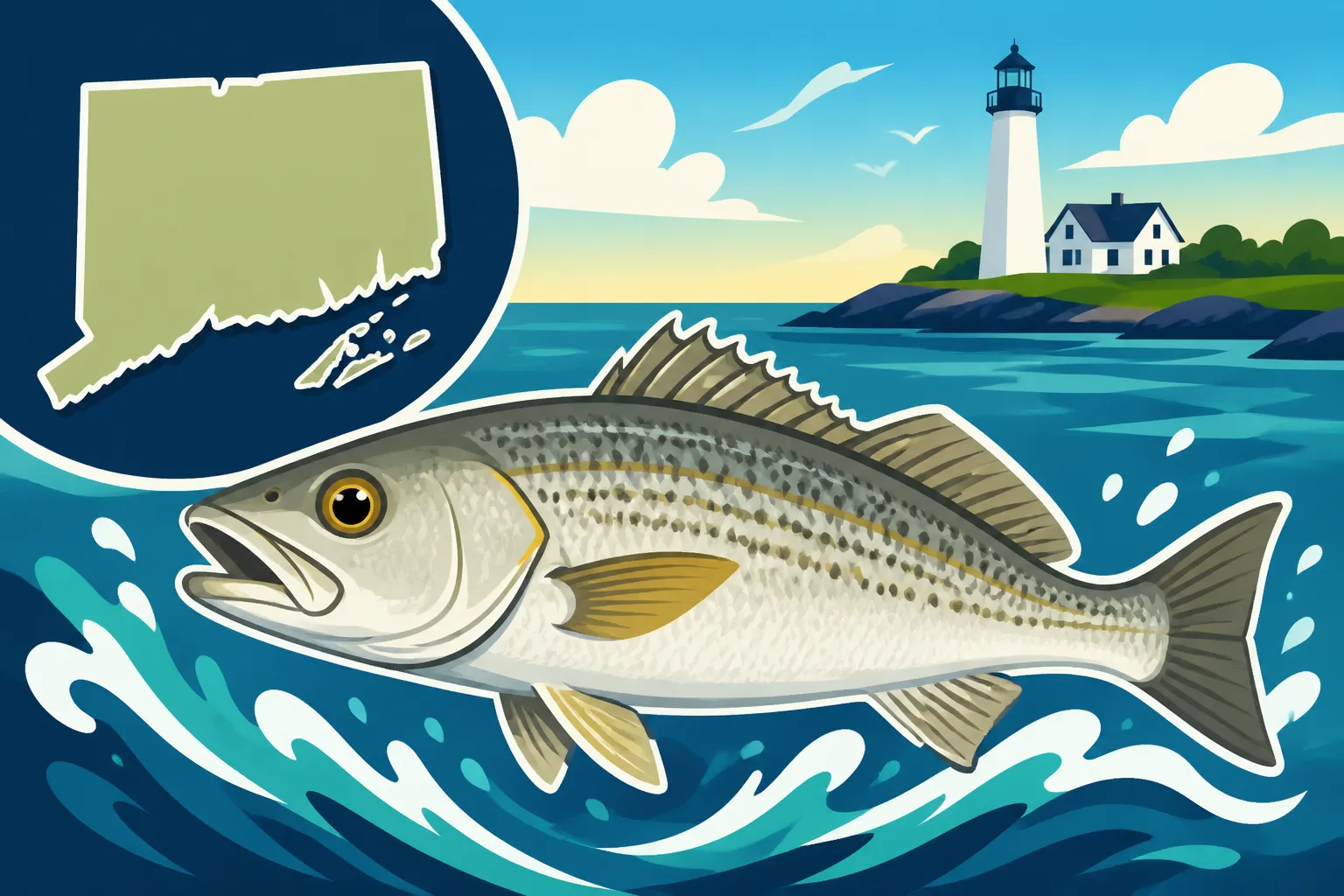
While their appearance can vary slightly depending on their habitat and diet, weakfish generally boast a stunning, iridescent purple-green sheen along their back, fading to silvery sides and a white belly. They have small, distinct spots that often form wavy lines along their upper body, and a prominent, sharp canine tooth in their upper jaw, which is a dead giveaway. Their tail fin is usually pointed.
Anglers sometimes confuse weakfish with other species, most notably the speckled trout (though speckled trout are far less common in Long Island Sound) or even small bluefish. However, the unique coloring, the distinct wavy lines of spots, and that single prominent tooth should help you tell them apart. Bluefish have a more streamlined, torpedo-like body and lack the distinct coloration and spots of a weakfish. Learning these identifying features will not only help you correctly log your catch but also ensure you're adhering to any specific regulations. Connecticut Saltwater Fishing Regulations by Species can offer more detail on other species you might encounter.
Where to Find Weakfish in Long Island Sound
Long Island Sound offers a patchwork of environments that can hold weakfish at different times of the year. Unlike some species that might stick to very specific types of structure, weakfish are quite adaptable, moving between various areas in search of food and comfortable water temperatures. Knowing these prime locations can significantly boost your chances of a successful outing.
Estuaries and River Mouths
River mouths and estuaries are classic weakfish hotspots, especially in the spring and early summer. The mixing of fresh and saltwater here creates a nutrient-rich environment that attracts a variety of baitfish, which in turn draws in predators like weakfish. Areas where rivers like the Connecticut River, Housatonic River, or Thames River meet the Sound are prime examples.
Look for areas with strong current seams, deeper channels running out of the river, and adjacent mudflats or sandy bottoms that warm up quickly. These locations are often rich in shrimp, worms, and juvenile baitfish. The convergence of currents also creates natural ambush points where weakfish can lie in wait. Targeting the edges of these channels or the drop-offs where deeper water meets shallower flats can be particularly productive.
Shallow Flats and Grass Beds
As the water temperatures rise into late spring and summer, weakfish will often move onto shallower flats, especially those with eelgrass beds. These grassy areas provide excellent cover for both weakfish and their prey. The lush vegetation attracts crabs, shrimp, and juvenile baitfish, making them a buffet for hungry weakfish.
When fishing these areas, pay attention to the tides. Weakfish will often move onto the flats with the incoming tide to feed, retreating to slightly deeper channels or holes as the tide recedes. Kayak anglers or those with shallow-draft boats can really excel here, quietly poling or trolling over the grass. Best Kayak Fishing Spots in Connecticut might reveal some fantastic weakfish opportunities. The visual aspect of sight-fishing for weakfish tailing in shallow water on a calm day is an unforgettable experience!
Deeper Channels, Reefs, and Structure
While weakfish often frequent shallow areas, they also utilize deeper channels, reefs, and various submerged structures throughout Long Island Sound, especially during stronger currents or when seeking cooler water in the heat of summer. Submerged rock piles, mussel beds, old bridge pilings, and even subtle changes in bottom contour can hold weakfish.
These deeper spots provide both cover and a steady supply of food swept along by the current. Weakfish often stack up on the leeward side of structures, out of the direct current, waiting for an easy meal to pass by. Bottom fishing with bait or jigging artificials around these structures can be highly effective. Long Island Sound Fishing Guide covers many of these deeper spots and structures that can hold various species, including weakfish.
Best Times and Seasons for Weakfish
Timing is everything when it comes to weakfish, arguably more so than with many other species. Their migratory patterns and sensitivity to environmental factors mean that knowing when to target them can make the difference between a memorable day and a slow one. While specific dates can vary annually, general seasonal trends hold true for Long Island Sound.
Spring to Early Summer: The Arrival
The prime weakfish season in Long Island Sound generally kicks off in late April or early May, continuing strongly through June and often into early July. This is when the weakfish migrate into the Sound, following warming water temperatures and the abundant baitfish that also move inshore to spawn. This is arguably the most consistent time to target them.
During this period, look for them in the aforementioned river mouths and shallower, protected bays and estuaries. Water temperatures around 55-65 degrees Fahrenheit often trigger their arrival and active feeding. Early mornings and late evenings tend to be the most productive times, as the light is low, and weakfish feel more comfortable feeding actively in shallower water. The tides also play a crucial role; an incoming or outgoing tide, creating good current flow, is often when they are most aggressive.
Mid-Summer: The Dog Days Challenge
As mid-summer arrives, typically from mid-July through August, weakfish can become a bit more challenging to locate and catch. The water temperatures in many shallow areas of Long Island Sound can become quite warm, pushing weakfish into deeper, cooler waters or causing them to feed more selectively during cooler parts of the day.
If you're targeting weakfish during the height of summer, shift your focus to deeper channels, the cooler waters around offshore reefs, or tidal rips where cooler, more oxygenated water is present. Fishing during dawn or dusk, or even into the night, can be very productive as weakfish will often move shallower to feed under the cover of darkness when water temperatures are at their coolest. Understanding Best Time of Day to Catch Striped Bass can offer some transferable insight, as both species often exhibit similar feeding patterns in hot weather.
Fall: A Final Push
As September rolls around and into October, weakfish can offer a resurgence of activity before their southward migration. Cooler air temperatures begin to drop the water temperatures in Long Island Sound, and baitfish are often schooling up in preparation for their own migrations. This creates excellent feeding opportunities for weakfish looking to bulk up for their journey.
During the fall, weakfish can be found in similar locations as the spring, but they might be more concentrated as baitfish schools become larger and more defined. They will often be very aggressive, chasing down larger baits and lures. This is a fantastic time for both casting artificials and live-lining larger baits. However, keep an eye on the thermometer; once water temperatures drop consistently below 50 degrees Fahrenheit, most of the weakfish will have moved out of the Sound.
Techniques and Tackle for Catching Weakfish
Weakfish are a lot of fun to catch, but their delicate mouths demand a certain finesse in your approach. Ripping lips is not the goal here; a gentle touch and appropriate gear will save you from heartbreaking break-offs right at the boat or shore. Let’s dive into what works best.
Rods, Reels, and Lines: The Finesse Factor
For weakfish, light to medium-light spinning gear is usually ideal. You want a rod with a sensitive tip to detect subtle bites but enough backbone to handle a spirited run. A 7-foot rod in the medium-light action range is a great all-around choice. Pair this with a high-quality spinning reel spooled with 10-20 lb braided line. Braided line offers superior sensitivity and casting distance, crucial for detecting those soft weakfish bites.
A fluorocarbon leader of 10-15 lb test is essential. Weakfish have excellent eyesight, and the invisibility of fluorocarbon will help with presentation. Plus, the slight stretch in fluorocarbon can act as a shock absorber, protecting their delicate mouths during the fight. Remember, their mouths are "weak," so any sudden jerks can tear the hook out. A good rule of thumb is to fight them with steady pressure, letting the rod do the work, and avoid trying to "horse" them in. When you're ready to stock up on new line or a reel, checking out fishing gear on Amazon can be a convenient way to compare options and read reviews.
Baits and Lures: Tempting the Sea Trout
Weakfish aren't overly picky, but certain baits and lures consistently outperform others. Matching the hatch – using baits or lures that mimic the local forage – is always a good strategy.
Soft Plastics and Jigs
Soft plastic lures are incredibly effective for weakfish. Grubs, paddle tails, and curly tail worms in sizes ranging from 3 to 6 inches, rigged on a jig head (typically 1/4 to 3/4 oz, depending on current and depth), are go-to choices. Colors like pink, chartreuse, white, and natural baitfish patterns are often productive. The key is a slow, methodical retrieve with occasional lifts and drops to impart a natural swimming or darting action. Weakfish often hit on the fall, so pay attention to your line as your jig sinks. You can find a vast selection of these soft plastics and jig heads on Amazon, allowing you to experiment with different sizes and colors.
Live and Cut Baits
When weakfish are less aggressive or you’re fishing deeper channels, live bait can be deadly. Small live shrimp, killifish, spearing, or peanut bunker are excellent choices. Rig them on a small Kahle or circle hook, either free-lined in the current or suspended under a bobber in shallower water. If live bait isn't available, fresh cut bait like squid strips, clam snot, or strips of bunker can also work wonders, especially fished on a high-low rig or a simple bottom rig. Best Baits for Smallmouth Bass on the Housatonic might focus on freshwater, but the principle of using local forage as bait translates well.
Topwater Lures
On calm mornings or evenings, especially when weakfish are feeding aggressively on baitfish near the surface, topwater lures can provide explosive strikes. Small poppers, walk-the-dog lures, or even small metal lip swimmers can entice weakfish. The visual aspect of a weakfish inhaling a topwater lure is exhilarating and makes for some truly memorable fishing. A slow, steady retrieve with a subtle twitch is often all that's needed to get their attention.
Techniques for Successful Weakfish Angling
Successful weakfish angling often boils down to a few key techniques:
- Drifting: Whether in a boat or kayak, drifting over likely weakfish habitat like channels, flats, or reef edges allows you to cover a lot of water and present your bait or lure naturally with the current. This is particularly effective with soft plastics or live bait.
- Targeting Structure: When you find an area with good current and structure (rock piles, drop-offs, wrecks), weakfish will often stack up there. Position your boat upstream and cast your jig or bait downstream, letting it drift naturally into the strike zone.
- Patience and Persistence: Weakfish can be finicky. If one color or retrieve isn't working, don't be afraid to change it up. Sometimes a slight change in jig weight, plastic color, or retrieve speed can make all the difference. Their movements can be tide-dependent, so if one tide phase is slow, the next might be on fire.
| Technique | Recommended Gear | Best Conditions | Key Tip |
|---|---|---|---|
| Soft Plastic Jigging | Med-Light Spin Rod, 10-20lb Braid, 10-15lb Fluoro Leader, 1/4-3/4oz Jig Head, 3-6" Grub/Paddle Tail | Moderate Current, Various Depths, Dawn/Dusk | Slow retrieve with lifts and falls; watch line on the drop. |
| Live Bait (Free-lined) | Light Spin Rod, 8-15lb Mono/Braid, Small Kahle/Circle Hook, Live Shrimp/Baitfish | Calm Water, Shallow Flats, Light Current | Let bait drift naturally; set hook gently. |
| Cut Bait (Bottom Rig) | Medium Spin Rod, 15-25lb Braid, High-Low Rig, Bank Sinker, Squid/Clam/Bunker Strips | Deeper Channels, Strong Current, Night/Day | Use just enough weight to hold bottom; check bait often. |
| Topwater Casting | Med-Light Spin Rod, 15-20lb Braid, Small Poppers/Walk-the-Dog Lures | Calm Water, Low Light, Aggressive Fish | Steady retrieve with subtle twitches; anticipate explosive strikes. |
Conservation and Future of Weakfish
Weakfish populations have seen their ups and downs over the years, leading to various management strategies across the Atlantic coast. As anglers, it's our responsibility to contribute to their sustainability in Long Island Sound and beyond. Healthy fisheries ensure that future generations can enjoy the thrill of catching these beautiful fish.
Understanding Regulations and Limits
Connecticut, along with other states in the region, participates in regional management plans for weakfish. These plans often involve size limits, daily creel limits (how many fish you can keep), and sometimes season dates. These regulations are dynamic and can change based on stock assessments and conservation needs.
Before heading out, always check the current Connecticut Fishing Regulations Explained or the DEEP website for the most up-to-date weakfish rules. Ignorance of the law is never an excuse, and abiding by these rules is critical for the health of the fishery. Catch-and-release is a great practice, especially for larger breeding fish, to help ensure the species thrives.
Practicing Responsible Catch and Release
Because of their "weak" mouths, careful handling is paramount when practicing catch and release with weakfish. If you intend to release a fish:
- Minimize Handling: Try to keep the fish in the water as much as possible. If you must lift it, support its belly.
- Use the Right Tools: A de-hooker can quickly remove hooks with minimal damage. Pliers are also essential.
- Avoid the Gills: Never hold a weakfish by its gills. This can cause severe internal damage.
- Revive Gently: If a fish seems sluggish, gently hold it in the water, facing into the current, until it regains its strength and swims away on its own.
These practices not only improve the survival rate of released fish but also show respect for the resource. Many anglers are now proactively using circle hooks when fishing with bait, as they are proven to reduce gut-hooking and increase survival rates for released fish.
Habitat Protection and Water Quality
Beyond direct fishing practices, the long-term health of weakfish populations in Long Island Sound is intrinsically linked to the health of their habitat and the water quality of the Sound itself. Weakfish rely on clean, productive estuaries and coastal waters for spawning, feeding, and juvenile development.
Supporting initiatives that protect wetlands, reduce pollution runoff, and maintain healthy eelgrass beds directly benefits weakfish and the entire Long Island Sound ecosystem. As anglers, we are often the first to notice changes in the environment, and being vocal advocates for conservation is one of the most important roles we can play. The future of weakfish in our beloved Sound truly depends on all of us.
Disclaimer
This article is for general informational purposes only and does not constitute professional advice. Laws, prices and regulations vary by location and change over time. Consult a qualified professional for guidance on your specific situation.