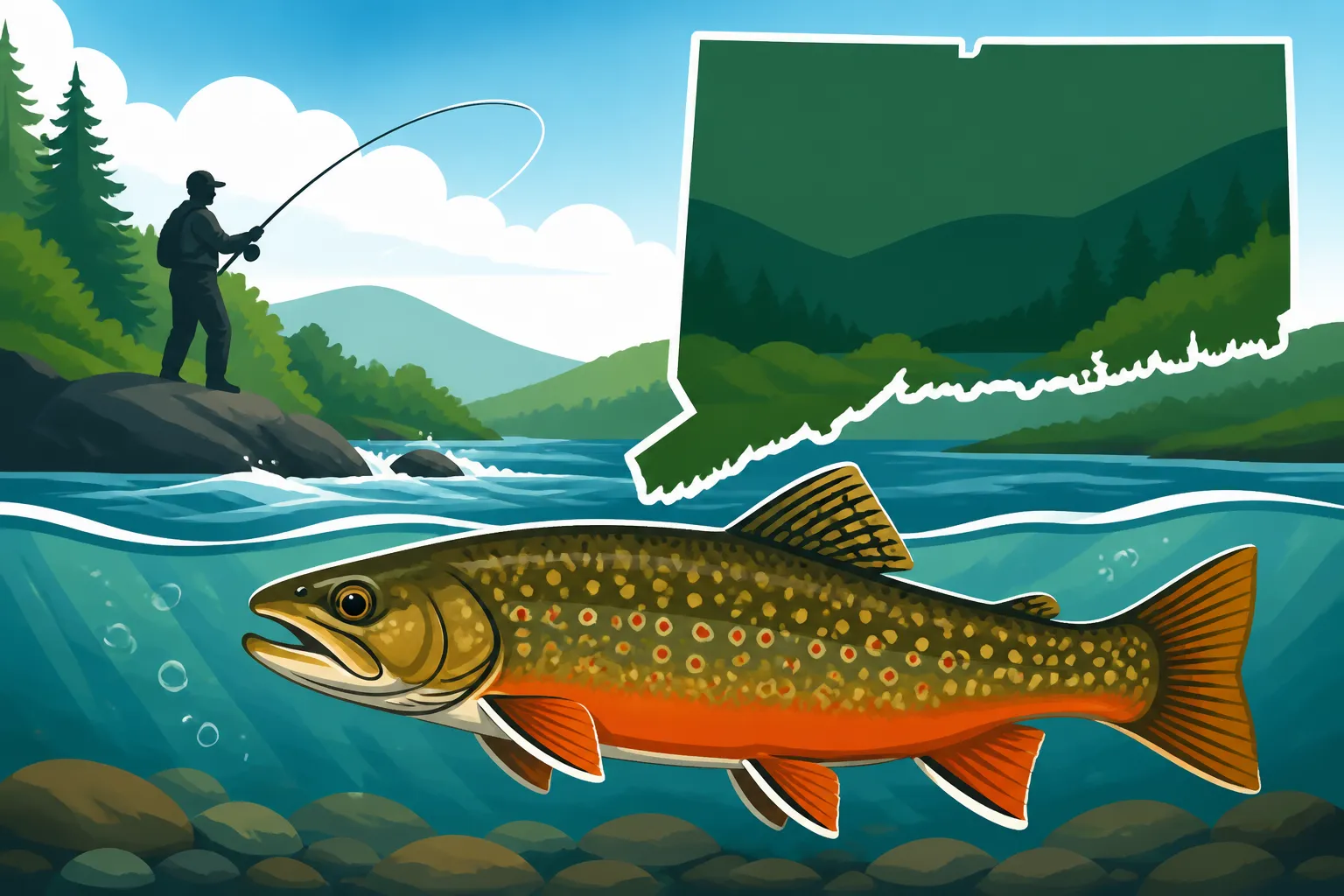
Native trout species found in Connecticut
Many anglers in Connecticut often wonder about the true native fish swimming in our sparkling streams and hidden ponds, especially when it comes to trout. It's a common misconception that all trout you catch here are naturally occurring, but the truth is, only one species truly calls Connecticut home without human introduction. This guide will dive deep into identifying our sole native trout, exploring where these incredible fish thrive, and discussing how you can respectfully pursue them while contributing to their preservation.
Identifying Connecticut's True Native Trout
When we talk about trout in Connecticut, it's easy to picture the vibrant browns, shimmering rainbows, and speckled brookies. However, only one of these species has been here since before European settlement, evolving with our waterways and landscapes. Understanding this distinction is crucial for appreciating the unique ecological heritage of our state.
The Elusive Brook Trout: A True Connecticut Gem
Let's cut right to the chase: the brook trout ( Salvelinus fontinalis) is Connecticut's undisputed native trout species. Often affectionately called "brookies," these fish are actually part of the char family, but they are widely referred to as trout due to their similar appearance and habitat. They are a sight to behold, with their olive-green backs sporting worm-like markings (vermiculations), reddish-orange bellies that often turn brilliant scarlet during spawning, and distinctive white leading edges on their lower fins, separated by a black stripe. These vivid colors are a hallmark of a truly wild fish, a stark contrast to their hatchery-raised counterparts.
Brook trout are incredibly sensitive fish, acting as a crucial indicator of water quality. They demand cold, crystal-clear, and highly oxygenated water to survive and reproduce. You'll find them predominantly in the headwaters of small, pristine streams, often tucked away in shaded, forested areas where spring-fed sources keep water temperatures consistently cool throughout the year. Their presence signifies a healthy, undisturbed aquatic ecosystem, which is increasingly rare in our developed landscape. They are truly an ecological treasure, and finding a wild brook trout in Connecticut is a special experience. If you're keen to learn more about this specific species, we have a dedicated piece on Brook Trout: Connecticut's Native Trout.
Beyond the Brookie: Why Other Trout Aren't Native
While brook trout hold the title of Connecticut's only native trout, our waters are also teeming with two other popular species: rainbow trout and brown trout. These fish, while incredibly fun to catch and a vital part of our recreational fisheries, are actually introduced species. They were brought to North America from other continents and then heavily stocked into our waterways to create diverse angling opportunities.
Rainbow trout (Oncorhynchus mykiss), with their iridescent silvery sides and distinct pink or red band, are native to the Pacific drainages of North America and Asia. They are known for their strong fighting ability and are widely stocked across Connecticut's lakes, ponds, and rivers. They are a bit more tolerant of warmer water temperatures than brook trout, making them suitable for a broader range of habitats. You'll often find them in larger rivers like the Farmington or Housatonic after stocking events.
Brown trout (Salmo trutta), characterized by their golden-brown bodies adorned with black and often red or orange spots (some with light halos), are native to Europe and western Asia. They are renowned for their cunning nature and ability to grow to impressive sizes, particularly in larger rivers and lakes. Brown trout are incredibly adaptable and can tolerate a wider range of water temperatures and conditions than brook trout, allowing them to thrive in many of the same waters that might be too marginal for our native species. Our dedicated Trout Species Identification Guide for Connecticut offers even more details on distinguishing between these magnificent fish.
Where to Find Wild Brook Trout in Connecticut Today
The quest for native brook trout in Connecticut is less about casting into the state's largest, most well-known rivers and more about seeking out secluded, unspoiled pockets of wilderness. These aren't the fish you'll find in heavily trafficked areas; their shyness and specific habitat needs mean you have to work a little harder to find them.
Prime Habitats: Cold, Clean, and Remote Waters
Wild brook trout cling to existence in the smaller, colder tributaries, headwaters, and isolated feeder streams that crisscross the state. Think less "river" and more "trickle." These are typically very small, forested streams with consistent flow, abundant canopy cover to keep water temperatures down, and plenty of natural structure like fallen logs, undercut banks, and rocky pockets. The water itself needs to be exceptionally clean, with low turbidity and minimal pollution, as brook trout are highly sensitive to environmental changes. Many of these streams are found within state forests, wildlife management areas, and other protected lands, often requiring a hike to reach.
Look for streams that originate from springs rather than large reservoirs, as spring water maintains a consistent cold temperature year-round, even through the height of summer. The higher elevations of the Litchfield Hills and northeastern Connecticut are often prime areas to search, though pockets can be found throughout the state wherever undisturbed forested watersheds remain. These hidden gems are often narrow, overgrown, and can be challenging to navigate, but the reward of a wild brook trout is unparalleled. Anglers looking for a challenge might explore some of the state's lesser-known waterways. For broader information on various fishing spots, consider checking out resources like Best Trout Streams in Connecticut.
Conservation Efforts and Angler Responsibility
Because wild brook trout populations are so delicate and isolated, conservation is paramount. Many of these small streams support genetically unique populations that have adapted over millennia to their specific environments. Overfishing, habitat degradation, and climate change all pose significant threats to their survival. As anglers, we have a profound responsibility to protect these precious resources.
Practicing catch-and-release is strongly encouraged, especially for native brook trout. Handling them gently, minimizing their time out of the water, and using barbless hooks can significantly increase their survival rates. If you do plan to keep any fish (and always check local regulations!), ensure you can accurately identify it as a stocked fish and not a native. Understanding and adhering to Connecticut Fishing Regulations Explained is key to responsible angling. Supporting local conservation groups and advocating for the protection of forested watersheds are also vital actions.
Fishing Techniques for Native Brook Trout
Catching a native brook trout is often more about finesse, stealth, and respecting their delicate environment than brute force. They are not typically large fish, but their beauty and the challenge of finding them make the pursuit incredibly rewarding.
Tackle and Approaches for Small Stream Success
When targeting native brook trout, scale down your gear significantly. Forget the heavy bass rods; think ultralight spinning gear or light fly rods. A 6-foot ultralight spinning rod paired with a small reel spooled with 2-4 pound test line is ideal. For fly anglers, a 2 or 3-weight rod, 6 to 7.5 feet long, will offer the perfect presentation and fight for these smaller fish. Short leaders and tippets are often sufficient given the intimate nature of these streams. Many anglers find reliable ultralight rods and reels, as well as selection of small lures and flies, on sites like Amazon, making it easy to gear up for a dedicated brook trout expedition.
Stealth is your best friend. Wild brook trout are incredibly wary. Approach stream banks carefully, keeping a low profile, and try to avoid casting shadows over the water. Long casts are often unnecessary; instead, focus on short, accurate presentations to likely holding spots. Small inline spinners, tiny spoons, micro-jigs, and various fly patterns (dry flies, nymphs, wet flies, and small streamers) can all be effective. Natural baits like worms or small grubs can also entice a bite, but remember, the goal is often catch-and-release. For deeper insights into fly fishing specifically, our guide on Fly Fishing for Trout in Connecticut offers invaluable advice.
Reading the Water for Brook Trout Holds
Unlike larger river trout that might hold in broad seams or deep runs, native brook trout often seek refuge in very specific, often subtle, pockets of water. They love cover and protection from predators and strong currents. Look for undercut banks where the current has carved out a small cave, fallen logs that create eddies and overhead cover, and submerged rocks that break the current. Small plunge pools below tiny waterfalls or rapids are also prime real estate.
Anywhere there's a slight increase in depth, a bit of shade, or a break in the current, a brook trout might be hiding. They're opportunistic feeders, so they'll often position themselves to ambush insects or small aquatic organisms drifting by. Pay close attention to subtle changes in water flow and structure. Often, the best spots are no bigger than a dinner plate. Don't overlook the shallowest pockets either; sometimes, a surprisingly large brook trout can be found in just a few inches of water, particularly in heavily shaded areas.
The Future of Native Brook Trout in Connecticut
The challenges facing Connecticut's native brook trout populations are complex and ongoing. Their survival is intrinsically linked to the health of our environment, and understanding these threats is the first step toward effective conservation.
Threats to Their Survival
One of the most significant threats to native brook trout is habitat degradation and loss. Urbanization, agricultural runoff, deforestation, and road construction can all lead to increased water temperatures, sedimentation, and pollution, making streams uninhabitable for these sensitive fish. Impervious surfaces in developed areas cause rapid runoff, leading to flashier flows during storms and lower flows during dry periods, both of which stress brook trout populations. The construction of dams, even small ones, can fragment their habitat, isolating populations and preventing natural migration and genetic exchange.
Another major challenge is climate change. As average air temperatures rise, so do water temperatures, pushing brook trout beyond their thermal tolerance. Even a few degrees can make a significant difference in these coldwater-dependent species. Competition from non-native trout, particularly brown trout, can also be an issue. Brown trout are more aggressive and can outcompete brook trout for food and spawning grounds, especially in waters where conditions become less pristine. Invasive species, like certain aquatic plants or insects, can also disrupt the delicate ecosystem that brook trout rely upon.
How Anglers Can Help Protect Them
As anglers, we have a unique connection to these wild places and their inhabitants, making us natural stewards of the environment. Our actions, both on and off the water, can make a real difference in the long-term survival of native brook trout. Firstly, educating ourselves and others about the importance of native species and their specific needs is crucial. Understanding where Connecticut Catch and Release Fly Fishing Only Waters exist can help guide our practices.
Secondly, practicing responsible angling techniques, such as catch-and-release, using barbless hooks, and minimizing handling time, significantly boosts survival rates. Consider using gear bought from environmentally conscious retailers or searching for eco-friendly fishing accessories on Amazon to minimize your impact. Beyond fishing, supporting organizations dedicated to watershed protection, land conservation, and stream restoration projects can have a broad impact. Participating in stream clean-ups, reporting pollution incidents, and advocating for policies that protect riparian zones and mitigate climate change are all ways to contribute. Remember, every wild brook trout you encounter is a testament to a healthy ecosystem, and protecting them ensures future generations can experience their beauty.
Here's a quick comparison of the trout species you might encounter in Connecticut:
| Feature | Native Brook Trout (Salvelinus fontinalis) | Brown Trout (Salmo trutta) | Rainbow Trout (Oncorhynchus mykiss) |
|---|---|---|---|
| Origin | Native to Eastern North America (CT) | Native to Europe/Western Asia | Native to Pacific North America/Asia |
| Appearance | Olive-green back with worm-like markings, red/orange belly, white-edged fins. | Golden-brown with black and often red/orange spots, sometimes with halos. | Silvery with a pink/red stripe, fine black spots over body. |
| Habitat | Cold, clear, highly oxygenated headwater streams; very sensitive. | Rivers, lakes, ponds; more tolerant of varied conditions. | Rivers, lakes, ponds; good tolerance for warmer water. |
| Diet | Aquatic insects, small fish, larvae, terrestrial insects. | Insects, crustaceans, small fish, worms, rodents. | Insects, crustaceans, small fish, zooplankton. |
| Conservation | High concern, indicator species for water quality; often catch-and-release. | Heavily stocked for sport fishing. | Heavily stocked for sport fishing. |
| Connecticut Status | Native, wild populations are rare and protected. | Introduced, widely stocked. | Introduced, widely stocked. |
Disclaimer
This article is for general informational purposes only and does not constitute professional advice. Laws, prices and regulations vary by location and change over time. Consult a qualified professional for guidance on your specific situation.