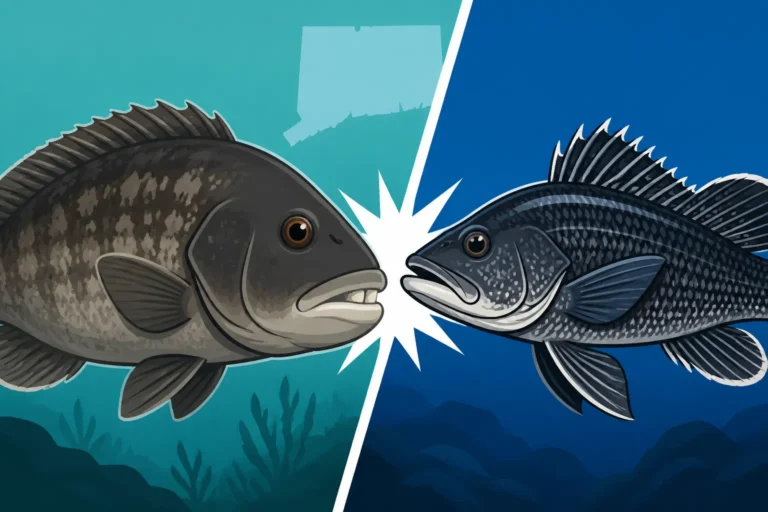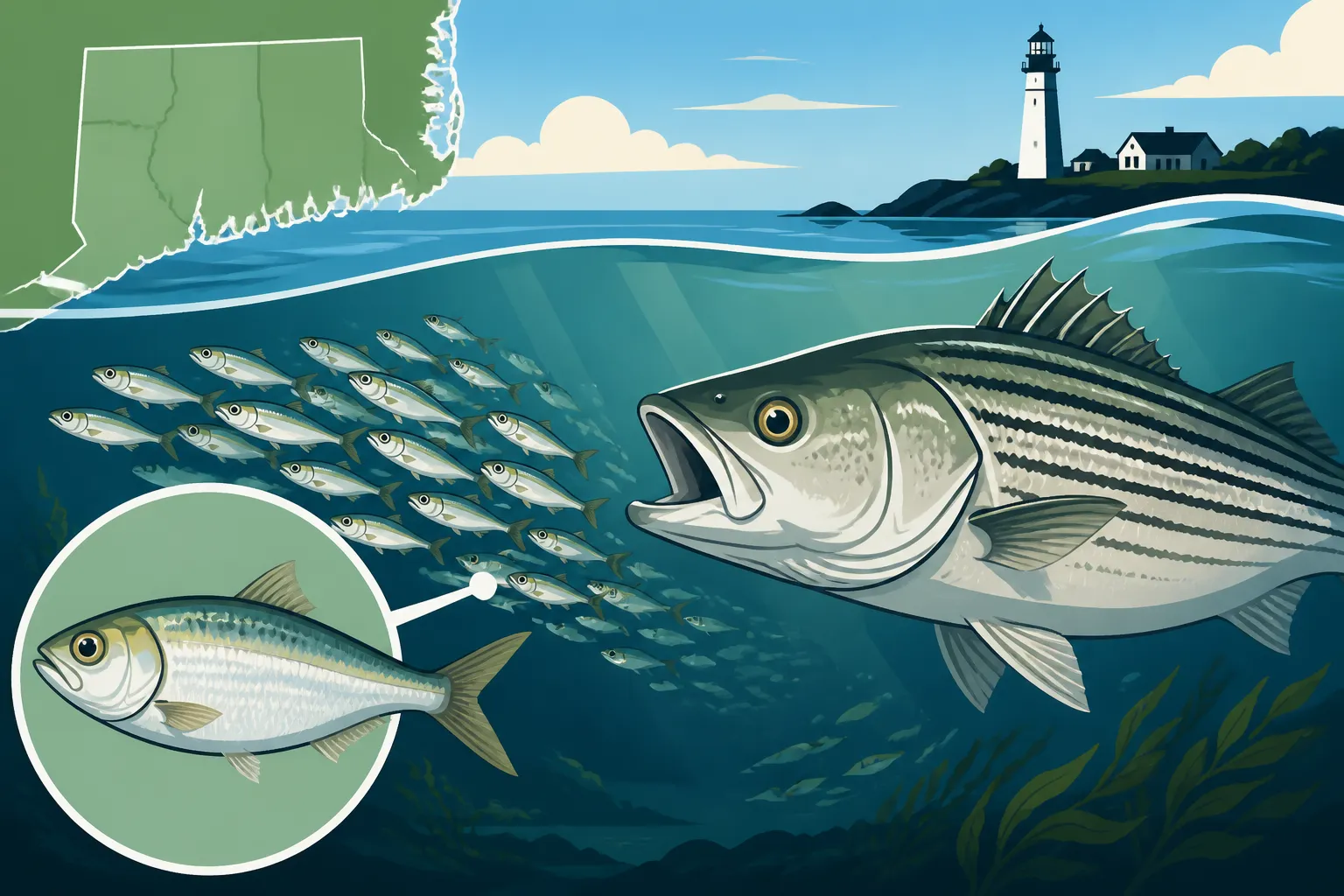
What Atlantic menhaden are and why they matter to striped bass
Have you ever been out on the Connecticut shoreline, perhaps scanning the waters of Long Island Sound, and witnessed those massive, dark bait balls boiling on the surface? Or perhaps you've smelled a distinct, oily aroma on the breeze, long before you even saw a fish? Chances are, you've encountered Atlantic menhaden, often called "bunker" by local anglers. These unassuming fish are absolutely critical to the health of our marine ecosystem and, more specifically, they're a literal lifeline for the striped bass that so many of us love to pursue. This guide will pull back the curtain on menhaden, explaining what they are, why they're so incredibly vital, and how understanding their role can make you a more successful and knowledgeable angler.
What Exactly Are Atlantic Menhaden?
Atlantic menhaden (scientific name: Brevoortia tyrannus) are a species of ray-finned fish from the herring family, Clupeidae. They're not the flashiest fish in the sea, nor are they typically a target for recreational anglers to catch and eat directly. In fact, many people might not even recognize them by name, but their presence—or absence—sends ripples throughout the entire coastal food web.
Physical Characteristics and Habitat
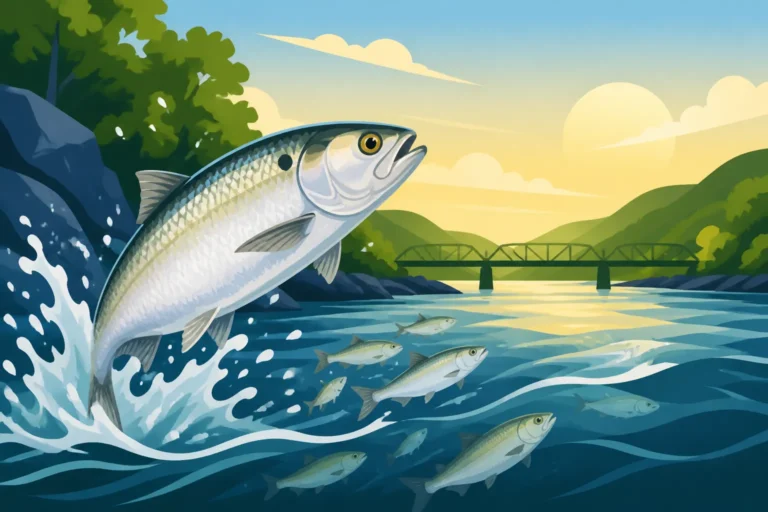
Menhaden are easily identifiable once you know what to look for. They have a deep, compressed body, large head, and a distinctive dark spot behind their gill plate. Their scales are large and metallic, often with a silvery-blue sheen on their sides and a darker, bluish-green back. They can grow up to about 15 inches long, though most you encounter are often smaller, especially the younger "peanut bunker."
They are pelagic fish, meaning they live in the open ocean, but they spend a significant portion of their lives in coastal waters, estuaries, and bays along the Atlantic seaboard, from Nova Scotia down to Florida. In Connecticut, we see them in force, particularly in Long Island Sound Fishing Guide and even pushing up into the lower reaches of the Connecticut River during warmer months. They prefer temperate waters and are often found in large, dense schools, sometimes numbering in the millions. These schools are a sight to behold, often creating a dark patch on the water or appearing as a shimmering, agitated mass when predators are in pursuit.
A Filter Feeder's Diet
One of the most fascinating aspects of menhaden is their diet. Unlike many baitfish that feed on smaller invertebrates or other fish, menhaden are primarily filter feeders. They have specialized gill rakers that allow them to strain phytoplankton and zooplankton from the water column. This makes them a crucial link between the microscopic world and larger marine life. By consuming vast quantities of plankton, they effectively convert this tiny biomass into a form that can be utilized by bigger predators.
Think about it: they are essentially the ocean's nutrient-recyclers, taking energy from the very base of the food chain and making it available to everything from striped bass to whales. This unique dietary habit also makes them very rich in omega-3 fatty acids, which is why they're so sought after by larger, predatory fish and why they’re also harvested for products like fish oil and bait.
The Pivotal Role of Menhaden in the Ecosystem
It's hard to overstate the importance of Atlantic menhaden to the health and vitality of our coastal waters. They are often referred to as the "most important fish in the sea" for good reason. They are the primary forage fish for a vast array of marine predators, acting as a critical energy transfer mechanism.
The Foundation of the Food Web
Imagine our marine ecosystem as a multi-story building. Menhaden aren't the penthouse, but they're certainly a foundational floor, supporting almost everything above them. They consume plankton, which are the producers of the ocean, and in turn, become prey for nearly every major predatory fish, bird, and marine mammal that inhabits our coastal waters.
Without a healthy population of menhaden, many other species would struggle to find enough food to survive and reproduce. This isn't just about the big, flashy predators either; it impacts the entire delicate balance of marine life. A decline in menhaden can have cascading effects, leading to reduced populations of dependent species and overall ecosystem instability. It's a classic example of how interconnected life in the ocean truly is.
Supporting Diverse Marine Life
The list of creatures that rely on menhaden for sustenance is incredibly long. Of course, our beloved striped bass are high on that list, but they're far from alone. Bluefish, tuna, weakfish, and fluke all key into menhaden schools. Migratory birds like osprey and various gulls feast on them. Marine mammals such as seals and even humpback whales gorge themselves on menhaden. Even sharks, like sand tigers and makos, will target these oily fish.
Their schooling behavior, while a defense mechanism, also makes them a highly efficient food source for predators. A large school provides a substantial, concentrated meal, allowing predators to expend less energy hunting individual prey. This makes menhaden a crucial component of the entire life cycle for many marine animals throughout their different growth stages and Connecticut Fishing Seasons by Month.
Why Striped Bass Absolutely Depend on Menhaden
If you're a fan of Striped Bass Fishing in Long Island Sound, then you must understand menhaden. For striped bass, menhaden aren't just a food source; they are arguably the most important food source, especially for larger, migratory stripers.
Nutritional Value and Energy
Striped bass are voracious predators, and menhaden offer a high-fat, high-protein meal that is incredibly energy-dense. This is crucial for stripers, especially those undertaking long migrations and growing to trophy sizes. Think of it like this: would you rather eat a handful of crackers or a hearty steak to fuel a cross-country trip? Menhaden are that steak for a striped bass.
The rich oil content of menhaden provides the caloric intake necessary for striped bass to maintain their metabolism, build fat reserves, and fuel their powerful bursts of speed when hunting. When a large school of menhaden is present, striped bass will gorge themselves, often to the point of regurgitation, to maximize their intake. This is why when you clean a striper that has been feeding on bunker, you often find their stomachs absolutely packed with partially digested menhaden – sometimes still looking whole! Their preference for this high-calorie meal is a major reason why What striped bass eat in Long Island Sound often centers around these oily baitfish.
Schooling Behavior and Migration Patterns
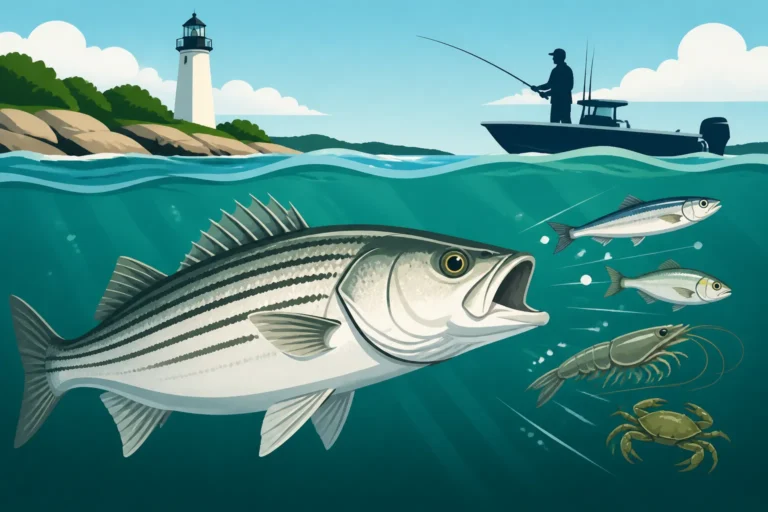
The massive schooling behavior of menhaden creates a perfect hunting ground for striped bass. These schools can span acres, making them easy targets for predators to ambush. Striped bass will often herd menhaden schools against structure, into shallow coves, or up against the shoreline, creating feeding frenzies that anglers dream of. The sheer density of these schools also means that a single striper can consume many menhaden in a short amount of time, making it an efficient hunting strategy.
Furthermore, the migrations of Atlantic menhaden directly influence the movements of striped bass. As menhaden move north along the coast in the spring and south in the fall, Striped Bass Migration Along the Connecticut Coast often follows suit. Anglers who pay attention to where and when menhaden schools are appearing are often the ones who find the most consistent striped bass action. It's a predator-prey relationship that drives the entire fishery, making "finding the bunker" a common mantra among striper anglers. A good pair of binoculars, which you can easily find on Amazon, can be invaluable for spotting these tell-tale signs of menhaden schools from a distance.
The Link to Trophy Stripers
It's no coincidence that the biggest, fattest striped bass are often caught in areas and at times when menhaden are abundant. These large stripers need massive amounts of high-quality forage to sustain their size and growth. A consistent supply of menhaden allows them to pack on weight and reach impressive lengths.
When a school of menhaden is getting hammered by striped bass, it can be a truly electrifying experience for an angler. The water erupts with crashing fish, gulls divebombing, and the distinct smell of menhaden oil in the air. This connection to the "big ones" is a significant part of why understanding menhaden is so vital for anyone serious about catching trophy striped bass. The phrase "How menhaden schools attract striped bass and bluefish" isn't just a saying; it's a fundamental truth of the fishery.
How Anglers Can Understand Menhaden's Impact on Striped Bass Fishing
Knowing about menhaden isn't just academic; it's practical. For the savvy angler, understanding menhaden means understanding striped bass, and that leads to more fish in the net.
Locating Menhaden Schools
The first step is to locate the menhaden. This can be done in several ways:
- Visual Cues: Look for those dark, agitated patches on the water surface. Sometimes you'll see "nervous water" or actual fish jumping and splashing as they try to evade predators. Gulls and other seabirds circling and diving are also a dead giveaway.
- Smell: Menhaden have a distinct, oily smell. If you're downwind from a large school, you might smell them before you see them.
- Sonar/Fishfinder: If you're on a boat, your fishfinder will light up like a Christmas tree when you pass over a dense menhaden school. They often appear as large, dark clouds on the screen, sometimes extending from the bottom almost to the surface.
- Reports: Pay attention to local fishing reports and forums. Anglers are often quick to share news of "bunker schools moving in" or "peanut bunker everywhere."
Once you've found a school, don't just blast through it. Observe it. Are stripers actively feeding on it? Are they on the edges, or busting through the middle? This observation will inform your approach.
Mimicking Menhaden with Lures and Baits
If you can't find live menhaden, or if you prefer to use artificials, your best bet is to "match the hatch" by mimicking their appearance and action.
- Color and Profile: Choose lures that are silvery, blue-green, or dark on the back, with a light belly, to imitate a menhaden. Soft plastics, swimbaits, and even large plugs like lipped swimmers or topwater poppers can be effective. Many popular lures, easily purchased on Amazon, are specifically designed to replicate bunker.
- Action: Menhaden often swim in tight schools, but when chased, they'll dart erratically. Lures that have a wide wobble, a strong side-to-side darting action, or a slow, rolling retrieve can often trigger strikes. For subsurface presentations, jigs with a paddle tail or a large bucktail jig can be very effective, especially when jigged near the bottom or through the middle of a school.
- Live Lining: If legal and accessible (always check Connecticut Saltwater Fishing Regulations by Species), live-lining a menhaden is one of the most effective ways to catch large striped bass. Hook a live menhaden through the nose or back, cast it into a bunker school, and let it swim naturally. It won't take long for a striper to pick it out.
- Chunking: Another highly effective technique, especially for larger, lazier stripers, is "chunking." This involves cutting menhaden into pieces and distributing them as chum to attract fish, then fishing with a larger piece of menhaden on a hook among the chum slick. This works wonders when the stripers are down deep or not actively chasing. Trolling Techniques for Long Island Sound Striped Bass also often involve lures that imitate menhaden.
Understanding the Bigger Picture
Beyond the immediate tactical advantages, appreciating menhaden allows you to understand the broader health of our fisheries. When menhaden populations are robust, it generally bodes well for other predatory species, including striped bass. Conversely, declines in menhaden can signal trouble for the entire ecosystem.
So, the next time you're on the water in Connecticut, keep an eye out for those unassuming, silvery fish. They might not be the glamour species, but they are the unsung heroes of our marine environment, and their well-being is intrinsically linked to the fortunes of our beloved striped bass.
Here's a quick comparison of menhaden with another common baitfish in Connecticut waters:
| Feature | Atlantic Menhaden (Bunker) | Spearing (Atlantic Silverside) |
|---|---|---|
| Size | Up to 15 inches (mostly 6-12 inches) | Typically 3-6 inches |
| Body Shape | Deep, compressed, large head, distinct shoulder spot | Slender, elongated, silvery stripe along sides |
| Diet | Filter feeders (plankton, phytoplankton, zooplankton) | Omnivores (small crustaceans, worms, insect larvae) |
| Habitat | Coastal waters, estuaries, bays, open ocean | Shallow coastal waters, estuaries, tide pools, brackish areas |
| Schooling | Large, dense schools, often near surface | Smaller to moderate schools, often tight to shore |
| Oil Content | Very high (oily, strong scent) | Low to moderate |
| Predators | Striped bass, bluefish, tuna, sharks, whales, osprey | Striped bass (especially smaller ones), bluefish, fluke, birds |
| Angler Use | Primary live bait/chunk for stripers, industrial harvest | Live bait for smaller game fish, chum for various species |
Remember, knowing the bait is half the battle. When you see those big schools of bunker, know that the striped bass are likely not far behind! If you're planning a trip to catch dinner, checking out guides like Best Charters for Catching Dinner to Keep might be helpful, as these charters often target areas where menhaden are present to maximize your chances.
Disclaimer
This article is for general informational purposes only and does not constitute professional advice. Laws, prices and regulations vary by location and change over time. Consult a qualified professional for guidance on your specific situation.