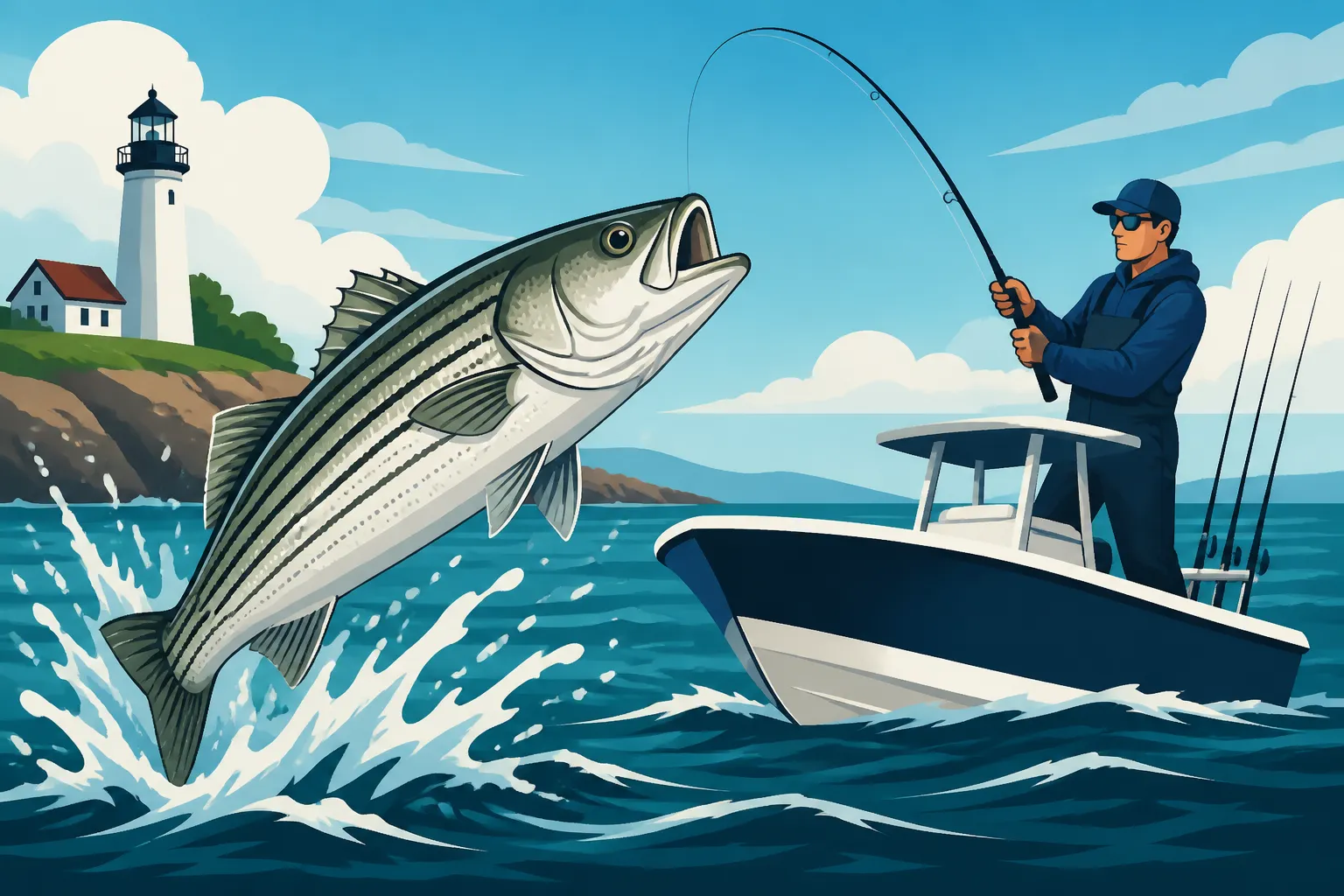
Striped Bass Fishing in Long Island Sound
Long Island Sound is a majestic body of water, offering some truly incredible fishing opportunities. For many of us who love to cast a line in Connecticut, the striped bass is the undisputed king of these waters. There's nothing quite like the anticipation of a strong pull on your line, the drag screaming as a powerful striper takes off. But these fish can also be incredibly challenging, making us feel like we're always just one step behind. If you've ever felt overwhelmed by the sheer size of the Sound or confused by the latest regulations, you're not alone. This comprehensive guide is designed to cut through the noise, offering you a deep dive into everything you need to know to successfully target striped bass in Connecticut's magnificent Long Island Sound.
Understanding the Elusive Striper: Habits and Habitat in Long Island Sound
The Annual Migration: Following the Feast
Striped bass aren't just fish; they're nomads, following their stomachs across vast distances. As the long Connecticut winter thaws and water temperatures in Long Island Sound nudge past 50 degrees Fahrenheit, those first vanguard schools of stripers start pushing in. They're often smaller, eager "schoolies," but they're here for a reason: the awakening baitfish that are themselves moving into warmer, shallower waters. Early arrivals often lurk in estuarial areas and river mouths, seeking out river herring, sand eels, and early runs of menhaden. This initial push can be subtle, with fish moving through quickly, but their presence is a clear sign that the fishing season has truly begun.
By late spring and early summer, the main body of migratory stripers has arrived, establishing feeding patterns across the Sound. These fish will spread out, from the rocky shorelines and jetties to deeper reefs and current-swept rips. This is when you start to see the bigger fish settle into their summer haunts, often driven by the vast schools of bunker that become a primary food source. They're no longer just passing through; they're actively hunting, setting up ambushes wherever the conditions are favorable for them to feed efficiently. Their movements become more predictable, allowing seasoned anglers to target specific areas with confidence.
As autumn cools the water, Long Island Sound transforms into a massive striper buffet. This is the fabled "fall run," a time of intense feeding as stripers gorge themselves, building up reserves for their southward migration to warmer waters. They'll be found crashing bait schools near the surface, pushing up against the shoreline in massive numbers, or congregating in major migratory pathways off prominent points and river mouths. This period offers some of the most exciting and consistent fishing of the year, with multiple hookups often possible. Understanding this migratory ebb and flow, detailed in Striped Bass Migration Along the Connecticut Coast, is your first step to consistent success.
Preferred Habitats: Structure, Rips, and Shallow Flats
Striped bass are quintessential ambush predators, and Long Island Sound offers a smorgasbord of places for them to hide and hunt. Rocky reefs, submerged ledges, and man-made jetties are prime real estate for these fish. These structures break up the current, creating eddies and calm zones where baitfish gather, making them easy targets. Imagine a scenario where you're casting a plug along a jetty; the striper might be tucked just behind a large submerged boulder, waiting for your lure to drift past, mimicking a struggling baitfish. These areas provide both cover and a concentrated food source.
Where strong currents meet underwater structure or shallow shoals, you'll find "rips" – turbulent areas on the surface that indicate significant underwater activity. These rips are like natural conveyor belts for baitfish, concentrating them and disorienting them, making them easy targets for hungry stripers. Deeper channels and swift current areas, especially around major river mouths like the Connecticut River or the passages between islands, also act as highways and feeding grounds. Larger fish often prefer to hold in these deeper, cooler water columns during the day, moving up to feed in the rips when conditions are right. These spots are often best fished from a boat, allowing you to drift or troll through the most active zones.
While many anglers think of stripers as deep-water ocean fish, they spend considerable time in the shallower, often brackish waters of estuaries and tidal flats, especially during the spring and fall. These areas warm up faster in spring, providing shelter and nurseries for juvenile baitfish and crustaceans. Conversely, in the fall, they offer a final chance to gorge before the migration. Fly anglers and light tackle enthusiasts often target stripers in these skinny water environments at dawn or dusk, casting over seagrass beds or along marsh edges. It's a completely different experience from deep-water fishing, requiring stealth and precise presentations.
What's on the Menu: Striper Forage in Connecticut Waters
If there's one baitfish synonymous with big striped bass in Long Island Sound, it's the Atlantic menhaden, affectionately known as "bunker." These oily, protein-rich fish arrive in vast schools, sometimes numbering in the thousands, creating a massive food source. When stripers find them, it's often an all-out feeding frenzy, with fish crashing the surface, gulls diving, and the water boiling with activity. Anglers often look for these visual cues – diving birds and surface commotion – to locate these schools, then employ methods like live-lining a fresh bunker or chunking fresh bunker to attract strikes. The scent and oil from these baitfish are incredibly powerful attractants.
Beyond bunker, stripers are incredibly opportunistic feeders, and their diet is remarkably varied, changing with the seasons and location. In early spring, they'll gorge on river herring making their spawning runs up estuaries. Throughout the summer and fall, smaller baitfish like sand eels, silversides, and squid are critical food sources. Don't forget the crustacean contingent either; stripers will readily consume crabs, especially around rocky areas, and even juvenile lobsters when available. Their willingness to eat almost anything means you have a wide range of bait and lure choices, but matching the prevailing forage is key.
Knowing what stripers are keying in on is crucial for selecting your bait or lure. If you see small baitfish dimpling the surface, a smaller, slender plug, a soft plastic, or a fly designed to imitate those specific baitfish might be your best bet. If massive schools of bunker are being pushed and torn apart, a large topwater plug that creates a big commotion, or a big paddle tail soft plastic, will get their attention. Sometimes, they'll ignore everything on the surface and feed solely on the bottom, requiring a weighted jig or a chunk of bait presented directly in their path. For a comprehensive look at their diet, check out What striped bass eat in Long Island Sound.
Essential Gear for Long Island Sound Striped Bass
Rod and Reel Setups: Matching Your Tackle to the Fight
For most Long Island Sound striper fishing, a versatile medium-heavy to heavy spinning combo is your absolute workhorse. Think a 7 to 9-foot rod with a fast action, meaning it bends mostly at the tip, offering excellent sensitivity and casting power. This rod should be capable of handling lures from 1 to 4 ounces, giving you the flexibility to cast a wide range of offerings. Pair this with a reliable, saltwater-rated spinning reel in the 5000-8000 size range, spooled with 30-50 lb braided line. This setup provides the backbone to cast larger lures, fight strong currents, and subdue a determined striper that wants nothing more than to break you off.
If you're going to specialize in certain techniques, your gear will naturally evolve. Surfcasters, for instance, often opt for longer rods, typically 10 to 12 feet, sometimes even longer, to achieve maximum casting distance from the beach or jetties. These longer rods provide leverage for launching heavy plugs and bait rigs into the distant surf. Boat anglers might prefer shorter, more powerful conventional rods for jigging heavy metal jigs in deeper water or for trolling large, heavy umbrella rigs. Fly anglers, on the other hand, will use powerful 9 or 10-weight fly rods specifically designed to cast large, wind-resistant flies that imitate substantial baitfish.
Regardless of your chosen method, pay close attention to your line, leaders, and terminal tackle. Braided line is almost universally preferred for its incredible strength-to-diameter ratio, sensitivity, and casting distance. However, always tie on a fluorocarbon leader (typically 40-80 lb test, 2-5 feet long) to resist abrasion from sharp teeth and abrasive structure, and to offer invisibility to wary fish. Invest in high-quality swivels, snaps, and hooks that can withstand the corrosive saltwater environment and the immense power of a striper. Don't skimp on terminal tackle; a cheap snap or weak hook can quickly cost you a trophy fish and leave you with nothing but a story of "the one that got away." Many dependable brands for these items can be found readily on Amazon.
Lures and Baits: The Striper's Weaknesses
Nothing quite beats the explosive, heart-stopping strike of a striped bass on a topwater lure. Poppers, walk-the-dog baits, and large spook-style plugs are incredibly effective, especially during low light conditions at dawn or dusk, or when stripers are actively busting bait on the surface. These lures mimic distressed baitfish struggling on the surface, creating a commotion that makes them irresistible to hungry predators looking for an easy meal. The visual thrill of seeing a striper erupt on your lure is an experience every angler should have.
When stripers are holding a bit deeper in the water column or aren't eager to commit to a surface presentation, subsurface plugs like swimmers, darters, and minnow imitations are key. These lures dive a few feet and swim with a wobbling action that mimics swimming baitfish. Soft plastics, particularly paddle tails and worm-style baits rigged on appropriately weighted jig heads, are incredibly versatile. They can be worked slowly along the bottom, bounced through rips, or retrieved steadily through the water column. The natural action and vibration of these baits often trigger strikes even when fish are less aggressive. Our guide on Best Lures for Striped Bass in Long Island Sound provides more in-depth choices.
Sometimes, despite all the fancy lures, nothing beats the real thing. Live bait, especially fresh Atlantic menhaden (bunker) or eels, can be absolutely deadly for large, wary stripers. Fishing them with a free-lined setup or with minimal weight allows them to swim naturally, drawing powerful strikes from fish that might ignore artificials. Cut bait, such as fresh bunker chunks or clam bellies, fished on the bottom, is also a reliable method, particularly during slower periods or when targeting fish holding tight to structure. The natural scent trail created by cut bait can draw in stripers from a distance.
Essential Accessories: Safety and Success on the Water
Proper handling tools are not just convenient; they are non-negotiable for both the fish's well-being and your own safety. Long-nosed pliers or a dedicated de-hooking tool are crucial for safely removing hooks, especially if you're practicing catch and release. Many anglers find tools like a Boga Grip or other fish grippers indispensable for controlling a feisty striper for photos without harming its jaw or exposing your hands to sharp hooks. Always prioritize the fish's well-being and your personal safety when handling a powerful, thrashing striper.
If you're fishing from a boat, navigation equipment, appropriate lighting, and a reliable anchor are paramount. Even shore anglers need a good headlamp for pre-dawn or after-dark fishing, both for rigging tackle and navigating uneven terrain. Regardless of your fishing platform, always check the marine forecast before heading out on Long Island Sound; conditions can change rapidly and unexpectedly. Waterproof layers, quality polarized sunglasses to cut glare and spot fish, and high-SPF sunscreen are also essential for comfort and safety, particularly during long days exposed to the elements.
Beyond the basics, there are a few miscellaneous must-haves that can make your trip smoother. A sharp knife for cutting bait or line, a sturdy cooler with ice for your legal catch, and plenty of water or other hydration are essential. If you're bringing a camera, make sure it's waterproof or in a dry bag. A small first-aid kit is also a wise addition for any unexpected nicks, scrapes, or minor emergencies. Being prepared with these essentials ensures a more enjoyable and safer outing for everyone on board or fishing alongside you.
Top Techniques for Hooking Stripers in Long Island Sound
Surfcasting: The Thrill of Shore-Based Striper Fishing
Surfcasting isn't just about heaving a lure as far as possible; it's an art that requires you to actively read the water. Look for "cuts" or "run-outs" where water drains back into the Sound, creating current and washing bait out. Identify submerged rocks, sandbars, or even subtle changes in bottom contour – these are all potential holding areas for stripers looking for an ambush point. The more you observe and understand how the water moves and interacts with the shoreline, the more productive your surfcasting efforts will become.
For surfcasting, a variety of lures work wonders, depending on the conditions and the bait present. Pencil poppers are fantastic for creating topwater commotion, mimicking a fleeing baitfish. Metal-lipped swimmers, like darters or minnow plugs, dig into the water and wiggle enticingly. Heavy tin jigs or bucktails can be cast a mile and worked through deeper water. The key is to "match the hatch" – use lures that imitate the size and profile of the prevalent baitfish. Experiment with retrieve speeds; sometimes a slow, deliberate retrieve is best, other times a fast, erratic jigging motion will trigger a strike, especially when fish are actively feeding.
Surfcasting on crowded beaches or jetties requires a good deal of awareness and etiquette. Always be mindful of other anglers, giving them ample space to cast and retrieve. Before you cast, always look behind you to ensure no one is in your backcast path. For safety on slippery rocks or jetties, a good pair of studded wading boots and a properly fitted life vest are absolutely crucial. The solitude and challenge of surfcasting is a huge draw, but knowing when and where to go, as detailed in our Best Shore Fishing Spots in Connecticut guide, will make it truly rewarding.
Boat Fishing: Trolling, Jigging, and Live-Lining
Trolling is a highly effective method for locating scattered stripers and covering vast amounts of water, especially when they are spread out or holding at specific depths. Using large lipped plugs, umbrella rigs, or mojos behind a boat allows you to present multiple lures simultaneously at varying depths. Pay close attention to your boat speed; different lures perform best at different speeds, and knowing the depth at which stripers are holding is paramount. This technique is an excellent way to find fish, particularly if you're not seeing any surface activity or obvious signs of feeding.
When stripers are congregated over structure, in deeper channels, or within current-swept rips, jigging becomes an incredibly effective technique. Vertical jigging with diamond jigs, large bucktails, or heavy soft plastics allows you to target fish directly in a specific water column. The key is to get your lure down to where the fish are and impart an enticing action – a sharp rip followed by a free fall, mimicking an injured baitfish. This method often produces powerful strikes and can be particularly effective for larger, more aggressive fish that are actively feeding on concentrated bait.
For those targeting trophy-sized stripers, live-lining fresh bunker, eels, or other large baitfish is often the most productive technique. This involves hooking a live baitfish and allowing it to swim naturally, either free-lined or with minimal weight, in areas where big stripers are known to lurk. The natural movement and scent of a live bait are incredibly enticing to wary predators. This is often done around bridge pilings, deep reefs, or where schools of bunker are actively being pushed. Just make sure to use a circle hook to increase survival rates on released fish, as per Connecticut Striped Bass Circle Hook Requirement.
Fly Fishing for Striped Bass: A Niche, Exciting Challenge
Fly fishing for striped bass in Long Island Sound is a truly engaging and often demanding experience, requiring skill and finesse. It typically calls for a powerful 9 or 10-weight fly rod capable of throwing large, wind-resistant flies, paired with a saltwater-resistant reel that boasts a strong, smooth drag system. Sink-tip or intermediate lines are often necessary to get flies down in the water column or to counteract the inevitable wind. The challenge lies in accurately presenting your fly to moving fish, often in breezy conditions, and then managing the fight of a powerful fish on lighter tackle.
This method truly shines in calmer conditions, often at dawn or dusk, or on overcast days when stripers are in shallower water, such as tidal flats, the edges of estuaries, or along marsh grass lines. When you spot stripers actively feeding on the surface, "boiling" on bait, or cruising in the shallows, that's your prime window of opportunity. It's a highly visual form of fishing, where spotting the fish before you even cast is often half the battle. This close-quarters engagement makes every hookup feel incredibly personal and rewarding.
Fly patterns for stripers are specifically designed to imitate common baitfish like bunker, sand eels, and spearing. Popular choices include Lefty's Deceivers, Clouser Minnows, Surf Candies, and Half-and-Halfs, often tied on stout saltwater hooks. Color choice can be critical; white, chartreuse, olive, and blue/silver are often top performers. The retrieve is also vital – stripping the line in erratic bursts mimics a fleeing baitfish and often elicits an aggressive strike. This pursuit is not just about catching fish, but about the unique challenge and connection to the environment, much like fly fishing for other species as discussed in Fly Fishing for Trout in Connecticut.
Best Times and Locations for Striper Success
Seasonal Hotspots: Where the Stripers Go Each Season
As spring arrives and the water begins to warm, look for striped bass in the shallower, often warmer, waters of estuaries and tidal rivers, and around major river mouths like the Connecticut River. These areas are rich with early season baitfish like river herring and provide ideal water temperatures, making them prime early-season feeding grounds. Shore anglers will often find success casting around the mouths of smaller creeks and inlets during this time, especially on the incoming tide. These early fish are often aggressive, eager to feed after their long migration.
In the heat of summer, larger stripers often move to deeper, cooler waters during the bright daylight hours. This means focusing your efforts on offshore reefs, deeper channels, and current-swept rips. However, during low light periods – dawn, dusk, and especially after dark – these same fish will often push into shallower areas to feed under the cover of darkness. Many experienced anglers swear by night fishing for large summer stripers, as the fish become less wary without the direct sunlight. Consider booking a dedicated Night Fishing for Striped Bass in Connecticut charter during this time to target these elusive giants.
The fall run is legendary in Long Island Sound, and for good reason. Stripers are on the move, pushing south along the coast and gorging themselves on massive schools of baitfish. This is when you can find them almost anywhere: busting bait on the surface near shore, congregating at the mouths of major rivers, or holding over offshore structure. Watch diligently for bird activity; gulls and terns diving indicate baitfish, and often, stripers pushing them up from below. The entire Sound becomes a potential hotspot during this period, with fishing opportunities available from almost any access point.
Tides and Moon Phases: Understanding the Water's Rhythm
Striped bass are highly influenced by tidal movement, making it one of the most critical factors in successful fishing. Moving water, whether incoming or outgoing, is almost always more productive than slack tide. The current concentrates baitfish, disorients them, and positions stripers in predictable ambush points where they can expend minimal energy while feeding. Many experienced anglers find the last two hours of the incoming tide and the first two hours of the outgoing tide to be particularly effective, especially around points, rips, and inlets where current is most pronounced.
In areas with strong current rips, understanding how the moving water interacts with underwater structure is absolutely key. Fish will often hold on the "down-current" or lee side of a boulder, ledge, or other obstruction, waiting for food to be swept to them. As the tide changes direction, their position will shift accordingly. Learning to "read the water" – observing surface turbulences, eddies, and current lines – and predict where the fish will be based on the current is a nuanced skill that comes with extensive experience and careful observation.
While not as directly impactful as daily tides, moon phases can also play a significant role, mainly by influencing the strength of those tides. Full and new moons bring stronger "spring" tides, meaning more aggressive current, which can sometimes ignite a more intense feeding frenzy. Conversely, quarter moons bring weaker "neap" tides, resulting in less current and often a slower bite. While you can't control the moon, being aware of its phase helps in planning your trips and adjusting your expectations for the day, directly influencing the Best Time of Day to Catch Striped Bass.
Prime Long Island Sound Fishing Locations
The mouth of the Connecticut River and its surrounding estuary is an undisputed hotspot for striped bass in Long Island Sound. In spring, it's a major artery for migratory fish pushing into freshwater, and throughout the season, it holds resident fish due to the sheer abundance of bait and varied structure. Areas around Old Saybrook, Great Island, and the various coves and points within the lower river are legendary for their productivity. Public boat ramps are plentiful, offering easy access to some truly fantastic fishing, whether you're trolling, jigging, or live-lining.
The western end of Long Island Sound, spanning from Norwalk to Greenwich, also offers phenomenal striper fishing opportunities. The numerous Norwalk Islands, various rocky reefs, and the busy shipping channels provide incredibly diverse habitats for striped bass. This area can be particularly good for those seeking larger fish, especially during the summer and fall months when bunker schools become prevalent. Shore access may be more limited than in other parts of the Sound, often requiring a boat or kayak to reach the most productive spots, but for those with access, the rewards can be significant.
Moving eastward along the coastline, from Niantic through New London, Groton, and Stonington, the shoreline is dotted with numerous productive reefs, rips, and rocky shorelines. Places like Bartlett Reef, Black Point, and the various islands and passages offer excellent opportunities for both boat and shore anglers. The strong currents and deeper water in this region often hold large schools of stripers, making it a reliable bet for consistent action throughout the season. For a detailed overview of the entire region, complete with charts and access points, check out our Long Island Sound Fishing Guide.
Navigating Connecticut's Striper Regulations and Conservation
Understanding Slot Limits and Seasons
Fishing for striped bass in Long Island Sound isn't just about the thrill of the catch; it's about being a responsible steward of the fishery. Regulations, such as slot limits and seasonal restrictions, are put in place by fisheries managers to effectively manage the population. These rules ensure there are enough breeding fish to sustain the stock and provide future generations of anglers with opportunities to enjoy this iconic species. Ignoring these rules not only risks heavy fines and legal penalties but also jeopardizes the long-term health and sustainability of this incredibly valuable resource. It's a delicate balance trying to meet angler demand while protecting the resource.
Striped bass regulations can and often do change, sometimes annually, based on the latest scientific assessments of the stock's health and population trends. Currently, Connecticut typically employs a "slot limit" for striped bass. This means you can only keep fish that fall within a very specific size range, for example, from 28 inches up to but not including 31 inches. Fish smaller than the minimum or larger than the maximum must be immediately released back into the water with minimal harm. These specific rules, including the Connecticut Striped Bass Slot Limit and Season, are carefully designed to protect the most prolific spawners, allowing them to reproduce and replenish the population. It is absolutely essential to always check the most current Connecticut DEEP fishing guide before each season to ensure you are compliant with the latest regulations.
Before even thinking about catch limits, you absolutely need a valid Connecticut fishing license. Whether you're a resident or a non-resident, planning to fish from shore or a boat, a license is a mandatory requirement. This small investment directly supports the management, research, and conservation efforts that are vital for keeping our fisheries healthy and productive. These funds go towards stocking programs, habitat restoration, and enforcement. For all the detailed information on obtaining one, including costs and different license types, see our comprehensive guides: Connecticut Fishing License Guide for 2026 and Where and How to Buy a Connecticut Fishing License.
Catch and Release Best Practices
Many anglers choose to release their striped bass, either because they fall outside the legal slot limit or due to a personal commitment to conservation. To ensure the best possible chance of survival for a released fish, minimizing stress is paramount. This starts with how you hook the fish. Using non-offset circle hooks, especially when fishing with bait, dramatically reduces the incidence of gut-hooking, which significantly increases a fish's survival rate upon release. These hooks are designed to catch the corner of the fish's mouth, making removal easier and less damaging.
Once a fish is hooked, fight it efficiently to avoid exhausting it unnecessarily. When bringing it to the boat or shore, avoid dragging it over rough surfaces like sand, rocks, or the deck of a boat, as this can remove protective slime and cause abrasions. If possible, keep the fish in the water while de-hooking. If you must remove it from the water for a quick photo, do so quickly, supporting its body horizontally with both hands to prevent damage to internal organs or its spine. Never hold a large striper vertically by its jaw or gill plates. Have your de-hooking tool and camera ready so the fish is out of the water for the shortest time possible, ideally less than 30 seconds.
If a fish appears sluggish or stressed after a fight, gently hold it upright in the water, facing into a mild current, allowing water to flow naturally over its gills. Do not pump it back and forth, as this can actually damage the gills. Wait patiently until it shows strong signs of recovery and swims away under its own power. Sometimes, a larger fish might need several minutes to regain its strength. These practices are not just good sportsmanship; they are vital for the health of the Long Island Sound striper fishery and contribute directly to the population's resilience. For more tips on reducing fish mortality, refer to Striped Bass Catch and Release Survival Tips.
The Role of Conservation in Striper Fishing
The health and vibrancy of the Long Island Sound striped bass fishery are a shared responsibility, falling on the shoulders of state agencies, numerous conservation groups, and individual anglers alike. Every decision we make, from strictly adhering to current regulations to diligently practicing proper catch and release techniques, directly contributes to the overall well-being and future of the species. It's a powerful testament to collective effort that we still have robust striper fishing opportunities, given the historical pressures on the population.
Conservation isn't just about the striped bass themselves, but also about protecting their entire ecosystem. This means advocating for healthy and abundant baitfish populations, particularly Atlantic menhaden (bunker) and river herring, which are critical food sources for stripers. It also involves protecting vital habitats – estuaries, salt marshes, and ensuring clean water – from pollution, coastal development, and other environmental threats. These interconnected factors all play an indispensable role in maintaining a thriving and sustainable striper population for decades to come.
Anglers are often among the first to notice subtle changes in the fishery, making their observations and involvement incredibly valuable. Staying informed about current scientific research and management proposals from organizations like the Connecticut DEEP and regional fisheries councils is important for all dedicated anglers. Consider joining a local fishing club or conservation group; these organizations often play a direct and impactful role in advocacy, habitat restoration projects, and community education. Your voice, combined with others, can make a significant difference in ensuring healthy striped bass fishing for generations to come.
Local Wisdom and Pro Tips for Better Striper Fishing
Reading the Water: Signs of Life and Structure
One of the oldest and most reliable indicators of striped bass activity, especially for boat and shore anglers alike, is the presence of birdlife. Diving gulls, terns, or even larger gannets often signal that baitfish are being pushed to the surface, usually by predators from below – and those predators are often striped bass. Keep a keen eye on the horizon for sudden flurries of bird activity; this is a tell-tale sign that you should move quickly to that area, as the feeding window can be short-lived. Observing the type of bird and how they are feeding can also offer clues about the size of the baitfish and the predators below.
Beyond the dramatic surface busts of stripers chasing bait, look for more subtle signs. Small dimples or "nervous water" on the surface can indicate schools of small baitfish like sand eels or silversides being gently herded. Larger, calmer swirls or boils might mean stripers are cruising just below the surface, gently pushing bait or even feeding on larger prey without breaking the surface dramatically. Learning to differentiate between these various types of surface commotion is an art that comes with hours on the water and helps you understand exactly what the fish are doing.
If you're fortunate enough to be on a boat, your fishfinder and GPS are invaluable tools for interpreting the underwater world. Learn to distinguish baitfish schools from larger fish. Look for distinct arches or blobs that indicate stripers holding near submerged structure or actively feeding in the water column. Mark productive spots on your GPS, noting the tide, time of day, and environmental conditions. Over time, you'll build a personal map of hot spots and learn how stripers relate to different types of structure in your preferred areas, truly enhancing your Best Fishing Charters in Connecticut experiences, even if you're on your own boat.
Adapt and Overcome: Adjusting to Conditions
Long Island Sound fishing conditions are rarely static; they are constantly changing. Wind, rain, fog, and even bright sunshine can drastically alter fishing conditions and striped bass behavior. A strong wind might mean switching from a light topwater plug to a heavier jig or a weighted soft plastic to cut through the chop and reach the fish. A clear, sunny day might push fish deeper, requiring a change to subsurface lures, vertically jigged baits, or live bait fished on the bottom. Don't be afraid to experiment and change your strategy when your initial plan isn't producing results.
Water clarity and temperature are two more crucial factors to constantly monitor. After a heavy rain, rivers can dump muddy, debris-filled water into the Sound, forcing stripers to relocate or making them less willing to chase fast-moving lures. Similarly, extreme water temperatures – either too cold or too warm – can make fish sluggish or send them seeking more comfortable depths. If the water is murky, brighter lure colors, lures with strong vibrations, or natural baits with strong scent might be more effective. In clear water, natural colors, a stealthy approach, and longer fluorocarbon leaders are often best to avoid spooking wary fish.
Never get stuck on just one lure or one retrieve method. If topwater isn't working, try a soft plastic or a bucktail jig. If a fast retrieve isn't triggering strikes, slow it down and add pauses. Experiment with different colors, sizes, and actions until you find what the fish are keying on that day. Often, a subtle change in your presentation – a slight twitch, a different cadence, or even just moving a few yards to a different spot – can be the difference between a frustratingly slow day and a banner day. The stripers aren't always going to bite exactly how you expect, so be prepared to change it up.
Safety First: Staying Safe on Long Island Sound
The waters of Long Island Sound, while often appearing calm and inviting, can turn dangerous quickly and without much warning. Always, without exception, check the marine forecast before you leave the dock or head to the shoreline, and keep a constant eye on the sky and barometer while you're out. A small craft advisory, a sudden drop in air temperature, or an unexpected fog bank can turn a fun day of fishing into a hazardous situation. If in doubt about the weather, it's always best to stay ashore or head back to port. Your safety, and the safety of anyone fishing with you, should always be the absolute top priority.
Whether you're fishing from a boat or wading the shoreline, having essential safety gear is non-negotiable. For boaters, this includes properly fitting life jackets for everyone on board (especially important for children under a certain age, as detailed in Life Jacket Requirements for Connecticut Boaters), emergency flares, a fully stocked first-aid kit, and a reliable means of communication (a VHF radio and a charged cell phone). Shore anglers should always carry a fully charged phone, be acutely aware of tide changes that can cut off access to certain spots, and avoid slippery rocks, especially when fishing after dark.
If you're operating a boat, know and follow all Connecticut boating laws and regulations, including specific speed limits in harbors and no-wake zones. Consider taking a boater safety course, particularly if you're new to operating a vessel on the Sound; it will make you a safer, more confident boater. Being respectful of other boaters and anglers – giving them ample space, not cutting off their drifts, and avoiding excessive noise – ensures everyone has a pleasant and safe experience on the water. We all share this valuable resource, and courtesy goes a long way.
Techniques and Conditions for Striped Bass
Here's a quick look at how different techniques align with various conditions for striped bass fishing in Long Island Sound:
| Technique | Best Conditions | Required Gear (Examples) | Target Depth (Typical) | Notes |
|---|---|---|---|---|
| Surfcasting | Dawn/Dusk, moving tide, cloudy/choppy water | Long surf rod (10-12ft), heavy spinning reel, waders, plugs, jigs | Shallow to Mid (0-20 ft) | Excellent for targeting fish close to shore or in breaking waves. |
| Boat Trolling | Wide areas, searching for scattered fish, day/night | Conventional or heavy spinning gear, planer boards, umbrella rigs | Mid to Deep (10-60+ ft) | Covers lots of water, effective for larger, deeper holding fish. |
| Live-Lining | Calm to moderate current, concentrated fish | Medium-heavy conventional/spinning, circle hooks, livewell | Varies, often Mid-Deep | Highly effective for wary, larger stripers with live bait. |
| Jigging | Over structure, rips, channels, active schools | Medium-heavy spinning/conventional, diamond jigs, soft plastics | Mid to Deep (20-100+ ft) | Great for targeting specific marks on sonar or in strong currents. |
| Fly Fishing | Calm water, low light, shallow flats/estuaries | 9-10 wt fly rod, saltwater reel, sinking line, large flies | Shallow to Mid (0-15 ft) | Visual and challenging, best when fish are actively feeding on top. |
Disclaimer
This article is for general informational purposes only and does not constitute professional advice. Laws, prices and regulations vary by location and change over time. Consult a qualified professional for guidance on your specific situation.