Do Blackfish Get Bigger in Deeper Water?
It’s a question that plagues many a Connecticut angler, especially when you’ve put in your time fishing the shallower rocks and jetties, only to pull up smaller blackfish, or "tog" as we affectionately call them. You look at those pictures of monster tog, fish that seem to belong in a whole different league, and you can’t help but wonder: do blackfish really get bigger in deeper water, or is it just an old angler’s tale?
This guide is here to cut through the speculation and give you the real scoop on the relationship between water depth and blackfish size, helping you understand where those elusive giants truly hide in Connecticut's diverse waters.
The Deep Dive: Unpacking Blackfish Size and Habitat Depth
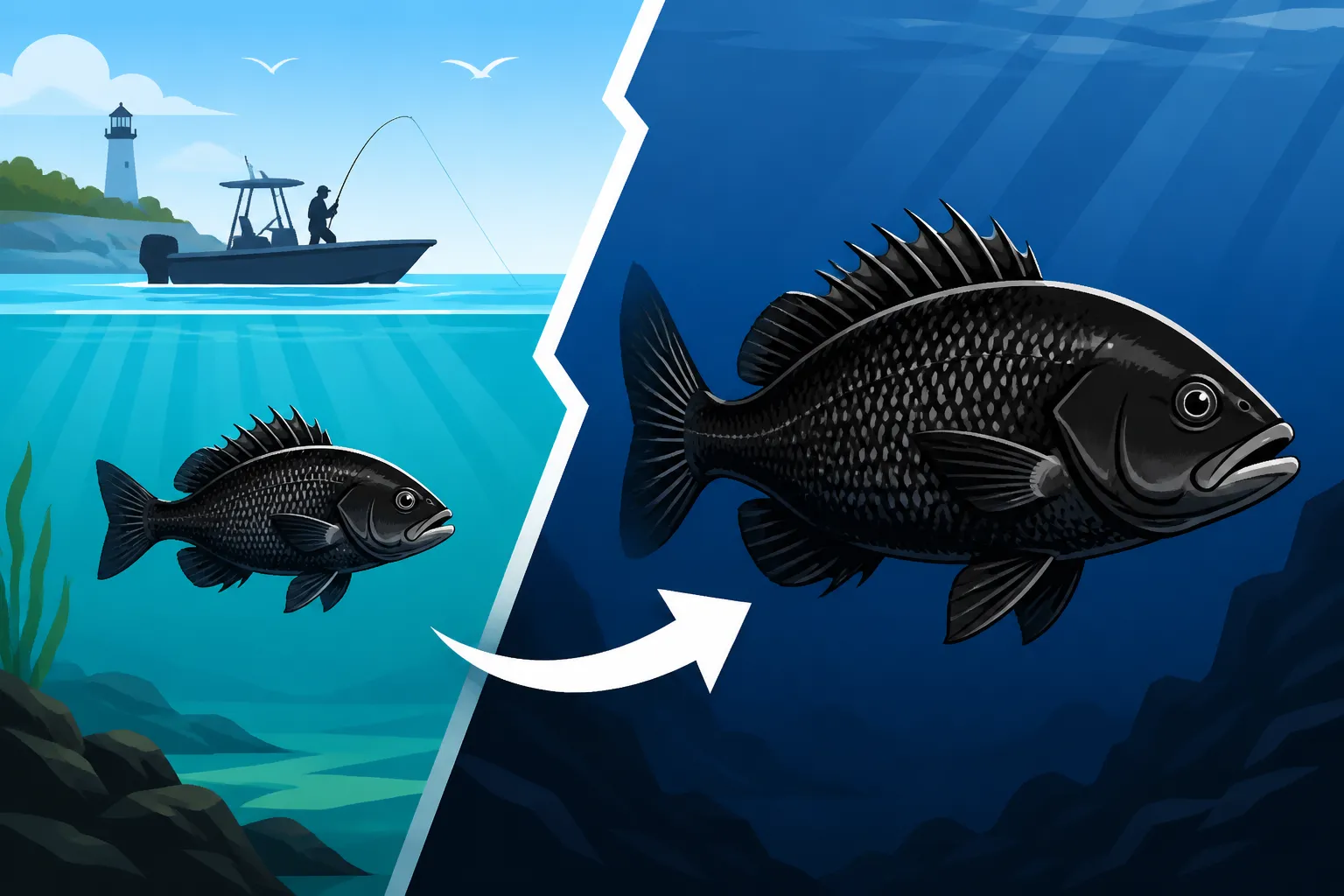
The short answer is: yes, generally, you have a better chance of finding larger, older blackfish in deeper waters. But it's not simply a matter of depth magic; it’s a complex interplay of factors that make deeper habitats more appealing and conducive to growing bigger fish.
The Correlation Between Age, Size, and Deeper Water
Think about it from a blackfish's perspective. As these incredibly tough and intelligent fish age, they naturally seek out environments that offer more stability, greater food abundance, and enhanced protection. Deeper waters, particularly in places like Long Island Sound, tend to provide just that.
Firstly, deeper areas often experience more stable water temperatures. While shallow flats can heat up quickly in summer and cool down rapidly in winter, deeper reefs and wrecks offer a more consistent thermal environment. This consistency is crucial for fish that are trying to conserve energy and grow. Imagine being a tog that’s lived through several Connecticut winters; you’ve learned that the deeper, more insulated spots are where you can find refuge when the water turns truly frigid. These older, more experienced fish are naturally larger, and their survival instincts guide them to these prime, deeper locations.
Secondly, deeper structures often mean less fishing pressure. While countless anglers can easily access nearshore rocks and jetties, reaching those offshore wrecks, deep rock piles, and ledges requires more specialized boats and knowledge. The bigger, wiser blackfish learn to avoid the easily accessible spots and gravitate towards these harder-to-reach havens. When you do find them, they've often had more time to grow without constant disturbance.
Food Abundance and Shelter in Deeper Connecticut Waters
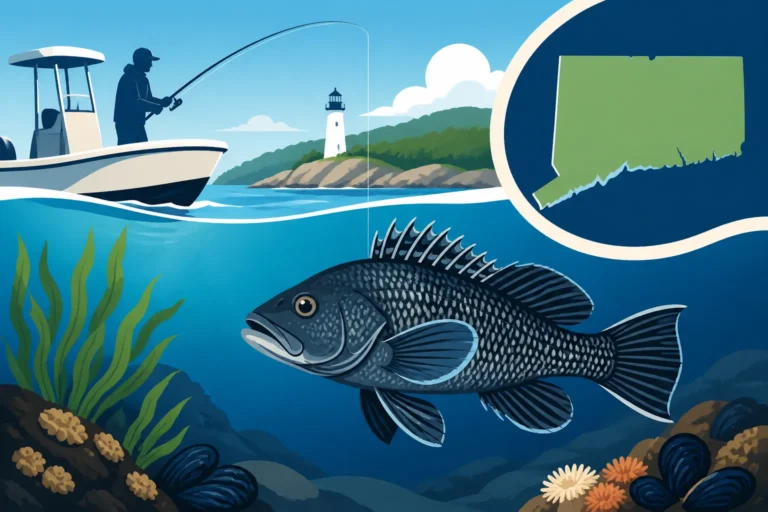
Deeper marine habitats aren't just about stable temperatures and less pressure; they're also often veritable buffets for blackfish. These fish are primarily crustacean and mollusk eaters, with a particular fondness for crabs, mussels, and barnacles. And where do these delectable treats thrive in abundance? Often on complex, deep-water structures.
Consider the intricate ecosystems that form around offshore wrecks or extensive rock formations in deeper parts of the Sound. These areas become magnets for marine life, fostering dense colonies of mussels, barnacles, and various crab species. The sheer volume and consistency of these food sources allow blackfish to feed heavily and grow robustly. A consistent, high-quality food supply is paramount for a fish to reach trophy size. It's not just about finding a crab, but finding lots of crabs, day in and day out, without having to expend excessive energy.
Furthermore, these deeper structures offer unparalleled shelter. The complex topography of a submerged wreck or a sprawling rock reef provides countless nooks, crannies, and overhangs where a blackfish can hide from predators like larger striped bass or seals. It's a sanctuary, a place where they can feel secure while they digest their meals and continue their growth unimpeded. This protection is invaluable for older, larger fish who have more to lose. You'll often find these giants nestled right into the heart of the structure, making them a real challenge to extract.
Beyond Depth: Other Factors Influencing Blackfish Size
While depth often correlates with bigger blackfish, it's not the only piece of the puzzle. Several other critical factors contribute to a blackfish's ultimate size, and understanding them can significantly improve your chances of landing a true Connecticut slab.
Age, Genetics, and Fishing Pressure
It might seem obvious, but the primary determinant of a blackfish's size is its age. Blackfish are slow-growing, long-lived fish. A truly large tog, say one tipping the scales over 10 pounds, is likely many years old, possibly even a couple of decades! They don't just spring up to huge sizes overnight; it takes years of consistent feeding and survival to reach that kind of girth. So, when you're targeting bigger fish, you're essentially targeting older fish, and these older fish, as discussed, often prefer deeper, less disturbed environments.
Genetics also play a subtle but important role. Just like any species, some blackfish are predisposed to grow larger and faster than others. While you can't pick and choose the genetics of the fish you're catching, it's a factor that contributes to the diversity of sizes you encounter, even within the same age class.
Fishing pressure, however, is a factor you can account for. Heavily fished areas, even those with good depth and structure, will often see a reduction in the average size of fish over time. Constant angling pressure removes the larger, more aggressive fish from the population, leaving behind smaller, perhaps warier individuals. This is why exploring less-known, harder-to-reach spots, which often happen to be deeper, can yield better results for trophy-sized blackfish. It’s a constant cat-and-mouse game between anglers and these intelligent fish. For more on how these fish behave, check out Blackfish Habits Around Structure.
Food Sources and Growth Rates
A blackfish is what it eats, and a consistent, high-quality diet is fundamental to achieving impressive size. Blackfish are opportunistic feeders, but they have distinct preferences. Crabs, particularly green crabs, hermit crabs, and Asian shore crabs, are like candy to them. Mussels, barnacles, and various worms also form significant parts of their diet.
The abundance and availability of these food sources directly impact a blackfish's growth rate. In areas with a rich, year-round supply of their preferred prey, blackfish will grow faster and larger. This is why certain areas of Long Island Sound, with their extensive rocky bottoms and diverse invertebrate populations, are known for producing larger tog. While you can certainly find smaller bait crabs near shore, the sheer biomass of crustaceans and shellfish on extensive offshore reefs or wrecks provides a sustained feast for growth. Sometimes, even the presence of specific species, like Asian shore crabs, can influence where fish congregate and feed heavily.
Anglers often bring a variety of baits, from green crabs to whole fiddlers, to entice these picky eaters. You can often find a good selection of specialized bait containers and tools on Amazon to keep your crabs lively for your trip.
Targeting Bigger Blackfish: Strategies for Deeper Structure
Now that we understand why bigger blackfish often inhabit deeper water, let's talk about how to target them effectively in Connecticut. This isn't just about dropping a line deeper; it requires a tailored approach to gear, location scouting, and presentation.
Specialized Gear for Deeper Water Blackfishing
When you're dealing with deeper water and potentially heavier currents, your standard inshore rod and reel setup might not cut it. You need gear that can handle the increased strain and provide the sensitivity required to detect those notoriously subtle tog bites.
- Rods: Look for a stout, fast-action rod, typically 7 to 8 feet long, with a sensitive tip. The backbone needs to be strong enough to muscle a large fish away from structure, while the tip sensitivity is crucial for feeling the light "taps" of a tog mouthing your bait. Many anglers prefer conventional reels for blackfishing, and the rods are often designed for them.
- Reels: A conventional reel with a strong drag and good line capacity is ideal. You'll need to hold bottom in current, and when a big tog bites, you need to turn its head immediately to prevent it from burying you in the rocks. Line capacity is important for deeper drops.
- Line: Braided line, typically 30-50 lb test, is almost essential for deep water blackfishing. Its zero-stretch quality transmits even the slightest bite directly to your hand, and its thinner diameter cuts through the current better than mono, allowing you to use lighter sinkers. Always use a fluorocarbon leader, usually 25-40 lb test, for abrasion resistance against the unforgiving rocks and to provide some invisibility in the water.
- Sinkers: This is where depth and current really come into play. You'll need a range of lead sinkers, from 4 ounces up to 12 ounces or more, depending on the current and depth. Having an assortment is key, as conditions can change rapidly. "Bank" or "bell" sinkers are common, but "bottom walking" sinkers can sometimes be useful for less snagging on certain bottoms.
- Hooks: Sharp, strong, octopus-style hooks are standard, usually in sizes 1/0 to 4/0, depending on your bait size. The Gamakatsu brand is a favorite among tog anglers for their sharpness and strength, and you can often find multipacks on Amazon.
Reading Charts and Finding Prime Deep Water Habitat
Finding those deeper honey holes isn't a matter of luck; it's a science. Modern electronics like GPS and sonar are your best friends here.
- Sonar/Fishfinder: Learning to read your fishfinder is paramount. You're not necessarily looking for "fish arches" as much as you're looking for significant bottom structure. Sharp drop-offs, jagged returns indicating rock piles, or even the distinct shape of a submerged wreck will tell you where blackfish are likely to hold. Pay attention to the depth contours and identify areas where depth changes rapidly, creating ledges or humps.
- Navigational Charts: Paper or electronic charts are invaluable for identifying promising areas before you even leave the dock. Look for symbols indicating rocky bottom, wrecks, and sudden changes in depth. These charts provide the blueprint for your deeper water exploration. Knowing the topography of Long Island Sound Fishing Guide or specific areas like Connecticut River Striped Bass Fishing (though mostly for bass, the same principles of structure apply) can help you find potential tog spots.
- Local Knowledge: Don't underestimate the power of talking to seasoned local anglers or charter captains. They've spent years on the water and often have invaluable insights into specific deep-water spots that hold larger fish. You can find excellent charter options like Best Blackfish Charters in Connecticut for a guided experience.
Once you find a promising spot, mark it on your GPS! Being able to return to productive spots is how you build a reliable repertoire of deep-water blackfish locations.
Techniques for Presenting Baits Effectively in Deeper Water
Fishing deeper water for blackfish isn't a passive activity; it demands constant attention and refined technique.
- Vertical Presentation: The goal is to keep your bait as still as possible, directly on or very near the structure where the blackfish are hiding. This often means a vertical presentation directly beneath the boat. When drifting, you need to constantly adjust your line to maintain bottom contact without letting your sinker drag excessively and snag.
- Feeling the Bite: Blackfish bites are legendary for their subtlety. It's often not a dramatic yank but a series of light taps or a slight weight change. Many experienced anglers describe it as a "peck, peck, thump." You need to be ready to set the hook quickly and decisively on that "thump" or the firmest pull. Using a sensitive rod tip and braided line helps immensely in detecting these subtle bites in deep water.
- Current Management: Deeper waters often have stronger currents, which can make it challenging to hold bottom and present your bait naturally. Always position your boat strategically, often "up-current" from the structure, to allow your bait to drift naturally over the target. Experiment with different sinker weights to find the lightest one that will hold bottom. Too heavy, and you might lose the sensitivity; too light, and you'll be constantly swept off the target.
- Bait Selection: While crabs are king, having a variety can sometimes make a difference. Green crabs are a staple, but if you can get your hands on hermit crabs or even Asian shore crabs, they can be irresistible to tog. Present them cleanly on the hook, ensuring the point is exposed for a solid hookset. For more on the specifics of Best Baits for Smallmouth Bass on the Housatonic (a different species, but illustrates bait importance) the principle of specialized bait remains.
Navigating Regulations and Seasons for Trophy Tog
Part of successfully targeting larger blackfish, especially in deeper, less pressured environments, is understanding and adhering to Connecticut's fishing regulations. These rules are put in place to ensure a sustainable fishery, allowing fish to grow to mature sizes and reproduce.
Understanding Connecticut's Blackfish Regulations
Connecticut's Department of Energy and Environmental Protection (DEEP) sets specific rules for blackfish, which can vary by season. These regulations typically cover minimum size limits, daily creel limits (how many fish you can keep), and specific open seasons.
- Minimum Size Limits: These are crucial for blackfish. The minimum length ensures that most fish have had a chance to spawn at least once before being harvested. This directly supports the growth of the population and increases the likelihood of older, larger fish being available in deeper waters. Releasing smaller fish, even if legal, is a great practice if you're truly targeting trophies. Always have a measuring device readily available on your boat.
- Daily Creel Limits: These limits restrict the number of fish you can keep per day. It’s important to respect these limits to prevent overfishing, especially of the larger, breeding-stock fish. When you land a monster tog, it can be tempting to keep more, but sticking to the rules is vital for the long-term health of the fishery.
- Open Seasons: Blackfish seasons in Connecticut are structured to protect the fish during critical periods, such as their spawning season. This means there might be specific open and closed periods, or different bag limits during different parts of the year. For all the precise details, you absolutely need to consult the official Connecticut Blackfish (Tautog) Season Dates and Connecticut Saltwater Fishing Regulations by Species. These rules can change, so always check the latest official DEEP guide before heading out.
Best Seasons for Targeting Larger Fish
While blackfish can be caught year-round in some areas, certain seasons offer a better chance at landing those larger, deeper-dwelling fish.
- Fall (Late September through November): This is arguably the prime time for trophy blackfish in Connecticut. As water temperatures begin to drop, blackfish become incredibly active, feeding aggressively to build up fat reserves for the winter. They often move from shallower, summer haunts to deeper, more stable structures. This period sees some of the biggest fish of the year landed. The fish are often schooled up, making it possible to have incredible days if you find the right spot.
- Late Spring (May into Early June): After the initial spring rush, as water temperatures slowly climb, blackfish can be found on deeper structures. While not as intense as the fall bite, this can be a productive time before they fully disperse to shallower feeding grounds for the summer. The fish might be thinner post-spawn, but still good-sized and hungry.
During these peak seasons, fishing deeper wrecks and rock piles in areas like the eastern and central Long Island Sound can be incredibly rewarding. Remember that patience is a virtue when targeting these specific fish in their preferred deep-water lairs. Combining the right knowledge of their habits with the appropriate gear and regulations will significantly increase your odds.
| Feature | Shallow Water (<30 feet) | Deeper Water (30+ feet) |
|---|---|---|
| Typical Size | Often smaller, younger fish | Higher chance of encountering larger, older fish |
| Fishing Pressure | Generally higher, more accessible | Lower, requires more specialized equipment |
| Habitat | Nearshore reefs, docks, jetties, rock piles | Offshore wrecks, deep reefs, rock ledges, humps |
| Current | Can be significant, but often more manageable | Often stronger, requires heavier tackle |
| Food Availability | Varies, can be seasonal | More consistent, stable food sources |
| Seasonality | More active in warmer months | More consistent through different seasons, especially fall |
Disclaimer
This article is for general informational purposes only and does not constitute professional advice. Laws, prices and regulations vary by location and change over time. Consult a qualified professional for guidance on your specific situation.