Blackfish Habits Around Structure
Ah, the wily blackfish – or tautog, as many of us old-timers call them. If you’ve spent any time on the Connecticut shoreline trying to hook these stubborn bottom-dwellers, you know the frustration of losing gear, feeling those subtle taps that might be a tog or just a crab, and the sheer elation when you finally haul one in. They are masters of their environment, blending seamlessly with the rocky seafloor, and truly understanding their habits around structure is the secret sauce to consistent success. This guide is all about peeling back the layers on these fascinating fish, giving you the insights you need to find them and, more importantly, catch them.
Understanding Blackfish (Tautog) Basics
When you’re talking about blackfish, you’re talking about a fish that is synonymous with hard-fighting, structure-loving action. They aren't the flashiest fish in Long Island Sound, but they certainly provide some of the most challenging and rewarding fishing experiences. From their unique dental setup to their preferred hideouts, knowing the fundamentals of these fish is your first step to becoming a 'tog whisperer.'
What Are Blackfish and Where Do They Live?
Blackfish, or tautog (scientific name: Tautoga onitis), are a distinct species of wrasse found along the Atlantic coast of North America, from Nova Scotia down to South Carolina. In Connecticut, they are a beloved game fish, especially among those who appreciate a good challenge and a delicious fillet. They’re easily identifiable by their stout bodies, thick lips, and a set of human-like incisors and molars that are perfectly adapted for crushing shells and barnacles. You'll find them predominantly in our rich, rocky coastal waters, making the entirety of Long Island Sound their oyster, or rather, their mussel bed.
These fish are incredibly localized, often spending their entire lives within a relatively small area once they find a spot with abundant food and cover. Unlike migratory species that travel vast distances, a tog will often be found year after year on the same rock pile or patch of reef. This localized behavior is precisely why understanding "Blackfish Habits Around Structure" is so crucial for anglers. They are intrinsically tied to hard bottom features, rarely venturing far into sandy or muddy expanses unless migrating for spawning or extreme temperature changes.
Why Structure is Key to Finding Tautog
The phrase "structure is king" is practically the blackfish angler's mantra, and for good reason. Tautog are obligate structure dwellers. This isn't just a preference; it's a fundamental aspect of their survival and feeding strategy. Imagine an underwater landscape: vast stretches of sand, then suddenly, a towering rock formation, a sunken barge, or a dense mussel bed. These features aren't just scenery for a tog; they are home.
Structure provides everything a blackfish needs: food, shelter from predators, and refuge from strong currents. Their diet consists almost entirely of crustaceans and mollusks—crabs, mussels, barnacles, and small lobsters—all of which cling to or live among rocky crevices, reefs, and man-made structures. Without this hard substrate, their food sources wouldn't exist, and neither would the blackfish in any significant numbers. Furthermore, their relatively slow, deliberate swimming style makes them vulnerable in open water, so they rely on the intricate nooks and crannies of structure to ambush prey and dart away from larger predators like striped bass, bluefish, or seals. Losing a big tog to structure is a common, albeit frustrating, rite of passage for many anglers, proving just how deeply they embed themselves into their chosen hideaways.
Seasonal Movements and Temperature Preferences
While tautog are highly localized, they do exhibit seasonal movements driven primarily by water temperature. They are quite sensitive to changes in temperature, dictating where you’ll find them from early spring to late fall.
In the colder months of late fall and early spring, when water temperatures dip into the 40s and low 50s Fahrenheit, tautog will generally move to deeper, more stable waters. This often means offshore reefs, deep rock piles, or wrecks that offer thermal stability. They can become quite lethargic in these colder conditions, and their feeding windows might be shorter. However, as the water begins to warm in late spring, reaching into the mid-50s and 60s, blackfish become more active and move into shallower, inshore structures. This is when you'll find them around docks, bridge pilings, and shoreline rock formations. During the peak summer heat, they might retreat slightly to slightly deeper, cooler spots on reefs or around deeper ledges, but generally, they remain very accessible inshore. As autumn arrives and the water cools again, they return to those shallower spots for a strong feeding blitz, packing on weight before moving back to their deeper wintering grounds. Understanding these seasonal shifts is critical for knowing when and where to start your search, rather than wasting precious fishing time in barren waters.
Types of Structure Blackfish Love in Connecticut
Connecticut's coastline and the waters of Long Island Sound are a patchwork of diverse habitats, many of which are prime blackfish territory. From ancient geological formations to human-made marvels, each type of structure offers unique advantages for these cunning fish. Knowing which types of structure to target and why blackfish gravitate towards them is invaluable.
Natural Rock Piles and Boulders
Connecticut's shoreline and much of Long Island Sound's bottom are naturally strewn with rock piles, ledges, and individual boulders—the bread and butter of blackfish habitat. These aren't just random rocks; they are often remnants of glacial activity or ancient geological processes that have shaped our underwater landscape. From the craggy coves of eastern Connecticut to the rugged shoreline of Fairfield County, these natural formations are teeming with life.
Blackfish love these spots because they offer an incredible array of hiding places and feeding opportunities. Mussels, barnacles, crabs, and other invertebrates cling to the surfaces of these rocks, providing an all-you-can-eat buffet. The irregular shapes create countless crevices, overhangs, and swim-throughs where tautog can ambush prey or hide from predators. Anglers often refer to these as "sticky" spots because it's incredibly easy to get snagged, but that's a good sign you're right where the tog are. You'll find these natural rock piles both close to shore, accessible to shore anglers in Best Shore Fishing Spots in Connecticut, and further offshore, forming extensive reef systems that require a boat to reach. Understanding how to present your bait precisely within these intricate structures without getting hung up is a skill that takes time to master.
Artificial Reefs and Wrecks
Beyond nature's design, humans have inadvertently (and sometimes intentionally) created prime blackfish habitat. Artificial reefs and shipwrecks are absolute magnets for tautog. These can range from purpose-built structures made of concrete or old tires to unfortunate vessels that met their end beneath the waves. The Connecticut Department of Energy and Environmental Protection (DEEP) has even established official artificial reefs to enhance marine life, and these quickly become hubs of blackfish activity.
Wrecks, in particular, are incredible ecosystems. A sunken ship might seem like a somber relic, but to a blackfish, it’s a high-rise apartment complex with a built-in diner. The skeletal remains of a boat provide countless nooks, crannies, and dark interior spaces where blackfish can hide and feed. Barnacles encrust the metal, mussels colonize the decaying wood, and crabs scuttle through the debris. Fishing wrecks requires precision and a good sonar unit, as you need to position your boat directly over or just up-current from the structure to get your bait into the strike zone. Just be prepared for potential snags; wrecks are notorious for eating tackle, but the reward of a big tog can be well worth the risk. Many Best Blackfish Charters in Connecticut specialize in fishing these prime offshore locations.
Docks, Piers, and Bridge Pilings
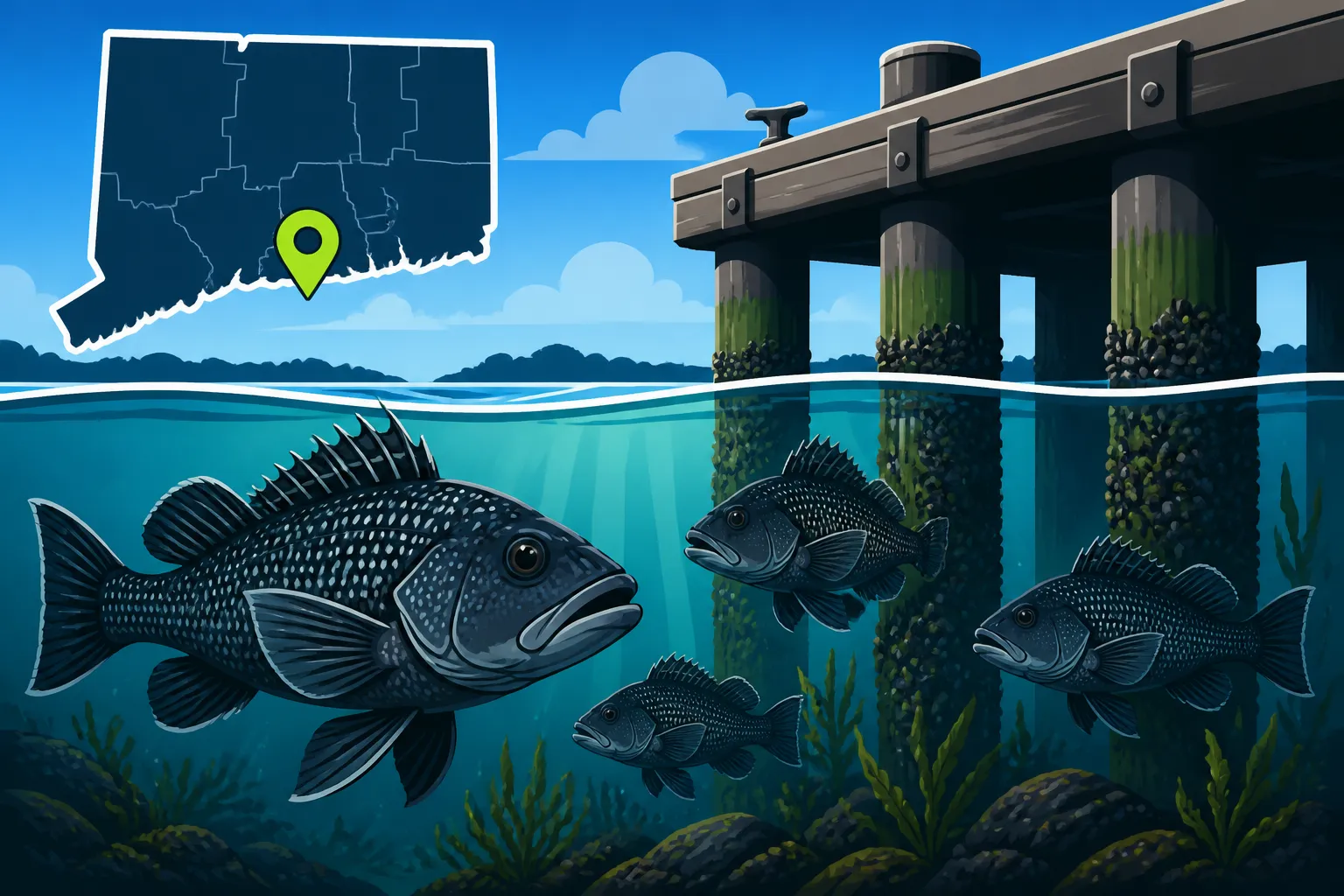
Closer to shore, and often more accessible, are the man-made structures that punctuate our coastal landscape: docks, piers, and bridge pilings. These are fantastic places to find blackfish, especially during the warmer months when tog move into shallower water. Think about the massive stone and concrete pilings of the Gold Star Bridge over the Thames River, or the old wooden pilings supporting a fishing pier in Guilford or Branford.
These structures provide vertical habitat that extends from the surface down to the seafloor, offering blackfish a column of cover. They also create current breaks, allowing fish to conserve energy by sitting in eddies formed by the flowing tide. Crucially, these structures are often covered in barnacles and mussels, providing an immediate food source. Anglers targeting these spots can often fish from shore, kayaks, or smaller boats. The challenge here is typically casting accurately and fighting a fish that immediately tries to wrap your line around the pilings. You'll need to use heavy line and a stout rod to muscle them out before they can cut you off. Fishing beneath docks can be particularly productive, as these areas offer shade and protection, making them ideal hangouts for tautog.
Mussel Beds and Shellfish Bottoms
While not "structure" in the traditional sense of rocks or steel, dense mussel beds and shellfish bottoms are undeniably critical to blackfish. In fact, many anglers consider a healthy mussel bed the ultimate blackfish magnet. These aren't always visible on your sonar as distinct "structure," but an experienced eye can often identify them as irregular, lumpy bottom contours.
Mussel beds represent an enormous, concentrated food source for tautog. Blackfish will often cruise the edges of these beds, or even burrow into them, picking off mussels and other small invertebrates. When the tide is running, loose mussels and crabs might be dislodged, providing an easy meal. To find these spots, you might look for subtle changes in bottom composition on your sonar, or simply fish around known rocky areas, as mussel beds often form adjacent to or among rock piles. For anglers, presenting a fresh crab bait near a thriving mussel bed is often the recipe for success. The sheer abundance of food makes these locations irresistible to blackfish, and understanding What blackfish eat around structure directly points to seeking out these mollusk-rich environments.
Decoding Tautog Behavior Around Structure
To consistently catch blackfish, you need to think like a blackfish. Their entire existence revolves around the structural features of their habitat. Understanding their motivations—feeding, spawning, and predator avoidance—will allow you to predict their movements and pinpoint the most productive areas within a given structure.
Feeding Habits: Crushing Shells and Crabs
Blackfish are truly built for their diet. Those distinctive teeth aren't for show; they're formidable tools for crushing the hard shells of their prey. Their primary diet consists of green crabs, Asian shore crabs, hermit crabs, fiddler crabs, and various species of mussels and barnacles. They are slow, deliberate feeders, often "testing" a bait with a series of subtle taps before committing to a full bite. This is what makes tog fishing so challenging and rewarding – distinguishing between a fish picking at your bait and a full-on take requires keen focus.
Around structure, they'll patrol the edges, nose into crevices, and even dislodge prey from rocks. Imagine a blackfish slowly moving along a barnacle-encrusted piling, systematically scraping off its meal. Or picture one lurking in the shadows of a boulder, waiting for a crab to scuttle by. They are not chasing down fast-moving baitfish; their hunt is a patient, methodical affair. This feeding behavior directly influences your presentation. You want your bait to appear natural and easily accessible within their feeding zone. That means getting it right on the bottom, often right into the structure where they live and eat. A perfectly presented crab on a simple tog rig is often irresistible.
Spawning and Nursery Areas
Like all fish, tautog have specific times and places for reproduction. Spawning typically occurs in late spring to early summer, usually between May and July, when water temperatures are conducive. During this time, they often move to shallower, hard-bottomed areas where there's plenty of structure and good current flow. While the adults are focused on spawning, the resulting eggs and larvae will drift with the currents until they develop into juvenile fish.
These juveniles, often called "pinhead" tog, also depend heavily on structure for survival. They seek refuge in even smaller crevices and dense algal growth within the reef systems and around inshore structures. Think tiny gaps in rock piles, dense beds of kelp or seaweed, or even the fouling on bridge pilings. These areas serve as crucial nursery grounds, protecting the vulnerable young fish from predators and providing micro-food sources. While anglers don't typically target spawning fish, understanding these patterns helps to appreciate the ecological role of structure and reinforces the importance of practicing responsible fishing to protect these vital life stages. Knowing about Connecticut Blackfish (Tautog) Season Dates helps ensure you're fishing responsibly during these critical periods.
Hiding from Predators
In the marine world, every fish is both a predator and potential prey. For a relatively slow-moving, bottom-dwelling fish like the blackfish, robust structure is an essential defense mechanism. Their mottled coloration provides excellent camouflage against rocky backgrounds, but physical cover is their ultimate protection.
When a larger predator like a striped bass, bluefish, or even a seal approaches, a blackfish will immediately dive into the nearest hole, crevice, or beneath a rock overhang. Their body shape allows them to wedge themselves into tight spaces, making them incredibly difficult for larger fish to dislodge. This instinct to "hole up" is something every tog angler learns quickly. Once hooked, a blackfish's first instinct is often to dive back into the structure, trying to cut your line on sharp rocks or barnacles. This is why you need strong tackle and quick reactions to turn their head and pull them away from their sanctuary before they can break you off. They know their territory intimately, using every advantage the structure provides to evade capture.
Best Times to Target Tautog Around Structure in Connecticut
Timing is everything in fishing, and with blackfish, it's particularly true. Their activity levels, feeding patterns, and locations are heavily influenced by the clock, the calendar, and the tides. Knowing when to hit your favorite piece of structure can make the difference between a frustrating day of snags and a cooler full of delicious tog.
Peak Seasons for Active Feeding
In Connecticut, the prime seasons for blackfish fishing are undoubtedly the spring and fall. These shoulder seasons offer the "sweet spot" in terms of water temperature, which drives their metabolism and feeding drive.
- Spring Season: As the cold grip of winter loosens and Long Island Sound waters begin to warm, usually from late March through May, blackfish become increasingly active. They move from their deeper wintering grounds into shallower, inshore structures as the water temperature climbs into the mid-40s to low 50s. This is often an intense feeding period as they recuperate from winter and prepare for spawning. The bite can be aggressive, but the weather can still be unpredictable.
- Fall Season: This is arguably the most popular and productive time for blackfish. From late September through November, as the water temperatures begin to cool from their summer highs but are still above the preferred range of their winter deep-water retreats, blackfish go on a serious feeding binge. They are packing on weight for the lean winter months, and their activity around structure is at its peak. The bite is usually very consistent, and fish can be found in a variety of depths, often transitioning from shallower to deeper structures as the season progresses. This is when anglers truly enjoy the pursuit of How big blackfish get in Connecticut waters.
While you can catch blackfish in the summer, they can be a bit more lethargic in the warmest waters, sometimes seeking slightly deeper, cooler spots, or concentrating their feeding to early mornings, late evenings, or specific tidal windows.
Tidal Influence and Current Breaks
The tide is a powerful force, and blackfish are acutely aware of its influence, especially when positioned around structure. Tautog are not typically strong swimmers that fight against raging currents. Instead, they cleverly use structure to their advantage, positioning themselves in "current breaks."
A current break is any feature that disrupts the flow of water, creating an area of calmer water or an eddy. This could be the leeward side of a large boulder, the sheltered corner of a dock piling, or inside a sunken wreck. By positioning themselves in these calmer zones, blackfish can wait for the current to deliver food directly to them, expending minimal energy. This also gives them a stable platform from which to ambush any crabs or mussels dislodged by the moving water. The best fishing often occurs during the middle of the incoming or outgoing tide, when there's enough current to activate feeding but not so much that it's washing out the structure or making it impossible to hold bottom with your bait. Slack tide, while sometimes producing, can often see a slowdown in the bite as the current-driven food delivery system pauses. Pay close attention to the tidal charts for your fishing location, and always try to position your boat or cast to the up-current side of the structure, allowing your bait to drift naturally into the blackfish's strike zone.
Weather Patterns and Their Impact
Like all fishing, weather plays a significant role in blackfish activity, though perhaps not as dramatically as for some other species. Tautog are bottom dwellers, so surface conditions like wind chop might not affect them directly as much as, say, a topwater striper. However, major weather events can certainly shift their behavior and location.
- Stable Weather: Generally, stable weather patterns with consistent barometric pressure are ideal. This allows fish to settle into predictable routines. A few days of calm, sunny weather in spring or fall can lead to excellent fishing.
- Cold Fronts: A strong cold front bringing a sudden drop in air temperature and high pressure can often slow down the bite. Fish might become less active or move to deeper, more stable water to avoid the sudden change. It's often best to avoid fishing immediately after a strong cold front passes.
- Storms and Heavy Rain: While fishing during a heavy storm is unsafe and not recommended, the period before a storm front can sometimes trigger an aggressive bite as fish feed heavily. After a significant rain event, especially in shallower areas near river mouths, freshwater runoff can create murky water and temperature stratification, potentially pushing blackfish to clearer, saltier water.
- Wind: Wind is a critical factor for boat anglers. Strong winds can make boat positioning over precise structure incredibly difficult and dangerous. Choppy conditions make it hard to feel those subtle tog bites. Lighter winds, or winds that align with the current, are generally preferable for effective structure fishing. Always check the marine forecast before heading out on Long Island Sound, and be mindful of Connecticut Boating Laws for Anglers regarding safe operation.
Techniques for Fishing Structure for Blackfish
Alright, you've located the structure, you know the season is right, and the tide is moving. Now comes the exciting part: how do you actually get that blackfish to bite? This is where your technique, gear, and bait selection come into play. Blackfish fishing is often described as a "feel" game, requiring patience, persistence, and a healthy dose of finesse despite needing heavy tackle.
Essential Gear: Rods, Reels, and Line
Fishing for blackfish around structure is not a job for your light bass setup. These fish are powerful, and their instinct to dive into rocky snags demands robust gear.
- Rods: You need a strong, fast-action rod with a sensitive tip but plenty of backbone. A medium-heavy to heavy conventional rod, typically 7 to 8 feet long, is a popular choice. The sensitive tip allows you to detect those subtle "taps" as a tog mouths your bait, while the stiff backbone is crucial for muscling a fish away from structure before it can break you off. Many anglers prefer rods specifically designed for tautog fishing, which usually means a fast taper and serious lifting power. You don't want a soft noodle rod here; it'll let the fish win every time.
- Reels: Conventional (baitcasting) reels are almost universally preferred for tog fishing. They offer better control for precise bait placement, stronger drag systems, and better winching power compared to spinning reels. Look for a reel with a high gear ratio for quick line retrieval to keep the fish from digging into the rocks, and a smooth, powerful drag. Something like an Ambassadeur or comparable robust conventional reel from a reputable brand (you can often find great options on Amazon for specific angling needs) would be a solid starting point. Spool it with plenty of line, as you might need to drop to considerable depths on offshore reefs.
- Line: Braided line is king for blackfish. Its lack of stretch offers superior sensitivity, allowing you to feel every bump and nibble, which is paramount when decoding a tog bite. Most anglers use 30 to 50 lb test braided line. However, braid is highly visible and easily cut on sharp edges, so you'll absolutely need a fluorocarbon leader. A good quality, abrasion-resistant fluorocarbon leader of 30 to 50 lb test, typically 3 to 6 feet long, is essential to connect your braid to your rig. This leader provides the necessary invisibility and chew-resistance to withstand the tog's powerful jaws and the inevitable contact with structure.
Rigging for Success: Tog Rigs and Jigs
The right rig can significantly improve your chances of hooking up and landing a blackfish. There are two primary approaches: traditional bait rigs and jigs.
- Traditional Tog Rigs: The classic blackfish rig is a simple but effective high-low or snell rig. It typically consists of a heavy sinker at the bottom (often a bank sinker, but flat sinkers are popular for snaggy bottoms) and one or two snelled hooks tied above it on short leaders. The key is to use strong, sharp hooks (sizes 1/0 to 4/0, depending on bait size and target fish) that can withstand a tog's powerful bite and get a good hookset. The snelled hook setup allows the hook to stand out naturally from the leader, presenting the bait appealingly. Some anglers prefer a single hook rig for less tangling and fewer snags in heavy structure. The length of the leader can be critical; too long, and it might get wrapped; too short, and it might not present naturally. Experimentation is key.
- Tog Jigs: In recent years, tog jigs have become incredibly popular, offering a more active and sporting approach, especially in shallower water or lighter current. These are typically heavy, compact jigs (1-4 ounces) designed with a strong, single hook. They allow for a more direct connection to the bait and fish, increasing sensitivity. You tip these jigs with a crab, effectively creating a one-and-done presentation. The advantage of jigs is fewer snags (due to a single, often upward-pointing hook) and a better fight. They also offer a more precise feel for the bottom and the bite. The Best Techniques for Blackfish Around Structure often involves careful jigging.
Regardless of your chosen rig, the goal is always to present your bait as close to the structure as possible without getting instantly snagged.
Bait Selection: Crabs are King
When it comes to blackfish bait, there's one king of the hill: crabs. Tautog are absolute crab connoisseurs. While they will occasionally take clams, worms, or other baits, fresh green crabs are consistently the most effective.
- Green Crabs: These are the gold standard. They're readily available at most bait shops along the Connecticut coast. For bait, you'll want to break them in half or quarters, depending on their size and the size of the tog you're targeting. Impale the hook through a leg socket or where the leg attaches to the body, ensuring the hook point is exposed. The scent and natural appearance of a broken crab half are irresistible to tog.
- Asian Shore Crabs: These smaller, often colorful crabs are incredibly effective, especially for light tackle jigging. They're smaller than green crabs, so you often use them whole or just nip off a claw. Their abundance on the shoreline makes them a convenient bait source if you're willing to gather them yourself.
- Fiddler Crabs: Excellent in shallower, warmer waters. Their small size makes them perfect for smaller hooks and a more subtle presentation.
- Hermit Crabs: If you can find them, hermit crabs are another fantastic option. Crack their shell just enough to expose the soft body, then hook through the soft part.
- Clams: While not as consistent as crabs, fresh skimmer clams or surf clams can work, especially if crabs are scarce. They tend to attract more unwanted species but can occasionally entice a tog.
Always make sure your bait is fresh and lively, if possible. Old, stale bait will rarely draw a strike from a discerning blackfish.
Strategic Positioning and Boat Control
This is where experience truly shines in blackfish fishing. Simply dropping anchor and hoping for the best usually isn't enough. You need to meticulously position your boat to maximize your chances and minimize snags.
- Anchoring: If you're fishing a specific rock pile or wreck, precise anchoring is crucial. You want to anchor up-current from the structure, calculating the drift of your boat and the swing of your anchor line so that your baits land on or just at the edge of the structure. This often means dropping anchor a fair distance away and letting out enough scope to slowly drift back. Using a grappling anchor or a heavier anchor designed for rocky bottoms is often necessary. A good depth sounder/fishfinder is invaluable here, helping you identify the exact contours of the structure and the presence of fish.
- Drifting: In some situations, especially over larger reef systems or if the current isn't too strong, a controlled drift can be effective. You allow the boat to slowly move over the structure, presenting your bait to different areas. This can be challenging because blackfish are so tightly associated with specific spots. If drifting, use a sea anchor (drogue) to slow your drift and allow your bait to stay near the bottom.
- Electric Trolling Motors: Modern electric trolling motors with GPS spot-lock features are a game-changer for blackfish anglers. These allow you to precisely hold your position over a piece of structure, even in wind and current, without needing to anchor. This means you can spend more time fishing and less time re-positioning. If you're serious about structure fishing, a quality GPS-enabled trolling motor is a worthy investment. Regardless of your method, constant vigilance of your depth finder and paying attention to where your line is hitting bottom relative to the structure is key.
Navigating Regulations and Conservation
As anglers, we have a responsibility to not only enjoy our sport but also to protect the resources that make it possible. Blackfish are a valuable and popular species in Connecticut, and adhering to regulations and practicing conservation are essential for their continued health and abundance.
Understanding Connecticut's Tautog Regulations
Fishing regulations for blackfish in Connecticut are designed to manage the stock and ensure sustainable fishing pressure. These regulations typically include specific open seasons, minimum size limits, and daily possession limits. These rules can change from year to year based on scientific assessments of the fish population and management goals.
It's absolutely vital that every angler understands and follows these rules. Fishing out of season, keeping undersized fish, or exceeding the daily limit not only carries penalties but also harms the overall health of the fishery. Before heading out, always consult the most current Connecticut Department of Energy and Environmental Protection (DEEP) fishing guide or website. This will give you the precise information on Connecticut Blackfish (Tautog) Season Dates, minimum length limits, and how many fish you can keep. These rules are put in place for a reason – to protect our blackfish for future generations of anglers. Ignoring them jeopardizes the very sport we love.
Responsible Fishing Practices Around Structure
Fishing around structure, especially for a fish that is so deeply embedded in it, comes with unique challenges and responsibilities. Our actions as anglers can have a significant impact on the fish and their habitat.
- Minimize Gear Loss: Structure fishing means snags are inevitable, but we can minimize their frequency and impact. Use sinkers designed to reduce snags (like flat bank sinkers or specialized tog sinkers). When you get snagged, try to free your line by giving it slack, then sharply pulling, rather than simply yanking. If you can't free it, cut your line as close to the snag as possible to minimize the amount of line and lead left on the bottom. Consider using biodegradable sinkers if available. You can find various types of specialized weights and rigs on Amazon to help reduce snags.
- Handle Fish Carefully: Tautog are tough fish, but proper handling is still important, especially for those you intend to release.
- Quick Release: If a fish is undersized or you're practicing catch and release, try to unhook it quickly while it's still in the water.
- Support the Fish: If you need to bring the fish aboard for a photo or measurement, support its body horizontally. Avoid holding it solely by the jaw, as this can cause internal damage.
- Dehooking Tools: Keep a good pair of pliers or a dehooking tool handy to quickly remove hooks, especially if they are deeply set.
- Fizzing (Venting): If you're fishing in deeper water (say, 30 feet or more) and notice a fish showing signs of barotrauma (swollen belly, bulging eyes), learn how to properly fizz (vent) the fish. This involves carefully releasing gas from the swim bladder with a hypodermic needle to help the fish swim back down.
- Respect the Habitat: Be mindful of the delicate marine environment. Avoid discarding trash, old line, or damaged gear into the water. Structure is home to countless organisms, and keeping it clean benefits the entire ecosystem.
By understanding blackfish habits around structure, employing appropriate techniques, and fishing responsibly, we can all contribute to a thriving blackfish fishery in Connecticut for years to come. It’s a rewarding challenge, and the more you learn, the more successful—and sustainable—your fishing adventures will be.
Disclaimer
This article is for general informational purposes only and does not constitute professional advice. Laws, prices and regulations vary by location and change over time. Consult a qualified professional for guidance on your specific situation.