What black sea bass eat around wrecks and reefs
You've just reeled in a spirited black sea bass from the deep, rocky contours off the Connecticut coast, perhaps from a submerged wreck or a vibrant reef, and as you admire its iridescent scales, a natural question sparks in your mind: "What exactly were you hunting down there?" Understanding what black sea bass eat around these complex underwater structures isn't just about satisfying curiosity; it's the fundamental key to consistently finding, hooking, and catching these delectable bottom dwellers.
Why Wrecks and Reefs Are Prime Dining Tables for Black Sea Bass
Black sea bass aren't just drawn to wrecks and reefs because they're interesting places to hang out; these structures are bustling underwater ecosystems, literal smorgasbords brimming with their favorite foods. Think of these spots as underwater cities, teeming with life, providing both shelter and an endless supply of prey. If you want to understand the black sea bass's diet, you first need to understand their home.
The Allure of Artificial and Natural Structure
Whether it's a centuries-old shipwreck, a purpose-sunk artificial reef made of old barges, or a natural rock outcropping, these formations provide vital cover and habitat. For black sea bass, these aren't just places to hide from larger predators; they're perfect ambush points. They love to position themselves within the nooks and crannies, tucked away behind a piece of twisted metal or nestled among boulders, waiting for an unsuspecting meal to swim or scuttle by. This makes them highly effective predators.
The complexity of these structures creates countless hiding spots for smaller baitfish, shrimp, and especially crabs—all prime targets for a hungry black sea bass. These rocky and metallic mazes also provide stable surfaces for algae, barnacles, and mussels to grow, attracting a diverse food web that ultimately benefits the black sea bass. It's a self-sustaining pantry, essentially, and the black sea bass are master exploiters of this bounty.
How Current and Depth Influence Feeding Behavior
Current is a huge factor in the diet and feeding patterns of black sea bass. Wrecks and reefs often create eddies and upwellings, concentrating baitfish and other small prey items right where the black sea bass are waiting. Imagine a river flowing past a large rock; small debris and insects get caught in the calmer water behind it. The ocean works similarly. Black sea bass will orient themselves facing into the current, allowing the natural flow to bring dinner right to their doorstep. This energy-efficient hunting strategy means they expend less effort chasing food and can conserve their energy, making these high-current, structured areas incredibly productive.
Depth also plays a role. While black sea bass can be found in relatively shallow water, the deeper wrecks and reefs in Long Island Sound Fishing Guide offer cooler, more stable temperatures and often hold larger concentrations of prey away from the intense surface activity. In deeper water, the type of forage might shift slightly, with different species of crabs, squid, and slower-moving bottom dwellers becoming more prevalent. Anglers targeting these deeper structures often find larger, more robust black sea bass, indicating a consistent and abundant food supply.
The Primary Forage of Black Sea Bass in Connecticut Waters
When it comes to the black sea bass's menu around Connecticut's wrecks and reefs, there are some undeniable favorites that make up the bulk of their diet. They're not overly picky, but certain items are certainly high on their culinary wish list. Understanding these preferences is paramount for choosing the right bait.
Crustaceans: The Mainstay of Their Diet
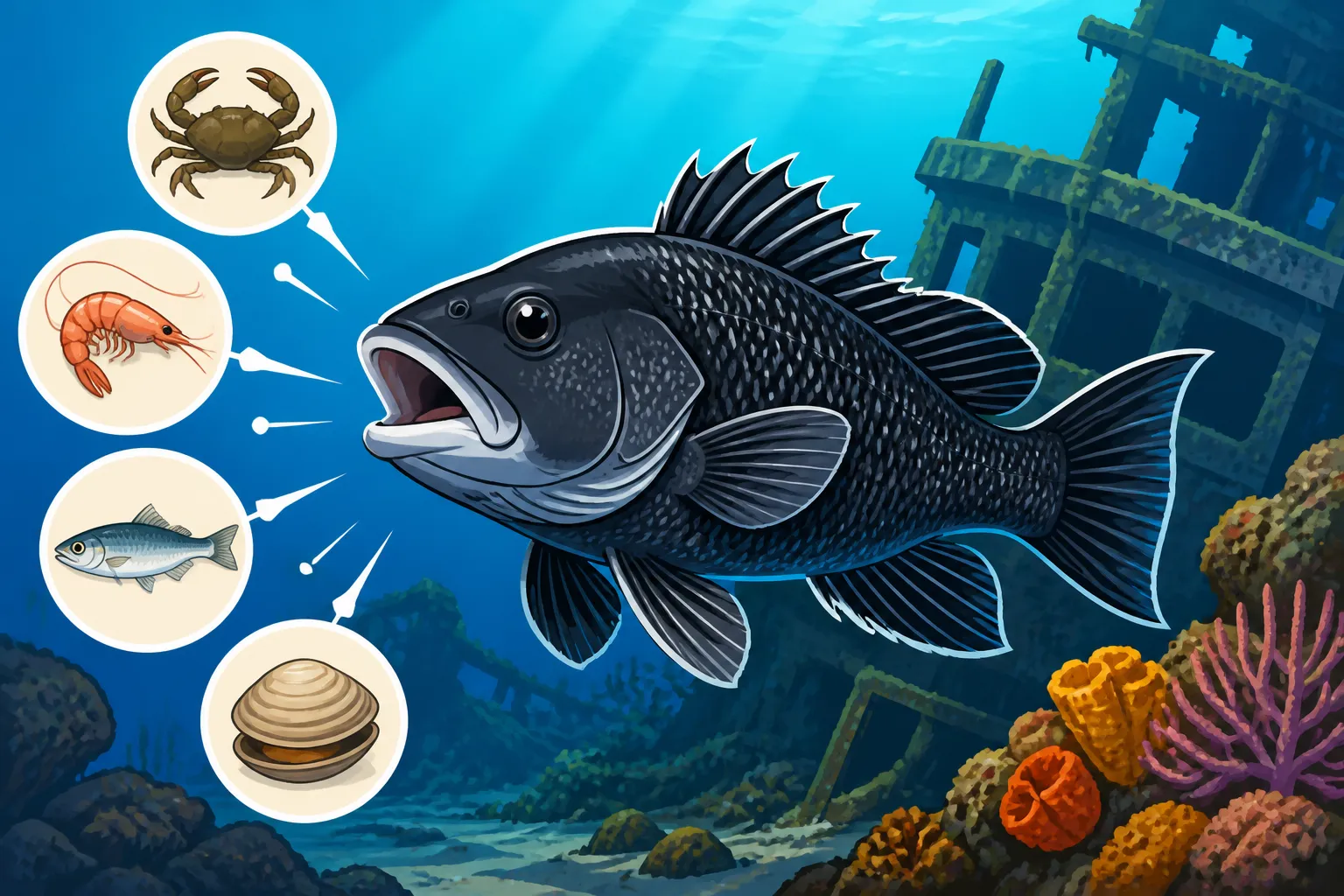
If there's one food group that truly defines the black sea bass diet, it's crustaceans. Crabs, in all their various forms, are absolutely irresistible to them. Green crabs, rock crabs, hermit crabs, and even juvenile blue crabs or spider crabs found clinging to structure are prime targets. Black sea bass have strong jaws and teeth perfectly adapted for crushing shells, making them incredibly efficient at devouring these hard-shelled delicacies.
Beyond crabs, shrimp are another significant component of their diet. Small grass shrimp or sand shrimp, which inhabit the rocky crevices and weed lines around reefs, are easy pickings. Even tiny lobsters or their larval stages can end up on the black sea bass's plate. This heavy reliance on crustaceans is why baits mimicking crabs and shrimp are so incredibly effective when targeting these fish. It's their comfort food, their go-to meal, and you'll find them actively hunting these crunchy morsels. You can learn more about their general habits in Black Sea Bass Habits in Connecticut Waters.
Small Fish and Invertebrates: Opportunistic Delights
While crabs are king, black sea bass are far from exclusive eaters. They are opportunistic predators, and a wide variety of small fish and other invertebrates also feature prominently in their diet. When schools of baitfish pass over a wreck or reef, black sea bass will eagerly rise from their ambush points to snap them up. Common baitfish include sand eels (also known as sand launce), spearing (silversides), juvenile scup (porgies), and even smaller mummichogs or killifish that venture too close to the structure.
Squid is another highly prized food item. Whether it's small, juvenile squid or larger ones that get injured or disoriented near structure, black sea bass will readily consume them. Their rich protein content makes them an excellent energy source. Additionally, other bottom-dwelling invertebrates like small mussels, marine worms, and even tiny conchs or snails that get dislodged from the structure can become a meal. This varied diet ensures that black sea bass always have something to eat, even if one specific food source is temporarily scarce. They are truly adaptable feeders, making them a fun challenge for anglers.
Seasonal Shifts and Opportunistic Feeding Strategies
Just like our own appetites change with the seasons, so too does the menu for black sea bass in Connecticut waters. While their core preference for crustaceans remains strong, the availability of other prey items can lead to fascinating shifts in their feeding patterns throughout the year.
Adapting to Availability Throughout the Year
In the cooler waters of spring, as black sea bass first become more active after winter, their diet might include more small, sluggish baitfish or overwintering invertebrates. As the water warms into summer, crustaceans like crabs and shrimp become incredibly abundant and active, leading to a feeding frenzy on these shelled creatures. This is often when you'll find black sea bass gorging themselves, trying to pack on weight. Later in the fall, as baitfish like bunker and mackerel begin their migrations along the coast, black sea bass will switch gears, actively chasing down schools of these larger, oil-rich fish to build up reserves for the colder months.
Understanding these Connecticut Fishing Seasons by Month and the corresponding prey availability can dramatically improve your success rate. For instance, if you know there's a strong run of juvenile squid in late summer, using a squid-imitating jig or bait might be more effective than a crab imitation, even if crabs are still around. Their diet isn't static; it's a dynamic reflection of what the ocean ecosystem around them is currently offering.
The True Opportunist: If It Fits, It Eats!
Beyond their preferred menu, black sea bass are quintessential opportunistic feeders. This means if something edible presents itself and is easy to catch, they're likely to take it. They're not going to turn down a struggling baitfish, a piece of dislodged clam, or even a smaller, injured crab, regardless of whether it's their "favorite" meal. Their strong predatory instincts mean they're always on the lookout for an easy meal, making them responsive to a wide variety of offerings from anglers.
This opportunistic nature is a boon for anglers, as it means you don't always have to perfectly match the hatch. While knowing their primary forage is key, they'll often strike at something that simply looks like a vulnerable meal. This is particularly true when they are aggressively feeding or when competition with other black sea bass is high. So, don't be afraid to try different baits and lures; you might just hit on something they can't resist, even if it's not what you'd typically expect.
Matching Your Offerings to Their Natural Diet
Now that we know what black sea bass love to eat around wrecks and reefs, the next logical step is to translate that knowledge into effective bait and lure choices. This is where the science of their diet meets the art of angling, giving you a distinct advantage on the water.
Mimicking Natural Prey with Artificial Lures
For anglers who prefer artificials, the key is to select lures that imitate the black sea bass's natural forage. Jigging is incredibly effective for black sea bass, and a variety of lures can do the trick:
- Metal Jigs: These mimic small baitfish like sand eels or injured fish. Drop them to the bottom, give them a few sharp jerks, and let them flutter back down. The flash and erratic movement can trigger aggressive strikes, especially when black sea bass are keying on baitfish. You might find a fantastic selection of jigs and soft plastics, including popular brands, available on Amazon.
- Bucktail Jigs: Tipped with a strip of squid or a Gulp! grub, bucktails are phenomenal. The hair pulsates in the water, mimicking a shrimp or a small, struggling fish. They are versatile and can be fished directly on the bottom or jigged throughout the water column near the structure.
- Soft Plastics: Grubs, paddle tails, and creature baits (like crab or shrimp imitations) rigged on a jig head can be deadly. These offer a more subtle presentation and can be very effective when bounced along the bottom, mimicking a scuttling crab or a fleeing shrimp. Colors like chartreuse, white, and natural browns often work well.
The goal is to make your lure look and behave as much like a natural food item as possible, whether it's darting, fluttering, or crawling.
Effective Natural Baits for Wreck and Reef Fishing
While artificials are great, sometimes nothing beats a natural bait, especially for bottom-dwelling species like black sea bass. Here are some of the most effective options:
- Squid: This is perhaps the most universally effective bait for black sea bass. It's tough, stays on the hook well, and is something they readily eat. Strips of fresh squid, whether whole or cut into enticing pieces, will often produce bites when nothing else will. For live bait, local tackle shops are always your best bet, but you can find a surprising array of terminal tackle, hooks, and even specialized bait scents on Amazon that can give you an edge.
- Clams: Particularly surf clams or skimmer clams, are another highly effective bait. Their strong scent disperses in the water, attracting black sea bass from a distance. While softer than squid, they are incredibly attractive.
- Green Crabs: Live green crabs, cut in half or quarters depending on size, are a black sea bass delicacy. Rigged on a bottom rig, these are hard to beat when you know the sea bass are heavily feeding on crustaceans. Many anglers keep a variety of crab snares or traps, which can also be sourced from retailers like Amazon for those who prefer to catch their own bait.
- Mackerel/Spearing: Strips of fresh mackerel or whole spearing can be very effective, especially if the black sea bass are actively chasing baitfish. These baits offer a strong scent and realistic profile.
When using natural bait, freshness is key. The fresher the bait, the more scent it will put out, and the more attractive it will be to a hungry black sea bass.
Presentation is Everything
It's not just what you offer, but how you offer it. Black sea bass are typically found tight to structure, so getting your bait or lure down to them is crucial.
- Bottom Rigs: A simple high-low rig or a standard dropper loop rig with a sinker on the bottom is classic for bait fishing. This keeps your bait near the structure where the black sea bass are.
- Jigging Technique: When jigging, you want to get your lure to the bottom, then work it aggressively with short, sharp snaps of the rod, followed by pauses. Most bites will come on the drop or during the pause as the lure flutters.
- Drifting: If you're drifting over a wreck or reef, use enough weight to keep your bait or lure near the bottom but allow it to tumble naturally with the current. This mimics a struggling or disoriented prey item.
Remember to check the Black Sea Bass Regulations for 2026 and Connecticut Saltwater Fishing Regulations by Species before heading out to ensure you're compliant with size and bag limits. From stout braided lines to fluorocarbon leaders, Amazon offers a wide range of options to suit your setup, ensuring you have the right gear to feel those subtle bites and haul in those feisty fish.
Here's a quick comparison of common black sea bass forage and the baits that imitate them:
| Natural Forage Item | Effective Baits/Lures | Notes |
|---|---|---|
| Crabs (Green, Rock) | Live green crabs (cut), Gulp! Crab, Fished on bottom rig | Black sea bass's favorite, strong crushing jaws |
| Shrimp | Live shrimp, Gulp! Shrimp, Small soft plastic grubs | Excellent for jigging or slow bounces near structure |
| Sand Eels | Metal jigs (diamond, hammered), Thin soft plastics | Effective when jigged vertically, mimics fleeing baitfish |
| Squid | Strips of fresh squid, Squid jigs | Highly versatile, strong scent, stays on hook well |
| Small Fish (Spearing, Scup) | Strips of fresh mackerel/bunker, Whole spearing, Soft plastic swimbaits | Great for attracting aggressive feeders, natural presentation |
| Mussels/Worms | Clam strips, Marine worms (bloodworms, sandworms) | Strong scent, good for tempting less aggressive fish |
Ultimately, becoming a successful black sea bass angler around wrecks and reefs involves a bit of detective work. By understanding what they eat, why they eat it there, and how their preferences might shift, you can dramatically increase your chances of a productive day on the water. Happy fishing!
Disclaimer
This article is for general informational purposes only and does not constitute professional advice. Laws, prices and regulations vary by location and change over time. Consult a qualified professional for guidance on your specific situation.