Seasickness tips for a Connecticut fishing charter
There’s nothing quite like the excitement of waking up for a Connecticut fishing charter, rods loaded, bait ready, and the salty air already calling your name. But for many of us, that anticipation can quickly be overshadowed by a creeping dread: seasickness. It’s a truly miserable experience that can turn a dream day on the water into a nightmare of nausea and dizziness. This guide is here to arm you with practical, realistic tips and strategies to keep that queasiness at bay, ensuring your next adventure on Long Island Sound or the open ocean is filled with fish-fighting fun, not stomach-churning misery.
Understanding Seasickness: It's Not Just "In Your Head"
Let's be real, if you've ever battled seasickness, you know it's a very real, very physical phenomenon. It's not about being weak or "mind over matter" when your body is actively rebelling against the motion of the ocean. The feeling of wanting to get off the boat and be on solid ground can be overwhelming, and it can genuinely ruin what should be a fantastic day of fishing. So, let's break down what's actually happening and why it feels so awful.
What Causes Seasickness on a Boat
At its core, seasickness, or motion sickness, is a conflict of the senses. Your brain is getting mixed signals from different parts of your body. Think about it: your eyes might be focused on the stable interior of the boat or a fishing rod, telling your brain that you're not moving. Meanwhile, your inner ear, which is responsible for balance, is sensing every roll, pitch, and heave of the boat, sending signals that you are moving. This disconnect between what your eyes see and what your inner ear feels creates confusion in your brain, leading to that utterly dreadful feeling of nausea, dizziness, and general malaise.
It's a completely natural physiological response, and trust me, you're not alone. Many seasoned anglers, even captains, have had their moments with it. It’s particularly common when the seas are choppy, or when you're focusing intensely on something up close, like tying a knot or baiting a hook, rather than letting your eyes adjust to the horizon. Understanding this sensory conflict is the first step to mitigating it, because then you know what you're up against.
Common Symptoms You Might Experience
The classic symptom everyone associates with seasickness is, of course, nausea, often leading to vomiting. But it's usually not the only one. Before the full-blown queasiness hits, you might notice a cold sweat breaking out, especially on your forehead. You might start to feel unusually pale, or develop a persistent headache that just won't quit. Dizziness, a general feeling of disorientation, and even fatigue can set in, making it hard to concentrate on anything, let alone reeling in a big striped bass.
Sometimes, people also report increased salivation, a feeling of lightheadedness, or even a sense of dread or anxiety as they realize what's coming. These symptoms can range from mild discomfort to truly debilitating, forcing you to spend the rest of your Best Half-Day Fishing Charters in Connecticut trip leaning over the rail. The good news is that recognizing these early signs can give you a head start on implementing prevention and relief strategies before things get too far gone.
Proactive Steps Before You Even Board the Boat
The key to beating seasickness often lies in prevention, not just treatment. Think of it like preparing for a big fishing trip; you don't just show up and hope for the best, right? You plan your tackle, check the weather, and make sure your gear is ready. The same proactive approach applies to seasickness. Getting ahead of it can make all the difference, transforming a potential day of misery into one of memorable catches.
Medications: Your First Line of Defense
For many, medication is the most effective way to prevent seasickness from even starting. There are a couple of main categories, and knowing your options can help you prepare.
Over-the-counter (OTC) medications like Dramamine (dimenhydrinate) and Bonine (meclizine) are popular choices. The crucial thing with these is timing. You absolutely cannot wait until you feel sick to take them. They work best when taken an hour or two before you board the boat, allowing them time to get into your system and start working. Dramamine can sometimes cause drowsiness, which might be a trade-off for a calm stomach. Bonine is often touted as "non-drowsy," though individual reactions can vary. Make sure you read the instructions carefully and, if you're sensitive to medications, perhaps test it out a day or two before your trip if possible.
| Medication Type | Common Examples | How it Works | Key Considerations |
|---|---|---|---|
| Over-the-Counter | Dramamine (Dimenhydrinate) | Blocks signals to the brain's vomiting center | Can cause drowsiness; take 1-2 hours before boarding |
| Bonine (Meclizine) | Similar to Dramamine, often less drowsy | Take 1 hour before boarding; longer-acting | |
| Prescription | Scopolamine Patch (Transderm Scop) | Delivers medication slowly through skin to block nerve signals | Requires doctor's prescription; apply behind ear hours before trip; lasts up to 3 days; potential side effects |
For those with severe seasickness, a prescription medication like the Scopolamine patch (Transderm Scop) might be an option. This small patch is placed behind the ear several hours before your trip and can last for up to three days, continuously releasing medication. It's incredibly effective for many, but it does require a doctor's visit and prescription. Discussing your options with your healthcare provider is always the best course of action, especially if you have existing health conditions or are taking other medications. Remember, the goal is to enjoy your time on the water, not just endure it!
Diet and Hydration Matters
What you put into your body before a boat trip can significantly impact how well you handle the motion. It's tempting to grab a greasy breakfast sandwich or a big, heavy meal on your way to the dock, but resist the urge! Rich, fatty, or spicy foods can be much harder to digest, and a sluggish, unhappy stomach is far more prone to rebellion when the boat starts rocking.
Instead, opt for light, bland foods the night before and the morning of your charter. Think toast, crackers, a banana, or a plain bagel. These foods are easy on the stomach and provide some energy without overwhelming your digestive system. Staying well-hydrated is also crucial. Drink plenty of water in the days leading up to your trip, and avoid excessive alcohol or caffeine, which can both contribute to dehydration and upset your stomach. A clear, calm stomach is your best friend when facing the open waters of Long Island Sound Fishing Guide.
Choosing the Right Charter and Conditions
Sometimes, simply picking the right day and the right kind of trip can be your best defense against seasickness. If you know you're prone to it, try to book your charter on a day with a calm forecast, ideally with light winds and minimal swell. Reputable charter captains, like those you might find listed on platforms such as FishingBooker, are usually upfront about sea conditions and will prioritize your safety and comfort. Don't be shy about asking about the forecast when you book, or even the day before the trip.
Consider the type of trip too. An inshore trip, staying closer to the coast in calmer waters, might be a better option than a full-on offshore adventure in potentially rougher seas. If you're susceptible, a half-day trip might also be preferable to a full-day excursion, giving you less time on the water. Bigger boats tend to handle waves better and offer a more stable platform, so if you have the choice, that might be something to consider. Finding a good match for your comfort level can be made easier when using resources like How to Choose a Connecticut Fishing Charter.
Onboard Strategies to Combat the Queasiness
Even with proactive measures, the ocean can sometimes surprise you. That's why having a few tricks up your sleeve for when you're actually on the boat is essential. These aren't magic cures, but they can significantly alleviate discomfort and keep you focused on the fish, not your stomach.
Where to Position Yourself on the Boat
This is a big one. When you step onto the boat, don't automatically head for the enclosed cabin or the very front (bow), which tends to have the most up-and-down motion. The best place to be for stability is usually midship, near the center of the boat. This is where the boat's motion is least pronounced.
Once you're midship, try to stay on deck in the fresh air. Avoid going below deck into enclosed spaces, as this can exacerbate the sensory conflict. The lack of a visible horizon, combined with stale air and the smell of diesel, can quickly send you spiraling into seasickness. The fresh breeze alone can do wonders for keeping nausea at bay, so embrace the open air experience, even if it's a bit cooler.
Focus Your Gaze and Mind
Remember that sensory conflict we talked about? One of the most effective ways to counteract it is to give your eyes a stable reference point. Stare at the horizon. Pick a point far in the distance and keep your eyes fixed on it. This helps synchronize what your eyes see with what your inner ear feels, reducing the mixed signals to your brain.
Conversely, avoid focusing on anything close up, like reading your phone, tying lures, or even watching someone else fish intently. These activities draw your gaze away from the horizon and can rapidly bring on symptoms. If you need to tie a knot, do it quickly, then look back at the horizon. Engage in conversation, listen to music (if it doesn't distract you too much), and try to keep your mind occupied but not overly focused on static, close-up objects. Simple deep breathing exercises can also help calm your system and reduce anxiety that might worsen symptoms.
Hydration, Snacks, and Fresh Air (Again!)
Even if you prepared well, continuing these practices on board is vital. Keep sipping on cool water throughout the trip. Avoid sugary drinks and definitely no alcohol while you're battling seasickness, as both can dehydrate you and make you feel worse. Ginger ale can be a soothing choice, as ginger is a known anti-nausea remedy.
Small, bland snacks like saltine crackers or dry toast can also help settle your stomach if you feel a bit queasy. Just like before the trip, avoid anything greasy or heavy. And seriously, don't underestimate the power of fresh air. If you start to feel unwell, move to the rail where you can get the most fresh air, turn your face into the breeze, and breathe deeply. Sometimes, just a few minutes of good ventilation can make a world of difference. Your What to Bring on a Connecticut Fishing Charter checklist should definitely include some ginger chews or crackers.
Natural and Alternative Remedies
For those who prefer to avoid medication, or want to supplement their pharmaceutical approach, there are several natural and alternative remedies that many anglers swear by. While not universally effective for everyone, they can provide significant relief for many.
Ginger: The Classic Nausea Fighter
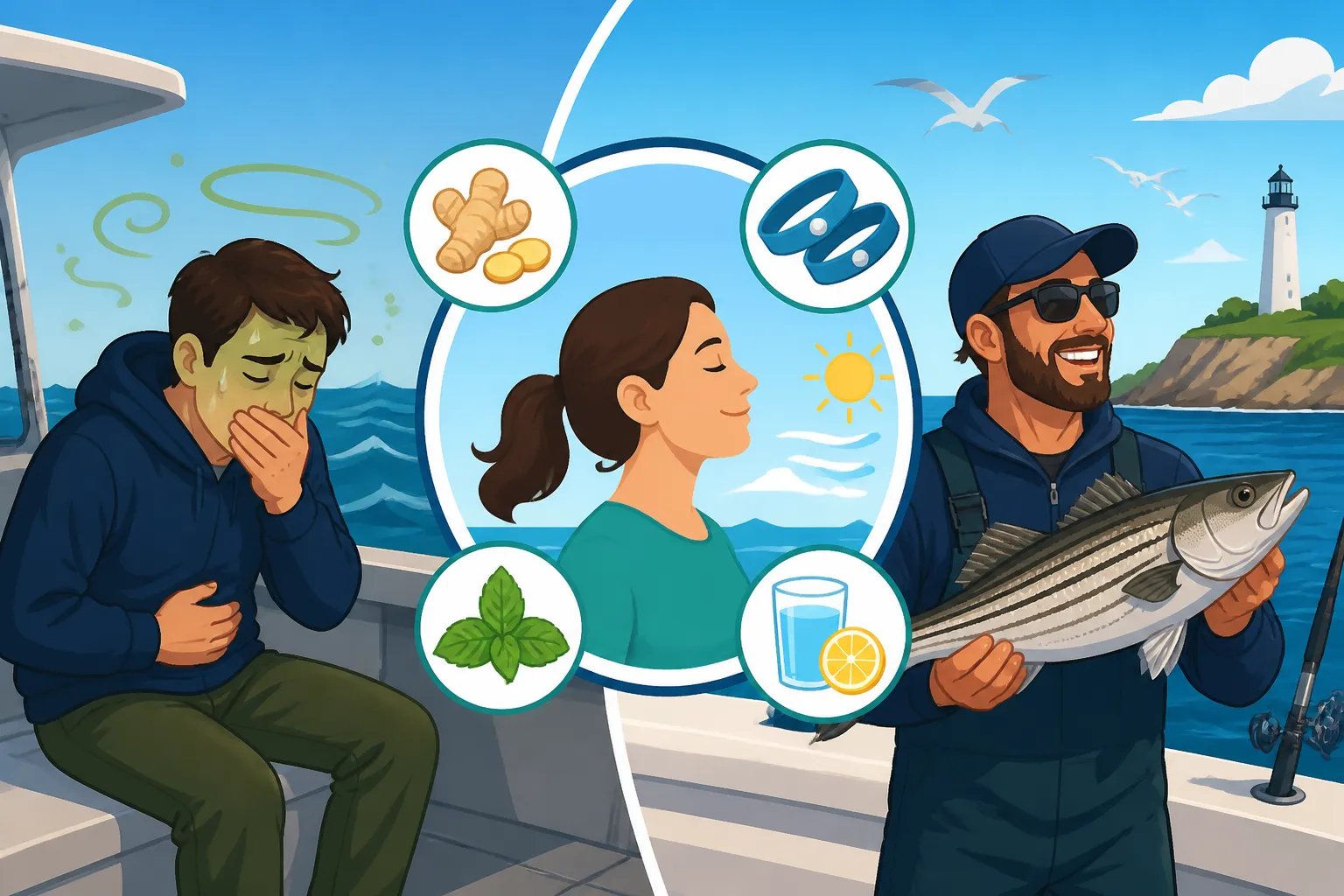
Ginger has been used for centuries as a natural remedy for nausea and indigestion, and it's a popular choice for combating seasickness. How it works isn't fully understood, but it's believed to help calm the digestive system and reduce stomach upset. You have several options for incorporating ginger into your seasickness prevention plan.
You can take ginger in capsule form as a supplement, which should be done before your trip, similar to OTC medications. Ginger candies or chews are another great option to have on hand during the charter; the act of chewing and the gradual release of ginger can be very soothing. Even a simple can of ginger ale (make sure it's real ginger ale, not just ginger-flavored soda) can provide comfort. Some people even chew on a small piece of raw ginger. It's a low-risk option that's definitely worth trying.
Acupressure Wristbands
Acupressure wristbands, often sold under brand names like Sea-Bands, are another drug-free option that many find effective. These bands work by applying gentle pressure to a specific point on your inner wrist, known as the P6 (Nei-Kuan) acupressure point. This point is traditionally associated with relieving nausea and vomiting.
You simply wear the bands on both wrists, positioning the plastic stud directly over the P6 point. They are easy to use, don't have any side effects, and can be worn throughout your entire trip. While scientific studies on their efficacy have had mixed results, anecdotal evidence from countless anglers suggests they work wonders for many people. It's an inexpensive, non-invasive method that's easy to try on your next Best Fishing Charters in Connecticut trip.
Other Less Common Approaches
Beyond ginger and acupressure, some people find relief with other natural remedies. The scent of fresh lemon or peppermint can sometimes help quell nausea. You could bring a small baggie with lemon slices or a few drops of peppermint essential oil on a tissue to sniff if you start feeling queasy. The idea here is that strong, pleasant aromas can distract your brain from the unpleasant feelings of nausea.
Maintaining a positive mindset and focusing on the fun of fishing can also play a small, but sometimes significant, role. While it's certainly not a cure, a calm and excited mental state can help keep anxiety—which often exacerbates physical symptoms—at bay. Distract yourself by anticipating that first bite, talking about fishing strategies, or simply enjoying the scenery of the Connecticut shoreline.
What to Do If Seasickness Strikes Anyway
Despite all your best efforts, sometimes seasickness just happens. Maybe the seas got rougher than predicted, or your body just decided today was the day it wasn't cooperating. The most important thing at this point is not to suffer in silence or feel embarrassed.
Don't Be Ashamed – Communicate with Your Crew
This is absolutely crucial: if you start feeling unwell, tell the captain or one of the mates immediately. They are professionals, and they've seen it all. Seriously, all of it. They won't judge you; in fact, they'd prefer to know so they can help. They might be able to suggest a better spot on the boat, offer you some ginger ale, or even adjust their course slightly if conditions allow.
Many charter boats are equipped with seasickness bags, or the crew can quickly grab a bucket for you. Trying to "tough it out" and hide your symptoms usually only makes things worse, and it certainly won't make the trip more enjoyable for you or those around you. Communication is key, especially if you booked through a reputable service like FishingBooker where crew professionalism is a priority. They want you to have a good experience!
Practical Tips for Relief Mid-Trip
If the nausea has truly set in, there are a few things you can try to alleviate the worst of it. First, if possible, lie down. Sometimes, taking away the visual input altogether by closing your eyes can help. If lying down isn't an option, find a place to sit or stand where you can keep your eyes fixed on the horizon, ideally with fresh air blowing on your face.
Focus on slow, deep breaths. Hyperventilating can make nausea worse. If you do need to vomit, don't fight it. It's often the quickest way to find temporary relief. Be prepared: aim for the leeward side of the boat (the side away from the wind) to prevent splashback, and always, always look over the side, not down into the water close to the boat, which can worsen dizziness. Remember that the crew is there to help, so don't hesitate to ask for assistance.
Post-Trip Recovery
Once you're back on solid ground, the good news is that the symptoms usually dissipate quite quickly. However, you might still feel a bit "off" or tired. Give yourself time to recover. Rest is important, and continue to rehydrate with water or electrolyte drinks. Stick to bland foods for your first meal back, gradually reintroducing heavier fare as your stomach settles.
While seasickness can be a truly unpleasant experience, don't let it deter you from future fishing adventures. With careful planning and the right strategies, you can minimize its impact and ensure your time on the water chasing striped bass, fluke, or blackfish in Connecticut is nothing short of fantastic. Next time, consider checking out some Best family-friendly fishing charters in Connecticut for a gentler introduction to the sport, or explore Connecticut Boating Laws for Anglers for broader safety information that can contribute to a more comfortable trip.
Disclaimer
This article is for general informational purposes only and does not constitute professional advice. Laws, prices and regulations vary by location and change over time. Consult a qualified professional for guidance on your specific situation.