Best Inshore vs Offshore Charters in Connecticut
Deciding on the perfect Connecticut fishing adventure often boils down to a fundamental choice: do you want to stay close to shore, exploring the bays and estuaries, or venture out into the vast, deep waters of the open ocean? This question can feel overwhelming for many anglers, especially those new to the region or just getting into charter fishing, as the differences between inshore and offshore trips are significant, impacting everything from the fish you'll target to the type of boat you'll be on. This comprehensive guide will meticulously break down the distinctions between inshore and offshore fishing charters in Connecticut, helping you confidently pick the experience that best suits your angling dreams and expectations.
Understanding the Connecticut Fishing Landscape: Inshore vs. Offshore
Connecticut boasts an incredibly diverse fishing environment, offering everything from calm tidal rivers to the dynamic waters of Long Island Sound and the deep blue beyond. Understanding where the "inshore" ends and the "offshore" begins is crucial when planning your trip. It's not just about distance from land; it's about the type of water, the fish species present, and the entire ecosystem you'll be engaging with.
What Defines "Inshore" Fishing in Connecticut
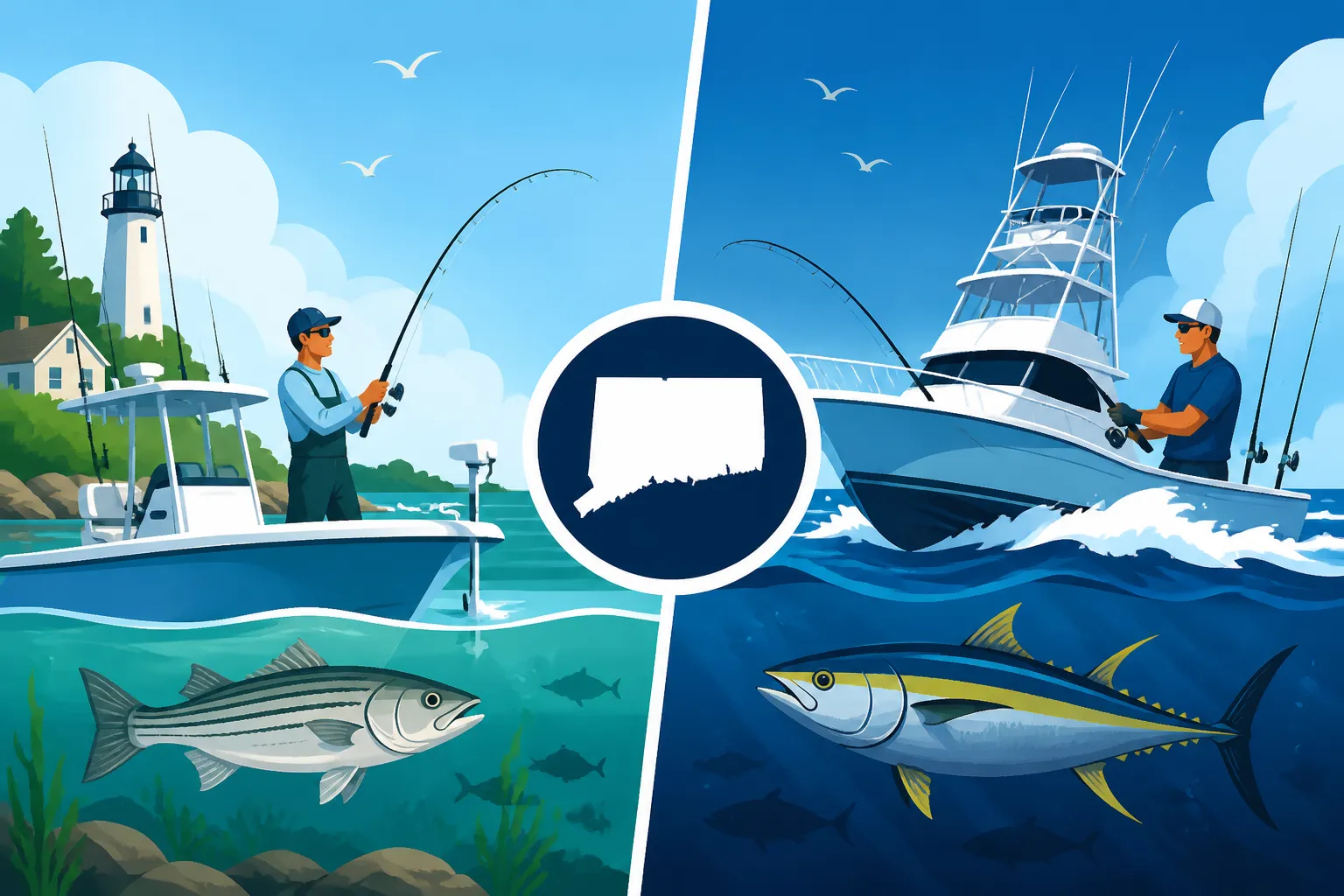
In Connecticut, "inshore" fishing generally refers to angling activities conducted in waters relatively close to the coastline. This includes the various bays, estuaries, tidal rivers, harbors, and the shallower, protected areas of Long Island Sound. Think of places where you can often still see the shore, navigate by local landmarks, and find a bustling mix of boat traffic and wildlife. The water depth in these areas typically ranges from just a few feet up to about 60-70 feet, though some deeper holes exist within the Sound's reach.
The key characteristics of inshore environments are their proximity to land and their often more sheltered nature. While Long Island Sound can certainly get choppy, especially on windy days, it's generally far less exposed to the massive swells and unpredictable weather patterns of the open ocean. This makes inshore trips a fantastic option for families, beginners, or anyone prone to seasickness, offering a more comfortable and accessible experience. You'll often find a mix of structured bottom, oyster beds, marsh grass, and feeder creeks, all of which attract a variety of baitfish and the predators that follow them.
What Defines "Offshore" Fishing in Connecticut
Offshore fishing, in stark contrast, takes you much further out to sea, beyond the protective embrace of Long Island Sound and into the expansive Atlantic Ocean. We're talking about trips that might involve traveling 30, 50, even 100 miles or more from the Connecticut coastline. These are deep-water excursions, targeting pelagic species that roam the open ocean, often around submarine canyons, Georges Bank, or the edge of the continental shelf. The water depths can range from a couple hundred feet to thousands of feet, creating a dramatically different fishing environment.
The defining features of offshore fishing are its distance from land, the depth of the water, and the exposure to true ocean conditions. You'll be out of sight of land for much of the trip, relying on sophisticated navigation and fish-finding electronics. Weather plays a much more critical role in offshore safety and comfort, as swells can be significant, and storms can develop rapidly. Offshore charters are a commitment in terms of time and resources, typically involving full-day or even multi-day trips, but they offer the chance to pursue some of the ocean's most powerful and sought-after game fish.
The Overlap: Where the Lines Blur
It's important to recognize that the line between "inshore" and "offshore" isn't always perfectly rigid, especially in a region like Connecticut. Some nearshore areas of Long Island Sound, particularly closer to its mouth or around major reefs and wrecks, might exhibit characteristics that feel more "offshore" than a calm estuary. For instance, chasing bluefish or larger striped bass around deep reefs in eastern Long Island Sound might involve similar boat types and tactics to what you'd see slightly further out, even if you're technically still within the Sound.
Charter operators might even offer "nearshore" or "coastal" trips that bridge the gap, venturing out a bit further than the most protected coves but not quite making the full journey to the deep ocean. These trips can be an excellent compromise for anglers looking for a bit more adventure than pure inshore fishing without the full commitment and potential rigors of a true offshore expedition. When booking, always clarify with your captain precisely what areas they plan to fish and what species they typically target, to ensure everyone is on the same page. You can often find detailed descriptions of such trips when browsing options on platforms like FishingBooker.
The Allure of Inshore Charters: Calm Waters and Diverse Catches
Inshore fishing charters in Connecticut offer a fantastic blend of accessibility, diverse fishing opportunities, and a generally more relaxed environment. They are incredibly popular for a reason, drawing in anglers of all skill levels, from complete novices to seasoned veterans who appreciate the challenge of lighter tackle and varied species.
Target Species and Fishing Techniques Inshore
The beauty of inshore fishing in Connecticut lies in the sheer variety of species you can encounter. Connecticut Saltwater Fishing Regulations by Species details many of the common catches. Depending on the season, you could be targeting:
- Striped Bass: Arguably the most popular inshore game fish. You'll find them cruising rocky shorelines, lurking around oyster beds, and ambushing baitfish in tidal rips. Light tackle casting with soft plastics, live bait (like eels or bunker), or even fly fishing can be incredibly effective. Read more about How to Catch Striped Bass in Long Island Sound.
- Bluefish: Known for their aggressive strikes and powerful fights, bluefish are abundant in Long Island Sound. They'll readily hit a variety of lures, often causing explosive surface action. They’re a blast on conventional gear.
- Fluke (Summer Flounder): A highly prized table fish, fluke are found on sandy or muddy bottoms, often near structure. Drifting with bait (squid, spearing) or bucktail jigs is the go-to method. Check out Fluke Fishing in Long Island Sound for more details.
- Blackfish (Tautog): These strong, structure-oriented fish are a favorite among bottom fishermen. They require precise bait presentation (crabs are king) and a good feel for their subtle bite.
- Scup (Porgy): Abundant and delicious, scup offer fast action, making them perfect for kids or anyone who loves consistent bites. They are usually caught on small pieces of bait like clams or squid.
- Weakfish: While their numbers can fluctuate, weakfish are beautiful, delicate fighters that frequent deeper channels and grassy flats within the Sound.
- Albacore (False Albacore): A highly prized light tackle speedster that zips into Long Island Sound in the late summer and early fall, offering thrilling, sight-casting opportunities.
Techniques range from light tackle casting and jigging to bait fishing and even fly fishing in certain areas. The charter captain will often employ different strategies based on the tide, time of day, and the specific species being targeted.
Typical Inshore Locations and Seasons
Inshore charters operate extensively throughout Long Island Sound, its estuaries, and tidal rivers. Popular departure points include coastal towns like Old Saybrook, Niantic, Stonington, Norwalk, and Greenwich. Each area offers unique fishing grounds, from the rocky points and sandbars near the Connecticut River mouth to the expansive flats of the western Sound. For a deeper dive, explore our Long Island Sound Fishing Guide.
The inshore fishing season in Connecticut generally kicks off in spring, often with early striped bass and scup, and extends well into the fall. Best Time of Year to Fish in Connecticut will give you a seasonal breakdown.
- Spring (April-May): Migratory striped bass arrive, along with scup and some early bluefish. Fluke season typically opens in late spring.
- Summer (June-August): Peak season for most inshore species. Striped bass, bluefish, fluke, blackfish, and scup are all active. The warmer waters can bring in species like weakfish.
- Fall (September-November): Often considered the best time for trophy striped bass and bluefish as they feed heavily before migration. Blackfish action also heats up, and false albacore can provide incredible light tackle thrills.
Benefits of Choosing an Inshore Trip
Opting for an inshore charter comes with several distinct advantages:
- Comfort and Accessibility: Shorter boat rides to fishing grounds mean less time traveling and more time fishing. The calmer waters are also much more forgiving for those prone to seasickness, and families with young children often find these trips much more enjoyable.
- Variety of Species: You're often not just targeting one type of fish. Inshore charters can switch tactics to chase different species based on what's biting, providing a dynamic and engaging experience.
- Great for Beginners: The techniques are generally easier to learn, and the action can be more consistent, helping new anglers build confidence and excitement. It's an excellent way to introduce someone to the joys of saltwater fishing.
- Shorter Trip Options: Many inshore charters offer half-day trips, which are perfect if you have limited time or want to combine fishing with other activities.
The Thrill of Offshore Charters: Deep Seas and Big Game
For the adventurous angler seeking a true big-game experience and the challenge of battling powerful pelagic fish, offshore charters are the ultimate choice. These trips are an entirely different beast, demanding more commitment, specialized gear, and a greater tolerance for open ocean conditions, but the rewards can be truly epic.
Target Species and Fishing Techniques Offshore
Venturing offshore opens up a whole new world of hard-fighting fish that inhabit the deeper waters of the Atlantic. The primary targets for Connecticut offshore charters typically include:
- Tuna (Bluefin, Yellowfin, Longfin/Albacore): The kings of offshore fishing. Bluefin tuna are powerful, highly sought-after game fish, while yellowfin and longfin (often just called "albacore" by offshore anglers, not to be confused with the inshore false albacore) offer blistering runs and excellent table fare. Trolling with large lures or natural baits, chunking (chumming with cut bait), and jigging are common methods.
- Mako and Thresher Sharks: For those seeking a pure adrenaline rush, these powerful apex predators provide an unforgettable battle. Chumming and drift fishing with large baits are standard tactics.
- Mahi-Mahi (Dorado): These vibrant, acrobatic fish are a joy to catch and delicious to eat. They are often found around floating debris or weed lines, and respond well to trolling small lures or casting baits.
- Wahoo: Known for their incredible speed and razor-sharp teeth, wahoo are a challenging and highly prized catch, often taken while high-speed trolling.
- Swordfish: The ultimate deep-drop challenge, swordfish are targeted specifically at night using heavy tackle and specialized baits fished hundreds of feet down.
- Black Sea Bass (larger, ocean-dwelling specimens): While some black sea bass are caught inshore, the largest "knob-headed" specimens are found on deep ocean wrecks and reefs, offering excellent bottom fishing. Our Best Black Sea Bass Charters in Connecticut guide can provide more insights.
Offshore techniques are typically more specialized and gear-intensive. Trolling, chunking, deep dropping, and heavy jigging are common, often involving heavy-duty rods and reels capable of handling immense pressure and long fights.
Typical Offshore Locations and Seasons
Offshore charters from Connecticut typically depart from ports like Stonington, Old Saybrook, or Niantic, heading south or southeast into the open Atlantic. The journey to the fishing grounds can take several hours, sometimes before dawn. Common destinations include:
- The Canyons (e.g., Block Canyon, Hudson Canyon): These massive submarine trenches along the continental shelf are biodiversity hotspots, attracting a wide array of pelagic species including all types of tuna, mahi-mahi, and billfish.
- Offshore Banks and Seamounts: Underwater topographical features like the Cox's Ledge or the Horns hold baitfish and, consequently, large predators.
- Offshore Wrecks and Reefs: Deeper wrecks are magnets for large black sea bass, cod, and sometimes even hake.
The offshore season in Connecticut is generally shorter and more weather-dependent than inshore fishing.
- Summer (July-August): Prime time for tuna, mahi-mahi, and sharks as warm currents bring these species north.
- Fall (September-October): Can still be excellent for tuna, especially bluefin, before they begin their southern migration. Weather windows become more critical.
Challenges and Rewards of Offshore Adventures
Offshore fishing is not for the faint of heart, but it offers unparalleled rewards:
-
Challenges:
- Weather Dependency: Trips are highly susceptible to weather and sea conditions. Rough seas can lead to cancellations or uncomfortable rides.
- Long Travel Times: Expect several hours of steaming to and from the fishing grounds, reducing actual fishing time compared to inshore trips.
- Physical Demands: Battling large pelagic fish on heavy tackle can be extremely physically demanding, often requiring significant endurance.
- Cost: Offshore charters are significantly more expensive due to fuel costs, specialized gear, and the extended duration of the trip.
- Seasickness: The open ocean can be very rough, making seasickness a real concern for many.
-
Rewards:
- Trophy Fish: The chance to hook into a true monster – a giant bluefin tuna, a powerful mako shark, or a beautiful swordfish – is a major draw.
- Unique Experience: The solitude and vastness of the open ocean create a unique, awe-inspiring atmosphere distinct from inshore fishing.
- Abundant Fish: When you find them, offshore species can be incredibly numerous, leading to fast and furious action, especially with tuna or mahi-mahi.
- Memories: The stories from an offshore trip, whether a triumph or a battle lost, are often legendary among anglers.
Vessel Types and Their Suitability for Inshore vs. Offshore
The type of boat you'll be fishing from is a major differentiator between inshore and offshore charters. Each environment demands specific vessel characteristics to ensure safety, comfort, and effective fishing.
Inshore Boats: Nimble, Shallow-Draft Vessels
Inshore charters typically utilize a range of boats designed for shallower, more protected waters. These vessels prioritize maneuverability, shallower draft, and often a more open deck plan for casting.
- Center Console Boats: These are perhaps the most common type of inshore charter boat. Their open layout allows for 360-degree fishing, and their relatively shallow draft lets them access skinny water. They range in size but are typically 20-30 feet long, fast, and versatile. They are great for casting lures, live-lining, or bottom fishing.
- Bay Boats: Similar to center consoles but often with an even shallower draft, specifically designed for fishing bays, estuaries, and salt ponds. They may have casting platforms at the bow and stern.
- Skiffs: Smaller, simpler boats used in very shallow or tight waters, often for specific light tackle or fly fishing opportunities.
- Pilothouse Boats: Some inshore charters, especially those operating in Long Island Sound during cooler months, might use pilothouse boats, offering more shelter from the elements.
These boats are generally easier to handle in crowded areas, can get into tight spots, and don't require the same robust construction as offshore vessels, though they are still very capable in chop within the Sound. Their lower fuel consumption also contributes to the typically lower cost of inshore trips.
Offshore Boats: Robust, Deep-V Hulls
Offshore charters require boats built to withstand the rigors of the open ocean. These vessels are larger, heavier, and designed for stability, speed, and safety in potentially rough conditions.
- Sportfishing Convertibles (Flybridge Boats): These iconic offshore vessels feature a raised "flybridge" helm that provides excellent visibility for spotting fish and structure. They are typically large (35-70+ feet), heavy, and powered by powerful diesel engines. They offer comfortable cabins, multiple bunks, a galley, and often air conditioning – essential for long runs and multi-day trips. Their deep-V hulls cut through waves, providing a smoother ride.
- Large Center Consoles (30+ feet): While center consoles are primarily inshore, larger, more robust models (often with multiple outboards and a much deeper V-hull) are increasingly popular for offshore day trips. They offer speed and a large fishing platform, but might lack the creature comforts of a sportfishing convertible on long trips.
- Walkaround Cuddy Cabins: Offer a balance of fishing space and a small cabin for shelter and a head, suitable for day trips offshore.
The robust construction, powerful engines (often multiple), and comprehensive electronic suites (radar, sonar, GPS) on offshore boats are crucial for navigating and fishing safely far from shore. These features contribute significantly to the higher operational costs of offshore charters.
Safety Considerations for Each Type
Safety is paramount in any fishing adventure, and charter captains are legally required to adhere to strict Coast Guard regulations. However, the inherent risks vary between inshore and offshore environments.
- Inshore Safety: While generally safer due to proximity to shore and calmer waters, inshore still presents risks. Collisions with other boats, sudden squalls, or equipment failures are possibilities. Charter captains are well-versed in local navigation, emergency procedures, and carrying appropriate safety gear like life jackets, flares, and first aid kits. The ability to quickly reach sheltered harbors is a major advantage.
- Offshore Safety: The open ocean demands a much higher level of preparedness. Offshore boats are equipped with more extensive safety gear, including EPIRBs (Emergency Position-Indicating Radio Beacons), satellite phones, redundant navigation systems, and often life rafts. The captain's experience in reading offshore weather patterns and making critical judgment calls is invaluable. Seasickness can also become a safety concern if it incapacitates an angler or crew member. Always ensure your captain is licensed and experienced, and the vessel is well-maintained and equipped. Our guide on Connecticut Boating Laws for Anglers provides more background on general marine safety.
Cost Comparison: What to Expect for Inshore and Offshore Trips
The financial aspect is a significant factor for many when choosing between inshore and offshore charters. There’s a noticeable difference in price points, driven by the operational costs, duration, and specialized nature of each trip. Our Connecticut Fishing Charter Cost Guide offers a broader overview, but let's dive into the specifics of inshore vs. offshore.
Factors Influencing Inshore Charter Costs
Inshore charters are generally more affordable, making them a great option for those on a budget or looking for a shorter, less intensive experience. Several factors contribute to their cost structure:
- Shorter Duration: Many inshore trips are half-day (4-5 hours) or three-quarter day (6-7 hours), which inherently reduces the overall cost compared to full-day or extended trips.
- Lower Fuel Consumption: Inshore boats are typically smaller and run at lower speeds or for shorter distances to reach fishing grounds, consuming less fuel. This is a major cost saving.
- Less Specialized Gear: While quality gear is always used, the tackle required for inshore species (like striped bass, fluke, or scup) is generally less expensive to purchase and maintain than the heavy-duty offshore outfits needed for tuna or shark.
- Fewer Crew Members: Many inshore trips can be effectively run by a single captain, reducing labor costs.
- Smaller Vessel Size: Smaller boats are less expensive to purchase, insure, maintain, and dock, which translates to lower operating overhead for the charter business.
As a rough example, a half-day inshore trip for 1-4 people might cost a few hundred dollars, while a full-day might be a bit more. These prices can fluctuate based on the specific boat, captain's reputation, and the time of year.
Factors Influencing Offshore Charter Costs
Offshore charters represent a significant investment, reflecting the demanding nature of the operation. You're paying for expertise, specialized equipment, and the sheer logistics of venturing far out to sea.
- Extended Duration: Offshore trips are almost always full-day (8-12+ hours) or even multi-day excursions. This means more time, more fuel, and more crew hours.
- Massive Fuel Consumption: Large offshore sportfishing boats are gas guzzlers, often burning hundreds of gallons of fuel in a single trip, especially when running long distances to the canyons. Fuel is often the single biggest expense for these charters.
- Highly Specialized Gear: The rods, reels, lines, lures, and terminal tackle for tuna, sharks, and swordfish are extremely expensive to acquire, maintain, and replace. You're talking about gear designed to handle hundreds of pounds of fighting fish.
- More Crew Members: Offshore trips typically require a captain and at least one, often two, experienced mates to assist with rigging, fighting fish, gaffing, and general boat operations, adding to labor costs.
- Larger, More Complex Vessels: Offshore boats are substantial investments. Their purchase price, insurance, maintenance, electronics, and slip fees are exponentially higher than inshore boats.
- Bait and Ice: Large quantities of bait (like chum, bunker, squid, ballyhoo) and ice are often required for offshore trips, which adds to the per-trip cost.
An offshore day trip for tuna might easily run into the thousands of dollars, and multi-day canyon trips could be several times that amount. This is why offshore trips are often split among a group of anglers to make them more affordable per person. When booking, always confirm what is included in the price – sometimes bait, tackle, and fish cleaning are extra, so be sure to check the details on a platform like FishingBooker.
Value Proposition: What Your Money Buys
While the sticker shock for offshore charters can be real, it's essential to consider the value proposition.
- Inshore Value: You're paying for a convenient, comfortable, and often action-packed day on the water, with a high likelihood of catching a variety of common, popular game fish. It’s an accessible way to enjoy saltwater fishing without a huge time or financial commitment.
- Offshore Value: You're investing in an expedition. You're paying for the opportunity to pursue true giants of the ocean, a highly specialized deep-sea experience, and the use of a sophisticated vessel with an experienced crew that can safely navigate far from shore. The "trophy potential" and the sheer adventure factor are what drives the value here. It's not just about catching fish, but about the hunt and the battle itself.
Preparing for Your Connecticut Charter: Gear, Attire, and Expectations
Regardless of whether you choose an inshore or offshore charter, proper preparation can significantly enhance your experience. While captains provide essential gear, knowing what to bring and what to expect will help you have a smooth and enjoyable day on the water.
What to Bring for an Inshore Trip
Inshore trips generally require less specialized personal gear, but there are still some key items to ensure your comfort and safety.
- Appropriate Clothing: Dress in layers! Connecticut weather, especially near the water, can change rapidly. Even on a warm day, the breeze on the boat can make it feel cooler. A rain jacket or windbreaker is always a good idea.
- Sun Protection: Sunscreen (high SPF, please!), a wide-brimmed hat, and polarized sunglasses are essential, even on cloudy days. The sun's reflection off the water is intense.
- Food and Drinks: Pack a small cooler with your snacks, lunch, and beverages. Most boats have cooler space, but confirm if ice is provided or if you should bring your own.
- Footwear: Wear non-marking, non-slip shoes with good traction. Sneakers or boat shoes are ideal. Avoid flip-flops or open-toed sandals.
- Medication: If you have any personal medications, bring them. For seasickness, consider taking medication like Dramamine or Bonine the night before and again in the morning, as it's most effective as a preventative measure.
- Camera: Capture those memories! Just ensure it's secure or waterproof.
- Cooler for Your Catch: If you plan on keeping fish, bring a separate cooler to transport your fillets home. The charter will usually have one for the boat's ice.
- Fishing License: While many charters have a blanket license that covers passengers, it’s always best to check. If you need your own, refer to our Connecticut Fishing License Guide for 2026.
- Tips for the Crew: Don't forget to budget for a tip for the mate or captain if they've provided excellent service. Our Tipping Etiquette for Connecticut Fishing Charters guide can help.
The boat will typically provide all the rods, reels, bait, and tackle you need. However, if you have a favorite light tackle rod or a specific lure you want to try, ask the captain if it's appropriate to bring. What Gear a Connecticut Charter Provides offers a detailed list.
What to Bring for an Offshore Trip
Offshore trips demand even more robust preparation due to their extended duration and the potential for more extreme conditions.
- Heavy-Duty Layers: Beyond typical layering, consider waterproof foul-weather gear (jacket and pants) even if the forecast is clear. Spray and rain can be constant offshore.
- Sun Protection (Critical): The sun's intensity offshore is no joke. Reapply sunscreen frequently. Long-sleeved shirts, neck gaiters, and gloves are highly recommended.
- Hearty Food and Hydration: Pack enough food and water for a very long day, potentially two. Dehydration can exacerbate seasickness. Bring plenty of water, sports drinks, and substantial meals.
- Sturdy Footwear: Waterproof deck boots or heavy-duty boat shoes are highly recommended for comfort and safety on a wet, rocking deck.
- Aggressive Seasickness Prevention: If you have any doubt, take preventative seasickness medication well in advance. Patches behind the ear are also popular for offshore trips. Once you're sick, it's hard to recover.
- Personal Hygiene Items: Toothbrush, small towel, change of clothes – especially for multi-day trips where you might have access to a head (marine toilet) and bunk.
- Cooler for Your Catch: Absolutely essential for offshore, often a large one. Tuna and mahi-mahi are big fish and need to be iced down properly for quality table fare.
- Documents: Don't forget your fishing license (if required, again check with the captain) and ID.
On offshore boats, the gear provided will be heavy-duty, robust, and specifically matched to the target species. Do not bring your own light tackle unless specifically cleared by the captain for a very particular secondary target. The professional gear is designed to handle the immense stress of offshore fish and prevent break-offs.
Setting Realistic Expectations for Both
Perhaps the most crucial aspect of preparing for any charter is setting realistic expectations. Fishing is, by nature, unpredictable.
- Inshore Expectations: While often productive, there are no guarantees of a "limit" catch. Focus on the experience – the boat ride, the scenery, learning new techniques, and the camaraderie. You're likely to catch fish, but the size and quantity can vary.
- Offshore Expectations: Offshore fishing can be feast or famine. You might have an incredible day, filling the boat with tuna, or you might steam for hours and come back with little to show for it. That's the challenge and the thrill. The adventure of the hunt, the vastness of the ocean, and the potential for a truly memorable battle are part of the experience, even if the fish aren't biting. Understand that captains work incredibly hard to put you on fish, but they cannot control the ocean.
- Communication is Key: Always discuss your goals and expectations with the captain beforehand. Are you looking for quantity, a specific species, or a trophy? Are you comfortable with catch-and-release, or do you want to keep fish for dinner? Clear communication ensures everyone is on the same page.
Choosing Your Adventure: Key Questions to Ask Yourself
Now that we've laid out the differences, it's time for some self-reflection. The "best" type of charter isn't universal; it's the one that aligns with your preferences and goals. Consider these questions carefully.
Your Experience Level and Comfort Zone
Be honest with yourself about your fishing prowess and how you handle motion on the water.
- Beginner or Casual Angler? If you're new to fishing or just want a relaxed day without too much physical exertion, an inshore charter is likely your best bet. The calmer waters, shorter trips, and more consistent action are perfect for learning the ropes and enjoying the sport. There's less pressure, and you can focus on the basics.
- Experienced Angler Seeking a Challenge? If you've got some fishing under your belt, understand marine conditions, and are looking for a true test of skill and endurance, offshore might call to you. Battling large pelagics is a demanding sport that requires strength, stamina, and often, patience.
- Prone to Seasickness? This is a huge factor. If you know you get seasick easily, even with medication, sticking to inshore waters is a wise choice. Long Island Sound can get choppy, but it pales in comparison to the swells of the open Atlantic. A miserable day offshore is no fun for anyone. Even if you've never been seasick, the continuous motion far from shore can be a challenge.
Your Target Species and Fishing Goals
What kind of fish truly excites you? This might be the most straightforward way to make your decision.
- Want Diverse Catches, Table Fare, or Consistent Action? Inshore fishing offers a smorgasbord of delicious fish like fluke, scup, blackfish, and the ever-popular striped bass. The action can be more consistent, and you often have the chance to catch multiple species in one trip. If bringing home a varied dinner is a priority, inshore is often a great choice.
- Dreaming of Big Game Trophies like Tuna or Shark? If pictures of giant bluefin tuna or powerful sharks adorn your wall, then offshore is your only option. These pelagic titans simply don't inhabit inshore waters. The pursuit of a truly massive, once-in-a-lifetime fish defines the offshore experience.
- Looking for Light Tackle Fun or Fly Fishing Opportunities? Inshore waters are far more conducive to light tackle angling and fly fishing, especially for striped bass, false albacore, or even some smaller bluefish. If you enjoy the finesse and skill of these methods, inshore will provide those opportunities.
Your Group Size and Preferences
Consider who you'll be fishing with and what kind of atmosphere everyone prefers.
- Families with Kids or Mixed Experience Levels? Inshore charters are typically more family-friendly. The shorter trips, calmer rides, and higher likelihood of consistent bites keep everyone engaged and happy. Kids often don't have the patience or physical stamina for long offshore runs and battles. Look for Best Family-Friendly Fishing Charters in Connecticut.
- A Group of Hardcore Anglers? If your entire group lives and breathes fishing and is prepared for a grueling but potentially rewarding day, an offshore trip can be an incredible shared adventure. The camaraderie built during a long battle with a tuna is unforgettable.
- Looking for a Social, Relaxed Vibe? Inshore trips often foster a more relaxed, social atmosphere. You can chat, enjoy the scenery, and still get plenty of fishing in. Offshore, while social, is often more focused and intense when fish are on the lines.
- Time and Budget Constraints: As discussed, inshore trips are shorter and more budget-friendly. If you have limited time or a specific budget, inshore will likely fit the bill. Offshore demands more of both.
Here’s a quick comparison table to help visualize the key differences:
| Feature | Inshore Charter | Offshore Charter |
|---|---|---|
| Typical Range | Bays, Estuaries, Long Island Sound | Open Atlantic, Canyons, Offshore Banks |
| Water Depth | Shallow to Moderate (a few feet to 70 ft) | Deep to Very Deep (100s to 1000s of feet) |
| Target Species | Striped Bass, Bluefish, Fluke, Blackfish, Scup | Tuna (Bluefin, Yellowfin), Mahi-Mahi, Sharks, Wahoo |
| Vessel Type | Center Console, Bay Boat, Pilothouse (20-30 ft) | Sportfishing Convertible, Large Center Console (35-70+ ft) |
| Trip Duration | Half-Day (4-5 hrs), Three-Quarter (6-7 hrs), Full-Day (8 hrs) | Full-Day (8-12+ hrs), Multi-Day (24-48+ hrs) |
| Cost | Lower (e.g., a few hundred dollars) | Higher (e.g., thousands of dollars) |
| Comfort | Generally calmer, less prone to severe seasickness | Can be very rough, high potential for seasickness |
| Experience Level | Great for beginners, families, casual anglers | Best for experienced, adventurous anglers |
| Physical Demands | Moderate | High (battling large fish on heavy tackle) |
| Trophy Potential | Good for local species (e.g., large striped bass) | Excellent for world-class pelagic game fish |
Booking Your Connecticut Fishing Charter: Tips for a Smooth Experience
Once you've decided on the type of charter that's right for you, the next step is finding and booking the perfect trip. This process involves a bit of research and clear communication to ensure your day on the water is everything you hope for. For a deeper dive, check out our How to Choose a Connecticut Fishing Charter guide.
Finding Reputable Charter Operators
The best way to ensure a great fishing trip is to book with a reputable and experienced captain. Here’s how to go about it:
- Online Platforms: Websites like FishingBooker are excellent resources. They list numerous Connecticut charter boats, often with photos, detailed descriptions of their trips (inshore vs. offshore), target species, pricing, and most importantly, customer reviews. This allows you to compare options side-by-side and see what other anglers have to say. When looking through the options, pay close attention to the specific trip types advertised – many boats specialize.
- Word-of-Mouth: Ask friends, family, or local tackle shops for recommendations. Personal endorsements can be incredibly valuable.
- Marina Listings: Visit local marinas in coastal towns like Niantic, Stonington, or Old Saybrook. Many charter boats advertise directly from their slips, and you can often speak to captains in person.
- Check Credentials: Ensure the captain is properly licensed by the U.S. Coast Guard (a requirement for all paying passengers). Reputable charters will proudly display this information.
When you've narrowed down your choices, don't hesitate to call the captain directly. A good captain will be happy to answer your questions, discuss your goals, and manage your expectations.
Understanding Deposit and Cancellation Policies
Before you commit to a booking, it's absolutely crucial to understand the charter's deposit and cancellation policies.
- Deposits: Most charters require a deposit to secure your booking. This can range from a percentage of the total cost to a flat fee. Understand if it's refundable and under what circumstances.
- Weather Cancellations: This is the most common reason for cancellations.
- Captain's Call: Reputable captains will always prioritize safety. If they determine the weather conditions are unsafe (e.g., high winds, rough seas, lightning storms), they will cancel the trip. This decision is solely at the captain's discretion.
- Your Options: If the captain cancels due to weather, you should be offered the option to reschedule for another date or receive a full refund of your deposit.
- Your Responsibility: Be aware that a little rain or a bit of chop often does not warrant a cancellation. Don't expect a refund if you decide to cancel last-minute for minor weather that the captain deems fishable.
- Angler Cancellations: If you need to cancel for personal reasons, there will typically be a deadline (e.g., 7-14 days in advance) to receive a deposit refund. Cancellations made within that window may result in forfeiture of your deposit. Always read the fine print before booking.
Reading Reviews and Asking for References
Online reviews are a goldmine of information. When reading them, look for:
- Consistency: Do many reviews praise the captain's knowledge, friendliness, and ability to put clients on fish?
- Specifics: Do reviewers mention specific techniques, species, or areas fished that align with your interests?
- Honesty about Conditions: Some of the most helpful reviews will mention if the weather was tough but the captain still worked hard, or if the fishing was slow but the crew made the experience enjoyable.
- Customer Service: How were issues handled? Was communication clear?
Don't be afraid to ask a potential captain for references from past clients, especially for an expensive offshore trip. Speaking to someone who has fished with them before can provide invaluable insight.
By doing your homework and clearly communicating your preferences, you can ensure your Connecticut fishing charter, whether inshore or offshore, will be a memorable and successful adventure.
Disclaimer
This article is for general informational purposes only and does not constitute professional advice. Laws, prices and regulations vary by location and change over time. Consult a qualified professional for guidance on your specific situation.