Connecticut life jacket rules for children under 13
It’s a beautiful day on the Connecticut water, the sun is shining, and your kids are bouncing with excitement for a day of fishing or exploring. But wait, did you remember the life jackets? Navigating the specific boating regulations, especially when it comes to the safety of our youngest adventurers, can feel like a confusing labyrinth. This guide cuts through the noise, explaining Connecticut's life jacket rules for children under 13, helping you keep your little ones safe and compliant without the headache.
Understanding Connecticut's Mandatory Life Jacket Law for Kids
Let's be honest, nobody wants to get a surprise visit from the EnCon Police, especially not for something as critical as child safety. Connecticut takes the well-being of its youngest boaters very seriously, which is why there’s a clear and non-negotiable law regarding life jackets for children. This isn't just a suggestion; it's a legal requirement designed to prevent tragedies and ensure every family enjoys their time on the water safely. It's easy to assume that if you're just paddling around a calm lake, the rules might be a bit more relaxed, but that's simply not the case. The law applies broadly, casting a wide net to protect kids in almost all boating situations. Understanding these basics is the first step in responsible boating with your family.
The Specifics of the Under 13 Rule
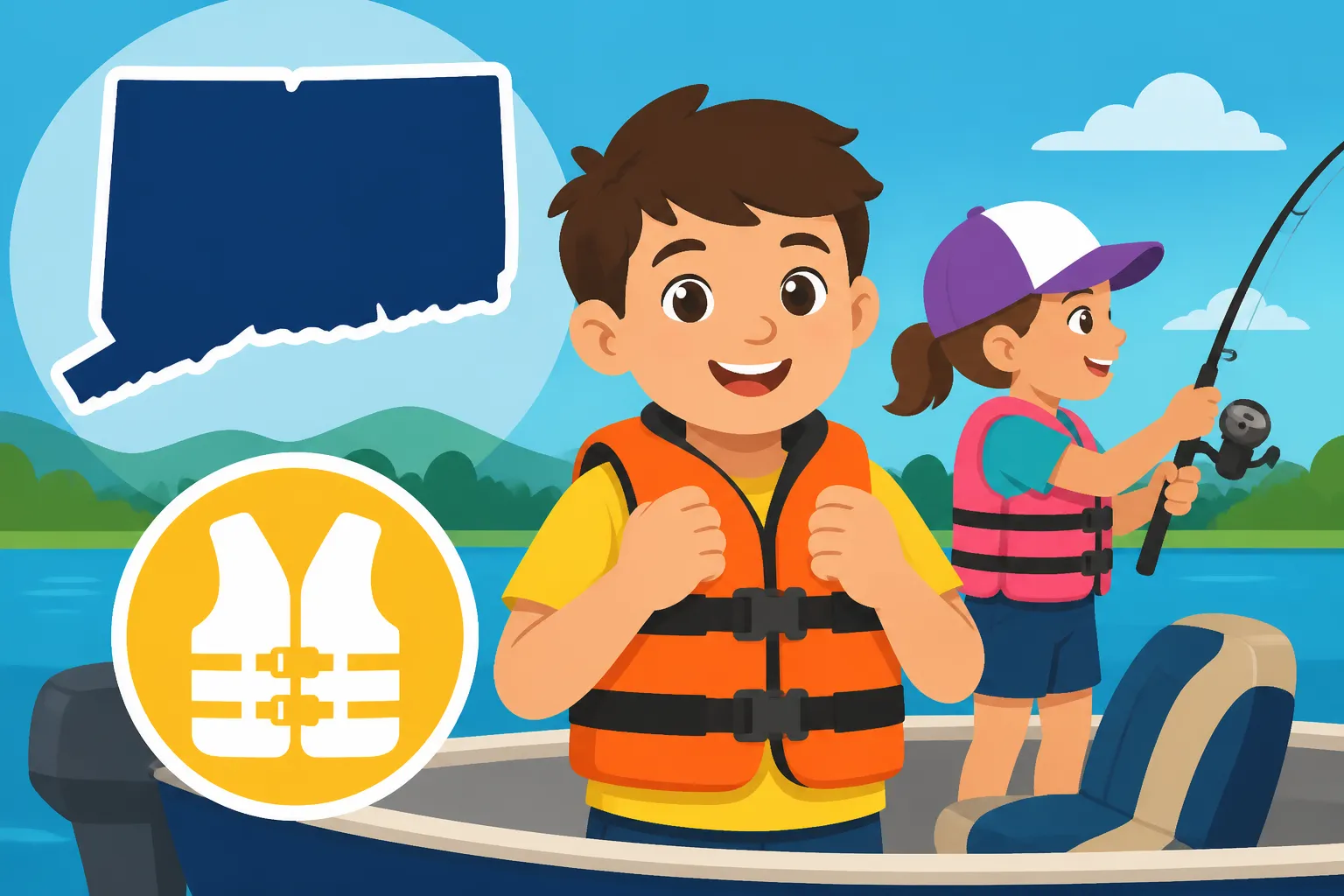
The core of the Connecticut life jacket law is pretty straightforward: any child under the age of 13 must wear a U.S. Coast Guard (USCG) approved life jacket (also known as a Personal Flotation Device, or PFD) whenever they are on board any vessel that is underway. "Underway" is a key term here; it means the vessel is not at anchor, moored, or aground. So, whether you're cruising out on Long Island Sound in a fishing boat, or just slowly motoring across a lake to a favorite fishing spot, if your child is under 13, that life jacket needs to be securely fastened. This age cutoff isn't arbitrary; it's based on safety statistics and the understanding that younger children often lack the swimming skills, judgment, or physical ability to stay afloat or react effectively in an unexpected capsizing or fall overboard situation. It’s not about how well your child can swim in a pool; it’s about their ability to survive a sudden, cold water immersion.
This rule also means that simply having a life jacket on board isn't enough for your little ones. They must be wearing it, and it must fit correctly. Too often, I've seen parents with a pile of PFDs in their boat, only for a child to fall in and realize the jacket wasn't on, or it was the wrong size. It's a preventable mistake that no one wants to make. So, before you even leave the dock, double-check those buckles and straps. For more general guidelines, you can also check out our comprehensive guide on Life Jacket Requirements for Connecticut Boaters.
Where These Rules Apply On the Water
This "under 13" rule isn't limited to just large motorboats on the bigger bodies of water. It applies across the board to virtually all vessels and waterways within Connecticut's jurisdiction. This means if you're fishing for bass on Candlewood Lake, kayaking on the Connecticut River, or even paddleboarding on a small pond in a state park, if a child under 13 is with you, they need to be wearing their PFD. There are no exemptions for calm waters, shallow depths, or sunny days. The law doesn't differentiate between a massive yacht and a small rowboat. It’s all about protecting the child.
Think about it this way: a sudden wave from a passing boat, an unexpected capsize in a kayak, or even just slipping off the deck of a boat can happen in an instant, regardless of how experienced you are or how calm the water seems. The rule even extends to rented equipment – if you're renting a canoe or paddleboard from a local outfitter, ensure they provide USCG-approved PFDs for your children, and that your kids wear them. This uniform application of the law ensures maximum safety coverage for all young boaters across the state's diverse aquatic landscapes, from the freshwater fishing lakes to the saltwater expanses of Long Island Sound.
Types of Life Jackets and Choosing the Right Fit
Understanding the law is one thing, but knowing which life jacket to choose and how to ensure it fits properly can be a whole other challenge. Walk into any marine supply store, or browse online, and you'll be faced with a dizzying array of options. It's not just about color or style; PFDs are categorized by type, each designed for specific activities and conditions. For our younger boaters, getting this right is paramount, as an ill-fitting or inappropriate life jacket offers little protection when it matters most. This is where a little bit of knowledge goes a long way in securing your child's safety and your peace of mind.
Decoding USCG-Approved PFD Types
The U.S. Coast Guard classifies PFDs into different types, primarily based on their buoyancy and intended use. For children, you'll most commonly encounter Type II and Type III, though understanding Type I and Type V can also be helpful.
- Type I (Off-Shore Life Jackets): These are designed for rough, open, or remote waters where rescue may be delayed. They offer the most buoyancy and are designed to turn an unconscious person face-up in the water. They are bulky but offer maximum protection. You'll rarely see these on recreational fishing trips with kids, but they're important for extreme conditions.
- Type II (Near-Shore Buoyant Vests): These are good for calm, inland waters where there's a good chance of quick rescue. They might turn an unconscious person face-up, but it's not guaranteed. These are often the "orange horse collar" style life jackets you find on rental boats. While they meet the legal requirements, they're not always the most comfortable or practical for active children, especially when fishing or playing.
- Type III (Flotation Aids): This is arguably the most common and popular type for recreational boating and fishing with children. They are designed for general recreational use and provide good comfort and freedom of movement, making them ideal for fishing, waterskiing, or kayaking. They will not turn an unconscious person face-up, so they are best for situations where immediate rescue is likely and the wearer can assist themselves. Many child-specific PFDs fall into this category, offering a much better fit and less bulk than Type IIs.
- Type V (Special Use Devices): These are designed for specific activities and must be worn to be considered valid PFDs. Examples include work vests, deck suits, or hybrid inflatable PFDs. While some adult Type V PFDs exist, they are less common for children in recreational settings, and the "wear it at all times" aspect is critical.
When shopping, always look for the USCG approval stamp on the label. Brands like Stearns, O'Brien, and even options you can find on Amazon often offer a good range of USCG-approved children's PFDs. Remember, the best life jacket is the one your child will actually wear, comfortably and consistently.
How to Ensure a Perfect (and Safe!) Fit for Your Child
A life jacket that doesn't fit properly is as good as no life jacket at all. For children, fit is even more crucial because they are smaller and can slip out of poorly fitted PFDs. Here’s a step-by-step guide to ensuring a perfect fit:
- Check the Weight Range: All USCG-approved PFDs have a weight range printed on the label (e.g., Infant: 0-30 lbs, Child: 30-50 lbs, Youth: 50-90 lbs). This is the most critical factor. Do not put a child in a PFD outside their weight range. A PFD that is too big will ride up and could even come off in the water, while one that is too small won't provide adequate buoyancy.
- Try it On: This isn't something you can eyeball. Have your child put on the life jacket.
- Fasten All Straps and Zippers: Ensure all buckles are clipped, and all zippers are fully pulled up. Make sure it's snug, but not uncomfortably tight.
- Perform the "Lift Test": This is the ultimate test. After the jacket is fastened, lift your child by the shoulders of the life jacket. If the jacket slides up past their chin or ears, it’s too big. The jacket should remain snug around their body, and their chin should not be able to slip below the top of the PFD.
- Check for Comfort and Mobility: While snug, the jacket shouldn't restrict their breathing or movement too much. Ask your child to move their arms and sit down. If they complain it's too restrictive, try a different style within their weight range, perhaps a Type III which often offers better mobility.
- Consider the Crotch Strap: Many child and infant PFDs come with a crotch strap (sometimes called a leg strap). This is incredibly important for smaller children as it prevents the jacket from riding up over their head when in the water, which can be disorienting and dangerous. Always use this strap if the PFD has one.
Remember, children grow fast! Re-check the fit at the beginning of every boating season and after any significant growth spurt. Investing in a good quality, well-fitting PFD from brands like O'Neill, Astral, or even reputable sellers on Amazon is a small price to pay for genuine safety.
Common Scenarios and Practical Tips for Boating with Kids
Knowing the law and choosing the right life jacket is excellent, but real-world boating with kids throws up all sorts of scenarios. From convincing a toddler to keep their PFD on to navigating different types of vessels, the practical side of things can sometimes feel overwhelming. It’s not just about compliance; it's about fostering a culture of safety that your kids will carry with them for life. Let’s tackle some of those common questions and offer some friendly advice for making boating with your mini-crew both fun and secure.
What About Kayaks, Canoes, and Paddleboards?
Here's a common misconception: people often think the "under 13" rule only applies to motorboats. Not true! In Connecticut, this regulation extends to all vessels, and that absolutely includes kayaks, canoes, and stand-up paddleboards (SUPs). If your child under 13 is a passenger on any of these human-powered crafts while underway, they must be wearing a USCG-approved life jacket.
I've seen plenty of families enjoying a quiet paddle on the Farmington River or exploring the coves of the Thimble Islands, and sometimes, parents will let their younger kids go without a PFD, thinking "it's just a kayak." But a small craft can capsize just as easily, if not more so, than a larger boat, especially with an excitable child shifting their weight. The water can be colder than you expect, even on a warm day, and a child can quickly become disoriented. So, whether you're taking your little one for their first kayak fishing trip or just a leisurely paddle across a pond, the PFD needs to be on and correctly fastened. This applies even if they're sitting in a tandem kayak with you, or on the front of a SUP. The rule is clear and consistent for all types of vessels. For additional information on broader boating rules, our article on Connecticut Boating Laws for Anglers is a great resource.
Encouraging Kids to Wear Life Jackets Without a Fight
Ah, the age-old battle: getting kids to wear what's good for them. Life jackets can be bulky, sometimes hot, and kids often view them as restrictive or "uncool." But it doesn't have to be a constant struggle. Here are some strategies that often work:
- Make it Non-Negotiable: Establish from day one that the life jacket goes on before getting near the water, and it stays on until they are off the boat/dock. Frame it as "part of the uniform" for water adventures, just like a seatbelt in a car. Consistency is key.
- Let Them Choose (Within Limits): Give them some agency. Let them pick out their own USCG-approved life jacket, maybe one with their favorite color or a cool design. Brands like O'Brien or Connelly often have fun patterns that appeal to kids. Even checking out the options on Amazon together can make it an exciting event.
- Lead by Example: If adults (especially parents and guardians) wear their PFDs, even when not legally required (like in a larger boat), children are far more likely to comply. Show them that safety is for everyone.
- Educate, Don't Scare: Explain why life jackets are important in simple, age-appropriate terms. "This helps you float if you accidentally fall in, so you can play safely." Avoid terrifying scenarios, but emphasize the jacket is their friend on the water.
- Comfort is Key: If the life jacket is truly uncomfortable, scratchy, or rubs, they'll resist. Ensure it's the right size and type for their activity. A Type III PFD often offers more freedom of movement for active kids.
- Make it a Game: Turn putting on life jackets into a race, or reward them for wearing it without complaint. Positive reinforcement works wonders.
- Practice: Have them wear it around the house for a few minutes or during a pool visit to get used to the feeling before they even get to the boat.
Remember, the goal is to instill a lifelong habit of water safety, not just to comply with a law for today.
Life Jacket Maintenance and Storage for Longevity
A life jacket is an investment in safety, and like any important piece of gear, it needs proper care to function correctly and last for years. Neglecting your PFD can compromise its effectiveness, turning a life-saving device into a potential liability.
- Rinse After Use: Especially after being in saltwater or chlorinated water, rinse life jackets thoroughly with fresh water. This removes salt, dirt, and chemicals that can degrade the fabric and stitching over time.
- Air Dry Completely: Hang PFDs in a well-ventilated area away from direct sunlight to air dry. Never store a wet life jacket, as this can lead to mildew growth, which not only smells terrible but can also weaken the material. Avoid using a dryer, as high heat can damage the foam.
- Store Properly: Once completely dry, store life jackets in a cool, dry place away from direct sunlight and extreme temperatures. Avoid stuffing them into tight spaces, which can compress the foam and reduce buoyancy. Many people hang them in a garage or boat shed.
- Inspect Regularly: Before each season, and periodically throughout the year, give your child's life jacket a thorough inspection. Look for:
- Tears or punctures: Even small holes can reduce buoyancy.
- Faded or brittle fabric: Sun exposure can degrade materials.
- Damaged straps or buckles: Ensure all are securely attached and functioning.
- Mildew: A sign of improper drying and potential material weakness.
- Compressed foam: Squeeze the foam to ensure it's still firm and resilient.
- Avoid Harsh Chemicals: Do not use strong detergents, bleach, or solvents to clean life jackets, as these can break down the materials. Mild soap and water are usually sufficient for spot cleaning.
Proper maintenance not only extends the life of your PFD but ensures it’s ready to perform when you need it most. It's an easy habit to develop that pays dividends in safety.
Consequences of Non-Compliance and Enforcement
It's easy to think of life jacket rules as just another piece of bureaucratic red tape, but in Connecticut, they are serious. The state's Department of Energy and Environmental Protection (DEEP) EnCon Police are actively patrolling waterways, and they don't take kindly to disregard for safety, especially when it involves children. Ignoring the life jacket law isn't just a minor oversight; it carries real legal and financial penalties. More importantly, it carries an unspoken, far greater cost that no one wants to imagine.
Penalties for Violating Life Jacket Rules
If you're caught operating a vessel with a child under 13 not wearing a USCG-approved life jacket while underway, you can face a fine. While the exact amount can vary, it’s typically a substantial fine that serves as a deterrent. These citations aren't just a slap on the wrist; they are official infractions that go on record. The EnCon Police officers are trained to prioritize safety, and they have no hesitation in enforcing these rules for the protection of children.
Beyond the direct financial penalty, there can be other inconvenient consequences. An officer might require you to return to shore immediately to correct the violation, effectively ending your day on the water. Or, if you're on a vessel like a fishing charter, the captain could be held responsible, which could lead to complications for their business. While not directly related to life jackets, it's worth noting that other boating infractions, such as those covered in Connecticut Boating Laws for Anglers or even fishing without a license (see Fishing Without a License in Connecticut: Penalties), can compound issues if you're already in violation of PFD rules. The bottom line is that ignoring this simple safety measure can quickly turn a fun family outing into a costly and frustrating experience.
The Unspoken Cost: Peace of Mind and Safety
While fines and legal troubles are certainly unpleasant, they pale in comparison to the "unspoken cost" of neglecting life jacket rules: the potential for a tragic accident. No parent ever wants to find themselves in a situation where their child falls overboard and a life jacket wasn't there, or wasn't worn, or didn't fit. The peace of mind that comes from knowing your child is securely wearing a properly fitted, USCG-approved life jacket is priceless. It allows you to relax and enjoy the beauty of Connecticut's lakes and coastlines, knowing you've done everything in your power to protect your most precious cargo.
Consider the Connecticut Cold Water Life Jacket Rule (October to May), which mandates everyone wear a life jacket on smaller boats during colder months. This rule exists because cold water drastically reduces survival time, even for strong swimmers. While the "under 13" rule is year-round, combining it with cold water awareness underscores the critical role life jackets play. They're not just for rough seas; they're for every unexpected moment. Don't let a momentary lapse in judgment or a child's protest lead to a lifetime of regret. The small effort it takes to ensure compliance is an investment in your child's life and your family's future memories on the water.
Disclaimer
The information provided in this guide is for general informational purposes only and does not constitute legal advice. While we strive to provide accurate and up-to-date information, boating regulations are subject to change. Always consult the most current official Connecticut Department of Energy and Environmental Protection (DEEP) regulations or a legal professional for specific guidance.