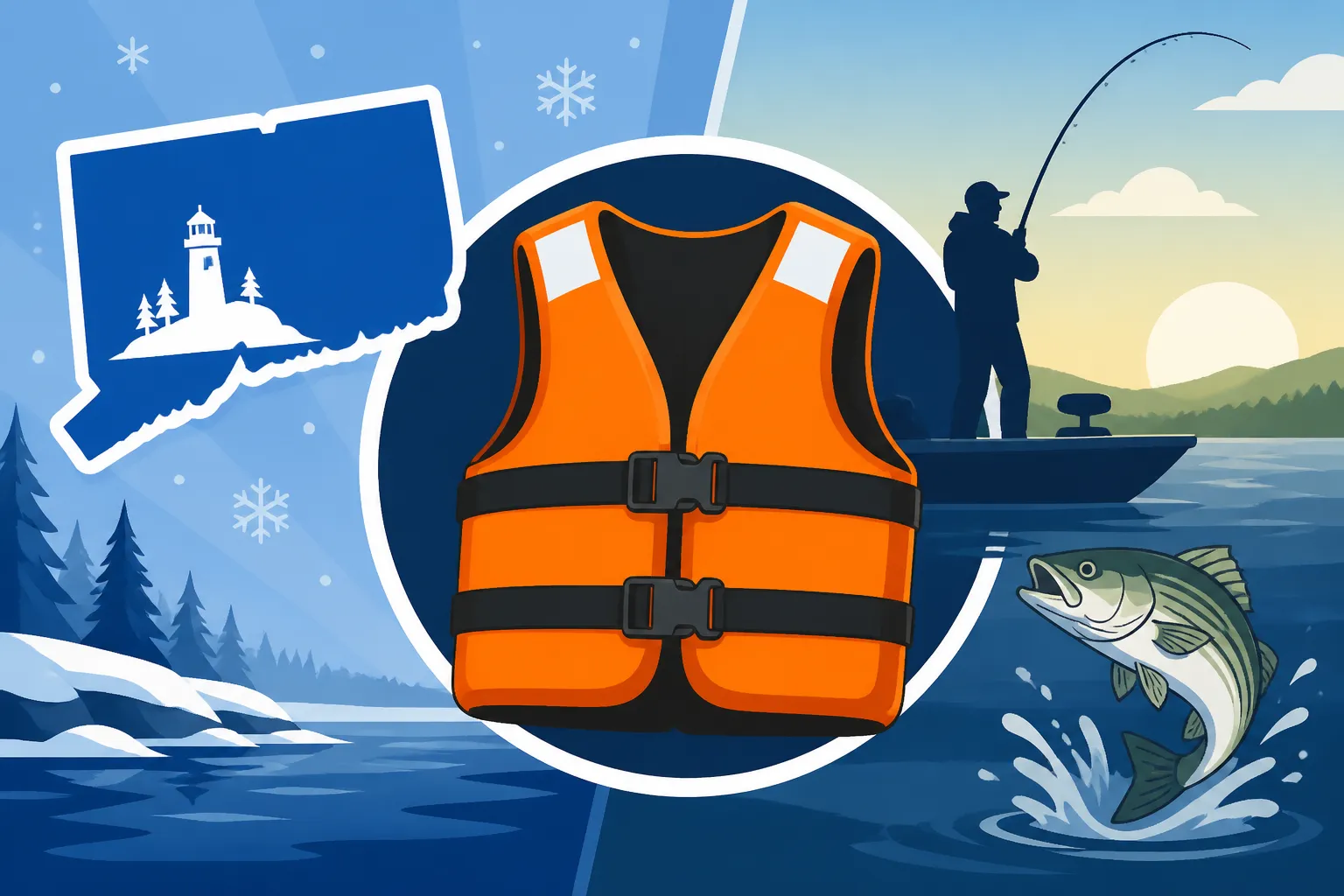
Connecticut Cold Water Life Jacket Rule (October to May)
There's nothing quite like the crisp air of an autumn morning or the hopeful chill of early spring as you head out to your favorite Connecticut fishing spot. But those beautiful, brisk days also hide a serious danger: cold water. Many anglers and boaters, myself included, often underestimate just how quickly icy water can turn a peaceful outing into a life-threatening emergency. This guide will walk you through Connecticut's crucial cold water life jacket rule, helping you understand why it exists and how to stay safe and compliant.
Understanding Connecticut's Cold Water Life Jacket Mandate
It’s a regulation that sometimes feels like a hassle, especially when you’re bundled up and just want to cast a line, but Connecticut's cold water life jacket rule is genuinely designed to save lives. It’s not about bureaucracy; it’s about acknowledging the very real and immediate threats posed by cold water immersion. The state understands that even the strongest swimmers can be incapacitated in minutes when exposed to frigid temperatures.
The Specific Dates and Why They Matter
The most critical thing to remember about this rule is its specific timeframe: from October 1st through May 31st, anyone on a manually propelled vessel, or on any vessel less than 21 feet in length, must wear a U.S. Coast Guard-approved life jacket. That's right, it's not enough to simply have one stowed away under a seat or in a storage compartment. You need to have it on your person. These dates aren't arbitrary; they encompass the periods when Connecticut's waters, both inland and marine, are at their coldest and most dangerous. During these months, water temperatures can hover in the 30s, 40s, or low 50s, far below what the human body can safely tolerate for long. The intent behind this period-specific rule is to ensure that during the riskiest times of the year, boaters and anglers are afforded maximum protection against accidental falls overboard.
This rule specifically targets the times of year when an unexpected dip can lead to rapid incapacitation due to cold shock, followed by hypothermia. While you might feel comfortable air temperatures on a sunny April day, the water beneath you is still holding onto winter's chill. It's easy to get complacent, especially when the sun is shining, but the water doesn't warm up nearly as quickly as the air. Understanding these specifics is the first step in responsible boating and fishing in our beautiful state. For a broader overview of state boating laws, you might want to check out our guide on Connecticut Boating Laws for Anglers.
Who is Affected by This Rule
The rule isn't universal for all vessels, which can sometimes lead to confusion. It specifically applies to any person on a manually propelled vessel of any length and anyone on any vessel less than 21 feet in length. What does "manually propelled" mean? Think kayaks, canoes, paddleboards, rowboats, and even sculls. If you're using your own muscle power to move it, you're covered. This also includes smaller motorboats, sailboats, and jon boats under 21 feet.
So, if you're out on your kayak chasing stripers in the Connecticut River Striped Bass Fishing grounds in November, or fly fishing from your drift boat on the Farmington River West Branch Trout Fishing section in March, you must be wearing your life jacket. The rule also applies to passengers, not just the operator. If you bring a friend or family member along on your small fishing boat, they need to be wearing a PFD too. This regulation stems from the understanding that smaller vessels, and those relying on manual power, are often more susceptible to capsizing or swamping, and recovery can be significantly harder in cold water conditions. Larger vessels (21 feet and over) are only required to have readily accessible life jackets for everyone on board during these dates, but not necessarily wear them, highlighting the increased risk associated with smaller craft.
The Very Real Dangers of Cold Water Immersion
We often hear about cold water dangers, but it’s easy to dismiss them with an "it won't happen to me" mentality. The truth is, cold water is an unforgiving environment, and its effects on the human body are swift and brutal. It's far more than just "feeling cold" – it triggers a series of physiological responses that can quickly lead to incapacitation and, tragically, drowning. Understanding these dangers helps us appreciate why this specific regulation is so vital.
Cold Shock and Involuntary Gasps
Imagine falling into water that's 40 degrees Fahrenheit. Your body's immediate, involuntary reaction is something called "cold shock." This isn't just shivering; it's a sudden, gasp-like intake of air, often followed by hyperventilation. The big problem here is that if your head is underwater when that gasp happens, you can instantly inhale water into your lungs. Even if your head is above water, the uncontrolled breathing can lead to dizziness and disorientation, making it incredibly difficult to stay afloat or swim effectively. This cold shock response can overwhelm you in the first few minutes, long before hypothermia even sets in. It's a primal, uncontrollable reflex, and it's a primary cause of drowning in cold water incidents.
Without a life jacket, that initial gasp could be fatal. You might suddenly find yourself disoriented, fighting to breathe, and unable to coordinate your movements. Even strong swimmers can quickly become helpless. A properly worn life jacket ensures that if you do experience cold shock, your head stays above water during that critical initial phase, giving you precious seconds to regain control of your breathing and assess your situation. This immediate buoyancy is literally a lifesaver.
Hypothermia: A Silent Threat
While cold shock is the immediate danger, hypothermia is the longer-term, silent killer in cold water. Hypothermia occurs when your body loses heat faster than it can produce it, causing your core body temperature to drop to dangerously low levels. In water below 50 degrees Fahrenheit, hypothermia can set in surprisingly quickly. Your muscles stiffen, coordination deteriorates, and your ability to perform even simple tasks like holding onto a rope or climbing back into a boat diminishes rapidly. The "1-10-1" rule is a grim but accurate way to remember this: 1 minute of cold shock, 10 minutes of meaningful movement, and 1 hour before unconsciousness from hypothermia.
As your body temperature continues to drop, confusion, drowsiness, and impaired judgment set in. People often lose the ability to help themselves or even call for help. A life jacket, while not preventing hypothermia, significantly delays its onset by keeping you afloat and allowing you to conserve energy. It prevents you from expending vital energy treading water, letting you focus on staying as warm as possible, huddling, or signaling for help. It gives rescuers more time to find you. You can find more comprehensive information on staying safe on the water by reviewing the general Life Jacket Requirements for Connecticut Boaters.
The "Swim Failure" Phenomenon
Many people assume that if they fall into cold water, they can simply swim to shore or back to their boat. This is a dangerous misconception, often referred to as "swim failure." The intense cold quickly numbs muscles, drains strength, and impacts coordination. Even a short swim to safety can become an impossible task. Your arms and legs might feel like lead weights, and your strokes become weak and ineffective. Panic, combined with the physiological effects of cold, can quickly lead to exhaustion.
Furthermore, fine motor skills are among the first to go. Trying to unclip a carabiner, grab a throw rope, or operate a whistle becomes incredibly difficult, if not impossible. A life jacket acts as your personal flotation device, meaning you don't have to fight to stay afloat. It saves your energy and preserves your muscle function for potential self-rescue efforts or for simply staying calm and signaling. The ability to just float, rather than swim, can make all the difference in a cold water emergency, keeping you alive until help arrives.
What Qualifies as a Legal Life Jacket in Connecticut?
Navigating the world of life jackets can feel a bit like trying to decipher an ancient code sometimes, but it's simpler than you think once you know what to look for. Not just any old floatation device will do. For the Connecticut cold water rule, and really, for any boating safety, specific criteria must be met. The most crucial detail is the U.S. Coast Guard approval.
US Coast Guard Approval is Key
The absolute non-negotiable requirement for any life jacket to be considered legal in Connecticut, and across the United States, is that it must be U.S. Coast Guard-approved. This isn't just a label; it means the device has undergone rigorous testing to ensure it meets specific safety and performance standards. When you're shopping for a life jacket, look for the official U.S. Coast Guard approval stamp or label prominently displayed on the inside or outside of the PFD. This label will also specify the Type of PFD (Type I, II, III, IV, or V), which indicates its intended use and flotation performance.
Without that Coast Guard approval, even if a device looks like a life jacket and feels buoyant, it simply doesn't count in the eyes of the law, and more importantly, it hasn't been certified to perform when you need it most. Avoid purchasing unapproved items, no matter how cheap or comfortable they seem. Your life isn't worth saving a few bucks. Always prioritize safety and compliance when selecting your gear. You can usually find a good selection of approved PFDs on platforms like Amazon, but always scrutinize the product details for that critical Coast Guard certification.
Types of Personal Flotation Devices PFDs Permitted
The Coast Guard classifies PFDs into different "Types," and understanding them can help you choose the best one for your specific activity, especially during the colder months.
- Type I: Offshore Life Jackets – These provide the most buoyancy (22 lbs. for adults) and are designed to turn an unconscious person face-up in the water. They are bulky but offer maximum protection, ideal for rough, open waters where rescue might be delayed.
- Type II: Near-Shore Vests – Less bulky than Type I, these vests still offer good buoyancy (15.5 lbs. for adults) and may turn an unconscious person face-up. They're good for calm, inland waters or when rescue is likely to be quicker.
- Type III: Flotation Aids – These are the most common for recreational boating and fishing. They offer the same buoyancy as Type II (15.5 lbs.) but are designed for comfort and mobility. They typically will not turn an unconscious person face-up, so they require the wearer to be conscious and able to assist themselves. Many fishing vests are Type III.
- Type IV: Throwable Devices – These are ring buoys or seat cushions. They are not designed to be worn and do not count towards the cold water wearing requirement. They are meant to be thrown to someone in distress.
- Type V: Special Use Devices – These are designed for specific activities, like kayaking, windsurfing, or waterskiing, and often include inflatable PFDs. They must be worn to be counted as a PFD and are approved for limited uses. Many inflatable PFDs fall into this category and are popular among anglers for their low profile and freedom of movement.
For the cold water rule, Type I, II, III, and certain Type V PFDs are all acceptable, provided they are Coast Guard-approved and worn. The key is finding one that is comfortable enough to wear consistently without hindering your fishing or boating activities.
Ensuring Proper Fit and Condition
Having a legal life jacket is only half the battle; it must also fit properly and be in good condition. A life jacket that is too loose can ride up around your ears, hindering your ability to breathe and keep your head above water. One that's too tight will be uncomfortable, tempting you to take it off. Always check the manufacturer’s label for weight and chest size recommendations, and try it on. A good fit means it feels snug but allows for full range of motion. You should be able to lift your arms above your head without the vest riding up past your chin.
Beyond fit, regularly inspect your life jacket for signs of wear and tear. Look for:
- Rips, tears, or holes in the fabric.
- Faded colors (which can indicate UV damage).
- Broken buckles, zippers, or straps.
- Crushed or hardened foam, which indicates a loss of buoyancy.
For inflatable PFDs, check the CO2 cylinder to ensure it hasn't been discharged and is properly armed. Inflatables also require regular inspection and re-arming kits. A damaged or poorly fitting life jacket is just as ineffective as not wearing one at all. Make it a routine to check your PFDs at the start of each fishing season, or even before each cold-weather outing. For comprehensive safety, also consider reviewing the Connecticut Required Boat Safety Equipment Checklist.
Practical Considerations for Anglers and Boaters
Compliance with the cold water life jacket rule doesn't have to be a burden. In fact, modern PFDs are designed with comfort and functionality in mind, especially for activities like fishing. It’s all about making smart choices that enhance your safety without detracting from your enjoyment on the water.
Choosing the Right Life Jacket for Fishing
For anglers, comfort and freedom of movement are paramount. Nobody wants a bulky vest interfering with their cast or making it hard to tie a knot. This is where Type III and Type V inflatable PFDs truly shine.
- Inflatable PFDs (Type V): These are incredibly popular among serious anglers. They are compact and lightweight, often resembling a small fanny pack or a slim vest. They only inflate when activated, either manually by pulling a cord or automatically upon water immersion. This allows for unrestricted movement, which is fantastic for casting, reeling, and navigating. Brands like Onyx and Mustang Survival make excellent inflatable PFDs specifically designed for fishing. You can often find a great selection of these on sites like Amazon, complete with angler reviews. Just remember, automatic inflatables need to be re-armed after each deployment, and manual ones require you to pull the cord yourself. They also need to be worn to be considered legal.
- Traditional Foam Vests (Type III): While bulkier, many foam vests are now designed with anglers in mind, featuring segmented foam, mesh backs for breathability, and pockets for tackle or tools. These are generally more affordable and require less maintenance than inflatables. They offer constant buoyancy, which can be reassuring. Look for designs that prioritize armhole size and shoulder flexibility. For those who prefer the simplicity and reliability of a foam vest, companies like Stearns and NRS offer fishing-specific models. When browsing for options, don't hesitate to compare features and prices, perhaps even doing a quick search on Amazon for specific models you're interested in.
The best life jacket is the one you will wear. Prioritize comfort, fit, and Coast Guard approval, and you'll find a PFD that works for your style of fishing.
Layering and Comfort in Cold Weather
Wearing a life jacket in cold weather doesn't mean sacrificing warmth or comfort. In fact, many PFDs can actually add an extra layer of insulation. The key is smart layering beneath your life jacket.
- Base Layer: Start with a moisture-wicking base layer. This pulls sweat away from your skin, preventing that clammy, cold feeling. Merino wool or synthetic fabrics are excellent choices.
- Mid-Layer: Add an insulating layer like a fleece jacket or a down vest. This traps warm air close to your body.
- Outer Layer: Finish with a waterproof and windproof shell. This protects you from the elements and helps retain heat.
Your life jacket then goes over all these layers. Ensure your outer layers aren't so bulky that they compromise the fit of your PFD. If your life jacket feels too tight over your cold-weather gear, you might need a slightly larger PFD specifically for cold-weather use, or look for one with adjustable straps that can accommodate additional clothing. Proper layering will keep you warm and dry, making it much more comfortable to wear your life jacket for extended periods.
How to Check Your Life Jacket for Wear and Tear
Regular inspection of your life jacket is a habit every responsible boater and angler should adopt. Just like you'd check your fishing lines or boat engine, your PFD needs a once-over.
Here's a simple checklist:
- Fabric Integrity: Look for any rips, tears, punctures, or excessive fraying. Even a small hole can compromise the buoyancy of a foam vest or lead to damage in an inflatable.
- Stitching: Check all seams and straps for loose threads or areas where the stitching is coming undone. These are critical points of failure.
- Zippers and Buckles: Ensure all zippers glide smoothly and latch securely. Buckles should click firmly into place and show no signs of cracking or brittleness. Straps should be intact and not frayed.
- Flotation Material (for foam vests): Squeeze the foam sections. They should feel pliable and uniform. If the foam is hard, lumpy, or appears compressed, its buoyancy may be compromised.
- Inflatable PFDs: For inflatables, check the CO2 cylinder's expiration date and ensure it's properly armed (if a manual inflatable). Inspect the indicator window for green, meaning it's ready. Periodically inflate it according to manufacturer instructions to check for leaks.
- Sunlight Damage: UV rays are harsh on synthetic materials. Faded colors or a stiff, brittle feel can indicate UV degradation, which weakens the material.
If you find any significant damage, it's time to replace the life jacket. Don't risk it. A compromised PFD is no PFD at all. You can easily find replacement options, or even check out new models on retailers like Amazon, ensuring they are USCG-approved and meet your needs. Keeping your gear in top shape is part of being prepared for any scenario on the water.
Penalties for Non-Compliance and Why It's Not Worth the Risk
Nobody wants to get a ticket, especially when you're just trying to enjoy a day on the water. But ignoring Connecticut's cold water life jacket rule isn't just about a potential fine; it's about a much graver consequence. The legal penalties are there to reinforce the importance of safety, but they pale in comparison to the ultimate price you could pay.
Fines and Legal Ramifications
If you're caught violating the cold water life jacket rule, you'll likely face a fine. While the exact amount can vary depending on the officer, the jurisdiction, and whether it's a first offense, it's typically a significant enough hit to your wallet to make you wish you'd just worn the jacket. These fines are issued by local law enforcement and the Connecticut Department of Energy and Environmental Protection (DEEP) Environmental Conservation Police (EnCon Police).
Beyond the immediate financial penalty, there could be other implications. Repeated violations could potentially lead to more severe fines or other legal actions. Remember, these regulations are part of the broader framework of Connecticut Fishing Regulations Explained and Connecticut Boating Laws for Anglers. Officers aren't just looking to write tickets; they're ensuring public safety. It’s far cheaper and infinitely safer to simply wear your life jacket than to deal with the headache of a citation, let alone the potential for a serious accident.
Beyond the Law: The Ultimate Price
While legal penalties are certainly a deterrent, the true "penalty" for ignoring the cold water life jacket rule is far more severe: the risk of losing your life. As we've discussed, cold water rapidly incapacitates even the strongest individuals. Without a life jacket, an accidental fall overboard in the frigid waters of October or April can quickly become a struggle for survival that you are unlikely to win. The time it takes for emergency services to respond, even if someone immediately calls for help, is often longer than the time it takes for cold water to render a person helpless.
Think about the impact on your loved ones. The anguish, the unanswered questions, the preventable tragedy. Is the slight discomfort of wearing a PFD worth risking everything? Most people would agree it’s not. This rule is a direct response to preventable drownings, a stark reminder that even on beautiful days, our natural environment demands respect and preparation. This isn't just a rule; it's a lifeline.
What to Do if You See Someone in Distress
Knowing the cold water rule also means being prepared to help others. If you witness someone fall into cold water or spot a capsized vessel, immediate action is crucial.
- Call for Help: The very first thing you should do is call 911 or the Coast Guard (Channel 16 on a marine radio) and provide your exact location and a description of the emergency. Time is of the essence.
- Reach, Throw, Row, Go: Prioritize getting help to the person without putting yourself in danger.
- Reach: If they are close enough, extend an oar, branch, or fishing net to them.
- Throw: Throw a U.S. Coast Guard-approved throwable PFD (Type IV cushion or ring buoy) to them. Having one onboard is a legal requirement for most vessels over a certain length.
- Row: If you have a boat, carefully row or motor towards them. Avoid getting too close if there's a risk of capsizing your own vessel.
- Go: Only as a last resort, and only if you are trained and equipped for cold water rescue, should you enter the water. This is extremely dangerous and should only be done by professionals.
- Provide Aid: Once the person is out of the water, immediately begin rewarming efforts. Remove wet clothing, wrap them in blankets, and if they are conscious, provide warm, non-alcoholic drinks. Seek medical attention immediately.
Being vigilant and prepared isn't just about your own safety; it's about being a responsible member of the boating and fishing community in Connecticut.
Dispelling Common Myths and Misconceptions
Despite the clear dangers and explicit rules, there are still a few persistent myths about cold water safety and life jackets that can put people at risk. Let's tackle some of these head-on, because understanding the truth can literally save a life.
"I'm a Strong Swimmer" – Why That's Not Enough
This is perhaps the most dangerous misconception out there. Many people, particularly those who are confident in their swimming abilities in a pool or warm lake, believe they can simply swim their way out of trouble if they fall into cold water. This simply isn't true, and it tragically underestimates the physiological effects of cold shock and hypothermia.
As discussed, cold shock causes an involuntary gasp and hyperventilation, making it nearly impossible to swim effectively in the first few minutes. Beyond that, the rapid loss of body heat causes your muscles to become stiff, weak, and uncoordinated. Your "strong swimming" skills become almost irrelevant when your body is fighting to survive the cold itself. Even Olympic swimmers wouldn't last long or be able to perform efficiently in 40-degree water without proper protection. A life jacket buys you time and conserves your energy, keeping your head above water without effort, allowing your body to focus on coping with the cold. Your swimming prowess is commendable, but it's no match for the brutal realities of cold water immersion.
"My Boat Has Life Jackets Onboard" – The Catch
Another common misunderstanding is thinking that simply having life jackets onboard is sufficient during the cold water rule period. While it's true that all vessels (except certain canoes and kayaks) are required to carry a U.S. Coast Guard-approved PFD for each person on board year-round, the cold water rule for smaller vessels (under 21 feet) and manually propelled vessels explicitly states they must be worn.
This distinction is crucial. A life jacket stowed in a dry bag, under a seat, or in a storage compartment does absolutely no good if you suddenly find yourself in the water. Trying to retrieve a stowed life jacket while in the grips of cold shock, struggling to breathe, and with numb fingers is an impossible task. The "catch" is that the jacket needs to be on your body, buckled up, ready to provide immediate flotation the moment you hit the water. It's a proactive measure, not a reactive one. This is part of the overarching Connecticut Fishing Regulations Explained which aims for maximum safety.
Understanding Reciprocity with Other States
Anglers and boaters often travel across state lines, especially those near the borders with New York, Rhode Island, or Massachusetts. You might wonder if Connecticut's cold water life jacket rule applies if you're a non-resident or if you're fishing waters that border another state, like the Connecticut River or Long Island Sound. Generally, when you are operating a vessel within Connecticut's jurisdictional waters, you are subject to Connecticut's regulations, regardless of where your boat is registered or where you hold your fishing license.
While many states have similar cold water life jacket mandates, the specific dates and vessel requirements can vary. For example, some states might have slightly different start or end dates for their cold water periods. Always familiarize yourself with the regulations of the state you are currently operating in. It’s your responsibility to know and follow the rules. If you're coming into Connecticut, assume our cold water life jacket rule (October 1st to May 31st for vessels under 21 feet and manually propelled vessels) applies to you. When planning your fishing trips, it's a good idea to also look into specifics like Connecticut Fishing Seasons by Month to ensure you're compliant with all relevant regulations.
| PFD Type | Description | Buoyancy (Adult) | Mobility for Anglers | Cold Water Suitability | Pros for Anglers | Cons for Anglers |
|---|---|---|---|---|---|---|
| Type I (Offshore) | Most buoyant, turns unconscious wearer face-up. | 22 lbs | Poor, very bulky | Excellent | Max flotation, turns face-up | Bulky, hinders casting |
| Type II (Near-Shore) | Good buoyancy, may turn unconscious wearer face-up. | 15.5 lbs | Fair, somewhat bulky | Good | Better than Type I for mobility | Still bulky, may not turn face-up |
| Type III (Flotation Aid) | Designed for comfort, will NOT turn unconscious wearer face-up. | 15.5 lbs | Good, common fishing vests | Good (if worn) | Comfortable, good mobility, pockets | Requires conscious effort to stay face-up |
| Type V (Special Use/Inflatable) | Specific use, must be worn. Inflatables compact until deployed. | Varies (often 22-26 lbs) | Excellent, highly mobile | Excellent (if worn/deployed) | Very comfortable, unrestricted movement | Requires maintenance (CO2 checks), must be worn, may need manual activation |
Disclaimer
Please note that while this guide provides comprehensive information, fishing and boating regulations can change. It is always your responsibility to consult the most current official Connecticut Department of Energy and Environmental Protection (DEEP) fishing and boating guides or their website for the precise, up-to-date rules and regulations before heading out on the water. This guide is for informational purposes only and should not be considered legal advice.