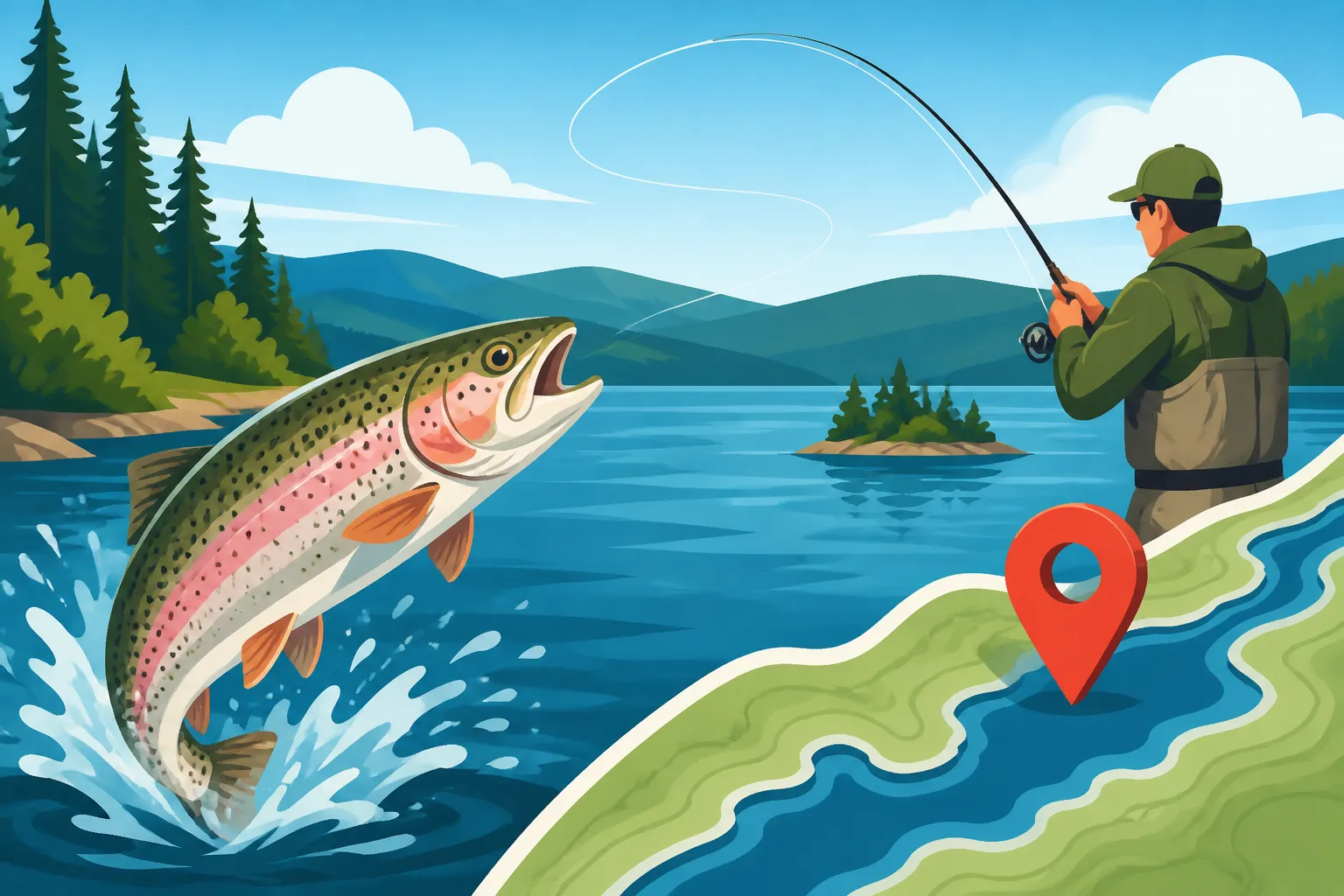
Best trout fishing spots on Candlewood Lake
Candlewood Lake, with its sprawling waters and complex underwater topography, can be an incredibly intimidating place for anglers trying to pinpoint the best trout fishing spots. Many folks, myself included, have spent hours fruitlessly trolling or casting, wondering if the trout are even there or just incredibly elusive. This guide is dedicated to unraveling the mysteries of Candlewood’s trout fishery, helping you understand where these beautiful fish hide and how to catch them, so you can spend less time guessing and more time reeling in a catch.
Understanding Candlewood Lake's Trout Fishery
Candlewood Lake is an anomaly in Connecticut—a massive, deep reservoir that offers a unique challenge and reward for trout anglers. Unlike the state's smaller streams or ponds, fishing for trout here requires a different approach, largely due to the sheer size and diverse habitat. Getting to grips with what makes Candlewood tick for trout is the first step to success.
Species Present and Stocking Efforts
When you're chasing trout on Candlewood Lake, you're primarily looking for three distinct species: rainbow trout, brown trout, and lake trout. Each has its own habits and preferences, but they all share a love for cooler, well-oxygenated water, which is a key feature of this deep lake.
Rainbow trout are the most commonly stocked species in many Connecticut waters, and Candlewood is no exception. These energetic fish are known for their vibrant colors and aggressive strikes, making them a favorite among anglers. The Connecticut Department of Energy and Environmental Protection (DEEP) actively stocks rainbow trout here, often as larger "trophy" sized fish, to enhance the angling experience. You can often find information on these stocking efforts, which are vital for maintaining a healthy trout population, on the official DEEP website or by checking their specific details about Connecticut Trout Season and Stocking Rules. Brown trout, while also stocked, can often establish wilder populations in lakes with suitable conditions, offering a more elusive and sometimes larger target. They are known for being a bit more solitary and less aggressive than rainbows, often preferring to hug structure. Then there are the lake trout, often referred to as "lakers." These are the true deep-water specialists of Candlewood, capable of growing to impressive sizes. They are a much sought-after prize, primarily found in the deepest, coldest parts of the lake. Their presence makes Candlewood a unique fishery in the state.
Seasonal Movements and Preferred Habitats
Trout, by their very nature, are cold-water fish. This fundamental truth dictates their movements and where you'll find them throughout the year on Candlewood Lake. As the seasons change, so too do the depths and locations where these fish prefer to hold.
In the cooler months of spring and fall, trout can be found closer to the surface and nearer to shorelines. The entire lake is relatively cool, and oxygen levels are high everywhere, allowing them to roam freely. This is often when shore anglers or those in smaller boats have their best luck. As summer progresses and water temperatures rise, especially in the shallower sections, trout retreat to the deeper, colder parts of the lake. This phenomenon creates a distinct "thermocline"—a layer in the water column where the temperature changes rapidly. Trout will often suspend themselves just above or within this thermocline, where they find their ideal temperature and oxygen levels. Locating this critical depth becomes paramount for summer success. Conversely, during the dead of winter, especially under the ice, trout can again be found in various depths, often relating to structure but still seeking out areas of consistent cold water. They are constantly in search of comfortable temperatures and ample oxygen, often following schools of baitfish like alewives, which are a primary food source in Candlewood Lake. Understanding these patterns is key to finding the best trout fishing spots on Candlewood Lake year-round.
Top Trout Fishing Locations on Candlewood Lake
Candlewood Lake is a vast body of water, and simply saying "go fish deep" isn't nearly enough to consistently find trout. To really dial in on these elusive fish, you need to understand the specific contours and features of the lakebed that attract them. Different areas will hold different species at different times, offering diverse opportunities.
Deep Water Basins and Thermocline Zones
For lake trout and often the larger brown and rainbow trout during warmer months, the deep water basins are your absolute best bet. Candlewood Lake is known for its incredible depth, reaching over 90 feet in some areas, particularly in the northern and southern sections. These deep basins act as cold-water sanctuaries when the rest of the lake heats up.
The northern basin, particularly the area around New Fairfield and Sherman, boasts some of the deepest water on the lake. Here, you'll find expansive flats and sudden drop-offs that plunge into the abyss. Lake trout will patrol these deep, dark waters, often suspending over the open water but relating closely to the bottom contours for feeding opportunities. Similarly, the southern basin, near the towns of Brookfield and Danbury, also features significant depths and is a prime location. Identifying the thermocline—that critical temperature layer—is paramount. If your electronics show a defined thermocline at, say, 30-40 feet, that’s where you should focus your efforts. Trout will often stack up just above, in, or sometimes just below this layer, depending on the oxygen content and baitfish presence. Using a good sonar unit to mark baitfish schools, often alewives, near these deep structures is like finding a giant "fish here" sign for hungry trout. Many local fishing guides, often found through platforms like FishingBooker, specialize in these deep-water tactics, knowing the precise contours and depths where trout are most likely to be holding.
Tributary Inflows and Cooler Water Refuges
While trout generally prefer deep water, certain areas of Candlewood Lake provide unique cool-water refuges, especially during periods of high heat, thanks to the influx of colder, oxygenated water from tributaries. These spots can be absolute goldmines, particularly for rainbow and brown trout.
The Rocky River, which flows into the northern end of Candlewood Lake near New Fairfield, is a significant inflow. The cooler water it introduces creates a localized zone of comfort for trout, attracting them from the warmer main lake. Fishing near the mouth of this river, especially after a period of rain that increases flow, can be incredibly productive. You'll often find a mix of stocked rainbows and holdover brown trout congregating here. Another important area is Sherman's Great Hollow Brook, also flowing into the northern part of the lake. These tributary areas not only bring cooler water but also carry nutrients and small baitfish, creating excellent feeding opportunities. Anglers often find success by drifting or slowly trolling parallel to these inflow currents, as trout will stage themselves in these cooler seams, waiting for food to drift by. These shallow-to-deep transition areas near tributary mouths are key. They offer a gradient of temperatures and depths, allowing trout to move freely between cooler inflow and the deeper, stable waters of the main lake. Focusing your efforts where these cooler waters mix with the main lake body is often the most productive strategy, especially during the spring and fall transitions.
Structure and Transition Areas
Trout, like most predatory fish, are heavily influenced by structure and changes in the lakebed. Candlewood Lake, being a man-made reservoir, is incredibly rich in submerged structure, from old foundations to roadbeds and underwater humps. These features provide cover, ambush points, and attract baitfish, making them prime locations for trout.
Old roadbeds and submerged foundations are particularly productive. When the lake was flooded, entire towns and roads were submerged, leaving behind a wealth of structure. These linear features provide excellent travel corridors and ambush points for trout. Using your electronics to identify these contours, especially where they drop off into deeper water, can yield fantastic results. Look for the old Route 7 access or other historical structures that now lie beneath the surface. Underwater humps and points that rise significantly from the lakebed are also magnets for trout. These "high spots" often intercept currents and concentrate baitfish, making them ideal feeding stations. Trolling around these humps, or jigging directly on them, can be incredibly effective. The transition zones where rocky bottom gives way to softer substrate, or where dense weed lines meet open water, also offer prime habitat. Trout will often patrol the edges of these weed lines, especially in the spring and fall when temperatures allow them to forage in shallower areas. Understanding these complexities can be daunting, but resources like Candlewood Lake Fishing Guide can help you visualize these underwater features. For the most up-to-date local intel on conditions and bite, sometimes a quick chat with a captain listed on FishingBooker can offer invaluable insights.
Essential Techniques and Gear for Candlewood Lake Trout
Catching trout on a lake as vast and deep as Candlewood isn't usually a matter of simply tossing a worm from shore, though that can certainly work for recently stocked fish in certain spots. To consistently target the larger, wilder trout and especially the deep-dwelling lake trout, you'll need specialized techniques and the right gear.
Trolling and Downrigging Strategies
Trolling is arguably the most effective method for covering water and finding actively feeding trout on Candlewood Lake, especially for suspended fish in deeper water. This technique allows you to present lures at specific depths and speeds across vast areas, mimicking natural baitfish movements.
When trolling, precise depth control is paramount. For deep-water trout, downriggers are indispensable. These devices allow you to send your lure down to an exact depth, right into the thermocline or where you're marking fish on your sonar. For rainbow and brown trout, you might start by targeting depths from 15 to 40 feet, while lake trout often prefer even deeper water, sometimes 50 feet or more. The speed of your troll is also critical; generally, a slower troll (1.5 to 2.5 mph) is effective for trout, but experimenting with speed bursts and turns can often trigger strikes. Lure selection is equally important. Spoons like the Sutton, Mooselook Thinfish, or traditional trolling flies trailed behind a dodger or flasher are popular choices. Make sure to match the size and color of your lures to the primary baitfish in Candlewood, which are often alewives. Using a good long fluorocarbon leader (6-10 feet) can also improve your presentation and reduce line visibility, especially in Candlewood’s clear waters. Pay close attention to your electronics to mark bait schools and individual fish, and adjust your depth and presentation accordingly.
Jigging and Live Bait Fishing
While trolling covers a lot of ground, jigging and live bait fishing offer more stationary and focused approaches, often highly effective when you've located a concentration of trout, perhaps schooled up over a deep hump or along a drop-off.
Deep-water jigging is a fantastic technique for lake trout, especially when they're holding tight to bottom structure or suspended in specific layers. Heavy spoons, lead jigs, or even blade baits in chrome or white are excellent choices. Drop your jig to the desired depth, let it hit bottom, and then retrieve it with a series of sharp lifts and drops. The goal is to imitate a dying baitfish. The strike often comes on the fall, so pay close attention to your line. For rainbow and brown trout, particularly in cooler months or around tributary inflows, live bait can be incredibly effective. Shiners are the baitfish of choice for many Candlewood anglers. Hook them lightly through the lips or back and suspend them under a float or on a three-way swivel rig, allowing them to swim naturally. Worms, particularly nightcrawlers, can also entice trout, especially freshly stocked ones. Drift your live bait through known trout holding areas or position it near structure. A common setup involves a sliding sinker rig to present the bait near the bottom, or a slip bobber to suspend it at a precise depth.
Electronics and Reading the Water
In a lake the size of Candlewood, modern fish finders and mapping GPS units are not just helpful—they are essential tools for finding trout. Without them, you're essentially fishing blind in a vast ocean.
A high-quality sonar unit will allow you to do several critical things. First, it lets you identify the bottom contours and structure, such as old roadbeds, humps, and sudden drop-offs where trout are likely to ambush prey or seek cover. Second, and perhaps most importantly, it helps you locate the thermocline, that crucial depth layer where trout will concentrate during warmer months. Seeing a distinct line on your screen where the temperature changes rapidly is your cue to fish at that depth. Third, and most exciting, is marking actual fish and baitfish schools. When you see arches or bait balls on your screen, particularly in conjunction with promising structure or the thermocline, you know you're in a productive zone. Pay attention to the size of the arches; larger, stronger arches usually indicate bigger fish. Complementing your sonar, a good GPS unit with detailed lake mapping is invaluable. It allows you to mark waypoints of productive spots, track your trolling passes, and navigate precisely back to where you found fish previously. Many modern units combine both functions, providing an integrated view of the underwater world. Knowing how to interpret what your electronics are telling you, combined with understanding trout behavior, significantly increases your chances of success on Candlewood Lake.
Navigating Regulations and Best Practices
Successful trout fishing on Candlewood Lake isn't just about knowing where to cast or what lure to use; it's also about understanding the rules of the game and practicing responsible angling. Ignoring regulations can lead to fines and negatively impact the fishery, while good conservation practices ensure healthy populations for future generations.
Connecticut Trout Regulations Specific to Candlewood
Before you even wet a line, it's absolutely crucial to be familiar with the current Connecticut Fishing Regulations Explained, as they can vary by water body and species. Candlewood Lake, being a major fishery, often has specific rules that might differ from a small stream or pond.
For all trout species in Candlewood Lake, there are usually specific length limits and daily creel (possession) limits. For instance, there might be a minimum length for lake trout, or a maximum number of trout of a certain species you can keep in a day. These regulations are designed to protect younger fish and ensure enough breeding stock remains. Rainbow and brown trout regulations are generally similar across many of the state's large lakes, but it's always best to double-check the latest DEEP Fishing Guide. Remember, all anglers 16 years of age or older need a valid Connecticut Fishing License Guide for 2026 to fish in Connecticut waters. This is non-negotiable, and fishing without one can result in significant penalties. You can find detailed information on these licenses, including options like the Connecticut Inland vs Marine vs All-Waters License, Explained, through the DEEP website or authorized vendors. Special regulations can also apply to certain areas or times of the year, so a quick review of the official regulations before each trip is a smart move.
Key Trout Fishing Zones on Candlewood Lake
| Location | Target Species | Key Features | Recommended Techniques |
|---|---|---|---|
| Northern Basin (New Fairfield/Sherman) | Lake Trout, Brown Trout, Rainbow Trout | Deepest water (50-90ft+), expansive flats, drop-offs, old submerged structures | Trolling with downriggers, deep jigging with heavy spoons, live bait rigs |
| Southern Basin (Brookfield/Danbury) | Lake Trout, Brown Trout, Rainbow Trout | Significant depths (40-70ft), sharp contours, underwater humps, open water suspension | Trolling with downriggers, vertical jigging, suspending live bait |
| Rocky River & Great Hollow Brook Inflows | Rainbow Trout, Brown Trout | Cooler water inflow, current seams, shallower depths (10-30ft), oxygenated refuge | Drifting live shiners, casting spoons/spinners, slow trolling small stickbaits |
| Submerged Roadbeds & Foundations | Brown Trout, Rainbow Trout | Linear structure, ambush points, adjacent to deeper water (20-50ft) | Trolling diving crankbaits, jigging jigs/plastics, drifting live bait |
| Underwater Humps & Points | Lake Trout, Brown Trout, Rainbow Trout | Attracts baitfish, intercepts currents, abrupt depth changes (30-60ft+) | Trolling around contours, deep jigging, positioning live bait on edges |
Responsible Angling and Conservation
Beyond the legal requirements, practicing responsible angling is vital for maintaining Candlewood Lake's reputation as a premier trout fishery. Our actions on the water directly impact the health of the fish populations and the enjoyment of other anglers.
For starters, proper fish handling is essential, especially if you're practicing catch and release. Always try to minimize the time a fish spends out of the water. Use wet hands when handling trout, support their body weight, and avoid touching their gills. If a fish is deeply hooked, it's often better to cut the line as close to the hook as possible rather than attempting to rip the hook out. Circle hooks, which are often required for other species like striped bass (refer to Connecticut Striped Bass Circle Hook Requirement), can also reduce gut hooking for trout, even if not specifically mandated. If you plan to keep your catch, understand your Connecticut Trout Limit and Possession Rules and only keep what you intend to eat, within the legal limits. Additionally, be mindful of your impact on the environment. Pack out all your trash, avoid disturbing spawning beds, and be respectful of other boaters and shore anglers. The health of Candlewood Lake and its incredible trout fishery depends on all of us being good stewards of the resource. By being informed and responsible, we can ensure that future generations can also experience the thrill of catching trout in this magnificent body of water.
Disclaimer: Fishing regulations and conditions are subject to change. Always consult the latest official Connecticut Department of Energy and Environmental Protection (DEEP) fishing guide and regulations before heading out on the water. This guide is for informational purposes only and does not supersede state laws.