Best deep water structure spots on Candlewood Lake
Trying to unlock the secrets of Candlewood Lake's deep waters can feel like searching for a needle in a haystack, especially when you know those trophy fish are lurking in hidden structures. It's a common frustration to spend hours casting over seemingly barren open water when the real action is often tucked away on forgotten ledges, humps, and drop-offs. This guide is here to demystify those elusive deep-water spots, helping you understand where to find them, what to look for, and the best ways to fish them, ultimately leading you to more successful outings on Connecticut’s largest lake.
Understanding Candlewood Lake's Deep Water Dynamics
Candlewood Lake isn't just a big bowl of water; it's a complex ecosystem with incredible depths and varied bottom contours, remnants of its pre-reservoir days. For anglers, especially those targeting larger, more mature fish, understanding these deep-water dynamics is absolutely crucial. Fish aren't just swimming aimlessly; they are actively relating to structure for survival, whether for ambush points, thermal refuge, or access to bait.
The Importance of Deep Water Structure
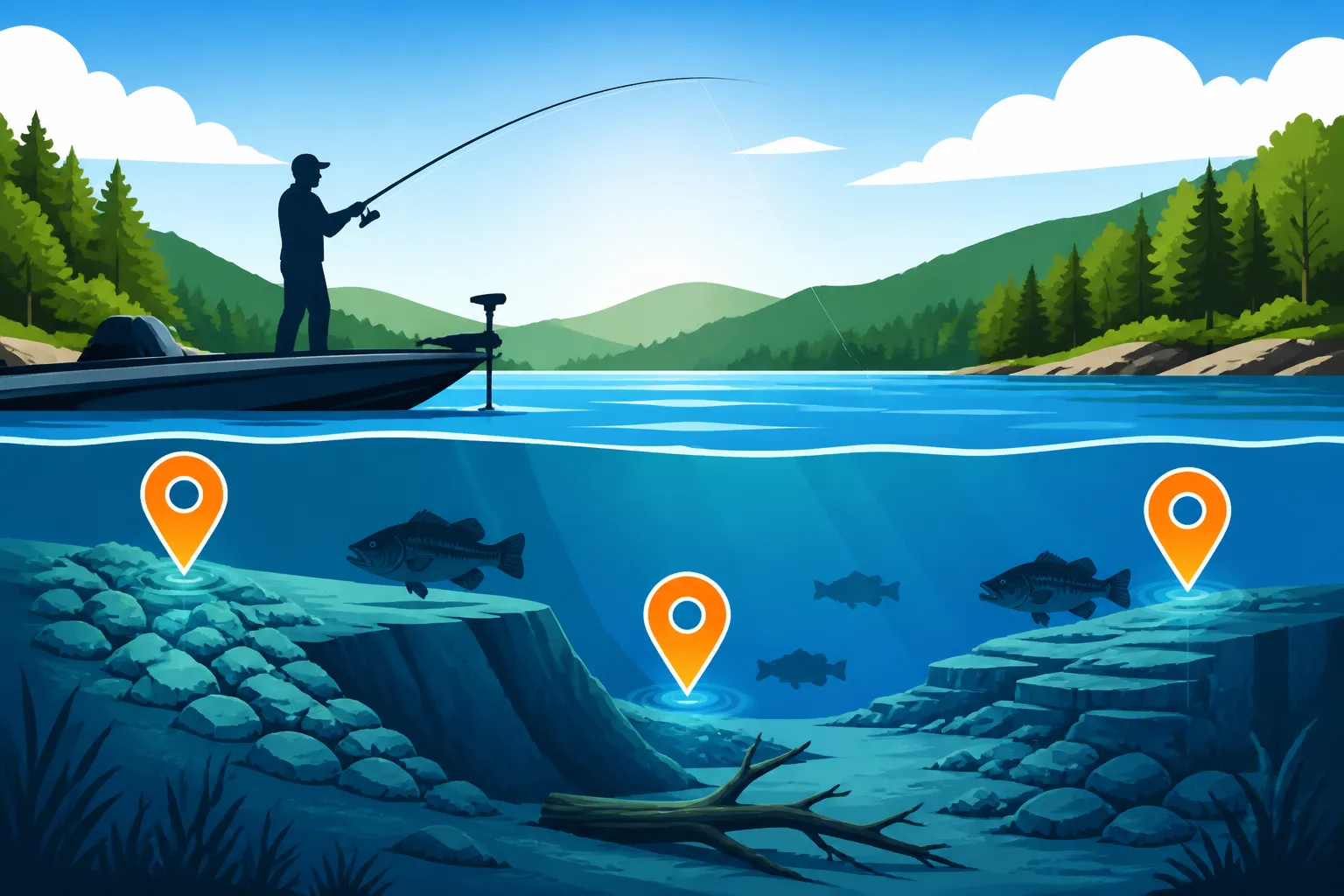
When we talk about "structure" in deep water, we're referring to any irregularity on the lakebed that provides cover, ambush points, or a break in current (even subtle ones in a lake) or depth. This could be anything from a subtle change in bottom composition to dramatic rock piles, old roadbeds, or submerged timber. During the warmer months, as surface waters heat up and become less oxygenated or simply too bright, many species retreat to the cooler, more stable environment of deeper water. This is especially true for species like smallmouth bass, lake trout, and even some larger largemouth bass. These deep-water havens aren't just about temperature; they offer protection from predators and act as prime ambush points for baitfish, creating natural feeding lanes. Imagine a lone boulder on an otherwise featureless bottom – that boulder acts as a magnet, concentrating baitfish and, subsequently, the predators that feed on them. Finding these structural elements is the first step to consistently catching fish when the bite goes deep.
Key Fish Species Targeting Deep Structure
Candlewood Lake is renowned for a few key species that absolutely love deep-water structure. Foremost among them are the smallmouth and largemouth bass. While largemouth often prefer shallower, weedy areas, the biggest largemouth can often be found suspended or tucked tight to deep cover, especially during the dog days of summer. Smallmouth bass, however, are perhaps the quintessential deep-water structure dwellers. These bronze beauties thrive on rocky ledges, humps, and main lake points that drop off into significant depths. They use these areas to ambush schools of baitfish, often suspending just off the structure.
Beyond bass, Candlewood Lake also holds a population of lake trout. These cold-water predators are almost exclusively found in the deepest parts of the lake, relating to deep thermoclines and major structural elements. They're often caught trolling over vast deep flats or jigging vertical structure. Additionally, you might encounter yellow perch or even crappie relating to submerged brush piles or deep docks, especially during colder periods. Understanding which species prefer which type of deep structure will help you refine your approach and gear, making your efforts much more targeted and effective. For a broader perspective on the species, check out our Candlewood Lake Fishing Guide.
Prime Deep Water Structure Locations on Candlewood Lake
Candlewood Lake, with its unique history as a flooded valley, is a treasure trove of deep-water structure. Unlike many lakes, it wasn't simply dug out; it was formed by damming the Rocky River, submerging old farms, roads, and hills. This means there's a surprising amount of defined structure below the surface just waiting to be explored. Knowing where to start looking for these deep-water gems is half the battle.
Submerged Humps and Rock Piles
These are arguably some of the most productive deep-water structures on Candlewood Lake. Submerged humps are essentially underwater hills that rise from the lakebed but don't break the surface. They can be found in various depths, but the ones that rise from 40-60 feet to 20-30 feet are often honey holes. These humps act as natural congregating points for baitfish like alewives, which in turn attract hungry bass and even trout. The key is to find humps with irregular features, like scattered boulders, gravel patches, or even a few old stumps. These irregularities provide vital cover for ambush predators.
Fishing these spots often involves using your electronics to meticulously map out the hump's contours. Start by circling the hump, noting depth changes and any marks indicating baitfish or larger predators. Focus your efforts on the "break lines" – where the depth changes most dramatically – or on the very top of the hump. Jigging spoons, drop shots, and even deep-diving crankbaits can be incredibly effective here. Areas around Squantz Pond and the main basin near the dam are known for holding several prominent humps that hold fish year-round. Many anglers rely on charter services, especially when first learning the lake, and you can often find experienced captains on platforms like FishingBooker who specialize in these deep-water techniques, providing invaluable local knowledge.
Steep Drop-Offs and Ledges
Candlewood Lake is riddled with dramatic depth changes, a direct result of its formation. Steep drop-offs and ledges are essentially underwater cliffs or shelves that plunge quickly from shallower flats into much deeper water. These are prime locations for both smallmouth and largemouth bass, especially as the seasons change. In spring and fall, fish might be found higher on the ledge, transitioning between shallow and deep. In summer, they'll often suspend directly off the face of the ledge, or tuck into any crevices or overhangs.
Identifying these on your sonar and then precisely positioning your boat is crucial. You're looking for areas where the depth might go from 15 feet down to 40 or 50 feet in a very short horizontal distance. The presence of baitfish schooling along these drops is a huge indicator of game fish activity. Techniques like vertical jigging, slowly dragging a Carolina rig, or casting a football head jig parallel to the drop-off can yield excellent results. For more specific insights on these kinds of spots, you might find our guide on Best drop-offs to fish on Candlewood Lake helpful. Look for areas along the western shore, particularly around Sherman, which features many deep, rocky ledges.
Old Roadbeds and Foundations
One of the most fascinating aspects of Candlewood Lake's deep structure are the remnants of the pre-flood landscape: old roadbeds and foundations. These man-made structures provide incredibly distinct and often overlooked habitat. An old roadbed, for example, will typically be a raised, harder bottom contour, often running relatively straight across a flat or down a gradual slope. These create perfect travel corridors and ambush points for bass. Similarly, old farm foundations, often just scattered rocks and debris, create isolated pockets of cover on an otherwise featureless bottom.
Finding these requires good mapping and careful observation with your sonar. Side-imaging technology is particularly effective here, allowing you to "see" these linear features as you pass over them. Once located, these spots can be incredibly productive, especially if they intersect with other forms of structure like a submerged creek channel or a depth change. Crankbaits that deflect off the hard bottom of a roadbed, or drop shots presented directly over a foundation, can trigger strikes from wary fish. These areas can be less pressured because they're harder to find without proper electronics. Many of the larger bass in Candlewood Lake are caught by anglers who dedicate time to exploring and marking these historical underwater features.
Essential Techniques and Gear for Deep Water Structure Fishing
Fishing deep water on Candlewood Lake isn't just about finding the spots; it's about presenting your bait effectively and understanding how to read the underwater world. Without the right approach, even the best spot can seem barren. Mastering these techniques will elevate your deep-water game.
Electronics are Your Best Friend
Let's be real, trying to fish deep water without modern electronics is like trying to navigate a dark room blindfolded. Your fishfinder, especially with side imaging and down imaging capabilities, is indispensable. You need to be able to identify humps, ledges, rock piles, and even individual fish or bait schools. Learning to interpret what you see on the screen takes practice, but it's vital. A good quality unit like those from Humminbird or Lowrance will allow you to scan wide areas, mark waypoints on subtle changes, and then precisely hover over your target.
Using your sonar, actively search for baitfish schools. Where there's bait, there are usually predators. Pay close attention to arcs or distinct marks near the bottom or suspended just above structure. Don't just motor over a spot once; make several passes from different angles to get a full picture of the structure. Many seasoned anglers on Candlewood will spend more time idling and looking at their screens than actually fishing when they're scouting new deep-water areas. Taking the time to dial in your Best sonar settings for finding structure on Candlewood Lake can make a world of difference in what you're able to see and interpret below the surface.
Lures and Baits for Deep Water
When targeting deep-water structure, presentation is everything. You need baits that can get down quickly, accurately, and stay in the strike zone. Here are some proven options:
- Jigging Spoons: These are workhorses for deep water. Their flash and erratic fall mimic dying baitfish. Drop them to the bottom, give a sharp rip, and let them flutter back down on a semi-slack line. The cadence is key.
- Drop Shots: Incredibly effective for finicky smallmouth and largemouth. This rig presents a plastic worm or minnow imitation just off the bottom, allowing for subtle shakes without moving the weight. It's excellent for pinpointing fish holding tight to structure.
- Football Head Jigs: These jigs, often tipped with a creature bait or grub, are designed to crawl over rocky bottoms without snagging excessively. They imitate crawfish or bottom-dwelling bait. Dragging and hopping them along ledges and humps can be deadly.
- Deep-Diving Crankbaits: While often associated with covering water, some deep-diving cranks can reach impressive depths (20+ feet). They're great for finding fish on shallower humps or the tops of ledges. A bait that "digs" into the bottom and deflects off structure can trigger reaction strikes.
- Swimbaits: Both soft plastics on jig heads and hard-bodied swimbaits are fantastic for mimicking alewives, a primary forage in Candlewood Lake. They can be slow-rolled over humps or retrieved along the face of deep ledges.
When choosing colors, consider the water clarity and available light. Natural baitfish patterns (silver, white, shad colors) are almost always a safe bet. Sometimes, a brighter "reaction" color like chartreuse or fire tiger can trigger a bite in murkier conditions or when fish are aggressive.
Boat Control and Presentation
Good boat control is paramount when fishing deep structure. The wind and current (even subtle ones on a lake) can quickly pull you off your target. A reliable trolling motor with GPS-controlled spot-lock or anchor mode is almost a necessity. This allows you to stay precisely on top of a hump or slowly drift along a deep ledge, keeping your bait in the strike zone longer.
When you've found a promising spot, approach it carefully. If you're drifting, try to set up your drift so it carries you over the most productive part of the structure. If you're using spot-lock, position your boat slightly upwind or upcurrent from the fish, allowing you to cast past them and retrieve your bait through the zone. Vertical jigging requires keeping your boat directly over the fish you see on sonar. It's a dance between watching your screen, managing your boat, and feeling for the lightest bite. It might sound complex, but with practice, it becomes second nature and vastly improves your success rate.
Here’s a quick overview of some prime deep-water structure types and what you can expect:
| Structure Type | Typical Depth Range | Primary Species Targeted | Best Techniques | Key Indicators |
|---|---|---|---|---|
| Submerged Humps | 20-60 feet | Smallmouth Bass, Lake Trout, Largemouth Bass | Jigging Spoons, Drop Shots, Football Jigs | Baitfish schools, defined breaks |
| Steep Drop-Offs & Ledges | 15-70 feet | Smallmouth Bass, Largemouth Bass | Drop Shots, Vertical Jigging, Carolina Rigs | Hard bottom changes, fish marks |
| Old Roadbeds & Foundations | 25-50 feet | Largemouth Bass, Smallmouth Bass | Football Jigs, Deep Crankbaits, Swimbait | Linear features on sonar, debris |
| Deep Rock Piles | 20-50 feet | Smallmouth Bass, Blackfish (Tautog) | Drop Shots, Heavy Jigs, Live Bait | Irregular sonar returns, isolated cover |
Exploring these deep-water structures on Candlewood Lake can be incredibly rewarding, offering up some of the biggest and hardest-fighting fish the lake has to offer. Whether you're a seasoned angler or just starting out, learning to read your electronics and adapting your techniques to these submerged landscapes will open up a whole new world of fishing possibilities. If you're looking for an experienced guide to help you unlock these spots, many local guides listed on sites like FishingBooker are masters of deep-water techniques and can show you the ropes, making your next trip to Candlewood Lake a true success. You can also explore general Candlewood Lake Bass Fishing or Candlewood Lake Trout Fishing for more specific tactics. Don't forget, understanding the Best time to fish Candlewood Lake in summer can also significantly impact your deep-water success. For overall access and other general spots, consider reading our guide on Best fishing spots on Candlewood Lake.
Disclaimer
Fishing regulations and conditions can change rapidly. Always consult the latest Connecticut Department of Energy and Environmental Protection (DEEP) fishing guides and advisories before heading out on the water. This article is intended for informational purposes only and does not constitute official advice. Always prioritize safety and practice responsible angling.