How to fish deep structure for summer striped bass
Summer striped bass fishing in Connecticut can feel like a totally different ball game compared to the lively spring run or the aggressive fall blitz. When those scorching hot summer days hit, many anglers get frustrated because the surface bite seems to just vanish. That's because the stripers, being the smart, temperature-sensitive predators they are, often head for the cooler, deeper waters, making them much harder to find. This guide is dedicated to helping you unlock the secrets of fishing deep structure for summer striped bass, giving you the knowledge and techniques to keep catching even when the heat is on.
Understanding Summer Striped Bass Behavior in Deep Water
It's easy to assume that if you're not seeing stripers on the surface in July and August, they've just left. But that's rarely the case in our beloved Long Island Sound. They're still here, just in different zip codes within the water column. Understanding why they move deep is the first step to figuring out how to catch them.
Why Stripers Go Deep in Summer
The primary driver for striped bass heading deep in the summer is water temperature. Like us, they don't enjoy overheating! As the surface waters of Long Island Sound warm up significantly, often reaching well into the 70s Fahrenheit, stripers seek out cooler, more comfortable temperatures. This leads them to deeper areas where thermal stratification occurs, creating cooler layers of water.
Beyond temperature, oxygen levels play a crucial role. While not as critical in our well-mixed waters as in some stagnant lakes, the cooler, deeper water generally holds more dissolved oxygen, which is essential for fish metabolism. Furthermore, the baitfish that stripers feed on – like bunker, scup, and squid – will also seek refuge in these deeper, cooler zones, often congregating around specific underwater features. If the bait moves, the stripers follow. So, when you're out there on a blistering afternoon and the surface looks barren, remember that it's likely a whole different world just 30, 40, or even 60 feet below.
Identifying Productive Deepwater Structures
Not all deep water is created equal for summer stripers. They're looking for specific features that offer cover, ambush points, and a consistent food supply. Think of it like a buffet with good air conditioning and hiding spots. The most productive deepwater structures in Long Island Sound typically include:
- Reefs and Humps: These are underwater elevated areas that break up the otherwise flat bottom. They create current eddies and attract baitfish seeking shelter and food. Stripers will position themselves on the leeward side of these structures, out of the main current, waiting to ambush prey.
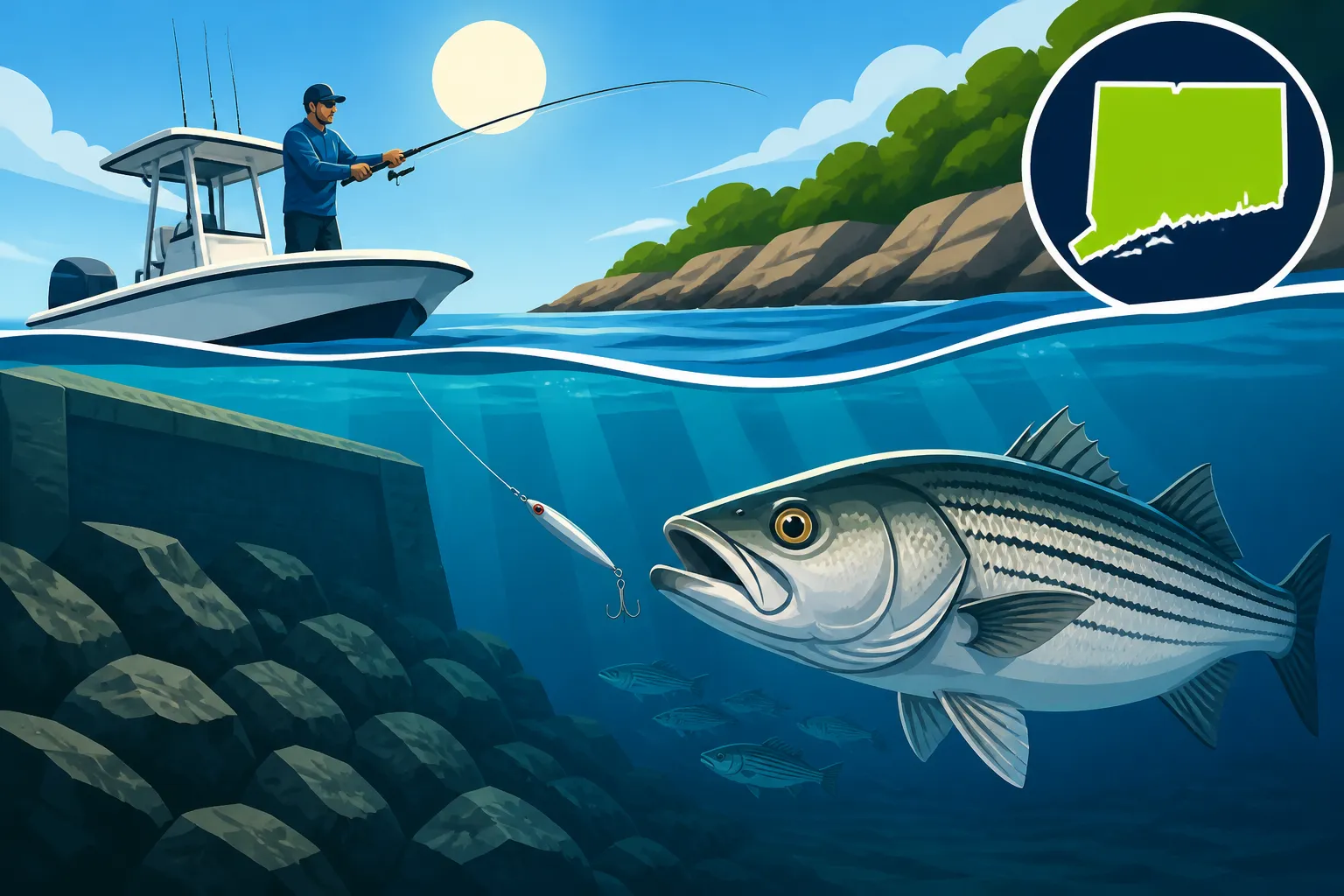
- Ledges and Drop-offs: Where the bottom dramatically changes depth, creating vertical or near-vertical walls underwater. These are prime ambush points, as baitfish are funneled along the edge.
- Channels and Gutters: Deeper troughs that often run through shallower areas. These act as highways for migrating baitfish and provide cooler water access for stripers. The edges of these channels are key.
- Wrecks and Artificial Reefs: Man-made structures that provide immediate cover and habitat for a vast array of marine life, from small baitfish to larger predators like stripers. They act as magnets, often holding significant schools of fish.
- Mussel Beds and Rocky Bottoms: Areas with dense mussel beds or extensive rock formations provide food and cover for smaller organisms, which in turn attract baitfish, and then the stripers. These spots are often overlooked but can be goldmines.
Learning to read your charts and fish finder to pinpoint these structures is paramount. The more specific you can get about the contour changes, the better your chances of finding that sweet spot where the stripers are holed up. You can learn more about specific spots in our Long Island Sound Fishing Guide.
Essential Gear and Tackle for Deep Structure Stripers
When you're chasing big striped bass in deep water, your light tackle setup just won't cut it. You need gear that can handle heavy weights, strong currents, and the powerful runs of a trophy-sized striper. Skimping on tackle here will lead to heartbreak.
Rod and Reel Setup for Heavy Duty Fishing
For deep water stripers, you'll want a robust setup. A medium-heavy to heavy power spinning or conventional rod, typically between 6.5 to 7.5 feet long, is ideal. The rod should have a fast action tip for sensitivity to detect subtle bites, but plenty of backbone to muscle fish away from structure. A common choice might be a rod rated for 1-4 ounces or 2-6 ounces for jigging, or even heavier for live baiting large bunker.
Pair this with a size 5000 to 8000 spinning reel or a conventional reel with a high retrieve ratio that can hold at least 250-300 yards of braided line. Conventional reels often give you more cranking power and better control when dropping heavy weights precisely. For line, braided line is non-negotiable. Its lack of stretch provides incredible sensitivity, allowing you to feel every bump and bite, even in deep water. It also offers superior strength-to-diameter ratio, allowing for lighter line tests with higher breaking strength. A good starting point is 30-50 lb braid. Always use a fluorocarbon leader of 40-80 lb test, depending on the conditions and target size, to provide abrasion resistance against structure and invisibility underwater. Many anglers find great deals on high-quality braid and leaders on Amazon.
Baits and Lures for Deepwater Presentation
The deepwater striper arsenal differs significantly from what you'd use on the surface. You need baits and lures that can get down quickly and effectively into the strike zone.
- Live Bait: This is often the undisputed champion for deep, lethargic summer stripers.
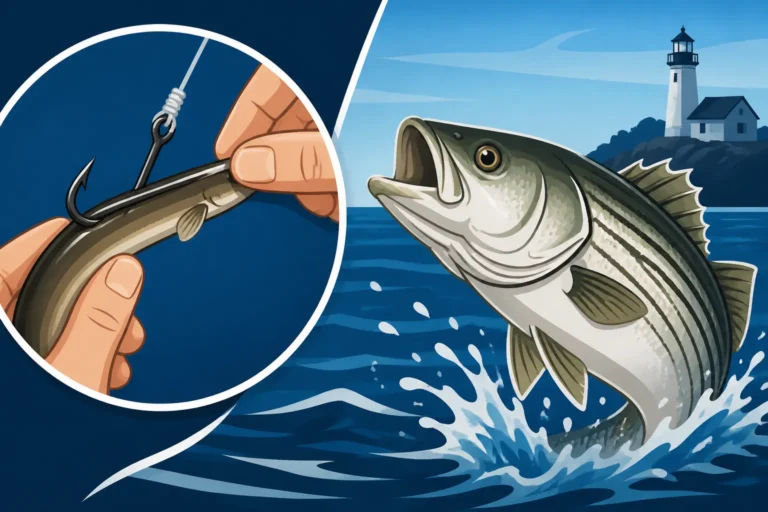
- Eels: A classic striper killer. Their serpentine action drives stripers wild. Hook them through the jaw or eye socket with a circle hook and let them swim naturally near structure.
- Bunker (Menhaden): Both live and chunks work wonders. Live bunker are powerful baits, especially when drifted with a heavy sinker. Chunked bunker emit a strong oil slick that draws fish in from a distance.
- Porgies (Scup) and Mackerel: These are excellent live baits when available, fished similarly to bunker.
- Remember to check the Connecticut Circle Hook Requirement for Striped Bass as it's crucial when using bait!
- Artificial Lures:
- Diamond Jigs: Heavy, slim metal jigs that sink fast. They are incredibly effective for vertical jigging. Drop them to the bottom, reel up a few cranks, and impart a sharp jigging motion. You can find various weights and sizes on Amazon to match the depth and current.
- Flutter Jigs: These jigs have a wider profile and a more erratic, fluttering action on the drop, mimicking an injured baitfish. They can be very enticing when stripers are a bit more active.
- Soft Plastics on Heavy Jig Heads: Large paddle tail swimbaits or grub tails rigged on heavy lead jig heads (2-4 oz or more) can be deadly. The soft plastic provides a realistic profile and action, while the heavy head gets it down.
- Umbrella Rigs: These are trolling rigs designed to imitate a school of baitfish. They typically consist of a spreader bar with multiple teasers (squid, tubes, or small swimbaits) and a main lure. Trolled with heavy weights or downriggers, they cover a lot of ground and are excellent for finding scattered fish. You can read more about Trolling Techniques for Long Island Sound Striped Bass.
The key is to match the hatch as much as possible, mimicking the prevalent baitfish in the area. Our guide on the Best Lures for Striped Bass in Long Island Sound offers even more detail.
Proven Techniques for Targeting Deep Structure Stripers
Finding the deep structure is only half the battle; presenting your bait or lure effectively is where true angling skill comes into play. These techniques are designed to put your offering right in front of those deepwater dwelling stripers.
Vertical Jigging and Dropping Baits
Vertical jigging is perhaps the most precise way to fish deep structure. Once you've marked fish on your sonar or identified a promising piece of structure, position your boat directly over it. The goal is to drop your jig or live bait straight down into the strike zone and keep it there.
For jigging, drop a heavy diamond jig or flutter jig to the bottom. Once it hits, reel up a few feet to avoid snags, then begin a rhythmic retrieve. This usually involves sharp lifts of the rod tip, letting the jig flutter back down on a semi-slack line. Experiment with the cadence: sometimes a fast, aggressive jigging works, other times a slower, more subtle lift and drop is preferred. Pay close attention to your line; often, a bite will feel like a slight "tick" or added weight on the drop. For detailed insights, check out our piece on How to Catch Striped Bass in Long Island Sound.
When dropping live bait, use an appropriately weighted three-way swivel or a Carolina rig to keep your bait near the bottom without hindering its natural movement. Let your eel, bunker, or porgy swim enticingly just above or within the structure. The critical aspect here is boat control. You'll want to use your engine or a trolling motor to slowly drift over the structure, allowing your bait to cover the area. If the current is strong, a controlled drift is essential to keep your line as vertical as possible. This minimizes line bow and helps you maintain contact with your bait and feel strikes.
Trolling Deep Diving Plugs and Umbrella Rigs
If fish are scattered across a wider area of deep water or you're struggling to pinpoint them with your electronics, trolling can be incredibly effective. This method allows you to cover vast stretches of water, especially along deep channels, ledges, or expansive reefs.
To get your lures down to the required depths, you'll need specialized equipment or heavy weights. Downriggers are systems that use a heavy ball to carry your fishing line down to a precise depth, allowing your lure to run freely behind it. If downriggers aren't an option, heavy inline weights or planer boards can help get deep-diving plugs or umbrella rigs into the strike zone.
When choosing lures for trolling, opt for large, deep-diving crankbaits or lipped plugs that are designed to reach significant depths. Umbrella rigs, as mentioned earlier, are also excellent for trolling deep. They present a "school" of bait to the stripers, often triggering aggressive strikes. Experiment with different colors and sizes to see what the stripers are keying in on that day. Troll at a slow, steady speed, typically between 2-4 knots, varying your speed occasionally to give the lures a different action. Pay close attention to your rod tips; a strike can be violent, or sometimes just a slight tap if the fish is mouthing the lure. Trolling is a great way to find the fish, and once you get a strike, you can circle back and try vertical jigging that specific spot.
Reading the Water and Electronics for Success
Fishing deep structure for summer striped bass is a technical game, and your electronics are your best friends. They can turn a day of aimless searching into a day of targeted, successful fishing.
Interpreting Sonar and Chartplotter Readings
Your fish finder (sonar) and chartplotter are indispensable tools for deepwater striper fishing. The chartplotter helps you navigate to known structures, mark waypoints, and understand the bottom contour. Look for those drastic depth changes, reefs, and wrecks.
Your sonar display, on the other hand, gives you a real-time view of what's happening beneath your boat.
- Identifying Structure: Look for hard, defined lines on the bottom that indicate rocks, ledges, or wrecks. A softer, fuzzier bottom reading usually means mud or sand, which is generally less productive.
- Spotting Bait Balls: These will appear as dense, often irregular clouds or blobs on your screen. Stripers are almost always near their food source.
- Locating Fish Arches: Stripers will show up as distinct arches, or sometimes as solid lines if they are directly under the transducer. Pay attention to their size and position relative to the structure and bait. Are they right on the bottom? Are they suspended just above a ledge?
Once you find a promising area, use your GPS to mark it precisely as a waypoint. This allows you to return to the exact spot or make repeated drifts over the productive zone. This is key to consistent success.
Understanding Tides and Currents
Even in deep water, tide and current play a massive role in striper behavior. Striped bass are powerful swimmers, but they prefer to use current to their advantage, often holding in seams or eddies to conserve energy while waiting for bait to be swept to them.
- Current Flow: Strong currents can position stripers on the down-current side of structure, out of the main flow. Weaker currents might see them more actively cruising the structure. Understanding the general flow of current in Long Island Sound for specific areas, such as the mouth of the Connecticut River or around The Race, is vital.
- Tidal Stages: Different tidal stages affect current strength and direction. Often, the beginning and end of a strong current, or the "slack tide," can be particularly productive. Slack tide might see stripers spread out more, while a strong current might concentrate them in predictable ambush points. The Best Time of Day to Catch Striped Bass often correlates with specific tidal movements.
By combining your knowledge of local tides, careful interpretation of your electronics, and the right gear, you'll significantly increase your odds of connecting with those elusive summer striped bass holding deep on the structure. It’s a rewarding challenge, and when you finally feel that powerful tug, you'll know all the effort was worth it.
Here's a quick comparison of two deepwater techniques:
| Feature | Vertical Jigging | Trolling Deep Diving Plugs/Umbrella Rigs |
|---|---|---|
| Target Area | Precise structure, specific marks on sonar | Broader areas, searching for scattered fish, covering ground |
| Boat Movement | Controlled drift or anchoring over specific spot | Continuous, slow movement over longer distances |
| Lure Control | Active, hands-on jigging action, precise depth | Passive, set-it-and-forget-it (until a strike), covers more water |
| Sensitivity | High, direct contact with lure/bait | Moderate, less direct feel of subtle bites |
| Primary Gear | Heavy spinning/conventional rod & reel, braid, jigs, live bait | Trolling rod & reel, downriggers/planer boards, plugs, umbrella rigs |
| Best For | Known fish concentrations, pinpointing specific spots | Locating fish, covering large structures or channels, finding feeding lanes |
Disclaimer
This article is for general informational purposes only and does not constitute professional advice. Laws, prices and regulations vary by location and change over time. Consult a qualified professional for guidance on your specific situation.