Best Lures for Striped Bass in Long Island Sound
It can feel overwhelming standing on the shores of Long Island Sound, or even out on a boat, looking at a tackle box overflowing with options and wondering: which lure will actually entice those elusive striped bass today? We've all been there, wondering if we're throwing the right thing in the right conditions. This comprehensive guide will cut through the noise, helping you understand the best lures for striped bass in Long Island Sound, breaking down when and how to use them effectively to increase your chances of a successful catch.
Understanding Striped Bass Feeding Habits in Long Island Sound
Before we even talk about specific lures, it's crucial to grasp what makes striped bass tick, especially in a dynamic environment like Long Island Sound. These powerful predators are opportunistic feeders, but their preferences can shift dramatically based on bait availability, water temperature, light conditions, and even the time of year. Knowing their diet helps us choose lures that mimic their natural prey.
Preferred Forage Species
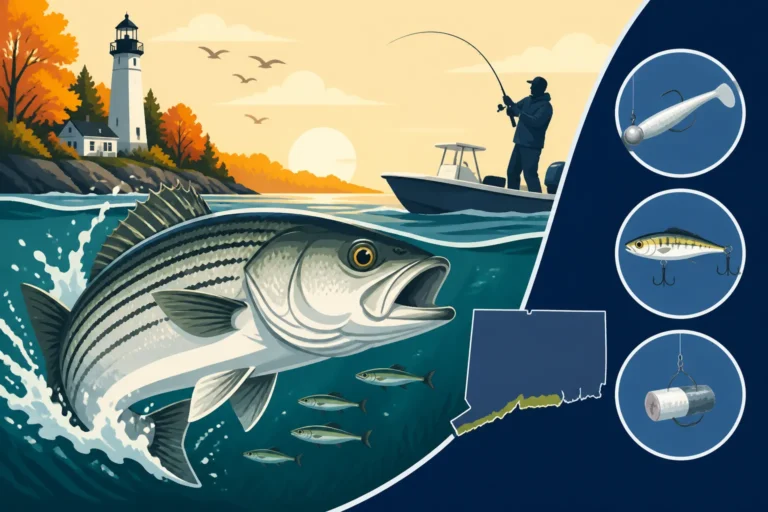
Stripers in Long Island Sound have a diverse menu, and the availability of these food sources dictates where you'll find them and what they'll be willing to strike. One of their absolute favorites, especially as they migrate into the Sound, is the Atlantic menhaden, often called "bunker." These oily baitfish move in massive schools, and when they're present, stripers will often ignore anything else. Other key forage includes various smaller baitfish like silversides, spearing, and sand eels. In rocky areas and around structure, crabs and even smaller lobsters can be on the menu. Knowing what they're likely eating is the first step in choosing your artificial offering. If you see birds diving or baitfish scattering, chances are there's a striper on the hunt, and your lure choice should reflect that. Understanding their seasonal movements and diet is key, as discussed in our guide on What striped bass eat in Long Island Sound.
Impact of Water Conditions and Light
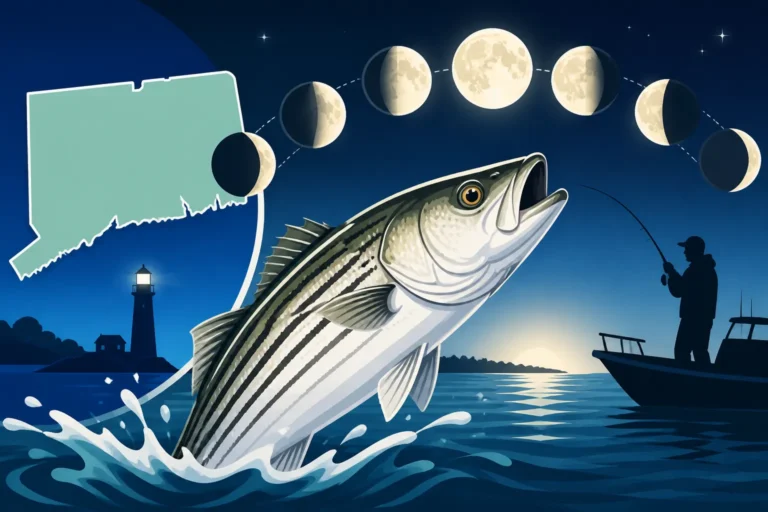
Striped bass are highly sensitive to their environment, and factors like water clarity, current, and light levels play a massive role in their feeding behavior and, consequently, which lures will be most effective. On a bright, sunny day with clear water, a more natural presentation and subtle colors might be preferred. Conversely, in murky water or low light conditions like dawn, dusk, or night, lures with strong vibration, loud rattles, or brighter, contrasting colors can be more visible and provoke strikes. Current also dictates how stripers position themselves and how they attack prey; a strong rip might call for heavier lures that can hold their depth, while slack tide could mean a slower retrieve with a lighter offering. The time of day significantly impacts their activity, and you might find them more aggressive at certain periods, a topic explored further in Best Time of Day to Catch Striped Bass.
Topwater Lures for Explosive Strikes
There's truly nothing quite like the heart-stopping excitement of a striped bass blowing up on a topwater lure. These lures sit on the surface, creating commotion that mimics distressed baitfish, and they can provoke incredibly aggressive strikes, especially during low-light periods or when stripers are actively busting on bait.
Walk-the-Dog and Poppers
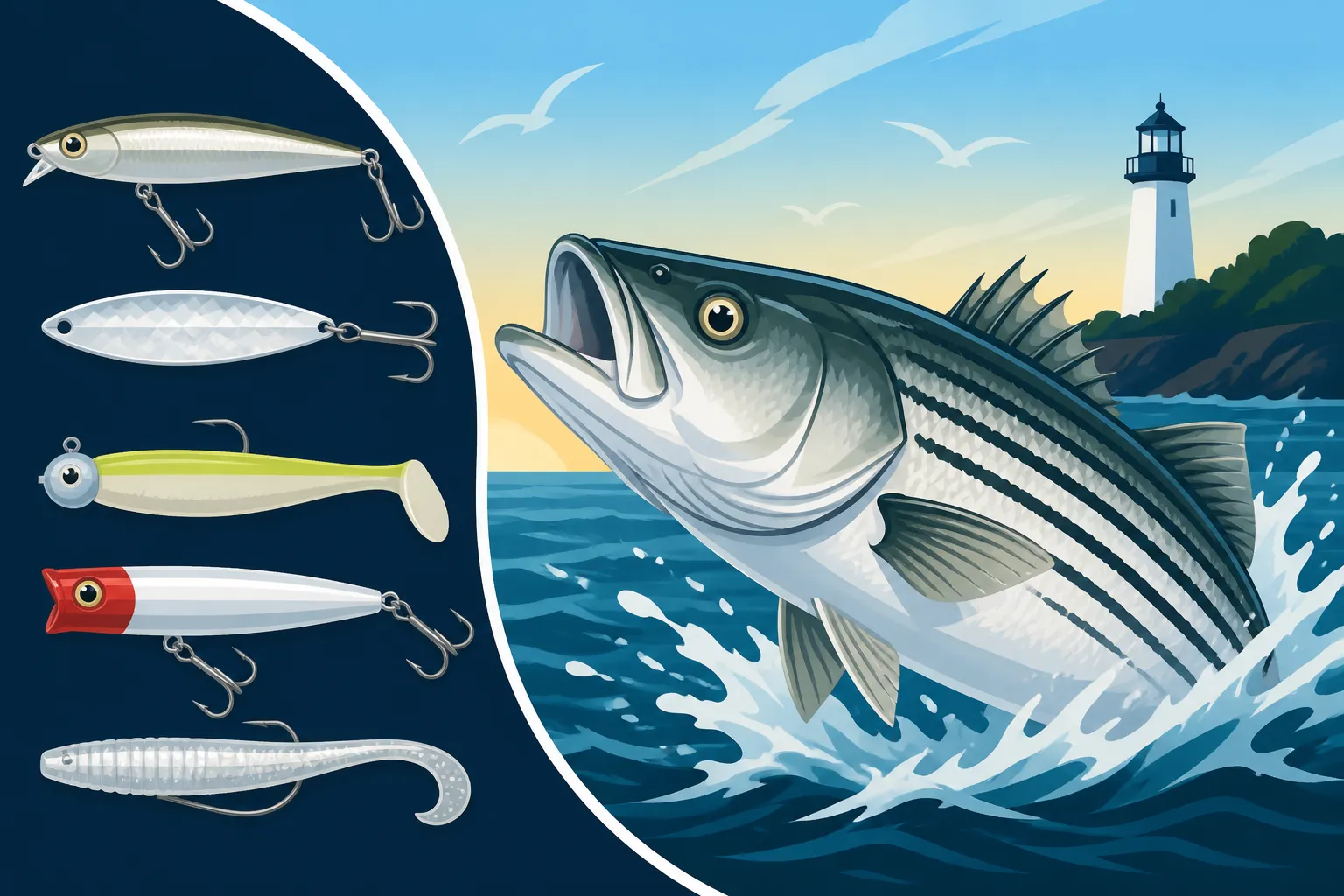
Walk-the-dog lures, like the classic Heddon Super Spook or Zara Spook, are designed to glide side-to-side across the surface with a rhythmic retrieve, imitating a baitfish frantically trying to escape. This action is incredibly enticing and can call stripers up from surprising depths. These lures are best used in calm to moderately choppy water, particularly during low light or when fish are feeding aggressively on the surface. You'll want to use a steady retrieve with subtle rod tip twitches to get that signature "walk."
Poppers, on the other hand, create a more dramatic disturbance. Lures like the Cotton Cordell Pencil Popper or the Stillwater Smack-It Popper have a cupped face that "pops" and sprays water when retrieved with a sharp jerk of the rod. This mimics a struggling baitfish, or even a predator splashing through a school of bait, and the loud noise can draw attention from a distance. Poppers excel when stripers are actively feeding on large schools of menhaden, or in choppy water where the added commotion helps them stand out. You can find a huge variety of both walk-the-dog lures and poppers on platforms like Amazon, making it easy to experiment with different sizes and colors.
Pencil Poppers and Spooks
Pencil poppers, often larger and heavier than traditional poppers, are fantastic for covering a lot of water and making long casts, which is especially beneficial when surfcasting or fishing from a boat trying to reach breaking fish. Their slender profile and weight allow them to cast like a bullet. The retrieve for a pencil popper is usually a sweeping motion of the rod tip, which makes the lure "slash" and "dance" on the surface, pushing a significant amount of water. This creates an irresistible disturbance for bigger striped bass.
Spooks, while generally smaller than pencil poppers, offer a more subtle walk-the-dog action. They can be incredibly effective when stripers are a bit more finicky, or when the bait they're chasing is smaller. Their retrieve requires a bit of practice to get that perfect side-to-side sashay, but once mastered, they are deadly. The key is to keep a consistent rhythm, letting the lure do its work. Remember, patience is key with topwater; wait until you feel the weight of the fish before setting the hook!
Subsurface Plugs and Stickbaits for Versatility
When stripers aren't willing to commit to a surface strike, or when they're holding a bit deeper, subsurface plugs and stickbaits become your go-to. These lures mimic baitfish swimming just below the surface or down to several feet deep, and their versatility makes them indispensable in any striper angler's tackle box.
Swimmers and Darter Plugs
Swimmer plugs, often made of wood or hard plastic, have a lip or bib that makes them dive and wobble as they're retrieved. They come in a wide range of sizes and diving depths, from shallow swimmers that stay just below the surface to deep divers that can reach 10-15 feet. Popular choices include the Daiwa SP Minnow and the Bomber Long A, both known for their enticing wiggle. These are excellent for imitating fleeing baitfish and can be particularly effective when trolled or retrieved steadily from shore or boat. They are fantastic for enticing actively feeding fish that are keying in on schools of baitfish, often found along drop-offs or near structure.
Darter plugs, on the other hand, have a more erratic, darting action. They lack a traditional lip, instead relying on their unique body shape to create a side-to-side, unpredictable movement when retrieved. This mimics a wounded baitfish, making them incredibly effective in turbulent water, current, or at night. They tend to fish a bit deeper than shallow swimmers, often in the 3-6 foot range, depending on retrieve speed and current. You can work them with a slow, steady retrieve or incorporate pauses and twitches to enhance their darting action.
Stickbaits and Glide Baits
Stickbaits are typically lipless, slender lures designed to be fished just under the surface or at moderate depths. They can be retrieved with a steady pull, a twitch-pause retrieve, or even jigged vertically depending on their design. Lures like the Shimano ColtSniper Jerkbait or the Yo-Zuri Mag Darter fall into this category. They are excellent for imitating sand eels or slender baitfish, and their natural profile can be deadly when stripers are picky. For a more detailed look at how these lures fit into the overall picture, check out our guide on Best Lures for Striped Bass in Long Island Sound.
Glide baits, while more commonly associated with freshwater bass fishing, are gaining popularity for stripers, especially larger ones. These lures have a wide, sweeping side-to-side glide on a steady retrieve, often resembling a large, slow-moving baitfish or even a bunker. They are typically fished slowly, allowing the fish to track and commit to the lure. While often on the pricier side, their unique action can entice monster stripers that might ignore more traditional offerings. Both stickbaits and glide baits require a bit of finesse to master their action, but the results can be well worth the effort.
Soft Plastics and Jigs for Deeper Water and Finesse
When stripers are holding deep, when the water is cold, or when they're just not hitting aggressive presentations, soft plastics and jigs really shine. These versatile lures can imitate a wide range of forage and can be fished at virtually any depth, making them essential for targeting striped bass in Long Island Sound.
Paddle Tail Swimbaits
Paddle tail swimbaits are incredibly popular for a reason: they work! Their soft plastic body with a hinged paddle tail creates an enticing thumping and wobbling action that perfectly mimics a swimming baitfish. Brands like Keitech, Hogy, or Z-Man offer a variety of sizes and colors. These can be rigged on a leadhead jig for casting and retrieving or on a weighted hook for a shallower presentation. They are particularly effective when retrieved slowly near the bottom, through current, or around structure. The natural movement of the tail sends out vibrations that stripers can detect even in murky water or low light. Many anglers swear by the natural presentation of these lures, and they're always a good choice for targeting fish holding in cooler, deeper water. You can often buy these in bulk on Amazon, saving you a few bucks when you inevitably lose a few to snags or toothy critters.
Bucktail Jigs
The humble bucktail jig is arguably one of the most effective and classic striped bass lures out there, and for good reason. It's incredibly versatile, can be fished at any depth, and its natural hair pulsates enticingly in the water, mimicking squid, baitfish, or even crabs. Bucktails come in various weights and colors, often with a skirt of deer hair. The retrieve is key: a series of lifts and drops, mimicking a baitfish hopping along the bottom or jigging through the water column.
You can tip bucktails with a piece of pork rind, a soft plastic trailer (like a curly tail grub or a grub-shaped retrieve), or even a strip of fresh bait for added scent and appeal. This can make an already effective lure absolutely deadly. They're particularly devastating when targeting stripers holding near rocky structure, in strong current, or off deep ledges. Many experienced surfcasters and boat anglers consider the bucktail their "desert island" lure because of its consistent effectiveness on striped bass.
Metal Lures and Spoons for Long Casts and Structure
Sometimes you need a lure that can cut through the wind, reach distant feeding fish, and sink quickly to depth. That's where metal lures and spoons come into their own. Their density and hydrodynamic shape make them exceptional tools for covering water and getting down to where the fish are holding.
Casting Spoons
Casting spoons, like the old reliable Kastmaster or Acme Little Cleo, are essentially weighted pieces of metal designed to wobble and flash as they're retrieved or dropped. Their reflective surface mimics the flash of fleeing baitfish, and their erratic action can trigger aggressive strikes. They excel when you need to make long casts from shore or reach breaking fish that are just out of range of lighter lures.
Spoons are particularly effective when baitfish like spearing or peanut bunker are present, as their profile often matches these smaller forage items. You can retrieve them steadily, allowing them to wobble and flash, or incorporate a series of lifts and drops to give them a more erratic, jigging action. This can be especially productive when fish are schooled up or holding over structure. Their heavy weight also allows them to sink quickly, which is great for probing deeper channels or rips.
Diamond Jigs and Sliders
Diamond jigs are precisely what they sound like: weighted, slender pieces of metal, often chrome or lead, shaped like a diamond. They are primarily designed for vertical jigging, dropping quickly to the desired depth and then retrieved with a series of sharp upward jerks, allowing them to flutter and flash on the fall. This action perfectly imitates a wounded or dying baitfish. Diamond jigs are deadly for targeting stripers holding deep, especially around humps, wrecks, and reefs in Long Island Sound. You can also cast them and retrieve with a fast, erratic motion, mimicking a fleeing sand eel or slender baitfish.
Sliders, sometimes called tins, are similar to casting spoons but often have a more streamlined profile and less wobble. They are designed for fast, erratic retrieves and making incredibly long casts. The Hopkins Shorty is a classic example. These lures are fantastic when stripers are chasing fast-moving bait or when you need to cover a lot of ground quickly. They can be fished near the surface with a fast retrieve or allowed to sink and jigged back. Both diamond jigs and sliders are fantastic for cutting through strong winds and current, making them go-to options for many anglers, especially in rougher conditions or when fishing open water. For more on targeting specific structures, our Long Island Sound Striped Bass Spots guide provides valuable insights.
Matching Lures to Conditions and Techniques
Choosing the right lure isn't just about having the best options; it's about knowing when and how to use them. The conditions on Long Island Sound can change rapidly, and being able to adapt your lure choice and presentation is what separates good anglers from great ones.
Shore Fishing vs. Boat Fishing
Your vantage point significantly influences your lure selection. When Best Shore Fishing Spots in Connecticut you're often limited by casting distance and the need to fish specific areas like jetties, rocky points, or beach fronts. This often calls for lures that cast exceptionally well, such as pencil poppers, casting spoons, or heavier bucktail jigs. You might also focus on lures that can be worked effectively in the surf, like plastic swimmers or soft plastics on weighted hooks. The goal is to maximize your time in the strike zone and cover as much water as possible from a fixed position.
From a boat, your options open up dramatically. You can troll, drift, or anchor over specific structure. This allows you to deploy a wider range of lures. For example, you can use large swimming plugs for trolling, vertical jigs over deeper reefs, or more finesse presentations with soft plastics when drifting. Boat anglers also have the advantage of being able to chase breaking fish, making topwater lures incredibly effective when stripers are actively feeding on the surface. Having a varied selection ready is crucial for boat fishing, as you can quickly switch tactics based on what the fish are doing.
Tides, Currents, and Structure
Understanding how tides, currents, and bottom structure affect striped bass behavior is paramount to lure success. During strong incoming or outgoing tides, stripers often position themselves in ambush points, waiting for baitfish to be swept by. In these situations, heavier lures that can hold their depth in the current, such as bucktail jigs, diamond jigs, or heavy swimming plugs, are essential. You might want to fish upstream of the structure and allow your lure to drift naturally into the strike zone, mimicking a struggling baitfish.
When fishing around rocky reefs, jetties, or mussel beds, lures that can be worked close to the bottom without constant snagging are key. Bucktail jigs with weed guards, or even soft plastics retrieved with a slow lift-and-drop, can be highly effective. During slack tide, when the water movement is minimal, stripers can become more scattered or finicky. This might be the time for more subtle presentations, like a slow-moving soft plastic or a carefully worked glide bait. For those venturing out in a boat, knowing How to read structure for striped bass in Long Island Sound is a game-changer.
Table: Lure Selection Guide for Striped Bass in Long Island Sound
To help you make quick decisions on the water, here's a handy table summarizing lure choices based on common conditions:
| Condition/Technique | Recommended Lure Type(s) | Best Retrieve | Key Advantages |
|---|---|---|---|
| Early Morning/Late Evening | Poppers, Pencil Poppers, Walk-the-Dog Lures | Erratic, "walk" or "pop" and pause | Mimics distressed bait, high visibility, explosive strikes |
| Choppy Water/Active Feed | Poppers, Pencil Poppers, Heavy Swimmers | Aggressive "pop," steady retrieve with wobble | Creates commotion, cuts through chop, mimics frantic bait |
| Calm Water/Finicky Fish | Walk-the-Dog, Lipless Stickbaits, Soft Plastics (paddle tail) | Subtle "walk," twitch-pause, slow steady | Natural presentation, less intrusive, for wary fish |
| Deeper Water/Strong Current | Bucktail Jigs, Diamond Jigs, Deep Diving Swimmers | Lift-and-drop, vertical jigging, steady troll | Reaches depth, holds position, mimics diverse forage |
| Long Casting Needed | Pencil Poppers, Casting Spoons, Heavy Diamond Jigs | Fast retrieve, sweeping motion, jigging | Covers distance, cuts wind, attracts from afar |
| Night Fishing | Dark colored Soft Plastics, Darter Plugs, Dark Bucktail Jigs | Slow and steady, erratic darting, lift-and-drop | Silhouette against moonlight, strong vibration, appeals to senses beyond sight |
| Around Structure (Rocks/Reefs) | Bucktail Jigs (weed guard), Soft Plastics (weedless rig) | Slow bounces, short lifts and drops | Minimizes snags, imitates crabs/bottom dwellers |
| Imitating Bunker/Large Bait | Large Pencil Poppers, Glide Baits, Large Paddle Tail Swimbaits | Sweeping slash, slow glide, strong thumping tail | Matches large forage, appeals to bigger fish |
Remember, this table is a starting point. Experimentation is always key. Sometimes a completely unexpected lure will be the one they hit! Keep an open mind, and don't be afraid to try something new, even if it feels a little outside the box.
Getting the Right Gear for Your Lures
Having the best lures in the world won't do you much good if you don't have the right rod, reel, and line to fish them effectively. The gear you choose should complement your preferred lures and the techniques you'll be using in Long Island Sound.
Rod and Reel Combinations
For casting a wide variety of striped bass lures, a medium-heavy to heavy action spinning rod, typically 7 to 9 feet in length, is a versatile choice. This length provides good casting distance while still offering enough sensitivity to feel subtle bites and enough backbone to fight powerful stripers. If you're primarily surfcasting, you might opt for an even longer rod, 10 to 12 feet, to really bomb those lures out past the breakers. Our guide on Best rod setup for surfcasting striped bass dives deeper into specific recommendations.
Pair your rod with a durable, saltwater-rated spinning reel in the 4000 to 6000 size range. Look for reels with a smooth drag system, as this is crucial for preventing break-offs when a big striper decides to make a run. Brands like Penn, Shimano, and Daiwa offer excellent options that stand up to the rigors of saltwater fishing. The goal is a balanced setup that allows for comfortable casting all day long and has the power to handle those big fish when they strike.
Line and Leader Choices
When it comes to line, braided line is almost universally preferred for striped bass fishing in Long Island Sound. It offers superior casting distance, incredible sensitivity, and very little stretch, allowing for solid hooksets even at long range. A good starting point is 20 to 50 lb test braided line, depending on the lures you're throwing and the size of fish you expect to encounter. The lack of stretch in braid means every bump and subtle tap on your lure is transmitted directly to your hands.
However, you should always attach a fluorocarbon leader to your braided mainline. Fluorocarbon is nearly invisible in the water, which can be critical for wary stripers, and it offers excellent abrasion resistance against sharp rocks, oyster shells, and the striper's rough mouth. A 20 to 50 lb test fluorocarbon leader, typically 2 to 4 feet long, is a good standard. Connect your leader to your mainline using a strong knot like the FG knot or a double uni knot. Many anglers also choose to use a high-quality snap swivel at the end of their leader for quick lure changes, particularly when trying to match the hatch or adapt to changing conditions. You can find robust braided line and fluorocarbon leaders from various manufacturers on Amazon.
Advanced Lure Strategies for Striped Bass
Once you've got the basics down, it's time to think about how to elevate your lure game. Advanced strategies involve more than just knowing what lure to throw; it's about understanding the nuances of presentation, timing, and reading the water to put the odds further in your favor.
Fishing During Different Seasons
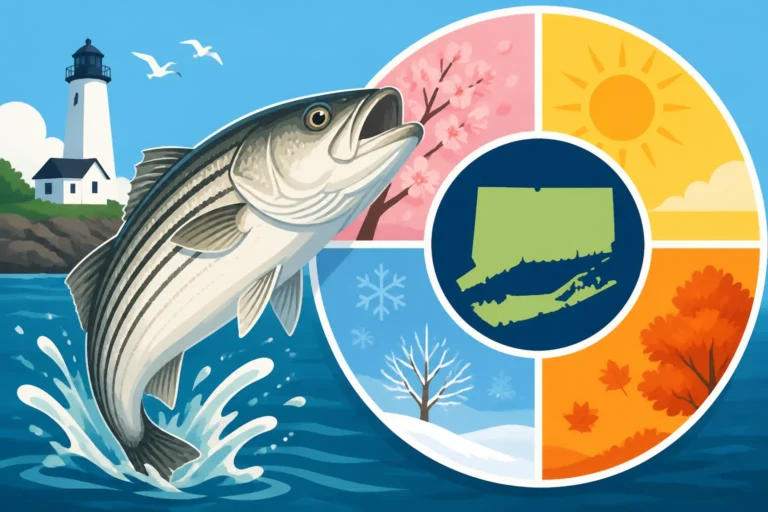
Striped bass behavior, and thus lure effectiveness, changes significantly throughout the year in Long Island Sound. In the spring, as stripers first migrate into the Sound, they are often hungry but can be finicky. Smaller soft plastics, bucktail jigs, and slender swimming plugs that mimic early-season baitfish like sand eels and spearing can be very productive. They might be keying in on specific areas as they move up the coast, as detailed in Striped Bass Migration Along the Connecticut Coast.
Summer sees stripers spread out more, often moving into deeper, cooler waters during the day or feeding heavily on bunker schools. This is prime time for larger topwater plugs at dawn and dusk, or vertical jigging with diamond jigs in deep rips and around structure. As fall approaches, stripers enter their "fall run" – a period of aggressive feeding as they bulk up for their migration south. This can be some of the most exciting fishing, with stripers busting on massive schools of bait. Large pencil poppers, big swimmers, and large paddle tail swimbaits that imitate substantial forage are all excellent choices. Our guide on Best Techniques for Fall Striped Bass offers even more seasonal tips.
Night Fishing for Trophy Stripers
Night fishing is a realm all its own when it comes to striped bass, and often the best time to target the truly big ones. Large stripers are often more active and less wary under the cover of darkness. Lure choices shift towards those that create strong silhouettes or vibrations that fish can detect in low light. Dark-colored soft plastics, especially large paddle tails, are excellent, as they create a strong silhouette against the lighter sky or water surface.
Darter plugs, with their erratic action and ability to move water, are also fantastic night lures. Many anglers also swear by wooden swimming plugs, particularly those with a slow, wide wobble. The key at night is often a slower, more deliberate retrieve, allowing the fish time to track the lure. You might also want to incorporate lures with rattles to add an auditory dimension. Don't forget a headlamp (with a red light setting to preserve your night vision!) and be extra cautious when navigating in the dark. For a deep dive into this topic, see our Night Fishing for Striped Bass in Connecticut guide.
Disclaimer
Fishing conditions and regulations can change. Always check the latest Connecticut Department of Energy and Environmental Protection (DEEP) fishing regulations before heading out. This guide is for informational purposes only and does not constitute professional advice.