How to Catch Striped Bass in Long Island Sound
Few experiences in Connecticut can compare to the thrill of a big striped bass exploding on a topwater lure at dawn or pulling drag against the relentless currents of Long Island Sound. Yet, many anglers, myself included, have spent countless hours fruitlessly casting into the vastness, wondering why the fish seem to be everywhere but where our lines are. This comprehensive guide is designed to cut through that frustration, offering proven strategies, essential gear advice, and local insights to significantly improve your chances of consistently catching striped bass in our beautiful Long Island Sound waters.
Understanding Striped Bass Behavior in Long Island Sound
Before you even think about baits and lures, understanding the habits of striped bass is paramount. These magnificent fish aren't just swimming around randomly; they follow predictable patterns influenced by instinct, environment, and the availability of food. Learning these behaviors is like unlocking a secret code to successful fishing.
Seasonal Migration Patterns
Striped bass are highly migratory, and their presence in Long Island Sound is a seasonal affair, driven primarily by water temperature and the availability of forage. It's a cyclical dance that dictates when and where you'll find them.
As winter's chill loosens its grip and water temperatures begin to climb into the upper 40s and 50s Fahrenheit, usually around April or early May, the first waves of "schoolie" stripers — younger, smaller fish — make their grand entrance into Long Island Sound. These early arrivals are often hungry and eager to feed after their migration, making for some exciting light tackle action. They typically push in from their overwintering grounds further south, seeking warmer, shallower waters and the burgeoning baitfish populations. You'll find them first in the protected estuaries and bays, places where the water warms up quicker and small baitfish like spearing and silversides gather. For a deeper dive into their journey, check out our guide on Striped Bass Migration Along the Connecticut Coast.
As summer progresses and the Sound's waters warm further, often peaking in the 70s by July and August, the larger, mature striped bass move in and spread out. They'll frequent deeper channels, cooler rips, and areas with abundant structure where they can ambush prey. However, extremely hot surface temperatures can sometimes push them into deeper, cooler thermoclines, making them harder to locate. This mid-summer period can be a bit more challenging as the fish become more lethargic during the day, often feeding most aggressively during low light hours. Come late September and October, as the air cools and water temperatures drop, the stripers begin their southbound migration. This is often heralded as the "fall run," a period of intense feeding as they bulk up for their journey. Baitfish like Atlantic menhaden (bunker) and mullet stage up along the coast, creating frenzied feeding opportunities that anglers dream about. The fish are often more aggressive and less particular during this time, making it a highly anticipated season for many dedicated striper anglers in Connecticut.
Preferred Habitats and Feeding Habits
Striped bass are opportunistic predators, and their habitat choices are directly linked to where they can most efficiently find and ambush their prey. They are masters of using structure and current to their advantage.
In Long Island Sound, you'll find stripers congregating around various types of structure. This includes natural features like rocky reefs, boulder fields, and underwater humps and ledges. Man-made structures are equally important: think bridge pilings, jetties, wrecks, and even channel markers. These spots provide ambush points and offer cover from strong currents, allowing stripers to conserve energy while waiting for an unsuspecting baitfish to swim by. They particularly love areas where current creates "rips" – turbulent water where baitfish get disoriented and swept along. Examples include the notorious Race at the eastern end of Long Island Sound, or numerous smaller rips found around points and islands. Estuaries, where rivers meet the Sound, are also crucial, especially during spring and fall, as they serve as highways for migrating baitfish and offer warmer, food-rich nursery areas for younger stripers.
Their diet is remarkably varied and shifts throughout the season based on availability. Early in the spring, smaller baits like spearing, silversides, and sandworms are the primary targets. As summer progresses, larger forage becomes more prevalent. Atlantic menhaden (bunker) are a staple, often forming massive schools that attract large stripers and bluefish. Squid, mackerel, eels, and even crabs are also on the menu. Knowing what baitfish are in the area – often referred to as "matching the hatch" – is critical to selecting the right lure or bait. Observing birds diving, baitfish showering on the surface, or even simply watching what other successful anglers are using can give you vital clues. If you want to dive deeper into what these fish prefer to munch on, take a look at our article on What striped bass eat in Long Island Sound.
Essential Gear for Long Island Sound Stripers
Having the right tools for the job can make all the difference between a frustrating day of missed opportunities and a triumphant trip. Striped bass are powerful fish, and the diverse environments of Long Island Sound demand versatility from your tackle.
Rods, Reels, and Line Selection
Choosing your rod and reel setup depends heavily on the technique you plan to use. There’s no single "best" setup, but rather optimal choices for different scenarios.
For surfcasting from the beach or jetties, you'll want a longer, heavier rod – typically 9 to 11 feet in length, with a medium-heavy to heavy power and a moderate-fast action. This length allows for longer casts to reach breaking fish or distant structure and provides the leverage needed to fight a large striper in powerful surf. Pair this with a robust spinning reel in the 6000 to 10000 size range, capable of holding 250-350 yards of 30-50 lb braided line. Popular reels often come from brands like Penn, Shimano, or Daiwa, known for their durability and smooth drag systems. A reliable retrieve is crucial when you're battling fish in current or casting heavy lures for hours.
When boat fishing, whether drifting live bait, jigging, or casting lures, a shorter, lighter rod is usually preferred. A 7 to 8-foot medium-heavy fast-action spinning rod paired with a 4000 to 6000 size reel is a versatile choice for most inshore boat applications. This setup offers excellent sensitivity for feeling subtle bites and sufficient backbone to handle stripers up to 30 or 40 pounds. If you plan on trolling or targeting truly large cows with live eels, a conventional reel setup might be better suited. A 7-foot medium-heavy conventional rod with a lever-drag reel (like a Penn Fathom or Shimano Torium) spooled with 50-65 lb braid offers immense power and control. Regarding line, braided line is almost universally preferred for its minimal stretch, incredible strength-to-diameter ratio, and sensitivity. You’ll feel every bump and subtle take. Always tie a leader of 30-60 lb fluorocarbon to your braid, as it's nearly invisible underwater and more abrasion-resistant than braid, especially important when fishing around rocks or toothy bluefish. You can find a fantastic array of rods, reels, and lines for striped bass on Amazon, often with reviews from fellow anglers to help you decide.
Terminal Tackle and Essential Accessories
The small components at the business end of your line are just as crucial as your rod and reel. Skimping here can lead to heartbreak.
First and foremost, hooks. When fishing bait for striped bass in Long Island Sound, Connecticut regulations often require the use of non-offset circle hooks. These hooks are designed to hook the fish in the corner of the mouth, significantly reducing gut-hooking and improving the chances of a healthy release. Ensure your circle hooks are sharp and appropriately sized for your bait – usually 5/0 to 9/0 depending on bait size. You can find detailed requirements in our guide on the Connecticut Striped Bass Circle Hook Requirement. Leaders are next; I typically use 30-60 lb fluorocarbon leaders, anywhere from 3 to 6 feet long. Fluorocarbon's low visibility and abrasion resistance are key. Connect your main line to your leader with a strong knot like an FG knot or an Albright knot, and use quality barrel swivels (around 100 lb test) to prevent line twist, especially with live bait or trolling. Weights will vary based on current and depth, from half-ounce sinkers for light jigging to 8-ounce bank sinkers for holding bottom in strong tides.
Beyond the terminal tackle, a few accessories are absolutely non-negotiable. A good pair of fishing pliers (preferably stainless steel or aluminum) is essential for cutting line, crimping sleeves, and safely removing hooks. A fish gripper like a BogaGrip or similar lip-gripper is invaluable for safely handling larger stripers without touching their rough mouths or delicate slime coat, especially when practicing catch and release. A large cooler with ice is necessary if you plan to keep your catch, ensuring the fish stays fresh. Don't forget a durable landing net with a rubberized mesh (which is kinder to fish fins and slime) if boat fishing, or a specialized gaff for very large, retained fish. A good headlamp is also vital for those early morning or late-night excursions. All these small but critical items are readily available on Amazon, making it easy to stock up before your next trip.
Top Techniques for Targeting Striped Bass
Striped bass are adaptable, and so should you be. There are numerous effective ways to catch them in Long Island Sound, each with its own nuances and ideal conditions. Mastering a few techniques will make you a much more versatile and successful angler.
Live Bait and Chunking
Few methods are as consistently effective for larger striped bass as fishing with live bait or cut bait (chunking). It's essentially presenting them with what they already eat, in a natural way.
Live bait is often the top choice, especially when targeting trophy-sized stripers. The most popular live bait in Long Island Sound is the Atlantic menhaden, or "bunker." Catching bunker requires a sturdy cast net or snagging them with specialized hooks (illegal to snag and then use as bait in some areas, so check local regulations). Once caught, they need to be kept alive in a large livewell with good aeration. You can fish bunker in several ways: free-lining them with a single circle hook through the nose or back is incredibly effective, allowing the bait to swim naturally. You can also fish them with a small egg sinker above the leader to get them down to the desired depth. Eels are another incredibly effective live bait, especially at night. Rig them with a large circle hook through the head, and either free-line them or add a small weight to drift them slowly through rips or along rocky shorelines. The struggling action of live bait is irresistible to a hungry striper.
Chunking involves cutting up fresh baitfish, usually bunker, into palm-sized pieces and drifting them down current with your hook bait. The idea is to create a scent trail – a "chum slick" – that draws stripers to your boat. Anchor upcurrent of a likely striper holding area, like a channel edge or a rocky reef. Periodically toss small chunks of bait into the water to get the fish interested. Your hook bait should be a larger chunk, rigged on a circle hook with just enough weight to keep it drifting naturally at the same speed as your chum. This method is incredibly patient, but when the stripers find your slick, the action can be furious. Ensure your drag is set properly, as stripers will often hit these chunks hard.
Lure Fishing and Trolling
Artificial lures offer a more active and often more exciting way to catch stripers, allowing you to cover more water and entice strikes from aggressive fish.
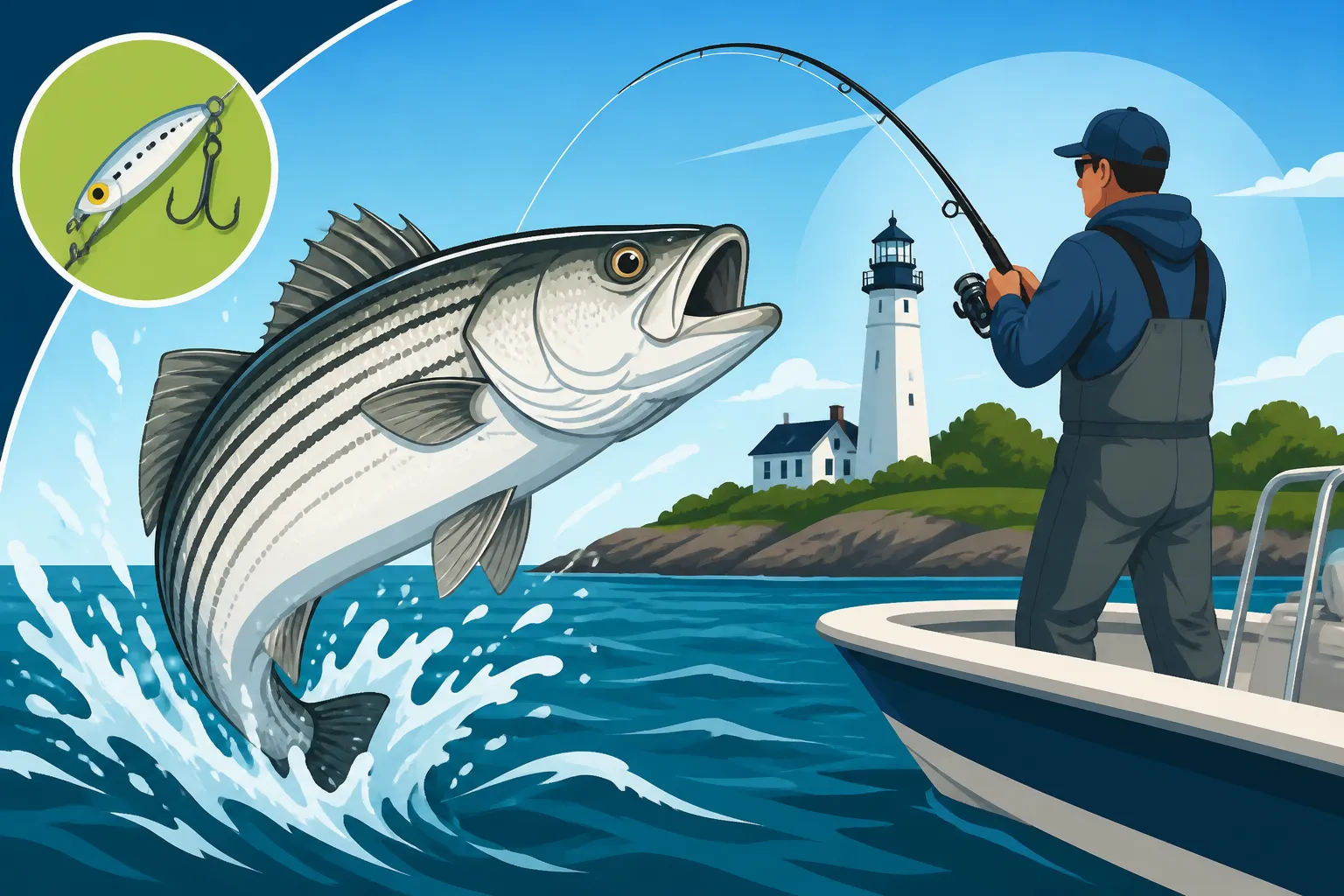
Casting artificial lures is perhaps the most popular technique for many anglers. Different lures excel in different conditions. Topwater plugs like poppers and walk-the-dog baits (e.g., Doc, Super Spook) are exhilarating when stripers are actively feeding on the surface, creating explosive strikes. They are particularly effective at dawn, dusk, or when baitfish are showering. Swimming plugs, both lipped (like Bombers, SP Minnows) and lipless (like pencil poppers, stickbaits), are versatile and can imitate a wide variety of baitfish. Work them with a retrieve that mimics a wounded baitfish – a combination of sweeps, twitches, and pauses. Soft plastics, such as paddle tails (e.g., Keitech, Tsunami) and Slug-Gos, rigged on jig heads, are incredibly effective for mimicking injured baitfish and can be fished at various depths. They're especially useful when fish are holding deeper or when you need a subtler presentation. Metal jigs and spoons are great for reaching deep-holding fish or for casting into strong currents where heavy lures are needed to get down quickly. For a comprehensive guide on what's biting, check out our article on Best Lures for Striped Bass in Long Island Sound.
Trolling is a highly effective method, especially for covering large areas and finding scattered fish, or when targeting deeper-dwelling stripers. Trolling involves dragging lures or baits behind a boat at a slow speed, typically between 2 and 5 knots. Popular trolling setups include tube-and-worm combinations, umbrella rigs (which imitate a school of baitfish), or deep-diving lipped plugs. Tube-and-worm rigs are particularly deadly in the spring and fall, often fished on lead core line or with downriggers to reach the desired depth. Umbrella rigs, often incorporating shad or spoon teasers, can be fished with heavier lead core or off planers to get them into the strike zone. The key to successful trolling is experimenting with speed, depth, and lure color until you find what the fish are responding to on a given day. You can find many of these effective lures and trolling setups easily on Amazon, making it simple to build out your tackle box.
Fly Fishing for Stripers
For the dedicated fly angler, catching a striped bass on the long rod in Long Island Sound is an incredibly rewarding experience that combines skill, artistry, and patience.
Fly fishing for stripers is typically most effective when conditions allow for sight fishing or when fish are actively feeding on smaller baitfish near the surface. This means shallower flats, rocky shorelines, and the calmer sections of estuaries or bays are prime locations. The spring and fall migrations often provide the best opportunities, particularly when schoolie stripers are abundant and feeding aggressively. You’ll need a sturdy outfit: typically a 9 or 10-weight fly rod, paired with a matching large-arbor reel equipped with a reliable sealed drag system. A good reel is essential, as even smaller stripers can make powerful runs.
A weight-forward floating line is versatile for surface presentations, but an intermediate or full sinking line is often necessary to get flies down to fish holding in deeper water or stronger currents. Leaders should be stout, typically 6-8 feet of 20-30 lb fluorocarbon. Fly patterns imitate common baitfish such as silversides, spearing, bunker, and even crabs or shrimp. Popular patterns include Clousers Minnows, Deceivers, and various baitfish imitations tied with synthetic fibers. The technique involves casting your fly accurately to feeding fish or into likely holding areas, and then retrieving it with strips and pauses to mimic a wounded baitfish. It's a challenging but incredibly engaging way to connect with these powerful fish, offering a unique perspective on the pursuit of striped bass.
Navigating the Tides and Prime Times
Understanding the subtle rhythms of Long Island Sound – particularly its tides and the daily light cycles – is not just helpful, it's absolutely crucial for consistent striped bass success. These factors dictate when stripers feed most actively and where they position themselves to ambush prey.
Reading the Tides and Currents
Long Island Sound is a tidal environment, and the movement of water fundamentally influences where and when striped bass feed. Ignoring the tides is like trying to catch fish with one hand tied behind your back.
Incoming and outgoing tides each create distinct feeding opportunities. On an incoming tide, stripers will often push into shallower areas, estuaries, and along shorelines, following the influx of baitfish that are carried in with the rising water. This can be a prime time for casting lures from shore or working flats from a boat. Conversely, an outgoing tide can concentrate baitfish and stripers in outflow areas, like the mouths of rivers, creek channels, or around points where currents funnel prey. Fish will stage in these areas, waiting for bait to be swept out to them.
The strength of the current is also vital. Moderate currents are generally preferred, as they disorient baitfish and make them easier targets for stripers. Too little current (slack tide) and fish can become lethargic and spread out; too strong a current, and they may hold tight to structure, making them difficult to entice. Many experienced anglers find the hour leading up to and the hour following a tidal change (high or low) to be the most productive, as the currents are often at their peak or just beginning to accelerate, creating prime feeding windows. Look for rips and eddies – areas where opposing currents or current hitting structure creates turbulent water. These are natural fish magnets, as baitfish are often concentrated and disoriented there.
Best Time of Day and Season
While the tides dictate the immediate feeding windows, the time of day and the overarching season layer another level of predictability onto striper behavior.
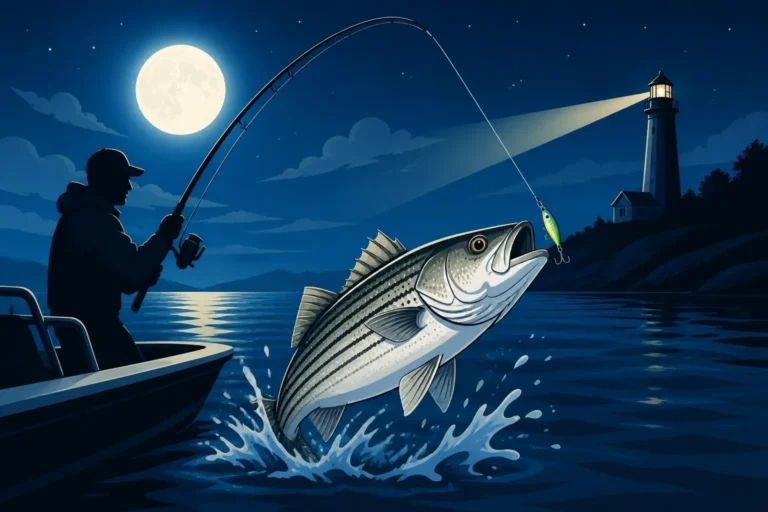
Generally, low light conditions – dawn and dusk – are universally considered the most productive times for striped bass. During these periods, stripers, especially larger ones, feel more comfortable moving into shallower water to feed, as their excellent low-light vision gives them an advantage over their prey. Topwater action is often phenomenal during these windows. Night fishing, as covered in our guide on Night Fishing for Striped Bass in Connecticut, can also be incredibly productive for larger fish, particularly in summer when hot daytime temperatures push them into nocturnal feeding patterns. Many of the biggest stripers are caught under the cover of darkness.
Seasonally, as touched on earlier, spring (April-June) and fall (September-November) offer the most consistent and often most aggressive fishing. Spring brings hungry, migrating fish into the Sound, eager to gorge after their journey. Fall witnesses the "fall run," a feeding frenzy as stripers load up on baitfish before migrating south. Summer (July-August) can be challenging during the day due to heat, often requiring anglers to focus on early mornings, late evenings, or nighttime. However, if you're out there, you might catch the occasional fish during the day. For a more detailed breakdown of when to hit the water, consult our articles on Best Time of Day to Catch Striped Bass and Best Time of Year to Fish in Connecticut. Keeping an eye on local tide charts, available through various apps or NOAA, will be your best friend. Even a simple waterproof printout that you can buy on Amazon can make a huge difference in planning your day on the water.
Here's a quick guide to pairing techniques with typical Long Island Sound conditions:
| Condition / Time | Primary Strategy | Preferred Technique | Notes |
|---|---|---|---|
| Early Spring (Cold Water) | Seek warmer, shallower water | Slow retrieves, bait | Focus on estuaries, sunny flats. Live eels at night. |
| Late Spring / Early Summer | Incoming/outgoing tide | Topwater, swimming plugs | Dawn/Dusk. Look for bait schools. |
| Mid-Summer (Hot Day) | Deeper water, low light | Live bait, chunking | Night fishing is often most productive. |
| Fall Run (Baitfish) | Follow the bait migration | All lures, live bait | Aggressive feeding; try various depths and speeds. |
| Strong Current (Rips) | Fish structure, current breaks | Jigs, heavy plugs, live bait | Stripers ambush prey here. Vertical jigging. |
| Slack Tide | Focus on deeper holes, structure | Live bait, chunking | Slower presentation, patience is key. |
Key Fishing Locations in Long Island Sound
Long Island Sound is a vast body of water, and knowing where to focus your efforts can be daunting. From busy harbors to secluded beaches, stripers can be found in a variety of places, depending on the season and tide.
Shore-Based Access Points
Not everyone has a boat, and thankfully, Long Island Sound offers numerous excellent opportunities for shore-bound anglers to target striped bass.
One of the most popular and productive shore-fishing strategies involves casting from jetties and rock piles. These structures extend into the water, providing deeper access and creating current breaks that stripers love. Iconic spots include the various jetties along the Connecticut coastline in places like West Haven, Milford, or Stonington. When fishing jetties, focus on the eddies and seams where the current is disrupted, as baitfish often get swept into these areas. Be sure to exercise extreme caution on slippery rocks, especially during high tide or after a rain. Beaches and sand flats can also be highly productive, particularly during the spring and fall runs when large schools of baitfish move along the shoreline. Look for areas with slight depressions, sudden drop-offs, or submerged rocks which can hold fish. Casting large swimming plugs, soft plastics, or even chunk bait can be effective from these spots. Places like Hammonasset Beach State Park or Bluff Point State Park offer expansive shoreline access. Piers, while less common for serious striper fishing, can still offer opportunities, especially for schoolie stripers that venture close to shore. Always be mindful of local regulations and private property when accessing these locations.
Boat-Based Hotspots
For those with a boat, the entirety of Long Island Sound opens up, revealing a treasure trove of striper hotspots, from vast open waters to intricate channels.
Reefs and shoals are absolute magnets for striped bass. These underwater structures break current, provide habitat for baitfish and crustaceans, and act as ambush points. The "Race" at the eastern end of Long Island Sound, between Fishers Island and New London, is perhaps the most famous and productive striper ground, known for its incredibly strong currents and massive fish. Other notable reefs include Six Mile Reef off Westbrook, Southwest Reef near Clinton, or many of the smaller, unnamed rocky areas that show up on your chart plotter. These areas are best fished by drifting live bait or jigs through the rips and over the structure. Channels and river mouths are also prime locations, especially during tidal changes. The mouth of the Connecticut River, for instance, is a renowned striper fishery, particularly in the spring and fall when fish are migrating and gorging on river herring and bunker. Drifting or trolling through these channels can be highly effective. The Thimble Islands off Branford and the Norwalk Islands in western Long Island Sound also offer excellent fishing around their rocky structures and protected coves. When exploring these boat-based hotspots, a good chart plotter or marine GPS is invaluable for identifying submerged structure, monitoring depth changes, and safely navigating the waters. For a broader look at some of the best spots, consult our comprehensive Long Island Sound Fishing Guide.
Understanding Regulations and Responsible Angling
Fishing for striped bass in Connecticut isn't just about what gear you use or where you go; it's also about understanding and respecting the rules and practicing responsible angling. Regulations are in place to protect the fishery, and proper catch-and-release techniques ensure the long-term health of the species.
Connecticut Striped Bass Regulations
Connecticut's Department of Energy and Environmental Protection (DEEP) sets specific regulations for striped bass to ensure sustainable fishing practices. These rules can change, so always check the most current DEEP fishing guide before heading out.
Currently, size limits and bag limits are critical. Striped bass in Connecticut are managed under a "slot limit," meaning you can only keep fish within a specific size range, for example, from 28 inches up to but not including 31 inches. This slot limit is designed to protect both the smaller, juvenile fish and the larger, spawning-potential females, allowing them to reproduce and sustain the population. The daily bag limit typically allows one fish per person within that slot. Going outside these limits, even by an inch, can result in significant fines, so it’s essential to measure your fish accurately. For specific details on the current slot limits and season dates, be sure to review the Connecticut Striped Bass Slot Limit and Season article.
Another crucial regulation is the circle hook requirement when fishing with bait. When using natural baits (live or dead) for striped bass, anglers are required to use non-offset circle hooks. This regulation is a critical conservation measure. Circle hooks are designed to hook fish in the corner of the mouth rather than deep in the gullet, greatly increasing the survival rate of released fish. You can find more information about this important rule in our guide on the Connecticut Striped Bass Circle Hook Requirement. Always ensure you have a valid Connecticut Fishing License Guide for 2026 for saltwater fishing, as well as an accurate measuring device (like a bump board) and a way to quickly release fish without causing undue harm. These regulations are not just arbitrary rules; they are carefully considered measures to help preserve the striped bass fishery for future generations of anglers. For a broader overview of all saltwater species, check out the Connecticut Saltwater Fishing Regulations by Species guide.
Catch and Release Best Practices
Many striped bass caught in Long Island Sound are either outside the slot limit or are fish you simply choose to release. Knowing how to properly handle and release them is vital for their survival.
The goal of catch and release is to minimize stress and physical harm to the fish. Firstly, minimize fight time by using appropriately sized tackle. Dragging out a fight exhausts the fish, making it less likely to survive. Secondly, keep the fish in the water as much as possible. Striped bass, especially larger ones, can suffer internal organ damage or suffocation when held vertically by the jaw or gills out of the water. If you must remove a fish from the water for a quick photo, support its body horizontally with two hands – one under the belly, one gripping the tail. Avoid touching the gills or eyes.
When removing the hook, use pliers or a de-hooking tool to quickly and carefully extract the hook. Since circle hooks typically lodge in the lip, removal is usually straightforward. If a fish is deeply hooked, it's often better to cut the line as close to the hook as possible rather than trying to rip it out, which can cause more damage. After removing the hook, gently revive the fish by holding it upright in the water, facing into a gentle current. Move it back and forth slowly to push water over its gills until it regains strength and swims away on its own. Never just toss a tired fish back into the water. These practices, combined with observing Connecticut Fishing Season Dates and Closures, help ensure that those powerful stripers we love to catch continue to thrive in Long Island Sound.
Advanced Tips and Local Insights
Even with the right gear and knowledge of basic techniques, there are always ways to refine your approach and gain an edge. Experienced anglers often rely on subtle cues and a deep understanding of their environment to consistently find and catch fish.
Monitoring Baitfish and Water Temperature
Being attuned to the environment is like having a sixth sense for fishing. Two of the most critical environmental factors for striped bass are baitfish presence and water temperature.
The presence of baitfish is arguably the single most important indicator of where stripers will be. If there's no bait, there are usually no stripers. Keep an eye out for visual cues: diving birds (gulls, terns, ospreys) are often a dead giveaway that baitfish are being pushed to the surface by predators below. Look for "nervous water" – subtle ripples or disturbances on the surface that indicate a school of bait just below. Your fish finder is an invaluable tool for locating bait schools in deeper water; learn to interpret its readings to distinguish between bait and larger fish. Pay attention to local reports; tackle shops are excellent sources of information on what baitfish are in the area and where they're being found. Knowing whether it's bunker, spearing, or squid on the menu allows you to "match the hatch" with appropriate lures or bait, dramatically increasing your chances.
Water temperature is another non-negotiable factor. Striped bass are cold-blooded and their metabolism, activity levels, and preferred locations are directly tied to it. They generally become active when water temperatures rise above 45-50°F in the spring. Their ideal feeding range is typically between 55-70°F. Once water temperatures exceed 70-72°F in mid-summer, stripers can become lethargic during the day and seek cooler, deeper waters or feed predominantly at night. Having a reliable water thermometer, either built into your fish finder or a handheld device, is extremely useful. Understanding these thermal preferences helps you predict where fish will be holding – shallower and warmer in spring, deeper and cooler in summer, and widespread in the temperate conditions of fall.
Safety and Preparedness
Long Island Sound can be a beautiful place to fish, but it can also be unforgiving. Prioritizing safety is paramount, whether you're fishing from shore or on a boat.
For boaters, adherence to Connecticut Boating Laws for Anglers is not just a legal requirement but a life-saving practice. Always have all required safety equipment on board, including Coast Guard-approved Personal Flotation Devices (PFDs) for everyone, a fire extinguisher, sound-producing devices, and visual distress signals. File a float plan with someone on shore, letting them know your intended fishing area and estimated return time. Check marine weather forecasts religiously before heading out, and be prepared for rapidly changing conditions. Long Island Sound can go from flat calm to choppy in a hurry. A marine VHF radio is essential, as cell phone service can be unreliable in some areas. Consider a satellite messenger for offshore trips.
Shore anglers also need to be mindful of safety. When fishing jetties or rocky shorelines, wear appropriate footwear with good grip to prevent slips and falls. A quality headlamp is crucial for navigating uneven terrain in low light. Always be aware of the tide schedule; rising tides can quickly cut off access to certain spots. Inform someone of your fishing plans and location. Carrying a first-aid kit, a fully charged cell phone (in a waterproof case), and plenty of water are good practices for any angler. Many of these essential safety items, from PFDs to waterproof dry bags for your electronics, are available on Amazon and are a small price to pay for peace of mind on the water.
Disclaimer
Please note that fishing regulations, including size limits, bag limits, and season dates, are subject to change by the Connecticut DEEP. Always consult the most current Connecticut Angler's Guide or the DEEP website before fishing to ensure compliance with all applicable laws. This guide is for informational purposes only and should not be considered a substitute for official regulations.