How to catch smallmouth in a Connecticut river current
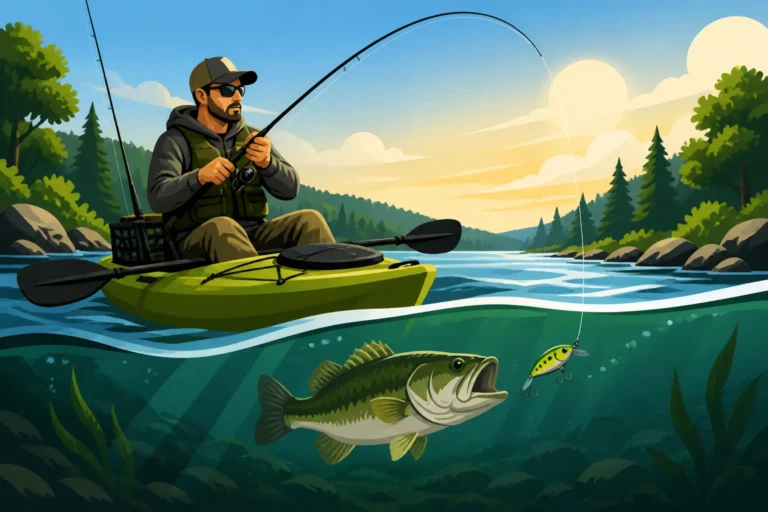
Fishing for smallmouth bass in Connecticut's rivers can be one of the most exciting and challenging experiences an angler can have, but that swift, unforgiving current often leaves even seasoned folks scratching their heads. It's not like still-water bass fishing where you can just cast to cover and hope for the best; the river dictates everything. This guide will help you decode the complexities of river currents, equip you with the right gear, and teach you the techniques necessary to consistently hook into those hard-fighting smallmouth that call Connecticut's moving waters home.
Understanding Smallmouth Behavior in River Currents
Smallmouth bass are incredible athletes, perfectly adapted to life in flowing water. They don't fight the current; they use it to their advantage, leveraging it to ambush prey and conserve energy. To successfully catch them, you first need to think like them – or at least understand their river-savvy strategies.
How River Currents Affect Smallmouth Behavior
Imagine yourself trying to stand in a strong river current all day. You'd be exhausted in no time, right? Smallmouth bass feel the same way. Their primary goal in a current is to find a spot where they can hold with minimal effort, yet still have access to food being swept downstream. This means they're constantly looking for current breaks, seams, and eddies – anything that offers a reprieve from the relentless flow. When they're actively feeding, they'll dart out into the faster water to grab a passing meal, then retreat back to their comfortable lie. When the current is particularly strong, they'll hug the bottom or tuck into the tightest cover possible.
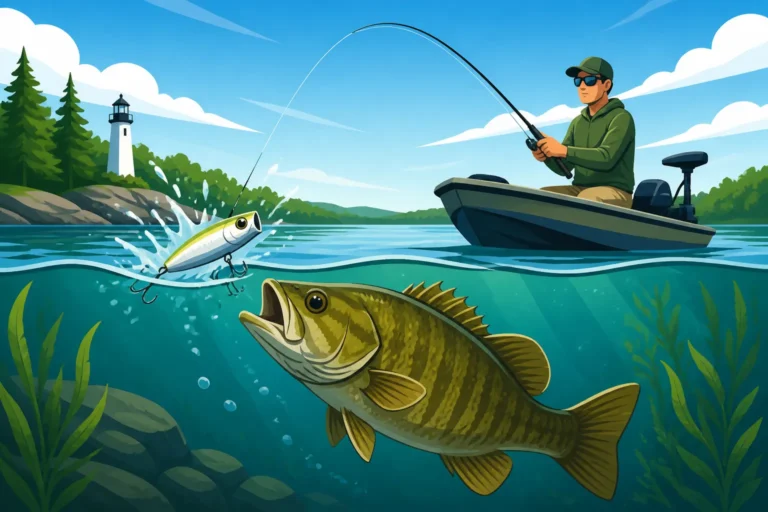
Their feeding behavior is also heavily influenced by the current. Unlike largemouth that might cruise weed lines, smallmouth often face upstream, waiting for baitfish, crayfish, or insects to drift by. This makes presentation absolutely critical; your lure needs to mimic this natural drift or appear as an easy, vulnerable meal that the current delivers right to their doorstep. Understanding these fundamental principles is your first step to unlocking success in river environments.
Prime Holding Lies in Connecticut Rivers
Connecticut's rivers, like the Housatonic or parts of the Farmington, are mosaics of current and structure, creating endless potential smallmouth hideouts. The key is identifying these prime holding lies. Look for features that disrupt the main current flow, creating slower water pockets.
Rocks and boulders are classic smallmouth magnets. A large boulder creates an eddy directly downstream, a perfect resting spot. Smallmouth will also position themselves just upstream of a boulder, right in front of it, where the current parts and brings food directly to them. Ledges, submerged logs, and downed trees also act as significant current breaks, offering both shelter and ambush points. Another fantastic spot is a seam where fast water meets slower water. Smallmouth will often sit right on this seam, darting into the fast lane when they see something appetizing, then slipping back into the slow water to digest. Deep pools with moderate current can also hold good numbers of fish, especially in cooler water or during slower feeding periods. Don't overlook undercut banks, which provide overhead cover and a natural current break for fish seeking refuge. By learning to "read the water" and identify these common structures, you'll dramatically increase your chances. You can find more specific guidance in our article on How to Fish a River for Smallmouth Bass.
Gearing Up for River Current Smallmouth
Using the right tackle is non-negotiable when battling powerful smallmouth in a river current. You need gear that can cast accurately, withstand strong tugs, and give you the leverage to steer a hard-fighting fish away from snags and downstream escape routes.
Rod, Reel, and Line Selection
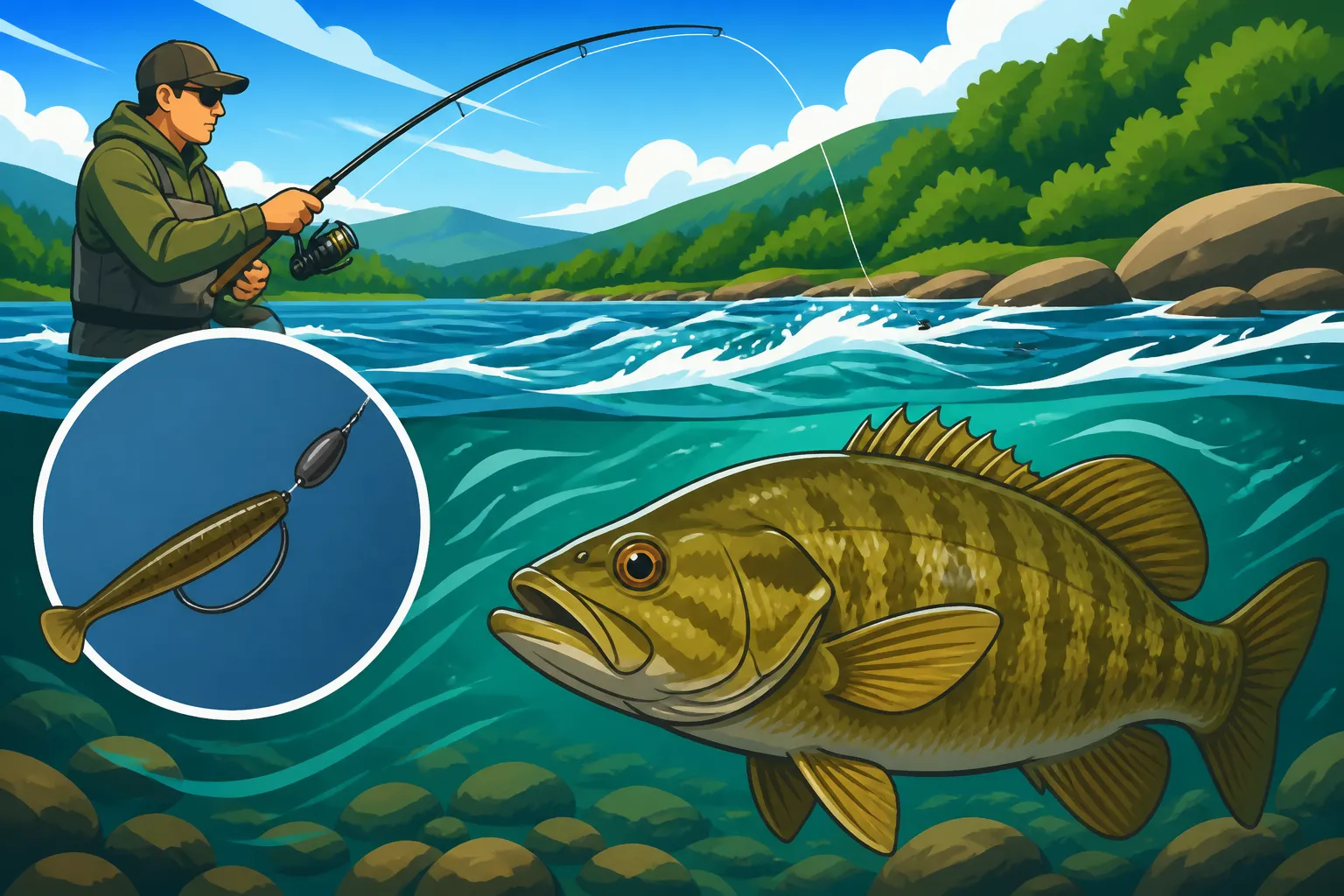
For river smallmouth, a medium-light to medium power spinning rod, typically in the 6'6" to 7'0" range, is often ideal. This length provides good casting distance and accuracy, while the medium power gives you enough backbone to set the hook and control a fish in current. A fast action tip is crucial for feeling subtle bites and quickly transmitting hooksets. For reels, a 2500 or 3000 series spinning reel offers a good balance of line capacity and retrieve speed. Make sure it has a smooth drag system, as smallmouth are notorious for powerful runs.
When it comes to line, a good fluorocarbon or braided line with a fluorocarbon leader is highly recommended. Braided line in the 10-15 lb test range offers incredible sensitivity, zero stretch for solid hooksets, and excellent casting distance. However, its visibility can be an issue in clear river water, so a 6-10 lb fluorocarbon leader of 3-5 feet is a must. Fluorocarbon itself is a fantastic main line choice too, especially in the 8-12 lb test range, as it's nearly invisible underwater, sinks, and has good abrasion resistance – a huge plus when fishing around rocks and logs. Many anglers will find a great selection of these specialized lines and reels on Amazon when preparing for their river adventures.
Lures and Baits That Excel in Current
The current will make light lures drift unnaturally or simply sweep them away. You need lures that can cut through the water, maintain depth, and offer a natural presentation.
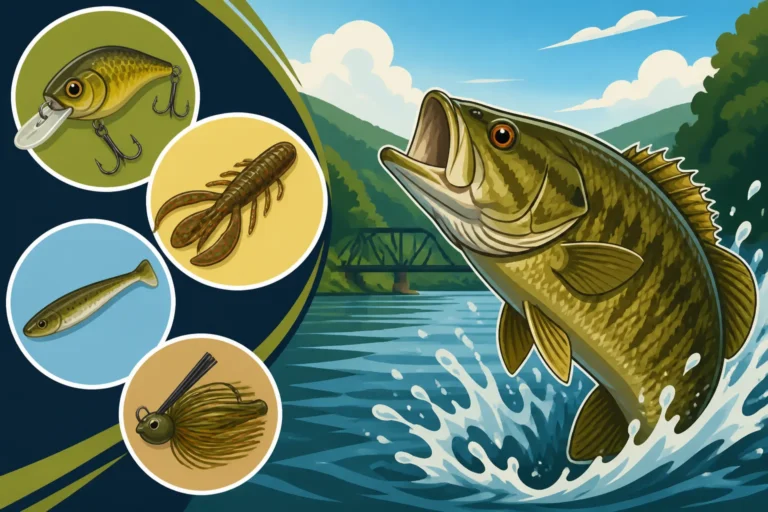
- Jigs: These are absolute river smallmouth staples. Football jigs, hair jigs, and tube jigs, especially those weighing 1/8 to 3/8 ounce, are fantastic. Tip them with soft plastic crawfish, grubs, or small paddle-tail swimbaits. The weight allows them to sink quickly and maintain bottom contact. Drifting jigs naturally downstream with the current, occasionally hopping them, can be deadly. You can often find a wide array of jig heads and soft plastics perfectly suited for river fishing on Amazon.
- Crankbaits: Smaller, tight-wobbling crankbaits that mimic baitfish or crawfish are excellent. Choose models that dive to the depth you're targeting. Squarebill crankbaits are particularly good for deflecting off rocks without snagging. Try to cast them upstream and retrieve them just fast enough to get the wobble, allowing the current to help with the presentation.
- Soft Plastics: Rigged on a jig head, Texas-rigged, or Carolina-rigged, soft plastics like creature baits, worms, and swimbaits can be incredibly effective. Make sure to use enough weight to get them down in the current.
- Spinnerbaits and Chatterbaits: While not always the first choice for heavy current, smaller spinnerbaits and Chatterbaits can be effective in moderate flows or along current seams, especially if you can keep them running true without spinning out.
- Natural Baits: Live minnows, shiners, or crayfish, fished on a simple bottom rig or under a float in slower eddies, are always a reliable option for smallmouth. Just ensure your rigging allows the bait to present naturally without getting swept immediately away or stuck on the bottom. For more on what these fish like to eat, check out Best Baits for Smallmouth Bass on the Housatonic.
Here's a quick comparison of popular lure types for river currents:
| Lure Type | Best Current Conditions | Ideal Depth | Retrieval Style | Pros | Cons |
|---|---|---|---|---|---|
| Jigs (Tube, Hair, Football) | Moderate to Strong Flow | Bottom to Mid-Column | Drift, Hop, Drag, Swim | Versatile, mimics crawfish/baitfish, great bottom contact, highly sensitive | Can snag easily in rocky areas, requires feel for subtle bites |
| Crankbaits (Squarebill, Diving) | Moderate Flow, Current Seams | Mid-Column to Shallow | Cast upstream/across, steady retrieve with deflection | Covers water quickly, triggers reaction strikes, good for searching | Can get swept out of strike zone in heavy current, limited depth control |
| Soft Plastics (Rigged) | Slow to Moderate Flow | Bottom to Mid-Column | Slow drag, light hop, shaky head | Highly customizable, natural look and feel, effective in clear water | Slower presentation, can be difficult to detect bites in heavy current |
| Spinnerbaits/Chatterbaits | Moderate Flow, Near Structure | Mid-Column to Shallow | Steady retrieve, stop-and-go | Good flash and vibration, effective for active fish, weedless options | Can "blow out" (spin incorrectly) in very fast current, less subtle |
Mastering Techniques for Fishing River Currents
Once you have your gear sorted, it's time to put it to work. Fishing in current requires a nuanced approach, blending observation, precise casting, and controlled presentation.
Reading the Water and Approach Strategies
The most successful river anglers spend more time observing than casting. Before you even make your first cast, stop and watch. Look for visible current breaks, changes in water color (indicating depth changes), and eddies. If you see foam lines or debris gathering in certain areas, those are often current seams or eddies where smallmouth might be holding. Pay attention to the subtle swirls or boils that can indicate a deeper pocket or submerged structure.
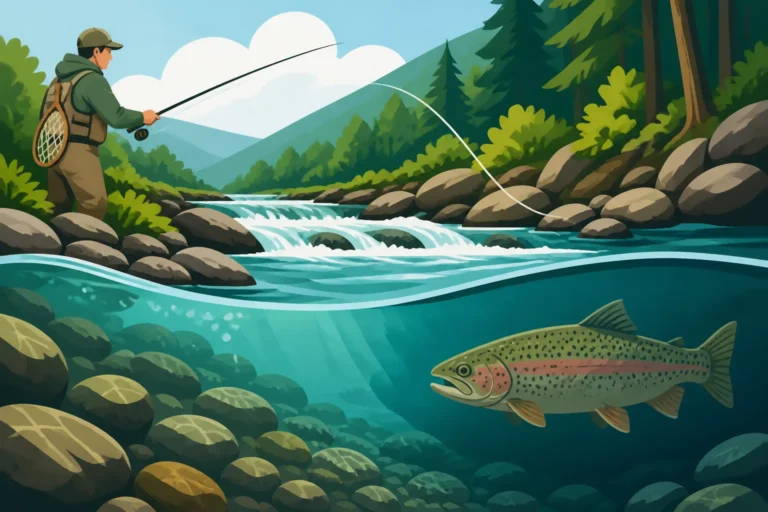
When approaching a spot, always try to fish upstream and cast upstream or quarter-upstream. This allows your lure to drift naturally back towards you with the current, mimicking real prey. It also keeps you from walking into the fish's "strike zone" and spooking them. Move slowly and deliberately, especially if wading. Try to keep a low profile. If you're on a boat, use a trolling motor or anchor strategically to hold your position relative to the current and the target structure. Remember, smallmouth usually face upstream, so you want your lure to come to them from the direction they're already watching. Our guide to How to Catch Smallmouth Bass in Connecticut Rivers offers more insights into finding these fish.
Presentation and Retrieval Methods
Presenting your lure correctly in current is paramount. For jigs and soft plastics, the "dead drift" is often king. Cast slightly upstream of your target, allow the lure to sink, and then try to keep just enough tension on your line to feel bites without impeding the natural drift. Your lure should tumble and bounce along the bottom or near structure, just like a dislodged crawfish or stunned baitfish. Many anglers use the "lift and drop" retrieve, lifting the rod tip slightly to move the jig, then allowing it to fall back on a semi-slack line, letting the current do most of the work. It's a subtle dance between you, the current, and your lure.
For crankbaits, cast upstream or across stream, aiming to hit the retrieve zone just ahead of where you expect the fish to be. Retrieve just fast enough to engage the lure's action, letting the current aid its movement. When it hits a rock or log, pause for a split second – that deflection and hesitation often triggers a strike. This reaction bite can be incredibly effective. Consider checking Amazon for fishing line designed for abrasion resistance if you're frequently deflecting lures off structure.
Safety Considerations
Wading in river currents, especially in a state like Connecticut where rivers can range from gentle flows to swift, rocky rapids, demands serious attention to safety. Always wear a PFD (personal flotation device), even in seemingly calm water, as conditions can change rapidly. Invest in good wading boots with felt or studded soles for traction. A wading staff can be an absolute lifesaver, providing an extra point of contact and helping you gauge depth and current strength. Never wade alone, and always let someone know where you're going and when you expect to return. Be mindful of sudden drop-offs, slippery rocks, and swift undertows. In higher water conditions, it might be safer to fish from the bank or a boat. For more on safe boating and fishing, you might want to look into Connecticut Safe Boating Certificate Requirement and Life Jacket Requirements for Connecticut Boaters.
Adapting to Different Connecticut River Conditions
Connecticut's rivers aren't static; they change with seasons, weather, and rainfall. Being able to adapt your smallmouth fishing strategy to these varying conditions is what separates consistent anglers from occasional lucky ones.
High Water vs. Low Water Strategies
- High Water Conditions: After heavy rain, rivers swell, currents become ferocious, and visibility often drops as the water turns muddy. Smallmouth will typically move out of the main current and into slower, calmer pockets. Look for them in flooded backwaters, eddies behind large obstructions, or along the very edges of the main flow where the current is significantly reduced. They'll often hug the banks, especially if there's flooded vegetation or structure. This is a good time for lures that create strong vibrations and profiles, like spinnerbaits, Chatterbaits, or larger jigs, as fish rely more on lateral line senses in murky water. Ensure you use heavier weights to get your lure down.
- Low Water Conditions: During dry spells, rivers shrink, and the current becomes less pronounced. Smallmouth will often concentrate in the deeper pools, especially those with some remaining current or adjacent to rock gardens and ledges. They can become warier in clear, low water, so finesse presentations are key. Downsize your lures, use lighter line, and make longer casts to avoid spooking them. Smaller tube jigs, Ned rigs, or subtle soft plastics can be incredibly effective. Focus on shaded areas or fish during low light conditions like dawn and dusk when fish are more likely to be active and less exposed.
Seasonal Adjustments
Smallmouth bass behavior in Connecticut rivers shifts throughout the year, primarily driven by water temperature and spawning cycles.
- Spring: As water temperatures rise into the 50s and low 60s, smallmouth move from their deep wintering holes to shallower spawning areas. They'll be feeding aggressively to build energy for the spawn. Look for them in rocky flats, gravel beds, and protected coves with some current. Crankbaits, jigs, and suspending jerkbaits are excellent choices. Be mindful of their spawning season; catch and release is especially important during this vulnerable time.
- Summer: When water temperatures climb into the 70s, smallmouth become more active but might move into deeper, cooler water during the brightest parts of the day. Early morning, late evening, and overcast days are prime. They'll often hold in deeper pools, current seams, and shaded areas provided by trees or undercut banks. Topwater lures can be incredibly exciting at dawn and dusk. Jigs and soft plastics fished slow and deep are effective during midday. For specific summer strategies, check out Best smallmouth bass lures for the Housatonic in summer and Best water temperature for smallmouth bass fishing.
- Fall: As water temperatures drop, smallmouth begin their "fall feed," gorging themselves in preparation for winter. This can be one of the best times to catch large fish. They'll often move back into shallower areas with good current, chasing baitfish. Spinnerbaits, crankbaits, and larger jigs are very effective. They'll be active throughout the day, often holding near deeper transition areas.
- Winter: Once water temperatures drop below 40-45 degrees, smallmouth become lethargic and move to their deep wintering holes, often in the slowest, deepest parts of the river. Fishing is challenging but possible with extremely slow presentations like vertical jigging small spoons or hair jigs right on their noses. Most anglers will target other species during this time, but dedicated smallmouth anglers can still find success.
By understanding how smallmouth react to the river's ever-changing personality, you can make informed decisions about where to find them and how to entice a bite, making your Connecticut river smallmouth adventures far more rewarding.
Disclaimer
This article is for general informational purposes only and does not constitute professional advice. Laws, prices and regulations vary by location and change over time. Consult a qualified professional for guidance on your specific situation.