Best technique for fishing a riffle for trout
There's nothing quite like the sound of water rushing over rocks, especially when you know that sound often means trout are holding somewhere in that turbulent flow. But let's be honest, fishing a riffle can feel incredibly intimidating. All that moving water, the hidden rocks, and the constant current can make it seem impossible to get a good drift or present a lure effectively. You might find yourself casting repeatedly, only to have your line dragged downstream or your fly completely ignored. This guide is here to demystify riffle fishing for trout in Connecticut, offering practical techniques and insights to help you confidently target those elusive fish hiding in the white water.
Understanding Trout Riffles in Connecticut
Riffles are essentially shallow, fast-moving sections of a river or stream where the water flows over rocks, creating turbulence and aerating the water. While they might look chaotic to us, to a trout, they are bustling cafeterias and safe havens. Learning to 'read' these areas is the first step to becoming a successful riffle angler.
What Makes a Riffle a Trout Haven?
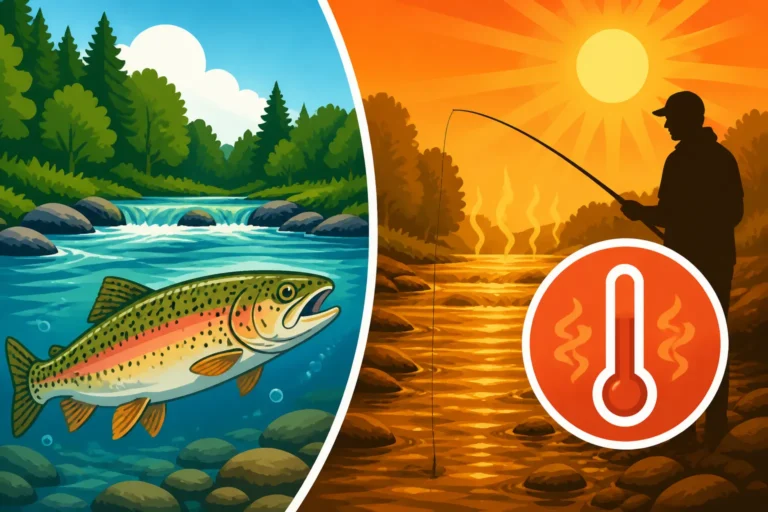
It's all about survival and sustenance for trout, and riffles provide both in spades. First and foremost, the turbulent flow oxygenates the water, which is critical for cold-water species like trout, especially as water temperatures rise in the summer. Think of it like a natural aeration system that keeps the environment healthy and comfortable for them. But beyond oxygen, riffles are prime feeding grounds. The fast current dislodges insects, crustaceans, and other small organisms from the streambed, effectively serving them up as a conveyor belt of food. Trout will position themselves strategically to intercept these morsels with minimal effort.
Consider the classic Connecticut trout stream like the Farmington River or a smaller freestone stream in the Northeast. You'll often find that even during the warmest parts of the day, trout will hold in these faster, more oxygenated sections. They might be tucked behind a larger rock, in the slack water on the edge of the main current, or right in the middle of a feeding lane, waiting for dinner to come by. The broken surface water also offers a crucial element of safety, making it harder for predators, including us anglers, to spot them. This inherent cover makes them feel secure enough to feed aggressively.
Reading the Water: Identifying Productive Riffle Zones
The art of fishing a riffle isn't just about casting into the white water; it's about understanding where in that white water the trout are most likely to be holding. You're looking for subtle changes in current speed and direction that indicate prime feeding or resting lies.
One of the most important things to identify are current seams. These are lines where two different currents meet – perhaps a fast current colliding with a slower one, or the edge of a strong flow against a rock or bank. Trout will often hold just out of the fastest current, conserving energy, and dart out to grab food as it drifts by in the seam. Picture a large boulder in the middle of a riffle; the water upstream of it will accelerate, but immediately downstream, there will be a pocket of slower water, often forming a small eddy. These eddies are fantastic holding spots, offering a rest from the current while providing easy access to food circling within.
Another key area is the transition zone where the riffle begins to deepen and slow, turning into a run or pool. Trout will often sit at the very tail of a riffle, where the food items settle out of the fast water just before it gets deep. These are often easier to fish because the current is less aggressive, allowing for better drifts. When you’re walking a river like the Housatonic River, try to spot these subtle variations. The water might look uniform at first glance, but with careful observation, you’ll start to see the nuances – the deeper channels, the quieter pockets, the places where the current seems to slow down just a hair. These are the spots where trout are most likely to be lurking, using the broken surface and abundant food to their advantage. Learning to read the water can significantly improve your success, no matter if you're fly fishing or using spinning gear.
Essential Gear for Riffle Fishing Success
Having the right tools for the job can make all the difference when tackling the challenges of riffle fishing. Whether you're a fly angler or prefer spinning gear, optimizing your setup will help you present your offerings more effectively and land more fish.
Rod, Reel, and Line Selection
For spinning anglers, a medium-light to medium action rod, typically between 6'6" and 7'6" in length, is a great choice for riffles. This length provides good casting distance while still allowing for precise control and sensitivity in moving water. A faster action tip will help you detect subtle bites amidst the current and set the hook quickly. Pair this with a lightweight spinning reel spooled with 4-8 lb monofilament or fluorocarbon line. Monofilament offers a bit more stretch, which can be forgiving with aggressive takes, while fluorocarbon provides excellent sensitivity and less stretch, which some anglers prefer for feeling delicate bites.
Fly anglers targeting riffles will generally find a 3-weight to 5-weight rod, 8'6" to 9' in length, to be ideal. The longer rod helps with line control and mending in the turbulent water, allowing for longer, drag-free drifts. A weight-forward floating fly line is standard, paired with a tapered leader (often 7.5 to 9 feet, 4X-6X tippet) designed for presenting nymphs or wet flies. Some anglers, especially when doing heavier nymphing, might opt for a nymph-specific fly line or a specialized Euro Nymphing setup that emphasizes direct contact with the flies over traditional floating lines. Your choice should ultimately align with the size of the stream and the trout you expect to encounter. For instance, smaller mountain streams might warrant a shorter, lighter rod, while larger rivers like the Farmington or Housatonic could handle a 9-foot, 5-weight rod with ease.
Trout Lures and Baits for Riffles
The key to successful riffle fishing, regardless of your gear, is to present something that looks natural and edible to a trout being swept along by the current.
For spinning gear, small inline spinners are absolute riffle magnets. Sizes 0, 1, and 2 in classic patterns like gold, silver, or spotted blades (think Panther Martins, Mepps, or Rooster Tails) are incredibly effective. The flash and vibration mimic small baitfish or larger insects. Small spoons, such as those weighing 1/16 to 1/8 oz, also work wonders, fluttering enticingly as they drift. Soft plastic grubs or trout worms rigged on a light jig head (1/32 to 1/8 oz) can imitate a variety of aquatic invertebrates or worms and offer a more subtle presentation. Don't underestimate natural baits either; a small worm or mealworm drifted naturally with a minimal split shot is often irresistible. You can find a fantastic selection of all these options on platforms like Amazon, making it easy to experiment and stock your tackle box.
Fly anglers will almost exclusively reach for nymphs and wet flies in riffles. Nymphs are the bread and butter here because trout in riffles spend most of their time feeding subsurface on dislodged larvae and pupae. Stonefly nymphs (Pat's Rubber Legs, Copper Johns), caddis pupae imitations (P.T. Nymphs, Hare's Ears), and mayfly nymphs are all excellent choices. It's wise to carry these in various sizes and weights to match the conditions and depth. Small wet flies, fished on a swing or dead-drifted, can also be very productive, mimicking emerging insects or drowned terrestrial bugs. Matching the hatch is always a good idea, but general attractor patterns often work well in the turbulent water where trout have less time to scrutinize their meal.
Wading Gear and Safety Considerations
When fishing riffles, you're almost always going to be in the water. Quality wading gear is not just about comfort; it's about safety. Breathable chest waders are essential for staying dry and warm, allowing you to access prime fishing positions that are inaccessible from the bank. Pair these with sturdy wading boots, preferably with felt or rubber soles that offer good traction on slippery rocks. Many anglers add studs to their wading boots for extra grip, which can be a lifesaver when navigating slick, moss-covered boulders.
Beyond the physical gear, safety in moving water is paramount. Always use a wading staff, especially when exploring new sections of a river or when the current is strong. A wading staff provides a crucial third point of contact, helping you maintain balance and test the depth and stability of the riverbed before committing your weight. Never wade alone if possible, and always let someone know where you're going and when you expect to return. Be mindful of sudden increases in water flow, especially after heavy rains upstream, which can turn a manageable riffle into a dangerous torrent. Understanding Wading Techniques for Connecticut Trout Streams will help you navigate safely and effectively. Pay attention to how the current pushes against you, and always move slowly and deliberately. Remember, a lost fish is better than a lost life.
Mastering Riffle Fishing Techniques for Trout
The turbulent nature of riffles means that your presentation needs to be spot-on. Trout in these areas are often quick to strike, but they also have a keen sense of what looks unnatural. The goal is always to present your lure or fly as if it were a natural food item drifting helplessly with the current.
Upstream Presentation with Spinning Gear
When using spinning gear in a riffle, an upstream presentation is often the most effective way to achieve a natural drift and minimize line drag. The idea is to cast your lure or bait upstream and across the current, allowing it to sink and drift naturally back towards you.
As your offering drifts downstream, reel in just enough slack to maintain a tight line and feel for strikes, but not so much that you pull the lure unnaturally against the current. This is often called a "controlled drift." If you're using an inline spinner, you want it to just barely turn its blade, not spin wildly out of control. For soft plastics or bait, imagine it tumbling along the bottom like a dislodged insect. The natural current will do most of the work for you. Trout in riffles are often aggressive feeders, so if your lure or bait is presented correctly, you might feel a sharp tug or see your line twitch. Be ready to set the hook quickly, as they often strike and then spit the offering just as fast. Focus on casting into the seams and eddies you identified earlier, allowing your lure to enter these zones as naturally as possible. Trying different retrieve speeds and angles can help you figure out what the fish are keying in on that particular day.
Dead-Drift Nymphing for Fly Anglers
For fly anglers, dead-drift nymphing is the absolute cornerstone of successful riffle fishing. This technique aims to present your artificial nymph as if it were a natural insect nymph dislodged from the bottom, tumbling downstream without any drag from your fly line.
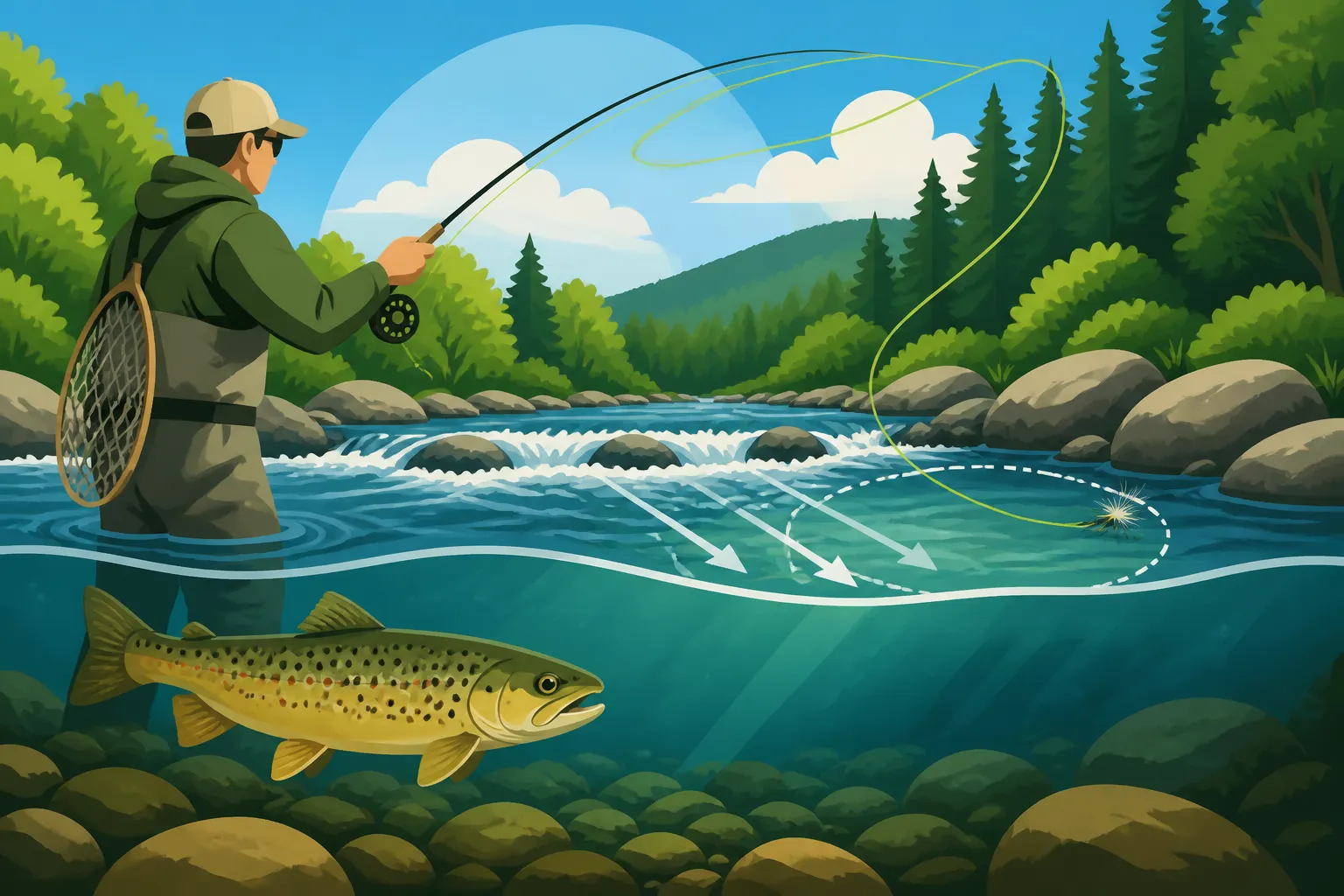
Start by casting your nymph rig (usually one or two nymphs, often with a small split shot for weight, under a strike indicator) upstream and slightly across the current. As your flies drift downstream, you'll need to continuously mend your line. Mending involves quickly lifting a section of your fly line and repositioning it upstream, effectively putting a 'belly' in the line above your flies. This counteracts the different current speeds acting on your line, allowing your flies to drift at the same speed as the natural current, completely drag-free. This is what we call a "dead drift." The longer you can maintain this drag-free drift, the higher your chances of a strike. Focus intently on your strike indicator; any subtle pause, twitch, or disappearance could signal a take. Many times, a trout will simply sip a nymph without a violent tug, so staying vigilant is key. High-stick nymphing, where you keep your rod tip high to minimize line on the water, is also crucial for maintaining control and detecting subtle bites. Learning the nuances of Fly Fishing for Trout in Connecticut will give you a significant advantage.
Targeting Seams and Eddies
Trout are smart; they conserve energy. Instead of battling the strongest current, they'll often position themselves in the slightly slower water right next to the main flow – the current seams – or in the swirling eddies created by obstacles. These spots offer a perfect balance: protection from the strongest current and a steady supply of food drifting by.
When fishing seams, try to cast your lure or fly so that it drifts right along that boundary between fast and slow water. Trout will often sit in the slower water and dart out a foot or two into the faster current to grab a passing meal. For eddies, cast your offering into the upstream edge of the eddy, letting it swirl naturally within the calmer water. Sometimes, a trout will hold right at the very head of the eddy, where the fast water first hits the slower water, or at the tail where food collects before being swept into the next section. Pay attention to how the current moves around every rock and structure; each one creates a potential hiding or feeding spot. Don't be afraid to make multiple casts to the same seam or eddy from slightly different angles, as a minor adjustment can often trigger a strike.
Advanced Tips for Challenging Riffles
Even with the best techniques, riffle fishing can throw curveballs. Water levels, clarity, and the ever-present need for stealth can make a big difference in your success. Incorporating these advanced tips can help you adapt and succeed even when conditions aren't ideal.
Adjusting to Water Levels and Clarity
Riffles are particularly sensitive to changes in water levels and clarity. After a heavy rain, rivers like the Naugatuck or Quinnipiac can rise quickly and become murky, making fishing incredibly tough. In these conditions, trout often move out of the fastest, dirtiest water and seek refuge in slower, clearer pockets along the banks or in larger eddies. When the water is high and murky, consider using larger, more vibrant lures or flies that create more vibration and can be seen (or felt) better in low visibility. Spinners with bright blades or dark-colored nymphs (like a black stonefly imitation) can stand out.
Conversely, during periods of low, clear water, stealth becomes paramount. The trout are much more easily spooked, and they have ample time to scrutinize your offering. This is when smaller lures, lighter leaders, and more subtle presentations are key. You might need to drop down to a smaller size 0 spinner or a tiny midge nymph. In these conditions, approaching the water carefully, using natural cover, and avoiding casting shadows over the water are absolutely critical. Understanding What water temperature trout need to survive can also give you clues, as low water often means warmer temperatures, pushing trout into the most oxygenated parts of the riffle.
Stealth and Approach
Trout in riffles, despite the broken surface water providing some cover, are still wary creatures. Your approach to the water can often determine your success before you even make a cast. Think like a hunter: stay low, move slowly, and use natural cover like trees, bushes, or bank contours to conceal yourself. Avoid stomping along the bank or making sudden movements, as vibrations can travel through the water and alert fish to your presence.
When wading into a riffle, do so slowly and deliberately. Shuffle your feet to avoid dislodging rocks and creating noise. Your goal is to enter the water with as little disturbance as possible. Cast from a position that minimizes your shadow falling across the water where you expect trout to be holding. Often, casting from slightly downstream and quartering your casts upstream allows you to present your lure or fly to untouched water before you potentially spook the fish closer to you. Remember, these fish are often holding in fairly shallow water, and even a small disturbance can send them scattering for deeper, safer lies. This is particularly true in highly pressured areas of popular destinations, so being mindful of your presence is key.
Seasonal Considerations for Riffle Fishing
The effectiveness of different riffle techniques can shift with the seasons, largely influenced by water temperature, insect hatches, and trout behavior.
In spring, especially around Connecticut trout season opening day for 2026, riffles are typically high and cold from snowmelt and spring rains. Trout are often less active but are still feeding on abundant dislodged nymphs. This is a great time for heavier nymph rigs or larger spinning lures that can get down quickly. The fish are often holding tight to the bottom in slightly slower water, so getting your offering deep is crucial.
Summer often brings lower, warmer water, pushing trout into the most oxygenated sections of riffles. While daytime fishing can be tough, early mornings and late evenings can be fantastic, especially with terrestrial insect imitations (like foam beetles or ants for fly anglers) or small spinners. When water is clear and low, trout can be highly selective, so matching smaller patterns or using very subtle presentations is key. Exploring Best Time of Year to Fish in Connecticut will highlight these seasonal shifts.
By fall, water temperatures begin to cool, and trout become very active, feeding aggressively to build up reserves for winter. Riffles can be incredibly productive during this time, with trout hitting a wide variety of lures and flies. Larger nymphs, streamers, and more aggressive spinning retrieves can often trigger strikes from actively feeding fish. This is when you might find larger brown trout moving into riffles for pre-spawn feeding.
| Factor | Spinning Gear Riffle Technique | Fly Fishing Riffle Technique |
|---|---|---|
| Rod/Reel | Medium-light to Medium action, 6'6"-7'6" rod; 4-8lb line | 3-5 weight, 8'6"-9' rod; weight-forward floating line |
| Primary Lures | Small inline spinners (size 0-2), spoons, soft plastics, bait | Nymphs (Stonefly, Caddis, Mayfly), small wet flies |
| Presentation | Cast upstream/across, controlled drift, minimal reeling | Upstream dead-drift, high-stick nymphing, frequent mending |
| Target Areas | Current seams, eddy lines, transition zones | Current seams, eddy lines, structure-induced holding lies |
| Depth Control | Jig head weight, split shot on bait, retrieve speed | Split shot, weighted flies, strike indicator depth adjustment |
| Strike Ind. | Line twitch, sharp tug, visual strike | Strike indicator movement, line pause/twitch, rod tip feel |
| Advantage | Can cover water quickly, effective with varying depths | Unparalleled natural drift, highly effective for subsurface food |
Regardless of the season, checking the Connecticut Interactive Trout Stocking Map, Explained can give you a heads-up on recently stocked areas, which often means more actively feeding fish in the riffles. Always consult the Connecticut Fishing Regulations Explained to ensure you're compliant with any specific rules for the waters you're fishing.
Fishing a riffle for trout can be one of the most rewarding experiences in angling. It requires a bit of finesse, an understanding of trout behavior, and the right gear, but once you crack the code, you'll find these turbulent sections of river to be incredibly productive. So next time you're on a Connecticut stream, don't shy away from the rushing water. Lean into it, read the currents, and cast with confidence. You might just find your next trophy trout waiting in the froth!
Disclaimer
This article is for general informational purposes only and does not constitute professional advice. Laws, prices and regulations vary by location and change over time. Consult a qualified professional for guidance on your specific situation.