Connecticut striped bass daily limit
There’s nothing quite like the thrill of feeling a powerful striped bass on the end of your line here in Connecticut. But as any seasoned angler knows, the excitement can quickly turn to confusion when you start thinking about the rules. Knowing the exact Connecticut striped bass daily limit, along with crucial size restrictions, is absolutely essential not just for staying legal, but for doing your part in protecting this incredible fishery. This guide is here to untangle all that jargon and give you a clear, straightforward understanding of what you need to know before your next trip out on the water.
Understanding the Connecticut Striped Bass Daily Limit
Navigating fishing regulations can feel like trying to solve a puzzle with missing pieces, especially when it comes to popular species like striped bass. The rules for striped bass in Connecticut are designed to balance angler enjoyment with vital conservation efforts, and they've seen some adjustments over the years. This means staying up-to-date isn't just a suggestion, it's a necessity.
The Current Daily and Size Limits for Striped Bass
For a while now, there's been a lot of discussion about how to best manage striped bass populations, which has led to regulations that are sometimes a bit more complex than just a simple "you can keep X fish." Currently, if you're fishing for striped bass in Connecticut waters, you are allowed to keep one (1) striped bass per person, per day. That's your daily creel limit. It sounds simple enough, right? But here's where the slot limit comes into play, adding another layer of crucial detail.
That one fish you keep must fall within a specific size range, known as a slot limit. For 2024, and continuing into 2025, that slot is 28 inches to less than 31 inches total length. This means your keeper striped bass must be at least 28 inches long, but it cannot be 31 inches or longer. If you catch a fish that's shorter than 28 inches, or 31 inches or longer, it must be immediately released. This is a critical point that many anglers, particularly those new to saltwater fishing or visiting from out of state, sometimes miss. The idea behind the slot limit is to protect the larger, more prolific breeding fish, allowing them to reproduce and sustain the population, while also protecting the younger, smaller fish that haven't had a chance to spawn yet. It's a careful balancing act for long-term health of the species.
It's also worth noting that these regulations are generally consistent across various marine environments, whether you're fishing in Long Island Sound or the lower tidal reaches of the Connecticut River. For a full rundown on all the saltwater species you might encounter, check out our comprehensive guide on Connecticut Saltwater Fishing Regulations by Species.
The Year-Round Open Season for Striped Bass
Unlike some freshwater species that have specific opening and closing days, the season for striped bass in Connecticut marine waters is generally open year-round. This means you can pursue these amazing fish any day of the year, provided you adhere to the daily creel and slot limits. While the season is technically open, experienced anglers know that the best time to fish for them will vary. You'll find different schools of fish migrating through and inhabiting different parts of our coast throughout the year. For instance, the spring and fall migrations often bring a surge of activity. If you're wondering when the action is hottest, our article on the Best Time of Year to Fish in Connecticut offers some great insights into seasonal patterns.
However, just because the season is open doesn't mean conditions are always ideal or that fish are plentiful. Factors like water temperature, bait availability, and weather fronts all play a huge role in striped bass behavior. So, while you can fish for them year-round, you’ll definitely find certain times of the year offer much better chances of success and more enjoyable fishing.
Why These Regulations Exist: Conservation Efforts
It’s easy to get frustrated with fishing regulations. They can feel restrictive, complex, and sometimes, frankly, like a buzzkill when you’re just trying to enjoy a day on the water. But understanding why these rules are in place can really shift your perspective. When it comes to striped bass, the regulations are a direct response to a very real and pressing need for conservation. These powerful, migratory fish have faced significant challenges over the decades, and without careful management, their populations could dwindle dramatically.
Protecting a Vulnerable Population
Striped bass are an iconic species along the East Coast, supporting a huge recreational fishery and providing an important economic boost to coastal communities. Unfortunately, like many popular species, they are vulnerable to overfishing. Their migratory patterns make them susceptible to fishing pressure across multiple states, and their relatively slow growth rate means that populations take a long time to recover once they're depleted.
The current daily limit of one fish and the specific slot limit of 28 to less than 31 inches are direct measures implemented by the Atlantic States Marine Fisheries Commission (ASMFC) and adopted by states like Connecticut to protect the spawning stock. By only allowing anglers to keep fish within a certain size range, we effectively allow the largest, most reproductively successful fish (the "brood stock") to continue spawning, and the smaller, younger fish to grow and mature. This approach is absolutely vital for ensuring there are future generations of striped bass for us all to enjoy. It’s a collective effort, and every angler plays a part in its success.
The Role of Circle Hooks in Striped Bass Conservation
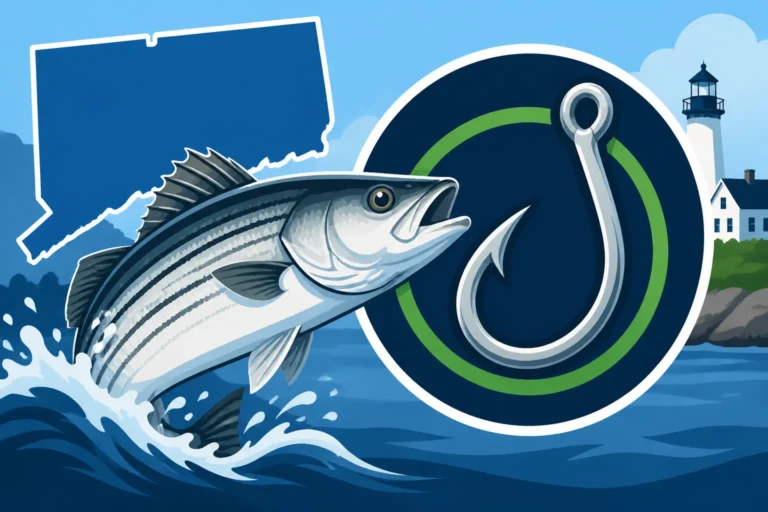
Beyond just the daily and size limits, there's another crucial regulation aimed at improving the survival rate of released striped bass: the circle hook requirement. When you're fishing for striped bass using bait (this includes live bait, dead bait, or any natural bait), you are legally required to use a non-offset circle hook. This isn't just a suggestion; it's a mandatory rule designed to minimize harm to fish that are caught and released.
So, why circle hooks? The science is pretty clear: traditional J-hooks are more likely to be swallowed deep by a fish, leading to "gut-hooking." This often results in fatal injuries, even if the fish is carefully released. Circle hooks, on the other hand, are designed to catch in the corner of a fish's mouth as the line tightens, making for much easier and safer removal. This drastically increases the chances of survival for released fish. Given that a significant number of striped bass caught, especially those outside the slot limit, are released, ensuring their survival is paramount. You can easily find packs of high-quality circle hooks on platforms like Amazon, ensuring you're always compliant and ready to go. To dive deeper into this specific requirement, take a look at our article on the Connecticut Circle Hook Requirement for Striped Bass. Adhering to this rule is a simple yet powerful way to contribute to conservation.
Practical Tips for Adhering to the Daily Limit
Following fishing regulations isn't just about avoiding a fine; it's about being a responsible steward of our natural resources. For striped bass, where the daily and slot limits are so specific, having a clear plan and the right tools can make all the difference. It ensures you stay legal, keep the fishery healthy, and still have a fantastic day on the water.
Measuring Your Catch Accurately
The slot limit for striped bass (28 inches to less than 31 inches) means that precise measurement is non-negotiable. "Close enough" simply won't cut it. You need a reliable measuring device on hand.
Here’s how to do it right:
- Use a sturdy, accurate measuring device: A rigid measuring board or a tape measure (the kind that doesn't stretch when wet) is ideal. Many tackle shops and online retailers like Amazon sell specific fish measuring boards that are perfect for this. They often have a built-in "nose bump" to ensure you get an accurate head-to-tail measurement.
- Lay the fish flat: Place the fish on its side on the measuring device, ensuring its mouth is closed and its nose is against the bump or starting point.
- Measure to the tip of the tail: Gently squeeze the tail lobes together to get the maximum overall length. This is how the Connecticut Department of Energy and Environmental Protection (DEEP) measures fish, and it’s how you should too.
- Confirm the slot: Double-check that your fish falls squarely between 28 inches and just under 31 inches. If it's even a hair under 28 or 31 inches or over, it must go back.
- Minimize handling time: The quicker you can measure and either retain or release the fish, the better its chances of survival. Wet your hands before handling the fish to protect its slime coat, and avoid placing it on hot, dry surfaces.
Remember, the responsibility for accurate measurement falls squarely on you, the angler. Don't guess.
Safely Releasing Oversized or Undersized Fish
Since you'll likely catch striped bass outside the legal slot limit, practicing proper catch and release techniques is just as important as knowing the limits themselves. Poor handling can lead to delayed mortality, negating the conservation efforts.
Here are some best practices for releasing striped bass:
- Use appropriate tackle: Don't "fight" a fish longer than necessary on ultra-light gear, especially if you intend to release it. Heavier tackle allows for a quicker fight, reducing stress on the fish.
- Minimize air exposure: Keep the fish in the water as much as possible. If you need to remove it for a quick measurement or photo, do so quickly. A fish out of water isn't breathing.
- Support the fish horizontally: If you must lift a large striped bass, support its body horizontally with both hands (one under the head, one under the tail). Never lift a large fish by the jaw or gill plates alone, as this can cause severe internal damage.
- Remove hooks carefully: This is where those circle hooks come in handy. They generally hook in the jaw, making removal much easier with a de-hooking tool or pliers. If a fish is deeply hooked despite using a circle hook, it's often best to cut the line as close to the hook as possible rather than trying to rip it out.
- Revive if necessary: If a fish seems sluggish before release, hold it gently in the water, facing into the current, until it regains its strength and can swim away on its own.
By mastering these techniques, you'll ensure that the fish you release have the best possible chance to thrive, contributing to the overall health of the Striped Bass Fishing in Long Island Sound and other populations.
What Happens if You Exceed the Limit? Penalties and Enforcement
Nobody wants to find themselves on the wrong side of the law, especially when it comes to something as enjoyable as fishing. But the reality is that fishing regulations, including the Connecticut striped bass daily limit, are serious business, and violating them can lead to significant consequences. Enforcement officers from the Connecticut Department of Energy and Environmental Protection (DEEP) are out on the water, patrolling shorelines and conducting checks to ensure everyone is playing by the rules.
Penalties for Violation
Exceeding the daily creel limit or keeping a fish outside the legal slot size for striped bass is a violation of Connecticut's fishing laws. The penalties can vary depending on the severity of the offense, your prior history, and the discretion of the enforcing officer and the courts. However, you should expect:
- Fines: These are almost always part of the penalty. Fines can range from moderate to substantial, especially for repeat offenders or egregious violations. For general fishing violations, fines can start in the hundreds of dollars, and specific game or protected species violations often carry higher penalties.
- Confiscation of fish: Any illegally possessed fish will be confiscated.
- Confiscation of fishing gear: In some cases, especially for serious or repeat offenses, your fishing gear (rods, reels, tackle) could be confiscated.
- License revocation or suspension: Your Connecticut fishing license could be suspended for a period of time, or even revoked entirely. This means you wouldn't be able to legally fish in Connecticut waters. Imagine having to sit out the entire season! You can read more about what happens if you're found Fishing Without a License in Connecticut: Penalties – and violating limits is often treated with similar seriousness.
- Court appearance: For more serious violations, you may be required to appear in court, adding legal fees and court costs to your woes.
These penalties aren't just empty threats; they are actively enforced to deter violations and protect the fishery. The DEEP takes its role as steward of Connecticut's natural resources very seriously, and they expect anglers to do the same.
How Enforcement Works
DEEP Environmental Conservation Police Officers (EnCon Police) patrol both inland and marine waters. They conduct routine checks at boat launches, fishing piers, and on the water. They are trained to identify fish species, measure them accurately, and recognize signs of tampering or illegal activity.
When an officer approaches you, they will typically ask to see your fishing license and may request to inspect your catch. It's crucial to be cooperative and respectful. Trying to hide fish, arguing, or being uncooperative will only escalate the situation and likely lead to harsher outcomes.
Remember, these officers are doing their job to protect the very resource that we all enjoy. Adhering to the regulations ensures the long-term health of the striped bass population, meaning more exciting fishing opportunities for everyone in the years to come. So, do yourself and the fish a favor: know the rules, follow them, and enjoy the peace of mind that comes with being a responsible angler.
Staying Informed and Being a Responsible Angler
The world of fishing regulations isn't static. It's a dynamic system that changes based on scientific data, conservation needs, and input from various stakeholders. What was true last year for striped bass might not be true next year. This is why staying informed is such a crucial part of being a responsible angler in Connecticut.
Where to Find the Most Up-to-Date Information
The absolute best source for current and accurate fishing regulations in Connecticut is the official Connecticut Department of Energy and Environmental Protection (DEEP) website. They publish annual fishing guides, updates, and news releases whenever regulations change.
Here’s how you can stay on top of things:
- Visit the DEEP Website Regularly: Make it a habit to check the DEEP's Fisheries Division section, especially before the start of a new fishing season or if you hear rumors of regulatory changes. They will have direct links to the latest Connecticut Fishing Regulations Explained.
- Download the Latest Fishing Guide: The DEEP publishes a comprehensive annual "Connecticut Angler's Guide" that covers all freshwater and saltwater regulations. You can usually download it as a PDF, or pick up a physical copy at tackle shops or DEEP offices.
- Sign Up for Email Alerts: Many state agencies, including DEEP, offer email notification services for important updates. This is an excellent way to get changes delivered directly to your inbox without having to constantly hunt for information.
- Talk to Local Tackle Shops and Charter Captains: Experienced local bait and tackle shop owners and charter captains (like those offering Best Striped Bass Charters on Long Island Sound) are often the first to know about upcoming or recent changes. They’re a valuable resource for hyper-local knowledge, but always cross-reference with the official DEEP guide.
The Angler's Role in Conservation
Beyond simply following the rules, responsible angling means adopting a mindset of stewardship. Every decision you make on the water has an impact, however small, on the overall health of the fishery. When we talk about Striped Bass Growth Rate to Trophy Size, we understand the importance of letting those fish grow and reproduce.
Here are a few ways you can go above and beyond:
- Report Violations: If you witness someone clearly violating fishing regulations, report it to the DEEP EnCon Police. This isn't "snitching"; it's protecting a shared resource from those who would undermine conservation efforts.
- Participate in Surveys or Citizen Science: Sometimes, DEEP or other organizations will ask for angler participation in surveys (e.g., recording catch data, tagging fish). Contributing to these efforts provides valuable data for scientists.
- Educate Others: If you see a fellow angler who seems unaware of a regulation (perhaps they're about to keep an undersized fish), approach them politely and offer helpful information. Many violations are due to ignorance, not malice. A friendly chat can turn a potential violator into a responsible angler.
- Minimize Your Footprint: Pack out everything you pack in, and even pick up any trash you find. Leave the shoreline or boat launch cleaner than you found it.
Ultimately, we all share a common goal: to enjoy the incredible fishing opportunities Connecticut offers, and to ensure those opportunities exist for generations to come. Understanding and adhering to the Connecticut striped bass daily limit and all other regulations is a fundamental step in achieving that goal.
Disclaimer
Please note that fishing regulations are subject to change. While this guide provides the most current information available as of its publication, it is the individual angler's responsibility to verify all regulations with the official Connecticut Department of Energy and Environmental Protection (DEEP) website or the current Connecticut Angler's Guide before fishing. This content is for informational purposes only and should not be considered legal advice.