Fish species unique to the Connecticut River
It's a common thought among anglers and nature enthusiasts to wonder about the truly special, perhaps even "unique," fish species that call an iconic waterway like the Connecticut River home. You might imagine hidden gems found nowhere else on earth, adapted perfectly to this specific stretch of water. While the reality of true endemic species is a bit different, the Connecticut River certainly boasts a fascinating array of fish that are incredibly noteworthy, ecologically significant, and in many ways, define the character and history of this incredible New England lifeline. This guide will delve into these remarkable aquatic inhabitants, explaining why they are so important to the Connecticut River's ecosystem and what makes them stand out, even if they aren't exclusive to its waters.
Understanding "Unique" in the Context of the Connecticut River
When we talk about "unique" fish species, it's easy to picture something found literally nowhere else. However, in the scientific world, a truly endemic species – one that exists only in a specific geographical area – is quite rare, especially in a large, interconnected river system like the Connecticut River. This doesn't mean the river isn't special; it means its uniqueness often lies in the specific assemblage of species it supports, the incredible migrations it facilitates, or the sheer abundance of certain fish that thrive within its diverse habitats.
True Endemic Species: A Rarity in Major River Systems
Let's address the elephant in the room first: the Connecticut River, despite its grandeur and long history, doesn't host any fish species that are truly endemic, meaning they are found only within its watershed and nowhere else on the planet. This isn't unusual for large, temperate river systems. Most fish species in these environments have broader distributions, capable of colonizing and adapting to similar habitats across regions. Think about it: a species would need a very specific set of isolation conditions, like a truly unique geological history or extreme habitat barriers, to evolve and remain confined to just one river. The Connecticut River, flowing through multiple states and connecting to Long Island Sound, is part of a larger ecological network.
Instead, the fish populations here are generally part of larger regional populations found across the northeastern United States or along the Atlantic seaboard. While a certain strain or genetic subgroup might show some localized adaptations, classifying an entire species as "Connecticut River only" is generally not accurate. This reality helps us appreciate the intricate web of life that connects our local waterways to broader ecosystems, emphasizing the importance of regional conservation efforts.
Iconic and Ecologically Significant Species that Define the River
Rather than seeking a truly endemic species, it's more accurate and enlightening to focus on those fish that are iconic to the Connecticut River – species whose presence, abundance, or life cycle stories are profoundly intertwined with the river's identity and ecological health. These are the fish that shape the river's reputation, support its food webs, and capture the imagination of anglers and conservationists alike.
The Connecticut River is a marvel of diverse habitats, ranging from cold, clear headwaters in northern New England to the broad, tidal estuary that empties into Long Island Sound. This variety supports a rich tapestry of fish life, including freshwater residents, anadromous species (born in freshwater, live in saltwater, return to freshwater to spawn), and catadromous species (born in saltwater, live in freshwater, return to saltwater to spawn). It's these migratory species, in particular, that bring a unique dynamic and seasonal drama to the river, making it a critical corridor for their survival. Understanding these species helps us appreciate the river not just as a body of water, but as a living, breathing ecosystem with vital connections to the ocean and the land.
Key Anadromous and Catadromous Migrators
The Connecticut River is perhaps best known for its incredible migratory fish runs. These species, traveling vast distances between freshwater and saltwater, define the river's seasonal rhythms and are a testament to its ecological vitality. Without these "travelers," the Connecticut River would be a very different place.
American Shad: The Springtime Icon
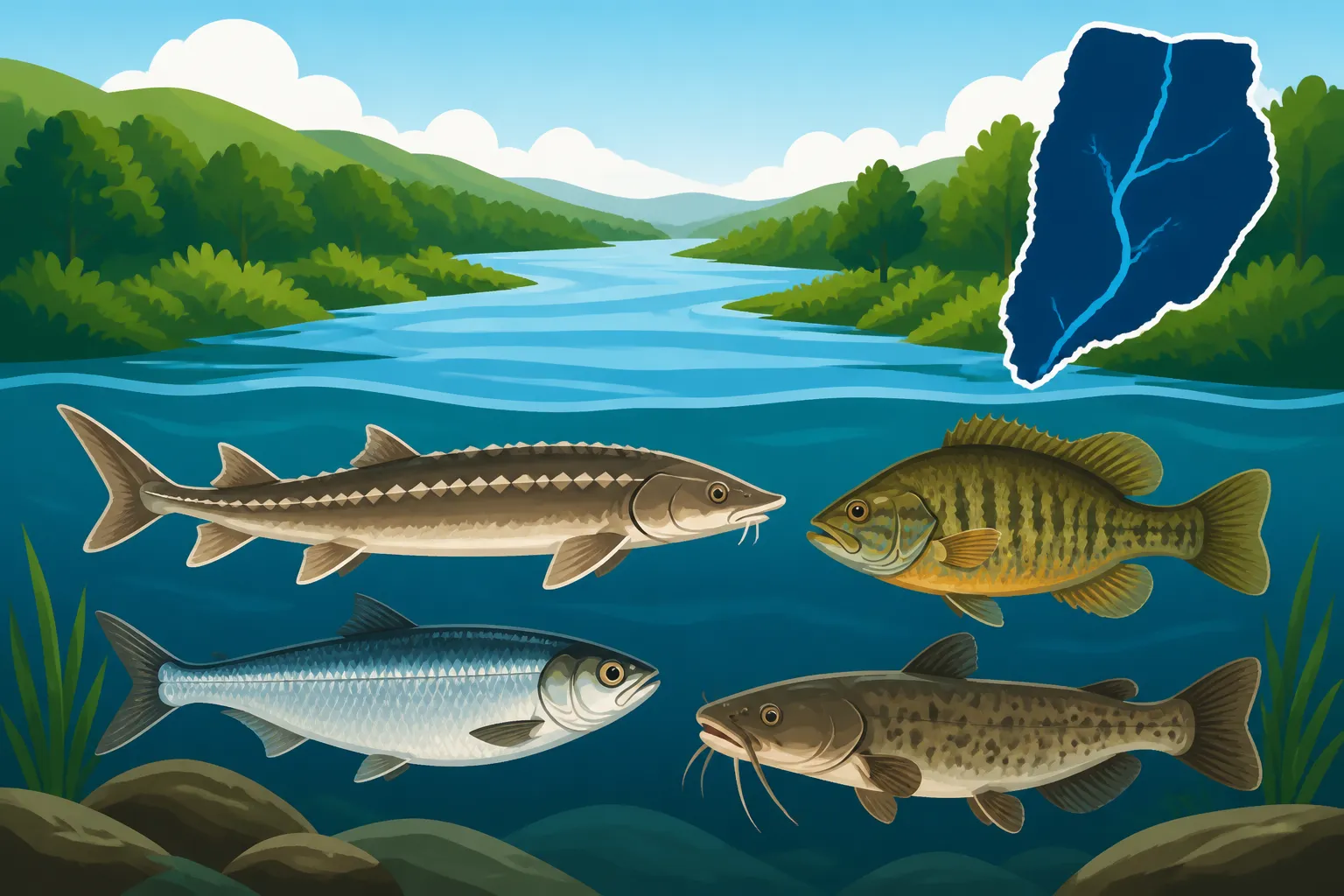
If there's one fish that truly embodies the spirit of the Connecticut River in spring, it's the American Shad. These members of the herring family undertake one of the most spectacular freshwater migrations in North America, swimming hundreds of miles upstream from the Atlantic Ocean to spawn in the river's middle and upper reaches. The sheer volume of shad that historically (and still, to a great extent) ascend the river is astonishing, making it a prime destination for anglers during the spring run. Whole communities along the river, from Essex to Holyoke, Massachusetts, once thrived on the shad fishery, and today, their return is a celebrated event.
The shad run typically begins in April and peaks in May and early June, drawing crowds of enthusiastic anglers. These silvery fish, often called "poor man's salmon" for their fighting spirit, provide an incredible sportfishing opportunity. People line the banks and launch their boats, casting small, brightly colored shad darts or spoons. For those looking to get into shad fishing, a quick search on Amazon will reveal an abundance of specialized shad darts and ultra-light spinning gear perfectly suited for these feisty fish. Their annual return is a crucial food source for other predators and a vital link in the river's food web, demonstrating the tremendous productivity of a healthy migratory fish population. Connecticut River Shad Fishing is a quintessential New England experience.
Atlantic Salmon: A Story of Restoration
The majestic Atlantic Salmon once thrived in the Connecticut River, making epic journeys from the ocean to spawn in its tributaries. Sadly, due to dam construction and pollution during the industrial revolution, these incredible fish were extirpated from the watershed by the early 1800s. However, the story of Atlantic Salmon in the Connecticut River isn't just one of loss; it's also a powerful testament to long-term, dedicated conservation efforts. For decades, federal and state agencies, along with countless volunteers, have worked tirelessly to bring them back. This ambitious restoration project has involved building fish ladders and elevators at dams, improving water quality, and stocking millions of young salmon.
While a self-sustaining wild population has not yet been fully re-established, the occasional return of adult salmon to the river is a moment of profound hope and a unique symbol of environmental recovery. Anglers are prohibited from targeting or keeping Atlantic Salmon, as they remain a critically endangered part of the river's ecosystem. Their presence, even in limited numbers, highlights the river's potential and the ongoing commitment to restoring its historical biodiversity. The vision of salmon leaping up fishways is a powerful reminder of what was lost and what can still be regained.
Sea Lamprey: A Misunderstood Native
Often maligned due to their parasitic nature, the Sea Lamprey (Petromyzon marinus) is another fascinating anadromous species that plays a natural, if sometimes unsettling, role in the Connecticut River ecosystem. Unlike the invasive Great Lakes lamprey, the Sea Lamprey of the Atlantic coast is native to these waters. They spend their adult lives in the ocean, attaching to large fish and feeding on their blood. However, when it's time to spawn, they migrate into freshwater rivers like the Connecticut River.
Their unique life cycle begins with larvae, called ammocoetes, that filter-feed in the river bottom for several years before transforming into parasitic adults and heading out to sea. This dual existence, living both as a filter-feeder in freshwater and a parasite in saltwater, is truly remarkable. While their appearance might be alarming, their presence is a natural component of the marine and freshwater ecosystems, serving as a food source for other animals and, in their larval stage, acting as important detritivores. Their existence highlights the complex and sometimes challenging balance of natural riverine processes.
American Eel: A Catadromous Marvel
Flipping the migratory script, the American Eel (Anguilla rostrata) offers another incredibly unique life story in the Connecticut River. These fascinating fish are catadromous, meaning they are born in saltwater, spend most of their lives in freshwater, and then return to the ocean to spawn. All American Eels are born in the Sargasso Sea, a vast area of the Atlantic Ocean. From there, tiny, transparent "glass eels" drift on ocean currents, eventually making their way into coastal estuaries and then far upstream into rivers and streams, including the Connecticut River and its numerous tributaries.
Eels can live for many years in freshwater, growing to impressive sizes, before embarking on their epic return journey to the Sargasso Sea to reproduce and complete their life cycle. Their ability to navigate complex waterways, bypass obstacles, and even slither across damp land for short distances is legendary. They are often found hiding in submerged vegetation, under rocks, or in muddy bottoms, foraging for invertebrates and small fish. Their unique life cycle makes them a vital, if often unseen, part of the Connecticut River's biodiversity, linking its freshwater habitats directly to a distant oceanic birthplace.
Noteworthy Freshwater Residents with Strong River Ties
While migratory species might steal the show, the Connecticut River also supports robust populations of resident fish that have adapted perfectly to its varied currents, depths, and structures. These species, though not unique in the endemic sense, are defining features of the river's aquatic life.
Striped Bass: The Tidal River Dominator
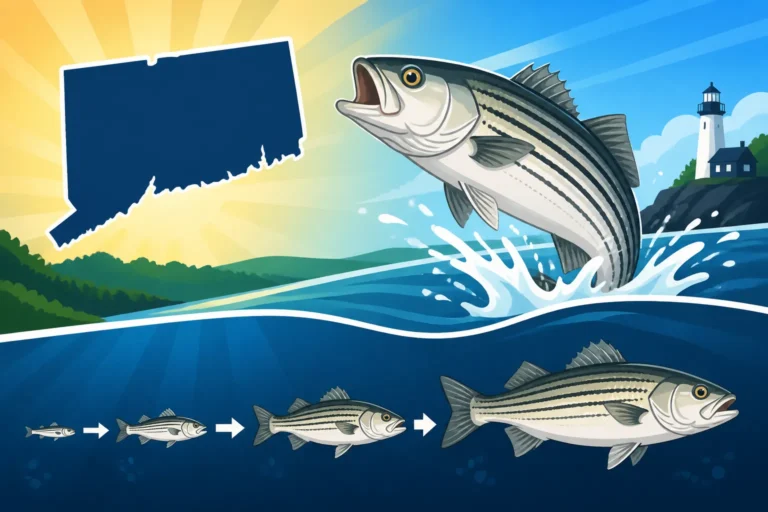
While known primarily as a saltwater species, the Striped Bass (Morone saxatilis) has an incredibly strong and "unique" connection to the lower, tidal sections of the Connecticut River. These powerful predators utilize the nutrient-rich estuary as a crucial nursery ground for their young and a prime feeding area for adults during their annual migrations. Thousands of stripers congregate here, particularly in spring and fall, chasing baitfish like river herring and Atlantic menhaden. Anglers flock to areas near the river mouth, like Old Saybrook and Essex, for some of the best striped bass fishing in the state. Connecticut River Striped Bass Fishing is a major draw.
What makes their presence here so special is the convergence of freshwater flow and tidal influence, creating a dynamic environment that provides ample food and diverse habitat. The river acts as a funnel, concentrating both bait and predators, offering incredible opportunities for shore-based and boat anglers alike. To tackle these strong fish, you'll want durable gear; a quick search on Amazon for "heavy duty spinning reels" or "surfcasting rods" will show you the kind of equipment needed for the powerful fights these fish put up. The Connecticut River truly showcases the striped bass's adaptability, thriving in conditions that bridge the gap between pure freshwater and the open ocean.
Smallmouth Bass: Riverine Powerhouses
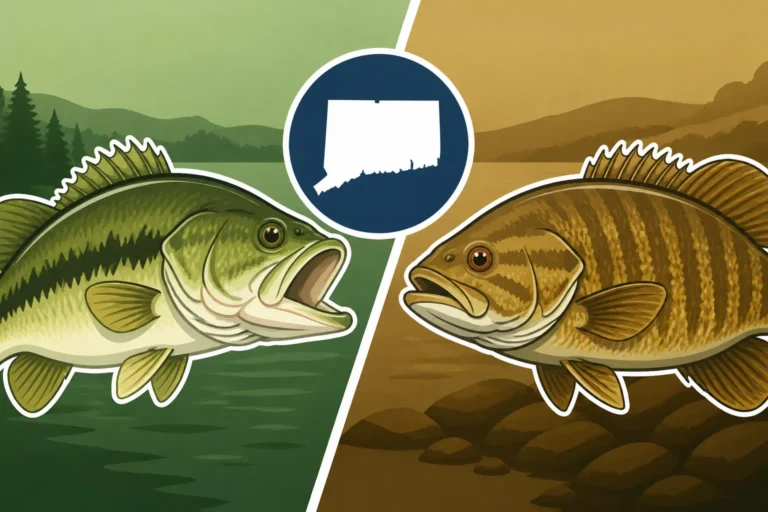
In the rocky, flowing sections of the upper and middle Connecticut River, the Smallmouth Bass (Micropterus dolomieu) reigns supreme. While found in many lakes and rivers across the region, the riverine smallmouth bass of the Connecticut River are particularly well-adapted to its currents and rocky structures. These fish are known for their incredible fighting ability and aggressive strikes, making them a favorite among sport fishermen. They often grow large, with impressive musculature honed by constantly battling the current.
Unlike their lake-dwelling cousins who might prefer calmer, weedier environments, Connecticut River smallmouth bass are masters of current seams, eddies, and submerged rock piles. They ambush prey that drifts by, feeding on crayfish, minnows, and aquatic insects. Understanding how to fish for Smallmouth Bass Fishing in Connecticut rivers often involves specific techniques, like casting crankbaits or jigs that mimic their natural forage, or using soft plastics to probe rocky bottoms. Many anglers rely on durable and reliable fishing line for river fishing, and a visit to Amazon for "fluorocarbon fishing line" will give you options for clear, abrasion-resistant leaders that are essential when fishing around rocks. Their robust populations and impressive size in the Connecticut River make them a truly noteworthy resident species.
Common Carp: An Often Overlooked Giant
Often overlooked by mainstream anglers, the Common Carp (Cyprinus carpio) represents a unique angling challenge and a substantial biomass in the Connecticut River. These large, powerful freshwater fish thrive in the river's slower, deeper sections and backwaters, especially in the fertile, lower reaches. While not native, carp have been present in North American waters for a long time and have established stable populations. In the Connecticut River, they can grow to truly enormous sizes, with fish weighing 20, 30, or even 40+ pounds being caught regularly.
Catching a truly massive carp requires specialized tactics, patience, and heavy-duty tackle. They are often targeted by dedicated "carp anglers" who appreciate the strength and intelligence of these fish. Their presence adds a unique dimension to the river's angling opportunities, providing a challenging and rewarding experience for those willing to pursue them. They are bottom feeders, often rooting around in the substrate for insects, crustaceans, and plant matter, and their activity can stir up nutrients, playing a role in the river's ecosystem.
Other Species of Ecological Importance
Beyond the well-known game fish and prominent migrators, the Connecticut River supports other species that are critical to its ecological integrity, some ancient and others vital for supporting the broader food web.
Shortnose Sturgeon: An Ancient, Protected Resident
The Shortnose Sturgeon (Acipenser brevirostrum) is, without a doubt, one of the most uniquely significant and protected fish species in the Connecticut River. These ancient, armor-plated fish are a relic from the age of dinosaurs, and the Connecticut River supports one of the largest remaining populations of this endangered species. Shortnose Sturgeon are anadromous, spending most of their lives in the brackish lower river and estuary, but migrating upstream to freshwater to spawn.
Their prehistoric appearance, with bony scutes along their bodies and a shovel-like snout, makes them instantly recognizable. They are bottom feeders, using their sensitive barbels to locate invertebrates and small fish in the riverbed. Due to their critically endangered status, it is illegal to target, catch, or possess Shortnose Sturgeon. If you accidentally hook one, it must be released immediately and unharmed. Their continued survival in the Connecticut River is a testament to habitat protection and water quality improvements, and their presence makes the river a unique sanctuary for these living fossils. Connecticut shortnose sturgeon protected status is a critical piece of conservation.
Atlantic Menhaden: The River's Fuel
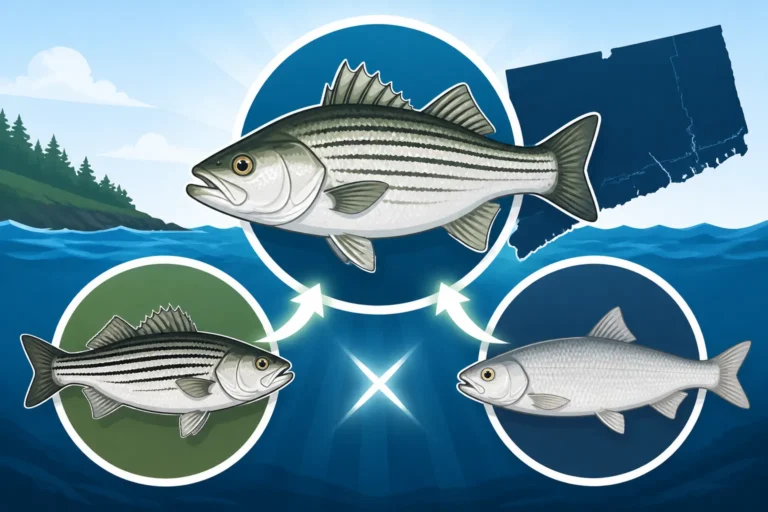
While not fished commercially or recreationally by most anglers, the Atlantic Menhaden (Brevoortia tyrannus) is arguably one of the most important fish species in the lower Connecticut River and Long Island Sound. Often referred to as "bunker," these schooling baitfish are the primary food source for a vast array of predatory species, including striped bass, bluefish, weakfish, and even marine mammals and birds. Their sheer abundance when they arrive in the estuary and nearshore waters is truly remarkable, with massive schools creating a unique spectacle.
Menhaden are filter feeders, playing a crucial role in the ecosystem by consuming phytoplankton and algae, thus helping to keep the water clean and transferring energy up the food chain. Their seasonal presence dictates the movements and feeding patterns of many game fish, making them the "fuel" that drives the vibrant predator fishery in the lower river and coastal waters. Without healthy menhaden populations, the populations of the predatory species we cherish would undoubtedly suffer. Witnessing a school of bunker being corralled by striped bass in the lower Connecticut River is a truly unique and thrilling natural event.
Here's a quick look at some of these important species:
| Species | Type | Key Habitat in CT River | What Makes it Noteworthy in CT River | Angling Relevance |
|---|---|---|---|---|
| American Shad | Anadromous | Mid to Upper Freshwater | Spectacular spring spawning runs, culturally significant, strong fighters. | Highly sought after by anglers in spring. |
| Atlantic Salmon | Anadromous | Historically throughout | Historic native, extirpated, now focus of challenging, ongoing restoration efforts. | Protected, no targeting allowed. |
| Sea Lamprey | Anadromous | Freshwater spawning/larval | Native parasitic species, unique life cycle, important ecological role in oceanic and riverine systems. | No angling value, often misunderstood. |
| American Eel | Catadromous | Throughout Freshwater | Unique life cycle (Sargasso Sea to CT River and back), incredibly adaptable and widespread. | Targeted by some for bait or food. |
| Striped Bass | Estuarine/Marine | Lower Tidal River/Estuary | Crucial nursery and feeding grounds, excellent sportfish, defines lower river fishery. | Highly prized game fish, strong fights. |
| Smallmouth Bass | Freshwater | Mid to Upper Rocky Sections | Thrives in river currents, known for strong fights and preference for rocky structure. | Popular sportfish, challenging and rewarding. |
| Common Carp | Freshwater | Slower, Deeper Sections | Can reach enormous sizes, provides unique big-fish angling challenge. | Targeted by dedicated carp anglers. |
| Shortnose Sturgeon | Anadromous | Lower River/Estuary | Ancient, endangered species, indicator of river health, protected status. | Protected, illegal to target/possess. |
| Atlantic Menhaden | Estuarine/Marine | Lower River/Estuary | Crucial forage fish, "fuel" for predatory species, filter feeders. | Not typically angled, but vital baitfish. |
The Connecticut River is a magnificent example of a thriving, dynamic ecosystem. While it may not harbor species found nowhere else on earth, its unique blend of migratory and resident fish, each with its own incredible story and ecological role, makes it an extraordinary waterway that truly stands out. From the epic runs of American Shad to the ancient presence of the Shortnose Sturgeon, the fish species of the Connecticut River paint a vivid picture of natural resilience and ongoing conservation efforts. Anglers and nature lovers alike have much to appreciate and protect within its waters.
Disclaimer
This article is for general informational purposes only and does not constitute professional advice. Laws, prices and regulations vary by location and change over time. Consult a qualified professional for guidance on your specific situation.