Connecticut shortnose sturgeon protected status
It's incredibly frustrating when you're out enjoying a peaceful day of fishing on one of Connecticut's beautiful rivers, only to hear whispers or read confusing snippets about protected species. You want to do the right thing, but sometimes the rules feel like a labyrinth, especially when it comes to a fish that looks like it swam out of a prehistoric ocean. This guide is here to untangle the mystery surrounding the shortnose sturgeon in Connecticut, explaining exactly why they're protected, what you need to know as an angler, and how you can help safeguard these amazing creatures.
What Exactly is a Shortnose Sturgeon?
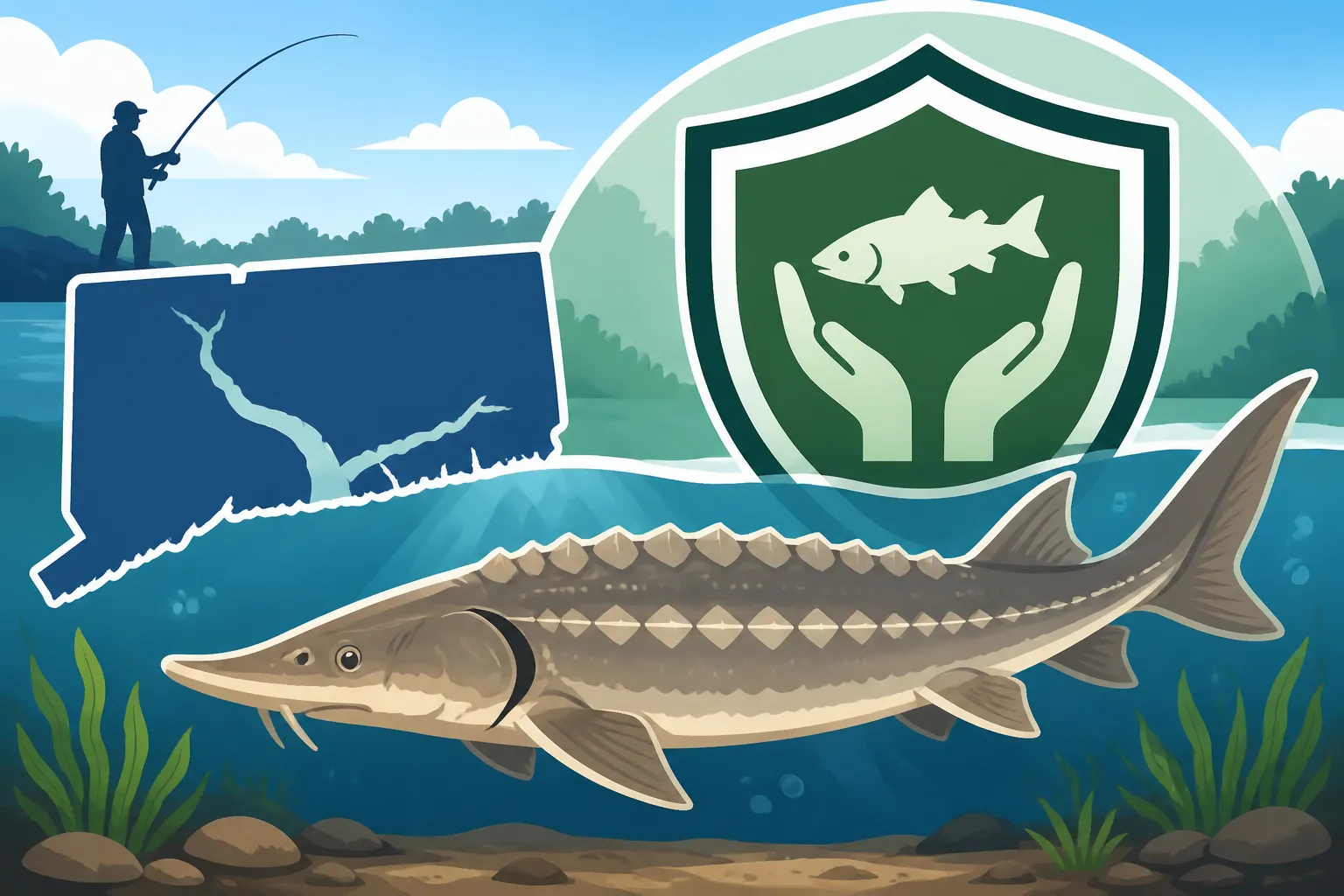
Let's start by getting to know our ancient friend, the shortnose sturgeon. These aren't your typical Connecticut panfish or bass; they're living fossils, having changed little over millions of years. Imagine a fish that looks like a miniature shark, but covered in rows of bony plates, called scutes, instead of scales. That's a sturgeon for you!
They have a distinctive shovel-like snout, with four whisker-like barbels underneath, which they use to rummage along the river bottom for food. Unlike many fish we catch, their mouth is located on the underside of their head, perfect for suctioning up invertebrates, worms, and small crustaceans from the mud and sand. They typically grow to about 2 to 4 feet in length and can live for an astonishing 60 years or more, maturing very slowly compared to other fish species.
A Glimpse into Their Unique Anatomy
The shortnose sturgeon's appearance is truly unique and immediately sets it apart from other fish you might encounter in Connecticut waters. Those five rows of bony scutes running along their body aren't just for show; they offer a protective armor against predators. Their heterocercal tail, with an upper lobe longer than the lower, also gives them a distinctly ancient look. Think of it like a shark's tail, but for a bottom-dwelling river dweller. You won't find anything else quite like them in our freshwater systems, though their larger cousin, the Atlantic sturgeon, shares some similarities in the marine environment. If you're looking for a good field guide to help identify different species, you can often find excellent options on Amazon.
Their Preferred Habitat in Connecticut
In Connecticut, the shortnose sturgeon primarily calls the lower Connecticut River home. This majestic waterway, particularly its estuarine and tidal freshwater sections, provides the slow-moving, silty or sandy bottom habitats these fish prefer. They are anadromous, meaning they spend parts of their lives in both fresh and saltwater, though the populations in the Connecticut River tend to spend most of their lives in freshwater, only venturing into brackish water. They're often found in deeper channels and slow pools, where they can quietly forage for their meals without expending too much energy against strong currents. Understanding their habitat preferences is key to understanding why specific areas might have special fishing regulations, as detailed in our guide to Connecticut Fishing Regulations Explained.
Why are Shortnose Sturgeon Protected in Connecticut?
The journey of the shortnose sturgeon from a relatively common fish to a critically endangered species is a sobering tale, one that highlights the impact of human activity on our natural world. Their protected status isn't just a bureaucratic decision; it's a desperate measure to save a species on the brink.
Historically, sturgeon were a vital part of many river ecosystems and a valuable resource for communities. Their meat was prized, and their roe was, and still is, a delicacy (caviar). However, this demand, coupled with rapid industrialization, led to their dramatic decline.
A History of Decline and Conservation Status
By the late 19th and early 20th centuries, widespread overfishing for both meat and caviar, along with the construction of dams that blocked their migration routes and significantly altered their riverine habitats, decimated sturgeon populations across their range. Pollution from growing industries further degraded water quality, making it harder for these sensitive fish to survive and reproduce.
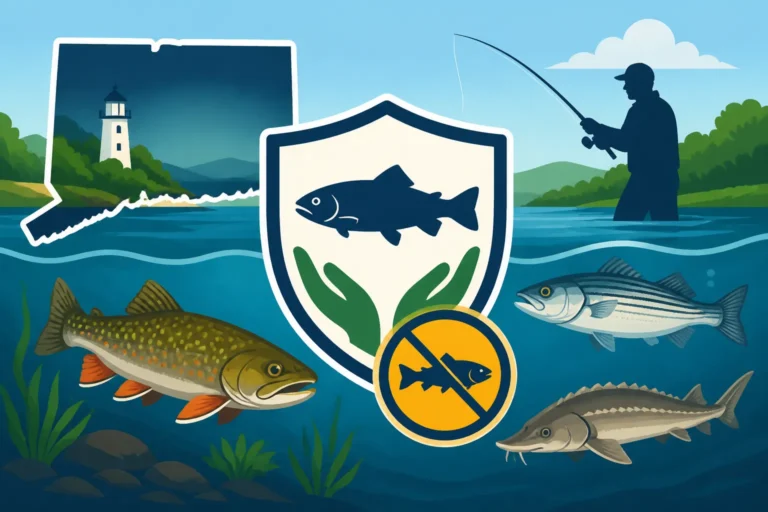
Recognizing the severe threat, the shortnose sturgeon was officially listed as a federally endangered species in 1967 under the Endangered Species Act. This designation means it is illegal to "take" (harass, harm, pursue, hunt, shoot, wound, kill, trap, capture, or collect, or to attempt to engage in any such conduct) a shortnose sturgeon. Connecticut, aligning with federal law, also lists the shortnose sturgeon as a state endangered species, further emphasizing the critical need for its protection within our borders. This double layer of protection underscores just how vulnerable these fish are. For more on the broader conservation landscape, check out Endangered and Protected Fish Species in Connecticut.
Key Threats to Their Survival
Even with protected status, shortnose sturgeon still face a myriad of threats today. One of the primary concerns is habitat degradation, including dredging, altered water flows, and continuing pollution, which can disrupt their feeding and spawning grounds. Accidental captures by anglers targeting other species, while often unintentional, still pose a risk, especially if the fish are mishandled. Boat strikes, particularly in busy navigable sections of rivers, are another unfortunate reality for these slow-moving bottom dwellers. Any activity that impacts the health of the Connecticut River, from development along its banks to runoff from agricultural areas, can inadvertently harm these fragile populations. Understanding these threats helps us all become better stewards of our waterways.
What Anglers Need to Know: Regulations and Accidental Catches
As an angler in Connecticut, you have a crucial role to play in the survival of the shortnose sturgeon. The most important thing to remember is that you absolutely cannot target, keep, or intentionally harm a shortnose sturgeon. If you happen to catch one accidentally, knowing exactly what to do can be the difference between life and death for the fish, and a clear conscience for you.
Identifying a Shortnose Sturgeon
Before you can know what to do if you catch one, you need to be able to identify it correctly. While their ancient, armored appearance is distinctive, there are other species, like the larger Atlantic sturgeon or even some common river fish, that could potentially be confused by an untrained eye.
Here are the key characteristics of a shortnose sturgeon:
- Size: Generally smaller than the Atlantic sturgeon, typically 2 to 4 feet in length. Atlantic sturgeon can reach 8-10 feet.
- Snout: Short and shovel-shaped, not as pointed as the Atlantic sturgeon.
- Mouth: Underslung, toothless, and protrusible, designed for vacuuming food.
- Barbels: Four distinct barbels located in front of the mouth.
- Scutes: Five rows of bony scutes, with the row along the side usually having fewer than the Atlantic sturgeon.
- Color: Typically olive to dark brown on top, fading to a lighter belly.
A quick reference:
| Feature | Shortnose Sturgeon | Atlantic Sturgeon | Common Carp |
|---|---|---|---|
| Size (Adult) | 2-4 feet | 5-10 feet | 1-3 feet |
| Snout | Short, shovel-shaped, somewhat blunt | Longer, more pointed | None, typical fish mouth |
| Body Covering | 5 rows of prominent bony scutes | 5 rows of prominent bony scutes | Large, distinct scales |
| Barbels | 4, closer to the tip of the snout | 4, closer to the mouth | None (some have mouth barbels, but not 4 prominent ones) |
| Mouth | Underslung, protrusible | Underslung, protrusible | Terminal, protrusible |
| Tail | Heterocercal (shark-like, upper lobe longer) | Heterocercal (shark-like, upper lobe longer) | Homocercal (forked, lobes equal) |
| Overall Look | Ancient, armored "living fossil" | Ancient, armored "living fossil," larger | Large, scaly, often bronze colored |
Knowing these differences is crucial. If you're unsure, treat any sturgeon-like fish as protected. A waterproof fish identification card, easily found on Amazon, can be a great tool to keep in your tackle box.
What to Do if You Accidentally Catch One
This is where your preparedness truly matters. Despite your best efforts, sometimes an accidental catch happens. It's not the end of the world, but your actions immediately afterward are critical for the fish's survival.
Here's the protocol:
- Do NOT Remove the Fish from the Water: This is the golden rule. Air exposure is extremely stressful and damaging to a sturgeon's delicate gills and internal organs. Keep the fish in the water, even if it means getting wet yourself.
- Handle Minimally: Avoid touching the fish as much as possible. If you must, use wet hands to support its body, especially around the belly.
- Unhook Quickly and Carefully: Use a de-hooking tool or needle-nose pliers to remove the hook. If the hook is deeply swallowed, cut the line as close to the hook as possible. Don't try to pull it out.
- Release Immediately: Once unhooked, gently guide the sturgeon until it can swim away on its own. It might take a minute or two for it to regain its strength, especially if it put up a fight.
- Report the Catch (Optional but Encouraged): While not legally required for accidental, immediate release, reporting your sighting to the Connecticut Department of Energy and Environmental Protection (DEEP) can be incredibly helpful for their research and monitoring efforts. They want to know where these fish are being encountered, as it helps them understand population distribution and health.
Remember, fishing without adhering to these rules, or intentionally targeting a protected species, can lead to significant penalties, as outlined in articles like Fishing Without a License in Connecticut: Penalties.
Preventing Accidental Catches
While accidents happen, there are steps you can take to reduce the likelihood of hooking a shortnose sturgeon:
- Avoid Bottom Fishing with Bait in Known Sturgeon Areas: If you're fishing in the lower Connecticut River, especially in deeper channels or areas with silty bottoms, consider adjusting your technique. Sturgeon are bottom feeders, so bait presented on the bottom is more likely to be intercepted.
- Use Circle Hooks: Circle hooks are designed to hook fish in the corner of the mouth, rather than deep in the throat, which significantly increases the survival rate of released fish. This is a common practice for many marine species, like striped bass, as you can see in Connecticut Striped Bass Circle Hook Requirement.
- Be Aware of Your Surroundings: Pay attention to local signage or information from DEEP regarding known sturgeon habitats. If you observe other anglers accidentally catching sturgeon, it might be an area to adjust your tactics or move.
- Educate Yourself: The more you know about these fish and their habits, the better equipped you'll be to avoid them and handle them properly if an accidental encounter occurs. Consider adding a book on Connecticut fish species to your fishing library, many of which are available on Amazon.
Conservation Efforts and How You Can Help
The future of the shortnose sturgeon in Connecticut and beyond depends on dedicated conservation efforts and, critically, the cooperation of informed citizens and anglers. The Connecticut DEEP, in conjunction with federal agencies and conservation groups, is actively involved in projects aimed at helping these ancient fish recover.
DEEP's Role in Sturgeon Recovery
The Connecticut DEEP plays a vital role in monitoring the health and population trends of shortnose sturgeon in the Connecticut River. This involves scientific surveys, tagging programs to track movements and growth, and genetic studies to understand population structure. They also work on habitat restoration projects, such as improving river connectivity by removing defunct dams or constructing fish passages where possible, although large dams like those on the Connecticut River remain significant barriers.
Enforcement of regulations is another key aspect of their work. While their primary goal is conservation, they also ensure that anglers and boaters are aware of and comply with the laws designed to protect this endangered species. Their efforts are crucial for the continued existence of species unique to rivers like the Connecticut, as highlighted in Fish species unique to the Connecticut River.
How Anglers and Citizens Can Contribute
Your role in sturgeon conservation extends beyond simply knowing the rules. Here are several ways you can actively contribute:
- Practice Responsible Angling: Always use proper catch-and-release techniques, especially in areas where protected species might be present. Consider barbless hooks or circle hooks, and always prioritize the fish's well-being.
- Report Sightings (Especially Strandings or Injuries): If you see a shortnose sturgeon that appears distressed, injured, or stranded on shore, immediately contact the Connecticut DEEP Wildlife Division or Environmental Conservation Police. Your timely report can be critical. Avoid trying to "help" an injured or stranded fish without professional guidance, as improper handling can cause more harm.
- Support Habitat Preservation: Advocate for clean water initiatives and participate in local river cleanups. Healthy river ecosystems are vital for sturgeon and all aquatic life. Even small actions, like ensuring your boat is properly maintained to prevent fuel leaks, can make a difference, as discussed in Connecticut Boating Laws for Anglers.
- Spread Awareness, Not Misinformation: Educate fellow anglers and outdoor enthusiasts about the importance of protecting shortnose sturgeon and how to identify and handle them correctly. Correct any misconceptions you hear about these fish. Knowledge is power, and when shared responsibly, it can inspire others to become conservation allies.
- Consider Volunteer Opportunities: Many conservation organizations, some of which work closely with DEEP, rely on volunteers for habitat restoration, monitoring projects, and educational outreach. Contributing your time can be a rewarding way to directly impact local conservation efforts.
By working together, respecting the regulations, and becoming informed advocates, we can all contribute to the recovery of this magnificent, ancient fish, ensuring that the shortnose sturgeon continues to swim in Connecticut's waters for generations to come. This kind of collective effort is how we safeguard all our precious natural resources, from trout streams to vital shad runs, like those mentioned in Connecticut River Shad Fishing.
Disclaimer
This article is for general informational purposes only and does not constitute professional advice. Laws, prices and regulations vary by location and change over time. Consult a qualified professional for guidance on your specific situation.