Trout Species Identification Guide for Connecticut
You’re out on a beautiful Connecticut stream, maybe the Farmington or a smaller, wilder brook, and you’ve just landed a stunning fish. It’s definitely a trout, but then you pause. Is it a brook trout, with those vibrant colors? Or perhaps a rainbow, given its fight? The truth is, identifying trout species can be trickier than it seems, especially for new anglers or even seasoned veterans when faced with variations. This guide is here to untangle that confusion, providing clear markers and insights to help you confidently identify the different trout species you'll encounter in Connecticut's diverse waters.
The Trout Family in Connecticut: An Overview
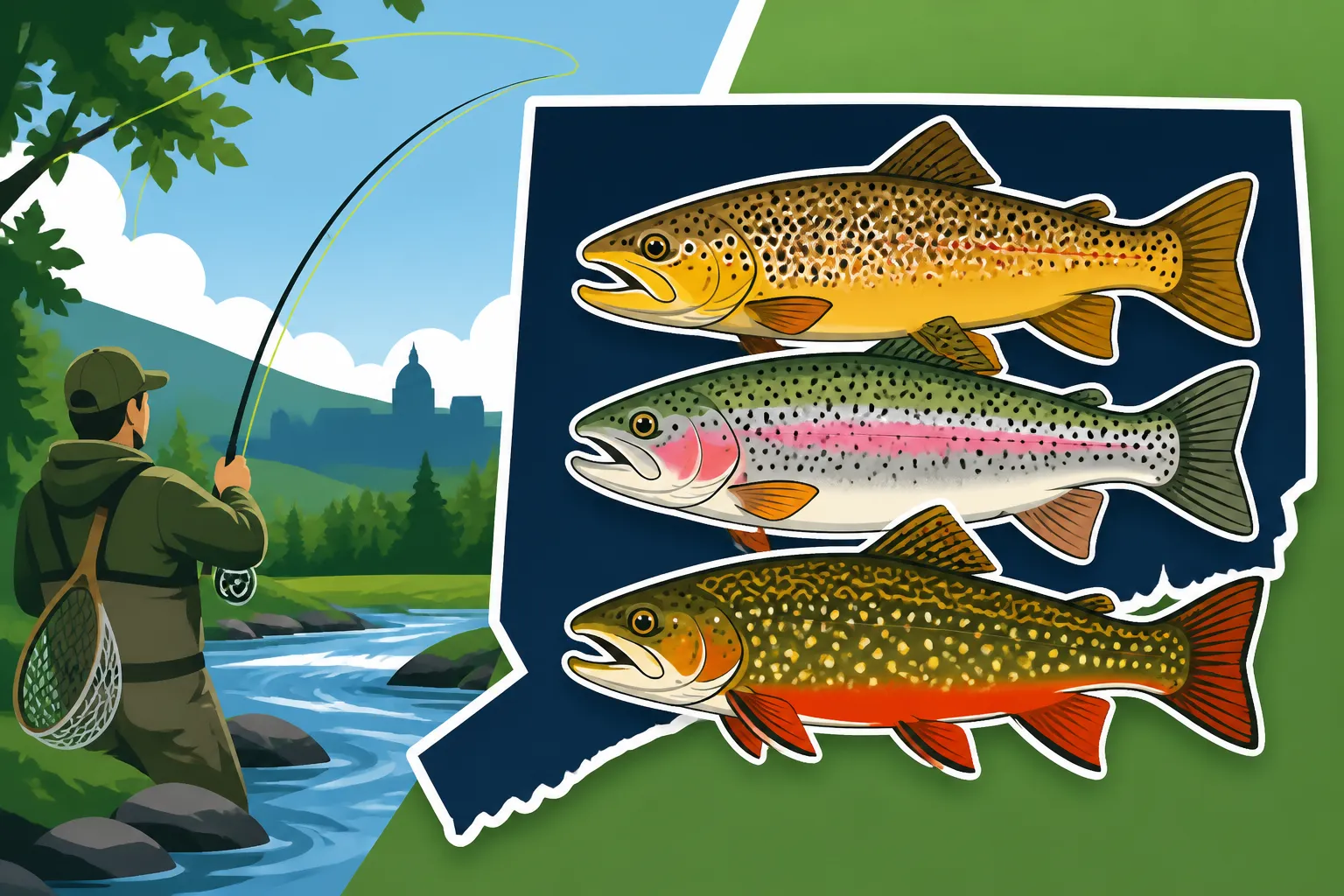
Connecticut's waters are home to a variety of trout, each with its own unique characteristics and story. While many anglers focus on "trout" as a general category, understanding the individual species not only enhances your appreciation for these magnificent fish but is also crucial for adhering to specific regulations. The primary players you'll be seeing are brook trout, rainbow trout, and brown trout, with a few special surprises popping up from time to time.
Why Identification Matters
Beyond the simple satisfaction of knowing what you've caught, precise trout identification carries significant weight, especially here in Connecticut. Firstly, fishing regulations often differ by species. For example, the daily creel limits or even the legal size can vary from brook trout to brown trout in certain waters. Misidentifying a fish could lead to unintentional violations, which no angler wants. Imagine you're in a special regulation area that's catch-and-release only for native brook trout, but you mistakenly keep one, thinking it's a stocked rainbow. That's a mistake that can carry consequences.
Secondly, understanding what you've caught gives you a deeper insight into the health of the ecosystem you're fishing. Native brook trout, for instance, are sensitive indicators of water quality and habitat integrity. Finding a healthy population of them tells you that stream is in fantastic shape. Conversely, a lack of brook trout in historically native waters might signal environmental concerns. For those who care deeply about conservation and the future of our fisheries, like many of us do, this knowledge is invaluable. It helps you connect more intimately with the waters and the fish within them, truly becoming part of the bigger picture of Connecticut Fishing Seasons by Month.
Native vs. Stocked: A Quick Primer
Before we dive into the nitty-gritty of individual species, it's essential to grasp the distinction between native and stocked trout, as this often influences their appearance and where you'll find them. Native trout are species that naturally occurred in Connecticut's waters before human intervention. They've been here for millennia, evolving with the local environment. Our star native is the brook trout. These fish are born and raised in the wild, often in pristine, cold-water streams, and their survival is a testament to the health of those habitats.
Stocked trout, on the other hand, are fish raised in hatcheries and then released into rivers, streams, and lakes by the Connecticut Department of Energy and Environmental Protection (DEEP). The goal of stocking is to provide recreational fishing opportunities, especially in waters that can't support natural reproduction or to supplement populations. Rainbow trout and most brown trout you'll catch in Connecticut fall into this category, though some wild populations of brown trout do exist in certain areas. Stocked fish can sometimes look a bit "rougher" around the edges from their hatchery upbringing, with worn fins or slightly less vibrant coloration, but they quickly adapt to their new environment. Learning to spot these differences is a crucial step in trout identification and understanding the fishery. You can often track where these fish are going by checking the Connecticut Interactive Trout Stocking Map, Explained.
Decoding the Brook Trout: Connecticut's Native Jewel
Ah, the brook trout! For many, this fish embodies the very spirit of wild Connecticut streams. Often found in the smaller, colder, and more pristine waters, catching a brook trout feels like a special privilege. They might not always be the biggest, but their beauty and the challenge of finding them are second to none. If you're looking for Brook Trout: Connecticut's Native Trout, you're often looking for untouched beauty.
Distinctive Markings and Coloration
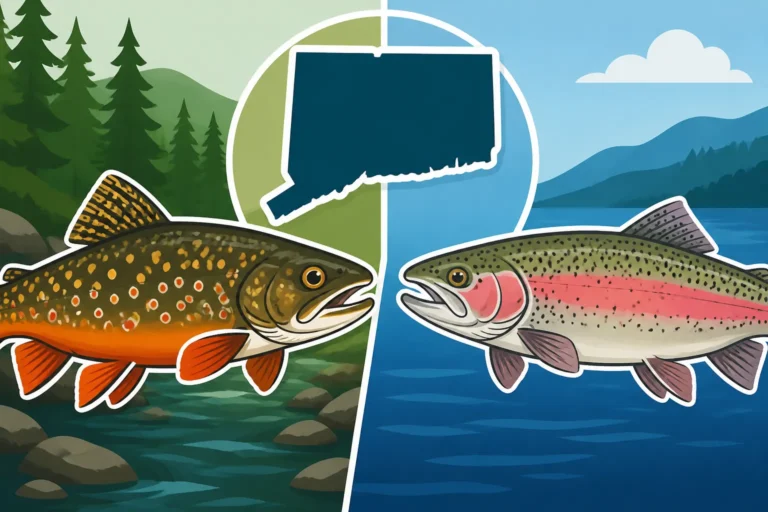
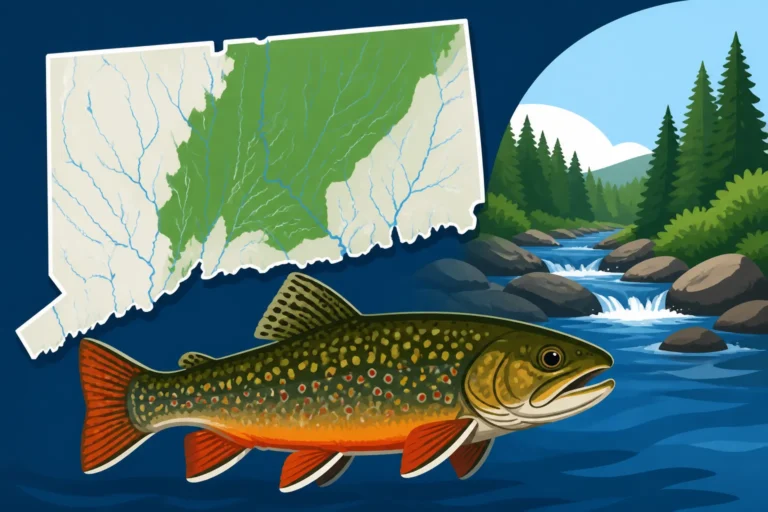
When you pull a brook trout from the water, you're immediately struck by its vibrant display. The dorsal (back) fin and tail fin often have wavy, worm-like markings called vermiculations, which are a beautiful camouflage pattern. The body itself can range from olive green to dark brown on the back, fading to lighter flanks. What really stands out are the bright, almost fluorescent red or orange spots, surrounded by blue halos, scattered along its sides. These "halos" are a key identifier for brook trout.
The lower fins – the pectoral, pelvic, and anal fins – are often fringed with a distinct white leading edge, followed by a black stripe, and then a reddish-orange or yellowish color. This white-black-color combination is almost like a painter's signature and is one of the most reliable ways to differentiate a brook trout from other species at a glance. Their bellies can sometimes be creamy white, but during spawning season, particularly for males, the lower flanks and belly can turn a brilliant orange or red. It's truly a fish that paints the stream with its presence.
Habitat and Behavior Clues
Brook trout thrive in very specific conditions: cold, clear, well-oxygenated water. They are typically found in the headwaters of streams and rivers, smaller tributaries, and high-elevation ponds where water temperatures remain consistently cool, even in the height of summer. Think tucked-away pockets, hidden springs, and streams shaded by dense forest canopies. These are the kinds of places where a true Connecticut resident inland fishing license cost 2026 comes in handy for exploration.
Their behavior is also quite telling. Brook trout tend to be more solitary than other trout species and are often found holding in slower pockets of water, behind rocks, or under fallen logs where they can ambush prey. They can be incredibly wary, darting for cover at the slightest disturbance. If you're catching small, vividly colored trout with those tell-tale white-edged fins in a remote, pristine brook, chances are you've found a brook trout. They are highly sensitive to pollution and habitat degradation, which is why finding them signifies a healthy, thriving aquatic environment. When you're out on the water, consider how these fish behave; their movements and preferred spots can reveal a lot about their identity before you even get a good look at their markings.
Spotting the Rainbow Trout: The Stocking Stalwart
The rainbow trout is arguably the most recognizable and widely stocked trout species across Connecticut, providing countless hours of angling pleasure. These energetic fish are known for their spirited fights and are a favorite target for many, especially on Connecticut Trout Opening Day for 2026 and throughout the spring.
Iridescent Hues and Unique Stripe
The name "rainbow" isn't just for show – these fish often exhibit a stunning array of colors. The most distinguishing feature of a rainbow trout is the broad, pinkish to reddish stripe running horizontally along its lateral line, from its gill plate to its tail. This stripe can be incredibly vibrant, almost glowing in certain light, or more subdued depending on the fish's age, sex, and environment. Their bodies are typically silver, olive, or bluish-green on the back, fading to silvery sides and a white belly.
Unlike brook trout, rainbow trout have small, distinct black spots covering their entire body, including their dorsal fin, adipose fin, and tail fin. These spots are usually uniformly distributed and lack the blue halos seen on brook trout. The tail fin is typically square or slightly forked, and you won't see the pronounced vermiculations or the dramatic white leading edges on the lower fins that characterize a brook trout. When you're comparing fish, pay close attention to the tail and the overall spotting pattern; these are key indicators. Many anglers find a good pair of polarized sunglasses (available on Amazon, for example) helps them spot these subtle color differences even before the fish is landed.
Where You'll Most Likely Find Them
Rainbow trout are incredibly adaptable, which is why they're such a popular choice for stocking programs. You'll find them in a vast range of Connecticut waters, from large lakes and reservoirs like Candlewood Lake or Squantz Pond, to medium and larger rivers, and even smaller streams that get regular stocking. They tolerate a wider range of water temperatures than brook trout, though they still prefer cool, well-oxygenated water.
Because they are so heavily stocked, you're most likely to encounter rainbow trout in easily accessible locations, especially those designated as trout management areas or popular fishing spots listed in the Connecticut Fishing Guide. Areas immediately after stocking can be incredibly productive. While wild populations exist in some tailwaters or larger rivers, the vast majority of rainbow trout caught in Connecticut are hatchery-reared. They tend to be less shy than their wild counterparts and are often found in open water, feeding aggressively. If you're fishing a popular, accessible spot after a recent stocking, the odds are very good that the leaping, spotted fish on your line is a rainbow. They’re a fantastic fish for beginners and experienced anglers alike, always ready for a spirited encounter. Knowing where and how to find them is key to successful Trout Fishing in Connecticut.
Unmasking the Brown Trout: The Elusive European
The brown trout, a species originally introduced from Europe, has made itself very much at home in Connecticut's waters. Known for its challenging nature and potential for large size, the brown trout is often considered a prize catch. They can be incredibly elusive, making their capture all the more rewarding. Anglers who consistently target these fish often spend hours perfecting their techniques, as detailed in guides like Fly Fishing for Trout in Connecticut.
Subtle Spots and Golden Tones
Brown trout generally have a more subtle, earthy coloration compared to the vibrant brook trout or the iridescent rainbow. Their bodies are typically a golden-brown or olive color on the back, fading to lighter flanks and a creamy or yellowish belly. What truly distinguishes them are their distinctive spots. Brown trout possess dark spots (black or dark brown) scattered over their back and sides, often extending onto the dorsal and adipose fins.
Crucially, they also have red or orange spots, but unlike the brook trout's blue-haloed spots, the red spots on a brown trout usually have a light, often pale yellowish or white halo, or no halo at all. The dark spots are typically larger and more irregular than those found on a rainbow. Another key identifier is their tail fin, which is typically square or slightly emarginate (not deeply forked) and usually has few to no spots, particularly on larger specimens. You also won't see the worm-like vermiculations of a brook trout or the prominent lateral stripe of a rainbow. The overall impression is often one of a sturdy, camouflaged fish, perfectly blending into rocky or woody river bottom structures.
Behavior and Preferred Lairs
Brown trout are famous for their cunning and reclusive nature. They are often found in larger rivers and lakes, particularly those with plenty of structure such as submerged logs, undercut banks, deep pools, and rocky ledges. They are also much more tolerant of warmer water temperatures than brook trout, which allows them to thrive in many of Connecticut's larger rivers that might become too warm for brook trout in summer. Think of places like the Housatonic River or sections of the Naugatuck.
Unlike rainbows that might feed openly, brown trout are often nocturnal feeders and can be incredibly wary during daylight hours. They prefer to hold in cover, waiting to ambush prey. This behavior means you often have to "hunt" for them, carefully presenting your lure or fly to their hidden lairs. They can grow to impressive sizes in Connecticut, with some trophy fish residing in waters like the Farmington River. A large brown trout can be a truly formidable opponent. If you're consistently catching larger, darker trout with scattered dark spots and subtle red spots in a river with good cover, you're likely connecting with one of these magnificent, elusive fish. Understanding Brown Trout Habits in Connecticut Streams is key to success.
Rare and Hybrid Trout: The Special Cases
While brook, rainbow, and brown trout make up the vast majority of your catches in Connecticut, every now and then, you might encounter something a little different. These special cases are exciting finds and further emphasize the diversity within our state's trout fisheries. Sometimes, these are natural occurrences, and other times, they are a result of intentional stocking for a unique angling experience. Having a good field guide or even a quick reference on your phone (you can find waterproof cases for phones on Amazon for fishing trips) can be a real game-changer for these rarer identifications.
Tiger Trout: A Striking Hybrid
The tiger trout is perhaps the most visually stunning of the rare trout species you might encounter in Connecticut. This fish is a sterile hybrid, a cross between a brown trout (female) and a brook trout (male). They get their name from their distinctive, maze-like patterns, which are truly unique to each fish. Imagine the vermiculations of a brook trout, but instead of being confined to the back, they extend across the entire body, creating intricate, wavy, and often broken patterns of dark and light.
Their coloration can be quite variable, typically a greenish-brown to yellowish background with dark, worm-like patterns that stand out vividly. They generally lack the distinct red spots with blue halos of a brook trout or the pronounced red/orange spots with pale halos of a brown trout. Their fins usually resemble those of a brown trout, without the prominent white leading edges of a brook trout. These fish are occasionally stocked in specific Connecticut waters to provide a novel angling opportunity and because of their aggressive nature. Catching a tiger trout is a truly memorable experience due to their striking appearance.
Palomino/Golden Rainbows: A Genetic Twist
Another "special case" you might encounter is the palomino trout or golden rainbow trout. These are not a separate species but rather a genetic color variant of the rainbow trout. They are hatchery-bred for their unique golden-yellow to bright orange coloration, often with a paler, sometimes white, lateral stripe rather than the typical pink of a standard rainbow.
They still retain the characteristic small black spots of a rainbow trout, though these spots might appear fainter against the lighter, golden background. The key to identifying them is their unmistakable bright, often iridescent, golden or cream-colored body. They are essentially a "blonde" version of the rainbow trout, making them quite easy to spot, even at a distance. Like regular rainbows, they are stocked for recreational fishing and are particularly popular in put-and-take fisheries. Catching one can be a fun surprise, adding a splash of unusual color to your creel or catch-and-release photo.
Practical Tips for On-the-Water Identification
Even with all the detailed descriptions, telling trout apart in the heat of the moment, with a wiggling fish in your hand, can still be a challenge. That's why having a few practical, on-the-water tips can make all the difference. Remember, the goal is often quick identification to ensure proper handling and adherence to regulations, especially in catch-and-release scenarios like those found in Connecticut Trout Management Area Regulations.
Key Features to Observe
When you land a trout, try to make a mental checklist or quickly scan for these crucial features:
- Lateral Stripe: Is there a prominent, often pink or red, horizontal stripe along the side? If yes, it's likely a rainbow. Brown and brook trout do not have this.
- Spotting Pattern:
- Brook Trout: Red/orange spots with distinct blue halos. Wavy, worm-like markings (vermiculations) on the back and dorsal fin.
- Rainbow Trout: Numerous small, distinct black spots scattered uniformly over the body, dorsal fin, and tail fin. No blue halos.
- Brown Trout: Dark spots (black/brown) and red/orange spots, typically with pale or no halos. Tail usually unspotted or lightly spotted.
- Lower Fins: Check the pectoral, pelvic, and anal fins. Do they have crisp white leading edges, followed by a black stripe, then color? This is the signature of a brook trout. Rainbows and browns typically have more uniform, darker fins without these distinct bands.
- Tail Fin: Look at the shape and spotting. Rainbows have a spotted, often slightly forked tail. Brook trout have a square or slightly emarginate tail, sometimes with vermiculations. Brown trout usually have an unspotted or very lightly spotted, square tail.
- Body Shape/Color: Brook trout are often more streamlined and can be darker with vibrant colors. Rainbows are generally silvery with the stripe. Browns are typically more robust, with a golden-brown hue.
- Mouth Size: While less reliable than spots, brown trout often have a larger mouth, extending back past the eye, compared to rainbows and brook trout.
It helps to have a quick reference guide on a waterproof card in your tackle box, or even download a fish identification app before you head out. Something like a basic fish identification chart (readily available on Amazon) can be invaluable.
Photography for Later Verification
In today's world, your phone isn't just for calls – it's an incredible tool for anglers! If you're unsure about an identification, especially when practicing catch and release, a quick, clear photo can save the day. Gently hold the fish (wet hands only, please, to protect their slime coat!), snap a few pictures from different angles – one showing the full body, another focusing on the spots and fins, and maybe one of the head. Then, release the fish as quickly and safely as possible.
Later, when you're off the water, you can consult your photos with a good field guide, compare them to online resources, or even ask experienced anglers for their input. This is particularly useful for those trickier identifications, or if you suspect you've caught a rarity like a tiger trout. Capturing the moment with a photo also allows you to enjoy the memory of the catch, and share it with others, without stressing too much about on-the-spot identification. It's a fantastic way to both learn and remember your angling adventures in Connecticut. For more specifics, always refer to the Connecticut Fishing Regulations Explained to ensure you're compliant with all local rules.
Trout Species Identification Summary
To help you quickly distinguish between the common trout species in Connecticut, here's a handy table summarizing their key identification features. Keep this in mind the next time you're on the water!
| Feature | Brook Trout | Rainbow Trout | Brown Trout |
|---|---|---|---|
| Lateral Stripe | Absent | Prominent pink/red stripe | Absent |
| Body Spots | Red/orange with blue halos; vermiculations on back | Small, distinct black spots all over | Dark spots (black/brown) and red/orange with pale/no halos |
| Fin Edges (Lower) | Distinct white leading edge, then black, then color | No distinct white/black edges | No distinct white/black edges |
| Tail Fin | Square or slightly emarginate, sometimes vermiculated | Spotted, often slightly forked | Unspotted or lightly spotted, square |
| Overall Color | Olive/dark brown back, vibrant sides, cream belly | Silvery to olive, iridescent, white belly | Golden-brown to olive, lighter belly |
| Preferred Habitat | Cold, clear, pristine streams/headwaters | Widely stocked in diverse waters (lakes, rivers, streams) | Larger rivers/lakes with structure, more temperature tolerant |
This table provides a quick reference, but remember that individual fish can vary based on age, diet, and specific habitat. The more trout you catch and observe, the better you'll become at telling them apart. Understanding these differences not only makes you a more knowledgeable angler but also a more responsible one, ensuring you adhere to all regulations for Connecticut Trout Limit and Possession Rules and help conserve our precious fisheries. Happy fishing!
Disclaimer
This article is for general informational purposes only and does not constitute professional advice. Laws, prices and regulations vary by location and change over time. Consult a qualified professional for guidance on your specific situation.