How fast striped bass grow
It’s a common question that pops into every angler's mind when they hook into a striped bass: "How old is this fish?" or "How long until this little guy becomes a trophy?" Understanding how fast striped bass grow is key to appreciating these magnificent creatures and plays a huge role in responsible angling, especially here in Connecticut. This guide will dive deep into the growth rates of striped bass, exploring the factors that influence their size and what it means for our fishing experiences.
The Early Years: Striped Bass Larvae and Juveniles
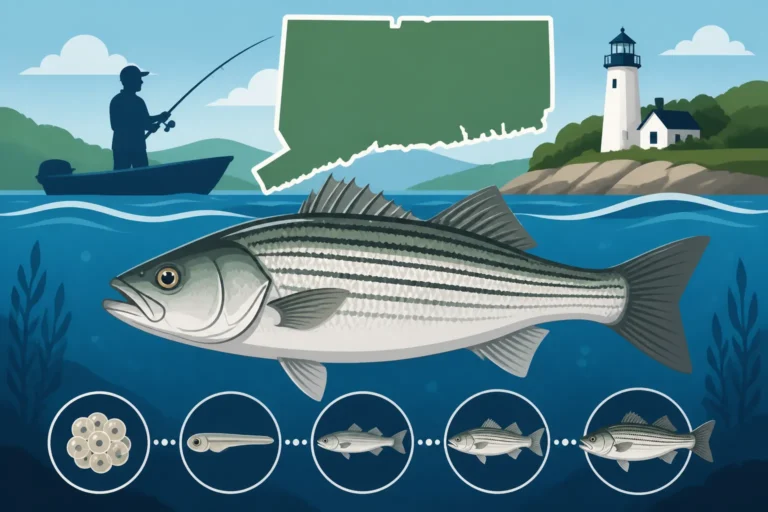
The life cycle of a striped bass is truly fascinating, starting from tiny, almost invisible eggs. These fish are anadromous, meaning they spend most of their lives in saltwater but return to freshwater to spawn. For those striped bass that eventually make their way to our waters here in Connecticut, their journey begins in the larger river systems to the south, like the Chesapeake Bay or Hudson River, where spawning occurs.
Once hatched, these larval striped bass are incredibly vulnerable, essentially drifting with the currents and feeding on zooplankton. Their growth at this stage is rapid but highly dependent on food availability and water temperature. A strong year class, meaning a large number of surviving young fish, often coincides with optimal environmental conditions in these nursery grounds. As they grow into juveniles, they start to develop the distinct dark stripes that give them their name, and their diet expands to small insects and tiny baitfish. It's during these early months that they begin their migration, eventually moving out of their natal rivers and into the wider coastal environment, including Long Island Sound Fishing Guide.
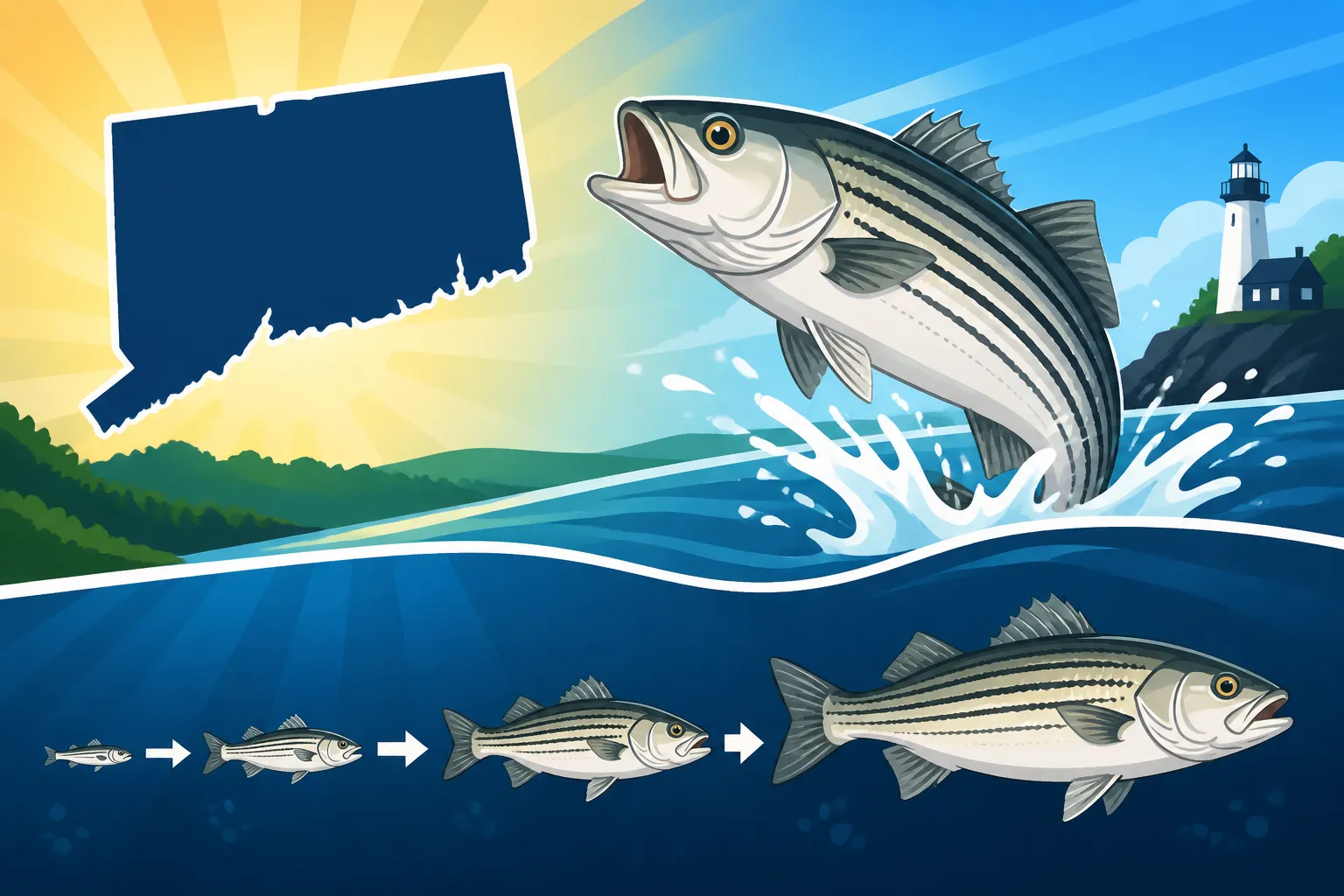
By the time they are about a year old, these juvenile stripers can range from 8 to 14 inches long, sometimes a bit more depending on their food intake and the warmth of the water. Think of it like a human growth spurt in reverse – their first year is absolutely critical for setting the stage for future size. If you've ever cast a line in our estuaries or along the Connecticut River in the late summer or fall, you've likely encountered these "schoolie" stripers, often in thick numbers, chasing baitfish. They're quick, feisty, and a blast on light tackle, but still have a long way to go before becoming the big cows we dream of.
Understanding Striped Bass Growth Rates in Coastal Waters
Once striped bass move from their freshwater nurseries into the more expansive and food-rich coastal waters like Long Island Sound, their growth can truly accelerate. However, it's not a perfectly linear journey. Several factors influence how quickly a striper gains length and weight, and these can vary significantly from one fish to another, and from one year to the next.
Generally speaking, a striped bass can reach a legal keeper size (which, of course, varies and you should always check the latest Connecticut Striped Bass Slot Limit and Season before heading out) within 3 to 7 years. Males tend to mature and reach smaller maximum sizes faster than females. Females, on the other hand, often grow larger and live longer, becoming the true trophy-sized fish that anglers covet. This is a common pattern in many fish species, where the females bear the burden of reproduction and thus require more energy reserves and larger body mass.
Here’s a rough breakdown of typical growth over time for striped bass in our region. Keep in mind these are averages, and individual fish can certainly deviate:
| Age (Years) | Average Length (Inches) | Average Weight (Pounds) | Notes |
|---|---|---|---|
| 1 | 8-14 | 0.5-1.5 | Often referred to as "schoolies." Rapid growth from larval stage. |
| 2-3 | 15-24 | 1.5-5 | Reaching sub-legal to legal sizes. Males often mature around this age. |
| 4-6 | 25-34 | 6-15 | Prime "keeper" size for many anglers. Strong, healthy fish. Females begin maturing. |
| 7-10 | 35-42 | 16-30 | Trophy potential starting to emerge. These fish have experienced many migrations and are resilient. |
| 10+ | 43+ | 30-60+ | True "cow" stripers, often large breeding females. These are the giants that stories are made of. How big striped bass get in Long Island Sound provides more perspective on these monsters. |
This table gives you a snapshot, but it’s crucial to remember that a fish’s individual genetics, the abundance of its prey, and even water conditions play a huge role. For instance, a striper that consistently finds a buffet of bunker and herring will undoubtedly outgrow one in an area with sparse baitfish. Anglers who are serious about tracking their catches might even consider investing in a quality measuring board, which you can often find on platforms like Amazon, to get accurate lengths before releasing their fish.
Factors Influencing How Large Striped Bass Grow
The ultimate size and growth rate of a striped bass are a complex interplay of environmental factors, genetics, and diet. It's not just about how old a fish is, but where it's lived and what it's eaten throughout its life.
Food Availability and Diet
This is perhaps the most significant factor. Striped bass are voracious predators, and their growth directly correlates with the abundance of their prey. In our Connecticut waters, their diet can include a wide variety of forage fish such as Atlantic menhaden (bunker), alewives, herring, sand eels, and even squid. When these baitfish populations are robust, stripers have a constant food source, allowing them to pack on pounds and inches more quickly. Conversely, periods of scarce bait can slow growth dramatically, leading to leaner fish.
Think of those epic fall blitzes when the striped bass are gorging themselves on massive schools of peanut bunker. These feeding frenzies aren't just exciting; they're essential for the fish to build up fat reserves for their migrations and for spawning. Knowing What striped bass eat in Long Island Sound can give you an edge in understanding where and when to find these actively feeding, fast-growing fish.
Water Temperature and Salinity
Water temperature plays a crucial role in a striped bass's metabolism. They are cold-blooded, so warmer waters (within their optimal range) can speed up their metabolism, increasing their feeding activity and thus their growth rate. However, excessively warm water can also stress them, especially during the summer months in shallower areas. Optimal temperatures generally range from the mid-50s to low-70s Fahrenheit. Similarly, while they are anadromous and can tolerate a wide range of salinities, prolonged exposure to extreme conditions outside their preferred range can impact their health and growth.
This is why their seasonal Striped Bass Migration Along the Connecticut Coast is so important. They move to find optimal temperatures and food sources, constantly seeking the best conditions for survival and growth.
Genetics and Age
Just like people, some striped bass are genetically predisposed to grow larger and live longer than others. There's a natural variation within the population. Age is, of course, a fundamental component of growth; the older a fish gets, the more time it has had to grow. Some striped bass can live for an impressive 20 to 30 years, especially the large females. These are the fish that contribute to legendary stories and, if caught, are truly once-in-a-lifetime experiences. It's these older, larger fish that are often the biggest breeders, making their protection crucial for the health of the entire fishery. A true trophy striper often means an ancient one. For context, the Connecticut state record striped bass weight was achieved by a fish that was undoubtedly many years old.
Implications for Anglers: Conservation and Trophy Potential
Understanding how fast striped bass grow has significant implications for how we, as anglers, approach fishing for them. It underscores the importance of conservation practices, especially regarding catch and release, and helps us set realistic expectations for catching those coveted "cow" stripers.
The Role of Slot Limits and Responsible Catch & Release
Current regulations, like the slot limits implemented in many areas, are designed to protect the breeding stock of striped bass. By allowing smaller, immature fish to grow and larger, mature breeders to continue spawning, these regulations help ensure the long-term health of the fishery. When you catch a fish just outside the slot, perhaps a beautiful 45-inch striper, knowing that fish is likely an old, productive female makes releasing her carefully all the more meaningful.
Practicing responsible catch and release, especially for larger fish, is paramount. This means minimizing fighting time, using appropriate tackle, avoiding handling fish by the gills, and using single, barbless hooks when possible. Investing in release tools like de-hookers or even specialized gloves for handling large fish can make a big difference, and these are readily available through online retailers like Amazon. Every healthy release of a large, mature female is an investment in future generations of striped bass. More information on safe handling can be found in Striped bass catch and release survival tips.
Chasing Trophy Stripers: Patience and Strategy
For those chasing a true trophy striped bass – a fish over 40 or even 50 pounds – patience is indeed a virtue. These fish are not just large; they are old. They've survived countless migrations, evaded predators, and outsmarted untold numbers of anglers. Their sheer longevity, as discussed in How long striped bass live, is a testament to their resilience.
Targeting these giants often requires a different strategy than fishing for schoolies. You might be looking for them in specific deep-water structures, targeting them with larger baits or lures, and often fishing at night when they are most active. The Best techniques for fall striped bass often focus on finding these larger, migratory fish as they bulk up before winter. It's a journey that combines understanding their biology, their behavior, and the specific nuances of fishing our local Connecticut waters. And when that rod doubles over, and you feel the raw power of a truly massive striper, you'll know that every year of its growth and every moment of your patience was worth it.
Ultimately, the growth rate of a striped bass isn't just a biological statistic; it's a narrative woven into the fabric of our angling experiences. It reminds us of the power and fragility of nature, and our role in ensuring these magnificent fish continue to thrive in Connecticut's waters for generations to come.
Disclaimer
This article is for general informational purposes only and does not constitute professional advice. Laws, prices and regulations vary by location and change over time. Consult a qualified professional for guidance on your specific situation.