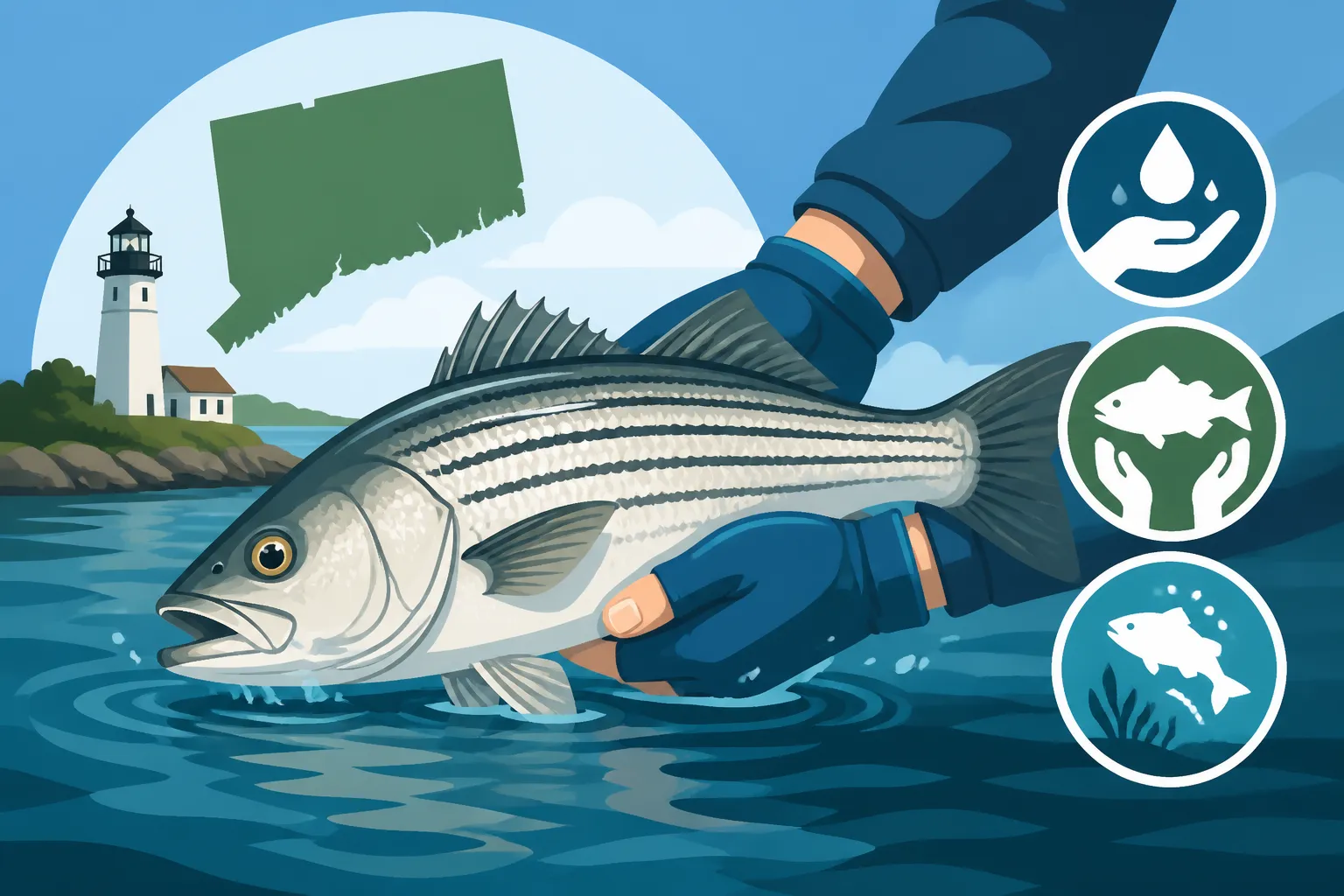
Striped bass catch and release survival tips
There's nothing quite like the thrill of hooking into a powerful striped bass, especially when you're fishing the waters of Connecticut. But let's be honest, many of us want to do our part for conservation, and that often means releasing these magnificent fish. The big worry, though, is whether that released striper actually swims off strong and survives, or if our handling did more harm than good. This guide is here to walk you through practical, empathetic, and truly effective tips to ensure your striped bass have the best possible chance of survival after you've enjoyed the fight.
Understanding Why Striped Bass Survival Matters
It’s easy to think, "I caught it, I released it, job done!" But the reality for a fish after a prolonged fight and improper handling can be pretty grim. We owe it to these incredible creatures, and to the future of fishing in Connecticut, to understand the science behind their vulnerability.
The Biology of Stress in Stripers
Imagine running a marathon, then being held underwater for a minute, and then someone poking and prodding you before you’re expected to sprint again. That's a bit like what a striped bass goes through. When a fish fights, its muscles produce lactic acid, similar to what happens in our own bodies during intense exercise. If the fight is too long, or the fish is exposed to air for an extended period, this lactic acid builds up, leading to metabolic acidosis. This can disorient the fish, damage its internal organs, and make it far more susceptible to predators or disease once released.
Their gills, which are crucial for oxygen exchange, can also be damaged by rough handling or prolonged exposure to air. Think of it this way: their gills are like our lungs. Imagine trying to breathe when your lungs are bruised or covered in sand. It’s tough. A fish struggling to breathe after release might not have the energy to evade a hungry bluefish or navigate back to safety. It's a sobering thought, but understanding this physiological toll helps us become better, more responsible anglers.
Conservation and Future Fishing
Beyond the immediate well-being of a single fish, successful catch and release is absolutely vital for the overall health of the striped bass population in Long Island Sound Fishing Guide and beyond. Striped bass populations face a lot of pressure, and when we release fish properly, especially those outside of slot limits or the larger, older breeders, we contribute directly to sustainable fishing. These larger fish are often the most prolific spawners, so allowing them to swim away and reproduce helps ensure there will be strong year classes for years to come.
Think of it as an investment in your future fishing trips. Every healthy fish you release, particularly those impressive ones that have successfully navigated the Striped Bass Migration Along the Connecticut Coast for many seasons, contributes to the genetic diversity and resilience of the species. It means more thrilling battles for the next generation of anglers, and a robust ecosystem for all. When you prioritize survival, you're not just letting one fish go; you're safeguarding an entire fishery.
Essential Gear for Responsible Catch and Release
Let's talk tools! Having the right gear isn't just about catching fish; it's about catching them responsibly. Using inappropriate equipment can drastically increase a fish's stress and decrease its chances of survival. A little preparation goes a long way.
The Right Rod, Reel, and Line Setup
Matching your tackle to the size of the striped bass you're targeting is paramount. I've seen countless anglers try to land a hefty 30-pound striper on gear meant for scup, and it always ends the same way: an exhausted fish, a prolonged fight, and often a poor outcome for the striper. The goal is to land the fish quickly, but without horsing it in so hard you damage its internal organs or tear its mouth.
For most Long Island Sound stripers, a medium-heavy to heavy action rod paired with a reel spooled with strong, abrasion-resistant braided line is ideal. This setup allows you to apply enough pressure to turn the fish without over-stressing it, significantly shortening the fight. A shorter fight means less lactic acid buildup and a better chance of survival. You can find excellent options for specific rod and reel applications, as well as high-quality braided lines, on sites like Amazon, often with reviews from other anglers that can guide your choice for Connecticut waters. For example, if you're Trolling Techniques for Long Island Sound Striped Bass, you'll want a sturdier setup than if you're light tackle casting from shore.
Crucial Handling Tools
This is where many anglers drop the ball, often without even realizing it. Bare hands and clumsy handling can strip a fish of its protective slime coat, leaving it vulnerable to infection. Investing in a few key tools can make all the difference.
- Rubberized Landing Net: Forget those old knotted nylon nets that tangle hooks and scrape off slime. A net with a soft, rubberized or silicon mesh cradles the fish, minimizes scale and slime loss, and prevents hooks from getting hopelessly snagged. This is probably the single best investment you can make for catch and release. Many outdoor retailers and even general online marketplaces like Amazon offer a range of sizes.
- Dehooker/Pliers: Pliers are essential, especially long-nosed ones, but a dedicated dehooking tool can be a game-changer for deeply set hooks or for reaching hooks in toothy fish without putting your hands too close. With the Connecticut Circle Hook Requirement for Striped Bass now in place for striped bass when using bait, hooks are generally set in the corner of the mouth, making removal much easier. Still, having the right tool helps you do it quickly and efficiently.
- Lip Grippers (Optional, with caution): While popular, lip grippers should be used with extreme care, and ideally only on smaller fish that can be supported horizontally with the other hand. Hanging a large striper vertically by a lip gripper can cause severe jaw and internal organ damage. If you use them, always support the fish's body, especially its belly, with your other hand.
Best Practices for Handling Striped Bass
This is the moment of truth: once you've landed that striper, how you handle it in those crucial seconds or minutes dictates its fate. The goal is always speed, gentleness, and minimal air exposure.
Minimize Fight Time and Air Exposure
We already talked about the right tackle helping shorten the fight, but it's also about technique. When you have a fish on, maintain steady pressure. Don't pump and reel wildly, but don't just hold on and let the fish run itself ragged. If you can, turn its head towards you and lead it in. The quicker you can bring it to hand (or net), the better.
Once the fish is boatside or shore-side, the clock starts ticking for air exposure. Striped bass are powerful, but they don't do well out of water. Every second they spend flopping on a deck or gasping for air reduces their chances of survival. Try your absolute best to keep the fish in the water while you remove the hook, especially if you have a net. If you must lift it for a quick photo, do so gently and as briefly as possible, ideally for no more than 10-15 seconds. Think of it as holding your breath – you can do it for a little while, but eventually, you need to breathe!
Gentle Handling and Dehooking
This is perhaps the most critical part. When handling a striped bass, avoid grabbing it by the gills or eyes. If you need to secure it, gently grasp the lower jaw with a wet hand or use a lip grip tool (again, with caution and support). Always support the fish horizontally with both hands, one under the head and one under the tail, if you lift it. Never hold a large striper vertically by the tail or mouth; this can dislocate its jaw and severely damage its spine and internal organs.
To remove the hook, use your pliers or dehooker. With Connecticut Circle Hook Requirement for Striped Bass, hooks are usually right in the corner of the mouth, making removal straightforward. If the hook is deeply swallowed and you can't easily remove it without tearing the gills or throat, it's often better to cut the line as close to the hook as possible. The hook will usually corrode and fall out over time, and this causes less trauma than trying to dig it out. Always wet your hands thoroughly before touching the fish to protect its slime coat, which is its first line of defense against disease and infection.
Releasing the Fish Successfully
Simply tossing a tired striper back into the water isn't always enough. You want to ensure it's revived and ready to swim off strongly.
Here's how:
- Cradle and Orient: Gently hold the fish upright in the water, facing into the current if there is one. This allows water to flow over its gills, helping it breathe.
- Observe for Recovery: Watch for signs of revival. The fish will start to move its fins, regain its color, and eventually try to swim out of your hands. Don't rush it.
- Release When Ready: When the fish actively tries to pull away and can hold itself upright, release it. Give it a gentle push forward to help it get going. If it rolls over or struggles, continue the revival process until it's strong enough to swim on its own. Sometimes, a few gentle side-to-side movements can help push oxygenated water over the gills.
This patient approach, especially important after a long battle, gives the fish its best shot.
Avoiding Common Catch and Release Mistakes
Even with the best intentions, it's easy to make mistakes that compromise a striped bass's survival. Awareness is the first step to avoiding these pitfalls.
The Dangers of "Photo Ops"
We all love a good trophy photo, especially when we land a beautiful specimen like those that exhibit significant Striped Bass Growth Rate to Trophy Size. It’s part of the fun of fishing! However, a few seconds out of water for a picture can quickly turn into a minute or more, causing irreparable damage. If you absolutely want a picture, here’s how to do it with minimal impact:
- Prepare Ahead: Have your camera ready before the fish is landed.
- Quick Lifts: If possible, keep the fish partially submerged and lift it only for a quick, single shot.
- Minimize Air Time: Aim for less than 10-15 seconds out of water.
- Support the Fish: Always support the fish horizontally with two hands.
- Avoid Dropping: A drop onto a hard surface can be fatal.
The best photos, in my opinion, are those taken with the fish still in the water, showing its vibrant colors and strength as it swims away. It tells a much better story of a successful catch and release.
Understanding Water Temperature and Depth Stress
While striped bass are pretty tough, they are still susceptible to environmental stressors. What water temperature striped bass prefer can vary, but generally, cooler water holds more dissolved oxygen, which is critical for fish recovery. In the peak of summer, when water temperatures in shallow bays can soar, the stress of a fight combined with low oxygen levels can be a lethal combination. Consider fishing during cooler parts of the day (dawn or dusk) or in deeper, cooler waters if you plan to catch and release during heatwaves.
Deep-water barotrauma, where rapid changes in pressure cause a fish's swim bladder to expand, is less common for inshore striped bass fishing in Connecticut, as they are often caught in shallower waters. However, if you do hook a striper in significantly deeper water (say, 50+ feet) and notice signs like bulging eyes or a distended belly upon retrieval, it's a sign of barotrauma. In such cases, a venting tool can be used to release the excess air, but this requires skill and should only be done if you know what you’re doing, as improper venting can be harmful. For the most part, simply minimizing fight time and gentle handling will be your primary concern.
Here’s a quick summary to help you keep these tips top of mind:
| DO'S for Striped Bass Catch & Release | DON'TS for Striped Bass Catch & Release |
|---|---|
| Use appropriately sized tackle for a quick fight. | Use light tackle that prolongs the fight and exhausts the fish. |
| Keep the fish in the water as much as possible. | Hold the fish out of water for extended periods for photos. |
| Wet your hands before touching the fish. | Handle the fish with dry hands or rough gloves. |
| Support the fish horizontally with two hands if lifted. | Hold the fish vertically by the jaw or tail, or by the gills. |
| Use a rubberized landing net. | Use knotted nylon nets that remove slime and damage fins. |
| Employ long-nosed pliers or a dehooker for quick release. | Dig around with your fingers or rip out deeply set hooks. |
| Cut the line on deeply swallowed hooks. | Try to extract a deeply swallowed hook, causing internal damage. |
| Revive the fish in current until it swims off strongly. | Simply toss an exhausted fish back without ensuring its recovery. |
| Fish during cooler parts of the day in warm weather. | Target fish in hot, shallow water during peak summer heat if releasing. |
By following these simple yet crucial guidelines, you're not just ensuring the survival of a single striped bass; you're actively participating in the conservation efforts that keep Striped Bass Fishing in Long Island Sound vibrant for everyone, now and for generations to come. Your efforts make a real difference, and that's something to be proud of. And remember, Is It Legal to Release a Striped Bass You Catch in Connecticut? — absolutely, and it's encouraged when done responsibly!
Disclaimer
This article is for general informational purposes only and does not constitute professional advice. Laws, prices and regulations vary by location and change over time. Consult a qualified professional for guidance on your specific situation.