What American eel look like and where they live
You've probably been there: reeling in what you thought was a good fish, only for it to turn into a wriggling, slimy surprise that looks more like a snake than a fish. That's often the moment you realize you've hooked an American eel, and if you're like most anglers, you might have more questions than answers about these fascinating, yet often misunderstood, creatures. This guide is here to shed some light on the American eel, explaining what they look like, where they thrive in Connecticut, and why they're such an important part of our local aquatic ecosystems.
What Exactly is an American Eel? Identifying Features and Biology
When you hook into something that feels surprisingly strong and looks, well, different from your typical trout or bass, there's a good chance you've met an American eel. These creatures are truly unique, and understanding their appearance and life cycle really helps appreciate their place in Connecticut's waters. They're not just some random "snake fish"; they are a marvel of nature.
Physical Appearance: More Than Just a "Snake Fish"
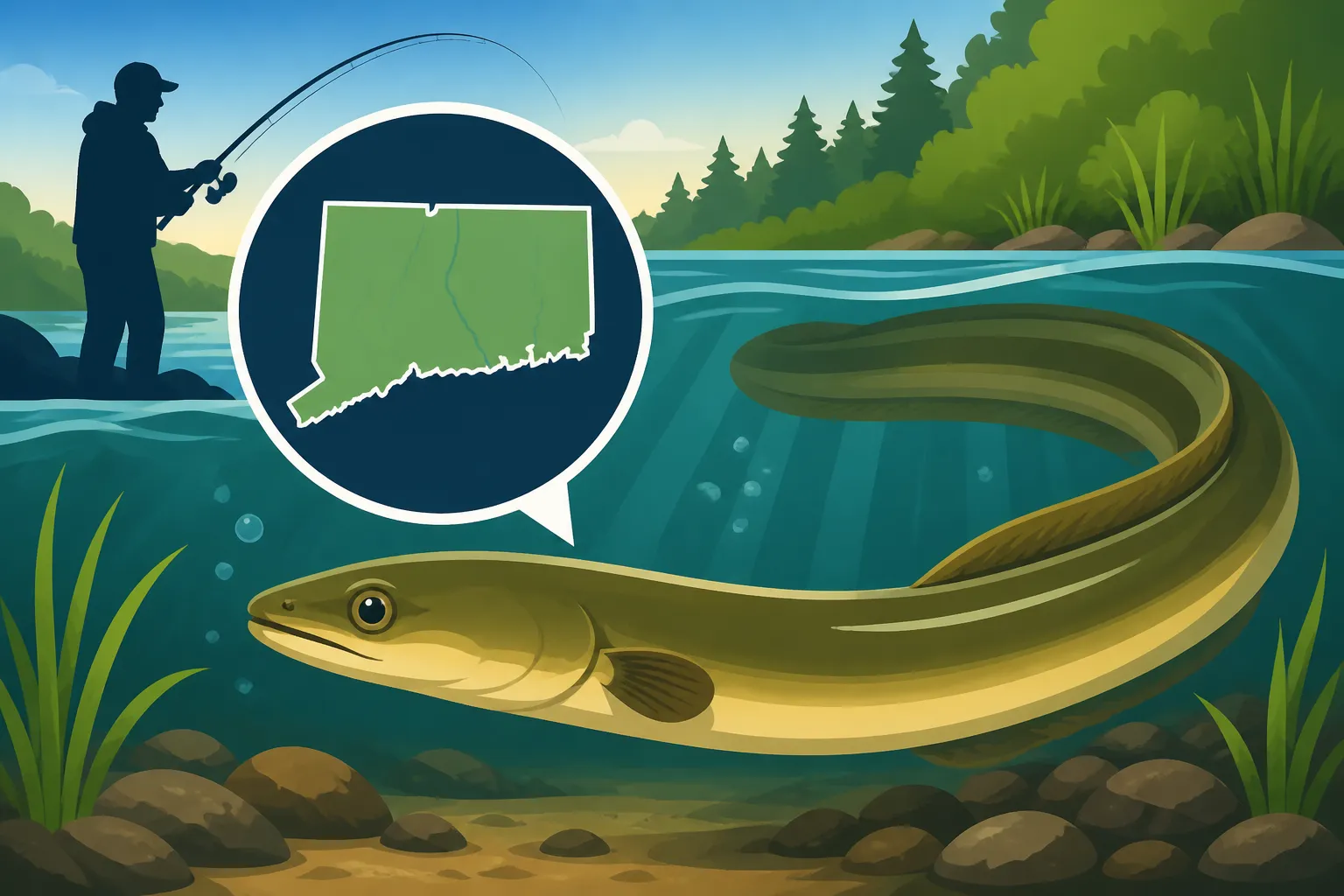
Let's get down to basics. American eels (Anguilla rostrata) have that distinctive, elongated, snake-like body that can definitely give you a start, especially if you're not expecting it. They generally sport a brownish-yellow to olive-green color on their backs, which fades to a lighter yellow or white on their bellies. This countershading helps them blend into their surroundings, whether they're lurking in a murky river bottom or weaving through the weeds of a pond.
One of the key things to notice about their appearance is the lack of prominent pelvic fins. Unlike most fish that have a pair of fins near their belly, eels don't have these, contributing to their sleek, almost seamless profile. They do, however, have long dorsal and anal fins that run continuously along most of their body and meet at the tail, forming a single, flowing fringe that helps propel them through the water with remarkable agility. Their scales are incredibly small, almost imperceptible, making their skin feel smooth but also notoriously slimy, which is a great defense mechanism when they're trying to escape a predator or an angler's grasp! Their jaws are typically short, and they have a slightly projecting lower jaw, with small, sharp teeth adapted for grasping prey.
Unique Life Cycle: The Incredible Catadromous Journey
What makes the American eel truly exceptional is its life cycle, which is completely opposite to that of salmon. Salmon are anadromous, meaning they live in saltwater and spawn in freshwater. American eels are catadromous: they live most of their lives in freshwater or brackish estuaries, but they migrate all the way out to the open ocean to spawn. Specifically, every American eel on the East Coast begins and ends its life in the Sargasso Sea, a vast area in the Atlantic Ocean near Bermuda.
After hatching in the Sargasso Sea, the tiny, transparent larval eels, called leptocephali, drift on ocean currents for months, sometimes over a year, making their way towards the North American coastline. As they get closer to shore, they transform into "glass eels," still transparent but now eel-shaped. These glass eels then enter estuaries and begin their incredible upstream migration into freshwater rivers and streams. Once they settle into a more permanent habitat, they develop pigmentation and are called "elvers." They continue to grow and mature in these freshwater and estuarine environments for many years, sometimes over a decade, at which point they are known as "yellow eels." When they reach sexual maturity, they undergo another dramatic transformation, becoming "silver eels." Their eyes enlarge, their coloration shifts to a more metallic silver belly and darker back, and their digestive systems shut down as they prepare for their epic, non-feeding migration back to the Sargasso Sea to spawn and complete their life cycle. It's truly one of nature's great migrations, happening right under our noses in Connecticut's waterways.
Where Do American Eels Live in Connecticut? Habitats and Distribution
Connecticut offers a diverse range of habitats that are perfect for American eels throughout their long residency here. Their adaptability means you can find them in surprisingly varied locations, which is part of their mystique for anglers and naturalists alike.
Freshwater Realms: Rivers, Streams, Ponds, and Lakes
Once glass eels and elvers make their way past the tidal influence, they fan out into almost every accessible freshwater body in the state. From the quiet depths of local ponds and lakes to the bustling currents of major rivers, if there's water and a connection to the sea, you can bet eels are likely present. They are incredibly hardy and can tolerate a wide range of water temperatures and conditions.
You'll find yellow eels burrowed in the muddy or silty bottoms of places like Lake Lillinonah and Bantam Lake, or tucked away under rocks and submerged logs in the Farmington River or the Willimantic River. They are nocturnal predators, so during the day, they prefer to hide, emerging at night to hunt for small fish, crustaceans, and insects. Their ability to even slither over damp ground for short distances allows them to bypass small obstructions and move between isolated water bodies, further expanding their reach. This is why you might find an eel in a seemingly landlocked pond that you thought was only home to bass and panfish. These freshwater environments are where they spend the bulk of their lives, growing large and strong before their final journey back to the sea. They are masters of their freshwater domain, often unnoticed until they make an appearance on the end of a fishing line. You can learn more about various waterways in our guide to Best Fishing Rivers in Connecticut.
Saltwater Sojourns and Estuaries: The Coastal Connection
While eels are predominantly known for their freshwater residency, their journey begins and ends in saltwater, and many yellow eels spend their entire lives in the brackish estuaries and coastal waters of Long Island Sound. Areas where rivers meet the sea, like the lower Connecticut River or the estuaries around the Niantic River and Thames River, are critical habitats. These brackish waters offer a rich buffet of food and protection, and eels thrive in the mix of fresh and salt.
Silver eels, when they're ready to spawn, will begin their migration from their freshwater homes, moving downstream through rivers and eventually entering Long Island Sound. They then head out into the open Atlantic, navigating thousands of miles to the Sargasso Sea. This incredible feat of navigation and endurance is still not fully understood by scientists. The coastal areas, bays, and harbors of Connecticut serve as crucial staging grounds for this outward migration, and also as the entry points for the new generation of glass eels arriving from the Sargasso. If you're fishing the brackish or saltwater areas of the state, especially at night, an eel encounter is a distinct possibility. Our Long Island Sound Fishing Guide covers many of these transitional zones where eels are prevalent.
Overcoming Obstacles: Eel Ladders and Environmental Considerations
Unfortunately, human development has created numerous barriers for these migratory fish. Dams, culverts, and other man-made structures can block the upstream migration of glass eels and elvers, impacting their ability to reach prime freshwater habitats. Recognizing this challenge, conservation efforts are underway in many places, including Connecticut, to help eels overcome these obstacles.
Eel ladders or eelways are specifically designed structures that help glass eels and elvers bypass dams and ascend to upstream waters. These ladders often consist of a ramp with a textured surface or bristles that allow the small eels to slither their way up and over the obstruction. It's a testament to the importance of the species that such measures are being taken. Additionally, maintaining healthy water quality in both freshwater and saltwater environments is crucial for the survival of American eels, as they are sensitive to pollution and habitat degradation. Their presence in a waterway can often be an indicator of a relatively healthy ecosystem, highlighting their ecological significance.
Encounters with Eels: Angling and Ecological Significance
For many anglers, encountering an eel can be a mix of surprise and mild exasperation, but these creatures are far more than just a nuisance. They play a vital role in the food web and can even offer a unique fishing challenge.
Eels on the Line: An Unexpected Catch
It's a common scenario: you're fishing for catfish, bass, or even trout, especially at night or in low light conditions, and suddenly your line goes taut with a powerful, persistent pull. You might think you've hooked a big one, only to find that slimy, wriggling form staring back at you. Eels are opportunistic feeders and are attracted to a wide variety of baits, particularly cut bait, worms, or even small live fish. They are primarily nocturnal, which is why night anglers often encounter them more frequently.
Their fight is unique – less about powerful runs and more about strong, sustained pulling and an uncanny ability to twist and tangle lines into an absolute mess. Getting an eel off the hook can be challenging due to their sliminess and their tendency to wrap around anything within reach, including your leader, line, and even your arm if you're not careful! Many anglers choose to simply cut the line as close to the hook as possible to minimize stress on both the fish and themselves. If you do plan on handling them, be prepared for a vigorous struggle. Don't forget, if you're fishing for any species in Connecticut, you'll need the right license. Our article on Connecticut Fishing License Guide for 2026 can help you sort that out.
Ecological Importance: More Than Just Bait
Beyond being an occasional angling surprise, American eels are incredibly important to the health of Connecticut's aquatic ecosystems. They are a crucial link in the food chain, serving as both predator and prey. As predators, they help control populations of smaller fish, insects, and crustaceans, acting as effective bottom scavengers that clean up detritus. This role helps maintain ecological balance in their habitats.
More importantly, they are a significant food source for many other species, including striped bass, bluefish, ospreys, eagles, raccoons, and even larger freshwater fish like northern pike. The presence of a healthy eel population supports a diverse array of wildlife up and down the food chain. Their unique catadromous life cycle means they transfer energy and nutrients between oceanic, estuarine, and freshwater environments, connecting these vastly different habitats in a way few other species do. Protecting American eel populations is therefore not just about the eels themselves, but about safeguarding the intricate web of life that depends on them in Connecticut's rivers, lakes, and coastal waters.
Gear and Tips for Handling Eels (If You Must!)
While many anglers prefer to avoid eels, sometimes they just can't be helped. If you find yourself in an eel encounter, having the right approach and a few key pieces of gear can make the experience much less stressful for both you and the eel.
Essential Gear for Eel Encounters
Dealing with a strong, slimy, and wriggly eel requires a bit of preparation. The right tools can make a huge difference in protecting your hands, your line, and the fish.
- Long-Nose Pliers or De-hookers: These are absolutely essential. Eels tend to swallow hooks deep, and long-nose pliers allow you to reach in and remove the hook with minimal harm to the fish. A specialized de-hooker is even better, offering more leverage and reach. You can find excellent options for these on Amazon, often with ergonomic grips designed for wet conditions.
- Heavy-Duty Gloves: Eels are incredibly slippery, and their small teeth can give you a nasty scrape if you're not careful. A good pair of gripping gloves, preferably made of a thick, waterproof material like neoprene or rubber, will give you the necessary grip and protection. Look for gloves with textured palms. Again, Amazon is a great place to browse for fishing gloves that offer both protection and dexterity.
- Wet Towel or Mat: If you need to lay the eel down for a moment to get the hook out, a wet towel or a small, wet mat provides a safe, clean surface that keeps the slime off your boat or the bank, and helps protect the eel's delicate skin from abrasions. Avoid letting them flop around on dry, hot surfaces.
- Line Cutters: In some cases, especially if the hook is swallowed deep or the eel is extremely tangled, the kindest thing to do is simply cut the line as close to the hook as possible. A good pair of sharp line cutters or braid scissors, which can easily be found on Amazon, will make this quick and efficient.
Remember, the goal is to handle the eel as little as possible and release it quickly and safely, minimizing any potential injury or stress.
Safe Handling Practices: Minimizing Stress and Damage
When an eel is on your line, a calm and methodical approach is best. Panicking will only make the situation worse. Here’s how to handle it:
- Keep it Wet: Eels breathe through their skin to some extent, so keeping them wet is crucial. If you've got them out of the water, try to keep a hand over their body (with a glove on, of course) and perhaps dribble a little water over them.
- Control the Head: The head is where all the action is. If you can gently but firmly grasp the head area (again, with gloves), you'll have much more control over the eel's body. Their wriggling power is astounding, and if you can prevent the head from thrashing, the body often follows suit.
- Use Pliers for Deep Hooks: If the hook is deep, use your long-nose pliers or de-hooker. Twist the hook gently to dislodge it, rather than yanking. If it's too deep and you're struggling, don't force it. That's when your line cutters come in handy. It's better to leave a small, biodegradable hook in place than to cause significant internal damage trying to remove it.
- Release Quickly and Gently: Once the hook is out (or the line is cut), gently place the eel back into the water. Hold it upright for a moment if needed, allowing it to regain its bearings before swimming off. Don't throw it in; a gentle re-entry is always best for the fish.
- Wash Up: Eels are incredibly slimy, and that slime gets everywhere. Have some soap and water, or at least a good hand sanitizer, ready for after the encounter to clean your hands and any affected gear.
Handling eels is definitely a unique experience, and while they might not be everyone's favorite catch, they are a fascinating and vital part of Connecticut's aquatic life. Respect for these incredible survivors is always the best approach. Our guide on American Eel in Connecticut Rivers further details their presence in specific waterways.
| Eel Life Stage | Appearance | Primary Habitat | Key Characteristic |
|---|---|---|---|
| Leptocephalus | Transparent, leaf-shaped larva | Open Sargasso Sea | Ocean current drifting |
| Glass Eel | Transparent, eel-shaped, tiny | Coastal waters, estuaries | Entering freshwater systems |
| Elver | Pigmented, small eel | Freshwater rivers/streams | Growing and developing |
| Yellow Eel | Brownish/olive, yellow belly, mature | Freshwater, estuaries | Feeding, growing, spending most of life |
| Silver Eel | Metallic silver belly, enlarged eyes | Migrating to Sargasso Sea | Non-feeding, sexually mature, spawning migration |
Disclaimer
This article is for general informational purposes only and does not constitute professional advice. Laws, prices and regulations vary by location and change over time. Consult a qualified professional for guidance on your specific situation.