Where American eel travel in Connecticut rivers
Many anglers and nature enthusiasts in Connecticut might be fascinated by the elusive American eel but truly wonder where these mysterious creatures actually travel within our state's diverse river systems. It's not always obvious, given their nocturnal habits and sometimes hidden pathways. This comprehensive guide will shed light on the incredible migratory journeys of American eels, revealing their essential travel routes, preferred habitats, and the challenges they face in Connecticut's rivers.
The Incredible Journey: Understanding American Eel Migration
The American eel, Anguilla rostrata, has one of the most remarkable life cycles of any fish in Connecticut, or indeed, the world. Their existence is a testament to perseverance, involving epic oceanic migrations and long periods spent in freshwater. Understanding their travel begins far from our shores, deep in the Atlantic.
Life Cycle Fundamentals: From Sargasso Sea to Connecticut Rivers
The story of the American eel begins in the mysterious, vast Sargasso Sea, a warm region in the western Atlantic Ocean known for its sargassum seaweed. This is the only known spawning ground for all American eels. Here, adult eels — often called "silver eels" at this stage — gather to reproduce, and shortly after, they perish, their life's purpose fulfilled. From these spawning events hatch tiny, leaf-like larvae known as leptocephali. These transparent, flat creatures are incredibly delicate and almost alien in appearance.
For approximately a year or more, these leptocephali drift on the major ocean currents, primarily the Gulf Stream, making a slow, passive journey northward and westward across the Atlantic. They feed on marine snow and other microscopic particles, growing slightly as they are carried towards the North American coastline, including the waters off Connecticut. This oceanic drift is a critical, albeit perilous, stage of their migration, exposing them to numerous predators and the vastness of the open ocean.
Elver and Yellow Eel Stages: Entering Freshwater
As the leptocephali approach the continental shelf and the cooler, less saline waters near the coast, they undergo a fascinating metamorphosis. They shrink in size, transform into a more cylindrical, transparent form known as "glass eels." This stage is often the first glimpse many people get of young eels, though they are still incredibly difficult to spot. Driven by an innate instinct, these glass eels move into estuaries and coastal embayments, like those found all along Long Island Sound.
Once in these brackish waters, they begin to develop pigmentation and grow, becoming what are known as "elvers." These small, pigmented eels are incredibly adept at navigating currents and even overcoming small obstacles. This is where their drive to push further upstream into freshwater systems becomes apparent. You'll often find them, in spring and early summer, actively swimming against currents, seeking out river mouths, tidal creeks, and even small drainage ditches. Estuaries serve as crucial transitional zones, allowing them to acclimate from saltwater to freshwater before embarking on their main upstream journey.
After successfully ascending into freshwater rivers, streams, lakes, and ponds, the eels enter their longest phase of life: the "yellow eel" stage. During this period, which can last anywhere from 5 to 20 years, they live a relatively sedentary life in freshwater. They grow substantially, becoming much thicker and darker, typically a yellowish-brown on their underside and olive-green or dark brown on their backs. They are active predators during this time, finding refuge and sustenance in the diverse freshwater habitats Connecticut offers. This is the stage where most anglers might encounter them incidentally.
The "Yellow Eel" Phase: Growing Up in Our Rivers
Once they've made it into freshwater, American eels find their long-term homes, settling into the "yellow eel" stage where they focus on growth and survival. Their residency in Connecticut's rivers, lakes, and ponds can last for many years, sometimes even decades, before they undertake their final migratory journey. During this period, they are masters of their environment, utilizing various habitat features to their advantage. They are primarily nocturnal, meaning they are most active under the cover of darkness, which helps them avoid predators and ambush prey more effectively.
Within the river systems, yellow eels show a strong preference for areas that offer ample cover and food. This includes stretches with abundant submerged vegetation, fallen trees and log jams, and rocky bottoms where they can burrow or hide in crevices. Undercut banks are also prime real estate for these eels, providing natural tunnels and safe havens during daylight hours. They are quite comfortable in muddy or silty substrates, often burying themselves to escape detection or to ambush unsuspecting prey. You might not see them often, but they are there, a vital part of the aquatic ecosystem, diligently growing.
Their diet is quite varied, making them opportunistic predators and scavengers. They'll feast on aquatic insects, small fish, crayfish, other crustaceans, and even carrion. This adaptability in diet helps them thrive in a wide range of freshwater environments, from fast-flowing rivers to slower, deeper ponds. They are solitary creatures for the most part, each establishing a territory where they can forage and hide. Their presence indicates a healthy aquatic environment, as they play a crucial role in the food web, both as predator and prey.
Key Connecticut River Systems for American Eels
Connecticut, with its intricate network of rivers and streams flowing into Long Island Sound, provides an ideal habitat and migratory pathway for American eels. While they can be found in virtually any water body connected to the ocean, some systems are particularly important.
The Mighty Connecticut River: An Eel Superhighway
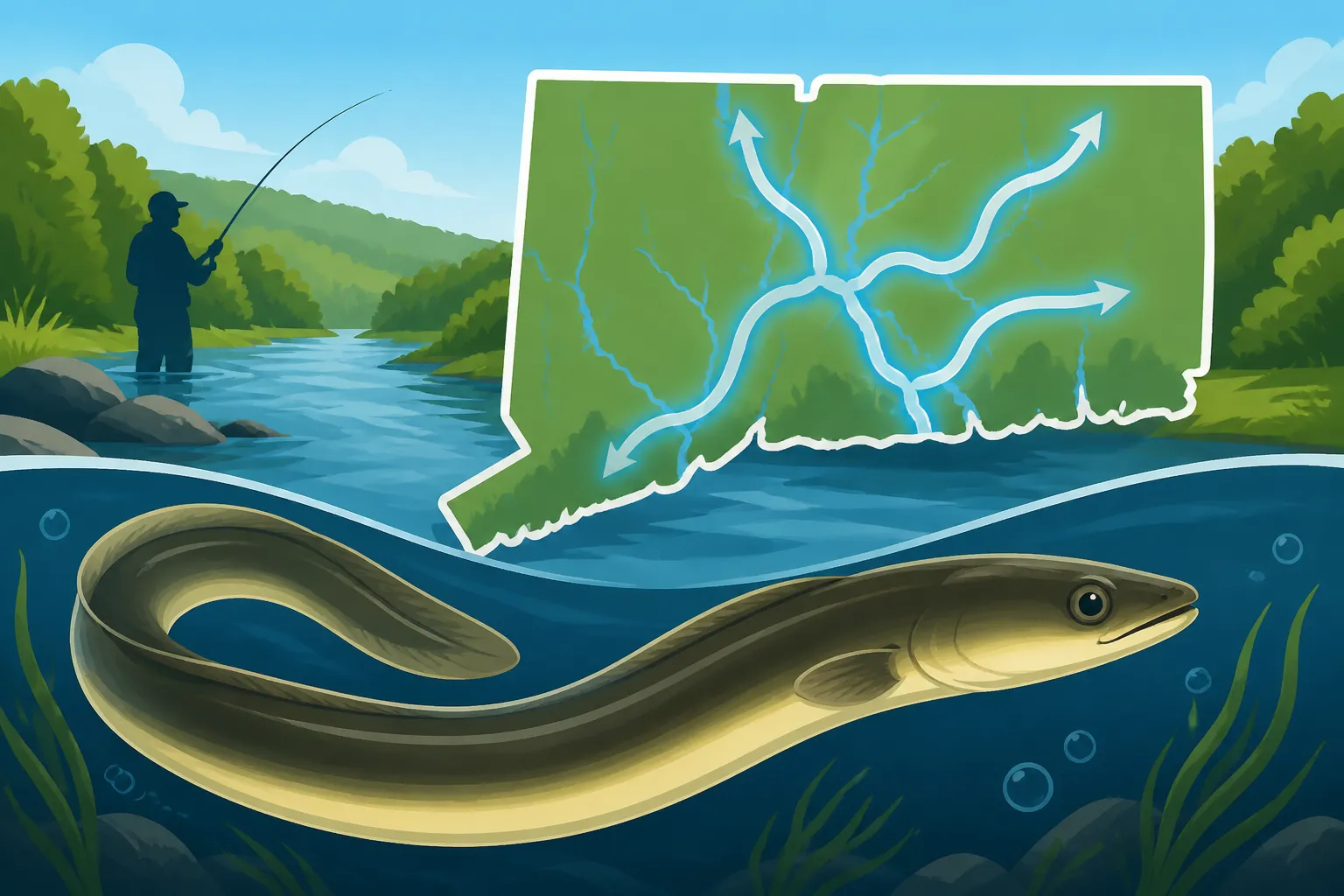
The Connecticut River is, without a doubt, the most significant travel corridor for American eels in our state. Stretching over 400 miles from its source in New Hampshire, it is the longest river in New New England and offers an immense and diverse pathway to the ocean. From its mouth at Old Saybrook, where it empties into Long Island Sound, eels embark on their upstream journey, penetrating deep into the state and beyond. The sheer volume of water and the extensive network of tributaries make it a vital "superhighway" for these fascinating fish.
Throughout the Connecticut River system, eels utilize both the main stem and its countless branches, creeks, and even small, seasonal streams. They are incredibly persistent, navigating through varied riverine landscapes. However, the river's development has introduced significant challenges, primarily in the form of dams. Historically, dams blocked vast stretches of their migratory paths, but efforts are continuously made to mitigate these impacts. Projects like fish ladders and eel passes at various dams along the river have opened up crucial access to historical habitats, allowing eels to continue their journey upstream. Connecticut Boating Laws for Anglers covers more on waterways.
The main stem of the Connecticut River itself offers diverse habitats for yellow eels, from its tidal portions near the coast to its more freshwater stretches further inland. The rich biodiversity of the river, including its abundant forage fish, insect populations, and protective cover, supports a thriving eel population. Understanding the Connecticut River's role is key to appreciating the broader movement of eels throughout the state, as it connects to so many other smaller systems that eels eventually inhabit.
Smaller Coastal Rivers and Streams: Vital Arteries
While the Connecticut River is a major player, it's crucial not to overlook the multitude of smaller coastal rivers and streams that dot Connecticut's landscape. Rivers like the Housatonic River, the Thames River, the Quinnipiac River, and the Naugatuck River, along with countless smaller, unnamed creeks and brooks, serve as vital arteries for American eels. If a water body ultimately flows into Long Island Sound, it's a potential pathway for eels.
These smaller systems often feature more varied bottom structures, from rocky stretches in the Farmington River Trophy Trout Stream Rules areas to muddy, meandering sections closer to the coast. Eels are incredibly adaptable and will utilize whatever cover is available, whether it's dense aquatic vegetation, submerged root systems, or accumulated leaf litter. They push far upstream, often into surprisingly small brooks, demonstrating their remarkable tenacity and exploratory nature. You might not think of a narrow, shallow creek as prime eel habitat, but if it offers food and cover, they'll find a way.
The presence of dams on these smaller rivers also poses a significant hurdle, mirroring the challenges seen on larger systems. However, the cumulative effort of allowing eel passage on these smaller, seemingly less important waterways is incredibly significant for the overall health and distribution of the eel population. Every accessible stream, no matter how small, contributes to the network of habitats eels depend on for their prolonged yellow eel growth phase. Connecticut Fishing Regulations Explained can offer more insights into specific waterway rules.
Overcoming Obstacles: Dams and Fishways
One of the most significant man-made obstacles to the American eel's migratory journey in Connecticut rivers, and indeed across their range, is the proliferation of dams. From colonial-era mill dams to modern hydroelectric facilities, these structures interrupt the natural flow of rivers and, more importantly for eels, block their upstream movement. Imagine being a small elver, driven by instinct to move upstream, only to find a towering wall of concrete in your path. It's a daunting challenge.
However, recognizing the ecological importance of eels, significant efforts have been made to help them overcome these barriers. This is where "eel passes" or "eel ladders" come into play. These specialized structures are designed to assist eels in bypassing dams. They often consist of inclined ramps or troughs lined with textured materials like bristles, studded mats, or even corrugated pipes, allowing the eels to climb or slither their way over the obstruction. Water flows over these surfaces, attracting the eels and giving them the necessary moisture to make their ascent.
The effectiveness of these eel passes is vital for maintaining healthy eel populations. By providing passage, these structures help reconnect fragmented habitats, allowing eels to access traditional foraging and growing grounds that were once cut off. This not only benefits the eels directly but also supports the entire ecosystem, as eels are both predators and a significant food source for other wildlife. Seeing a stream of tiny elvers making their way up an eel ladder is a truly impressive sight, highlighting both the eels' determination and our collective efforts to help them.
Habitat Preferences and Behavior Within Connecticut Rivers
Once the American eel successfully navigates its way into Connecticut's freshwater rivers and settles into its "yellow eel" phase, its behavior becomes far less migratory and much more focused on finding shelter, food, and growing large enough for its ultimate return journey.
Hiding in Plain Sight: Preferred Habitats
American eels, being primarily nocturnal, are masters of camouflage and concealment. During the day, they will typically seek out safe havens where they can rest undisturbed, emerging only under the cloak of darkness to feed. Within Connecticut's rivers, their preferred habitats are those that offer maximum cover and protection from predators, such as larger fish, birds of prey, and even mammals like otters. You won't often see an eel sunning itself on a log!
They have a particular fondness for rocky bottoms, where they can slip into crevices and under stones. Undercut banks, formed by erosion, create natural tunnels and overhangs that provide excellent hiding spots. Submerged structures like fallen trees, log jams, and dense root wads are also prime real estate, offering a tangle of protection. Beyond hard structures, eels are quite content to burrow into soft substrates. Mucky or silty riverbeds and lake bottoms allow them to bury themselves, leaving only their heads exposed, perfectly camouflaged and ready to ambush unsuspecting prey. If you're fishing for other species, you might inadvertently snag one in these types of spots. Best Fishing Lakes in Connecticut and Best Fishing Rivers in Connecticut offer prime examples of these varied habitats.
The presence of aquatic vegetation also plays a crucial role. Dense weed beds provide both cover and a rich hunting ground for the small fish and invertebrates that eels prey upon. Their serpentine bodies are perfectly adapted for maneuvering through such dense cover. This adaptability in choosing diverse hiding spots allows them to thrive across a wide range of riverine and lacustrine environments throughout Connecticut.
Feeding Habits and Daily Life
During their extended yellow eel stage in Connecticut's rivers, their daily life, or nightly life more accurately, revolves around feeding and growth. As opportunistic predators, American eels are not particularly picky eaters, which contributes to their success in various environments. Their diet reflects the availability of prey in their specific habitat.
They are efficient hunters, using their keen sense of smell to locate food in the dark. Their diet includes a wide array of aquatic organisms: insects and their larvae, small crustaceans like crayfish, worms, and various small fish species. They are also known to scavenge, readily consuming carrion, which makes them important members of the river's clean-up crew. This broad diet means they are not reliant on a single food source, making them resilient in fluctuating environmental conditions. For anglers, this means a variety of baits can attract them, from worms to cut bait. Finding durable hooks and lines for eel fishing, especially for their slippery nature, can be a specific challenge, but a quick search on Amazon will reveal countless options from brands like Berkley or Gamakatsu.
While they are primarily solitary foragers, their nocturnal habits mean they often avoid direct competition with many diurnal fish species. Their growth rate depends on food availability and water temperature, but over years, they can grow quite large and robust, becoming significant predators in their own right. This long, steady growth phase in freshwater is essential for building up the energy reserves needed for their final, monumental migration.
The Return Journey: Silver Eels Head to Sea
After years, sometimes over a decade or two, of growing in Connecticut's rivers as yellow eels, a remarkable transformation begins. Once they reach sexual maturity, typically around 2 to 3 feet in length (though some can be smaller or larger), they undergo another significant metamorphosis, transitioning into what are known as "silver eels." This stage marks the end of their freshwater residency and the beginning of their final, perilous journey back to the Sargasso Sea.
The physical changes are quite striking: their eyes enlarge, their coloration shifts to a silvery-bronze belly and darker back, and their digestive system begins to degenerate as they cease feeding. Their fins become more pointed, adapting for the long oceanic swim rather than river navigation. Most importantly, they accumulate large fat reserves, which will fuel their non-stop, months-long swim across the Atlantic. This downstream migration, typically occurring in the fall and early winter, is less about leisurely travel and more about an urgent, driven return to their ancestral spawning grounds. Connecticut Fishing Season Dates and Closures will often note times of year when these movements might overlap with other fishing activities.
These silver eels will travel downstream, navigating past the same dams they once climbed, though their larger size can sometimes make passage through fishways more challenging. They return to Long Island Sound, then into the open ocean, where they will swim thousands of miles back to the Sargasso Sea to complete their life cycle. It's a journey fueled solely by instinct and stored energy, a true marvel of the natural world. Once they reproduce, their life cycle ends, completing one of nature's most epic and mysterious migrations.
Angling for Eels and Conservation Efforts
While not always the target species for most anglers, American eels are certainly encountered in Connecticut's waters. Understanding how to manage these encounters and appreciating their conservation status is increasingly important.
Targeting Eels: Techniques and Gear
Most anglers in Connecticut catch American eels incidentally while targeting other species like catfish, bass, or even trout, especially when using bait. However, if you specifically want to target eels, there are simple techniques that can prove quite effective. Given their nocturnal habits, evening or night fishing is often the most productive time. Eels have an incredible sense of smell, making natural baits highly attractive.
Simple bottom rigs with a weight and a hook baited with nightcrawlers, pieces of cut fish (like bunker or mackerel), or even chicken livers are generally the most successful. You'll want a strong hook, as eels have tough mouths, and they can be incredibly slimy and difficult to handle once caught. A pair of gloves and a rag are almost essential if you plan to unhook and release one. While eels aren't typically a fly-fishing target, a large streamer fished at night could potentially attract one. For those looking to set up a dedicated eel fishing kit, Amazon offers a wide selection of durable circle hooks, heavy monofilament or braided lines, and various sinker weights to get you started, from reputable brands like Eagle Claw or Shakespeare. Remember, always check Connecticut Fishing Regulations Explained for any specific rules regarding eel harvesting or possession limits.
Catching an eel can be an exciting, albeit sometimes frustrating, experience due to their strength and slippery nature. They have a tendency to twist and knot your line, so robust tackle is recommended. If you plan to release them, do so quickly and carefully, minimizing handling time.
Conservation Concerns and Management
Despite their amazing journey and resilience, American eel populations have faced challenges across their range, including in Connecticut. Habitat loss, primarily due to damming and alteration of river systems, has significantly impacted their ability to migrate and access essential growing grounds. Pollution and changes in oceanic conditions may also play a role in their overall health and abundance.
Connecticut's Department of Energy and Environmental Protection (DEEP) actively monitors eel populations and implements management strategies to support them. A key focus of these efforts is providing fish passage at dams, as discussed earlier, through the installation and maintenance of eel ladders and fishways. These efforts aim to reconnect fragmented river habitats, allowing young eels to move upstream and adult silver eels to return to the sea. Reading the Connecticut Fishing Guide will always include updates on these conservation efforts and regulations.
The American eel is an ecologically significant species, playing a vital role in both freshwater and marine food webs. Their presence indicates a healthy aquatic ecosystem, and their decline can have ripple effects throughout the environment. Therefore, ongoing research, habitat restoration, and responsible management practices are crucial for the long-term sustainability of this extraordinary species in Connecticut and beyond.
Witnessing the Migration: Eel Ladders and Observation
While eels are generally secretive and hard to spot, especially in their larger "yellow eel" phase, there are specific times and places where you can observe their incredible migratory efforts. The most exciting opportunity often comes during the spring and early summer when elvers and glass eels are actively trying to ascend rivers and streams from Long Island Sound. This is when eel passes and fish ladders become active hubs.
Many fish ladders designed for species like shad and alewives are also utilized by eels. Places like the fish ladders on the Connecticut River, or smaller ones on coastal streams, can offer a glimpse of these determined creatures. If you visit a fish ladder during the late spring or early summer, particularly after dusk (since they're nocturnal), you might be lucky enough to see hundreds, or even thousands, of tiny elvers making their way up the textured ramps. It's a truly mesmerizing sight and a powerful reminder of nature's relentless drive. The Connecticut DEEP sometimes provides information or even live camera feeds on their interactive maps, such as the Connecticut Interactive Trout Stocking Map, Explained, which might occasionally highlight eel passage initiatives, though the focus is usually on trout.
Observing the eel migration offers a unique perspective on the interconnectedness of our ecosystems, from the vast ocean to the smallest backyard stream. It highlights the importance of keeping our waterways clean and free-flowing, not just for the fish we typically target, but for all the fascinating and essential creatures that call Connecticut's waters home. It's an experience that deepens appreciation for the natural wonders right in our own state.
Disclaimer
This article is for general informational purposes only and does not constitute professional advice. Laws, prices and regulations vary by location and change over time. Consult a qualified professional for guidance on your specific situation.