Connecticut trout management area catch and release only waters
One of the trickiest parts of fishing in Connecticut, especially for those beautiful trout, is keeping track of all the rules and regulations. It's easy to get confused about where you can keep fish and where you absolutely cannot, particularly when it comes to the highly popular Trout Management Areas (TMAs). This comprehensive guide will clear up that confusion, focusing specifically on Connecticut's designated catch-and-release only trout management areas, so you can fish with confidence and respect for these vital conservation zones.
Understanding Connecticut's Trout Management Areas (TMAs)
Connecticut's Trout Management Areas, or TMAs, are specific stretches of rivers and streams managed intensively by the Connecticut Department of Energy and Environmental Protection (DEEP) to provide exceptional trout fishing opportunities. They're not just random spots; they're carefully selected locations with special regulations designed to enhance the fishing experience and protect trout populations. If you’ve ever fished in Connecticut, you’ve likely heard tales of the incredible action in places like the Farmington River or the Housatonic River, and much of that comes down to the TMA designation.
What Makes a TMA Special?
The primary goal of a TMA is to create diverse fishing experiences, ranging from put-and-take stocking programs to areas dedicated to wild trout or trophy-sized fish. These areas often receive higher stocking densities of trout, including larger brown and rainbow trout, beyond what you might find in a typical stocked stream. The DEEP invests considerable effort in these areas, ensuring good habitat and public access. But with that enhanced opportunity comes a greater responsibility for anglers to understand and follow the rules. It's not a free-for-all; it's a privilege, and the special regulations are what make it truly special. You might think, "Why can't I just fish anywhere?" The answer is that these tailored rules help maintain a healthier, more robust fishery that benefits everyone in the long run.
Beyond just stocking, TMAs often feature specific habitat improvements, like stream bank stabilization, placement of fish shelters, and measures to improve water quality. This holistic approach ensures that trout not only survive but thrive, making these areas true gems for anglers. For a broader overview of the various rules that govern these waters, check out our guide on Connecticut Fishing Regulations Explained. Understanding the general framework helps to put the specific TMA rules into context.
Why Catch and Release Matters in TMAs
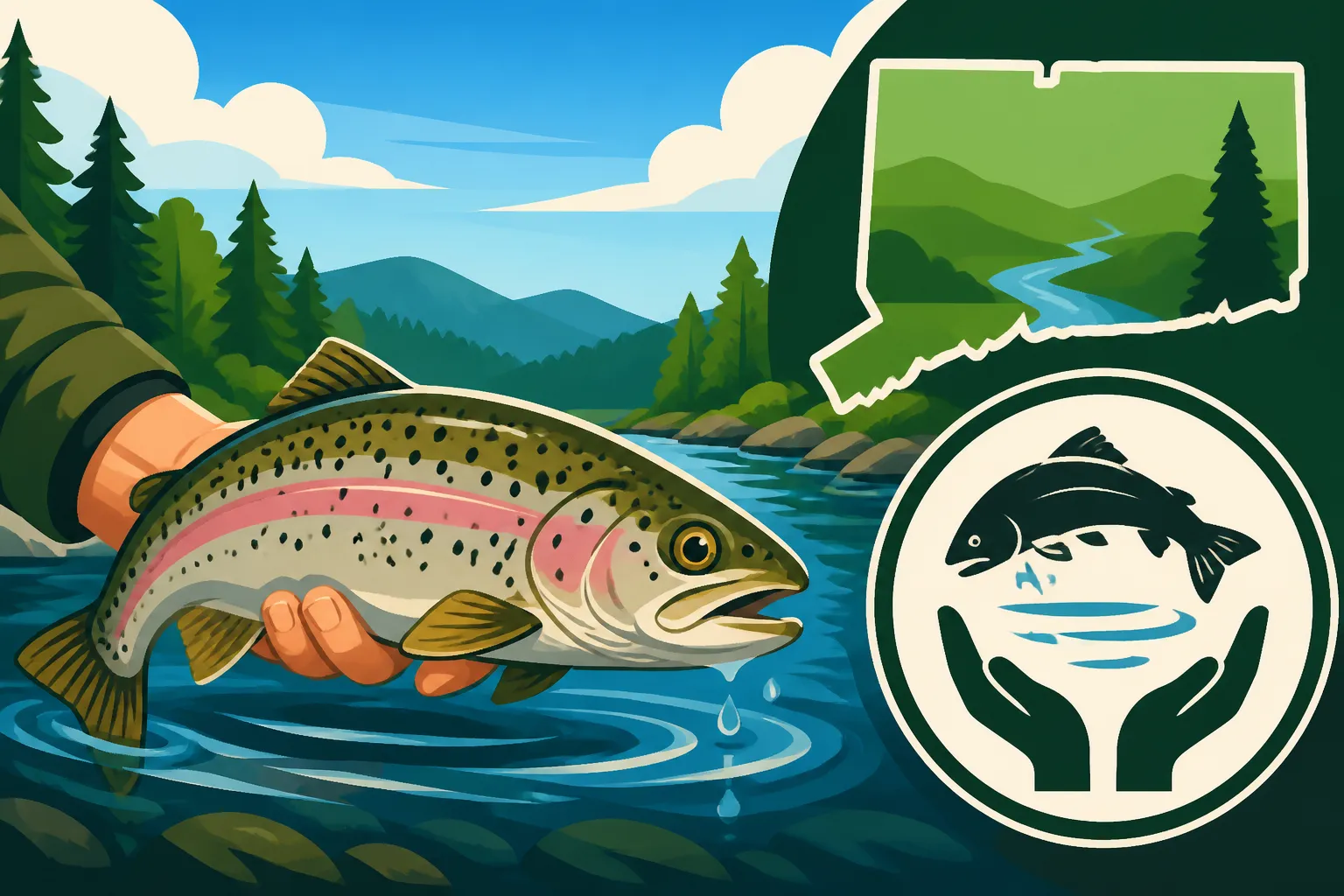
Catch and release fishing is more than just a preference; in designated TMAs, it's a critical conservation practice. By requiring anglers to release all fish caught, these areas allow trout to grow larger, establish more stable populations, and provide repeated angling opportunities. Imagine catching the same beautiful brown trout several times in one season – that's the magic of effective catch and release. This approach contributes significantly to the sustainability of the fishery, creating a self-renewing resource that can withstand heavy fishing pressure. It’s about ensuring that future generations can enjoy the same quality fishing experiences we do today.
Moreover, catch and release helps foster a population of smarter, more wary fish. Trout that have been caught and released a few times become more challenging to fool, which, for many experienced anglers, adds an exciting layer to the sport. It's a testament to the success of these programs that many of Connecticut's most famous trout are "residents" of C&R TMAs, known for their size and elusive nature. These regulations help support the DEEP's broader trout management goals, as detailed in our article on Connecticut Trout Season and Stocking Rules, by allowing fish to remain in the system longer.
Identifying Designated Catch and Release Only TMAs
Navigating the specific regulations of Connecticut's various TMAs can be a bit daunting, as not all TMAs are catch and release only. Some have seasonal catch and release periods, while others allow harvest within certain limits. Knowing the precise boundaries and rules for each location is crucial to staying compliant and ethical. It's not enough to simply know you're in a TMA; you need to know which kind of TMA.
A Detailed Look at Key C&R Only Waters
Connecticut is home to a few iconic catch-and-release only TMAs that every serious trout angler should know. These areas are specifically managed to protect trout populations and offer world-class angling experiences. The rules here are strict for a reason, preserving the integrity of the fishery.
Farmington River (Upper and West Branch): This river is arguably Connecticut's most famous trout stream, renowned for its challenging fly fishing and trophy-sized brown trout. While the entire river is a TMA, specific sections are designated as year-round catch and release only.
- The Upper West Branch TMA: From the Goodwin Dam in Hartland downstream to the confluence with the East Branch in New Hartford. This section is primarily known for its pristine waters and wild trout.
- The West Branch Trophy Trout Management Area: From the Route 219 bridge in New Hartford downstream to the Route 177 bridge in Unionville. This segment specifically prohibits the taking of trout and often sees some impressive fish. For more details on this particular area, you'll want to read up on Connecticut Farmington River Trophy Trout Stream Rules.
Housatonic River: Another significant river, especially for those looking for big trout and the chance to hook into a wild brown.
- The Housatonic River TMA: From the Cornwall "Covered Bridge" downstream to the confluence with the Ten Mile River in Sherman. This stretch is a fly-fishing-only, catch-and-release zone, creating a truly unique angling experience. Note that this river also has specific seasonal closures, which are different from C&R rules, so be sure to check Connecticut Housatonic River Seasonal Closure Explained for full details.
Mill River (Fairfield): This smaller, more intimate stream offers a fantastic urban trout fishing experience, with a section designated for catch and release.
- Mill River TMA (Fairfield): From the Easton/Fairfield town line downstream to the Merritt Parkway overpass. This section provides a great opportunity for those in Fairfield County to enjoy quality trout fishing without a long drive.
Here’s a quick overview of some of the primary year-round catch-and-release only waters:
| River Name | C&R Only Section | Key Regulations | Notable Fish Species |
|---|---|---|---|
| Farmington River | Upper West Branch (Goodwin Dam to East Branch confluence) | Catch & Release Only, Artificial Lures & Flies Only | Brown Trout, Rainbow Trout |
| Farmington River | West Branch Trophy Trout Management Area (Rte 219 to Rte 177) | Catch & Release Only, Artificial Lures & Flies Only | Brown Trout, Rainbow Trout |
| Housatonic River | Cornwall Covered Bridge to Ten Mile River confluence | Fly Fishing Only, Catch & Release Only | Brown Trout, Rainbow Trout |
| Mill River (Ffd) | Easton/Fairfield town line to Merritt Parkway overpass | Catch & Release Only, Artificial Lures & Flies Only | Brown Trout |
| Hammonasset River | Approximately 0.5 miles below the confluence of the two main branches, near the state park | Catch & Release Only, Artificial Lures & Flies Only | Brown Trout, Brook Trout |
These tables, while helpful, are summaries. Always refer to official DEEP maps and guides for the most current and precise boundaries.
How to Confirm C&R Regulations on the Water
Even with this guide, local conditions and regulations can sometimes change, or you might find yourself on an unfamiliar stretch of water. The best practice is always to verify the regulations before you cast your line. The DEEP does an excellent job of posting clear signage at access points for all TMAs. Look for brown and white signs detailing the specific rules, including tackle restrictions (e.g., "Artificial Lures and Flies Only") and harvest limits ("Catch and Release Only"). These signs are your authoritative source on the ground.
Beyond on-site signage, the Connecticut DEEP website is an invaluable resource. They publish an annual Connecticut Fishing Guide that is the definitive source for all regulations. You can usually download a PDF version or pick up a physical copy at license vendors. This guide often includes detailed maps and descriptions of TMA boundaries. Additionally, the DEEP's online interactive trout stocking map can sometimes offer regulation specifics for particular stretches of water, though its primary function is showing where and when fish have been stocked. Always have a copy of the regulations, either printed or on your phone, to avoid any misunderstandings.
Remember that even if you're in a Catch and Release TMA, you still need a valid Connecticut fishing license. Details on obtaining one can be found in our comprehensive Connecticut Fishing License Guide for 2026.
Gear and Techniques for Catch and Release Fishing
When fishing in catch and release only waters, your approach to gear and technique needs to be different. The goal isn't just to catch fish; it's to catch them and release them unharmed so they can continue to thrive and provide sport for other anglers. This requires a mindful approach, from the moment you select your tackle to the moment you let the fish swim away.
Essential Tackle for Minimizing Harm
The right tackle can significantly increase a fish's chances of survival after release. First and foremost, barbless hooks are a must. Many regulations in C&R TMAs specifically require them, but even if not mandated, they are best practice. Barbless hooks minimize tissue damage and make hook removal quick and easy. You can buy hooks that are already barbless, or you can easily crimp down the barb on any barbed hook with a pair of pliers. For a wide selection of barbless hooks suitable for trout fishing, many anglers turn to online retailers like Amazon, which offers various brands and sizes.
Next, consider your rod and reel setup. While it might be tempting to use ultralight gear for the "sport," excessively light tackle can prolong the fight, exhausting the fish and reducing its chances of survival. A medium-light to medium action rod, paired with a reel spooled with appropriate test line (e.g., 4-6 lb test monofilament or fluorocarbon, or similar strength fly line), allows you to land the fish efficiently without overstressing it. This is especially true for the larger trout often found in these TMAs.
Finally, a rubberized or knotless landing net is crucial. Traditional knotted nylon nets can remove a fish's protective slime layer, leaving it vulnerable to infection. A soft, rubberized net cradles the fish, minimizes scale damage, and helps keep the fish calm while you prepare for release. Many popular brands offer these catch-and-release friendly nets, readily available at local tackle shops or through online platforms.
Best Practices for Safe Release
Once you've hooked a fish, the work isn't over—it's just beginning. The way you handle a fish after it's caught is paramount to its survival.
- Minimize Fight Time: As mentioned with tackle, aim to land the fish as quickly as possible without "horsing" it. Prolonged fights lead to lactic acid buildup and exhaustion, making the fish more susceptible to post-release mortality.
- Keep the Fish in the Water: This is the golden rule. Whenever possible, unhook the fish while it's still submerged in the net or water. If you must lift it, do so for the absolute minimum time required for hook removal or a quick photo.
- Wet Your Hands: Always wet your hands before touching a fish. Dry hands can strip away the protective slime coat, which acts as the fish's primary defense against disease and parasites.
- Gentle Handling: Support the fish horizontally, ideally with one hand under the belly and the other gently gripping the base of the tail. Avoid squeezing the fish's body, especially around the gills or internal organs. Never hold a fish vertically by its jaw or gill plate, as this can cause severe internal damage.
- Quick Hook Removal: Use needle-nose pliers or a hemostat to quickly and carefully remove the hook. Since you're using barbless hooks, this should be relatively easy. If the hook is deeply swallowed and cannot be removed without excessive trauma, it's sometimes better to cut the line as close to the hook as possible; the hook may eventually corrode and fall out.
- Revival: If the fish seems sluggish or disoriented, hold it gently in the water, facing upstream, allowing water to flow over its gills. Move it slowly back and forth to help oxygenate the gills. Only release the fish when it swims away under its own power. Sometimes, a trout will revive quickly, while others may take a minute or two. Be patient.
These practices are not just suggestions; they are vital to the health of the TMA fisheries. Following these guidelines ensures that you are contributing positively to the resource. For anglers specifically interested in fly fishing in these sensitive areas, our guide on Fly Fishing for Trout in Connecticut offers additional insights into techniques that align well with catch and release principles.
Common Misconceptions and Legalities
Even with the best intentions, anglers can sometimes misunderstand certain aspects of TMA regulations. It’s not just about what you can or cannot keep, but also about what permits you need and the potential consequences of not following the rules. Clarity on these points is crucial for a worry-free fishing experience.
The "Trout and Salmon Stamp" and TMAs
A common question that pops up, especially for those new to trout fishing in Connecticut, is whether you need a special "Trout and Salmon Stamp" to fish in TMAs, particularly catch-and-release only ones. The answer is yes, generally you do. If you are 16 years of age or older and intend to fish for trout or salmon in any waters designated as "Trout Management Areas," "Wild Trout Management Areas," "Trophy Trout Streams," or "Sea Run Trout Streams," you are required to possess a valid Connecticut fishing license and a Connecticut Trout and Salmon Stamp.
This stamp isn't just for keeping fish; it's a permit to fish in these specially managed waters, regardless of whether you intend to harvest or not. The funds generated from the sale of these stamps go directly back into the DEEP's trout and salmon stocking and management programs, including those in catch-and-release TMAs. So, even if you’re only practicing catch and release, you are still contributing to the health of the fishery by purchasing this stamp. For a deeper dive into this specific requirement, consult our article on the Connecticut Trout and Salmon Stamp, Explained.
It's also important to remember that these regulations are in addition to your basic fishing license. You can find comprehensive information on securing your primary license in the Connecticut Fishing License Age Requirements guide.
Penalties for Violating C&R Rules
Violating catch and release rules in a designated TMA is not a minor infraction. These regulations are serious, designed to protect valuable fisheries, and the DEEP enforces them strictly. The penalties for keeping a fish from a catch-and-release only area can include significant fines and, in some cases, the suspension of your fishing license. These aren't just minor tickets; they can be substantial, often hundreds of dollars per fish, depending on the severity and whether it’s a repeat offense.
Fisheries officers frequently patrol these sensitive areas, especially during peak fishing times. They are trained to identify violations and will not hesitate to issue citations. The intent behind these rules is conservation, and disrespecting them undermines the efforts to maintain a healthy trout population for everyone. It's far better to err on the side of caution and double-check the regulations than to face the legal and financial repercussions. For more general information on the consequences of fishing without adhering to state rules, see our guide on Fishing Without a License in Connecticut: Penalties.
Always assume that if you are fishing in a special regulation area, especially one known for its trophy potential, that strict adherence to the rules, including barbless hooks and catch-and-release, is expected and enforced. Remember that the goal is to enjoy the experience and preserve the resource for countless seasons to come.
Disclaimer
Please note: Fishing regulations and laws can change. While this guide provides the most up-to-date information available at the time of writing, it is essential to always consult the official Connecticut Department of Energy and Environmental Protection (DEEP) website or their annual Connecticut Angler's Guide for the most current and authoritative regulations before heading out to fish.