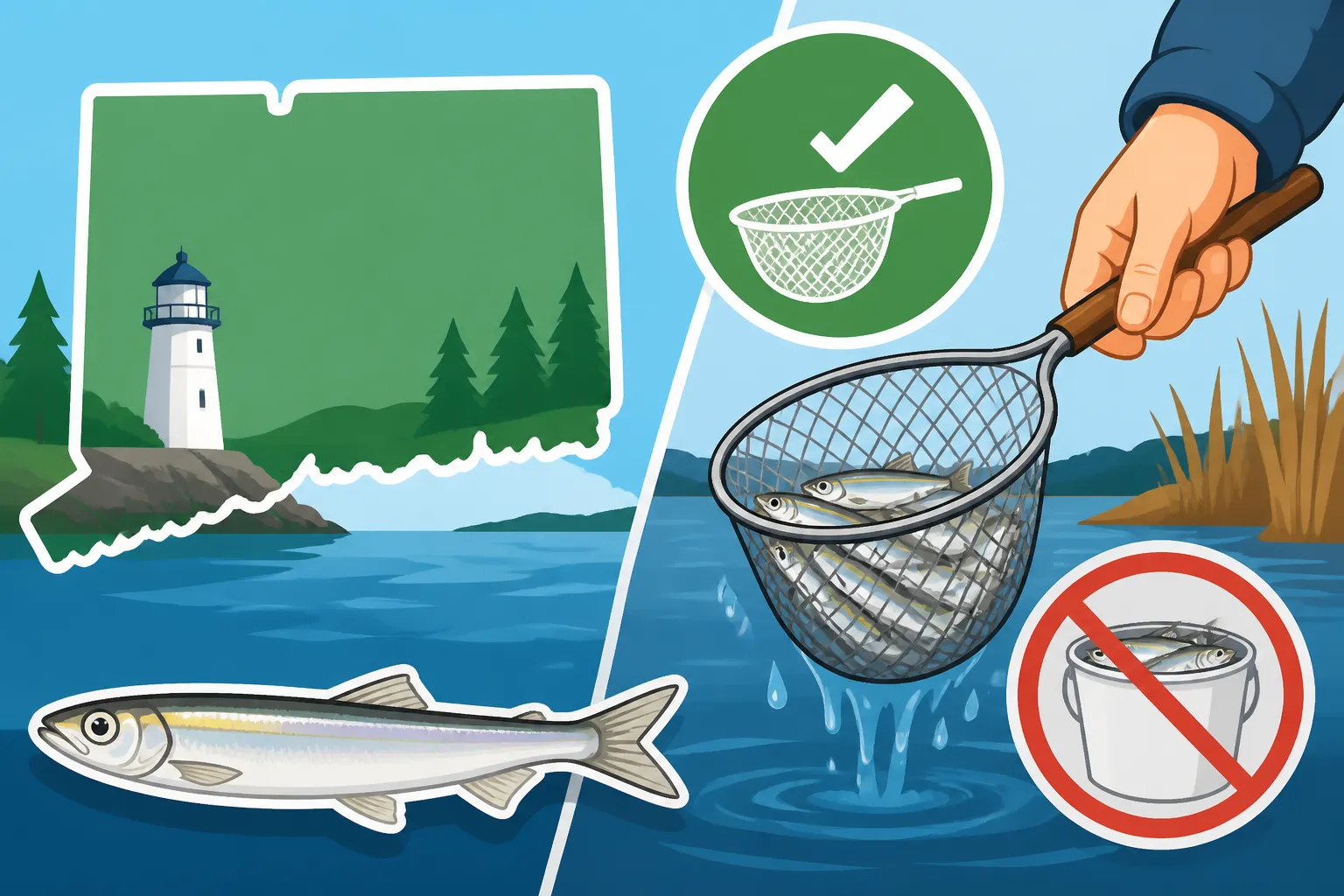
Connecticut smelt dipping rules
It can be incredibly confusing to navigate the specific, often niche, regulations that govern certain types of fishing here in Connecticut. You've heard whispers about smelt dipping, maybe seen folks out at night with big nets and lights, and thought, "What are they doing, and is it even legal?" The truth is, smelt dipping is allowed, but like most things in the world of fishing, it comes with its own very particular set of rules that, if you don't know them, can land you in hot water. This guide is going to break down everything you need to know about Connecticut's smelt dipping rules, the gear involved, and how to enjoy this unique fishery responsibly.
Understanding Connecticut Smelt Dipping Regulations
Smelt dipping isn't your everyday rod-and-reel adventure; it's a specialized method for targeting a specific, highly sought-after fish. Because it involves specific gear and often occurs during nocturnal runs, the Connecticut Department of Energy and Environmental Protection (DEEP) has put in place clear regulations to ensure the sustainability of smelt populations and the safety of anglers. Ignoring these rules isn't just a matter of misunderstanding; it can lead to fines and a diminished resource for everyone.
What is Smelt Dipping and Why It's Regulated
Smelt dipping refers to the practice of catching migrating smelt, typically rainbow smelt, using nets rather than traditional hook-and-line methods. These small, silvery fish embark on annual spawning runs from larger bodies of water like Long Island Sound and major rivers into smaller tributaries. This natural phenomenon often happens under the cover of darkness, making them a prime target for dippers who position themselves along stream banks and use lights to attract and net the fish.
The reason for strict regulation boils down to conservation. Smelt populations, while seemingly abundant during their runs, can be vulnerable to overharvesting if unchecked. Their schooling behavior and predictable migration patterns make them easy targets. Regulations help manage the harvest, ensuring enough fish make it upstream to spawn successfully, thereby safeguarding the population for future generations. It also prevents the accidental capture of non-target species, especially during sensitive spawning periods for other fish. Understanding these larger ecological goals makes adherence to the rules feel less like an arbitrary burden and more like a shared responsibility.
General Rules and Permitted Gear
First and foremost, anyone aged 16 or older participating in smelt dipping in Connecticut needs a valid Connecticut fishing license. This isn't just for rod-and-reel anglers; it covers all methods of taking fish. You can find comprehensive details on obtaining one in our guide on the Connecticut Fishing License Guide for 2026 or learn Where and How to Buy a Connecticut Fishing License. Whether you're a resident or non-resident, the license is essential, and understanding the differences, such as explained in Resident vs Nonresident Fishing License Costs in Connecticut, is key. Always make sure you're aware of your license's expiration date, as fishing without a license in Connecticut can lead to significant penalties.
Now, onto the specifics of smelt dipping itself. The season for smelt dipping in Connecticut typically runs from February 1st through March 31st each year. This narrow window targets the species' spawning runs but aims to close before peak spawning activities are completed, giving the fish a chance to reproduce. Always double-check the current year's Connecticut Fishing Season Dates and Closures for any last-minute changes, as DEEP occasionally adjusts dates based on biological data or environmental conditions.
The permitted gear is crucial. You're allowed to use dip nets and seines for smelt dipping. A "dip net" is generally a small net with a handle, used to scoop fish. "Seines" are longer, wall-like nets that are typically used by two people to encircle fish. However, there are strict size limitations for these nets. For dip nets, the net can't exceed 36 inches in diameter or square measure. For seines, the maximum length is typically 30 feet, and the maximum depth is 4 feet. The mesh size also has regulations, usually requiring a small enough mesh to retain smelt but not so small that it catches an excessive amount of juvenile fish. The daily creel limit for smelt is usually 5 quarts per person. This limit is strictly enforced to prevent overharvesting, so bring a measuring bucket!
Specific Designated Smelt Dipping Locations
Connecticut has specific waters designated for smelt dipping, and it's absolutely vital to know these locations. You can't just dip for smelt anywhere; many rivers and streams are protected or have different regulations for other species. While DEEP doesn't always list specific access points for smelt dipping as it does for trout stocking, they do designate certain rivers or river sections. Historically, areas of the Mystic River, Thames River, and smaller coastal streams leading into Long Island Sound have been popular for smelt runs.
It's important to consult the official Reading the Connecticut Fishing Guide or the DEEP website directly for the most current list of open waters. Some areas might be subject to municipal ordinances or be on private property, so always confirm access. For instance, sections of streams that flow through state parks or wildlife management areas might be permissible, but you must respect all posted signs regarding access and parking. You should also be mindful that many of these locations are also popular for other types of fishing, and shared access requires courtesy and awareness of your surroundings. Understanding the full scope of Connecticut Fishing Regulations Explained will help clarify any location-specific rules that might apply. Always remember that some waters, especially certain trout management areas or wild trout streams, may have regulations that specifically prohibit net use.
Essential Gear for Successful Smelt Dipping
Once you're clear on the rules, it's time to think about the gear. Smelt dipping often happens in cold, dark, and potentially slippery conditions, so having the right equipment isn't just about efficiency; it's about safety and comfort. You don't need a boatload of expensive equipment, but a few key items will make your experience much more enjoyable and productive.
Choosing the Right Dip Net or Seining Equipment
The net is, of course, the star of the show for smelt dipping. As mentioned, the regulations specify size limits, so make sure whatever you choose adheres to those. For individual dippers, a sturdy dip net is usually preferred. These can range from simple landing nets with fine mesh to specialized hoop nets designed for scooping. Look for a net with a strong, lightweight handle that offers good reach, especially if you'll be dipping from banks that aren't right at the water's edge. A longer handle can be a real game-changer for reaching out into the current where smelt often congregate. The mesh size should be small enough to catch smelt without them escaping but not so fine that it creates excessive drag in the water or gets clogged easily with debris. Many local tackle shops in coastal towns like Niantic or Stonington will carry appropriate nets, but you can also find a wide selection of suitable nets on Amazon by searching for "fine mesh dip net" or "minnow seine." Just be sure to double-check the dimensions against Connecticut's regulations before purchasing.
If you're planning to go with a partner or a small group, a small minnow seine can be incredibly effective. Remember the 30-foot length and 4-foot depth limit. Seines require coordination, with one person on each end guiding the net to sweep through productive areas. Ensure the seine has adequate weights on the bottom and floats on the top line to keep it properly oriented in the water column. The quality of the netting material matters too; look for durable, UV-resistant nylon that can withstand repeated use in saltwater and freshwater conditions.
Lighting and Wading Gear
Since smelt typically run at night, good lighting is non-negotiable. A bright, waterproof headlamp is absolutely essential. It keeps your hands free for holding your net and handling fish, and illuminates the water effectively to spot the shimmering schools of smelt. Many experienced dippers also bring a powerful lantern, often a battery-operated LED model, to provide broader illumination to the area, both for visibility and to potentially attract fish. Just be mindful of other dippers and don't shine bright lights directly into their eyes. You can find excellent waterproof headlamps and lanterns with long battery life on Amazon, often with various beam settings.
Wading gear is equally important for comfort and safety. Smelt dipping involves standing in or near cold water, often in early spring when air temperatures can still be quite chilly. Chest waders are highly recommended, paired with warm, layered clothing underneath. They will keep you dry and significantly extend your time on the water. If full waders aren't your style, at least invest in tall, waterproof rubber boots. Water shoes or sneakers are definitely not sufficient. Consider adding studded wading boots or cleats if the streambed is rocky or slippery. Additionally, waterproof gloves are a must-have for keeping your hands warm and protected while handling nets and fish in cold water. Again, searching for "waterproof fishing gloves" or "neoprene wading gloves" on Amazon will yield many suitable options.
Storage and Safety Essentials
Once you've scooped your quota of smelt, you'll need a way to store and transport them. A 5-gallon bucket is the traditional choice, as it makes it easy to measure your 5-quart limit. For longer sessions or larger catches, a cooler with ice will keep your smelt fresh until you get home. It's a good idea to have a separate, smaller bucket or container for any non-target species that might inadvertently end up in your net, so you can quickly and safely release them back into the water without harming them.
Safety should always be your top priority, especially when fishing at night or in moving water. A small, waterproof first-aid kit is always a smart addition to your gear bag, containing essentials for minor cuts, scrapes, or sprains. The banks of rivers and streams can be uneven, muddy, or icy in early spring, so watch your footing. Wearing a personal flotation device (PFD) or life jacket, particularly if you're wading in deeper or faster-moving water, is a sensible precaution. While not always legally mandated for wading, understanding Life Jacket Requirements for Connecticut Boaters can give you a good baseline for water safety, and it's always better to be safe than sorry. Consider the Connecticut Cold Water Life Jacket Rule (October to May) for any boating activities in particular; though for wading, it's just plain good sense. Finally, dress in layers, even if you think it won't be that cold; standing still in the water for extended periods can make you feel much colder than the air temperature suggests.
Practical Tips for a Rewarding Smelt Dipping Experience
Beyond the regulations and gear, there's an art to successful smelt dipping. Knowing when and where to go, and how to conduct yourself, can elevate your experience from just "catching some fish" to a truly memorable outing.
Timing and Environmental Factors
Smelt runs are incredibly sensitive to environmental cues. The most crucial factor is water temperature. Smelt typically begin their migrations when the water temperature in the rivers and streams hovers between 38°F and 45°F. This usually occurs from late February through March in Connecticut. Too cold, and they won't move; too warm, and they might have already spawned and moved back out.
Beyond temperature, timing your dipping session can make a huge difference. While some smelt can be caught during the day, the most significant runs often occur at night, especially on a rising or incoming tide if you're in a tidally influenced section of a river or estuary. The darkness provides cover, making them bolder in their movements. Many experienced dippers also swear by certain moon phases, often finding peak activity around the new moon or just after the full moon, though this can vary. A little bit of recent rain can also help, as it can raise water levels and provide a fresh push of water, which sometimes triggers a stronger run. Conversely, heavy rains can muddy the water, making it harder to spot the fish and potentially slowing their movement. Pay attention to local weather forecasts and tidal charts for the areas you plan to visit. If you're looking for broader fishing insights across the state, our Best Time of Year to Fish in Connecticut guide offers a good overview of seasonal patterns that can influence various species.
Ethical Dipping and Conservation
Being a responsible angler means more than just following the letter of the law. It means practicing ethical dipping and contributing to conservation efforts. Always be mindful of the fragile ecosystems you're interacting with. If you accidentally scoop up non-target species, such as small trout, juvenile bass, or other baitfish, release them immediately and gently back into the water. Minimize their time out of water, handle them with wet hands, and ensure they swim off vigorously. This respect for all aquatic life is paramount.
When choosing a location, be aware of private property boundaries. Many prime smelt dipping spots might be adjacent to or require crossing private land. Always seek permission if unsure, or stick to clearly marked public access points. Parking can also be an issue in some areas, so park legally and respectfully, ensuring you don't block driveways or access roads. Just like with any outdoor activity, practicing "Leave No Trace" principles is essential. Pack out everything you pack in, including any discarded fishing line, food wrappers, or trash. Leave the area cleaner than you found it. Adherence to rules, as detailed in Connecticut Fishing Regulations Explained, and a strong conservation ethic ensures these unique opportunities remain open for everyone.
Cooking and Enjoying Your Catch
Finally, the best part of a successful smelt dipping trip is enjoying the fruits of your labor! Smelt are known for their delicate, sweet flavor and are absolutely delicious when prepared simply. The most popular method by far is to pan-fry them whole. Their bones are very fine and become crispy when fried, making them entirely edible for most people.
To prepare them, a quick rinse in cold water is usually all that's needed. Some people like to quickly remove the head and gut them, especially for larger smelt, but smaller ones are often cooked whole. A simple breading of seasoned flour or cornmeal is traditional. Heat some oil (vegetable, canola, or even a blend with a touch of butter for flavor) in a cast iron skillet or heavy-bottomed pan. Fry the smelt until golden brown and crispy on both sides, usually just a few minutes per side. Serve them immediately with a squeeze of lemon, a sprinkle of salt, and perhaps a side of tartar sauce. They make a fantastic appetizer or a light meal. The unique experience of catching these fish with a net, often under the moonlight, makes the meal taste even better. This is a true Connecticut tradition, connecting you to the natural rhythms of our beautiful state.
Connecticut Smelt Dipping Regulations Summary
To help you keep track of the key rules, here's a quick overview of the essential regulations for smelt dipping in Connecticut:
| Regulation Aspect | Details |
|---|---|
| Fishing License | Required for all persons aged 16 and older. Residents and non-residents need a valid Connecticut fishing license. |
| Season Dates | Typically February 1st – March 31st. Always verify current dates on the official CT DEEP website or in the annual fishing guide, as outlined in Connecticut Fishing Season Dates and Closures. |
| Daily Creel Limit | 5 quarts per person. This is a strict possession limit, so measure your catch carefully. |
| Permitted Gear | Dip nets and seines are allowed. |
| Dip Net Size | Maximum 36 inches in diameter or square measure. |
| Seining Equipment | Maximum 30 feet in length and 4 feet in depth. |
| Mesh Size | Must be small enough to retain smelt but not excessively fine to avoid undue bycatch of juvenile fish. (Always consult official regulations for specific mesh size guidance if available). |
| Designated Waters | Smelt dipping is only permitted in specific designated waters. Check the current CT DEEP fishing guide for a list of open rivers and streams, particularly coastal and tidally influenced areas near Long Island Sound. |
| Night Fishing | Often the most productive time, but ensure proper lighting and safety gear. |
| Conservation | Release non-target species immediately and carefully. Respect private property and public access rules. Leave no trace. Adhere to Connecticut Fishing Regulations Explained and other local ordinances. |
Remember, these are the general rules, and it's always best practice to consult the most current Connecticut Angler's Guide published by the DEEP before heading out.
Disclaimer
The information provided in this guide is for general informational purposes only. While we strive to offer accurate and up-to-date content, fishing regulations, seasons, and licensing requirements in Connecticut can change. It is always the angler's responsibility to consult the official Connecticut Department of Energy and Environmental Protection (DEEP) website or the current printed Connecticut Angler's Guide for the most precise and legally binding information before engaging in any fishing activities. Adherence to all state and local laws is mandatory.