Connecticut ice shanty registration rules
Navigating the specific rules and regulations for ice fishing in Connecticut can sometimes feel like trying to untangle a particularly stubborn fishing line. You just want to get out on the ice, enjoy the peace and quiet, and maybe catch a few fish, but then you start wondering, "Do I need to register my ice shanty?" It's a valid question, and overlooking these details can turn a relaxing day into a frustrating one. This guide is here to cut through the confusion and give you all the straightforward information you need about Connecticut's ice shanty registration rules, ensuring your winter angling adventures stay on the right side of the law.
Understanding the Necessity of Ice Shanty Registration
When the lakes and ponds across Connecticut freeze over, they transform into a whole new playground for anglers. But with that transformation comes a need for specific rules, not just for fishing, but for structures like ice shanties. It might seem like just another bureaucratic hurdle, but these regulations are truly in place for your safety, the safety of others, and to protect our precious natural resources.
Why the Rules Exist: More Than Just Red Tape
Think about it: an ice shanty left unattended on the ice could pose a navigation hazard if the ice breaks up, especially for emergency responders or other recreational users like snowmobilers. There's also the very real concern of environmental impact if shanties are left behind to deteriorate or if waste is discarded improperly. The Connecticut Department of Energy and Environmental Protection (DEEP) takes these issues seriously, and that's why they've established a clear framework. These aren't arbitrary rules designed to make your life harder; they are common-sense measures for responsible ice recreation. They ensure that if a shanty does become an issue, there's a clear way to identify its owner, much like how a boat needs to be registered. You'll find similar considerations when looking into general fishing guidelines, as detailed in our comprehensive article, "Connecticut Fishing Regulations Explained".
Defining an "Ice Shanty" for Registration
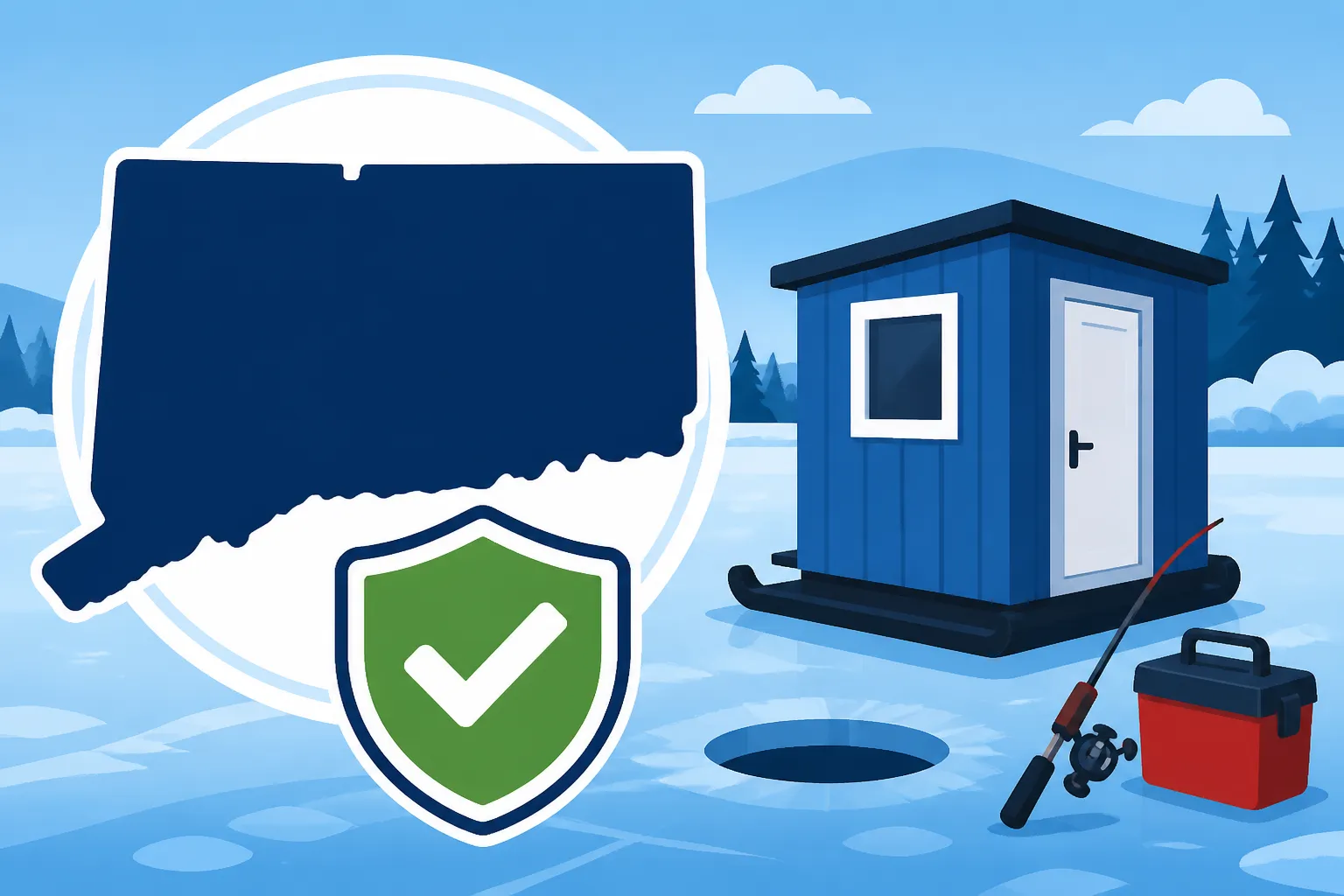
So, what exactly counts as an ice shanty that needs registration? The CT DEEP defines it pretty broadly. It's any structure, permanent or temporary, that you place on the ice to fish from. This isn't just about those quaint, wooden ice huts you might see in old photographs. It includes almost anything that provides shelter: a homemade wooden box, a commercially produced portable hub-style shelter, or even a pop-up tent if it's left on the ice for an extended period. The key is whether it's left unattended overnight or for multiple days. If you're just bringing a folding chair and a five-gallon bucket, and you're packing it all up at the end of the day, you're usually in the clear. However, if you're setting up a more substantial shelter with the intention of leaving it in place for several days, perhaps to come back to easily the next morning, then registration becomes a necessity.
The Specifics of Connecticut's Ice Shanty Registration Requirements
Now that we understand why these rules are in place, let's dive into the nitty-gritty of what Connecticut actually requires for your ice shanty. It’s less complicated than it might seem, but it requires attention to detail.
Registration Threshold and Key Dates
The primary rule to remember is this: any ice shanty left unattended on the ice overnight must be registered with the CT DEEP. This means if you're just taking a portable shelter out for the day and bringing it home, no registration is needed. But if you plan to leave it out, even for one night, you need to be registered. The Connecticut DEEP also sets a specific deadline each year for the removal of all ice shanties. This date is typically March 17th, regardless of ice conditions. This hard deadline is crucial because, as we all know, early spring ice can be incredibly unpredictable, and shanties left out too long can easily fall through, becoming hazards and environmental litter.
Here's a quick summary table of the core requirements:
| Requirement Category | Details |
|---|---|
| Who Needs to Register? | Anyone leaving an ice shanty (any structure used for fishing) unattended on the ice overnight. |
| What Needs Registration? | Permanent or temporary structures, including commercially made portable shelters, left on the ice overnight. |
| Registration Cost? | Free (no fee is charged for ice shanty registration). |
| Where to Register? | Online via the CT DEEP website or in person at DEEP offices/authorized vendors. |
| Required Information? | Owner's name, address, contact information, shanty dimensions, construction materials, and location where it will be used. |
| Identification Display? | Owner's name, address, and registration number (minimum 2-inch block letters) clearly visible on the exterior. |
| Removal Deadline? | All ice shanties must be removed from the ice by March 17th each year, regardless of ice conditions. |
The Registration Process: Step by Step
Thankfully, registering your ice shanty in Connecticut is quite straightforward and, best of all, it’s free! You won't incur any additional costs beyond perhaps some supplies to mark your shanty properly.
- Obtain the Form: You can typically find the ice shanty registration form on the official CT DEEP website under their Fisheries Division section. If you prefer, you can also pick up a physical form at a DEEP office or an authorized license vendor. The form will ask for basic information about you and your shanty.
- Provide Your Details: You'll need to fill in your full name, address, and contact information. This is standard procedure and allows the DEEP to contact you if there's ever an issue with your shanty.
- Describe Your Shanty: You'll need to provide details about the shanty itself, such as its approximate dimensions (length, width, height) and the primary construction materials. This helps the DEEP understand the general type of structure being left on the ice.
- Indicate Location: You’ll be asked to specify the general waterbody or area where you intend to use the shanty. This isn't a precise GPS coordinate, but rather identifying the lake or pond.
- Submit the Form: Once completed, you can submit the form online, by mail to the DEEP Fisheries Division, or in person at one of their offices.
- Receive Your Registration Number: After processing, the DEEP will issue you a unique registration number for your shanty. This number is your official identifier.
It’s a simple process, but an important one for accountability. While you're going through these steps, remember that having a valid Connecticut fishing license is also paramount. You can find more details on obtaining one in our article, "How to Buy a Fishing License Online in Connecticut".
Displaying Identification and Following Operational Rules
Getting your registration number is just the first step. The rules also dictate how you must display that information and other crucial guidelines for responsible shanty use. These are critical for safety and enforcement.
Clear and Visible Identification
Once you have your unique registration number, you must clearly mark your shanty with specific information. The regulations state that the owner's name, address, and the assigned registration number must be displayed on the exterior of the shanty. These markings need to be legible and visible at all times. This means using durable, contrasting paint or permanent markers, and ensuring the letters and numbers are at least two inches high in block print. Think of it like a license plate for your ice hut. You want someone to be able to identify it quickly, especially if conditions change unexpectedly. Many anglers find durable, weatherproof vinyl letters and numbers from places like Amazon to be an excellent solution for this, ensuring compliance and longevity.
The March 17th Removal Deadline: No Exceptions
We touched on this earlier, but it bears repeating with emphasis: all ice shanties must be removed from the ice by March 17th each year. This isn't a suggestion; it's a hard and fast rule. Mother Nature doesn't consult our calendars when deciding when the ice will melt, and waiting until the last minute can be incredibly dangerous. Every year, there are reports of shanties breaking through thin ice, becoming submerged, or drifting away as the ice pack weakens. This creates hazards for boaters, clogs waterways, and contributes to pollution. The DEEP doesn't want to see your shanty floating down a river in April, or worse, have to send personnel out to retrieve it. Be proactive. Even if the ice looks solid on March 16th, plan to remove your shanty well in advance of the deadline.
General Conduct and Environmental Responsibility
Beyond registration and removal dates, there are broader expectations for ice anglers using shanties. These are about respecting the environment and other recreational users:
- Leave No Trace: Whatever you bring onto the ice, you must take off. This includes trash, fishing line, bait containers, and any other debris. The goal is to leave the fishing spot cleaner than you found it. Disregarding this can lead to fines and a negative impact on the natural beauty of our lakes. For anyone concerned about penalties, our article "Connecticut fishing without a license penalty" provides a good overview of enforcement.
- Proper Lighting: If your shanty is occupied or left on the ice during hours of darkness, it's a good practice, and often a requirement, to have some form of lighting to make it visible to others, especially snowmobilers or anyone else moving on the ice. A small solar-powered light or a battery-operated lantern can be easily purchased from Amazon and make a huge difference in preventing accidents.
- Safety First: Always check ice conditions before venturing out. No shanty is worth risking your life over. Pay attention to local ice thickness reports and exercise extreme caution, especially around inlets, outlets, and pressure ridges. Even with a registered shanty, safety remains your paramount responsibility. Consider packing a small first-aid kit and emergency supplies, readily available from retailers.
Exemptions and Common Misconceptions About Ice Shelters
It’s easy to get caught up in the rules and start overthinking things. Let's clarify some common questions and situations that often lead to confusion regarding ice shanty registration.
The Portable Pop-Up Tent Exemption (Mostly)
One of the most frequent questions is about those popular, lightweight, portable pop-up ice shelters that collapse into a bag. Do these need to be registered? Generally, no, if you are removing it from the ice daily. If you use one of these for a day trip and then pack it up and take it home with you, it does not require registration. The key distinction, as mentioned earlier, is whether the structure is left unattended overnight. So, if you're hitting your favorite spot on Mashapaug Lake for a few hours with your Clam or Eskimo pop-up and then heading home, you're good to go. However, if you decide to leave that very same pop-up shelter out overnight, intending to come back to it the next morning, then it does fall under the registration requirement. The DEEP is more concerned with structures that could become abandoned or a hazard rather than gear you're actively using and removing.
Sharing Shanties and Borrowed Shelters
What if you borrow a friend's registered shanty, or you regularly fish with a group in one communal shelter? The registration is tied to the owner of the shanty. As long as the shanty itself is properly registered and marked with the owner's information, you are generally in compliance. However, it's always a good idea to know who registered it and where the documentation is, just in case a DEEP conservation officer checks. If you're building a new shanty or purchasing one second-hand, you'll need to go through the registration process yourself if you plan to leave it overnight.
Temporary vs. Permanent Structure Distinctions
While the CT DEEP lumps "any structure" under the shanty definition for overnight purposes, there's a practical difference in usage. Permanent, solid structures (often wooden) are almost always intended to be left out, at least for a portion of the season, and thus require registration. These are the ones where the March 17th deadline is most critical, as their weight and construction make them difficult to retrieve if the ice weakens suddenly. Portable shelters offer more flexibility. But again, the rule of thumb remains: if it stays overnight, it needs to be registered. This policy helps the DEEP keep tabs on potential liabilities and ensures a safer environment for everyone enjoying "Ice Fishing in Connecticut".
Safety Beyond Registration: Protecting Yourself and Others
While registering your ice shanty is a crucial part of following Connecticut's regulations, safety on the ice goes far beyond paperwork. As a seasoned angler, I've seen too many close calls that could have been avoided with a little extra vigilance.
Always Check Ice Thickness
This is paramount. The DEEP recommends a minimum of four inches of clear, solid ice for foot travel and five inches for groups or snowmobiles. For an ice shanty, especially one with gear and people inside, you want even more. No registration number in the world will save you if you venture onto unsafe ice. Always carry an ice chisel or spud bar to test ice thickness as you go. Be particularly wary of areas around currents, inlets, outlets, bridges, and underwater springs, as these spots often have thinner ice. You can find excellent ice safety gear, including ice picks and flotation suits, on Amazon to help keep you safe.
Ventilation and Carbon Monoxide Awareness
Many ice shanties incorporate a heater to keep warm, which is fantastic for comfort on a frigid day. However, without proper ventilation, these heaters can produce dangerous levels of carbon monoxide, an odorless, colorless gas that can be deadly. Always ensure your shanty has adequate airflow, even if it means cracking a window or door. It's also a smart move to invest in a battery-operated carbon monoxide detector for your shanty. Your life, and the lives of those fishing with you, could depend on it.
Emergency Preparedness
Even with all precautions, accidents can happen. Always let someone know where you are going and when you expect to return. Carry basic emergency supplies like a fully charged cell phone, a whistle, a length of rope, a first-aid kit, and an extra set of warm, dry clothes in a waterproof bag. Ice picks, worn around your neck, are a simple yet incredibly effective tool for self-rescue if you do fall through the ice. Having a throwable flotation device nearby, similar to what's required on boats (you can read more about "Life Jacket Requirements for Connecticut Boaters" for general water safety), is also a wise choice, particularly if you're fishing in a group or bringing children along.
By understanding and adhering to Connecticut's ice shanty registration rules, coupled with a strong commitment to ice safety, you can ensure your winter fishing experiences are not only productive but also safe and enjoyable for everyone. Tight lines, and stay warm out there!
Disclaimer
The information provided in this guide is for general informational purposes only and does not constitute legal advice. While we strive to keep the information up-to-date and correct, ice conditions, regulations, and laws can change frequently. Always consult the official Connecticut Department of Energy and Environmental Protection (DEEP) website or contact their Fisheries Division directly for the most current and authoritative regulations regarding ice shanty registration and ice fishing safety.