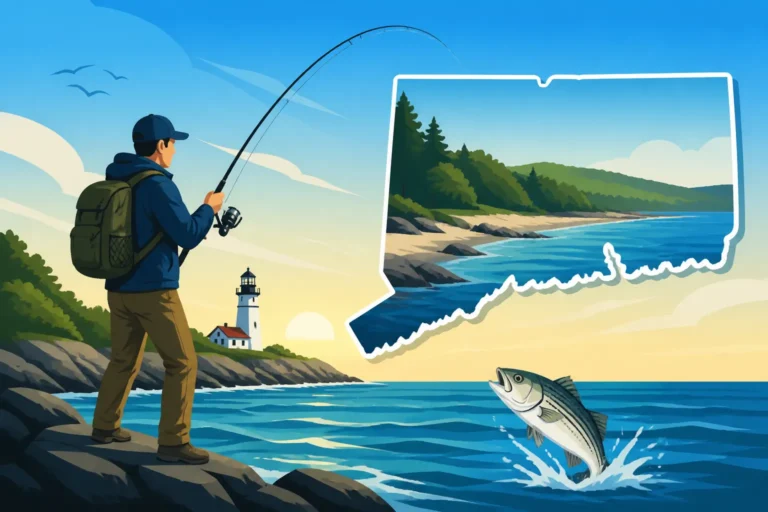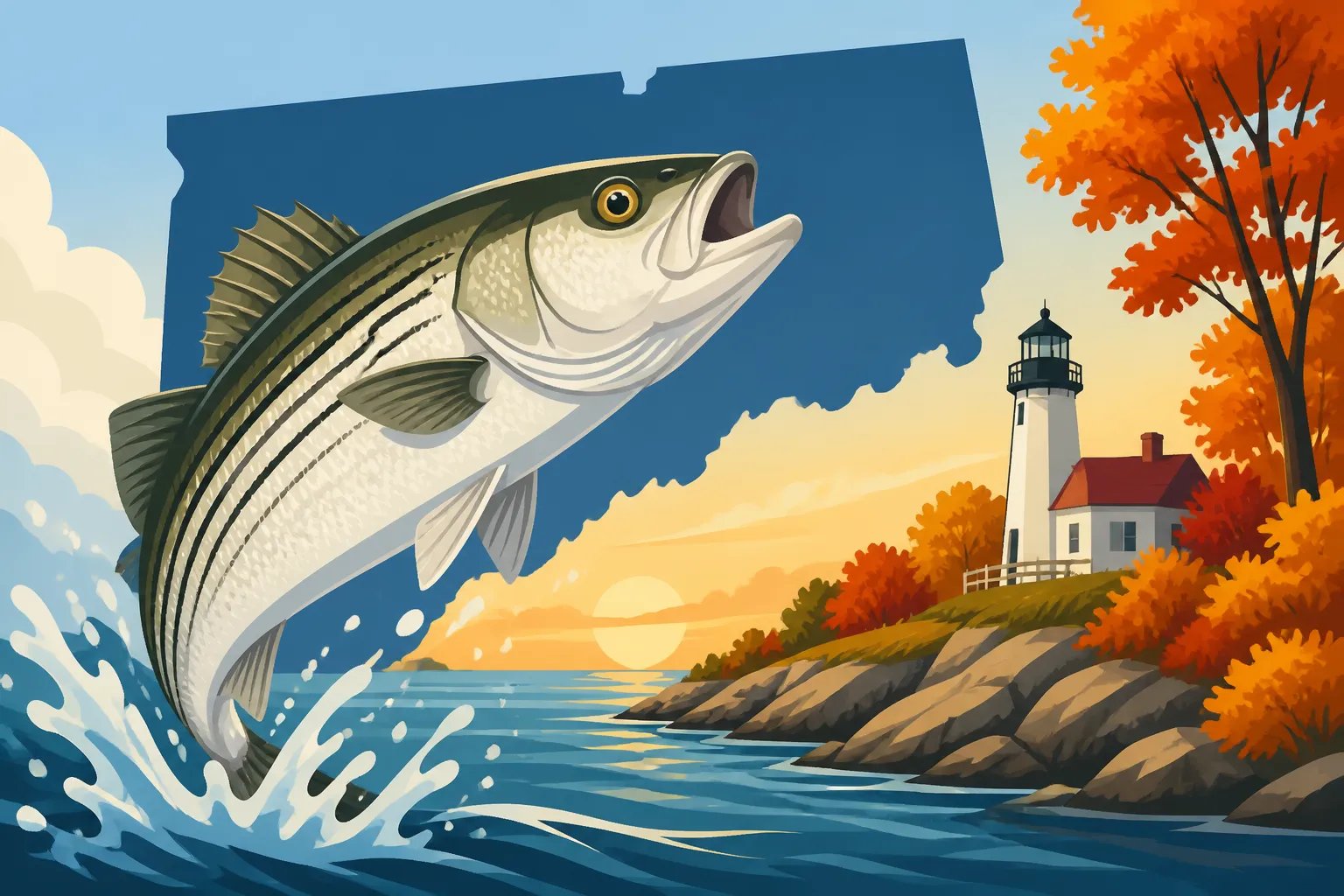
Best fall striped bass fishing spots in Connecticut
The crisp air of autumn in Connecticut brings with it a specific kind of excitement for anglers: the fall striped bass run. Many of us have felt the frustration of missing out on a hot bite, knowing the stripers are migrating through but not quite sure where to intercept them. This comprehensive guide is designed to cut through that uncertainty, revealing the prime locations and effective strategies for targeting striped bass during their epic fall journey through our local waters.
The Allure of Fall Striped Bass in Connecticut
There’s something truly magical about chasing striped bass in the fall in Connecticut. The season brings a unique set of conditions that can turn a regular fishing trip into an unforgettable experience. As the days shorten and the water temperatures begin to drop, a primal shift occurs, triggering one of the most anticipated migrations in the Northeast fishing calendar.
Why Fall is Prime Time for Stripers
Unlike the scattered schools of summer or the cautious feeding of spring, fall unleashes a ravenous appetite in striped bass. This isn't just a casual migration; it's a full-on feeding frenzy driven by instinct. The fish are making their journey south from their northern feeding grounds, pushing through Connecticut's Long Island Sound and tidal rivers, all while bulking up for the colder months ahead. This pre-winter gorging means they're often less finicky and more aggressive, making them a thrilling target for anglers.
The cooling water temperatures play a huge role. Once the oppressive summer heat breaks, usually around late September into October, the oxygen levels in the water improve, and the baitfish become incredibly active. This invigorates the stripers, turning them into highly efficient predators. You'll often hear old-timers talk about the "blitz" – a term for when schools of baitfish are absolutely hammered by hungry stripers on the surface, creating a chaotic, exhilarating scene that any angler dreams of witnessing. For a deeper dive into the seasonal movements, check out our guide on Striped Bass Migration Along the Connecticut Coast.
Understanding the Fall Run Dynamics
The success of your fall striped bass pursuit hinges on understanding their motivation: food. Their migration south is largely dictated by the availability and movement of baitfish. Think of it as a moving buffet line for stripers.
- Baitfish Bonanza: Connecticut's waters become teeming with various forage species. Huge schools of Atlantic menhaden, often called "bunker," are a primary target. These oily, protein-rich fish are like candy to stripers. But it’s not just bunker; you'll also find bay anchovies, spearing (silversides), mullet, and even juvenile river herring making their way out of the estuaries and into the Sound. The presence of these bait schools is the single biggest indicator of where the stripers will be. Knowing What Atlantic Menhaden as Forage Fish in Long Island Sound means for the striper bite is key.
- Tides and Currents: Just like any predatory fish, striped bass use currents to their advantage, ambushing baitfish that are swept past them. During the fall run, strong tidal currents, especially around points, rips, and mouths of rivers, become prime ambush points. The bait gets funneled, and the stripers lie in wait. Fishing during the peak of an incoming or outgoing tide, or just as the tide turns, can be incredibly productive, as discussed in our Best Time of Day to Catch Striped Bass guide. These current seams are like underwater highways, guiding both bait and predators.
- Weather Influences: Fall weather can be fickle, but it also creates opportunities. Cooler, overcast days often lead to longer feeding windows, and a stiff breeze can push bait into accessible areas, stirring up a bite. However, sudden cold fronts can sometimes temporarily shut down the bite, making fish more lethargic. You want those sustained cooling trends, not sharp drops.
Top Fall Striped Bass Hotspots Along Connecticut's Coast
Connecticut offers a diverse range of fishing environments, from bustling river estuaries to rugged offshore reefs, each providing unique opportunities to intercept fall striped bass. Understanding the specific characteristics of these locations can significantly improve your chances of success.
The Mouth of the Connecticut River and Estuary
The Connecticut River is an absolute powerhouse for fall striped bass fishing. As one of the largest rivers emptying into Long Island Sound, it serves as a massive migratory highway for baitfish moving out and stripers moving in to feed. The confluence of fresh and saltwater here creates an incredibly rich ecosystem.
- Specific Hotspots: The area immediately around Old Saybrook and Old Lyme, where the river meets the Sound, is legendary. Think about the jetties and breakwaters at Hammonasset Beach State Park and the rocky points and islands just inside the river mouth. Spots like Cornfield Point, Hatchetts Point, and the various coves and creek mouths around Essex, like Hamburg Cove, offer excellent ambush points for stripers gorging on outgoing bait. The deep channels of the river itself, from the mouth up past Essex, can hold significant schools of stripers.
- What Makes it Productive: The river acts as a funnel. Baitfish from upstream (like river herring and shad fry) are pushed out, mixing with resident bunker and spearing. This congregation of forage draws massive schools of striped bass. The strong tidal currents here, particularly on an outgoing tide, create eddies and current seams where stripers patiently wait. The rocky structure, bridge pilings, and submerged ledges provide excellent cover. This entire region is a key part of the larger Connecticut River Striped Bass Fishing experience.
- Tactics: Boaters often troll umbrella rigs or large swimming plugs like Rapala X-Raps or Bomber Long A's along the channel edges and around the points. Live-lining bunker or eels is incredibly effective, especially in deeper holes or around bridge structures. For shore anglers, casting large swimbaits, poppers, or SP Minnows from the jetties and rocky shorelines can yield impressive results, particularly around dawn and dusk. Night fishing with eels can also be lights-out.
Western Long Island Sound's Rocky Coasts and Islands
Moving west along the Connecticut shoreline, the geology changes, offering different types of structure that appeal to migrating stripers. The waters here are generally shallower but punctuated by numerous rocky islands, reefs, and prominent points.
- Specific Hotspots: Areas around Greenwich, Stamford, and Norwalk are prime. Look for major rocky points like Shippan Point, Calf Pasture Beach, and the clusters of islands such as the Norwalk Islands (Chimon Island, Sheffield Island) and the legendary Thimble Islands near Branford. These areas feature extensive rock reefs, sudden drop-offs, and plenty of current breaks. The harbors themselves, particularly at night, can hold large bass chasing smaller baitfish.
- What Makes it Productive: These western areas provide a complex underwater landscape. The numerous rocks, ledges, and channels create perfect ambush points for stripers. They can hide in the turbulent water behind a reef, waiting for schools of spearing or juvenile bunker to pass. The proximity to deeper water also means bigger, migrating fish often hug these structures. Bait schools tend to be plentiful, especially in the larger bays and around the island systems.
- Tactics: Light tackle fishing excels here. Casting soft plastics like Z-Man DieZel Minnowz or Keitech Swing Impact FAT swimbaits on jig heads is very effective, particularly around the rocky shorelines and current seams. Topwater plugs are a blast when stripers are busting bait on the surface. Fly anglers also find great success wading flats around the islands, targeting cruising bass with baitfish imitations. For boaters, drifting live eels or chunks of bunker around rocky structures and channels can be deadly. FishingBooker lists several excellent charters in the Norwalk and Greenwich areas that specialize in these inshore tactics.
Eastern Long Island Sound's Reefs and Rips
The easternmost section of Long Island Sound, leading towards Block Island and the open Atlantic, is renowned for its deep, fast-moving water and expansive reef systems. This is where the truly massive schools of bait and the largest striped bass often congregate.
- Specific Hotspots: The undisputed king here is "The Race," a notoriously strong current rip between Plum Island and Fisher's Island. This area, along with the numerous reefs and ledges in Fisher's Island Sound and the waters off Stonington, Mystic, and Niantic, are prime. Look for locations like Black Point, Bartlett Reef, and the many unnamed rocky outcrops that create strong rips and eddies.
- What Makes it Productive: The currents in Eastern Long Island Sound are incredibly powerful, especially in The Race. These currents churn up nutrient-rich waters and disorient baitfish, making them easy prey. Huge schools of bunker and other offshore bait push through these areas, attracting large concentrations of trophy-sized stripers, often referred to as "cows." The extensive network of underwater reefs and structure provides perfect hunting grounds. This region is a major component of the overall Long Island Sound Fishing Guide.
- Tactics: This area is generally more geared towards boat fishing due to the strong currents and deeper water. Trolling large tube-and-worm rigs, parachute jigs, or Mojos is a popular and effective method. Live-lining large bunker or eels in the rips or drifting chunks of bait on heavy tackle can also produce giants. Jigging with large diamond jigs or soft plastics on heavy jig heads can be effective when marking fish on the bottom. Many charter captains, easily found on platforms like FishingBooker, operate out of Niantic, Stonington, and Mystic, specializing in tackling these challenging but rewarding waters. Remember the Connecticut Circle Hook Requirement for Striped Bass when using natural baits.
Essential Techniques and Tackle for Fall Stripers
Having the right gear and knowing how to use it are critical components of successful fall striped bass fishing. The aggressive nature of the fall run often means you can be less subtle than in other seasons, but precision and presentation still matter.
Lures and Baits That Get Results
Fall stripers are often keyed into larger baitfish, so your tackle should reflect that. However, it's always wise to carry a variety to match whatever bait they might be feeding on.
- Topwater Plugs: When stripers are actively busting bait on the surface – that classic "blitz" – there’s nothing more exciting than a topwater explosion. Large walk-the-dog lures like Heddon Super Spooks or Yo-Zuri Sashimi Bull Popper, and chuggers like the Cotton Cordell Pencil Popper, are incredibly effective. Cast these into the feeding frenzy and work them back with an enticing retrieve. The visual strike is unparalleled!
- Soft Plastics and Swimbaits: These are incredibly versatile and can imitate almost any baitfish. Paddle tail swimbaits from brands like Tsunami, Albie Snax, or Bass Assassin, rigged on appropriate jig heads (1/2 oz to 2 oz depending on current and depth), are phenomenal. They can be retrieved steadily, jigged along the bottom, or allowed to drift with the current. White, chartreuse, olive, and pearl are reliable colors. Larger soft plastics, like those imitating bunker, can draw big strikes.
- Hard Body Swimmers/Plugs: Long, slender swimming plugs like the Daiwa SP Minnow, Bomber Long A, or various metal-lipped swimmers are excellent for imitating slender baitfish like spearing or juvenile herring. They cast well and have a tight wobble that stripers find irresistible, especially when retrieved at a moderate pace, particularly effective from shore, as highlighted in Best Shore Fishing Spots in Connecticut.
- Live Bait: When the bite is tough, or you’re targeting larger, more wary fish, live bait is often the answer. Live bunker (menhaden), eels, or even legal-sized snapper blues can be incredibly effective. Fish them free-lined or with a small amount of weight to get them to the desired depth. This method is particularly popular from boats in deeper channels or rips. Just make sure to be aware of the Connecticut Striped Bass Slot Limit and Season and adhere to all regulations.
- Cut Bait: Chunks of fresh bunker or mackerel, fished on the bottom with a fish-finder rig, can be very productive, especially at night or in areas with strong current where stripers are less likely to chase.
Fishing from Shore vs. Boat
Both shore and boat anglers can find tremendous success during the fall run, but each requires a slightly different approach.
- Shore Fishing:
- Ideal Spots: Jetties, rocky points, beaches adjacent to river mouths, and accessible coastal rock formations are prime. You want locations where baitfish are likely to be funneled or where stripers might patrol close to the structure. Look for areas with deeper water access or strong current.
- Tactics: Long casting is often crucial. A 9-11 foot surf rod paired with a robust spinning reel spooled with 30-50 lb braid will give you the reach and power needed. Focus your efforts around dawn, dusk, and during the nighttime hours, which often produce the largest fish. Utilize tides that push bait past your position. Target structures like jetties, bridge abutments, and areas where currents create rips or eddies. Check out Best Shore Fishing Spots in Connecticut for more ideas.
- Boat Fishing:
- Ideal Spots: Boats open up access to offshore reefs, rips, deeper channels, and expansive areas where schools of bait might be roaming. This includes places like The Race, various unnamed humps and bumps in Long Island Sound, and the deeper sections of river estuaries.
- Tactics: Trolling, live-lining, jigging, and chunking are all highly effective from a boat. Trolling allows you to cover vast amounts of water to locate fish, while live-lining or jigging is best once schools are located. Always keep an eye out for bird activity – diving gulls or terns often indicate bait being pushed to the surface by feeding stripers. Sonar is invaluable for locating bait schools and submerged structure. If you’re not sure about navigating these waters on your own, consider hiring a local expert through FishingBooker. They can put you right on the fish and provide valuable local insight. Or, explore Best Fishing Charters in Connecticut for options.
Reading the Water and Tides
Reading the water is a skill honed over years, but there are fundamental principles that apply especially well to fall striped bass.
- Current Breaks and Eddies: Always look for areas where the current changes direction, slows down, or creates swirling pockets of water. These are natural ambush points for stripers, as baitfish often get swept into these areas or congregate there to escape the main current. This could be behind a large rock, a point, or even a channel marker.
- Bird Activity: This is your absolute best friend in the fall. Diving gulls, terns, or even gannets are almost always an indicator that baitfish are being pushed to the surface by actively feeding fish, often striped bass or bluefish. Head toward the birds cautiously and watch for the commotion on the surface.
- Surface Disturbance: Keep an eye out for nervous water, subtle swirls, or even full-on explosions on the surface. Sometimes stripers will "sip" bait off the surface, creating subtle rings, while other times they'll launch themselves clear out of the water in pursuit.
- Tide Charts are Your Bible: Knowing when the tide changes and when the currents will be strongest is paramount. Generally, the hour or two leading up to and following a tide change (high or low) can be particularly productive as bait gets moved around. Some spots fish best on an outgoing tide, flushing bait out of an estuary, while others light up on an incoming tide.
| Hotspot Category | Prime Locations | Key Features | Best Conditions | Primary Techniques |
|---|---|---|---|---|
| River Mouth/Estuary | Connecticut River Mouth (Old Saybrook/Lyme), Essex | Jetties, channel edges, rocky points, coves | Outgoing tide, dawn/dusk, overcast | Live-lining, trolling, casting plugs/swimbaits |
| Western Long Island Sound | Norwalk Islands, Thimble Islands, Shippan Point | Rocky reefs, islands, deep channels, current seams | Strong tides, active bait, low light | Light tackle casting (soft plastics, topwater), live bait |
| Eastern Long Island Sound | The Race, Fishers Island Sound, Bartlett Reef | Powerful rips, deep water, extensive reef systems | Strong tides, offshore bait schools | Trolling (umbrella/parachute rigs), jigging, large live bait |
Disclaimer
Fishing conditions and regulations in Connecticut are subject to change. Always consult the latest Connecticut Department of Energy and Environmental Protection (DEEP) fishing guide and regulations before heading out on the water. This guide is for informational purposes only and does not constitute legal advice. Adherence to all local, state, and federal laws is the responsibility of the angler.