Best drop-offs to fish on Candlewood Lake
If you've ever spent a frustrating day on Candlewood Lake, wondering where the big fish are hiding, you're not alone. This massive, deep lake can be incredibly intimidating, and finding those elusive hotspots where fish congregate is often the biggest challenge. This guide is dedicated to unlocking one of the most productive secrets of the lake: fishing the drop-offs, providing you with detailed strategies and locations to turn those head-scratching days into memorable catches.
Understanding Drop-Offs on Candlewood Lake
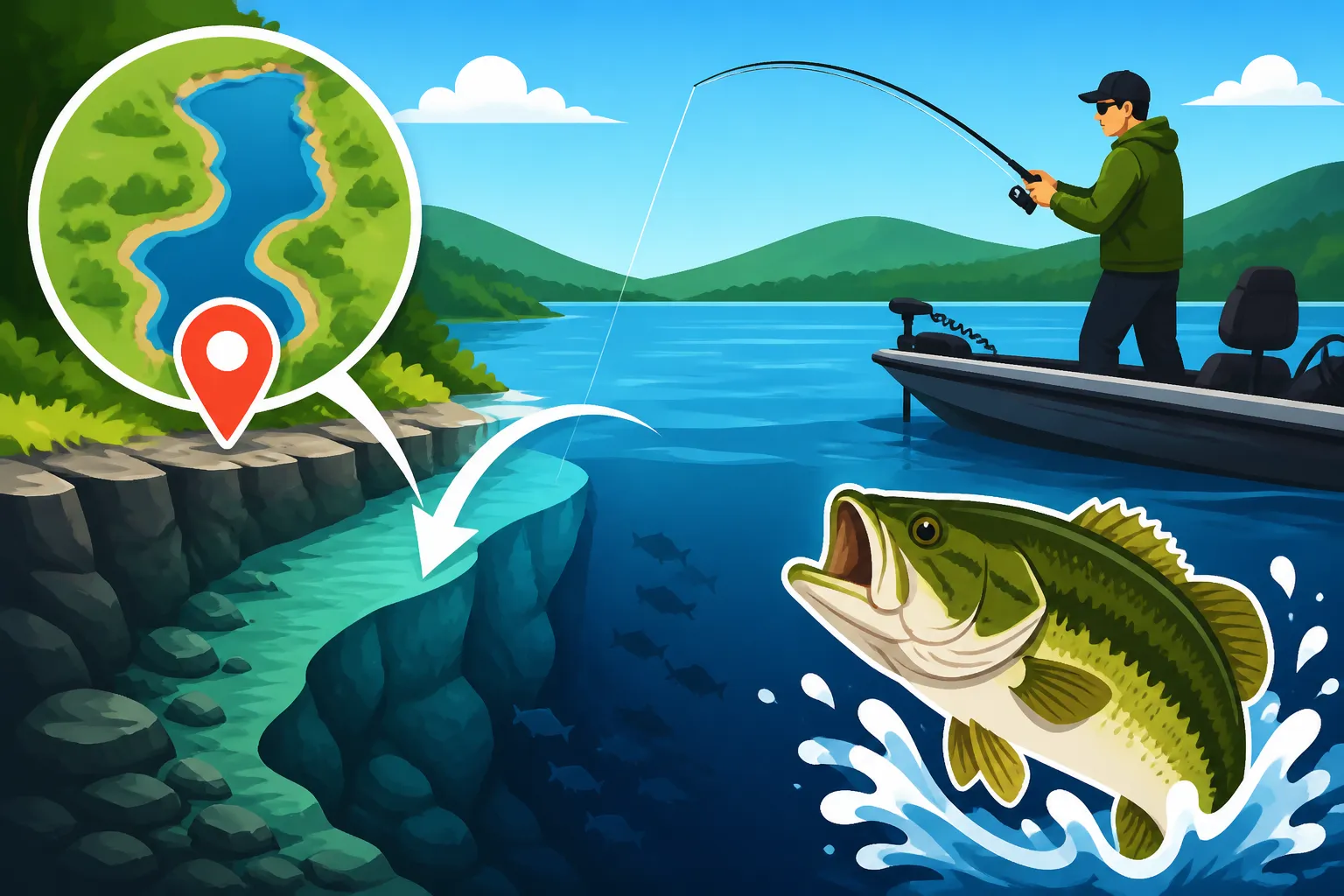
Candlewood Lake, with its intricate underwater topography, isn't just a big bowl of water. It's a submerged landscape of old foundations, humps, ledges, and channels, all remnants of the valley flooded to create this reservoir. Among these features, drop-offs are arguably the most crucial for successful fishing. They represent a sudden change in depth, a transition zone where shallow water rapidly plunges into deeper territory, and for fish, these are prime real estate.
Why Drop-Offs Attract Fish
Think about it from a fish's perspective. A drop-off provides immediate access to both shallow, warmer waters where baitfish might be feeding, and the cooler, darker depths that offer refuge from predators and bright sunlight. It's a strategic ambush point. Bass, trout, walleye, and even panfish will often patrol these depth changes, waiting for an unsuspecting meal to swim by. The thermocline, a distinct layer of water where the temperature changes rapidly with depth, also plays a huge role here, especially during the warmer months. Fish often suspend right at or above the thermocline on these drop-offs, finding their ideal comfort zone. It's where the food chain converges, making them consistent producers if you know how to work them.
Identifying Productive Drop-Off Features
Not all drop-offs are created equal, of course. On Candlewood, you're looking for drop-offs that offer additional structure. Is there a sunken roadbed that drops off? A rocky point that extends underwater and then plummets? Perhaps an old foundation that creates a sudden ledge? These added complexities amplify the attraction for fish. When you're studying your sonar or a detailed map, pay attention to the contour lines. Tightly packed lines indicate a steep drop-off, while wider spacing means a more gradual slope. The steeper, rockier, or more irregular the drop-off, the more likely it is to hold a variety of fish. For instance, a main lake point that tapers down quickly into 30 or 40 feet of water is almost always worth investigating. These areas are vital for anglers targeting anything from large smallmouth bass to elusive trout. You can find more detailed information in our comprehensive guide on Candlewood Lake Fishing Guide.
Key Drop-Off Locations and How to Fish Them on Candlewood Lake
Candlewood Lake is vast, but certain areas consistently offer excellent drop-off fishing opportunities due to their unique underwater topography. Knowing where these generally are is half the battle; the other half is understanding how to approach them effectively.
The Vaughn's Neck Area and Squantz Cove
The entire Vaughn's Neck peninsula, particularly its northern and southern tips, is renowned for its excellent underwater structure, including numerous productive drop-offs. On the north side, the points extending into the main lake provide steep transitions from shallower humps into significant depths. Similarly, as you move towards the entrance of Squantz Cove, you'll find ledges and sharp drops where the lake bottom changes from 15-20 feet down to 40-60 feet or more. These transitions are magnets for both largemouth and smallmouth bass, especially during the summer and fall.
To fish these effectively:
- Depth and Lure Choice: Start by locating the edge of the drop-off with your sonar. For bass, target depths from 15 to 35 feet, working your way down. Carolina rigs with soft plastic creature baits like a Zoom Speed Craw or a Yamamoto Senko are deadly here. Use a heavier weight (¾ to 1 oz) to maintain bottom contact in deeper water or if there's any current. Drop-shot rigs with finesse worms are also incredibly effective, allowing you to present a bait vertically right in the fish's face, especially when they're suspended.
- Boat Positioning: Position your boat directly over the deeper water and cast up onto the shallower ledge, then slowly work your bait down the drop-off. Alternatively, if you're comfortable with boat control, you can motor along the top of the drop-off, casting parallel to the edge, covering more water. Many guides on FishingBooker who specialize in Candlewood Lake will have these areas dialed in, making your trip more productive.
Sherman's Point and the Islands
Sherman's Point, a prominent feature on the western side of the lake, also offers fantastic drop-off fishing. The area around the point itself, and the submerged structures leading off it, create significant depth changes. Additionally, the various islands scattered throughout the lake, such as Green Island and the nearby submerged structures, are essentially elevated humps that plunge sharply into deeper water on all sides. These island drop-offs are crucial for Trout Fishing in Connecticut, as brown and rainbow trout often hold in the cooler, deeper water around them, especially in summer.
Techniques for these spots:
- Vertical Presentation: For bass holding tight to structure on these island drop-offs, vertical jigging with a heavy football jig or a blade bait can be very effective. Drop it right down to the fish you see on your sonar.
- Trolling for Trout: For trout, these deep-water island drop-offs are ideal for trolling. Use downriggers to get spoons like a Sutton or a Flipper spoon, or small crankbaits down to the depth where trout are actively feeding. Focus on the 25-50 foot range, adjusting based on current water temperatures and baitfish location. Sometimes, simply knowing the right trolling speed and depth makes all the difference. Check out Best Time to Fish Candlewood Lake in Summer for more seasonal tips.
The Coves and Submerged Roadbeds
Even within the larger coves, like Candlewood Isle Cove or New Fairfield Bay, you'll find smaller, localized drop-offs that can be highly productive, especially those associated with old submerged roadbeds or creek channels. These hidden gems might not be as dramatic as main lake points but can hold significant numbers of fish that prefer slightly calmer waters.
Fishing these subtle features:
- Finesse Tactics: In these more protected areas, fish might be less aggressive. Finesse techniques shine here. Wacky-rigged Senkos, Neko rigs, or small finesse jigs are excellent choices. Cast them to the shallow side of the submerged channel or roadbed and let them slowly fall into the deeper trench.
- Electronics are Key: A good fishfinder with side imaging is invaluable for pinpointing these narrower, less obvious drop-offs. It can reveal the exact path of a submerged road or the edge of an old foundation. Learning to use your electronics effectively, especially for finding structure, is covered in more detail in Best deep water structure spots on Candlewood Lake.
Gear and Techniques for Dominating Candlewood Drop-Offs
Fishing drop-offs effectively on a lake like Candlewood requires a thoughtful approach to gear and technique. It's not just about casting and hoping; it's about precision, understanding fish behavior, and adapting to conditions.
Essential Gear for Deep Water Success
You wouldn't bring a butter knife to a steak dinner, and you shouldn't bring inappropriate gear to tackle Candlewood's deep drop-offs.
- Rods and Reels: For most drop-off fishing, especially with jigs, Texas rigs, or Carolina rigs, a medium-heavy to heavy action spinning or casting rod, 7' to 7'6" in length, is ideal. This provides the backbone to set the hook in deeper water and muscle bigger fish out of structure. Pair it with a high-quality baitcasting reel with a good gear ratio (7.1:1 or higher for quick line retrieval) or a sturdy spinning reel in the 3000-4000 series.
- Line Choice: Fluorocarbon line is your best friend for deep water. Its low stretch provides excellent sensitivity, allowing you to feel subtle bites even in 40 feet of water, and its invisibility underwater is a huge advantage. Opt for 10-15 lb test for finesse applications and 15-20 lb test for heavier jigs or Carolina rigs. For trolling for trout, a braided main line with a long fluorocarbon leader (20-30 feet) offers the best combination of strength, thin diameter, and stealth.
- Electronics: This can't be stressed enough. A quality fishfinder with both 2D sonar and down/side imaging is paramount. Brands like Humminbird, Lowrance, and Garmin offer excellent units that can help you visualize the underwater world. Being able to mark fish, identify bait schools, and see the contours of the drop-off before you cast is a game-changer. For more specific advice, check out Best sonar settings for finding structure on Candlewood Lake.
Mastering Drop-Off Techniques
Fishing a drop-off isn't just one technique; it's a repertoire.
- The "Drag and Hop" (Carolina Rig): This is a staple for covering bottom on gradual to medium-steep drop-offs. Cast your Carolina rig up onto the shallower section of the drop-off. Once it settles, slowly drag it down the slope, pausing occasionally. The weight will kick up sediment, attracting fish, and the unweighted bait will flutter enticingly behind. Many large Largemouth Bass Fishing in Connecticut and smallmouth bass are caught this way.
- Vertical Drop-Shotting: When fish are suspended or tightly clustered on a sharp break, a drop-shot rig is unbeatable. Position your boat directly over the marked fish or structure. Drop your weight straight down until it hits bottom, then reel up just enough slack so your bait is suspended at the desired depth (usually a few feet off the bottom, or right in the middle of a fish school). Gently shake the rod tip to impart action to the bait. This is a highly effective method for targeting picky Smallmouth Bass Fishing in Connecticut.
- Deep Crankbait Cranking: For covering water quickly along a drop-off, deep-diving crankbaits are excellent. Cast them parallel to the drop-off or at an angle, letting them dive down and "deflect" off any structure along the edge. The erratic action often triggers reaction strikes. Look for crankbaits that dive to the depth range you're targeting.
- Jigging Spoons and Blade Baits: These are fantastic for vertical presentations, especially when fish are schooled up tight. Drop them to the bottom, then snap them up quickly, letting them flutter back down on a semi-slack line. Most bites occur on the fall. This technique is particularly effective in cooler water.
| Technique | Target Species | Ideal Depth Range | Lure Examples | Key Advantage |
|---|---|---|---|---|
| Carolina Rig | Bass, Walleye | 15-40 feet | Soft plastics (creatures, lizards) | Covers ground, attracts with scent & disturbance |
| Drop-Shot Rig | Bass, Walleye, Trout | 10-50 feet | Finesse worms, minnow imitations | Precise depth control, subtle presentation |
| Deep Diving Crankbait | Bass, Walleye | 10-30 feet | Large-lipped crankbaits | Rapid search, reaction strikes |
| Vertical Jigging | Bass, Walleye, Trout | 20-60 feet | Jigging spoons, blade baits, heavy jigs | Pinpoints schooled fish, effective in cold water |
| Trolling (with Downriggers) | Trout, Walleye | 25-80 feet | Spoons, small stickbaits, live shiners | Covers large areas for suspended fish |
Remember, patience and persistence are key. Some days, fish will be right on the top edge of the drop, and other days they'll be suspended 20 feet down over 50 feet of water. Use your electronics to find them, then apply the appropriate technique. If you're looking for an experienced hand to show you the ropes, consider booking a trip through FishingBooker with a local Candlewood guide who knows these techniques inside and out.
Navigating Candlewood's Depths: Sonar and Chart Tips
Candlewood Lake is a big place, and without the right tools and knowledge, finding those sweet drop-offs can feel like searching for a needle in a haystack. Modern electronics are your best friend here, but knowing how to interpret what they show you is even more important.
Reading Your Sonar Like a Pro
Your fishfinder isn't just for showing fish. It's an underwater map of structure, contour, and baitfish.
- 2D Sonar: This traditional view is excellent for showing depth changes and identifying fish arches. Look for sudden spikes or drops in the bottom line. Pay close attention to the strength and shape of fish arches; a strong, distinct arch often indicates a larger fish. When you see baitfish (usually appearing as clouds or dense schools), remember that predatory fish are likely nearby, often just below or to the side of the bait.
- Down Imaging: This technology gives you a picture-like view directly beneath your boat, showing clearer details of what's on the bottom. You can distinguish between rock piles, brush, and old stumps that might be clinging to the face of a drop-off. Use it to confirm the type of structure you're seeing on your 2D sonar.
- Side Imaging (or SideScan): This is where the magic happens for drop-off fishing. Side imaging scans out to the sides of your boat, revealing structure that you might otherwise drive right over. You can literally see the edge of a drop-off, a sunken road, or a rock wall extending away from your boat. Use it to scan ahead as you slowly motor along, marking promising features that you can then return to and fish with precision. Many anglers use this to map out entire sections of Best Bass Fishing Lakes in Connecticut before they even make a cast.
Chartplotters and Mapping Software
Modern chartplotters come pre-loaded with highly detailed lake maps, or you can purchase supplemental chips (like those from Navionics or Lakemaster) that offer even more intricate contour lines for Candlewood Lake.
- High-Definition Contours: These maps show contour lines as close as 1-foot increments, making it incredibly easy to identify steep drop-offs. Look for areas where these lines are tightly grouped.
- Shaded Relief: Some advanced maps offer shaded relief, which visually represents the underwater topography in an intuitive 3D-like format. This helps you quickly spot humps, channels, and, of course, sharp drop-offs.
- Waypoint Management: As you identify productive drop-offs with your sonar and chart, mark them as waypoints. Over time, you'll build up a personal "honey hole" map. You can even color-code your waypoints based on species caught or time of year.
- Pre-Trip Planning: Before you even leave the dock, spend some time studying your lake map on your chartplotter or a computer. Identify potential drop-offs, points, and humps that look promising. This pre-planning can save you hours of aimless searching and direct you to high-probability areas, making your time on the water much more efficient. Many successful trips often start with careful map study, pinpointing potential spots where fish might hold based on the contour of the lake.
Disclaimer
The information provided in this guide is for general informational purposes only. Fishing conditions, regulations, and fish behavior can change rapidly. Always consult the latest Connecticut Department of Energy and Environmental Protection (DEEP) fishing regulations before heading out. Fishing involves inherent risks; please prioritize safety on the water.