Best night fishing spots for striped bass in Connecticut
There's nothing quite like the frustration of fishing prime striped bass territory all day, only to come up empty-handed while watching boats buzz by. When the sun beats down, stripers can get awfully finicky and shy, often retreating to deeper, cooler water or tight cover. But once twilight settles over Connecticut's diverse waters, a whole new world of opportunity opens up for these elusive predators, making night fishing an absolute game-changer for serious anglers. This comprehensive guide will illuminate the best spots and strategies to connect with striped bass after dark in the Nutmeg State.
Why Night Fishing for Striped Bass in Connecticut is a Game Changer
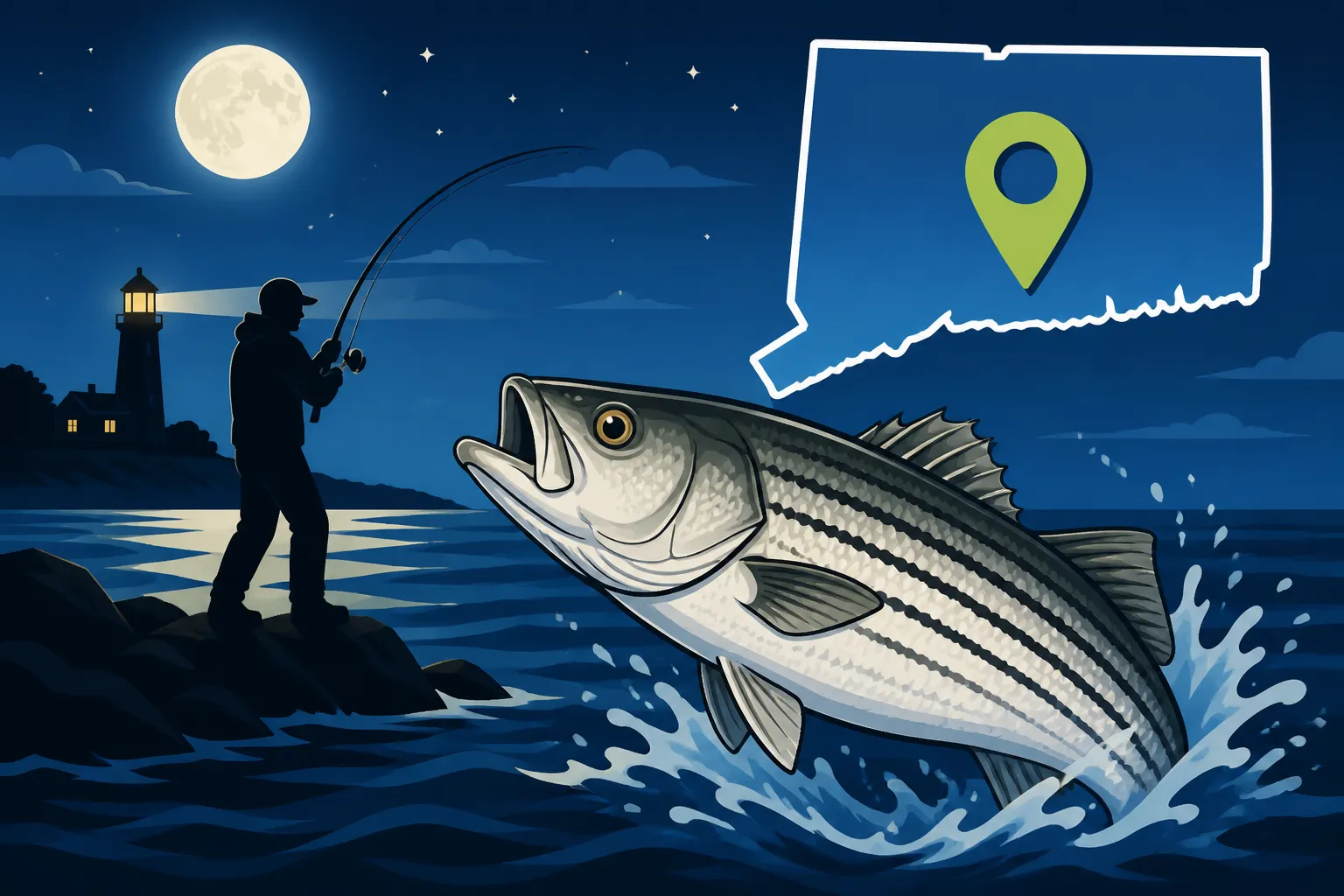
Many anglers shy away from fishing in the dark, imagining it's too difficult or dangerous. But when it comes to striped bass, the cover of night offers significant advantages that can turn a slow day into an unforgettable night. Stripers, especially the bigger ones, become more aggressive, less wary, and often move into shallower water to feed under the cloak of darkness.
The Nocturnal Advantage for Stripers
Think about it: during the day, large predatory fish like striped bass are constantly exposed. Boat traffic, bright sunlight, and the sheer volume of human activity make them cautious. They might patrol deep channels or hold tight to structure, only venturing out for quick, opportunistic feeds. As soon as the sun dips below the horizon, a profound shift occurs.
Under the cover of night, striped bass feel much bolder. Their natural instincts take over, and they'll often move from their daytime haunts to actively hunt baitfish in the shallows, around prominent points, or near lighted areas. This is when you'll find them cruising along sandy beaches, pushing into marshy areas, or ambushing prey around bridge pilings and jetties. The reduced light gives them an edge, allowing them to stalk their prey with greater confidence. It’s also during these hours that the biggest fish, often the most cautious during daylight, are most likely to drop their guard and feed aggressively.
Overcoming Daytime Challenges
The Connecticut shoreline and its major rivers can get incredibly busy during the day, especially in the warmer months. You're contending with recreational boaters, jet skiers, kayakers, and a multitude of other anglers. This constant pressure can spook fish and make them incredibly difficult to entice. The noise and commotion alone are enough to send wary stripers seeking refuge.
Night fishing completely sidesteps these issues. The waterways quiet down considerably, and you often have prime fishing spots all to yourself or with just a handful of dedicated night owls. There's no sun glare to contend with, which means you're not squinting to see your line or the water. Furthermore, the cooler night temperatures are more comfortable for both the angler and the fish, making for a more enjoyable and productive experience. If you’ve been struggling to land those bigger stripers during the day, embracing the night can be the key to unlocking consistent success.
Top Night Fishing Locations for Striped Bass in Connecticut
Connecticut's diverse aquatic landscape offers a wealth of opportunities for night fishing, from major river systems to the expansive Long Island Sound. Knowing where to focus your efforts is half the battle when targeting striped bass after dark.
Key Estuaries and River Mouths
Connecticut is blessed with several significant rivers that empty into Long Island Sound, creating ideal ambush points for striped bass. These areas are characterized by strong currents, baitfish congregations, and diverse structures that hold fish.
The Connecticut River mouth, particularly around Old Saybrook and Old Lyme, is a legendary striper fishery. As the tide pushes in under the cover of darkness, striped bass follow the influx of baitfish moving into the river. Popular spots include the numerous coves, tidal flats, and prominent points near the mouth. Shore anglers can find success casting from the beaches flanking the river entrance, while boaters can work the main channel, structure, and shallow flats further upstream, especially during a new moon. The convergence of fresh and saltwater here creates a nutrient-rich environment that stripers absolutely love, and at night, they are far more willing to hunt in these shallower feeding zones. You can often find fantastic action around the Saybrook breakwater or any of the smaller tributaries flowing into the main river channel during the right tide. For more on navigating these waters, check out our guide on Connecticut River Striped Bass Fishing.
The Thames River, flowing through Norwich and New London, is another excellent choice. The lower reaches, especially around the harbor and the various industrial structures, offer abundant cover and current. Bridge pilings, docks, and rock walls create current breaks where stripers lie in wait. Baitfish like herring and bunker move in and out with the tides, and stripers are never far behind. Focus on areas where there's good tidal flow and some form of structure, especially if there's any ambient light from shore, as this can concentrate bait and stripers alike. Similarly, the Housatonic River, particularly its lower stretches near Milford, can also be a hotspot as stripers push upriver at night, especially during spring and fall migrations.
Coastal Structures and Reefs
The Long Island Sound coastline is dotted with artificial and natural structures that become magnets for striped bass once the sun goes down. These locations offer current, cover, and a consistent food supply.
Jetties and Breakwaters are prime targets. Places like the Niantic River mouth jetty, the West Haven breakwater, or the jetties along Milford and Stratford can be incredibly productive. These rock structures disrupt currents, creating eddies and calm spots where baitfish gather, and deeper water where stripers can lie in wait. Anglers should fish both the ocean side and the calmer bay side of these structures, casting along the edges where current meets still water. Be sure to check local access rules, as some jetties might have restricted night access. Remember, always prioritize safety when fishing on rocky structures in the dark.
Bridge Pilings are also incredible fish-holding structures. The I-95 bridges over the Norwalk River, Quinnipiac River, and particularly the Gold Star Bridge over the Thames River in New London, create massive current breaks and habitat. These pilings are often encrusted with mussels and barnacles, attracting crabs and small fish, which in turn attract larger predators. Working soft plastics or live eels around these pilings at night can be extremely effective. The shadow lines created by any nearby lights are also key areas, as baitfish will often congregate there, and stripers will patrol the darker edges, ambushing anything that strays too close.
Submerged Reefs and Ledges in Long Island Sound are often teeming with life and become feeding grounds for stripers. While these are harder to access from shore, boat anglers can pinpoint these structures using charts and sonar. Areas like the Southwest Reef off Madison or the Cornfield Point Shoal are known hotspots. When the tide is running hard over these rocky bottoms, stripers will often position themselves to ambush bait caught in the current. These spots can hold truly large fish, especially when fished during the peak tide windows under the cloak of night. You might even hook into a formidable Connecticut state record striped bass weight on such structures.
Productive Shoreline Access Points
Not everyone has access to a boat, and thankfully, Connecticut offers plenty of fantastic shoreline spots where you can target night-feeding stripers. Stealth and understanding the tides are crucial for success from shore.
State Parks and Public Beaches offer vast stretches of shoreline, especially those with deeper drop-offs or nearby structure. Places like Hammonasset Beach State Park in Madison, Rocky Neck State Park in East Lyme, or Bluff Point State Park in Groton provide excellent surf fishing opportunities. Look for areas with a pronounced current, a slight drop-off, or proximity to a river mouth. During an incoming tide at night, stripers will often cruise these beaches, pushing baitfish into the shallows. The best success often comes on nights with darker conditions (new moon or overcast skies) when the fish feel most secure venturing close to shore.
Rocky Points and Coves are also excellent. Many towns along the Connecticut coast have public access points to rocky shorelines or smaller coves that can be incredibly productive at night. The smaller, less disturbed coves can hold baitfish that get trapped by the tide, attracting stripers. Rocky points that jut out into the Sound create current seams and provide excellent casting platforms. Always scout these areas during the day to identify potential hazards and understand the terrain before attempting to fish them at night. A quick search for "Best shore fishing spots in Connecticut" could reveal hidden gems in your local area.
Essential Gear and Techniques for Connecticut Night Striper Fishing
Night fishing for striped bass requires a slightly different approach than daytime angling. The right gear and techniques will not only increase your success but also ensure your safety when fishing in the dark.
Rods, Reels, and Line Considerations
For most Connecticut night fishing scenarios, especially from shore or a jetty, you'll want a medium-heavy to heavy action spinning rod, typically in the 9 to 11-foot range. This length provides the casting distance needed to reach distant rips or structure, while the heavy action has the backbone to handle larger stripers and throw heavier lures or baits. For boat fishing in tighter quarters, a 7-8 foot medium-heavy rod might suffice.
Pair your rod with a durable, saltwater-rated spinning reel in the 5000 to 8000 size range, capable of holding 250-300 yards of line. You'll want a smooth drag system that can withstand the powerful runs of a big striper. As for line, braided line is almost universally preferred for its sensitivity, lack of stretch, and incredible strength-to-diameter ratio. A 30-50 lb test braid is common. The sensitivity of braid helps you detect subtle bites in the dark. Always use a fluorocarbon leader (30-60 lb test, 3-6 feet long) to connect your braid to your lure or hook, as it’s less visible to the fish and more abrasion-resistant around structure.
Baits and Lures That Shine in the Dark
When the lights go out, some offerings become far more effective. Striped bass rely heavily on their lateral line and sense of smell at night, making noise, vibration, and scent key factors.
Live Eels: Without a doubt, live eels are often considered the king of night baits for big striped bass, especially in rocky areas and around bridge pilings. Their serpentine movement and strong scent are irresistible. Rig them on a single circle hook (6/0 to 9/0) either weightless or with a small egg sinker above a swivel, letting them swim naturally with the current. This technique is particularly deadly in the estuaries and around jetties. Remember the Connecticut Striped Bass Circle Hook Requirement for better fish survival.
Chunk Bait: Fresh bunker (menhaden), mackerel, or even herring, cut into chunks, can be incredibly effective, especially in areas with current or on sandy beaches. The scent trail they put out is a powerful attractant. Use a fish-finder rig with a circle hook and a weight appropriate for the current.
Artificial Lures:
- Surface Plugs: Large spook-style topwater lures or metal-lipped swimmers can create a commotion on the surface that stripers can't resist. Choose dark colors (black, purple, dark green) as they create a better silhouette against the night sky.
- Soft Plastics: Large swimbaits (like those from Guppy Lures or Tsunami) rigged on weighted jig heads, or soft plastic paddle tails, are excellent for imitating baitfish. Again, dark colors are often best, but sometimes a white or pearl can also work, especially under a full moon or ambient light.
- Bucktail Jigs: These versatile jigs, tipped with a strip of pork rind or a soft plastic trailer, are excellent for probing deeper water around structure or working current seams. Vary your retrieve and jigging motion to see what the fish prefer.
Safety and Navigation Tips
Fishing at night carries inherent risks, and safety should always be your top priority.
- Lighting: A reliable headlamp is essential, but invest in one with a red light option. Red light preserves your night vision and is less likely to spook fish. Use white light only when absolutely necessary (e.g., re-tying a knot, baiting a hook).
- Footwear and Clothing: Wear sturdy, non-slip footwear, especially if fishing from rocks or jetties. Dress in layers, as night temperatures can drop significantly, even in summer. A good quality rain jacket is also advisable.
- Life Jackets: If fishing from a boat, kayak, or on potentially slippery jetties, always wear a life jacket. It's a non-negotiable safety item. For boaters, remember the Life Jacket Requirements for Connecticut Boaters, especially the Connecticut Cold Water Life Jacket Rule October to May.
- Know Your Location: Scout your fishing spot during the day to identify any obstacles, slippery areas, or treacherous drop-offs. Never fish an unfamiliar spot at night. Inform someone of your plans and expected return time.
- Navigation Lights: If boating, ensure all your navigation lights are working and in use. Carry a marine radio and a fully charged cell phone.
Planning Your Night Fishing Adventure
Successful night fishing isn't just about showing up in the dark. It involves careful planning around natural cycles and regulations to maximize your chances of success and ensure a safe trip.
Best Tides and Moon Phases
Understanding the tides is paramount for night fishing. The incoming tide is often the most productive, as it brings in cooler water and fresh baitfish from Long Island Sound. Stripers will move with this tide, pushing into shallower feeding grounds. The peak of the incoming tide and the beginning of the outgoing tide (the "top of the tide") are often prime windows. Stronger tides, such as those around a new or full moon, typically mean more current and often more aggressive feeding activity.
The moon phase also plays a role. A new moon (dark skies) offers the best cover for stripers, making them bolder and more likely to feed in the open. Conversely, a full moon can make fish warier in clear, shallow water, but it can also concentrate baitfish, leading to frenzied feeding if you find the right spot. Some anglers prefer the added visibility a full moon provides, allowing for better casting and navigation. Pay attention to how the moon influences the tides – stronger tidal pulls often coincide with full and new moons. Knowing the Best Time of Day to Catch Striped Bass often extends into understanding these nocturnal tidal cycles.
Checking Regulations and Forecasts
Before heading out, always consult the most current Connecticut fishing regulations. These change annually, and it's your responsibility to know the minimum size limits, daily creel limits, and any special restrictions for striped bass. The Connecticut Department of Energy and Environmental Protection (DEEP) website is the official source for this information. Ignoring regulations can lead to hefty fines, as outlined in our article on Fishing Without a License in Connecticut Penalties. Specifically, be aware of the Connecticut Striped Bass Slot Limit and Season, which can vary from year to year to protect the stock.
Beyond regulations, checking the weather and marine forecasts is critical for safety. Pay close attention to wind speed and direction, wave height, and any advisories for thunderstorms or fog. Fog can roll in quickly at night, making navigation extremely dangerous for boaters. Never embark on a night trip if conditions are questionable, and always have a backup plan.
Finding Guides and Charters for Night Trips
If you're new to night fishing for striped bass or want to maximize your chances of success without the trial and error, hiring a local guide or charter captain who specializes in nocturnal trips is an excellent idea. These professionals have intimate knowledge of the local waters, understand striper movements after dark, and know which baits and techniques are most effective.
Platforms like FishingBooker can connect you with experienced Connecticut charter captains who specialize in night fishing for striped bass. Many offer dedicated night trips targeting the biggest fish under the cover of darkness. They provide all the necessary gear, bait, and most importantly, their invaluable expertise. A good guide can teach you techniques, explain why fish are holding in certain areas, and ensure a safe and productive outing. When considering a guide, look for those with strong reviews for night fishing, as it's a distinct skill set. For more advice on this, you might find our guide on How to Choose a Connecticut Fishing Charter helpful.
| Location Type | Pros | Cons | Best Techniques After Dark |
|---|---|---|---|
| River Mouths/Estuaries | High concentrations of bait, strong currents | Can be crowded, complex navigation for boats | Live eels, chunk bait, large soft plastics, topwater plugs |
| Jetties/Breakwaters | Excellent current breaks, holds big fish | Slippery, hazardous in dark, limited access | Live eels, bucktail jigs, dark metal-lipped swimmers |
| Bridge Pilings | Strong current, structure, baitfish magnets | Requires precision casting, strong currents | Live eels, soft plastics, bucktail jigs |
| Open Beaches/Surf | Easy access (some areas), mobile fishing | Can be featureless, requires long casts | Chunk bait, large swimming plugs, heavy jigs |
| Submerged Reefs (Boats) | Holds trophy fish, less pressure | Requires boat/sonar, can be rough water | Live eels, chunk bait, deep diving plugs, weighted soft plastics |
Disclaimer
The information provided in this guide is for general informational purposes only. Fishing conditions, regulations, and access can change rapidly. Always consult the official Connecticut Department of Energy and Environmental Protection (DEEP) website or resources for the most up-to-date and accurate regulations and safety guidelines before planning any fishing trip. Adherence to all local, state, and federal laws is the responsibility of the angler.